


Mastering the Compiler: Why React 19’s Automatic Memoization Changes How We Write UI Code
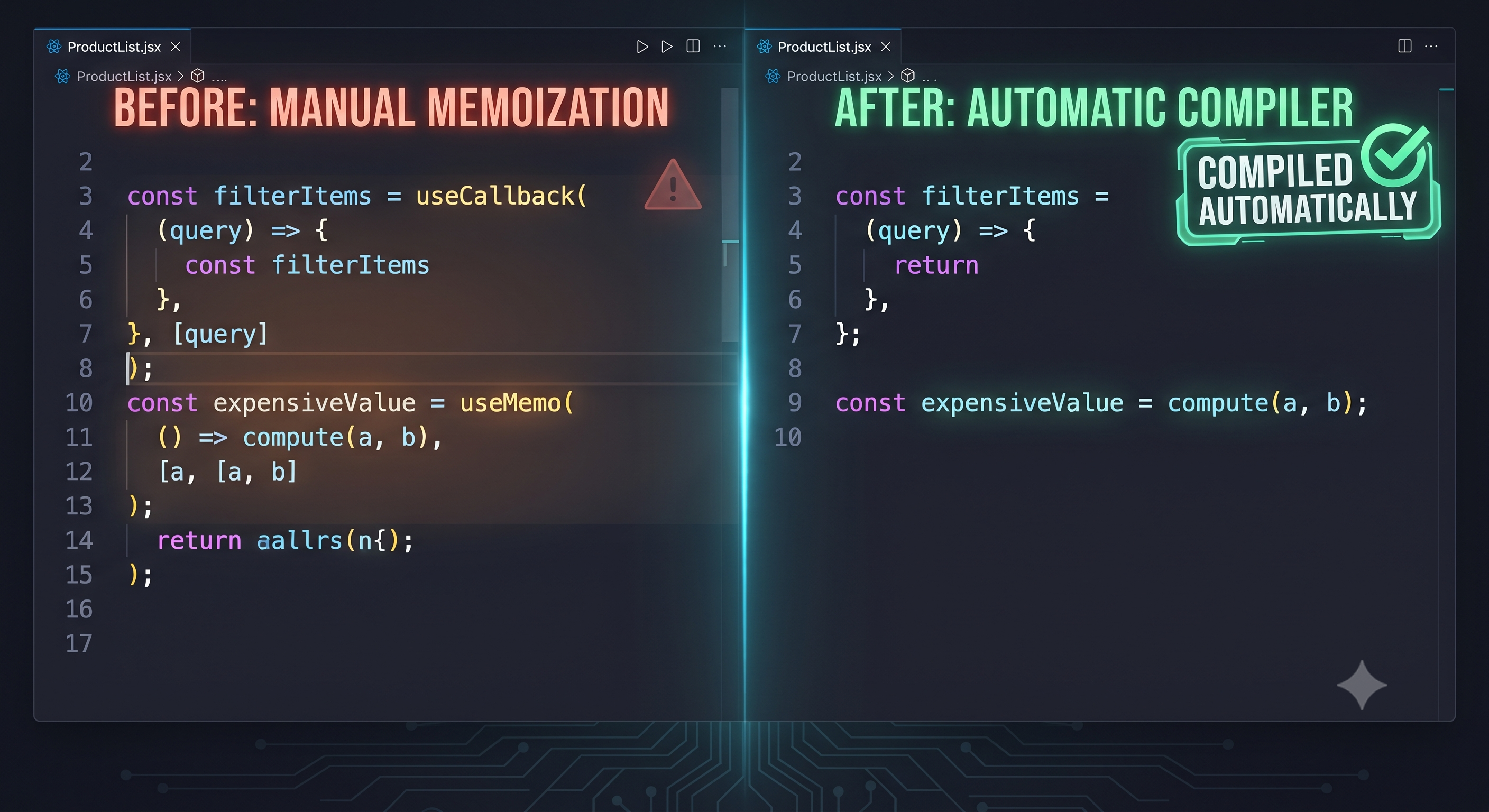
Modern frontend engineering is shifting away from manual performance tuning toward intelligent, compiler-driven optimization. With the widespread adoption of tools featuring automatic memoization (such as the React Compiler introduced in modern React stacks), the framework itself now analyzes your code's reactive semantics during build time.
Why it matters:
Manual memoization is error-prone. Developers often miss dependencies, add unnecessary wrappers that bloat code readability, or forget to memoize altogether—leading to sluggish user experiences. By letting a compiler handle component memoization under the hood, you eliminate boilerplate, reduce cognitive load, and instantly boost initial loads and cross-page navigation speeds.
What you can learn (The Tech Breakdown):
When building with modern compiler-backed UI frameworks, adapt your coding mental model with these principles:
Trust Pure Functions: Write standard, idiomatic JavaScript/TypeScript without defensive wrapping. Let the compiler safely determine what values need to be cached.
Understand Reactive Boundaries: Know how your framework tracks state mutations so you don't accidentally write side-effects inside render passes that break caching assumptions.
Clean Up Legacy Refactors: Audit older codebases to strip out redundant useMemo and useCallback hooks that might conflict with or duplicate automated compiler optimizations.
Discussion Question
Have you started leveraging automated compiler tools in your current React projects, or are you still manually auditing dependencies with useMemo? What performance gains have you noticed?
CTA (Join Developers & Coding)
Want to stay ahead of modern software architecture trends, clean code standards, and cutting-edge web tooling? Join the Techawks Developers & Coding community today and level up with engineers worldwide:
Modern frontend engineering is shifting away from manual performance tuning toward intelligent, compiler-driven optimization. With the widespread adoption of tools featuring automatic memoization (such as the React Compiler introduced in modern React stacks), the framework itself now analyzes your code's reactive semantics during build time.
Why it matters:
Manual memoization is error-prone. Developers often miss dependencies, add unnecessary wrappers that bloat code readability, or forget to memoize altogether—leading to sluggish user experiences. By letting a compiler handle component memoization under the hood, you eliminate boilerplate, reduce cognitive load, and instantly boost initial loads and cross-page navigation speeds.
What you can learn (The Tech Breakdown):
When building with modern compiler-backed UI frameworks, adapt your coding mental model with these principles:
Trust Pure Functions: Write standard, idiomatic JavaScript/TypeScript without defensive wrapping. Let the compiler safely determine what values need to be cached.
Understand Reactive Boundaries: Know how your framework tracks state mutations so you don't accidentally write side-effects inside render passes that break caching assumptions.
Clean Up Legacy Refactors: Audit older codebases to strip out redundant useMemo and useCallback hooks that might conflict with or duplicate automated compiler optimizations.
Discussion Question
Have you started leveraging automated compiler tools in your current React projects, or are you still manually auditing dependencies with useMemo? What performance gains have you noticed?
CTA (Join Developers & Coding)
Want to stay ahead of modern software architecture trends, clean code standards, and cutting-edge web tooling? Join the Techawks Developers & Coding community today and level up with engineers worldwide:
Mastering the Compiler: Why React 19’s Automatic Memoization Changes How We Write UI Code
Modern frontend engineering is shifting away from manual performance tuning toward intelligent, compiler-driven optimization. With the widespread adoption of tools featuring automatic memoization (such as the React Compiler introduced in modern React stacks), the framework itself now analyzes your code's reactive semantics during build time.
Why it matters:
Manual memoization is error-prone. Developers often miss dependencies, add unnecessary wrappers that bloat code readability, or forget to memoize altogether—leading to sluggish user experiences. By letting a compiler handle component memoization under the hood, you eliminate boilerplate, reduce cognitive load, and instantly boost initial loads and cross-page navigation speeds.
What you can learn (The Tech Breakdown):
When building with modern compiler-backed UI frameworks, adapt your coding mental model with these principles:
Trust Pure Functions: Write standard, idiomatic JavaScript/TypeScript without defensive wrapping. Let the compiler safely determine what values need to be cached.
Understand Reactive Boundaries: Know how your framework tracks state mutations so you don't accidentally write side-effects inside render passes that break caching assumptions.
Clean Up Legacy Refactors: Audit older codebases to strip out redundant useMemo and useCallback hooks that might conflict with or duplicate automated compiler optimizations.
Discussion Question
Have you started leveraging automated compiler tools in your current React projects, or are you still manually auditing dependencies with useMemo? What performance gains have you noticed?
CTA (Join Developers & Coding)
Want to stay ahead of modern software architecture trends, clean code standards, and cutting-edge web tooling? Join the Techawks Developers & Coding community today and level up with engineers worldwide:

 English
 Arabic
 French
 Spanish
 Portuguese
 Deutsch
 Turkish
 Dutch
Dutch
 Italiano
 Romaian
 Portuguese (Brazil)
 Greek
Greek