



Techawks Developers is a dedicated community for software developers, programmers, engineers, and tech enthusiasts who are passionate about building modern applications and exploring the future of technology. Whether you're learning your first programming language or leading enterprise projects, you'll find valuable discussions, resources, and networking opportunities.
Join conversations on programming languages, AI development, web and mobile technologies, cloud computing, DevOps, open-source projects, cybersecurity, APIs, system design, and software architecture. Learn from experienced developers, showcase your work, solve coding challenges, and collaborate on innovative projects.
Join conversations on programming languages, AI development, web and mobile technologies, cloud computing, DevOps, open-source projects, cybersecurity, APIs, system design, and software architecture. Learn from experienced developers, showcase your work, solve coding challenges, and collaborate on innovative projects.
-
PBID: 0230001500000004
-
80 people like this
-
95 Posts
-
95 Photos
-
0 Videos
-
Reviews
-
Science and Technology
Search

 Arabic
 French
 Spanish
 Portuguese
 Deutsch
 Turkish
 Dutch
 Italiano
 Russian
 Romaian
 Portuguese (Brazil)
 Greek
Recent Updates
-
Stop Leaking Unchecked Exceptions: How to Build Bulletproof APIs with the Result Pattern in TypeScript
Throwing exceptions for expected domain failures (e.g., validation errors, expired sessions, or resource conflicts) violates one of software engineering's most fundamental tenets: type safety across execution boundaries.
When a function signatures looks like this:
TypeScript
async function processOrder(orderId: string): Promise<Order>
The TypeScript compiler has no idea what could go wrong. It forces consumers to guess what exceptions need catching, resulting in swallowed errors, missing fallback states, and unexpected 500 HTTP crashes.
The Architectural Shift: Explicit Error Modeling
Languages like Rust make failure paths explicit at the type level using the Result<T, E> algebraic data type. You can implement this cleanly in modern TypeScript without external dependencies using discriminated unions:
TypeScript
type Result<T, E = Error> =
| { success: true; data: T }
| { success: false; error: E };
// Define discrete, exhaustive error states
type PaymentError =
| { code: 'INSUFFICIENT_FUNDS'; balance: number }
| { code: 'CARD_EXPIRED' }
| { code: 'GATEWAY_TIMEOUT' };
async function chargeCard(amount: number): Promise<Result<Transaction, PaymentError>> {
if (amount > availableFunds) {
return {
success: false,
error: { code: 'INSUFFICIENT_FUNDS', balance: availableFunds }
};
}
// ... execute charge
return { success: true, data: transaction };
}
Why This Changes Your Code Quality:
Exhaustive Type Narrowing: Consumers cannot access result.data without explicitly handling if (!result.success). TypeScript will flag unhandled error conditions at build time.
Deterministic Control Flow: Exceptions are reserved exclusively for truly unrecoverable anomalies (out-of-memory errors, syntax bugs, database connection drops), while expected business failures remain predictable, first-class values.
Decoupled API Contracts: Your HTTP controller can deterministically map every domain error code directly to its respective HTTP status code (e.g., 402 Payment Required, 408 Timeout) via a simple, exhaustive switch block.
Stop treating your failure paths as second-class citizens. If a failure can be predicted, it belongs in the return type.
Discussion Question
In your current backend codebase, do you handle domain-level failures via custom thrown exception hierarchies or explicit Result / Either types—and what was the tipping point for your team?
CTA
Join Developers & Coding: Connect with senior software engineers, backend developers, and systems architects refining clean code patterns, type safety, and scalable architectures inside the Techawks Developers community. Link in bio/comments.Stop Leaking Unchecked Exceptions: How to Build Bulletproof APIs with the Result Pattern in TypeScript Throwing exceptions for expected domain failures (e.g., validation errors, expired sessions, or resource conflicts) violates one of software engineering's most fundamental tenets: type safety across execution boundaries. When a function signatures looks like this: TypeScript async function processOrder(orderId: string): Promise<Order> The TypeScript compiler has no idea what could go wrong. It forces consumers to guess what exceptions need catching, resulting in swallowed errors, missing fallback states, and unexpected 500 HTTP crashes. The Architectural Shift: Explicit Error Modeling Languages like Rust make failure paths explicit at the type level using the Result<T, E> algebraic data type. You can implement this cleanly in modern TypeScript without external dependencies using discriminated unions: TypeScript type Result<T, E = Error> = | { success: true; data: T } | { success: false; error: E }; // Define discrete, exhaustive error states type PaymentError = | { code: 'INSUFFICIENT_FUNDS'; balance: number } | { code: 'CARD_EXPIRED' } | { code: 'GATEWAY_TIMEOUT' }; async function chargeCard(amount: number): Promise<Result<Transaction, PaymentError>> { if (amount > availableFunds) { return { success: false, error: { code: 'INSUFFICIENT_FUNDS', balance: availableFunds } }; } // ... execute charge return { success: true, data: transaction }; } Why This Changes Your Code Quality: Exhaustive Type Narrowing: Consumers cannot access result.data without explicitly handling if (!result.success). TypeScript will flag unhandled error conditions at build time. Deterministic Control Flow: Exceptions are reserved exclusively for truly unrecoverable anomalies (out-of-memory errors, syntax bugs, database connection drops), while expected business failures remain predictable, first-class values. Decoupled API Contracts: Your HTTP controller can deterministically map every domain error code directly to its respective HTTP status code (e.g., 402 Payment Required, 408 Timeout) via a simple, exhaustive switch block. Stop treating your failure paths as second-class citizens. If a failure can be predicted, it belongs in the return type. Discussion Question In your current backend codebase, do you handle domain-level failures via custom thrown exception hierarchies or explicit Result / Either types—and what was the tipping point for your team? CTA Join Developers & Coding: Connect with senior software engineers, backend developers, and systems architects refining clean code patterns, type safety, and scalable architectures inside the Techawks Developers community. Link in bio/comments.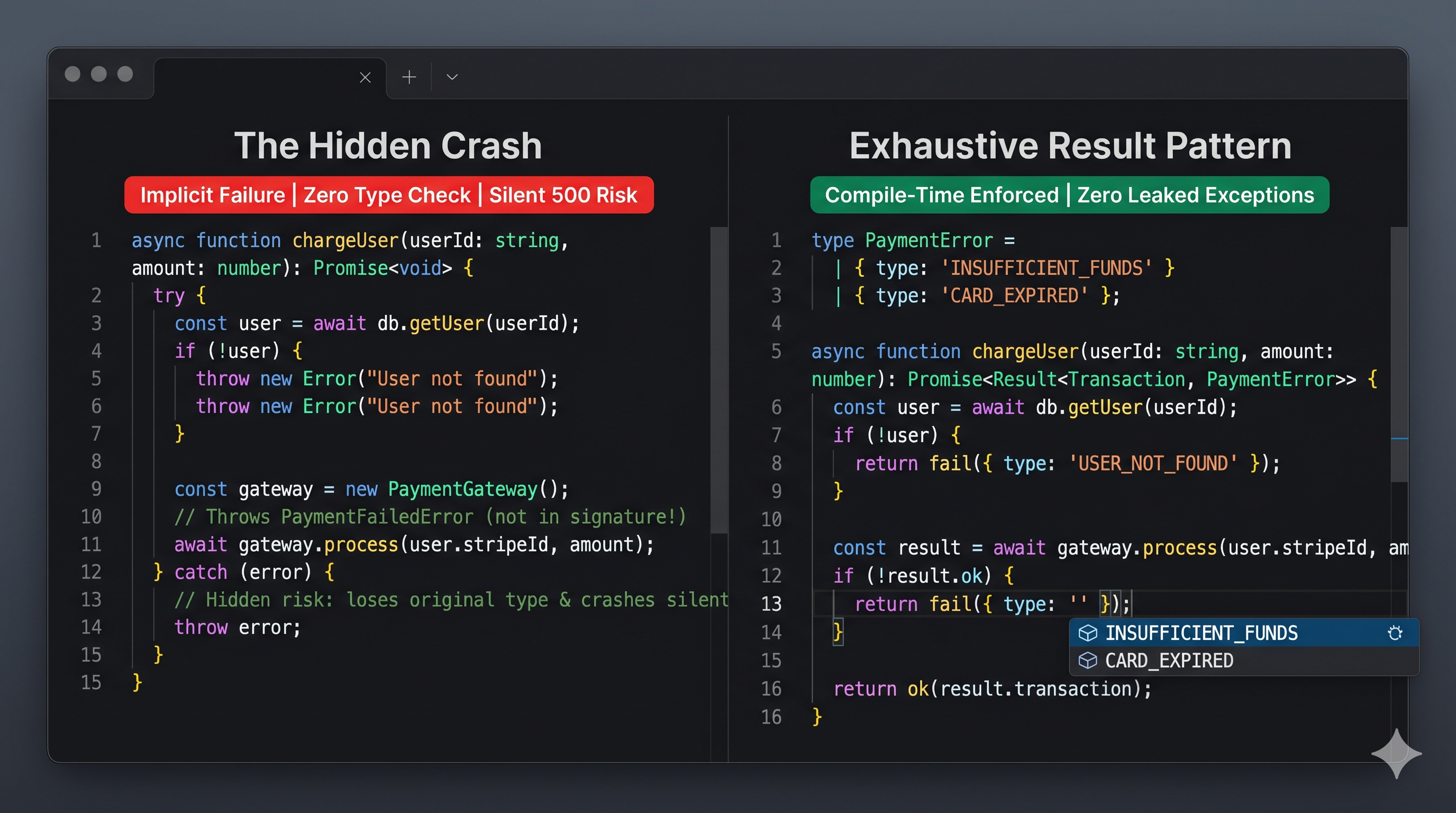 0 Comments 0 Shares 24 Views 0 Reviews
-
Eliminate Race Conditions and Boilerplate: How to Use Map.prototype.getOrInsert() in Modern JavaScript and TypeScript
Initializing missing keys in collections—whether managing grouping dictionaries, dependency graphs, or in-memory LRU request caches—has always required awkward defensive checks:
TypeScript
// ❌ The Verbose Pattern
if (!cache.has(userId)) {
cache.set(userId, []);
}
cache.get(userId)!.push(event);
This pattern forces two hash table lookups (.has() followed by .get()) and leaves concurrent code vulnerable to race conditions if asynchronous microtasks execute between key checking and value initialization.
The Modern Pattern: Atomic Key Initialization
Map.prototype.getOrInsert() (and its compute-on-demand sibling getOrInsertComputed()) resolves this by retrieving an existing value or inserting a default value in a single, atomic operation, returning the target reference immediately:
TypeScript
// ✅ The Modern Pattern
const sessions = new Map<string, SessionEvent[]>();
function recordEvent(userId: string, event: SessionEvent) {
// Returns existing array or inserts empty array and returns it in one step
sessions.getOrInsert(userId, []).push(event);
}
Handling Expensive Fallbacks with getOrInsertComputed()
Passing raw values like getOrInsert(key, []) allocates memory eagerly, even when the key already exists. For heavy objects or computational initializers, supply a callback function using getOrInsertComputed():
TypeScript
class QueryWorkerPool {
private workers = new Map<string, DedicatedWorker>();
getWorker(poolId: string): DedicatedWorker {
// Factory function executes ONLY if poolId is not present
return this.workers.getOrInsertComputed(poolId, (id) => {
return new DedicatedWorker({ workerPoolId: id, maxThreads: 4 });
});
}
}
Architectural Wins for Enterprise Codebases
O(1) Single Lookup Overhead: Cuts internal key hash operations in half by performing lookup and insertion in a single underlying runtime operation.
Deterministic Typing: TypeScript automatically infers the non-null, defined return type directly from the insertion payload, removing the need for non-null assertions (!) or type guards.
Cleaner Concurrency: Keeps map initialization deterministic across event-loop cycles without requiring custom mutexes or wrapper classes.
Discussion Question
Are you already targeting the latest ECMAScript features in your runtime runtimes (Node 22+, Bun, Deno, modern V8), or is polyfilling still a mandatory requirement in your production pipelines?
CTA
Join Developers & Coding to connect with modern software engineers, level up your language fundamentals, and write cleaner, production-grade code.Eliminate Race Conditions and Boilerplate: How to Use Map.prototype.getOrInsert() in Modern JavaScript and TypeScript Initializing missing keys in collections—whether managing grouping dictionaries, dependency graphs, or in-memory LRU request caches—has always required awkward defensive checks: TypeScript // ❌ The Verbose Pattern if (!cache.has(userId)) { cache.set(userId, []); } cache.get(userId)!.push(event); This pattern forces two hash table lookups (.has() followed by .get()) and leaves concurrent code vulnerable to race conditions if asynchronous microtasks execute between key checking and value initialization. The Modern Pattern: Atomic Key Initialization Map.prototype.getOrInsert() (and its compute-on-demand sibling getOrInsertComputed()) resolves this by retrieving an existing value or inserting a default value in a single, atomic operation, returning the target reference immediately: TypeScript // ✅ The Modern Pattern const sessions = new Map<string, SessionEvent[]>(); function recordEvent(userId: string, event: SessionEvent) { // Returns existing array or inserts empty array and returns it in one step sessions.getOrInsert(userId, []).push(event); } Handling Expensive Fallbacks with getOrInsertComputed() Passing raw values like getOrInsert(key, []) allocates memory eagerly, even when the key already exists. For heavy objects or computational initializers, supply a callback function using getOrInsertComputed(): TypeScript class QueryWorkerPool { private workers = new Map<string, DedicatedWorker>(); getWorker(poolId: string): DedicatedWorker { // Factory function executes ONLY if poolId is not present return this.workers.getOrInsertComputed(poolId, (id) => { return new DedicatedWorker({ workerPoolId: id, maxThreads: 4 }); }); } } Architectural Wins for Enterprise Codebases O(1) Single Lookup Overhead: Cuts internal key hash operations in half by performing lookup and insertion in a single underlying runtime operation. Deterministic Typing: TypeScript automatically infers the non-null, defined return type directly from the insertion payload, removing the need for non-null assertions (!) or type guards. Cleaner Concurrency: Keeps map initialization deterministic across event-loop cycles without requiring custom mutexes or wrapper classes. Discussion Question Are you already targeting the latest ECMAScript features in your runtime runtimes (Node 22+, Bun, Deno, modern V8), or is polyfilling still a mandatory requirement in your production pipelines? CTA Join Developers & Coding to connect with modern software engineers, level up your language fundamentals, and write cleaner, production-grade code.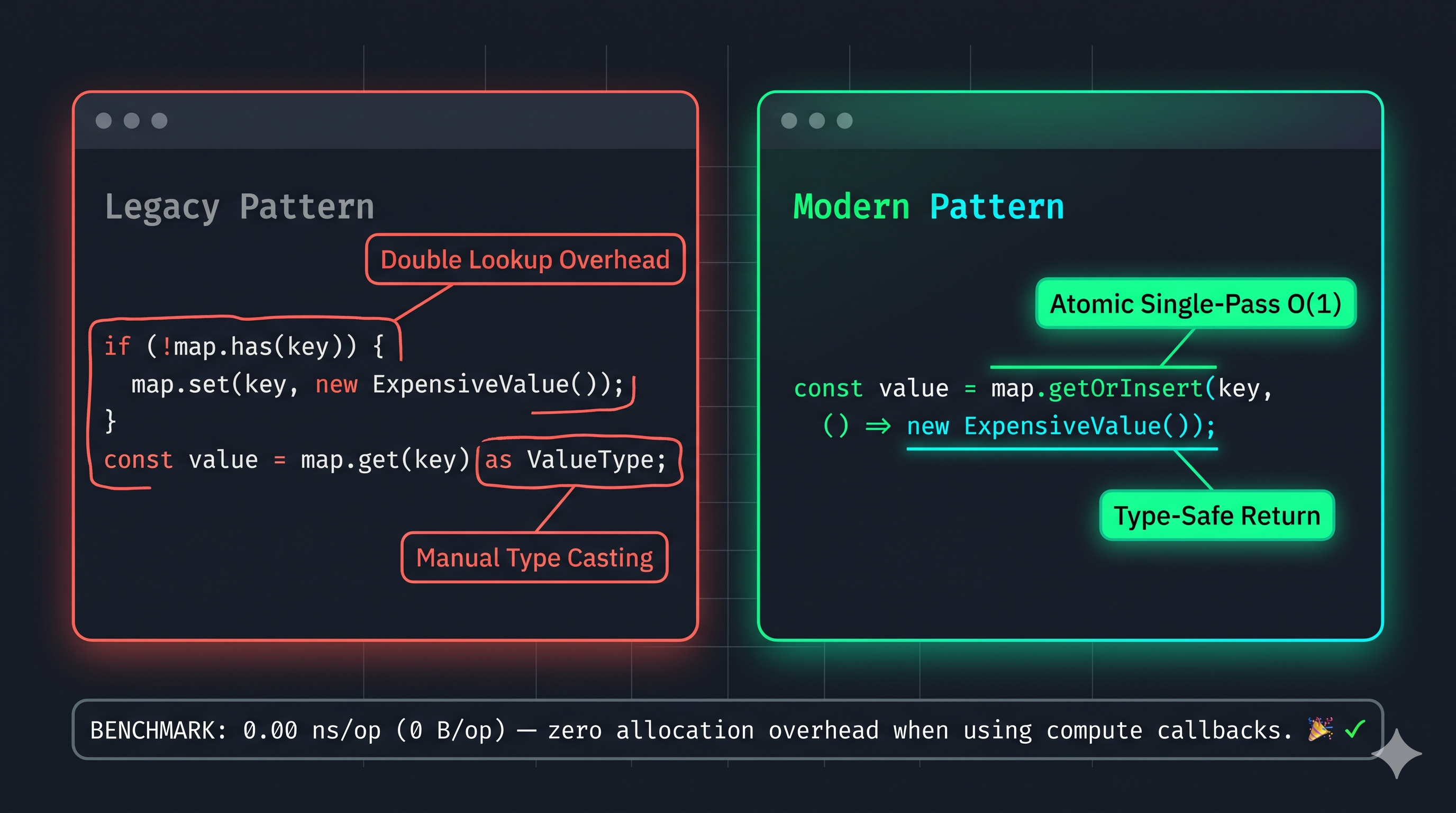 0 Comments 0 Shares 50 Views 0 Reviews
-
Taming Async Execution in Node.js: Why Promise.all() Might Be Killing Your Backend Performance
In the rush to optimize performance, it is easy to assume that launching all async tasks simultaneously is always faster. However, when you pass a large array of operations—such as scraping 150 URLs, querying APIs, or batching database writes—into Promise.all(), you create an instantaneous spike in concurrent connections.
Under heavy traffic, this brute-force approach leads to connection timeouts, severe memory bloat, and ECONNRESET errors.
To prevent concurrency cascading, backend developers must utilize Concurrent Pool Bottlenecking to constraint parallelism.
[ Array of 150 Async Tasks ]
│
▼
┌─────────────────────┐
│ Concurrency Limit │ (e.g., limit = 5)
└─────────────────────┘
│ │ │ │ │
▼ ▼ ▼ ▼ ▼ (Processing 5 at a time)
[ ][ ][ ][ ][ ]
│
(As task completes,
next is pulled in)
│
▼
[ Combined Results ]
💡 The Proactive Fix: Batching with a Concurrency Limit
Instead of firing 150 promises concurrently, use a controlled pipeline. Below is a lightweight, dependency-free pool implementation using native JS async/await:
JavaScript
async function asyncPool(limit, array, asyncFn) {
const results = [];
const executing = new Set(); // Track ongoing promises
for (const item of array) {
// Generate the promise and save its index
const p = Promise.resolve().then(() => asyncFn(item));
results.push(p);
executing.add(p);
// Clean up promise from executing pool when finished
const clean = () => executing.delete(p);
p.then(clean, clean);
// If limit is reached, wait for the fastest task to complete
if (executing.size >= limit) {
await Promise.race(executing);
}
}
return Promise.all(results);
}
// How to use it:
const urls = [...Array(150).keys()].map(i => `https://api.example.com/data/${i}`);
const fetchTask = async (url) => fetch(url).then(res => res.json());
// Max 5 concurrent fetches running at any given moment
const allData = await asyncPool(5, urls, fetchTask);
Why This Works Better:
Connection Congestion Relief: Avoids saturating your DB/HTTP client thread pools.
Controlled Failures: Prevents the whole process from immediately rejecting if a task fails midway (you can add try/catch bounds inside asyncFn).
Micro-Optimized Memory: Limits the simultaneous initialization of unresolved Promises waiting on I/O.
If you don't want to build a custom scheduler, production standard libraries like p-limit or chunk-based batches do the exact same job.
Architect your concurrency—don't hope for the best.
Discussion Question
How do you handle unconstrained async workflows in your stack? Do you rely on standard utility libraries like p-limit, use queue architectures (BullMQ), or handle throttle limits at the reverse proxy/network layer?
CTA
Ready to level up your asynchronous architecture and write highly performant, production-grade backend code? Join Developers & Coding at Techawks to trade optimization blueprints, tackle system bottlenecks, and build alongside a community of active engineers.Taming Async Execution in Node.js: Why Promise.all() Might Be Killing Your Backend Performance In the rush to optimize performance, it is easy to assume that launching all async tasks simultaneously is always faster. However, when you pass a large array of operations—such as scraping 150 URLs, querying APIs, or batching database writes—into Promise.all(), you create an instantaneous spike in concurrent connections. Under heavy traffic, this brute-force approach leads to connection timeouts, severe memory bloat, and ECONNRESET errors. To prevent concurrency cascading, backend developers must utilize Concurrent Pool Bottlenecking to constraint parallelism. [ Array of 150 Async Tasks ] │ ▼ ┌─────────────────────┐ │ Concurrency Limit │ (e.g., limit = 5) └─────────────────────┘ │ │ │ │ │ ▼ ▼ ▼ ▼ ▼ (Processing 5 at a time) [ ][ ][ ][ ][ ] │ (As task completes, next is pulled in) │ ▼ [ Combined Results ] 💡 The Proactive Fix: Batching with a Concurrency Limit Instead of firing 150 promises concurrently, use a controlled pipeline. Below is a lightweight, dependency-free pool implementation using native JS async/await: JavaScript async function asyncPool(limit, array, asyncFn) { const results = []; const executing = new Set(); // Track ongoing promises for (const item of array) { // Generate the promise and save its index const p = Promise.resolve().then(() => asyncFn(item)); results.push(p); executing.add(p); // Clean up promise from executing pool when finished const clean = () => executing.delete(p); p.then(clean, clean); // If limit is reached, wait for the fastest task to complete if (executing.size >= limit) { await Promise.race(executing); } } return Promise.all(results); } // How to use it: const urls = [...Array(150).keys()].map(i => `https://api.example.com/data/${i}`); const fetchTask = async (url) => fetch(url).then(res => res.json()); // Max 5 concurrent fetches running at any given moment const allData = await asyncPool(5, urls, fetchTask); Why This Works Better: Connection Congestion Relief: Avoids saturating your DB/HTTP client thread pools. Controlled Failures: Prevents the whole process from immediately rejecting if a task fails midway (you can add try/catch bounds inside asyncFn). Micro-Optimized Memory: Limits the simultaneous initialization of unresolved Promises waiting on I/O. If you don't want to build a custom scheduler, production standard libraries like p-limit or chunk-based batches do the exact same job. Architect your concurrency—don't hope for the best. Discussion Question How do you handle unconstrained async workflows in your stack? Do you rely on standard utility libraries like p-limit, use queue architectures (BullMQ), or handle throttle limits at the reverse proxy/network layer? CTA Ready to level up your asynchronous architecture and write highly performant, production-grade backend code? Join Developers & Coding at Techawks to trade optimization blueprints, tackle system bottlenecks, and build alongside a community of active engineers.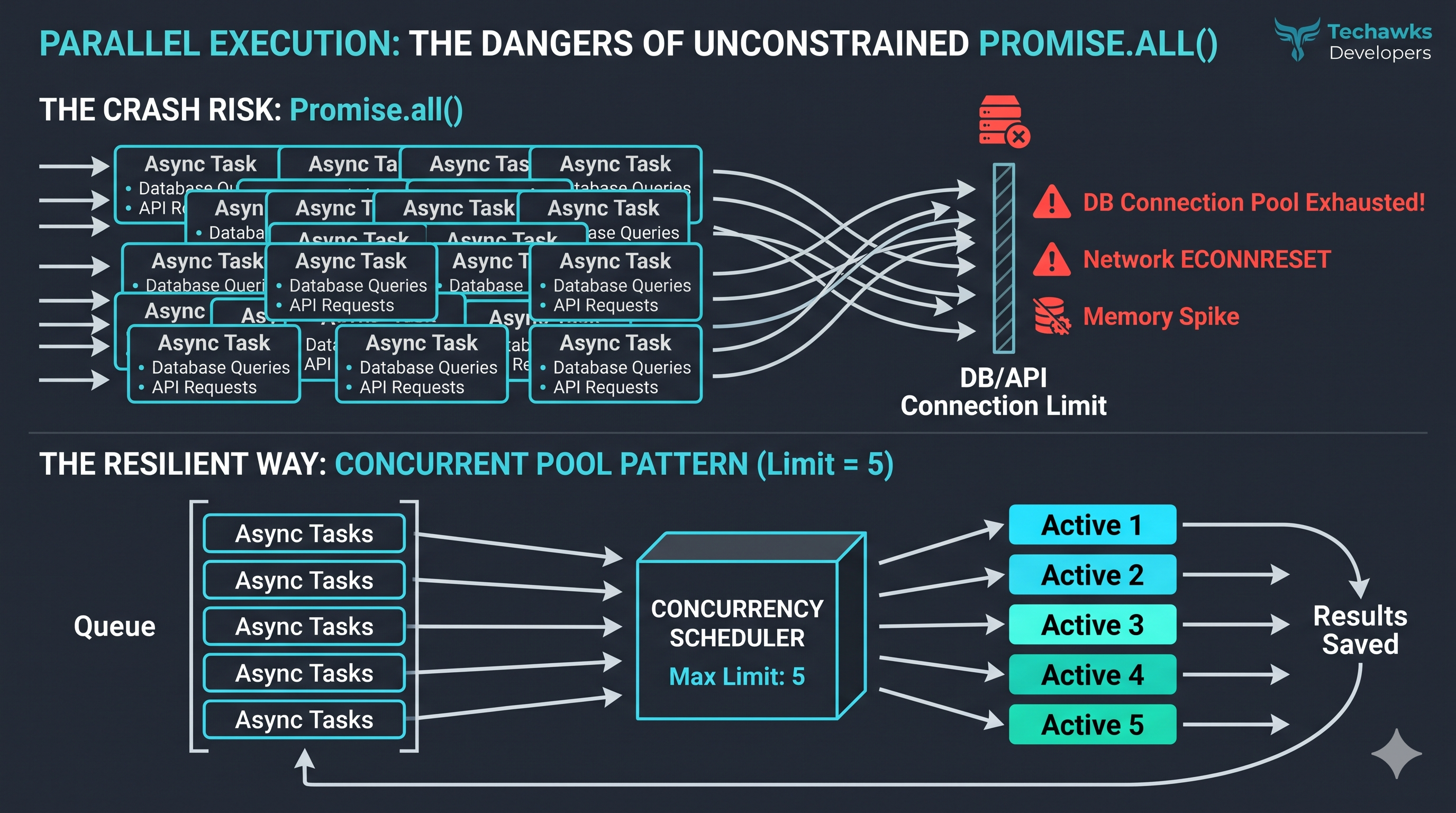 0 Comments 0 Shares 70 Views 0 Reviews
-
Designing Resilient Asynchronous Workflows: The Developer’s Checklist for Outbox and Idempotency Patterns
In distributed architectures, developers frequently face the challenge of updating a local datastore and notifying other services of that change. Combining these two operations into a single API endpoint without safety boundaries is an anti-pattern. If the database transaction fails, you might still send the event; if the message broker is unreachable, you leave your system in an inconsistent, orphaned state.
To guarantee that your outbound messages are always sent (at-least-once delivery) and processed without duplication (exactly-once processing), you must "shift-left" transaction boundaries using the Transactional Outbox and Consumer Idempotency patterns.
Plaintext
[ ANTI-PATTERN: UNGUARDED DISTRIBUTED TRANS ]
Postgres (Insert User) ──(Commit)──> SUCCESS ──> Kafka (Publish Event) ──(Network Timeout)──> LOST EVENT (SILENT OUTAGE)
[ RESILIENT PATTERN: TRANSACTIONAL OUTBOX ]
API ──> Postgres: BEGIN TRANSACTION
├── Insert User Data
└── Write to 'outbox' table (Event payload + Pending state)
Postgres: COMMIT (Atomic)
│
└──> Async Outbox Poller/Debezium ──> Publishes to Kafka ──> ACK ──> Mark Outbox Sent
[ DOWNSTREAM CONSUMER: IDEMPOTENCY GATEWAY ]
Kafka Consumer ──> Idempotency Check (Check Key in Redis/DB) ──[ NOT PROCESSED ]──> Process Event & Save Idempotency Key ──> ACK
└──[ ALREADY PROCESSED ]──> ACK & SKIP (ZERO DUPLICATES)
Here is your production-grade developer checklist for hardening asynchronous communication:
1. Publisher-Side Reliability (The Outbox Pattern)
[ ] Atomic Local Transactions: Always write your entity data and your outbound event payload into the same relational database under a single database transaction (BEGIN ... COMMIT).
[ ] Dedicated Outbox Store: Maintain an outbox table containing fields like id (UUID), aggregate_type, aggregate_id, payload (JSON), and status (PENDING, SENT).
[ ] Asynchronous Message Relay: Implement an isolated background poller (such as a CDC tool like Debezium or a worker using SELECT ... FOR UPDATE SKIP LOCKED) that picks up PENDING messages, publishes them to your broker, and updates the state to SENT upon receiving an ACK.
2. Subscriber-Side Hardening (Consumer Idempotency)
[ ] Immutable Event ID Generation: Ensure every published event contains a unique, deterministic identifier (like event_id or a combination of source + action + id) that persists through retries.
[ ] Centralized Idempotency Storage: Keep a fast-access transactional store (like Redis, PostgreSQL, or DynamoDB) to register processed event IDs.
[ ] Check-Before-Execution Validation: In your consumer logic, run an atomic lookup on the idempotency key (e.g., using INSERT ON CONFLICT DO NOTHING or Redis SETNX) before executing any downstream business logic.
3. Exception Handling and Operational Visibility
[ ] Exponential Backoff and Retries: Configure your background poller and consumers with exponential backoff and jitter to prevent cascading failures during message broker outages.
[ ] Dead-Letter Queue (DLQ) Fallbacks: Set a retry limit. Once an event fails processing repeatedly, route it to an isolated DLQ for manual analysis, rather than blocking the partition or worker.
[ ] Distributed Tracing & Correlation IDs: Inject a global correlation_id into all outbox payloads and carry it through message broker headers to enable end-to-end trace mapping in APM tools.
Discussion Question
When you implement idempotency in your consumers, do you prefer using a Redis-based distributed lock/cache, or do you leverage transactional unique database constraints in your primary database? What are the latency and storage trade-offs you have faced?
CTA
Join Developers & Coding — Connect with software engineers, database administrators, and application architects to access code blueprints, system design patterns, and debugging guides built for the global developer community.Designing Resilient Asynchronous Workflows: The Developer’s Checklist for Outbox and Idempotency Patterns In distributed architectures, developers frequently face the challenge of updating a local datastore and notifying other services of that change. Combining these two operations into a single API endpoint without safety boundaries is an anti-pattern. If the database transaction fails, you might still send the event; if the message broker is unreachable, you leave your system in an inconsistent, orphaned state. To guarantee that your outbound messages are always sent (at-least-once delivery) and processed without duplication (exactly-once processing), you must "shift-left" transaction boundaries using the Transactional Outbox and Consumer Idempotency patterns. Plaintext [ ANTI-PATTERN: UNGUARDED DISTRIBUTED TRANS ] Postgres (Insert User) ──(Commit)──> SUCCESS ──> Kafka (Publish Event) ──(Network Timeout)──> LOST EVENT (SILENT OUTAGE) [ RESILIENT PATTERN: TRANSACTIONAL OUTBOX ] API ──> Postgres: BEGIN TRANSACTION ├── Insert User Data └── Write to 'outbox' table (Event payload + Pending state) Postgres: COMMIT (Atomic) │ └──> Async Outbox Poller/Debezium ──> Publishes to Kafka ──> ACK ──> Mark Outbox Sent [ DOWNSTREAM CONSUMER: IDEMPOTENCY GATEWAY ] Kafka Consumer ──> Idempotency Check (Check Key in Redis/DB) ──[ NOT PROCESSED ]──> Process Event & Save Idempotency Key ──> ACK └──[ ALREADY PROCESSED ]──> ACK & SKIP (ZERO DUPLICATES) Here is your production-grade developer checklist for hardening asynchronous communication: 1. Publisher-Side Reliability (The Outbox Pattern) [ ] Atomic Local Transactions: Always write your entity data and your outbound event payload into the same relational database under a single database transaction (BEGIN ... COMMIT). [ ] Dedicated Outbox Store: Maintain an outbox table containing fields like id (UUID), aggregate_type, aggregate_id, payload (JSON), and status (PENDING, SENT). [ ] Asynchronous Message Relay: Implement an isolated background poller (such as a CDC tool like Debezium or a worker using SELECT ... FOR UPDATE SKIP LOCKED) that picks up PENDING messages, publishes them to your broker, and updates the state to SENT upon receiving an ACK. 2. Subscriber-Side Hardening (Consumer Idempotency) [ ] Immutable Event ID Generation: Ensure every published event contains a unique, deterministic identifier (like event_id or a combination of source + action + id) that persists through retries. [ ] Centralized Idempotency Storage: Keep a fast-access transactional store (like Redis, PostgreSQL, or DynamoDB) to register processed event IDs. [ ] Check-Before-Execution Validation: In your consumer logic, run an atomic lookup on the idempotency key (e.g., using INSERT ON CONFLICT DO NOTHING or Redis SETNX) before executing any downstream business logic. 3. Exception Handling and Operational Visibility [ ] Exponential Backoff and Retries: Configure your background poller and consumers with exponential backoff and jitter to prevent cascading failures during message broker outages. [ ] Dead-Letter Queue (DLQ) Fallbacks: Set a retry limit. Once an event fails processing repeatedly, route it to an isolated DLQ for manual analysis, rather than blocking the partition or worker. [ ] Distributed Tracing & Correlation IDs: Inject a global correlation_id into all outbox payloads and carry it through message broker headers to enable end-to-end trace mapping in APM tools. Discussion Question When you implement idempotency in your consumers, do you prefer using a Redis-based distributed lock/cache, or do you leverage transactional unique database constraints in your primary database? What are the latency and storage trade-offs you have faced? CTA Join Developers & Coding — Connect with software engineers, database administrators, and application architects to access code blueprints, system design patterns, and debugging guides built for the global developer community. 0 Comments 0 Shares 256 Views 0 Reviews
-
Stop Writing Defensive Nil Checks: Why Invariant Contracts Beat Null Guard Sprawl
Modern production services spend an absurd amount of CPU cycles and developer cognitive overhead defensively verifying data that should have been structurally impossible to invalidate in the first place.When every nested layer of a service re-validates the same inputs, two critical problems emerge:Silent Fallback Hazards: Falling back to empty lists, default zeros, or swallowing null deep in the call stack defers failure to downstream systems where root-cause tracing is nearly impossible.Cognitive Noise in Code Reviews: Business logic drowns in guard clauses. The real operational contract is hidden beneath defensive boilerplate.The Core Shift: Parse, Don't ValidateValidation is verifying a boolean property. Parsing is transforming data into a type that fundamentally guarantees that property across the remainder of the execution pipeline.[ Unchecked Input / Payload ]
│
▼
┌───────────────────────┐
│ Ingestion Boundary │ ──► Parse directly into Branded / Refined Types
│ (Single Parse Gate) │ (e.g., NonEmptyList, PositiveInt, ValidatedUUID)
└───────────────────────┘
│
▼
┌───────────────────────┐
│ Pure Core Domain │ ──► Zero defensive checks needed.
│ (Zero Null Checks) │ Compiler-enforced valid state by definition.
└───────────────────────┘
How to apply this to your codebase:Replace Primitive Types with Invariant Wrappers: Stop passing raw String or int parameters for sensitive domain identifiers. A UserId or CurrencyAmount class that asserts validity during instantiation guarantees that downstream methods never have to re-verify formatting, range, or nullity.Enforce Preconditions at Language Boundaries: Instead of sprinkling manual if-statements across internal functions, adopt formal Preconditions and Invariant Contracts. If a function cannot proceed without a valid state, fail fast at the boundary rather than returning a nullable result that forces the caller into another defensive branch.
Make the Invalid State Unrepresentable: If a user account cannot exist without a verified email in state $B$, do not make verifiedEmail an optional field on a monolithic User object. Represent states explicitly through algebraic data types (enums or sealed classes): PendingUser vs. VerifiedUser.
When the type system carries the invariant, your runtime no longer has to guess.
Discussion Question
What is your team’s policy on internal defensive checks—do you enforce fail-fast preconditions at the boundary, or let defensive null checks run through every service layer?
CTA (Join Developers & Coding)
Join the Techawks Developers community to level up your software architecture, tackle hard engineering challenges, and build production-grade systems alongside top engineers. Drop your perspective in the comments below.Stop Writing Defensive Nil Checks: Why Invariant Contracts Beat Null Guard Sprawl Modern production services spend an absurd amount of CPU cycles and developer cognitive overhead defensively verifying data that should have been structurally impossible to invalidate in the first place.When every nested layer of a service re-validates the same inputs, two critical problems emerge:Silent Fallback Hazards: Falling back to empty lists, default zeros, or swallowing null deep in the call stack defers failure to downstream systems where root-cause tracing is nearly impossible.Cognitive Noise in Code Reviews: Business logic drowns in guard clauses. The real operational contract is hidden beneath defensive boilerplate.The Core Shift: Parse, Don't ValidateValidation is verifying a boolean property. Parsing is transforming data into a type that fundamentally guarantees that property across the remainder of the execution pipeline.[ Unchecked Input / Payload ] │ ▼ ┌───────────────────────┐ │ Ingestion Boundary │ ──► Parse directly into Branded / Refined Types │ (Single Parse Gate) │ (e.g., NonEmptyList, PositiveInt, ValidatedUUID) └───────────────────────┘ │ ▼ ┌───────────────────────┐ │ Pure Core Domain │ ──► Zero defensive checks needed. │ (Zero Null Checks) │ Compiler-enforced valid state by definition. └───────────────────────┘ How to apply this to your codebase:Replace Primitive Types with Invariant Wrappers: Stop passing raw String or int parameters for sensitive domain identifiers. A UserId or CurrencyAmount class that asserts validity during instantiation guarantees that downstream methods never have to re-verify formatting, range, or nullity.Enforce Preconditions at Language Boundaries: Instead of sprinkling manual if-statements across internal functions, adopt formal Preconditions and Invariant Contracts. If a function cannot proceed without a valid state, fail fast at the boundary rather than returning a nullable result that forces the caller into another defensive branch. Make the Invalid State Unrepresentable: If a user account cannot exist without a verified email in state $B$, do not make verifiedEmail an optional field on a monolithic User object. Represent states explicitly through algebraic data types (enums or sealed classes): PendingUser vs. VerifiedUser. When the type system carries the invariant, your runtime no longer has to guess. Discussion Question What is your team’s policy on internal defensive checks—do you enforce fail-fast preconditions at the boundary, or let defensive null checks run through every service layer? CTA (Join Developers & Coding) Join the Techawks Developers community to level up your software architecture, tackle hard engineering challenges, and build production-grade systems alongside top engineers. Drop your perspective in the comments below.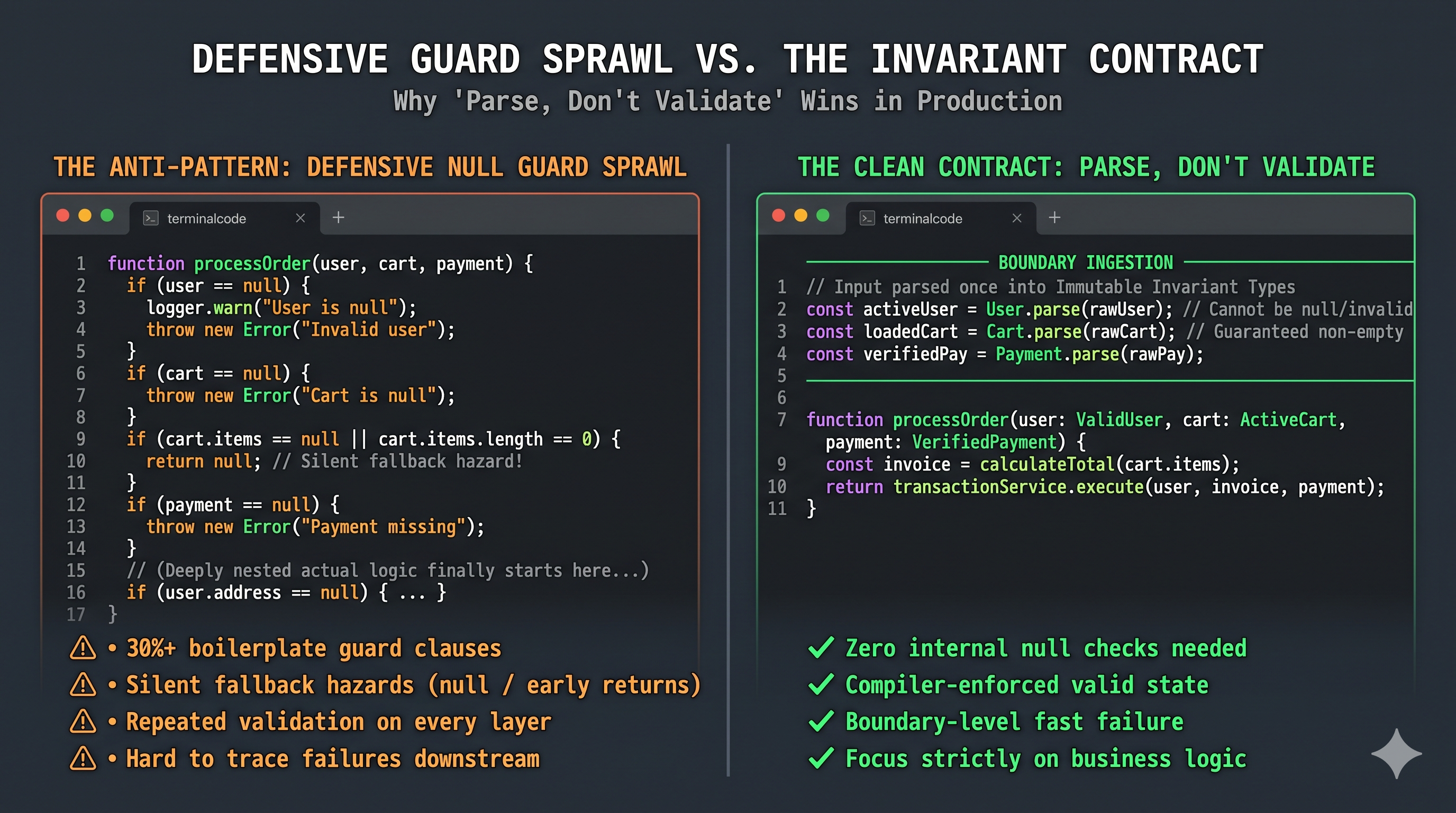 0 Comments 0 Shares 49 Views 0 Reviews
-
Async/Await Does Not Make Code Run in Parallel: The Concurrency vs. Parallelism Reality
As developers scale asynchronous runtimes (Node.js/V8, Python asyncio, Go runtimes, or Rust tokio), one of the most persistent misconceptions across backend engineering is: "async/await runs tasks in parallel."
Here is why confusing concurrency with parallelism degrades performance in high-throughput applications:
Myth vs Fact
Myth: Wrapping a slow computational function in async and awaiting it runs the task on another core, preventing latency spikes for other users.
Fact: async/await provides concurrency, not parallelism. It enables cooperative multitasking over I/O-bound wait cycles on an event loop or worker thread pool. A CPU-heavy synchronous loop inside an async function monopolizes the execution thread and halts the entire runtime tick.
The Core Problem: The Thread-Starvation Trap
Concurrency is about structure (handling multiple things at once); parallelism is about execution (doing multiple things at the same physical instant across CPU cores).
When an asynchronous routine issues an I/O request (a PostgreSQL query, an HTTP fetch, or a disk read), it registers a callback or future, yields its execution context back to the event loop, and frees the thread to process incoming requests.
However, if you place intensive computation (JSON serialization of gigabyte payloads, image transformations, cryptographic hashing, or large array sorting) inside an async function:
The Event Loop Freezes: Because the task does not yield (it performs no non-blocking I/O), no other incoming traffic can be processed.
Cascading Health-Check Failures: Readiness probes and ping endpoints time out because their handlers are queued behind the CPU-bound task.
P99 Latency Explodes: Concurrency collapses into a sequential, head-of-line blocking bottleneck.
What to Implement Instead: Proper Workload Isolation
Keep Async Strictly for Non-Blocking I/O: Use native non-blocking network sockets and database drivers that release the thread while waiting for kernel socket notifications (e.g., epoll, kqueue, io_uring).
Offload CPU-Bound Tasks to OS Worker Pools: Dispatch compute workloads outside the primary event loop using separate processes or OS-managed worker thread pools (e.g., Node.js worker_threads, Python ProcessPoolExecutor, Go goroutines scheduled across GOMAXPROCS cores).
Implement Explicit Cooperative Chunking: When long-running calculations must stay in the main loop, explicitly break the operation into discrete batches and yield back to the scheduler using zero-delay timers or microtask yields (e.g., await setImmediate() or await asyncio.sleep(0)).
Discussion Question
How does your team detect and prevent CPU-bound tasks from quietly blocking your primary backend event loops during peak production traffic?
CTA (Join Developers & Coding)
Ready to build bulletproof backend systems, master low-level runtime internals, and write cleaner, high-performance code? Join the Techawks Developers & Coding Community to connect with top engineers, review real-world system designs, and debug alongside peers.Async/Await Does Not Make Code Run in Parallel: The Concurrency vs. Parallelism Reality As developers scale asynchronous runtimes (Node.js/V8, Python asyncio, Go runtimes, or Rust tokio), one of the most persistent misconceptions across backend engineering is: "async/await runs tasks in parallel." Here is why confusing concurrency with parallelism degrades performance in high-throughput applications: Myth vs Fact Myth: Wrapping a slow computational function in async and awaiting it runs the task on another core, preventing latency spikes for other users. Fact: async/await provides concurrency, not parallelism. It enables cooperative multitasking over I/O-bound wait cycles on an event loop or worker thread pool. A CPU-heavy synchronous loop inside an async function monopolizes the execution thread and halts the entire runtime tick. The Core Problem: The Thread-Starvation Trap Concurrency is about structure (handling multiple things at once); parallelism is about execution (doing multiple things at the same physical instant across CPU cores). When an asynchronous routine issues an I/O request (a PostgreSQL query, an HTTP fetch, or a disk read), it registers a callback or future, yields its execution context back to the event loop, and frees the thread to process incoming requests. However, if you place intensive computation (JSON serialization of gigabyte payloads, image transformations, cryptographic hashing, or large array sorting) inside an async function: The Event Loop Freezes: Because the task does not yield (it performs no non-blocking I/O), no other incoming traffic can be processed. Cascading Health-Check Failures: Readiness probes and ping endpoints time out because their handlers are queued behind the CPU-bound task. P99 Latency Explodes: Concurrency collapses into a sequential, head-of-line blocking bottleneck. What to Implement Instead: Proper Workload Isolation Keep Async Strictly for Non-Blocking I/O: Use native non-blocking network sockets and database drivers that release the thread while waiting for kernel socket notifications (e.g., epoll, kqueue, io_uring). Offload CPU-Bound Tasks to OS Worker Pools: Dispatch compute workloads outside the primary event loop using separate processes or OS-managed worker thread pools (e.g., Node.js worker_threads, Python ProcessPoolExecutor, Go goroutines scheduled across GOMAXPROCS cores). Implement Explicit Cooperative Chunking: When long-running calculations must stay in the main loop, explicitly break the operation into discrete batches and yield back to the scheduler using zero-delay timers or microtask yields (e.g., await setImmediate() or await asyncio.sleep(0)). Discussion Question How does your team detect and prevent CPU-bound tasks from quietly blocking your primary backend event loops during peak production traffic? CTA (Join Developers & Coding) Ready to build bulletproof backend systems, master low-level runtime internals, and write cleaner, high-performance code? Join the Techawks Developers & Coding Community to connect with top engineers, review real-world system designs, and debug alongside peers.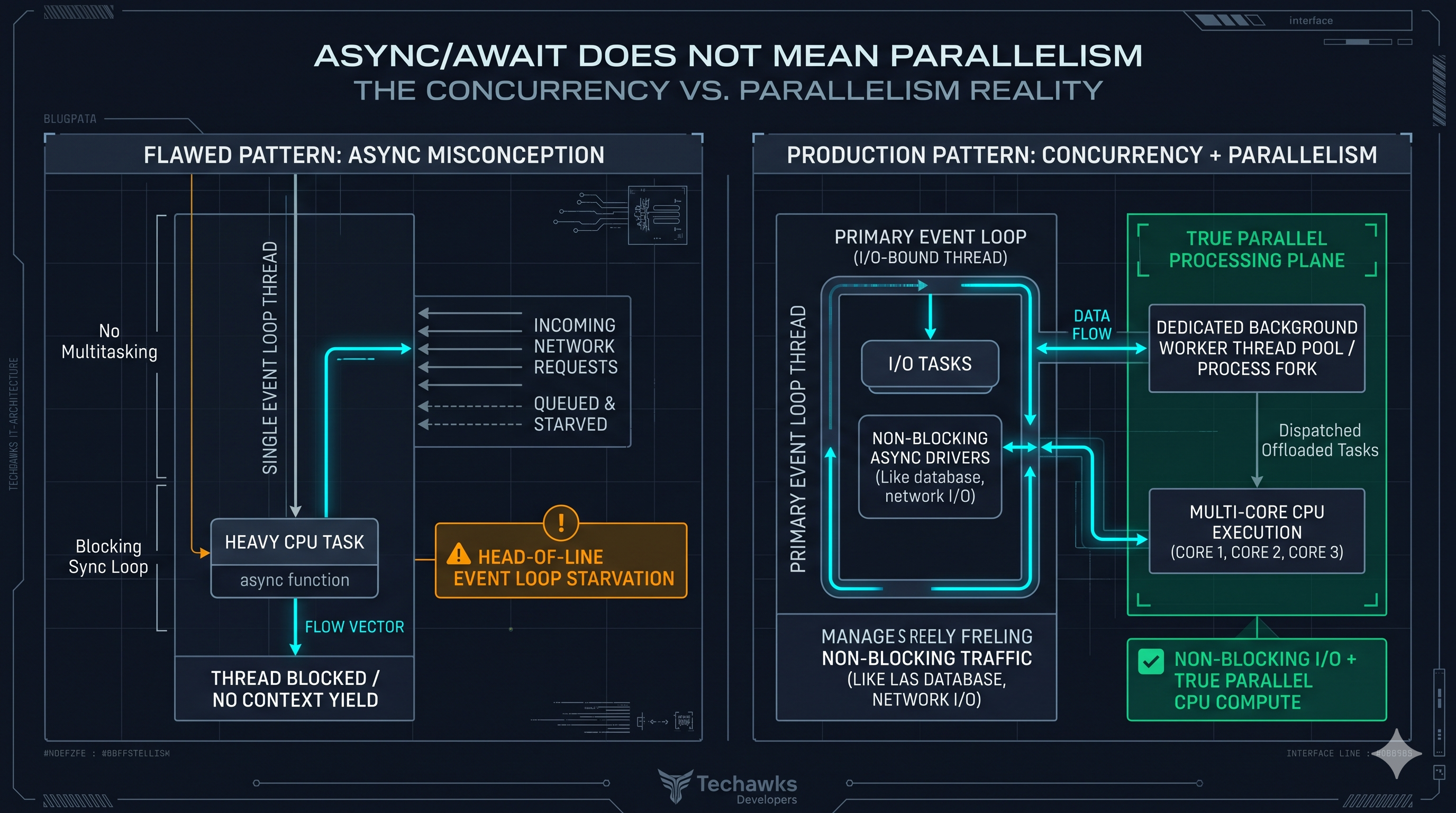 0 Comments 0 Shares 70 Views 0 Reviews
-
Tool Teardown: Why Advanced TS Codebases Are Ditching Transpilation and Running TypeScript Natively in Production
We spent the past week auditing modern Javascript & TypeScript runtime environments—specifically examining how team architectures are fundamentally changing with standard JS runtimes (like Node.js, Bun, and Deno) introducing native, fast TypeScript execution.
With Node.js having stabilized its --experimental-strip-types and --watch behaviors, alongside Deno 2.x and Bun natively interpreting TypeScript, the era of managing heavy tsc, ts-loader, and complex tsconfig.json build chains just for internal deployment is rapidly ending.
Here is the fundamental systems breakdown:
Systems Architecture: Native In-Memory Strip vs. Legacy Transpilation Build
Plaintext
[ ANTI-PATTERN: LEGACY TRANSPILE-TO-BUILD RUNTIME ]
Source (.ts) ➔ tsc / Build Step ➔ Emit Disk (.js & .map) ➔ Node Engine ➔ Run Disk File ➔ Disk Reads (I/O)
(Slow CI Bottleneck) (Complex Build Config) (Extra Map Debugging) (Runtime Phase) (Disk I/O Overhead)
[ RESILIENT PATTERN: NATIVE RUNTIME (IN-PROCESS TYPE STRIPPING) ]
Source (.ts) ➔ JSR / Node Runtime (Type Stripping) ➔ Native Execution in Memory ➔ Running Process (No Map, No Build Step)
(Zero Dev-Time Wait) (Fast In-Memory Lexing) (Fast SIMD Execution) (Direct Line Debugging)
Why it Matters (The Shift)
Traditionally, running TypeScript meant building a pipeline that converted TypeScript into JavaScript. This required building, writing, and deploying .js assets, configuring complex source maps for debug call stacks, and handling bloated Docker container image layers with build tools and redundant node_modules.
Native execution runtimes remove this middle layer entirely. By adopting fast Rust or Go-based transpilations directly inside the execution engine, standard runtimes run .ts files on the fly. In production environments, Node/Bun/Deno perform a high-speed "type-stripping" pass—discarding annotation tokens instantly with zero type-checking and passing the direct Javascript to V8 or JavaScriptCore. It cuts development feedback loops to zero and slashes CI pipeline build runtimes.
How to Leverage This (Step-by-Step)
Leverage Lightweight Type Stripping (No Checking in Production)
Don't use TypeScript’s heavily resource-intensive compiler tsc to inspect types on production servers. Strip types on the fly.
To run native TypeScript instantly with Node 22.x/23.x+:
Bash
node --experimental-strip-types index.ts
Note: Native runtimes purposely skip type checking for speed. You must run your type checking (tsc --noEmit) as an isolated, asynchronous verification step in your CI lint pipeline, separate from your run-time code.
Migrate to Modern Package Execution
For utility scripts and CLI actions, bypass intermediate generation steps by switching from slow, heavy runners like ts-node or tsnd to native modern alternatives:
Bash
bun run index.ts
# OR
deno run index.ts
Simplify Your Source Map Mapping
When utilizing in-memory parsing, tracking where things break becomes transparent. Avoid multi-step transpile compilation debug chains. If you are using native runtimes, debugging stays 1:1 against your actual .ts source because the runtime handles the in-memory line mapping, eliminating misaligned source-map mapping errors.
Discussion Question
Have you migrated your production or internal tooling workflows to run TypeScript natively through Node’s type stripping, Bun, or Deno? Or are you keeping a deterministic build step to inspect and optimize generated JS before execution? What have been your pipeline and debugging trade-offs?
CTA (Join Developers & Coding)
Want to master modern runtime execution, simplify compilation chains, and write lightning-fast application backends?
👉 Join Developers & Coding to collaborate with senior engineers, break down modern compilers, and build robust software.Tool Teardown: Why Advanced TS Codebases Are Ditching Transpilation and Running TypeScript Natively in Production We spent the past week auditing modern Javascript & TypeScript runtime environments—specifically examining how team architectures are fundamentally changing with standard JS runtimes (like Node.js, Bun, and Deno) introducing native, fast TypeScript execution. With Node.js having stabilized its --experimental-strip-types and --watch behaviors, alongside Deno 2.x and Bun natively interpreting TypeScript, the era of managing heavy tsc, ts-loader, and complex tsconfig.json build chains just for internal deployment is rapidly ending. Here is the fundamental systems breakdown: Systems Architecture: Native In-Memory Strip vs. Legacy Transpilation Build Plaintext [ ANTI-PATTERN: LEGACY TRANSPILE-TO-BUILD RUNTIME ] Source (.ts) ➔ tsc / Build Step ➔ Emit Disk (.js & .map) ➔ Node Engine ➔ Run Disk File ➔ Disk Reads (I/O) (Slow CI Bottleneck) (Complex Build Config) (Extra Map Debugging) (Runtime Phase) (Disk I/O Overhead) [ RESILIENT PATTERN: NATIVE RUNTIME (IN-PROCESS TYPE STRIPPING) ] Source (.ts) ➔ JSR / Node Runtime (Type Stripping) ➔ Native Execution in Memory ➔ Running Process (No Map, No Build Step) (Zero Dev-Time Wait) (Fast In-Memory Lexing) (Fast SIMD Execution) (Direct Line Debugging) Why it Matters (The Shift) Traditionally, running TypeScript meant building a pipeline that converted TypeScript into JavaScript. This required building, writing, and deploying .js assets, configuring complex source maps for debug call stacks, and handling bloated Docker container image layers with build tools and redundant node_modules. Native execution runtimes remove this middle layer entirely. By adopting fast Rust or Go-based transpilations directly inside the execution engine, standard runtimes run .ts files on the fly. In production environments, Node/Bun/Deno perform a high-speed "type-stripping" pass—discarding annotation tokens instantly with zero type-checking and passing the direct Javascript to V8 or JavaScriptCore. It cuts development feedback loops to zero and slashes CI pipeline build runtimes. How to Leverage This (Step-by-Step) Leverage Lightweight Type Stripping (No Checking in Production) Don't use TypeScript’s heavily resource-intensive compiler tsc to inspect types on production servers. Strip types on the fly. To run native TypeScript instantly with Node 22.x/23.x+: Bash node --experimental-strip-types index.ts Note: Native runtimes purposely skip type checking for speed. You must run your type checking (tsc --noEmit) as an isolated, asynchronous verification step in your CI lint pipeline, separate from your run-time code. Migrate to Modern Package Execution For utility scripts and CLI actions, bypass intermediate generation steps by switching from slow, heavy runners like ts-node or tsnd to native modern alternatives: Bash bun run index.ts # OR deno run index.ts Simplify Your Source Map Mapping When utilizing in-memory parsing, tracking where things break becomes transparent. Avoid multi-step transpile compilation debug chains. If you are using native runtimes, debugging stays 1:1 against your actual .ts source because the runtime handles the in-memory line mapping, eliminating misaligned source-map mapping errors. Discussion Question Have you migrated your production or internal tooling workflows to run TypeScript natively through Node’s type stripping, Bun, or Deno? Or are you keeping a deterministic build step to inspect and optimize generated JS before execution? What have been your pipeline and debugging trade-offs? CTA (Join Developers & Coding) Want to master modern runtime execution, simplify compilation chains, and write lightning-fast application backends? 👉 Join Developers & Coding to collaborate with senior engineers, break down modern compilers, and build robust software. 0 Comments 0 Shares 122 Views 0 Reviews
-
AI Assistant Over-Reliance: The Silent Path to Codebase Decay and Career Stagnation
Generative AI and auto-complete tools have made bootstrapping code trivial. However, a high-velocity feature delivery pipeline built on unscrutinized "copied-and-accepted" model suggestions introduces cascading systemic problems:
Architectural Fragmentation: Incoherent design patterns and duplicate implementations across boundaries, leading to codebase bloat.
Micro-Boundary Drifts: Edge-case bugs, silent logic shifts, and outdated dependencies masquerading as working patterns.
Mental Model Erosion: The "I’ll run it and see" debug loop replaces a baseline understanding of distributed execution paths and memory boundaries.
When you don’t fully trace, evaluate, and configure your code, you create a system that can only fail gracefully in theory, but entirely fails in production.
Plaintext
[ ANTI-PATTERN: The Passive Developer "Accept-Tab" Trap ]
AI Snippet Suggestion ──(Rapid blind accept)──> Massive Codebase ──(Untested dependency drift)──> Brittle production
[ RESILIENT PATTERN: Context-Engaged "Context Engineering" Pipeline ]
User Spec ──> Explicit Context Injection (.github/copilot-instructions.md / Custom Rules)
│
▼
[ AI Code Engine (VS Code / IDE Core) ]
│ (Contextual Code Gen)
▼
[ Multi-Tier Guardrails ]
├── (Human Review) ──> Question Architecture & Edge Cases
└── (Automated Boundary Test) ─> Write Contract-First Tests ──> Local Validation Run
│
└──> Merge with CI/CD Eval
3 Engineering Practices to Reclaim Your Context and Code Quality:
Implement Hard Context Engineering (.github/copilot-instructions.md)
Your tools should adapt to your architecture, not the other way around. Author declarative, repository-level guidelines (for example, .github/copilot-instructions.md or VS Code Workspace settings) specifying strict architectural patterns, mandatory logging standards, and API boundaries. Ensure generated boilerplate is bounded by your team's design choices, not random Internet patterns.
Run Contract-First, Spec-Driven Reviews Before Writing Code
Before accepting inline generations, write the test spec or boundary contract first. Ensure you have targeted unit tests verifying inputs, failures, and expected state transformations. If a block of code doesn’t align with these tests right away, reject or refactor it immediately.
Treat Inline Auto-Completes Like Legacy Dependencies
Every auto-generated block is foreign logic that you, the engineer, now own. Never approve or merge a pull request featuring code you cannot explain step-by-step. Break down complex suggestions, trace execution paths, and proactively strip out any unnecessary logic before it enters your code branches.
Discussion Question
What’s the most subtle or damaging bug you've ever had to debug that was introduced because an engineer blindly accepted an AI code suggest?
CTA
Ready to develop deeper architectural mastery and make code generation work for you rather than against you? Join our Developers & Coding Community to exchange systems design patterns, debugging runbooks, and high-quality engineering practices with senior practitioners.AI Assistant Over-Reliance: The Silent Path to Codebase Decay and Career Stagnation Generative AI and auto-complete tools have made bootstrapping code trivial. However, a high-velocity feature delivery pipeline built on unscrutinized "copied-and-accepted" model suggestions introduces cascading systemic problems: Architectural Fragmentation: Incoherent design patterns and duplicate implementations across boundaries, leading to codebase bloat. Micro-Boundary Drifts: Edge-case bugs, silent logic shifts, and outdated dependencies masquerading as working patterns. Mental Model Erosion: The "I’ll run it and see" debug loop replaces a baseline understanding of distributed execution paths and memory boundaries. When you don’t fully trace, evaluate, and configure your code, you create a system that can only fail gracefully in theory, but entirely fails in production. Plaintext [ ANTI-PATTERN: The Passive Developer "Accept-Tab" Trap ] AI Snippet Suggestion ──(Rapid blind accept)──> Massive Codebase ──(Untested dependency drift)──> Brittle production [ RESILIENT PATTERN: Context-Engaged "Context Engineering" Pipeline ] User Spec ──> Explicit Context Injection (.github/copilot-instructions.md / Custom Rules) │ ▼ [ AI Code Engine (VS Code / IDE Core) ] │ (Contextual Code Gen) ▼ [ Multi-Tier Guardrails ] ├── (Human Review) ──> Question Architecture & Edge Cases └── (Automated Boundary Test) ─> Write Contract-First Tests ──> Local Validation Run │ └──> Merge with CI/CD Eval 3 Engineering Practices to Reclaim Your Context and Code Quality: Implement Hard Context Engineering (.github/copilot-instructions.md) Your tools should adapt to your architecture, not the other way around. Author declarative, repository-level guidelines (for example, .github/copilot-instructions.md or VS Code Workspace settings) specifying strict architectural patterns, mandatory logging standards, and API boundaries. Ensure generated boilerplate is bounded by your team's design choices, not random Internet patterns. Run Contract-First, Spec-Driven Reviews Before Writing Code Before accepting inline generations, write the test spec or boundary contract first. Ensure you have targeted unit tests verifying inputs, failures, and expected state transformations. If a block of code doesn’t align with these tests right away, reject or refactor it immediately. Treat Inline Auto-Completes Like Legacy Dependencies Every auto-generated block is foreign logic that you, the engineer, now own. Never approve or merge a pull request featuring code you cannot explain step-by-step. Break down complex suggestions, trace execution paths, and proactively strip out any unnecessary logic before it enters your code branches. Discussion Question What’s the most subtle or damaging bug you've ever had to debug that was introduced because an engineer blindly accepted an AI code suggest? CTA Ready to develop deeper architectural mastery and make code generation work for you rather than against you? Join our Developers & Coding Community to exchange systems design patterns, debugging runbooks, and high-quality engineering practices with senior practitioners. 0 Comments 0 Shares 123 Views 0 Reviews
-
Beyond Copilots: Why Production Teams Are Building "Agent Coding Harnesses"
Most developers have experienced the "almost right" trap with AI-generated code: syntax looks pristine, unit tests pass in isolation, but runtime integration fails under edge cases.
In engineering orgs deploying autonomous coding agents directly into CI/CD pipelines, teams are replacing unconstrained code-generation prompts with a closed-loop Agent Coding Harness.
The Core Problem: The Open-Loop Failure Mode
A typical code assistant operates in an open loop:
Read prompt + local context file.
Predict diff/patch.
Emit code to working tree.
Without programmatic feedback, hallucinated APIs and subtle memory or type mismatches silently leak into pull requests, forcing engineers to spend more time debugging synthetic code than writing it from scratch.
The Pattern: The 4-Stage Closed-Loop Harness
A robust developer harness isolates agent execution inside an automated sandbox using an execution-evaluation loop:
Deterministic Workspace Snapshot:
Before the agent touches source code, the harness provisions a containerized ephemeral branch containing mock data and frozen dependency locks.
AST-Level Schema Invariants (Static Verification):
Rather than letting the model freely emit raw text, the harness parses proposed patches into an Abstract Syntax Tree (AST). It enforces strict type checks, export signatures, and architectural boundary rules (e.g., prohibiting direct DB calls from presentation layers).
Automated Reproduction Harness (Dynamic Verification):
Before accepting any proposed bug fix or feature code, the agent is forced to write a failing test demonstrating the condition, apply the patch, and prove the test passes green without breaking the existing test suite.
Self-Healing Error Feedback Loop:
If compilation fails or runtime exceptions occur, stderr and stack traces are captured by the harness and piped directly back into the agent’s scratchpad context as deterministic feedback:
Plaintext
[Harness Error] Type mismatch at auth.service.ts:42
Expected: Promise<UserSession>
Received: UserSession | null
Action: Re-evaluate nullable boundary in handleAuthCallback()
By turning coding agents from unconstrained text generators into bounded, self-correcting state machines, teams protect architectural integrity while unlocking genuine automation.
Discussion Question
Community Poll: When integrating autonomous coding agents into your team's workflow, where does the validation loop break down most often?
A) Semantic logic errors that pass unit tests but fail integration
B) Flaky test suites causing false positive loop re-tries
C) Environment sandboxing and secure API mock management
D) High token spend and latency during iterative compile-fail loops
CTA
Looking to master systems-level engineering, testing architectures, and next-generation developer tooling?
👉 Join Developers & Coding to build, debug, and scale with fellow engineers in the Techawks community.Beyond Copilots: Why Production Teams Are Building "Agent Coding Harnesses" Most developers have experienced the "almost right" trap with AI-generated code: syntax looks pristine, unit tests pass in isolation, but runtime integration fails under edge cases. In engineering orgs deploying autonomous coding agents directly into CI/CD pipelines, teams are replacing unconstrained code-generation prompts with a closed-loop Agent Coding Harness. The Core Problem: The Open-Loop Failure Mode A typical code assistant operates in an open loop: Read prompt + local context file. Predict diff/patch. Emit code to working tree. Without programmatic feedback, hallucinated APIs and subtle memory or type mismatches silently leak into pull requests, forcing engineers to spend more time debugging synthetic code than writing it from scratch. The Pattern: The 4-Stage Closed-Loop Harness A robust developer harness isolates agent execution inside an automated sandbox using an execution-evaluation loop: Deterministic Workspace Snapshot: Before the agent touches source code, the harness provisions a containerized ephemeral branch containing mock data and frozen dependency locks. AST-Level Schema Invariants (Static Verification): Rather than letting the model freely emit raw text, the harness parses proposed patches into an Abstract Syntax Tree (AST). It enforces strict type checks, export signatures, and architectural boundary rules (e.g., prohibiting direct DB calls from presentation layers). Automated Reproduction Harness (Dynamic Verification): Before accepting any proposed bug fix or feature code, the agent is forced to write a failing test demonstrating the condition, apply the patch, and prove the test passes green without breaking the existing test suite. Self-Healing Error Feedback Loop: If compilation fails or runtime exceptions occur, stderr and stack traces are captured by the harness and piped directly back into the agent’s scratchpad context as deterministic feedback: Plaintext [Harness Error] Type mismatch at auth.service.ts:42 Expected: Promise<UserSession> Received: UserSession | null Action: Re-evaluate nullable boundary in handleAuthCallback() By turning coding agents from unconstrained text generators into bounded, self-correcting state machines, teams protect architectural integrity while unlocking genuine automation. Discussion Question Community Poll: When integrating autonomous coding agents into your team's workflow, where does the validation loop break down most often? A) Semantic logic errors that pass unit tests but fail integration B) Flaky test suites causing false positive loop re-tries C) Environment sandboxing and secure API mock management D) High token spend and latency during iterative compile-fail loops CTA Looking to master systems-level engineering, testing architectures, and next-generation developer tooling? 👉 Join Developers & Coding to build, debug, and scale with fellow engineers in the Techawks community.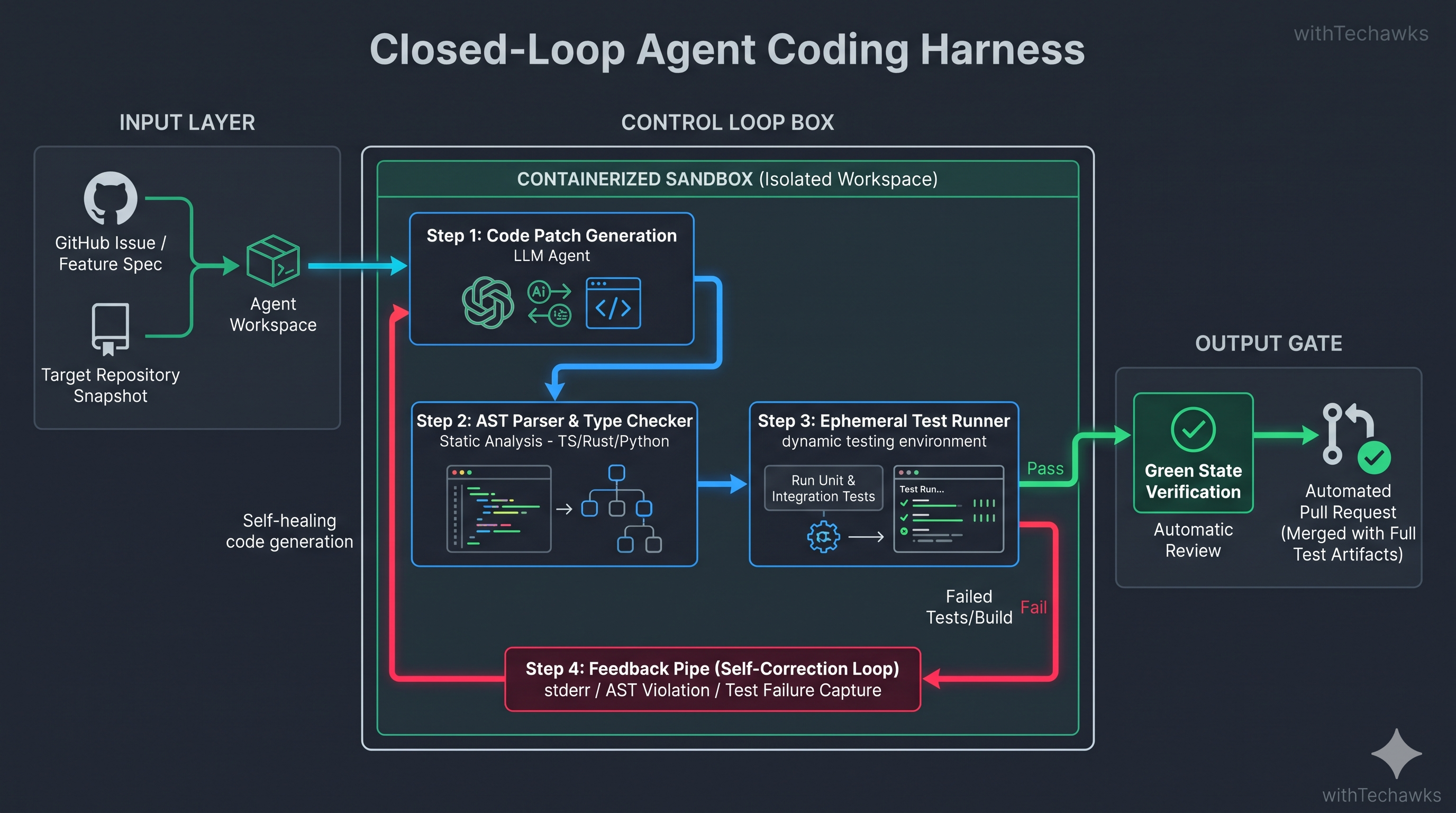 0 Comments 0 Shares 139 Views 0 Reviews
-
Why try/catch Won’t Save You in Microservices: Implementing the Outbox Pattern with Idempotency Keys
Every backend developer eventually confronts the dual-write problem:
[ Client Request ]
│
▼
[ API Controller ] ── (1) db.users.insert() ──> [ Database: SUCCESS ]
│
└── (2) kafka.publish("user_created") ──> [ Network Timeout / Crash! ]
Wrapping step (2) in a try/catch block fails because if the message broker drops connection or the process dies right after committing to the database, the transaction is durable, but downstream services (billing, notifications, analytics) never learn the record was created. Conversely, publishing before committing risks broadcasting events for transactions that subsequently roll back.
Distributed two-phase commits (2PC) add crippling latency and introduce tight database coupling. The production-standard solution is the Transactional Outbox Pattern paired with Idempotency Keys.
1. Atomic Local Commitment (The Outbox Table)
Instead of talking directly to your message broker during request handling, treat the event as part of your database state. Write your business payload and the outgoing event atomically within a single ACID transaction.
SQL
-- Migration: Add an outbox log table
CREATE TABLE outbox_events (
id UUID PRIMARY KEY DEFAULT gen_random_uuid(),
aggregate_type VARCHAR(64) NOT NULL,
aggregate_id VARCHAR(64) NOT NULL,
event_type VARCHAR(64) NOT NULL,
payload JSONB NOT NULL,
created_at TIMESTAMPTZ DEFAULT clock_timestamp(),
processed_at TIMESTAMPTZ NULL
);
CREATE INDEX idx_unprocessed_events ON outbox_events(created_at) WHERE processed_at IS NULL;
2. The Transactional Boundary
In your application code, write both mutations within one local transaction:
TypeScript
// Node.js / TypeScript Example
await db.transaction(async (trx) => {
// 1. Core domain mutation
const user = await trx('users').insert({
name: 'Alice',
email: 'alice@example.com'
}).returning('*');
// 2. Persist the event record atomically
await trx('outbox_events').insert({
aggregate_type: 'USER',
aggregate_id: user.id,
event_type: 'USER_REGISTERED',
payload: JSON.stringify({ userId: user.id, email: user.email })
});
});
// If the DB commit succeeds, the message is guaranteed to exist.
3. Asynchronous Relay (At-Least-Once Delivery)
A background processor—either a polling worker or a Change Data Capture (CDC) engine like Debezium reading the database Write-Ahead Log (WAL)—reads unprocessed rows and publishes them to Kafka/RabbitMQ:
[ WAL / Outbox Table ] ──> [ CDC Engine / Poller ] ──> [ Kafka Broker ]
│
▼
(Mark processed_at = NOW())
4. Safe Consumer Handling: Idempotent Execution
Because network retries guarantee at-least-once rather than exactly-once delivery, consumers must guard against duplicate events using an idempotency store (Redis or an idempotent unique index table):
Python
# Python Consumer Example
def process_event(event: dict):
idempotency_key = f"evt:{event['id']}"
# Atomic lock / set-if-not-exists (NX) with a TTL
acquired = redis_client.set(idempotency_key, "PROCESSING", nx=True, ex=3600)
if not acquired:
return # Event is already handled or in flight
try:
execute_business_logic(event['payload'])
redis_client.set(idempotency_key, "COMPLETED", ex=86400)
except Exception as e:
redis_client.delete(idempotency_key)
raise e
Discussion Question
When implementing the Outbox Pattern, does your stack use a background polling worker with batch updates, or do you stream CDC directly from the DB write-ahead log (WAL) using tools like Debezium? What tradeoffs drove your choice?
CTA
Level up your distributed systems engineering, backend patterns, and clean code architecture.
👉 Join the Developers & Coding Community: [techawks.io/join-dev]Why try/catch Won’t Save You in Microservices: Implementing the Outbox Pattern with Idempotency Keys Every backend developer eventually confronts the dual-write problem: [ Client Request ] │ ▼ [ API Controller ] ── (1) db.users.insert() ──> [ Database: SUCCESS ] │ └── (2) kafka.publish("user_created") ──> [ Network Timeout / Crash! ] Wrapping step (2) in a try/catch block fails because if the message broker drops connection or the process dies right after committing to the database, the transaction is durable, but downstream services (billing, notifications, analytics) never learn the record was created. Conversely, publishing before committing risks broadcasting events for transactions that subsequently roll back. Distributed two-phase commits (2PC) add crippling latency and introduce tight database coupling. The production-standard solution is the Transactional Outbox Pattern paired with Idempotency Keys. 1. Atomic Local Commitment (The Outbox Table) Instead of talking directly to your message broker during request handling, treat the event as part of your database state. Write your business payload and the outgoing event atomically within a single ACID transaction. SQL -- Migration: Add an outbox log table CREATE TABLE outbox_events ( id UUID PRIMARY KEY DEFAULT gen_random_uuid(), aggregate_type VARCHAR(64) NOT NULL, aggregate_id VARCHAR(64) NOT NULL, event_type VARCHAR(64) NOT NULL, payload JSONB NOT NULL, created_at TIMESTAMPTZ DEFAULT clock_timestamp(), processed_at TIMESTAMPTZ NULL ); CREATE INDEX idx_unprocessed_events ON outbox_events(created_at) WHERE processed_at IS NULL; 2. The Transactional Boundary In your application code, write both mutations within one local transaction: TypeScript // Node.js / TypeScript Example await db.transaction(async (trx) => { // 1. Core domain mutation const user = await trx('users').insert({ name: 'Alice', email: 'alice@example.com' }).returning('*'); // 2. Persist the event record atomically await trx('outbox_events').insert({ aggregate_type: 'USER', aggregate_id: user.id, event_type: 'USER_REGISTERED', payload: JSON.stringify({ userId: user.id, email: user.email }) }); }); // If the DB commit succeeds, the message is guaranteed to exist. 3. Asynchronous Relay (At-Least-Once Delivery) A background processor—either a polling worker or a Change Data Capture (CDC) engine like Debezium reading the database Write-Ahead Log (WAL)—reads unprocessed rows and publishes them to Kafka/RabbitMQ: [ WAL / Outbox Table ] ──> [ CDC Engine / Poller ] ──> [ Kafka Broker ] │ ▼ (Mark processed_at = NOW()) 4. Safe Consumer Handling: Idempotent Execution Because network retries guarantee at-least-once rather than exactly-once delivery, consumers must guard against duplicate events using an idempotency store (Redis or an idempotent unique index table): Python # Python Consumer Example def process_event(event: dict): idempotency_key = f"evt:{event['id']}" # Atomic lock / set-if-not-exists (NX) with a TTL acquired = redis_client.set(idempotency_key, "PROCESSING", nx=True, ex=3600) if not acquired: return # Event is already handled or in flight try: execute_business_logic(event['payload']) redis_client.set(idempotency_key, "COMPLETED", ex=86400) except Exception as e: redis_client.delete(idempotency_key) raise e Discussion Question When implementing the Outbox Pattern, does your stack use a background polling worker with batch updates, or do you stream CDC directly from the DB write-ahead log (WAL) using tools like Debezium? What tradeoffs drove your choice? CTA Level up your distributed systems engineering, backend patterns, and clean code architecture. 👉 Join the Developers & Coding Community: [techawks.io/join-dev] 0 Comments 0 Shares 104 Views 0 Reviews
-
The Distributed Tracing Fallacy: Why Manual Instrumentation Beats "Blind" eBPF Auto-Tracing in Complex Codebases
Every development team adopting distributed systems eventually encounters the observability dilemma:
Option A: Rely entirely on zero-code / eBPF kernel auto-instrumentation to capture inbound HTTP/gRPC requests, RED metrics (Rate, Errors, Duration), and database queries with zero code changes.
Option B: Write explicit, manual OpenTelemetry spans and context propagation into domain logic.
Teams rushing for instant visibility pick Option A. Then, an incident hits staging: a checkout event fails silently inside an asynchronous task queue.
Because eBPF operates at the socket, system call, and protocol parsing layer, it observes network traffic passing between processes. What it cannot see is what happens to in-memory context when execution hops across Go goroutines, Python asyncio event loops, or detached worker threads. The trace ID drops, the span tree fragments, and you end up with orphaned trace islands.
Senior backend engineers avoid the all-or-nothing trap by implementing a Hybrid Distributed Tracing Pattern:
Let Kernel Auto-Tracing Handle the "Plumbing"
Use zero-code eBPF tracing strictly for generic protocol boundaries: incoming ingress requests, outbound database driver calls, and raw TCP/TLS handshakes. It gives you 80% baseline network visibility with zero maintenance overhead.
Explicitly Inject W3C traceparent at Event Boundaries
When publishing events to message queues (Kafka, RabbitMQ, SQS) or scheduling asynchronous background tasks, manual context injection is non-negotiable. Always serialize the active OpenTelemetry context into the message metadata headers:
Python
from opentelemetry import trace
from opentelemetry.trace.propagation.tracecontext import TraceContextTextMapPropagator
tracer = trace.get_tracer("order-service")
with tracer.start_as_current_span("publish_order_event") as span:
headers = {}
# Inject current trace ID & span context into message headers
TraceContextTextMapPropagator().inject(carrier=headers)
# Attach high-cardinality domain context, NEVER raw PII
span.set_attribute("order.item_count", len(items))
span.set_attribute("tenant.tier", "enterprise")
event_bus.publish(topic="orders.created", payload=order_data, headers=headers)
Treat High-Cardinality Span Attributes as First-Class Code
Logging a flat error string ("Database query failed") forces developers to dig through gigabytes of logs. Instead, use spans to capture operational boundaries: tenant tier, retry attempts, cache hit flags, and downstream partition keys. If a failure occurs, the trace tree instantly isolates whether latency is systemic across all users or isolated to a specific shard.
Kernel-level automation gives you maps of network pipes; deliberate code instrumentation explains what is flowing through them.
Discussion Question
In your microservice or event-driven applications, how do you handle trace propagation across asynchronous task boundaries: are you relying on framework middleware, or have you built internal SDK wrappers to standardize context passing?
CTA
Join Developers & Coding — Connect with backend engineers, distributed systems builders, and software architects sharing production-tested code patterns, debugging frameworks, and system designs. Drop your architectural perspectives in the comments below!The Distributed Tracing Fallacy: Why Manual Instrumentation Beats "Blind" eBPF Auto-Tracing in Complex Codebases Every development team adopting distributed systems eventually encounters the observability dilemma: Option A: Rely entirely on zero-code / eBPF kernel auto-instrumentation to capture inbound HTTP/gRPC requests, RED metrics (Rate, Errors, Duration), and database queries with zero code changes. Option B: Write explicit, manual OpenTelemetry spans and context propagation into domain logic. Teams rushing for instant visibility pick Option A. Then, an incident hits staging: a checkout event fails silently inside an asynchronous task queue. Because eBPF operates at the socket, system call, and protocol parsing layer, it observes network traffic passing between processes. What it cannot see is what happens to in-memory context when execution hops across Go goroutines, Python asyncio event loops, or detached worker threads. The trace ID drops, the span tree fragments, and you end up with orphaned trace islands. Senior backend engineers avoid the all-or-nothing trap by implementing a Hybrid Distributed Tracing Pattern: Let Kernel Auto-Tracing Handle the "Plumbing" Use zero-code eBPF tracing strictly for generic protocol boundaries: incoming ingress requests, outbound database driver calls, and raw TCP/TLS handshakes. It gives you 80% baseline network visibility with zero maintenance overhead. Explicitly Inject W3C traceparent at Event Boundaries When publishing events to message queues (Kafka, RabbitMQ, SQS) or scheduling asynchronous background tasks, manual context injection is non-negotiable. Always serialize the active OpenTelemetry context into the message metadata headers: Python from opentelemetry import trace from opentelemetry.trace.propagation.tracecontext import TraceContextTextMapPropagator tracer = trace.get_tracer("order-service") with tracer.start_as_current_span("publish_order_event") as span: headers = {} # Inject current trace ID & span context into message headers TraceContextTextMapPropagator().inject(carrier=headers) # Attach high-cardinality domain context, NEVER raw PII span.set_attribute("order.item_count", len(items)) span.set_attribute("tenant.tier", "enterprise") event_bus.publish(topic="orders.created", payload=order_data, headers=headers) Treat High-Cardinality Span Attributes as First-Class Code Logging a flat error string ("Database query failed") forces developers to dig through gigabytes of logs. Instead, use spans to capture operational boundaries: tenant tier, retry attempts, cache hit flags, and downstream partition keys. If a failure occurs, the trace tree instantly isolates whether latency is systemic across all users or isolated to a specific shard. Kernel-level automation gives you maps of network pipes; deliberate code instrumentation explains what is flowing through them. Discussion Question In your microservice or event-driven applications, how do you handle trace propagation across asynchronous task boundaries: are you relying on framework middleware, or have you built internal SDK wrappers to standardize context passing? CTA Join Developers & Coding — Connect with backend engineers, distributed systems builders, and software architects sharing production-tested code patterns, debugging frameworks, and system designs. Drop your architectural perspectives in the comments below! 0 Comments 0 Shares 159 Views 0 Reviews
-
The Death of Blind Autocomplete: Why the Next Era of Coding Requires Model Context Protocols (MCP)
Modern software engineering has moved past simple text prediction. When building complex distributed systems, AI tools fail not because of weak underlying models, but because of context starvation.
Without secure, standardized access to your database schemas, internal CLI tools, and runtime logs, AI tools operate in a vacuum—forcing developers to constantly copy-paste error logs and boilerplate context.
Enter Model Context Protocol (MCP) and multi-file agent workflows. Instead of treating AI as an isolated plugin, modern development pipelines treat it as an integrated system layer capable of inspecting file trees, executing terminal commands safely, and querying external data structures through explicit, standardized interfaces.
What you need to implement in your workflow:
Move to Review-First Agentic Loops: Never give an agent unverified write access. Use a review-first pattern where the agent outlines a multi-file migration plan or refactoring script before modifying your codebase.
Standardize Context via Protocols: Adopt secure server-client bridges (like MCP) to give your terminal agents read-only access to your local databases, API docs, and environment variables without leaking credentials.
Isolate Execution Boundaries: Always run agent-driven shell commands and code executions inside containerized or sandboxed environments to catch unintended side effects early.
Discussion Question
Are you integrating multi-file coding agents and context protocols into your local dev environment yet, or are you still relying primarily on traditional line-by-line autocomplete extensions?
CTA (Join Developers & Coding)
Ready to build faster, master modern coding workflows, and stay at the cutting edge of software architecture? Join Developers & Coding today and collaborate with top-tier engineers.The Death of Blind Autocomplete: Why the Next Era of Coding Requires Model Context Protocols (MCP) Modern software engineering has moved past simple text prediction. When building complex distributed systems, AI tools fail not because of weak underlying models, but because of context starvation. Without secure, standardized access to your database schemas, internal CLI tools, and runtime logs, AI tools operate in a vacuum—forcing developers to constantly copy-paste error logs and boilerplate context. Enter Model Context Protocol (MCP) and multi-file agent workflows. Instead of treating AI as an isolated plugin, modern development pipelines treat it as an integrated system layer capable of inspecting file trees, executing terminal commands safely, and querying external data structures through explicit, standardized interfaces. What you need to implement in your workflow: Move to Review-First Agentic Loops: Never give an agent unverified write access. Use a review-first pattern where the agent outlines a multi-file migration plan or refactoring script before modifying your codebase. Standardize Context via Protocols: Adopt secure server-client bridges (like MCP) to give your terminal agents read-only access to your local databases, API docs, and environment variables without leaking credentials. Isolate Execution Boundaries: Always run agent-driven shell commands and code executions inside containerized or sandboxed environments to catch unintended side effects early. Discussion Question Are you integrating multi-file coding agents and context protocols into your local dev environment yet, or are you still relying primarily on traditional line-by-line autocomplete extensions? CTA (Join Developers & Coding) Ready to build faster, master modern coding workflows, and stay at the cutting edge of software architecture? Join Developers & Coding today and collaborate with top-tier engineers.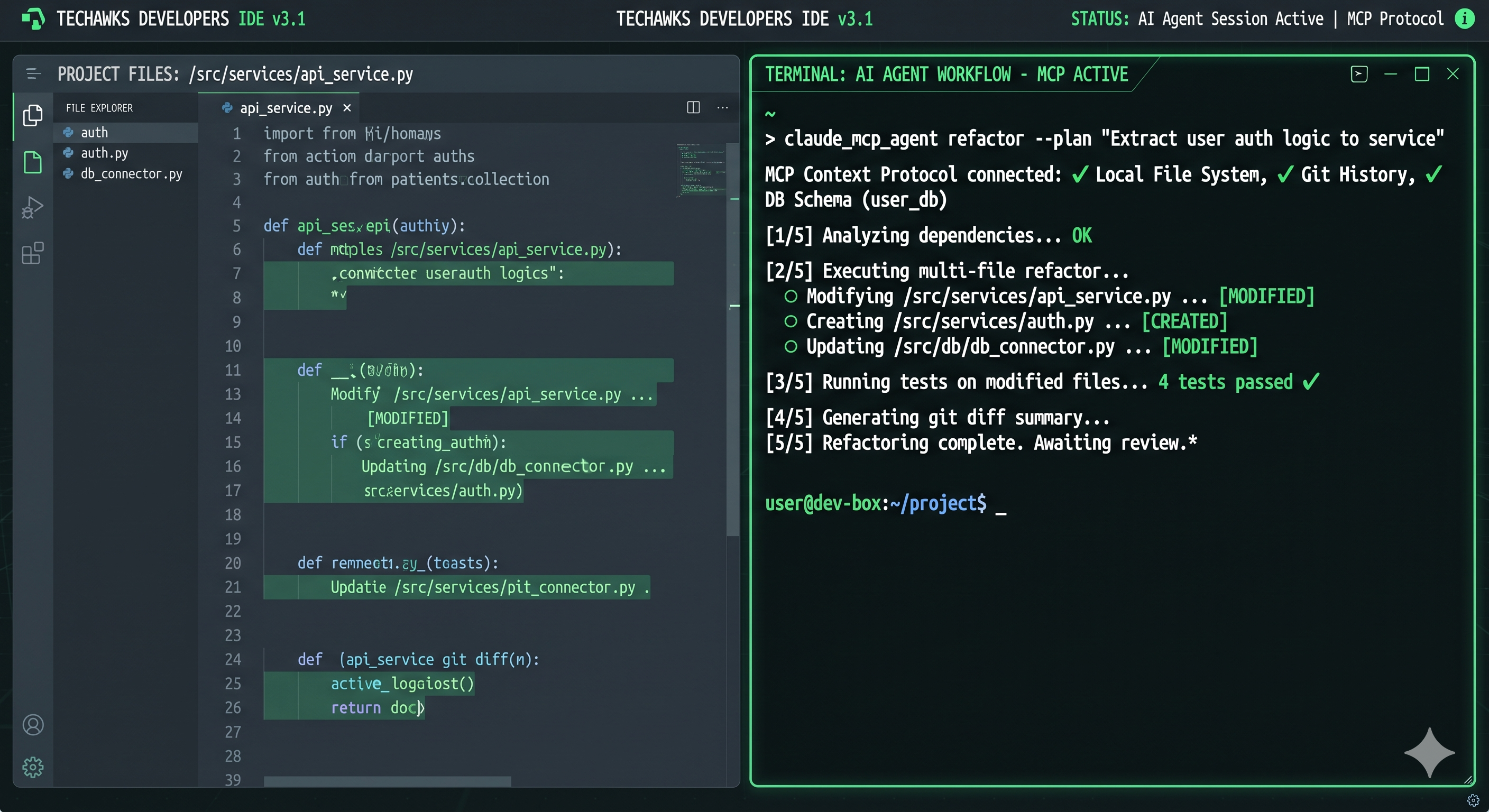 0 Comments 0 Shares 170 Views 0 Reviews
More Stories