


Decoding the ATS: How Modern Talent Intelligence Tools Parse Your Resume
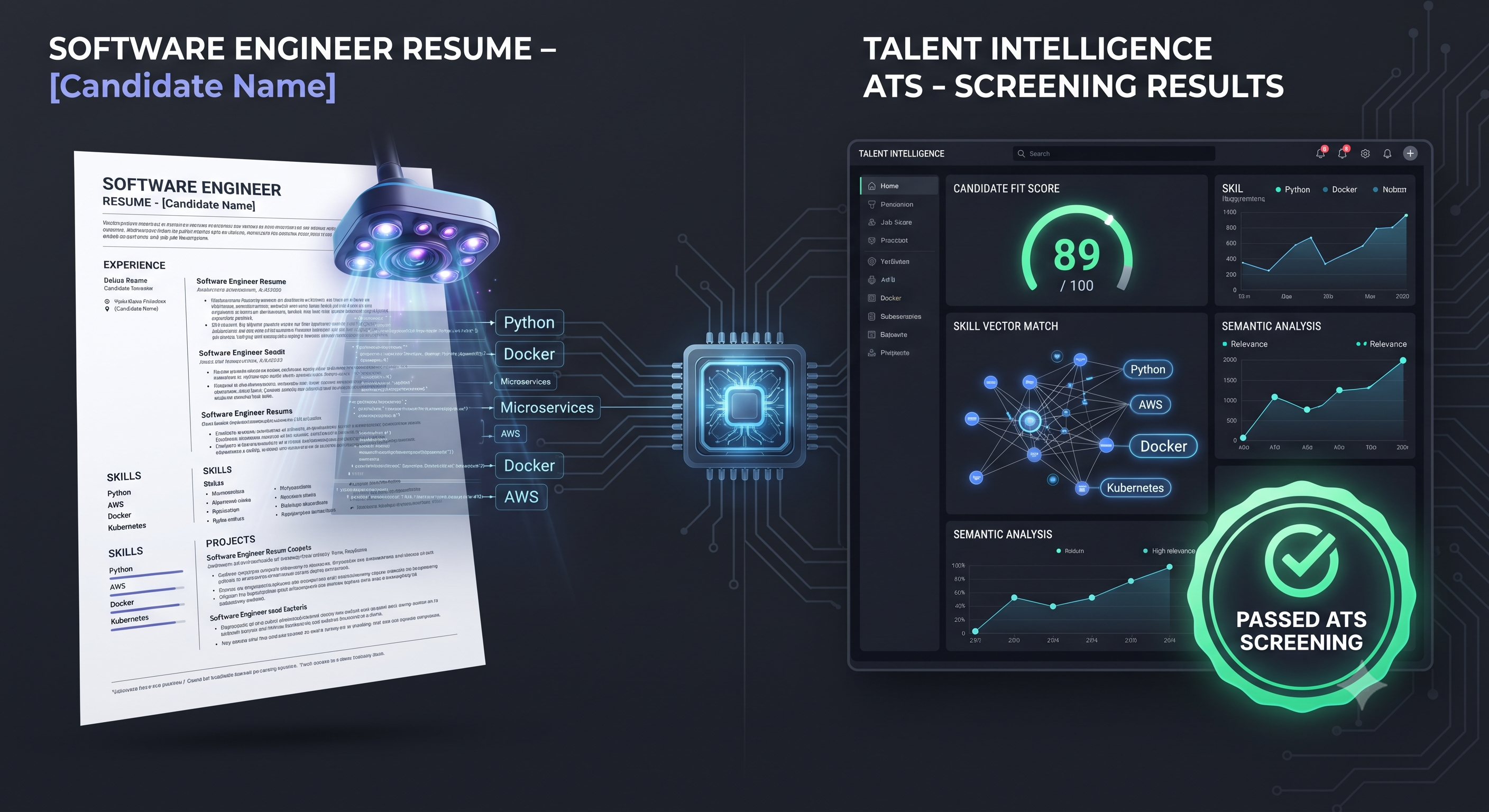
Modern recruitment tech has evolved far beyond basic keyword-matching algorithms. Platforms like Eightfold AI and Greenhouse AI use deep learning and Natural Language Processing (NLP) to evaluate applications against job-specific scorecards.
Why it matters:
Traditional resume advice—like stuffing white text with invisible keywords—no longer works and often triggers automated spam flags. Modern AI recruitment tools evaluate semantic context, assessing your transferable skills, project outcomes, and relational context. If your resume layout or phrasing hides your core competencies, the algorithm assigns a low "Candidate-to-Job" fit score before a human ever looks at it.
What you can learn (The Strategy Breakdown):
When formatting and writing your tech resume for modern AI screening tools, optimize around three core technical pillars:
Semantic Clarity over Clever Formatting: Avoid complex multi-column tables, graphics, or unusual headers. Use standard section headers (e.g., "Work Experience," "Technical Skills") so text-parsers extract data accurately.
Context-Driven Bullet Points: Don't just list technologies; show the system how you used them. Pair tools with architectural impacts (e.g., "Migrated legacy monolith to a microservices architecture using Docker and Kubernetes, reducing deployment latency by 40%").
Skill Clustering: Group your technical proficiencies logically so the machine learning model can easily map your stack to the required job description vector space.
Discussion Question
Have you adjusted how you write and format your resume to account for AI-driven applicant tracking systems? What has been your experience with modern tech hiring funnels?
CTA (Join Tech Jobs & Opportunities)
Ready to land your next big role and navigate the modern tech job market with confidence? Join the Techawks Tech Jobs & Opportunities community today to access insider tips, resume reviews, and open roles worldwide
Modern recruitment tech has evolved far beyond basic keyword-matching algorithms. Platforms like Eightfold AI and Greenhouse AI use deep learning and Natural Language Processing (NLP) to evaluate applications against job-specific scorecards.
Why it matters:
Traditional resume advice—like stuffing white text with invisible keywords—no longer works and often triggers automated spam flags. Modern AI recruitment tools evaluate semantic context, assessing your transferable skills, project outcomes, and relational context. If your resume layout or phrasing hides your core competencies, the algorithm assigns a low "Candidate-to-Job" fit score before a human ever looks at it.
What you can learn (The Strategy Breakdown):
When formatting and writing your tech resume for modern AI screening tools, optimize around three core technical pillars:
Semantic Clarity over Clever Formatting: Avoid complex multi-column tables, graphics, or unusual headers. Use standard section headers (e.g., "Work Experience," "Technical Skills") so text-parsers extract data accurately.
Context-Driven Bullet Points: Don't just list technologies; show the system how you used them. Pair tools with architectural impacts (e.g., "Migrated legacy monolith to a microservices architecture using Docker and Kubernetes, reducing deployment latency by 40%").
Skill Clustering: Group your technical proficiencies logically so the machine learning model can easily map your stack to the required job description vector space.
Discussion Question
Have you adjusted how you write and format your resume to account for AI-driven applicant tracking systems? What has been your experience with modern tech hiring funnels?
CTA (Join Tech Jobs & Opportunities)
Ready to land your next big role and navigate the modern tech job market with confidence? Join the Techawks Tech Jobs & Opportunities community today to access insider tips, resume reviews, and open roles worldwide
Decoding the ATS: How Modern Talent Intelligence Tools Parse Your Resume
Modern recruitment tech has evolved far beyond basic keyword-matching algorithms. Platforms like Eightfold AI and Greenhouse AI use deep learning and Natural Language Processing (NLP) to evaluate applications against job-specific scorecards.
Why it matters:
Traditional resume advice—like stuffing white text with invisible keywords—no longer works and often triggers automated spam flags. Modern AI recruitment tools evaluate semantic context, assessing your transferable skills, project outcomes, and relational context. If your resume layout or phrasing hides your core competencies, the algorithm assigns a low "Candidate-to-Job" fit score before a human ever looks at it.
What you can learn (The Strategy Breakdown):
When formatting and writing your tech resume for modern AI screening tools, optimize around three core technical pillars:
Semantic Clarity over Clever Formatting: Avoid complex multi-column tables, graphics, or unusual headers. Use standard section headers (e.g., "Work Experience," "Technical Skills") so text-parsers extract data accurately.
Context-Driven Bullet Points: Don't just list technologies; show the system how you used them. Pair tools with architectural impacts (e.g., "Migrated legacy monolith to a microservices architecture using Docker and Kubernetes, reducing deployment latency by 40%").
Skill Clustering: Group your technical proficiencies logically so the machine learning model can easily map your stack to the required job description vector space.
Discussion Question
Have you adjusted how you write and format your resume to account for AI-driven applicant tracking systems? What has been your experience with modern tech hiring funnels?
CTA (Join Tech Jobs & Opportunities)
Ready to land your next big role and navigate the modern tech job market with confidence? Join the Techawks Tech Jobs & Opportunities community today to access insider tips, resume reviews, and open roles worldwide

 English
 Arabic
 French
 Spanish
 Portuguese
 Deutsch
 Dutch
Dutch
 Italiano
 Russian
 Romaian
 Portuguese (Brazil)
 Greek
Greek