


The US Senior Engineer Checklist: 6 Things You Must Master to Hit $300k+ TC
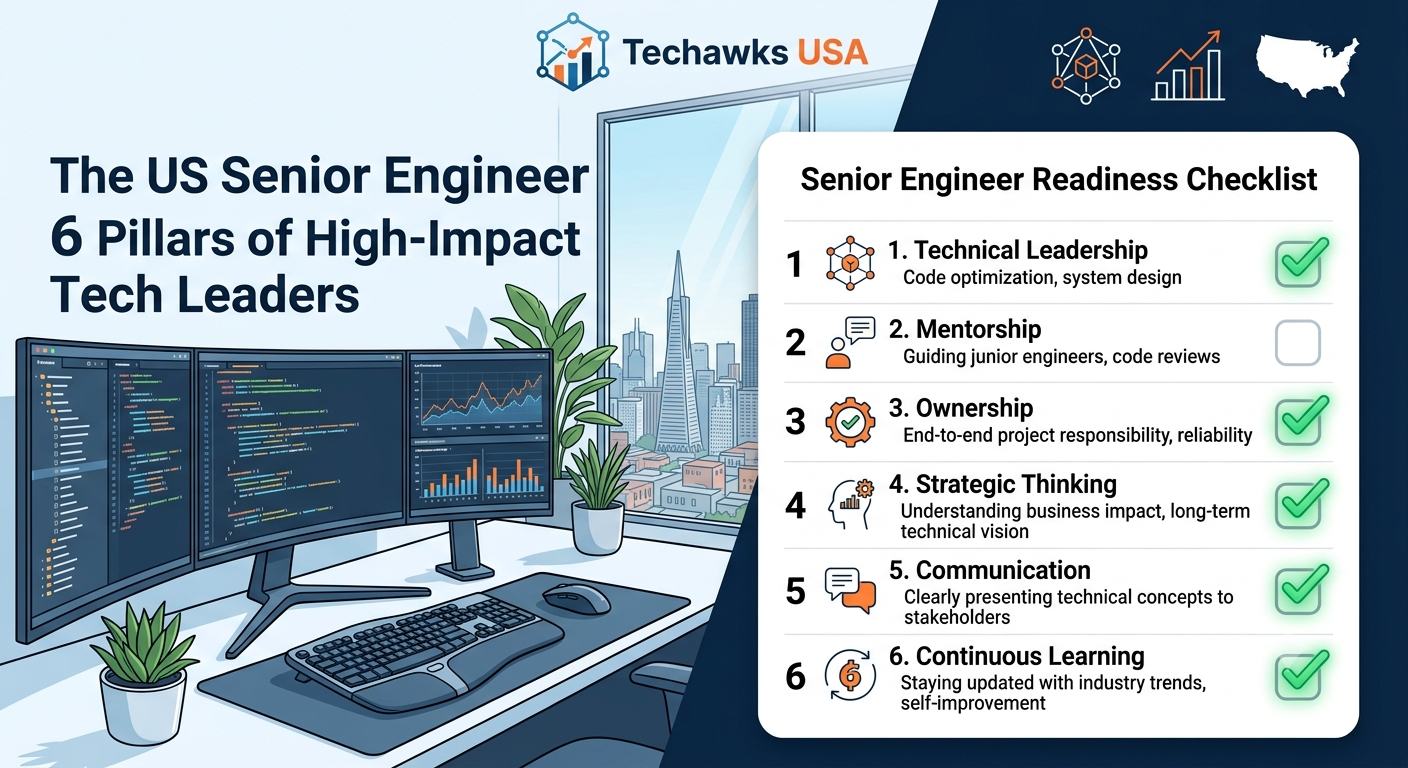
Surpassing the Senior engineering threshold in the US tech ecosystem demands a shift from execution to influence. Use this checklist to evaluate your technical and architectural maturity.
1. System Design & Architectural Ownership
RFC / Design Doc Mastery: Author comprehensive Request for Comments (RFCs) that outline trade-offs, capacity planning, and failure modes before writing code.
Cost-Aware Architecture: Calculate the infrastructure and cloud dollar cost of your system designs (compute, storage, data egress) before proposing them.
Backward Compatibility: Ensure API changes and database migrations zero-downtime deploy across distributed systems.
2. Production Readiness & Observability
SLOs & SLAs: Define clear Service Level Objectives (SLOs) and Service Level Indicators (SLIs) for every microservice you own.
On-Call Playbooks: Maintain detailed runbooks so any engineer on call can remediate incidents without escalating to you.
Post-Mortem Culture: Drive blameless post-mortems focused on root-cause prevention rather than surface-level quick fixes.
3. Cross-Functional Business Impact
Product Alignment: Translate business metrics (CAC, LTV, churn) into technical key performance indicators (latency, throughput, uptime).
Stakeholder Management: Explain technical debt and architectural investments in financial and business risk terms to non-technical leaders.
4. Engineering Velocity & Automation
CI/CD Optimization: Maintain pipeline build/test speeds so feature branches merge and deploy seamlessly.
Shift-Left Security: Integrate automated SAST/DAST tools and dependency scanners into early developer workflows.
5. Mentorship & Team Multiplication
Code Review Rigor: Provide constructive, high-signal feedback that elevates junior developers without blocking PR velocity.
Unblocking Others: Actively identify architectural bottlenecks across adjacent engineering pods and help solve them.
6. Personal Brand & Internal Visibility
Impact Documentation: Keep a running "Brag Document" tracking project metrics, architectural wins, and revenue impact for performance reviews.
Technical Sharing: Present internal tech talks or author engineering blog posts highlighting technical wins.
Key Takeaways
Influence over execution: Senior-plus roles are defined by multiplying the impact of surrounding engineers, not just solo output.
Architecture is business strategy: High earners in the US tech market evaluate cloud costs, reliability risks, and velocity trade-offs upfront.
Document your impact: Quantifying technical wins in business terms is essential for promotions and high-tier compensation negotiations.
CTA
🇺🇸 Looking to scale your engineering leadership, master system design, and navigate the US tech industry? Join the Techawks USA community for architecture breakdowns, career strategy guides, and high-signal developer networking!
👉 [Join Techawks USA]
Surpassing the Senior engineering threshold in the US tech ecosystem demands a shift from execution to influence. Use this checklist to evaluate your technical and architectural maturity.
1. System Design & Architectural Ownership
RFC / Design Doc Mastery: Author comprehensive Request for Comments (RFCs) that outline trade-offs, capacity planning, and failure modes before writing code.
Cost-Aware Architecture: Calculate the infrastructure and cloud dollar cost of your system designs (compute, storage, data egress) before proposing them.
Backward Compatibility: Ensure API changes and database migrations zero-downtime deploy across distributed systems.
2. Production Readiness & Observability
SLOs & SLAs: Define clear Service Level Objectives (SLOs) and Service Level Indicators (SLIs) for every microservice you own.
On-Call Playbooks: Maintain detailed runbooks so any engineer on call can remediate incidents without escalating to you.
Post-Mortem Culture: Drive blameless post-mortems focused on root-cause prevention rather than surface-level quick fixes.
3. Cross-Functional Business Impact
Product Alignment: Translate business metrics (CAC, LTV, churn) into technical key performance indicators (latency, throughput, uptime).
Stakeholder Management: Explain technical debt and architectural investments in financial and business risk terms to non-technical leaders.
4. Engineering Velocity & Automation
CI/CD Optimization: Maintain pipeline build/test speeds so feature branches merge and deploy seamlessly.
Shift-Left Security: Integrate automated SAST/DAST tools and dependency scanners into early developer workflows.
5. Mentorship & Team Multiplication
Code Review Rigor: Provide constructive, high-signal feedback that elevates junior developers without blocking PR velocity.
Unblocking Others: Actively identify architectural bottlenecks across adjacent engineering pods and help solve them.
6. Personal Brand & Internal Visibility
Impact Documentation: Keep a running "Brag Document" tracking project metrics, architectural wins, and revenue impact for performance reviews.
Technical Sharing: Present internal tech talks or author engineering blog posts highlighting technical wins.
Key Takeaways
Influence over execution: Senior-plus roles are defined by multiplying the impact of surrounding engineers, not just solo output.
Architecture is business strategy: High earners in the US tech market evaluate cloud costs, reliability risks, and velocity trade-offs upfront.
Document your impact: Quantifying technical wins in business terms is essential for promotions and high-tier compensation negotiations.
CTA
🇺🇸 Looking to scale your engineering leadership, master system design, and navigate the US tech industry? Join the Techawks USA community for architecture breakdowns, career strategy guides, and high-signal developer networking!
👉 [Join Techawks USA]
The US Senior Engineer Checklist: 6 Things You Must Master to Hit $300k+ TC
Surpassing the Senior engineering threshold in the US tech ecosystem demands a shift from execution to influence. Use this checklist to evaluate your technical and architectural maturity.
1. System Design & Architectural Ownership
RFC / Design Doc Mastery: Author comprehensive Request for Comments (RFCs) that outline trade-offs, capacity planning, and failure modes before writing code.
Cost-Aware Architecture: Calculate the infrastructure and cloud dollar cost of your system designs (compute, storage, data egress) before proposing them.
Backward Compatibility: Ensure API changes and database migrations zero-downtime deploy across distributed systems.
2. Production Readiness & Observability
SLOs & SLAs: Define clear Service Level Objectives (SLOs) and Service Level Indicators (SLIs) for every microservice you own.
On-Call Playbooks: Maintain detailed runbooks so any engineer on call can remediate incidents without escalating to you.
Post-Mortem Culture: Drive blameless post-mortems focused on root-cause prevention rather than surface-level quick fixes.
3. Cross-Functional Business Impact
Product Alignment: Translate business metrics (CAC, LTV, churn) into technical key performance indicators (latency, throughput, uptime).
Stakeholder Management: Explain technical debt and architectural investments in financial and business risk terms to non-technical leaders.
4. Engineering Velocity & Automation
CI/CD Optimization: Maintain pipeline build/test speeds so feature branches merge and deploy seamlessly.
Shift-Left Security: Integrate automated SAST/DAST tools and dependency scanners into early developer workflows.
5. Mentorship & Team Multiplication
Code Review Rigor: Provide constructive, high-signal feedback that elevates junior developers without blocking PR velocity.
Unblocking Others: Actively identify architectural bottlenecks across adjacent engineering pods and help solve them.
6. Personal Brand & Internal Visibility
Impact Documentation: Keep a running "Brag Document" tracking project metrics, architectural wins, and revenue impact for performance reviews.
Technical Sharing: Present internal tech talks or author engineering blog posts highlighting technical wins.
Key Takeaways
Influence over execution: Senior-plus roles are defined by multiplying the impact of surrounding engineers, not just solo output.
Architecture is business strategy: High earners in the US tech market evaluate cloud costs, reliability risks, and velocity trade-offs upfront.
Document your impact: Quantifying technical wins in business terms is essential for promotions and high-tier compensation negotiations.
CTA
🇺🇸 Looking to scale your engineering leadership, master system design, and navigate the US tech industry? Join the Techawks USA community for architecture breakdowns, career strategy guides, and high-signal developer networking!
👉 [Join Techawks USA]

 Arabic
 French
 Spanish
 Portuguese
 Deutsch
 Turkish
 Dutch
Dutch
 Italiano
 Russian
 Romaian
 Portuguese (Brazil)
 Greek
Greek