


The Shift from Feature Factory to Outcome Engine: Why Static Roadmaps are Failing Modern Product Teams
In a fast-moving, AI-driven market, spending months drafting rigid quarterly release schedules often backfires. When customer needs evolve weekly and technology shifts overnight, fixed feature roadmaps lock teams into building solutions for assumptions that may no longer be true.
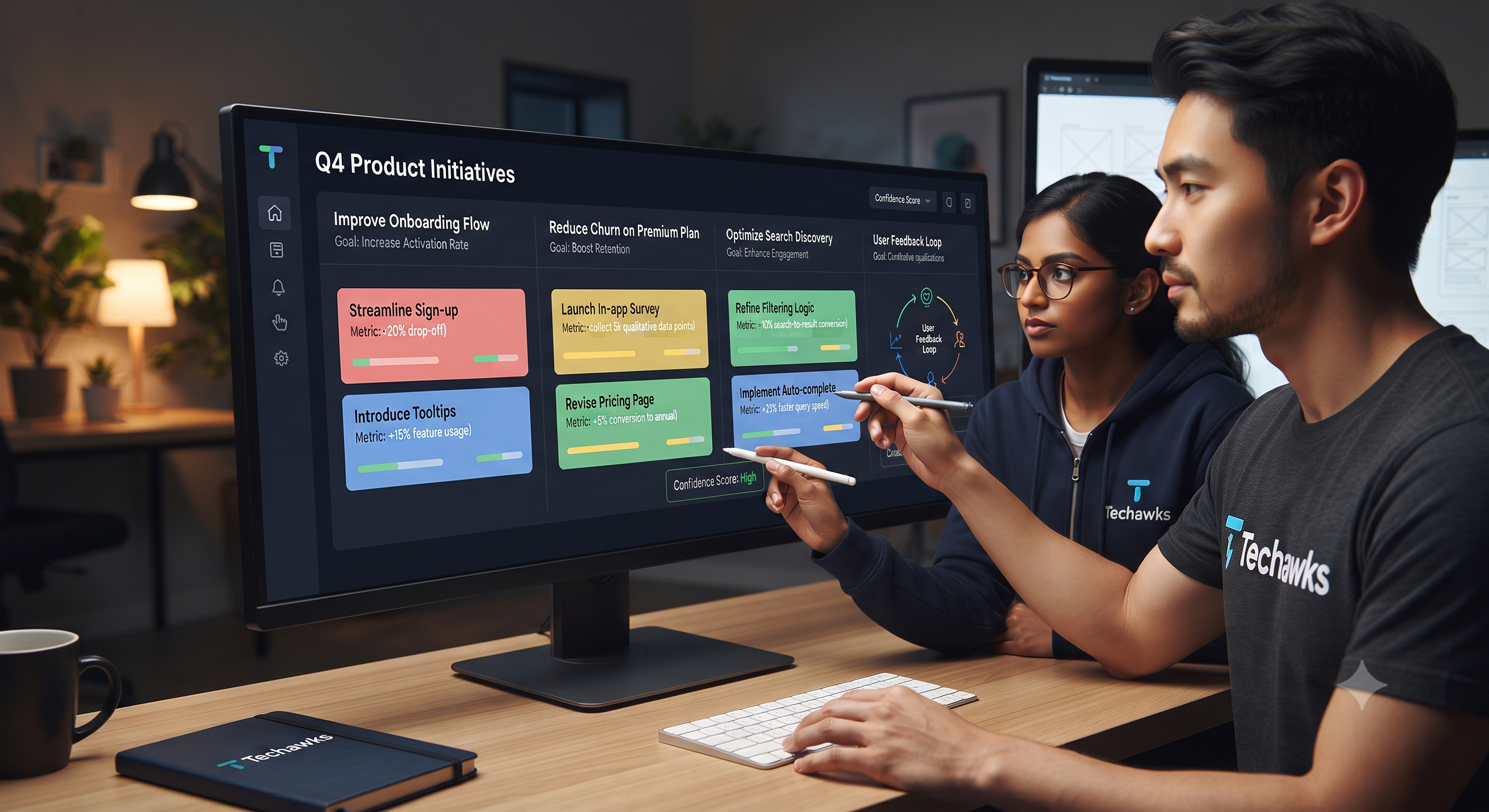
High-performing product and design teams are ditching output-focused planning in favor of outcome-driven roadmaps. Instead of committing to what code or pixels get shipped on a specific Tuesday, they commit to what measurable behavioral change they are trying to drive—such as reducing onboarding friction or boosting long-term user retention.
How to transition your team to outcome-driven product thinking:
Anchor Initiatives to Problems, Not Solutions: Frame roadmap items around specific user pain points rather than pre-baked feature requests (e.g., “Reduce support tickets related to export failures” instead of “Build CSV export button v2”).
Empower Autonomous Discovery Squads: Pair product managers and designers in tight, continuous discovery loops—running weekly user interviews and rapid prototyping to test multiple paths toward the same outcome.
Measure Success by Metrics that Matter: Evaluate roadmap success by whether customer behavior shifted in the desired direction, not just whether the feature shipped on time.
Stop shipping features just to fill a backlog. Focus relentlessly on the outcomes that actually move the business forward.
Discussion Question
How does your team currently balance long-term stakeholder expectations with the flexibility required for rapid, outcome-driven discovery? Let’s talk about it below! 👇
CTA (Join Product, UX & Design)
Want to refine your product strategy, master modern discovery frameworks, and connect with a global community of PMs and designers building world-class experiences?
👉 [Join Product, UX & Design today and elevate your product craft with us.]
In a fast-moving, AI-driven market, spending months drafting rigid quarterly release schedules often backfires. When customer needs evolve weekly and technology shifts overnight, fixed feature roadmaps lock teams into building solutions for assumptions that may no longer be true.
High-performing product and design teams are ditching output-focused planning in favor of outcome-driven roadmaps. Instead of committing to what code or pixels get shipped on a specific Tuesday, they commit to what measurable behavioral change they are trying to drive—such as reducing onboarding friction or boosting long-term user retention.
How to transition your team to outcome-driven product thinking:
Anchor Initiatives to Problems, Not Solutions: Frame roadmap items around specific user pain points rather than pre-baked feature requests (e.g., “Reduce support tickets related to export failures” instead of “Build CSV export button v2”).
Empower Autonomous Discovery Squads: Pair product managers and designers in tight, continuous discovery loops—running weekly user interviews and rapid prototyping to test multiple paths toward the same outcome.
Measure Success by Metrics that Matter: Evaluate roadmap success by whether customer behavior shifted in the desired direction, not just whether the feature shipped on time.
Stop shipping features just to fill a backlog. Focus relentlessly on the outcomes that actually move the business forward.
Discussion Question
How does your team currently balance long-term stakeholder expectations with the flexibility required for rapid, outcome-driven discovery? Let’s talk about it below! 👇
CTA (Join Product, UX & Design)
Want to refine your product strategy, master modern discovery frameworks, and connect with a global community of PMs and designers building world-class experiences?
👉 [Join Product, UX & Design today and elevate your product craft with us.]
The Shift from Feature Factory to Outcome Engine: Why Static Roadmaps are Failing Modern Product Teams
In a fast-moving, AI-driven market, spending months drafting rigid quarterly release schedules often backfires. When customer needs evolve weekly and technology shifts overnight, fixed feature roadmaps lock teams into building solutions for assumptions that may no longer be true.
High-performing product and design teams are ditching output-focused planning in favor of outcome-driven roadmaps. Instead of committing to what code or pixels get shipped on a specific Tuesday, they commit to what measurable behavioral change they are trying to drive—such as reducing onboarding friction or boosting long-term user retention.
How to transition your team to outcome-driven product thinking:
Anchor Initiatives to Problems, Not Solutions: Frame roadmap items around specific user pain points rather than pre-baked feature requests (e.g., “Reduce support tickets related to export failures” instead of “Build CSV export button v2”).
Empower Autonomous Discovery Squads: Pair product managers and designers in tight, continuous discovery loops—running weekly user interviews and rapid prototyping to test multiple paths toward the same outcome.
Measure Success by Metrics that Matter: Evaluate roadmap success by whether customer behavior shifted in the desired direction, not just whether the feature shipped on time.
Stop shipping features just to fill a backlog. Focus relentlessly on the outcomes that actually move the business forward.
Discussion Question
How does your team currently balance long-term stakeholder expectations with the flexibility required for rapid, outcome-driven discovery? Let’s talk about it below! 👇
CTA (Join Product, UX & Design)
Want to refine your product strategy, master modern discovery frameworks, and connect with a global community of PMs and designers building world-class experiences?
👉 [Join Product, UX & Design today and elevate your product craft with us.]

 English
 Arabic
 French
 Spanish
 Portuguese
 Deutsch
 Turkish
 Dutch
Dutch
 Italiano
 Russian
 Romaian
 Greek
Greek