


Job Offer Negotiation: What Factor Takes Priority After Base Salary?
Negotiating a job offer isn't just about pushing for a higher starting salary—it's about building a comprehensive compensation package aligned with your life and career goals.
When base salary hits a hard cap during hiring discussions, candidates often overlook high-value non-salary levers that are far easier for hiring managers to approve:
1. Equity & Performance Bonuses
Stock options, RSUs, or performance bonuses build wealth over time. In high-growth environments, a well-structured equity grant can far outpace annual salary increments. Always ask about vesting schedules and baseline metrics.
2. Learning & Development Budgets
Stagnant skills lead to stagnant earnings. Negotiating dedicated budget for conferences, specialized certifications, or technical courses guarantees that your market value continues to rise on the company's dime.
3. Schedule Flexibility & Remote Working Stipends
Time and autonomy are valuable currency. Securing explicit agreements on hybrid schedules, flexible hours, or initial home-office setup allowances directly affects your daily quality of life and reduces out-of-pocket expenses.
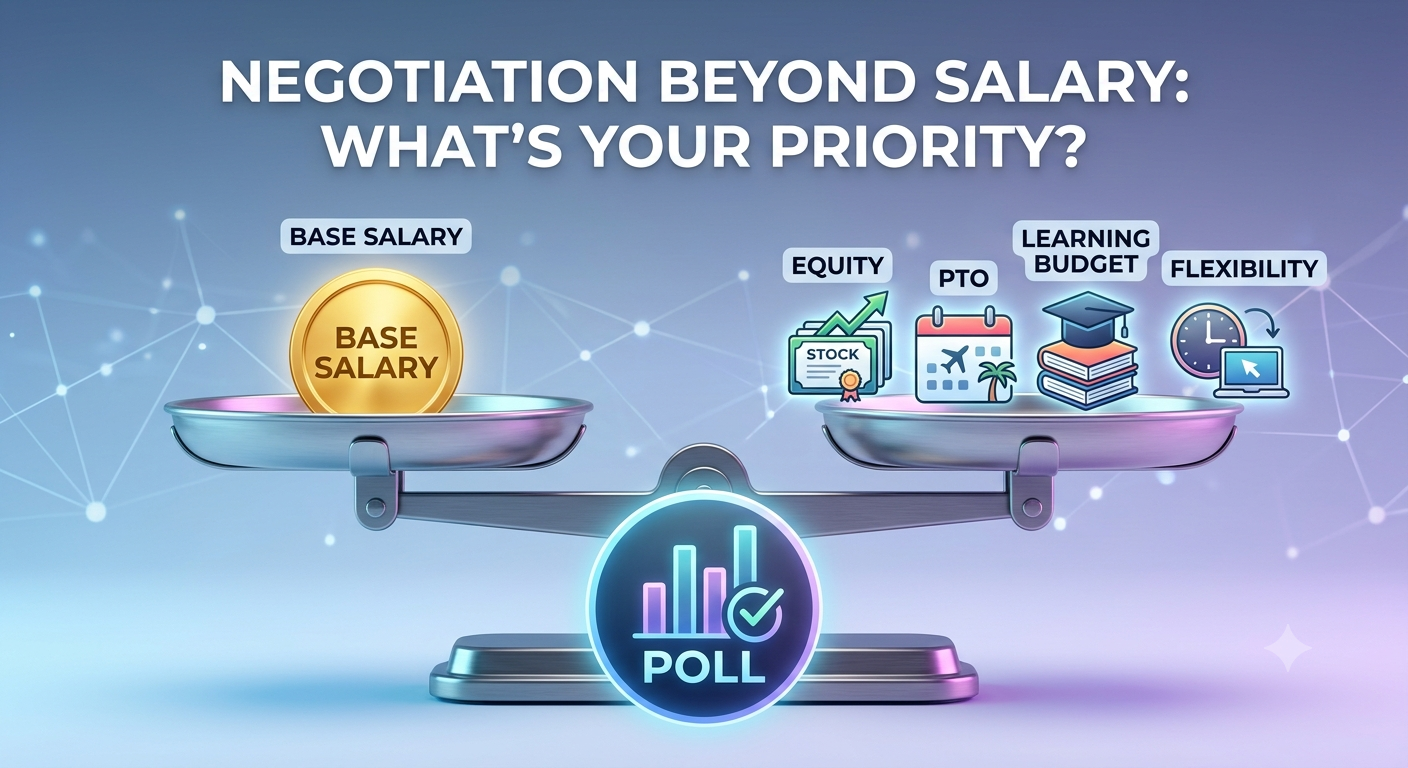
📊 Community Poll
If a company reaches its absolute limit on your base salary request, which secondary perk do you prioritize negotiating next?
🟢 Equity / Stock Options / Sign-on Bonus (Long-term financial upside)
🟡 Flexible Hours / Remote Autonomy (Work-life balance & time saved)
🔵 Learning & Development Allowance (Conferences, courses, & growth)
🟣 Additional Paid Time Off (PTO) (Rest & personal time)
(Vote in the poll above and drop your negotiation strategies in the comments!)
Key Takeaways
Think beyond the base: Base salary is only one component of total compensation (TC).
Target flexible levers: Budgets for learning or one-time sign-on bonuses often come from different internal pools and are easier for managers to secure.
Get everything in writing: Ensure any non-salary agreements (like remote days or certification coverage) are detailed in the formal offer letter.
CTA
Navigating job offers, salary negotiations, or career pivots? Join Tech Jobs & Opportunities on Techawks today to get salary benchmarks, interview insights, and advice from experienced professionals.
Negotiating a job offer isn't just about pushing for a higher starting salary—it's about building a comprehensive compensation package aligned with your life and career goals.
When base salary hits a hard cap during hiring discussions, candidates often overlook high-value non-salary levers that are far easier for hiring managers to approve:
1. Equity & Performance Bonuses
Stock options, RSUs, or performance bonuses build wealth over time. In high-growth environments, a well-structured equity grant can far outpace annual salary increments. Always ask about vesting schedules and baseline metrics.
2. Learning & Development Budgets
Stagnant skills lead to stagnant earnings. Negotiating dedicated budget for conferences, specialized certifications, or technical courses guarantees that your market value continues to rise on the company's dime.
3. Schedule Flexibility & Remote Working Stipends
Time and autonomy are valuable currency. Securing explicit agreements on hybrid schedules, flexible hours, or initial home-office setup allowances directly affects your daily quality of life and reduces out-of-pocket expenses.
📊 Community Poll
If a company reaches its absolute limit on your base salary request, which secondary perk do you prioritize negotiating next?
🟢 Equity / Stock Options / Sign-on Bonus (Long-term financial upside)
🟡 Flexible Hours / Remote Autonomy (Work-life balance & time saved)
🔵 Learning & Development Allowance (Conferences, courses, & growth)
🟣 Additional Paid Time Off (PTO) (Rest & personal time)
(Vote in the poll above and drop your negotiation strategies in the comments!)
Key Takeaways
Think beyond the base: Base salary is only one component of total compensation (TC).
Target flexible levers: Budgets for learning or one-time sign-on bonuses often come from different internal pools and are easier for managers to secure.
Get everything in writing: Ensure any non-salary agreements (like remote days or certification coverage) are detailed in the formal offer letter.
CTA
Navigating job offers, salary negotiations, or career pivots? Join Tech Jobs & Opportunities on Techawks today to get salary benchmarks, interview insights, and advice from experienced professionals.
Job Offer Negotiation: What Factor Takes Priority After Base Salary?
Negotiating a job offer isn't just about pushing for a higher starting salary—it's about building a comprehensive compensation package aligned with your life and career goals.
When base salary hits a hard cap during hiring discussions, candidates often overlook high-value non-salary levers that are far easier for hiring managers to approve:
1. Equity & Performance Bonuses
Stock options, RSUs, or performance bonuses build wealth over time. In high-growth environments, a well-structured equity grant can far outpace annual salary increments. Always ask about vesting schedules and baseline metrics.
2. Learning & Development Budgets
Stagnant skills lead to stagnant earnings. Negotiating dedicated budget for conferences, specialized certifications, or technical courses guarantees that your market value continues to rise on the company's dime.
3. Schedule Flexibility & Remote Working Stipends
Time and autonomy are valuable currency. Securing explicit agreements on hybrid schedules, flexible hours, or initial home-office setup allowances directly affects your daily quality of life and reduces out-of-pocket expenses.
📊 Community Poll
If a company reaches its absolute limit on your base salary request, which secondary perk do you prioritize negotiating next?
🟢 Equity / Stock Options / Sign-on Bonus (Long-term financial upside)
🟡 Flexible Hours / Remote Autonomy (Work-life balance & time saved)
🔵 Learning & Development Allowance (Conferences, courses, & growth)
🟣 Additional Paid Time Off (PTO) (Rest & personal time)
(Vote in the poll above and drop your negotiation strategies in the comments!)
Key Takeaways
Think beyond the base: Base salary is only one component of total compensation (TC).
Target flexible levers: Budgets for learning or one-time sign-on bonuses often come from different internal pools and are easier for managers to secure.
Get everything in writing: Ensure any non-salary agreements (like remote days or certification coverage) are detailed in the formal offer letter.
CTA
Navigating job offers, salary negotiations, or career pivots? Join Tech Jobs & Opportunities on Techawks today to get salary benchmarks, interview insights, and advice from experienced professionals.

 English
 Arabic
 French
 Spanish
 Portuguese
 Deutsch
 Turkish
 Dutch
Dutch
 Italiano
 Russian
 Romaian
 Greek
Greek