


The TypeScript Type-Safety Checklist: 5 Patterns to Eliminate any and Bulletproof Your Codebase
As professional developer surveys highlight, strict typing is foundational for maintaining massive, fast-evolving codebases. But leveraging TypeScript effectively means moving beyond basic interfaces and embracing advanced type-level programming.
Audit and elevate your code quality with this developer checklist:
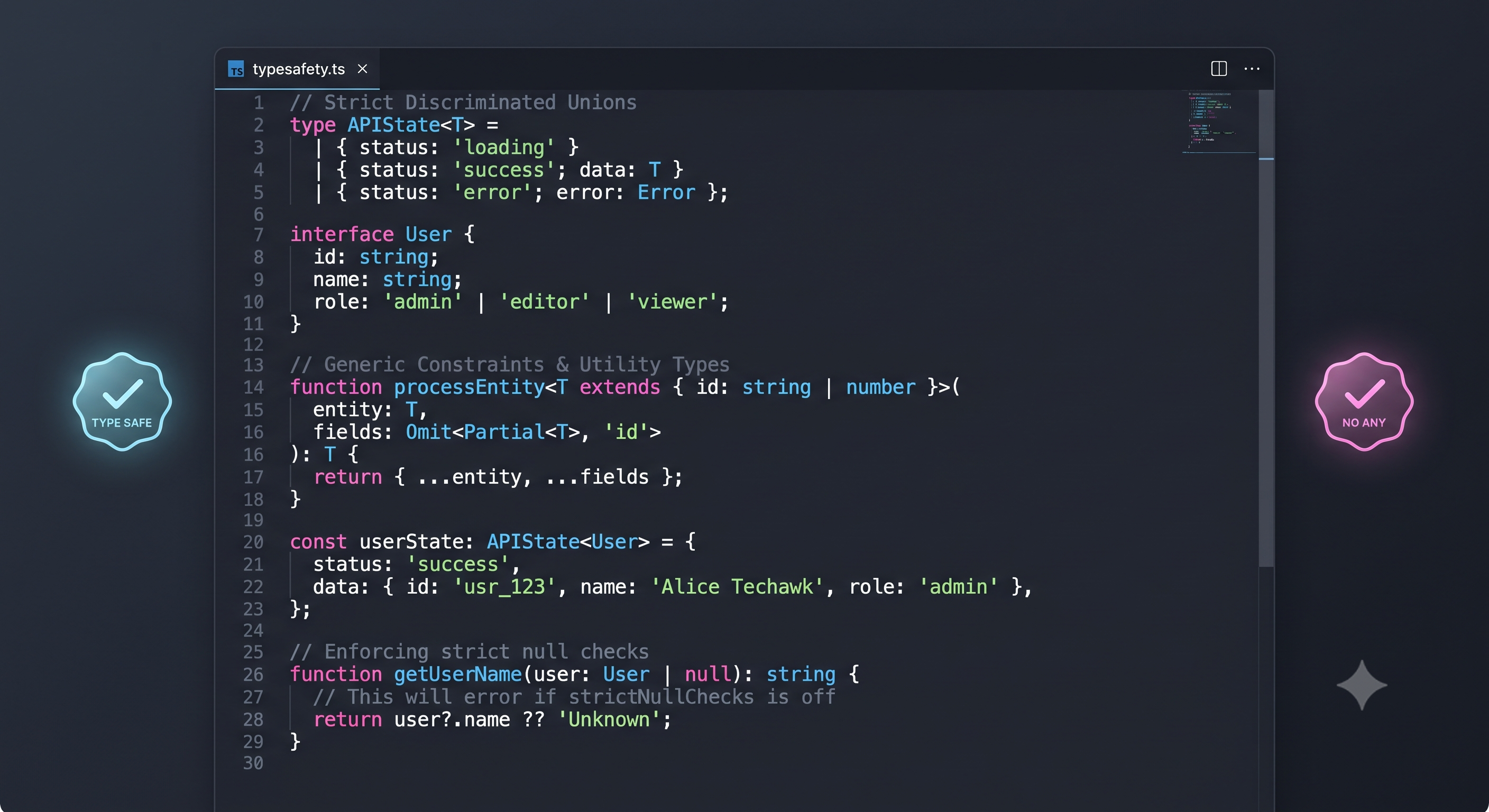
[ ] Ban Implicit & Explicit any: Enforce strict rules in your tsconfig.json (noImplicitAny: true) and replace lazy any types with unknown combined with type guards.
[ ] Leverage Discriminated Unions: Model complex state (like async loading, success, and error states) using tagged union types instead of optional properties that allow illegal states.
[ ] Utilize Utility Types Effectively: Master built-in utilities like Omit, Pick, Record, and ReturnType to derive types dynamically rather than duplicating manual definitions.
[ ] Constrain Generics Properly: Use the extends keyword on generic type parameters to restrict inputs and maintain predictable inference boundaries.
[ ] Enable Strict Null Checks: Turn on strictNullChecks to force explicit handling of null and undefined, wiping out entire classes of production TypeError bugs.
Why It Matters
TypeScript isn't just about catching typos before compile time—it's about creating living documentation and self-documenting code contracts. Strong typing empowers your team to refactor fearlessly and scale applications without second-guessing system behavior.
Discussion Question
What is your preferred strategy for managing deeply nested API response types without turning your code into an unreadable maintenance nightmare? Let’s talk code below! 👇
CTA (Join Developers & Coding)
Ready to sharpen your engineering skills and write cleaner code? Join the Developers & Coding community to collaborate with fellow developers, share architectural patterns, and level up your stack.
As professional developer surveys highlight, strict typing is foundational for maintaining massive, fast-evolving codebases. But leveraging TypeScript effectively means moving beyond basic interfaces and embracing advanced type-level programming.
Audit and elevate your code quality with this developer checklist:
[ ] Ban Implicit & Explicit any: Enforce strict rules in your tsconfig.json (noImplicitAny: true) and replace lazy any types with unknown combined with type guards.
[ ] Leverage Discriminated Unions: Model complex state (like async loading, success, and error states) using tagged union types instead of optional properties that allow illegal states.
[ ] Utilize Utility Types Effectively: Master built-in utilities like Omit, Pick, Record, and ReturnType to derive types dynamically rather than duplicating manual definitions.
[ ] Constrain Generics Properly: Use the extends keyword on generic type parameters to restrict inputs and maintain predictable inference boundaries.
[ ] Enable Strict Null Checks: Turn on strictNullChecks to force explicit handling of null and undefined, wiping out entire classes of production TypeError bugs.
Why It Matters
TypeScript isn't just about catching typos before compile time—it's about creating living documentation and self-documenting code contracts. Strong typing empowers your team to refactor fearlessly and scale applications without second-guessing system behavior.
Discussion Question
What is your preferred strategy for managing deeply nested API response types without turning your code into an unreadable maintenance nightmare? Let’s talk code below! 👇
CTA (Join Developers & Coding)
Ready to sharpen your engineering skills and write cleaner code? Join the Developers & Coding community to collaborate with fellow developers, share architectural patterns, and level up your stack.
The TypeScript Type-Safety Checklist: 5 Patterns to Eliminate any and Bulletproof Your Codebase
As professional developer surveys highlight, strict typing is foundational for maintaining massive, fast-evolving codebases. But leveraging TypeScript effectively means moving beyond basic interfaces and embracing advanced type-level programming.
Audit and elevate your code quality with this developer checklist:
[ ] Ban Implicit & Explicit any: Enforce strict rules in your tsconfig.json (noImplicitAny: true) and replace lazy any types with unknown combined with type guards.
[ ] Leverage Discriminated Unions: Model complex state (like async loading, success, and error states) using tagged union types instead of optional properties that allow illegal states.
[ ] Utilize Utility Types Effectively: Master built-in utilities like Omit, Pick, Record, and ReturnType to derive types dynamically rather than duplicating manual definitions.
[ ] Constrain Generics Properly: Use the extends keyword on generic type parameters to restrict inputs and maintain predictable inference boundaries.
[ ] Enable Strict Null Checks: Turn on strictNullChecks to force explicit handling of null and undefined, wiping out entire classes of production TypeError bugs.
Why It Matters
TypeScript isn't just about catching typos before compile time—it's about creating living documentation and self-documenting code contracts. Strong typing empowers your team to refactor fearlessly and scale applications without second-guessing system behavior.
Discussion Question
What is your preferred strategy for managing deeply nested API response types without turning your code into an unreadable maintenance nightmare? Let’s talk code below! 👇
CTA (Join Developers & Coding)
Ready to sharpen your engineering skills and write cleaner code? Join the Developers & Coding community to collaborate with fellow developers, share architectural patterns, and level up your stack.

 English
 Arabic
 French
 Spanish
 Portuguese
 Deutsch
 Turkish
 Dutch
Dutch
 Italiano
 Russian
 Portuguese (Brazil)
 Greek
Greek