


From Code Monkey to Tech Lead: How to Build High-Visibility Engineering Impact in India
The Industry Dilemma:
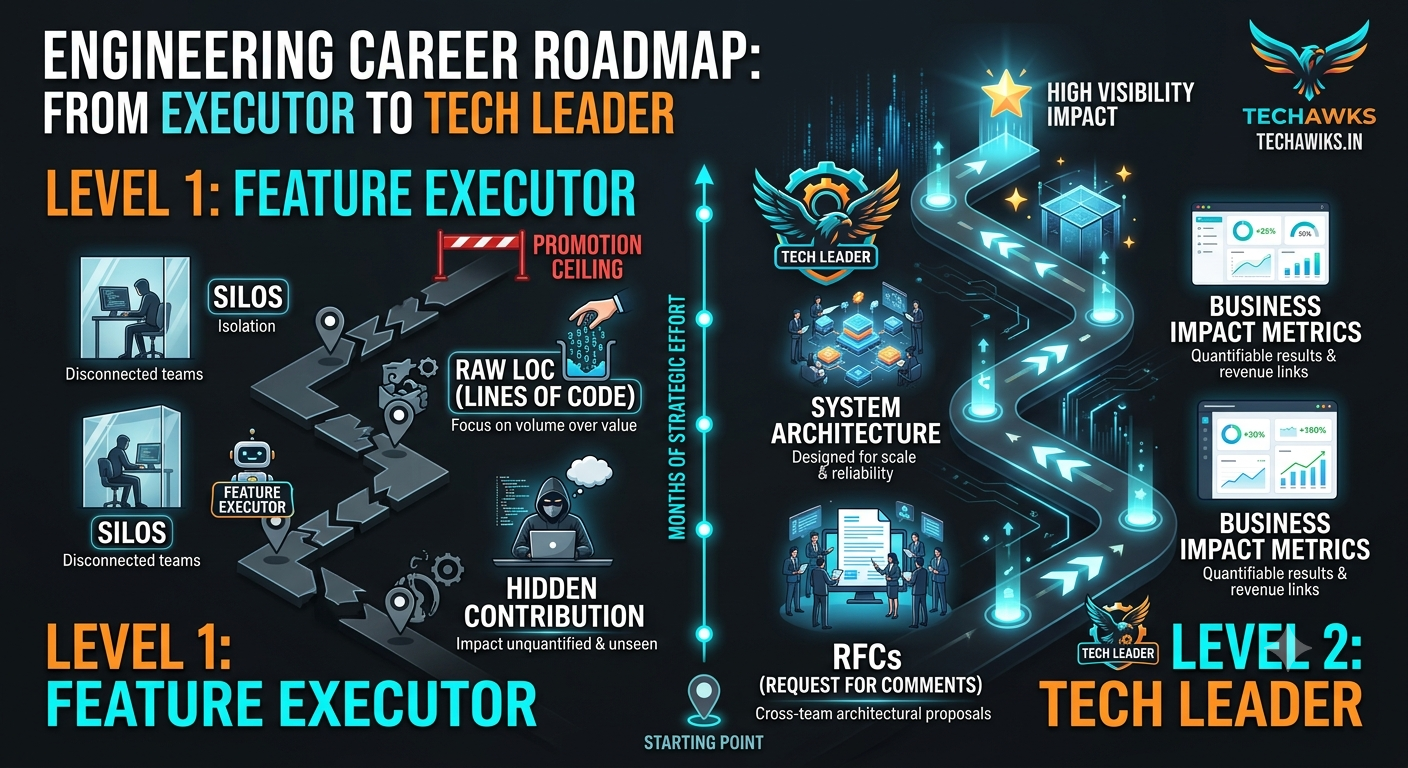
In India's fast-paced tech ecosystem, standard performance metrics often reward silent execution until promotion cycles hit—where management asks, "What high-impact systems did this engineer own?"
To transition from a Senior Software Engineer to a Lead or Staff Architect, you must shift your focus from volume of code to business ownership.
🚀 3 Practical Strategies to Drive High-Visibility Impact
1. Write RFCs (Request for Comments) Before You Write Code
The Action: Before kicking off major features, author a clear design document outlining architecture, edge cases, trade-offs, and security impacts.
Why it Works: RFCs force alignment early, prevent costly refactors, and establish you as a technical authority across cross-functional teams (Product, QA, DevOps).
2. Become a "Force Multiplier" for Your Team
The Action: Automate tedious developer workflows (e.g., local mock data generators, CI/CD pipeline checks), write onboarding docs, and actively mentor junior devs.
Why it Works: Engineering leaders look for people who elevate the entire pod, not just individual contributors who hoard domain knowledge.
3. Quantify Your Wins in Business Metrics
The Action: Don't just list "Migrated database endpoints" on your performance review. Frame it as:
❌ Bad: "Refactored payment gateway integration."
✅ Good: "Reduced API p99 latency from 450ms to 120ms, dropping checkout drop-offs by 4%."
Why it Works: Engineering managers and directors think in costs, reliability, and revenue—speak their language.
🛠️ Your 30-Day Action Plan
Identify a Pain Point: Find one repetitive bottleneck in your squad's weekly sprint (e.g., flaky integration tests).
Propose a Solution: Write a 1-page proposal detailing the fix and estimated time saved.
Execute & Share: Build it, roll it out, and present the results in your team's bi-weekly demo.
Key Takeaways
Design First: Architectural clarity (RFCs) creates more leadership visibility than raw pull requests.
Multiply Impact: Elevate team productivity through tooling, documentation, and mentorship.
Speak Business: Frame technical achievements around latency, cost savings, and reliability.
CTA
🇮🇳 Looking to navigate your tech career in top Indian startups and GCCs?
Get real-world career roadmaps, architecture guides, and peer mentorship from industry leaders.
👉 Join Techawks India and build a high-impact engineering career today!
The Industry Dilemma:
In India's fast-paced tech ecosystem, standard performance metrics often reward silent execution until promotion cycles hit—where management asks, "What high-impact systems did this engineer own?"
To transition from a Senior Software Engineer to a Lead or Staff Architect, you must shift your focus from volume of code to business ownership.
🚀 3 Practical Strategies to Drive High-Visibility Impact
1. Write RFCs (Request for Comments) Before You Write Code
The Action: Before kicking off major features, author a clear design document outlining architecture, edge cases, trade-offs, and security impacts.
Why it Works: RFCs force alignment early, prevent costly refactors, and establish you as a technical authority across cross-functional teams (Product, QA, DevOps).
2. Become a "Force Multiplier" for Your Team
The Action: Automate tedious developer workflows (e.g., local mock data generators, CI/CD pipeline checks), write onboarding docs, and actively mentor junior devs.
Why it Works: Engineering leaders look for people who elevate the entire pod, not just individual contributors who hoard domain knowledge.
3. Quantify Your Wins in Business Metrics
The Action: Don't just list "Migrated database endpoints" on your performance review. Frame it as:
❌ Bad: "Refactored payment gateway integration."
✅ Good: "Reduced API p99 latency from 450ms to 120ms, dropping checkout drop-offs by 4%."
Why it Works: Engineering managers and directors think in costs, reliability, and revenue—speak their language.
🛠️ Your 30-Day Action Plan
Identify a Pain Point: Find one repetitive bottleneck in your squad's weekly sprint (e.g., flaky integration tests).
Propose a Solution: Write a 1-page proposal detailing the fix and estimated time saved.
Execute & Share: Build it, roll it out, and present the results in your team's bi-weekly demo.
Key Takeaways
Design First: Architectural clarity (RFCs) creates more leadership visibility than raw pull requests.
Multiply Impact: Elevate team productivity through tooling, documentation, and mentorship.
Speak Business: Frame technical achievements around latency, cost savings, and reliability.
CTA
🇮🇳 Looking to navigate your tech career in top Indian startups and GCCs?
Get real-world career roadmaps, architecture guides, and peer mentorship from industry leaders.
👉 Join Techawks India and build a high-impact engineering career today!
From Code Monkey to Tech Lead: How to Build High-Visibility Engineering Impact in India
The Industry Dilemma:
In India's fast-paced tech ecosystem, standard performance metrics often reward silent execution until promotion cycles hit—where management asks, "What high-impact systems did this engineer own?"
To transition from a Senior Software Engineer to a Lead or Staff Architect, you must shift your focus from volume of code to business ownership.
🚀 3 Practical Strategies to Drive High-Visibility Impact
1. Write RFCs (Request for Comments) Before You Write Code
The Action: Before kicking off major features, author a clear design document outlining architecture, edge cases, trade-offs, and security impacts.
Why it Works: RFCs force alignment early, prevent costly refactors, and establish you as a technical authority across cross-functional teams (Product, QA, DevOps).
2. Become a "Force Multiplier" for Your Team
The Action: Automate tedious developer workflows (e.g., local mock data generators, CI/CD pipeline checks), write onboarding docs, and actively mentor junior devs.
Why it Works: Engineering leaders look for people who elevate the entire pod, not just individual contributors who hoard domain knowledge.
3. Quantify Your Wins in Business Metrics
The Action: Don't just list "Migrated database endpoints" on your performance review. Frame it as:
❌ Bad: "Refactored payment gateway integration."
✅ Good: "Reduced API p99 latency from 450ms to 120ms, dropping checkout drop-offs by 4%."
Why it Works: Engineering managers and directors think in costs, reliability, and revenue—speak their language.
🛠️ Your 30-Day Action Plan
Identify a Pain Point: Find one repetitive bottleneck in your squad's weekly sprint (e.g., flaky integration tests).
Propose a Solution: Write a 1-page proposal detailing the fix and estimated time saved.
Execute & Share: Build it, roll it out, and present the results in your team's bi-weekly demo.
Key Takeaways
Design First: Architectural clarity (RFCs) creates more leadership visibility than raw pull requests.
Multiply Impact: Elevate team productivity through tooling, documentation, and mentorship.
Speak Business: Frame technical achievements around latency, cost savings, and reliability.
CTA
🇮🇳 Looking to navigate your tech career in top Indian startups and GCCs?
Get real-world career roadmaps, architecture guides, and peer mentorship from industry leaders.
👉 Join Techawks India and build a high-impact engineering career today!

 Arabic
 French
 Spanish
 Portuguese
 Deutsch
 Turkish
 Dutch
Dutch
 Italiano
 Russian
 Romaian
 Portuguese (Brazil)
 Greek
Greek