


5 Essential Tools Every UK Tech Team Needs for Async Work
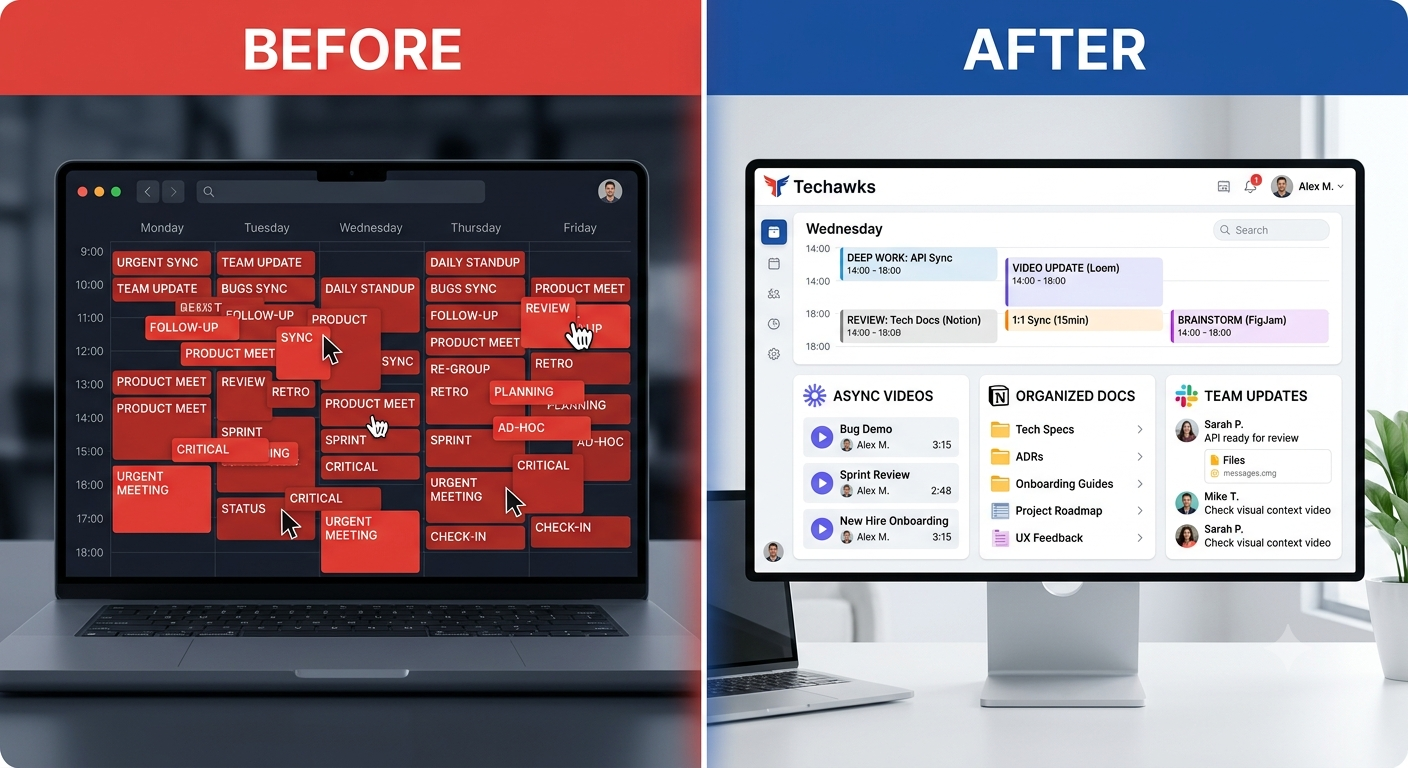
As engineering and product teams expand across different regions—from London and Manchester to remote hubs across the UK—relying on real-time meetings to make everyday decisions creates unnecessary bottlenecks. Moving toward an asynchronous-first culture keeps projects moving forward without burning out your developers and managers.
To build a seamless async workflow, your stack needs tools designed to reduce back-and-forth friction while keeping documentation crystal clear. Here are three core tool categories and top-tier recommendations to streamline your local workflow:
1. Loom: For Visual Context Without the Meeting
Instead of scheduling a 30-minute call to walk through a bug report or a code review, record a short 2-minute video. Loom lets you share your screen, explain technical nuances clearly, and allow teammates to review and respond in their own time.
Actionable Advice: Keep your screen recordings under 3 minutes. Outline the problem in the first 30 seconds, show the visual error or update, and end with a clear question for the recipient.
2. Notion: For Centralized Technical Documentation
Scattered Slack threads and lost Google Docs ruin productivity. Notion acts as a single source of truth for your team's system architecture, technical specs, and team onboarding guides.
Actionable Advice: Create standardized templates for project specs and Architecture Decision Records (ADRs). When a decision is made asynchronously, document the "why" in Notion so new engineers aren't left guessing.
3. FigJam: For Low-Friction Brainstorming & Retrospectives
Real-time whiteboarding sessions often favor the loudest voice in the room. FigJam allows team members to drop sticky notes, diagrams, and feedback asynchronously prior to sprint planning or retrospectives.
Actionable Advice: Open your retrospective board 24 hours before your wrap-up. Let team members contribute their feedback silently on their own schedule before holding a brief, targeted discussion.
Making the shift to async doesn't happen overnight, but auditing your tool stack is the fastest way to give your team back their deep-work hours.
Key Takeaways
Protect Focus Time: Replace routine status updates with short Loom videos and documented specs.
Centralize Knowledge: Standardize documentation in Notion so information is accessible on demand.
Async-First Collaboration: Give teams a 24-hour window to contribute to visual planning boards before finalizing decisions.
CTA (Join Techawks UK)
Looking to level up your tech stack and connect with fellow developers, product leaders, and tech founders across the UK?
👉 [Join Techawks UK Today] to access exclusive local networking, technical deep-dives, and community-driven insights.
As engineering and product teams expand across different regions—from London and Manchester to remote hubs across the UK—relying on real-time meetings to make everyday decisions creates unnecessary bottlenecks. Moving toward an asynchronous-first culture keeps projects moving forward without burning out your developers and managers.
To build a seamless async workflow, your stack needs tools designed to reduce back-and-forth friction while keeping documentation crystal clear. Here are three core tool categories and top-tier recommendations to streamline your local workflow:
1. Loom: For Visual Context Without the Meeting
Instead of scheduling a 30-minute call to walk through a bug report or a code review, record a short 2-minute video. Loom lets you share your screen, explain technical nuances clearly, and allow teammates to review and respond in their own time.
Actionable Advice: Keep your screen recordings under 3 minutes. Outline the problem in the first 30 seconds, show the visual error or update, and end with a clear question for the recipient.
2. Notion: For Centralized Technical Documentation
Scattered Slack threads and lost Google Docs ruin productivity. Notion acts as a single source of truth for your team's system architecture, technical specs, and team onboarding guides.
Actionable Advice: Create standardized templates for project specs and Architecture Decision Records (ADRs). When a decision is made asynchronously, document the "why" in Notion so new engineers aren't left guessing.
3. FigJam: For Low-Friction Brainstorming & Retrospectives
Real-time whiteboarding sessions often favor the loudest voice in the room. FigJam allows team members to drop sticky notes, diagrams, and feedback asynchronously prior to sprint planning or retrospectives.
Actionable Advice: Open your retrospective board 24 hours before your wrap-up. Let team members contribute their feedback silently on their own schedule before holding a brief, targeted discussion.
Making the shift to async doesn't happen overnight, but auditing your tool stack is the fastest way to give your team back their deep-work hours.
Key Takeaways
Protect Focus Time: Replace routine status updates with short Loom videos and documented specs.
Centralize Knowledge: Standardize documentation in Notion so information is accessible on demand.
Async-First Collaboration: Give teams a 24-hour window to contribute to visual planning boards before finalizing decisions.
CTA (Join Techawks UK)
Looking to level up your tech stack and connect with fellow developers, product leaders, and tech founders across the UK?
👉 [Join Techawks UK Today] to access exclusive local networking, technical deep-dives, and community-driven insights.
5 Essential Tools Every UK Tech Team Needs for Async Work
As engineering and product teams expand across different regions—from London and Manchester to remote hubs across the UK—relying on real-time meetings to make everyday decisions creates unnecessary bottlenecks. Moving toward an asynchronous-first culture keeps projects moving forward without burning out your developers and managers.
To build a seamless async workflow, your stack needs tools designed to reduce back-and-forth friction while keeping documentation crystal clear. Here are three core tool categories and top-tier recommendations to streamline your local workflow:
1. Loom: For Visual Context Without the Meeting
Instead of scheduling a 30-minute call to walk through a bug report or a code review, record a short 2-minute video. Loom lets you share your screen, explain technical nuances clearly, and allow teammates to review and respond in their own time.
Actionable Advice: Keep your screen recordings under 3 minutes. Outline the problem in the first 30 seconds, show the visual error or update, and end with a clear question for the recipient.
2. Notion: For Centralized Technical Documentation
Scattered Slack threads and lost Google Docs ruin productivity. Notion acts as a single source of truth for your team's system architecture, technical specs, and team onboarding guides.
Actionable Advice: Create standardized templates for project specs and Architecture Decision Records (ADRs). When a decision is made asynchronously, document the "why" in Notion so new engineers aren't left guessing.
3. FigJam: For Low-Friction Brainstorming & Retrospectives
Real-time whiteboarding sessions often favor the loudest voice in the room. FigJam allows team members to drop sticky notes, diagrams, and feedback asynchronously prior to sprint planning or retrospectives.
Actionable Advice: Open your retrospective board 24 hours before your wrap-up. Let team members contribute their feedback silently on their own schedule before holding a brief, targeted discussion.
Making the shift to async doesn't happen overnight, but auditing your tool stack is the fastest way to give your team back their deep-work hours.
Key Takeaways
Protect Focus Time: Replace routine status updates with short Loom videos and documented specs.
Centralize Knowledge: Standardize documentation in Notion so information is accessible on demand.
Async-First Collaboration: Give teams a 24-hour window to contribute to visual planning boards before finalizing decisions.
CTA (Join Techawks UK)
Looking to level up your tech stack and connect with fellow developers, product leaders, and tech founders across the UK?
👉 [Join Techawks UK Today] to access exclusive local networking, technical deep-dives, and community-driven insights.

 English
 Arabic
 French
 Portuguese
 Deutsch
 Turkish
 Dutch
Dutch
 Italiano
 Russian
 Romaian
 Portuguese (Brazil)
 Greek
Greek