


Beyond the Buzz: Why India’s ONDC Protocol is the Sleeping Giant of E-Commerce and How Developers Can Tap In
ONDC aims to democratize digital commerce by moving away from platform-centric models (like Amazon or Flipkart) to an interoperable, unbundled network. It allows a small artisan in Jaipur to display their products on any ONDC-compliant buyer app in Mumbai without being locked into a single walled garden.
Why does this matter?
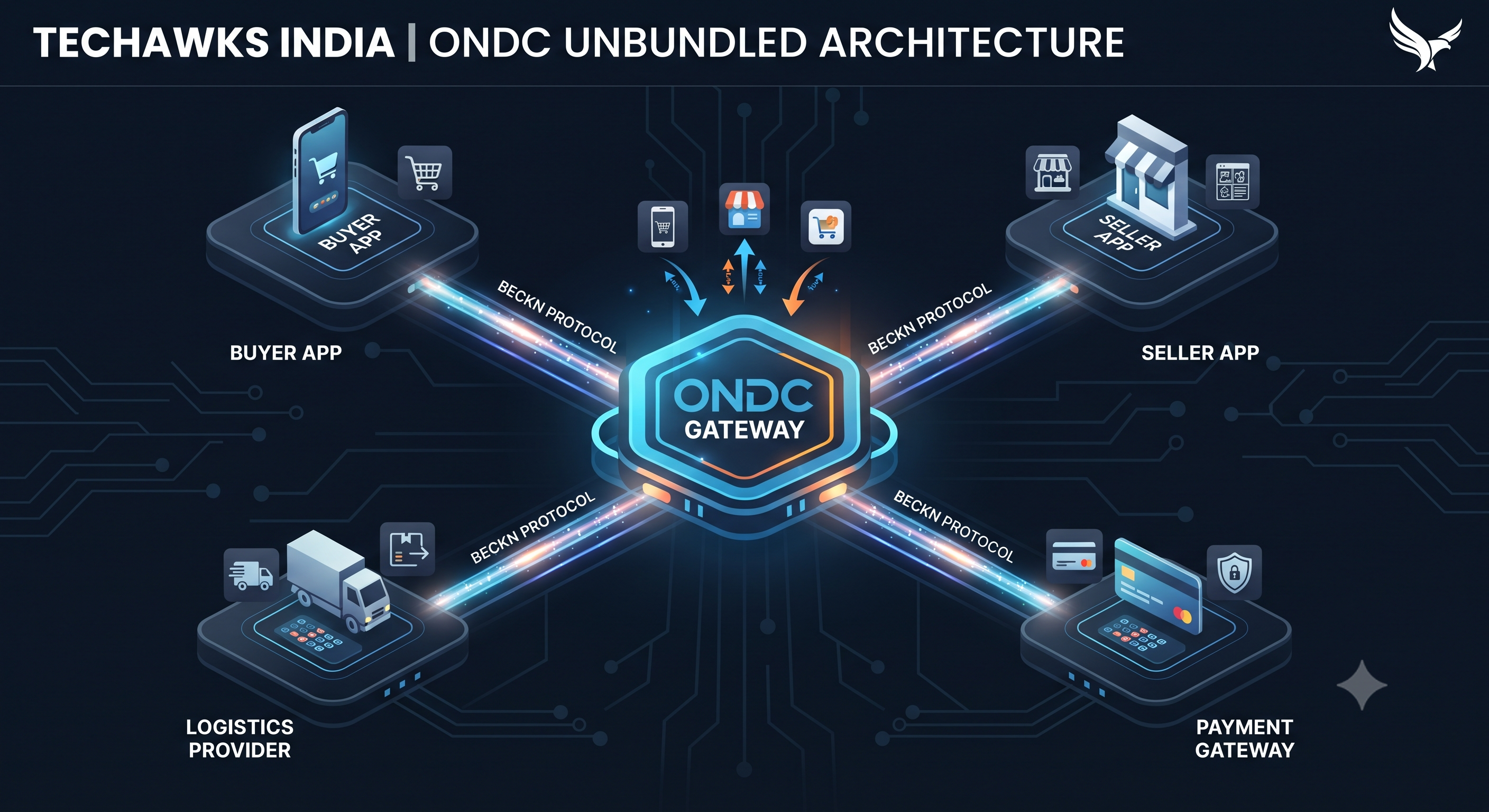
For years, the "ONDC vs. Zomato/Swiggy" narrative has dominated the news. The real story is the massive shift in system architecture. ONDC breaks the monolithic e-commerce stack into specialized microservices (Buyer Apps, Gateway, Seller Apps, and Logistics Providers) communicating via Beckn protocol APIs. This creates unprecedented competition and innovation opportunities.
Tutorial: Understanding the ONDC Beckn API Flow (A Simplified Look)
Instead of trying to reverse-engineer a massive platform, you need to understand the standardized API handshake that powers every transaction on the network:
The Search (/search): When a user (on a Buyer App like Paytm or Pincode) looks for "shoes," the Buyer App broadcasts a /search request to the ONDC Gateway, which relays it to all relevant Seller Apps (ERP systems, catalogue managers).
The Selection (/select and /init): The seller apps respond with available items (/on_search). The user selects an item (/select). The buyer app then initializes the order (/init) with fulfillment details.
The Fulfillment (/confirm and /update): The seller confirms the order (/on_confirm). The ONDC network then triggers logistics discovery, and the tracking begins (/status, /update if details change).
The Settlement (/track and /cancel): Finally, payment is processed (often via UPI integration) and settlement occurs.
The key technical challenge developers face is ensuring their app, whether it's a niche hyperlocal store or a logistics tracker, speaks the exact JSON schema of the Beckn protocol. Mastering this standard means your service becomes instantly compatible with the entire Indian e-commerce network, rather than just one platform's ecosystem.
Discussion Question: What do you see as the biggest technical hurdle for ONDC right now—standardizing complex catalogue schemas across millions of MSMEs, ensuring real-time inventory sync across the network, or managing distributed dispute resolution? Let’s discuss in the comments!
CTA (Join Techawks India): Ready to build the future of Indian e-commerce? Dive deeper into ONDC protocols, Beckn API tutorials, and connect with fellow builders by joining the Techawks India community today!
Beyond the Buzz: Why India’s ONDC Protocol is the Sleeping Giant of E-Commerce and How Developers Can Tap In
ONDC aims to democratize digital commerce by moving away from platform-centric models (like Amazon or Flipkart) to an interoperable, unbundled network. It allows a small artisan in Jaipur to display their products on any ONDC-compliant buyer app in Mumbai without being locked into a single walled garden.
Why does this matter?
For years, the "ONDC vs. Zomato/Swiggy" narrative has dominated the news. The real story is the massive shift in system architecture. ONDC breaks the monolithic e-commerce stack into specialized microservices (Buyer Apps, Gateway, Seller Apps, and Logistics Providers) communicating via Beckn protocol APIs. This creates unprecedented competition and innovation opportunities.
Tutorial: Understanding the ONDC Beckn API Flow (A Simplified Look)
Instead of trying to reverse-engineer a massive platform, you need to understand the standardized API handshake that powers every transaction on the network:
The Search (/search): When a user (on a Buyer App like Paytm or Pincode) looks for "shoes," the Buyer App broadcasts a /search request to the ONDC Gateway, which relays it to all relevant Seller Apps (ERP systems, catalogue managers).
The Selection (/select and /init): The seller apps respond with available items (/on_search). The user selects an item (/select). The buyer app then initializes the order (/init) with fulfillment details.
The Fulfillment (/confirm and /update): The seller confirms the order (/on_confirm). The ONDC network then triggers logistics discovery, and the tracking begins (/status, /update if details change).
The Settlement (/track and /cancel): Finally, payment is processed (often via UPI integration) and settlement occurs.
The key technical challenge developers face is ensuring their app, whether it's a niche hyperlocal store or a logistics tracker, speaks the exact JSON schema of the Beckn protocol. Mastering this standard means your service becomes instantly compatible with the entire Indian e-commerce network, rather than just one platform's ecosystem.
Discussion Question: What do you see as the biggest technical hurdle for ONDC right now—standardizing complex catalogue schemas across millions of MSMEs, ensuring real-time inventory sync across the network, or managing distributed dispute resolution? Let’s discuss in the comments!
CTA (Join Techawks India): Ready to build the future of Indian e-commerce? Dive deeper into ONDC protocols, Beckn API tutorials, and connect with fellow builders by joining the Techawks India community today!

 English
 Arabic
 French
 Spanish
 Portuguese
 Deutsch
 Turkish
 Dutch
 Russian
 Romaian
 Portuguese (Brazil)
 Greek