


Sovereign AI & Data Governance: The 4-Step UAE Compliance Checklist
As organizations across the UAE accelerate the adoption of sovereign AI, cloud infrastructure, and automated workflows, regulatory expectations have matured significantly. Navigating frameworks like the UAE Personal Data Protection Law (PDPL), sector-specific mandates (such as Central Bank regulations for financial institutions), and free zone requirements (like DIFC Regulation 10 for AI systems) requires clear structural control.
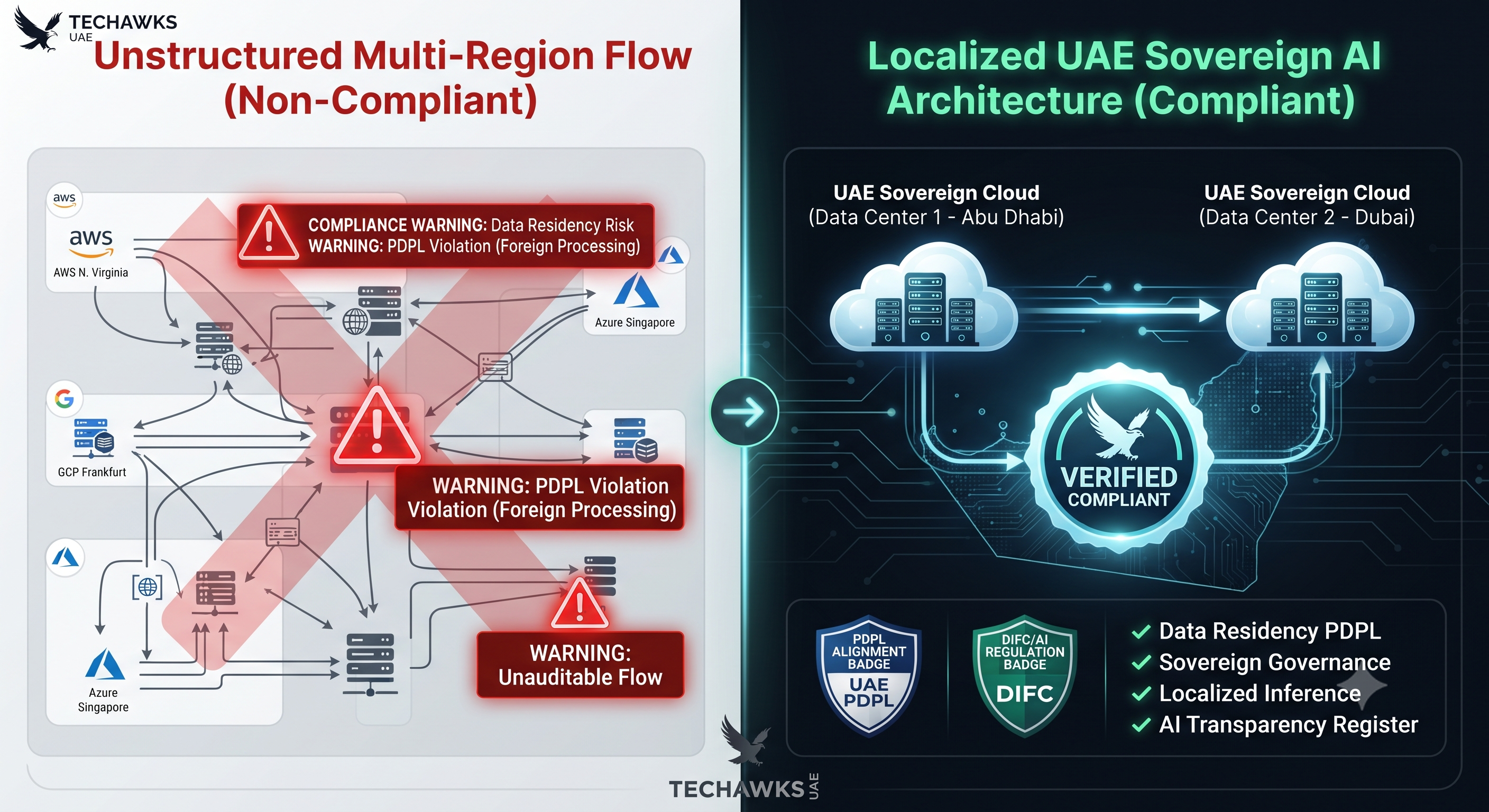
True AI sovereignty is defined by complete control over your data layer, model transparency, and operational auditability across the entire lifecycle.
Use this 4-step checklist to evaluate your UAE tech stack for compliance readiness:
Map Your Data Residency & Storage Perimeter: Identify where training datasets, model weights, and inference logs physically reside. Ensure sensitive workloads and master systems of record comply with in-country residency rules.
Conduct Mandatory AI Impact Assessments (DPIAs): For automated processing or high-risk AI deployments, perform comprehensive Data Protection Impact Assessments to proactively identify and mitigate systemic bias or privacy risks.
Implement Robust Transparency & User Notices: Provide clear, explicit notices at the point of interaction detailing how AI systems process personal data, what limits govern them, and how users can seek human intervention.
Maintain an Active AI & Processing Register: Keep structured records of your processing activities, system use cases, third-party data sharing agreements, and lawful compliance bases to streamline audit readiness.
Discussion Question: How is your team balancing the rapid deployment of generative AI features with UAE data sovereignty and regulatory requirements? Let’s discuss below!
CTA (Join Techawks UAE): Want to connect with UAE tech leaders, software architects, and engineering pioneers driving regional innovation? Join the Techawks UAE community
As organizations across the UAE accelerate the adoption of sovereign AI, cloud infrastructure, and automated workflows, regulatory expectations have matured significantly. Navigating frameworks like the UAE Personal Data Protection Law (PDPL), sector-specific mandates (such as Central Bank regulations for financial institutions), and free zone requirements (like DIFC Regulation 10 for AI systems) requires clear structural control.
True AI sovereignty is defined by complete control over your data layer, model transparency, and operational auditability across the entire lifecycle.
Use this 4-step checklist to evaluate your UAE tech stack for compliance readiness:
Map Your Data Residency & Storage Perimeter: Identify where training datasets, model weights, and inference logs physically reside. Ensure sensitive workloads and master systems of record comply with in-country residency rules.
Conduct Mandatory AI Impact Assessments (DPIAs): For automated processing or high-risk AI deployments, perform comprehensive Data Protection Impact Assessments to proactively identify and mitigate systemic bias or privacy risks.
Implement Robust Transparency & User Notices: Provide clear, explicit notices at the point of interaction detailing how AI systems process personal data, what limits govern them, and how users can seek human intervention.
Maintain an Active AI & Processing Register: Keep structured records of your processing activities, system use cases, third-party data sharing agreements, and lawful compliance bases to streamline audit readiness.
Discussion Question: How is your team balancing the rapid deployment of generative AI features with UAE data sovereignty and regulatory requirements? Let’s discuss below!
CTA (Join Techawks UAE): Want to connect with UAE tech leaders, software architects, and engineering pioneers driving regional innovation? Join the Techawks UAE community
Sovereign AI & Data Governance: The 4-Step UAE Compliance Checklist
As organizations across the UAE accelerate the adoption of sovereign AI, cloud infrastructure, and automated workflows, regulatory expectations have matured significantly. Navigating frameworks like the UAE Personal Data Protection Law (PDPL), sector-specific mandates (such as Central Bank regulations for financial institutions), and free zone requirements (like DIFC Regulation 10 for AI systems) requires clear structural control.
True AI sovereignty is defined by complete control over your data layer, model transparency, and operational auditability across the entire lifecycle.
Use this 4-step checklist to evaluate your UAE tech stack for compliance readiness:
Map Your Data Residency & Storage Perimeter: Identify where training datasets, model weights, and inference logs physically reside. Ensure sensitive workloads and master systems of record comply with in-country residency rules.
Conduct Mandatory AI Impact Assessments (DPIAs): For automated processing or high-risk AI deployments, perform comprehensive Data Protection Impact Assessments to proactively identify and mitigate systemic bias or privacy risks.
Implement Robust Transparency & User Notices: Provide clear, explicit notices at the point of interaction detailing how AI systems process personal data, what limits govern them, and how users can seek human intervention.
Maintain an Active AI & Processing Register: Keep structured records of your processing activities, system use cases, third-party data sharing agreements, and lawful compliance bases to streamline audit readiness.
Discussion Question: How is your team balancing the rapid deployment of generative AI features with UAE data sovereignty and regulatory requirements? Let’s discuss below!
CTA (Join Techawks UAE): Want to connect with UAE tech leaders, software architects, and engineering pioneers driving regional innovation? Join the Techawks UAE community

 English
 Arabic
 French
 Portuguese
 Deutsch
 Turkish
 Dutch
Dutch
 Italiano
 Russian
 Romaian
 Portuguese (Brazil)
 Greek
Greek