


The Multi-Regulator Maze: Why UK Tech Compliance Is Your Next Engineering Bottleneck
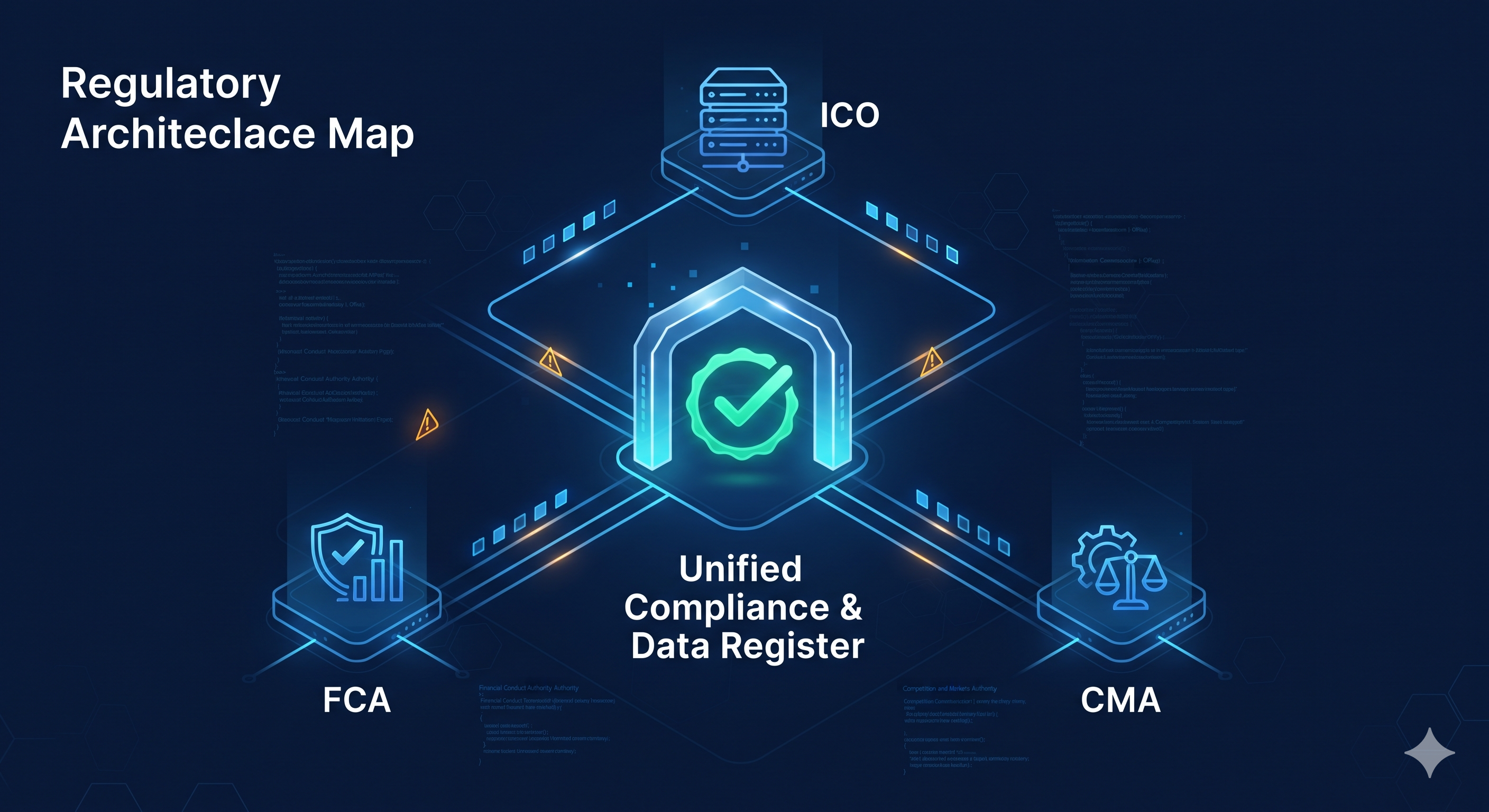
Unlike regions with single, centralized codebooks, the UK tech landscape relies on a multi-regulator, principles-based approach. Regulatory bodies like the Information Commissioner's Office (ICO), the Financial Conduct Authority (FCA), and the Competition and Markets Authority (CMA) are ramping up cross-sector scrutiny—especially regarding AI deployment, automated decision-making, and shadow data flows.
Why It Matters
When software architectures and data pipelines are built in isolation from regulatory mapping, engineering velocity screeches to a halt the moment an audit hits. If you deploy AI systems that make or inform consequential decisions about individuals without maintaining documented Data Protection Impact Assessments (DPIAs), strict traceability, and explicit data governance, your business faces heavy legal friction, broken deployments, and severe reputational damage.
What You Need to Know: Engineering for Regulatory Resilience
To ensure your tech stack can survive rigorous regulatory scrutiny without sacrificing development speed, implement these practices:
Build an Active AI and Data Register: An audit trail only works if it is dynamic. Implement continuous discovery mechanisms across your repositories and cloud clusters to track every active model, data source, and third-party API integration.
Embed Privacy and Explainability by Design: Never treat model transparency as a UI add-on. Ensure your engineering teams can technically explain how downstream outputs are generated, satisfying both UK GDPR principles and sector-specific oversight guidelines.
Map Multi-Regulator Obligations Early: If your product touches financial services, healthcare, or cross-border EU markets, map your system requirements against overlapping mandates (such as ICO guidelines, FCA principles, and extraterritorial frameworks) before writing code, rather than patching compliance holes post-launch.
Discussion Question
How is your engineering team bridging the gap between rapid software delivery and complex multi-regulator compliance? Are you tracking your data dependencies programmatically?
CTA (Join Techawks UK)
Want to connect with UK-based engineers, tech leaders, and innovators navigating the future of regulation, cloud scale, and software architecture? Join Techawks UK to stay ahead of the curve.
Unlike regions with single, centralized codebooks, the UK tech landscape relies on a multi-regulator, principles-based approach. Regulatory bodies like the Information Commissioner's Office (ICO), the Financial Conduct Authority (FCA), and the Competition and Markets Authority (CMA) are ramping up cross-sector scrutiny—especially regarding AI deployment, automated decision-making, and shadow data flows.
Why It Matters
When software architectures and data pipelines are built in isolation from regulatory mapping, engineering velocity screeches to a halt the moment an audit hits. If you deploy AI systems that make or inform consequential decisions about individuals without maintaining documented Data Protection Impact Assessments (DPIAs), strict traceability, and explicit data governance, your business faces heavy legal friction, broken deployments, and severe reputational damage.
What You Need to Know: Engineering for Regulatory Resilience
To ensure your tech stack can survive rigorous regulatory scrutiny without sacrificing development speed, implement these practices:
Build an Active AI and Data Register: An audit trail only works if it is dynamic. Implement continuous discovery mechanisms across your repositories and cloud clusters to track every active model, data source, and third-party API integration.
Embed Privacy and Explainability by Design: Never treat model transparency as a UI add-on. Ensure your engineering teams can technically explain how downstream outputs are generated, satisfying both UK GDPR principles and sector-specific oversight guidelines.
Map Multi-Regulator Obligations Early: If your product touches financial services, healthcare, or cross-border EU markets, map your system requirements against overlapping mandates (such as ICO guidelines, FCA principles, and extraterritorial frameworks) before writing code, rather than patching compliance holes post-launch.
Discussion Question
How is your engineering team bridging the gap between rapid software delivery and complex multi-regulator compliance? Are you tracking your data dependencies programmatically?
CTA (Join Techawks UK)
Want to connect with UK-based engineers, tech leaders, and innovators navigating the future of regulation, cloud scale, and software architecture? Join Techawks UK to stay ahead of the curve.
The Multi-Regulator Maze: Why UK Tech Compliance Is Your Next Engineering Bottleneck
Unlike regions with single, centralized codebooks, the UK tech landscape relies on a multi-regulator, principles-based approach. Regulatory bodies like the Information Commissioner's Office (ICO), the Financial Conduct Authority (FCA), and the Competition and Markets Authority (CMA) are ramping up cross-sector scrutiny—especially regarding AI deployment, automated decision-making, and shadow data flows.
Why It Matters
When software architectures and data pipelines are built in isolation from regulatory mapping, engineering velocity screeches to a halt the moment an audit hits. If you deploy AI systems that make or inform consequential decisions about individuals without maintaining documented Data Protection Impact Assessments (DPIAs), strict traceability, and explicit data governance, your business faces heavy legal friction, broken deployments, and severe reputational damage.
What You Need to Know: Engineering for Regulatory Resilience
To ensure your tech stack can survive rigorous regulatory scrutiny without sacrificing development speed, implement these practices:
Build an Active AI and Data Register: An audit trail only works if it is dynamic. Implement continuous discovery mechanisms across your repositories and cloud clusters to track every active model, data source, and third-party API integration.
Embed Privacy and Explainability by Design: Never treat model transparency as a UI add-on. Ensure your engineering teams can technically explain how downstream outputs are generated, satisfying both UK GDPR principles and sector-specific oversight guidelines.
Map Multi-Regulator Obligations Early: If your product touches financial services, healthcare, or cross-border EU markets, map your system requirements against overlapping mandates (such as ICO guidelines, FCA principles, and extraterritorial frameworks) before writing code, rather than patching compliance holes post-launch.
Discussion Question
How is your engineering team bridging the gap between rapid software delivery and complex multi-regulator compliance? Are you tracking your data dependencies programmatically?
CTA (Join Techawks UK)
Want to connect with UK-based engineers, tech leaders, and innovators navigating the future of regulation, cloud scale, and software architecture? Join Techawks UK to stay ahead of the curve.

 English
 Arabic
 French
 Spanish
 Portuguese
 Deutsch
 Turkish
 Dutch
Dutch
 Russian
 Romaian
 Portuguese (Brazil)
 Greek
Greek