


From Service Capital to Silicon Sovereignty: Why India’s Tech Ecosystem Must Master Full-Stack Deep Tech
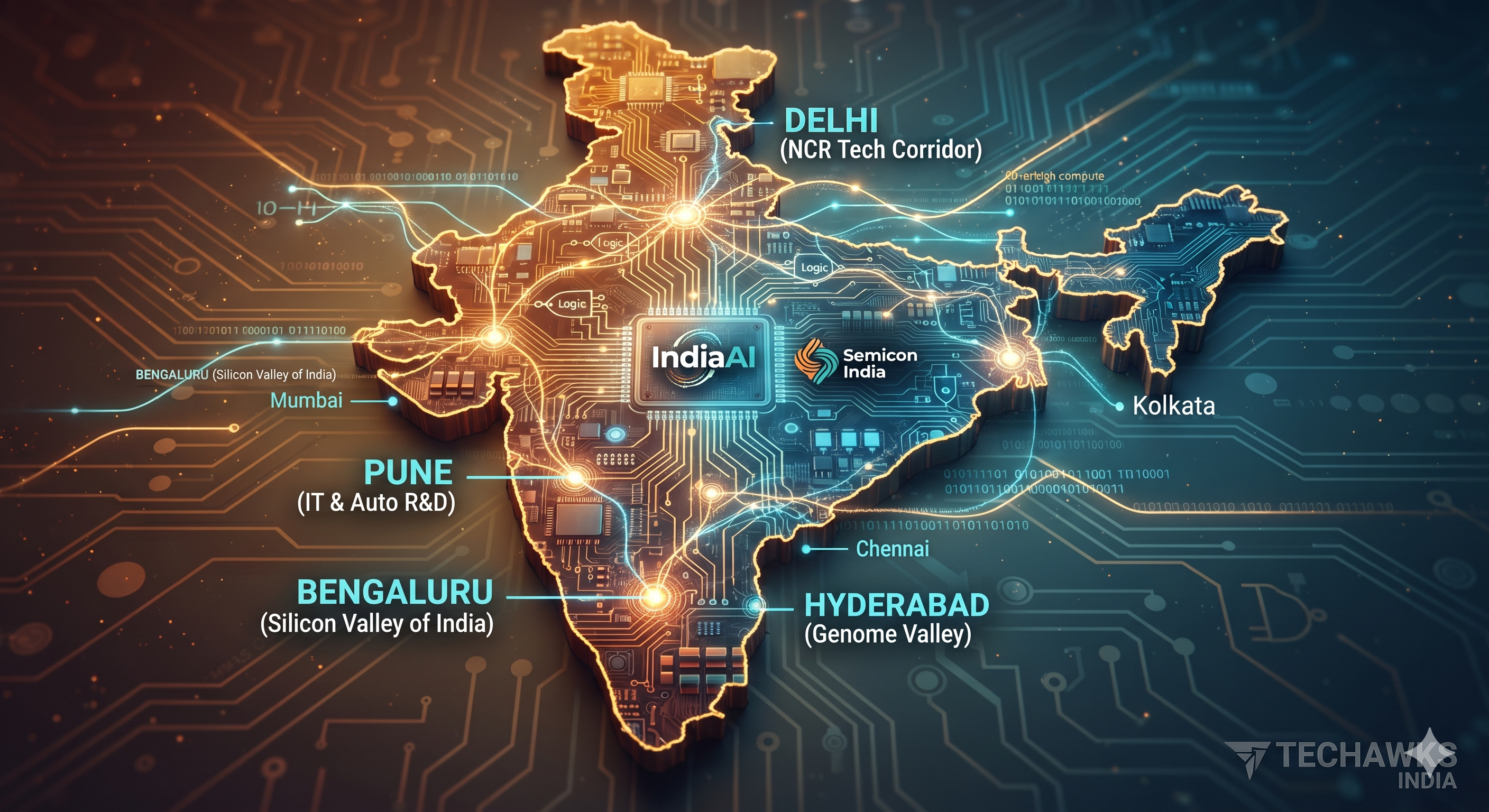
India's tech community is standing at a historic inflection point. With massive national pushes into domestic semiconductor fabrication, advanced OSAT/ATMP packaging, and millions of subsidized GPU hours rolling out through the IndiaAI Mission, the structural barriers to building hardware and foundational AI locally are disappearing.
Yet, a massive cultural and technical gap remains. Many regional engineering teams still treat tech stacks as integration puzzles rather than invention platforms. If we want to transition from writing code for foreign products to architecting indigenous foundational systems, Indian developers need to move beyond routine software delivery.
What you need to master to lead the next wave:
Understand Hardware-Software Co-Design: Modern AI efficiency isn't just about prompt tuning; it’s about understanding how models map down to silicon accelerators, memory bandwidth, and edge architecture.
Leverage Sovereign Compute Infrastructure: Take advantage of national high-performance computing resources and AI compute allocations to train, test, and deploy localized models rather than relying entirely on black-box external APIs.
Build for Bharat’s Scale and Diversity: Use open datasets and localized architectures to solve complex multilingual, financial, and infrastructural challenges unique to the subcontinent.
Discussion Question
Is your engineering team exploring hardware co-design and localized compute frameworks yet, or is your workflow still locked into traditional application-layer development?
CTA (Join Techawks India)
Ready to build deep tech, connect with India's top innovators, and shape the nation's technological independence? Join Techawks India today and lead the shift from service to sovereignty.
From Service Capital to Silicon Sovereignty: Why India’s Tech Ecosystem Must Master Full-Stack Deep Tech
India's tech community is standing at a historic inflection point. With massive national pushes into domestic semiconductor fabrication, advanced OSAT/ATMP packaging, and millions of subsidized GPU hours rolling out through the IndiaAI Mission, the structural barriers to building hardware and foundational AI locally are disappearing.
Yet, a massive cultural and technical gap remains. Many regional engineering teams still treat tech stacks as integration puzzles rather than invention platforms. If we want to transition from writing code for foreign products to architecting indigenous foundational systems, Indian developers need to move beyond routine software delivery.
What you need to master to lead the next wave:
Understand Hardware-Software Co-Design: Modern AI efficiency isn't just about prompt tuning; it’s about understanding how models map down to silicon accelerators, memory bandwidth, and edge architecture.
Leverage Sovereign Compute Infrastructure: Take advantage of national high-performance computing resources and AI compute allocations to train, test, and deploy localized models rather than relying entirely on black-box external APIs.
Build for Bharat’s Scale and Diversity: Use open datasets and localized architectures to solve complex multilingual, financial, and infrastructural challenges unique to the subcontinent.
Discussion Question
Is your engineering team exploring hardware co-design and localized compute frameworks yet, or is your workflow still locked into traditional application-layer development?
CTA (Join Techawks India)
Ready to build deep tech, connect with India's top innovators, and shape the nation's technological independence? Join Techawks India today and lead the shift from service to sovereignty.

 English
 French
 Spanish
 Portuguese
 Deutsch
 Turkish
 Dutch
 Italiano
 Russian
 Romaian
 Portuguese (Brazil)
 Greek