 English
 Arabic
 French
 Spanish
 Portuguese
 Deutsch
 Turkish
 Dutch
Dutch
 Italiano
 Russian
 Romaian
 Portuguese (Brazil)
 Greek
Greek
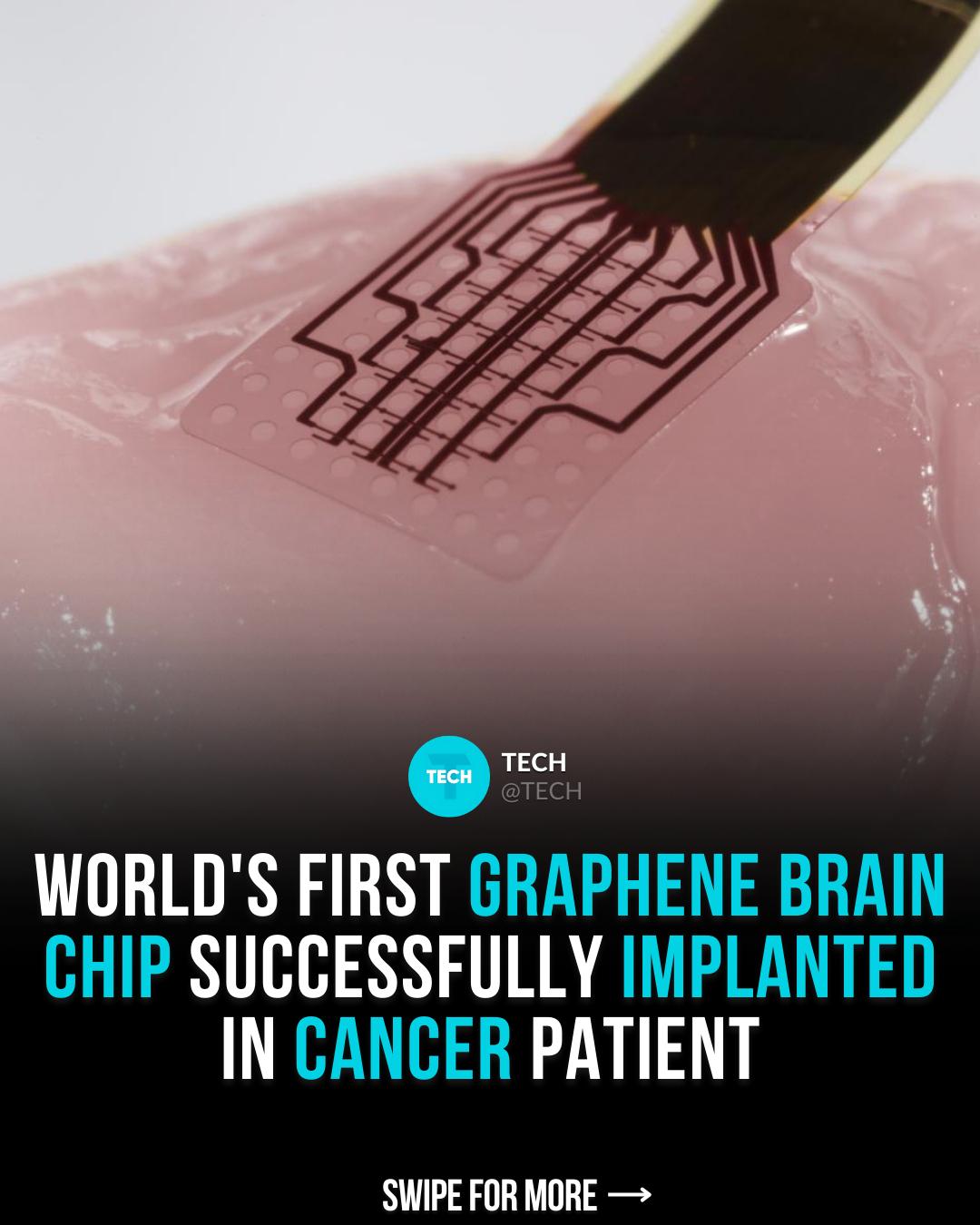
In a historic first, Inbrain Neuroelectronics has successfully implanted their revolutionary graphene-based brain-computer interface (BCI) in a patient undergoing brain tumor resection. This groundbreaking procedure, performed at Salford Royal Hospital in Manchester, UK, marks a significant milestone in the field of neurotechnology.
Inbrain's graphene BCI can differentiate between healthy and cancerous brain tissue with micrometer-level precision, enabling surgeons to conduct highly precise tumor removal while preserving critical brain functions.
Beyond neurosurgery, graphene BCIs hold immense potential for treating neurological disorders like Parkinson's disease, epilepsy, and depression, which affect an estimated 30% of the global population. Inbrain's BCI platform, which combines graphene, AI, and advanced semiconductors, received FDA Breakthrough Device designation for Parkinson's disease in September 2024.
As research progresses, graphene-based BCIs could usher in a new era of personalized, adaptive neuroelectronic therapies, improving the lives of millions affected by neurological conditions worldwide.
Inbrain's graphene BCI can differentiate between healthy and cancerous brain tissue with micrometer-level precision, enabling surgeons to conduct highly precise tumor removal while preserving critical brain functions.
Beyond neurosurgery, graphene BCIs hold immense potential for treating neurological disorders like Parkinson's disease, epilepsy, and depression, which affect an estimated 30% of the global population. Inbrain's BCI platform, which combines graphene, AI, and advanced semiconductors, received FDA Breakthrough Device designation for Parkinson's disease in September 2024.
As research progresses, graphene-based BCIs could usher in a new era of personalized, adaptive neuroelectronic therapies, improving the lives of millions affected by neurological conditions worldwide.
In a historic first, Inbrain Neuroelectronics has successfully implanted their revolutionary graphene-based brain-computer interface (BCI) in a patient undergoing brain tumor resection. This groundbreaking procedure, performed at Salford Royal Hospital in Manchester, UK, marks a significant milestone in the field of neurotechnology.
Inbrain's graphene BCI can differentiate between healthy and cancerous brain tissue with micrometer-level precision, enabling surgeons to conduct highly precise tumor removal while preserving critical brain functions.
Beyond neurosurgery, graphene BCIs hold immense potential for treating neurological disorders like Parkinson's disease, epilepsy, and depression, which affect an estimated 30% of the global population. Inbrain's BCI platform, which combines graphene, AI, and advanced semiconductors, received FDA Breakthrough Device designation for Parkinson's disease in September 2024.
As research progresses, graphene-based BCIs could usher in a new era of personalized, adaptive neuroelectronic therapies, improving the lives of millions affected by neurological conditions worldwide.
·266 Views
·0 Reviews
