


Tool Review: How Obsidian Can Turn Your Disorganized Tech Learning into a Career Superpower
When preparing for a career in tech, the volume of information you need to retain is overwhelming. Traditional note-taking tools store notes in isolated folders, making it hard to connect concepts.
Enter Obsidian: a free, local-first, markdown-based note-taking app that links your notes like a web of knowledge.
🌟 Why Obsidian Stands Out for Tech Job Seekers
1. Bi-Directional Linking (Graph View)
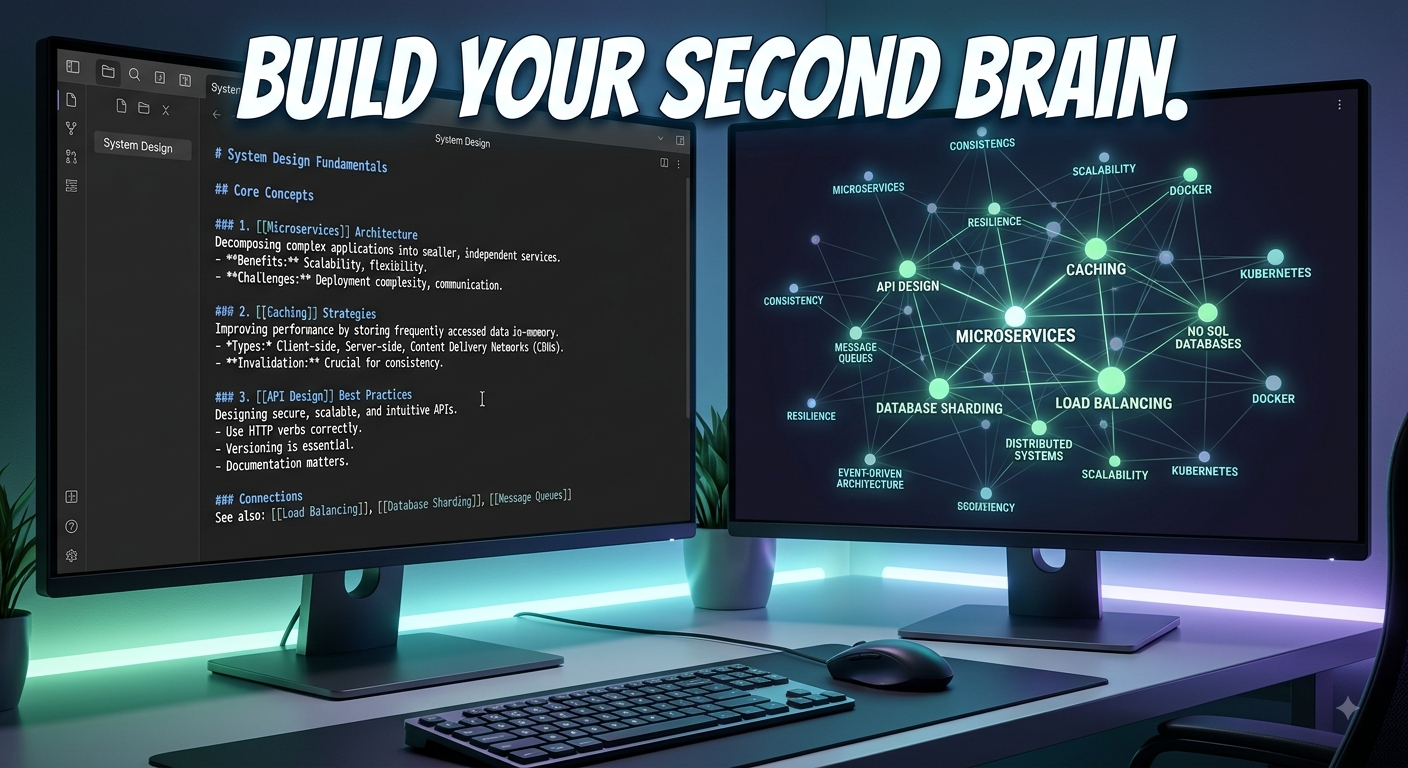
Instead of nesting notes inside endless subfolders, Obsidian lets you link concepts using double brackets [[Like This]].
Real-World Application: Create a note on [[Database Indexing]] and link it across separate notes for [[SQL Performance]], [[System Design]], and [[Interview Preparation]]. Over time, your Graph View visualizes how all your technical knowledge connects—a game-changer for deep conceptual understanding.
2. Local Markdown Ownership
Your notes are saved as standard .md (Markdown) files locally on your computer.
Why it matters: You own your data completely. There's no lock-in, and you can easily push your study notes directly to a public GitHub repository to serve as a live learning portfolio for recruiters.
3. Power-User Customization
Through community plugins like Dataview, you can turn Obsidian into a lightweight job application tracker or daily flashcard system without paying for extra SaaS subscriptions.
⚠️ Where It Falls Short
Steep Initial Curve: Unlike plug-and-play apps, Obsidian is a blank canvas. It takes a few hours to configure tags and templates to fit your workflow.
Syncing Across Devices: Free native sync isn't built-in (though you can easily sync via Git, iCloud, or Google Drive for free).
💡 How to Use Obsidian to Boost Your Career (Action Plan)
Build a Technical Glossary: Create dedicated notes for core concepts you struggle with during interview prep.
Log Your Coding Challenges: Store your LeetCode/HackerRank solutions alongside notes on the time and space complexity (O(n), trade-offs.
Publish Your Notes: Use tools like Obsidian Publish or export your Markdown files to GitHub to demonstrate publicly that you are a structured, continuous learner.
Key Takeaways
Connective Learning: Bi-directional links help you retain complex technical concepts far better than traditional nested folders.
Portable & Open: Markdown files ensure your career knowledge vault remains yours forever and can double as a public portfolio.
Low Overhead, High Yield: A modest initial setup time pays off in organized, instantly searchable interview prep.
CTA
Building your skills is only half the battle—finding the right team is the other.
Put your organized tech knowledge to the test. [Join Tech Jobs & Opportunities] to discover high-growth tech roles open for applications today.
When preparing for a career in tech, the volume of information you need to retain is overwhelming. Traditional note-taking tools store notes in isolated folders, making it hard to connect concepts.
Enter Obsidian: a free, local-first, markdown-based note-taking app that links your notes like a web of knowledge.
🌟 Why Obsidian Stands Out for Tech Job Seekers
1. Bi-Directional Linking (Graph View)
Instead of nesting notes inside endless subfolders, Obsidian lets you link concepts using double brackets [[Like This]].
Real-World Application: Create a note on [[Database Indexing]] and link it across separate notes for [[SQL Performance]], [[System Design]], and [[Interview Preparation]]. Over time, your Graph View visualizes how all your technical knowledge connects—a game-changer for deep conceptual understanding.
2. Local Markdown Ownership
Your notes are saved as standard .md (Markdown) files locally on your computer.
Why it matters: You own your data completely. There's no lock-in, and you can easily push your study notes directly to a public GitHub repository to serve as a live learning portfolio for recruiters.
3. Power-User Customization
Through community plugins like Dataview, you can turn Obsidian into a lightweight job application tracker or daily flashcard system without paying for extra SaaS subscriptions.
⚠️ Where It Falls Short
Steep Initial Curve: Unlike plug-and-play apps, Obsidian is a blank canvas. It takes a few hours to configure tags and templates to fit your workflow.
Syncing Across Devices: Free native sync isn't built-in (though you can easily sync via Git, iCloud, or Google Drive for free).
💡 How to Use Obsidian to Boost Your Career (Action Plan)
Build a Technical Glossary: Create dedicated notes for core concepts you struggle with during interview prep.
Log Your Coding Challenges: Store your LeetCode/HackerRank solutions alongside notes on the time and space complexity (O(n), trade-offs.
Publish Your Notes: Use tools like Obsidian Publish or export your Markdown files to GitHub to demonstrate publicly that you are a structured, continuous learner.
Key Takeaways
Connective Learning: Bi-directional links help you retain complex technical concepts far better than traditional nested folders.
Portable & Open: Markdown files ensure your career knowledge vault remains yours forever and can double as a public portfolio.
Low Overhead, High Yield: A modest initial setup time pays off in organized, instantly searchable interview prep.
CTA
Building your skills is only half the battle—finding the right team is the other.
Put your organized tech knowledge to the test. [Join Tech Jobs & Opportunities] to discover high-growth tech roles open for applications today.
Tool Review: How Obsidian Can Turn Your Disorganized Tech Learning into a Career Superpower
When preparing for a career in tech, the volume of information you need to retain is overwhelming. Traditional note-taking tools store notes in isolated folders, making it hard to connect concepts.
Enter Obsidian: a free, local-first, markdown-based note-taking app that links your notes like a web of knowledge.
🌟 Why Obsidian Stands Out for Tech Job Seekers
1. Bi-Directional Linking (Graph View)
Instead of nesting notes inside endless subfolders, Obsidian lets you link concepts using double brackets [[Like This]].
Real-World Application: Create a note on [[Database Indexing]] and link it across separate notes for [[SQL Performance]], [[System Design]], and [[Interview Preparation]]. Over time, your Graph View visualizes how all your technical knowledge connects—a game-changer for deep conceptual understanding.
2. Local Markdown Ownership
Your notes are saved as standard .md (Markdown) files locally on your computer.
Why it matters: You own your data completely. There's no lock-in, and you can easily push your study notes directly to a public GitHub repository to serve as a live learning portfolio for recruiters.
3. Power-User Customization
Through community plugins like Dataview, you can turn Obsidian into a lightweight job application tracker or daily flashcard system without paying for extra SaaS subscriptions.
⚠️ Where It Falls Short
Steep Initial Curve: Unlike plug-and-play apps, Obsidian is a blank canvas. It takes a few hours to configure tags and templates to fit your workflow.
Syncing Across Devices: Free native sync isn't built-in (though you can easily sync via Git, iCloud, or Google Drive for free).
💡 How to Use Obsidian to Boost Your Career (Action Plan)
Build a Technical Glossary: Create dedicated notes for core concepts you struggle with during interview prep.
Log Your Coding Challenges: Store your LeetCode/HackerRank solutions alongside notes on the time and space complexity (O(n), trade-offs.
Publish Your Notes: Use tools like Obsidian Publish or export your Markdown files to GitHub to demonstrate publicly that you are a structured, continuous learner.
Key Takeaways
Connective Learning: Bi-directional links help you retain complex technical concepts far better than traditional nested folders.
Portable & Open: Markdown files ensure your career knowledge vault remains yours forever and can double as a public portfolio.
Low Overhead, High Yield: A modest initial setup time pays off in organized, instantly searchable interview prep.
CTA
Building your skills is only half the battle—finding the right team is the other.
Put your organized tech knowledge to the test. [Join Tech Jobs & Opportunities] to discover high-growth tech roles open for applications today.

 English
 Arabic
 French
 Spanish
 Portuguese
 Deutsch
 Turkish
 Dutch
Dutch
 Italiano
 Russian
 Portuguese (Brazil)
 Greek
Greek