


The Tech Job Seeker’s Blueprint: 4 Pillars to Stand Out in Today’s Technical Hiring Market
In a competitive tech hiring landscape, landing a standout role requires more than meeting basic job description requirements. Technical recruiters and hiring managers look past generic skill lists—they search for candidates who demonstrate ownership, business context, and problem-solving velocity.
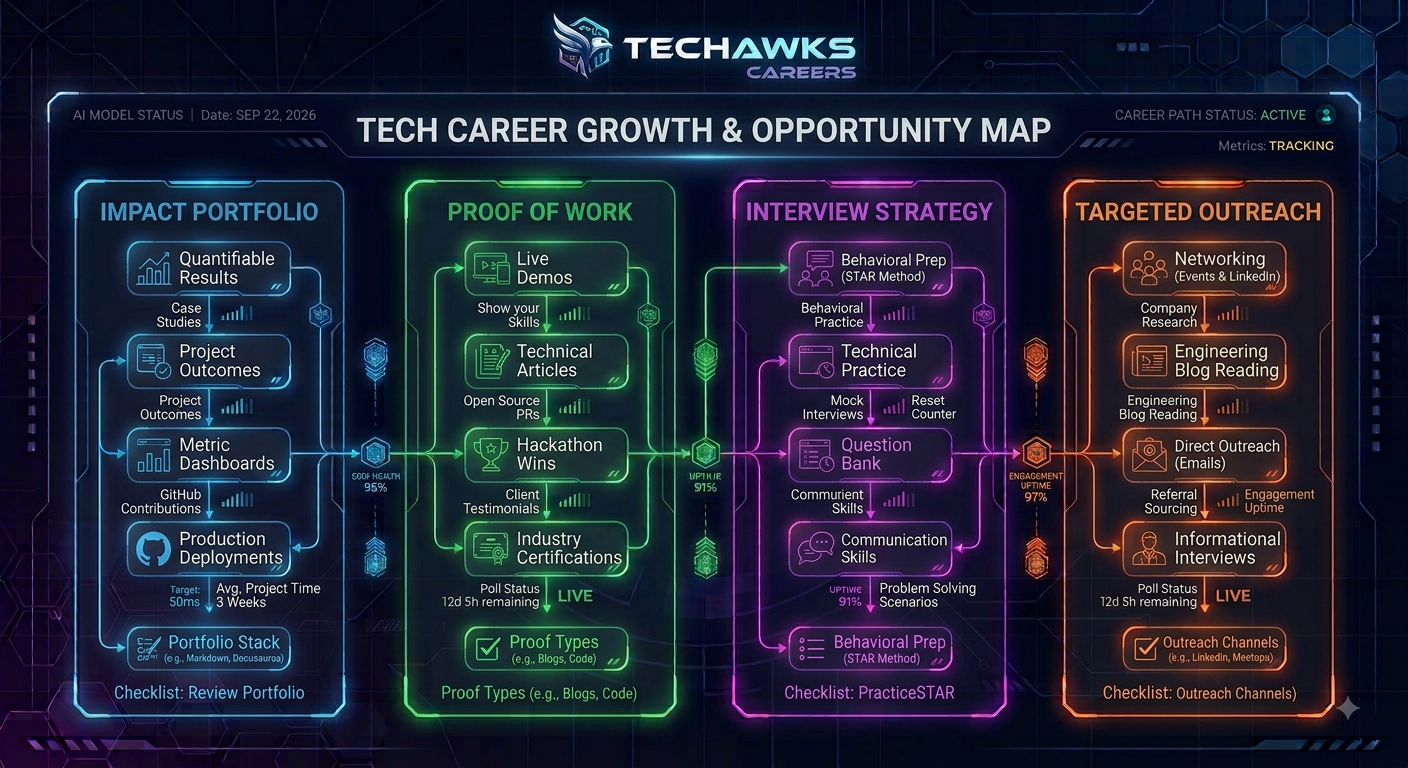
To elevate your job search strategy from reactive applying to intentional positioning, build your job hunt around four evergreen career pillars:
1. Shift from a "Skill Resume" to an "Impact Portfolio"
The Reality: Listing frameworks (e.g., React, Python, Docker) tells recruiters what tools you know, but not what you can achieve with them.
The Action: Frame your experience using quantifiable outcomes. Instead of "Built REST APIs with Node.js," write "Architected Node.js microservices that reduced database latency by 35% and handled 10,000 requests per second."
2. Showcase Proof of Work Through Open Architecture
The Reality: Personal projects that replicate basic tutorial apps rarely impress senior engineering interviewers.
The Action: Build and document projects that demonstrate real-world constraints. Highlight trade-offs you made—such as database choices, caching layers, or error-handling strategies. Include clear README documentation and deployment links in your public repositories.
3. Master the Behavioral & Systems Interview Hybrid
The Reality: Technical competence gets you through coding screens, but communication and collaboration seal job offers.
The Action: Structure behavioral responses using the STAR method (Situation, Task, Action, Result). When answering technical questions, think out loud, articulate trade-offs, and ask clarifying constraints before jumping directly into code.
4. Reverse-Engineer Target Companies Before Applying
The Reality: Mass-applying yields low conversion rates compared to targeted outreach.
The Action: Research the tech stack, open-source contributions, and engineering blogs of target companies. Reach out directly to engineering leads with specific questions or insights about their public projects rather than generic cold messages.
Key Takeaways
Quantify Your Impact: Translate technical tasks into measurable business value and system performance metrics.
Document Problem-Solving: Treat your portfolio projects like production software with architectural documentation and trade-off analyses.
Communicate Thought Processes: During technical interviews, focus on clear reasoning, active listening, and structured collaboration over pure code speed.
CTA
Looking for your next technical milestone or seeking career guidance from experienced industry hiring managers? Join Tech Jobs & Opportunities today to discover curated job openings, review interview strategies, and accelerate your career growth.
In a competitive tech hiring landscape, landing a standout role requires more than meeting basic job description requirements. Technical recruiters and hiring managers look past generic skill lists—they search for candidates who demonstrate ownership, business context, and problem-solving velocity.
To elevate your job search strategy from reactive applying to intentional positioning, build your job hunt around four evergreen career pillars:
1. Shift from a "Skill Resume" to an "Impact Portfolio"
The Reality: Listing frameworks (e.g., React, Python, Docker) tells recruiters what tools you know, but not what you can achieve with them.
The Action: Frame your experience using quantifiable outcomes. Instead of "Built REST APIs with Node.js," write "Architected Node.js microservices that reduced database latency by 35% and handled 10,000 requests per second."
2. Showcase Proof of Work Through Open Architecture
The Reality: Personal projects that replicate basic tutorial apps rarely impress senior engineering interviewers.
The Action: Build and document projects that demonstrate real-world constraints. Highlight trade-offs you made—such as database choices, caching layers, or error-handling strategies. Include clear README documentation and deployment links in your public repositories.
3. Master the Behavioral & Systems Interview Hybrid
The Reality: Technical competence gets you through coding screens, but communication and collaboration seal job offers.
The Action: Structure behavioral responses using the STAR method (Situation, Task, Action, Result). When answering technical questions, think out loud, articulate trade-offs, and ask clarifying constraints before jumping directly into code.
4. Reverse-Engineer Target Companies Before Applying
The Reality: Mass-applying yields low conversion rates compared to targeted outreach.
The Action: Research the tech stack, open-source contributions, and engineering blogs of target companies. Reach out directly to engineering leads with specific questions or insights about their public projects rather than generic cold messages.
Key Takeaways
Quantify Your Impact: Translate technical tasks into measurable business value and system performance metrics.
Document Problem-Solving: Treat your portfolio projects like production software with architectural documentation and trade-off analyses.
Communicate Thought Processes: During technical interviews, focus on clear reasoning, active listening, and structured collaboration over pure code speed.
CTA
Looking for your next technical milestone or seeking career guidance from experienced industry hiring managers? Join Tech Jobs & Opportunities today to discover curated job openings, review interview strategies, and accelerate your career growth.
The Tech Job Seeker’s Blueprint: 4 Pillars to Stand Out in Today’s Technical Hiring Market
In a competitive tech hiring landscape, landing a standout role requires more than meeting basic job description requirements. Technical recruiters and hiring managers look past generic skill lists—they search for candidates who demonstrate ownership, business context, and problem-solving velocity.
To elevate your job search strategy from reactive applying to intentional positioning, build your job hunt around four evergreen career pillars:
1. Shift from a "Skill Resume" to an "Impact Portfolio"
The Reality: Listing frameworks (e.g., React, Python, Docker) tells recruiters what tools you know, but not what you can achieve with them.
The Action: Frame your experience using quantifiable outcomes. Instead of "Built REST APIs with Node.js," write "Architected Node.js microservices that reduced database latency by 35% and handled 10,000 requests per second."
2. Showcase Proof of Work Through Open Architecture
The Reality: Personal projects that replicate basic tutorial apps rarely impress senior engineering interviewers.
The Action: Build and document projects that demonstrate real-world constraints. Highlight trade-offs you made—such as database choices, caching layers, or error-handling strategies. Include clear README documentation and deployment links in your public repositories.
3. Master the Behavioral & Systems Interview Hybrid
The Reality: Technical competence gets you through coding screens, but communication and collaboration seal job offers.
The Action: Structure behavioral responses using the STAR method (Situation, Task, Action, Result). When answering technical questions, think out loud, articulate trade-offs, and ask clarifying constraints before jumping directly into code.
4. Reverse-Engineer Target Companies Before Applying
The Reality: Mass-applying yields low conversion rates compared to targeted outreach.
The Action: Research the tech stack, open-source contributions, and engineering blogs of target companies. Reach out directly to engineering leads with specific questions or insights about their public projects rather than generic cold messages.
Key Takeaways
Quantify Your Impact: Translate technical tasks into measurable business value and system performance metrics.
Document Problem-Solving: Treat your portfolio projects like production software with architectural documentation and trade-off analyses.
Communicate Thought Processes: During technical interviews, focus on clear reasoning, active listening, and structured collaboration over pure code speed.
CTA
Looking for your next technical milestone or seeking career guidance from experienced industry hiring managers? Join Tech Jobs & Opportunities today to discover curated job openings, review interview strategies, and accelerate your career growth.

 English
 Arabic
 French
 Spanish
 Portuguese
 Deutsch
 Turkish
 Dutch
Dutch
 Italiano
 Russian
 Romaian
 Portuguese (Brazil)