


Building a Long-Term Tech Career in the UAE: 3 Strategies to Scale Beyond Salary and Unlock True Professional Autonomy
As multinational tech firms, high-growth scale-ups, and state-backed digital transformation initiatives continue expanding across the Emirates, software engineers and technical leaders face a unique shift. The traditional model of relying entirely on employer visa sponsorship is giving way to independent career equity.
Whether you are based in Dubai, Abu Dhabi, or working in a hybrid environment across the GCC, follow this 3-step actionable playbook to elevate your engineering career and secure long-term stability:
1. Transition from Employer-Dependent Visas to Long-Term Residency
Historically, moving between tech roles in the UAE meant navigating visa transfers and temporary status. Modern talent pathways allow high-impact engineers, AI specialists, and cloud architects to decouple their residency from a single employer:
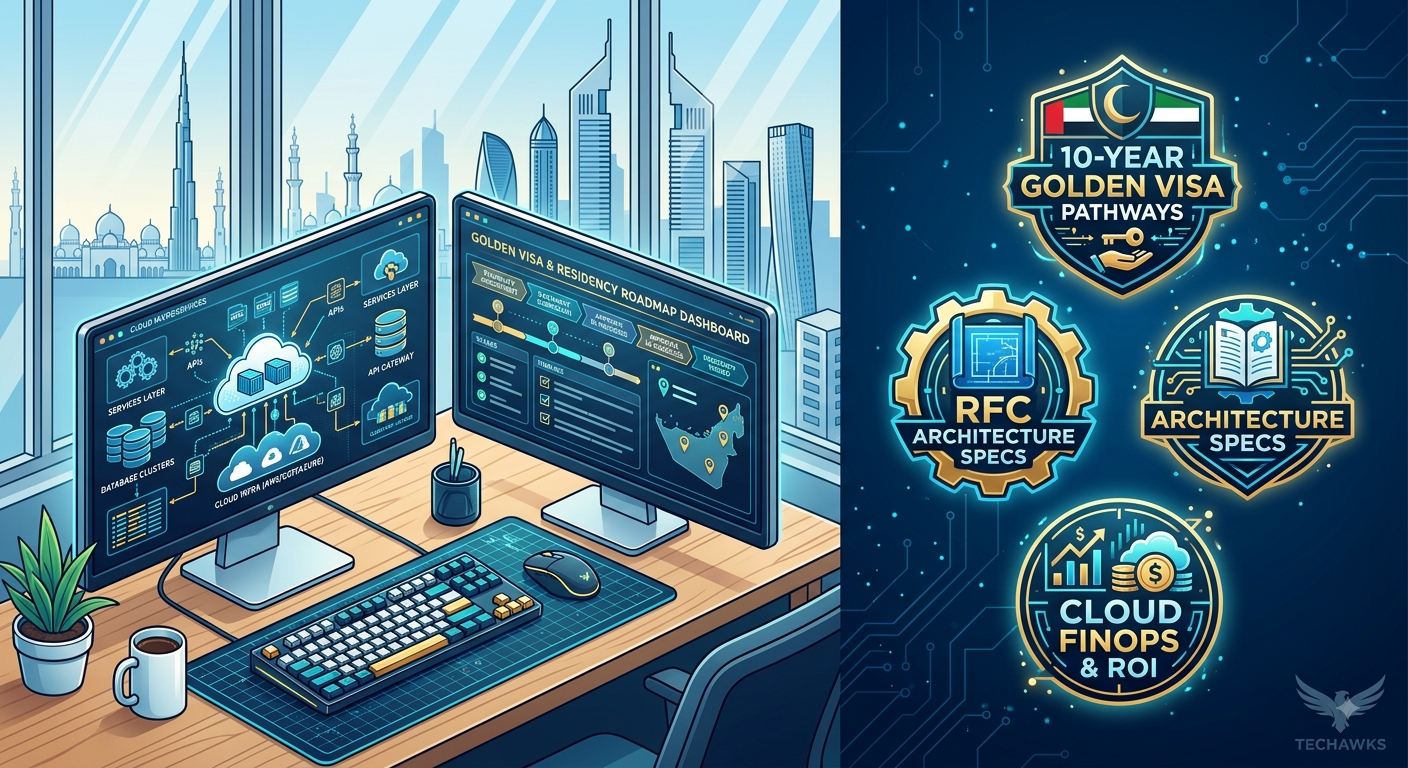
Target the Tech Talent Golden Visa: Engineers, developers, and tech managers meeting salary thresholds (typically AED 30,000/month basic salary under MOHRE Skill Level 1 or 2) or holding specialized expertise in AI, cloud, or cybersecurity can apply for 10-year self-sponsored Golden Visas.
Leverage Freelance or Innovation Pathways: Independent contractors, open-source contributors, and founders can utilize accredited incubator endorsements (such as from Hub71 or in5) or freelance permits to establish independent legal status.
2. Drive Asynchronous System Architecture (RFCs & ADRs)
In fast-paced regional hubs where product teams frequently collaborate across international time zones (Europe, India, and North America), real-time meetings can slow down progress.
Publish RFC Specs: Author detailed Request for Comments (RFCs) for major feature additions. Define problem statements, microservices flow, and trade-offs before writing code.
Document Architecture Decision Records (ADRs): Maintain an ADR repository for database schemas, cloud infrastructure shifts, and API gateway protocols. Showing structured technical rationale positions you directly for Staff, Principal, or Solutions Architect roles.
3. Align Your Code with Regional ROI & Cost Economics
Because personal income tax is zero, engineering metrics in the UAE focus heavily on operational efficiency, cloud unit economics, and rapid scale.
Master Cloud Cost Optimization (FinOps): Demonstrate how your architectural refactoring reduces AWS, Azure, or GCP overhead or speeds up latency for regional users.
Translate Tech Metrics to Business Outcomes: When proposing system changes to executives, present your ideas in terms of infrastructure savings, security compliance, and user retention rather than just code cleanliness.
Key Takeaways
Secure Independent Residency: Aim for self-sponsored 10-year Golden Visa pathways to gain job mobility and long-term career stability in the UAE.
Master Asynchronous Technical Writing: Use RFCs and ADRs to establish architectural consensus across global and distributed regional product teams.
Focus on FinOps and Business ROI: Align system design decisions with cloud cost efficiency and measurable business impact.
CTA
Looking to navigate UAE tech compensation benchmarks, secure long-term residency pathways, and connect with lead engineers across Dubai and Abu Dhabi?
Join Techawks UAE today to access exclusive career playbooks, technical teardowns, and a thriving community of regional tech leaders!
As multinational tech firms, high-growth scale-ups, and state-backed digital transformation initiatives continue expanding across the Emirates, software engineers and technical leaders face a unique shift. The traditional model of relying entirely on employer visa sponsorship is giving way to independent career equity.
Whether you are based in Dubai, Abu Dhabi, or working in a hybrid environment across the GCC, follow this 3-step actionable playbook to elevate your engineering career and secure long-term stability:
1. Transition from Employer-Dependent Visas to Long-Term Residency
Historically, moving between tech roles in the UAE meant navigating visa transfers and temporary status. Modern talent pathways allow high-impact engineers, AI specialists, and cloud architects to decouple their residency from a single employer:
Target the Tech Talent Golden Visa: Engineers, developers, and tech managers meeting salary thresholds (typically AED 30,000/month basic salary under MOHRE Skill Level 1 or 2) or holding specialized expertise in AI, cloud, or cybersecurity can apply for 10-year self-sponsored Golden Visas.
Leverage Freelance or Innovation Pathways: Independent contractors, open-source contributors, and founders can utilize accredited incubator endorsements (such as from Hub71 or in5) or freelance permits to establish independent legal status.
2. Drive Asynchronous System Architecture (RFCs & ADRs)
In fast-paced regional hubs where product teams frequently collaborate across international time zones (Europe, India, and North America), real-time meetings can slow down progress.
Publish RFC Specs: Author detailed Request for Comments (RFCs) for major feature additions. Define problem statements, microservices flow, and trade-offs before writing code.
Document Architecture Decision Records (ADRs): Maintain an ADR repository for database schemas, cloud infrastructure shifts, and API gateway protocols. Showing structured technical rationale positions you directly for Staff, Principal, or Solutions Architect roles.
3. Align Your Code with Regional ROI & Cost Economics
Because personal income tax is zero, engineering metrics in the UAE focus heavily on operational efficiency, cloud unit economics, and rapid scale.
Master Cloud Cost Optimization (FinOps): Demonstrate how your architectural refactoring reduces AWS, Azure, or GCP overhead or speeds up latency for regional users.
Translate Tech Metrics to Business Outcomes: When proposing system changes to executives, present your ideas in terms of infrastructure savings, security compliance, and user retention rather than just code cleanliness.
Key Takeaways
Secure Independent Residency: Aim for self-sponsored 10-year Golden Visa pathways to gain job mobility and long-term career stability in the UAE.
Master Asynchronous Technical Writing: Use RFCs and ADRs to establish architectural consensus across global and distributed regional product teams.
Focus on FinOps and Business ROI: Align system design decisions with cloud cost efficiency and measurable business impact.
CTA
Looking to navigate UAE tech compensation benchmarks, secure long-term residency pathways, and connect with lead engineers across Dubai and Abu Dhabi?
Join Techawks UAE today to access exclusive career playbooks, technical teardowns, and a thriving community of regional tech leaders!
Building a Long-Term Tech Career in the UAE: 3 Strategies to Scale Beyond Salary and Unlock True Professional Autonomy
As multinational tech firms, high-growth scale-ups, and state-backed digital transformation initiatives continue expanding across the Emirates, software engineers and technical leaders face a unique shift. The traditional model of relying entirely on employer visa sponsorship is giving way to independent career equity.
Whether you are based in Dubai, Abu Dhabi, or working in a hybrid environment across the GCC, follow this 3-step actionable playbook to elevate your engineering career and secure long-term stability:
1. Transition from Employer-Dependent Visas to Long-Term Residency
Historically, moving between tech roles in the UAE meant navigating visa transfers and temporary status. Modern talent pathways allow high-impact engineers, AI specialists, and cloud architects to decouple their residency from a single employer:
Target the Tech Talent Golden Visa: Engineers, developers, and tech managers meeting salary thresholds (typically AED 30,000/month basic salary under MOHRE Skill Level 1 or 2) or holding specialized expertise in AI, cloud, or cybersecurity can apply for 10-year self-sponsored Golden Visas.
Leverage Freelance or Innovation Pathways: Independent contractors, open-source contributors, and founders can utilize accredited incubator endorsements (such as from Hub71 or in5) or freelance permits to establish independent legal status.
2. Drive Asynchronous System Architecture (RFCs & ADRs)
In fast-paced regional hubs where product teams frequently collaborate across international time zones (Europe, India, and North America), real-time meetings can slow down progress.
Publish RFC Specs: Author detailed Request for Comments (RFCs) for major feature additions. Define problem statements, microservices flow, and trade-offs before writing code.
Document Architecture Decision Records (ADRs): Maintain an ADR repository for database schemas, cloud infrastructure shifts, and API gateway protocols. Showing structured technical rationale positions you directly for Staff, Principal, or Solutions Architect roles.
3. Align Your Code with Regional ROI & Cost Economics
Because personal income tax is zero, engineering metrics in the UAE focus heavily on operational efficiency, cloud unit economics, and rapid scale.
Master Cloud Cost Optimization (FinOps): Demonstrate how your architectural refactoring reduces AWS, Azure, or GCP overhead or speeds up latency for regional users.
Translate Tech Metrics to Business Outcomes: When proposing system changes to executives, present your ideas in terms of infrastructure savings, security compliance, and user retention rather than just code cleanliness.
Key Takeaways
Secure Independent Residency: Aim for self-sponsored 10-year Golden Visa pathways to gain job mobility and long-term career stability in the UAE.
Master Asynchronous Technical Writing: Use RFCs and ADRs to establish architectural consensus across global and distributed regional product teams.
Focus on FinOps and Business ROI: Align system design decisions with cloud cost efficiency and measurable business impact.
CTA
Looking to navigate UAE tech compensation benchmarks, secure long-term residency pathways, and connect with lead engineers across Dubai and Abu Dhabi?
Join Techawks UAE today to access exclusive career playbooks, technical teardowns, and a thriving community of regional tech leaders!

 English
 Arabic
 French
 Spanish
 Portuguese
 Deutsch
 Turkish
 Dutch
Dutch
 Italiano
 Romaian
 Portuguese (Brazil)
 Greek
Greek