English
 Arabic
 French
 Spanish
 Portuguese
 Deutsch
 Turkish
 Dutch
Dutch
 Italiano
 Russian
 Romaian
 Portuguese (Brazil)
 Greek
Greek
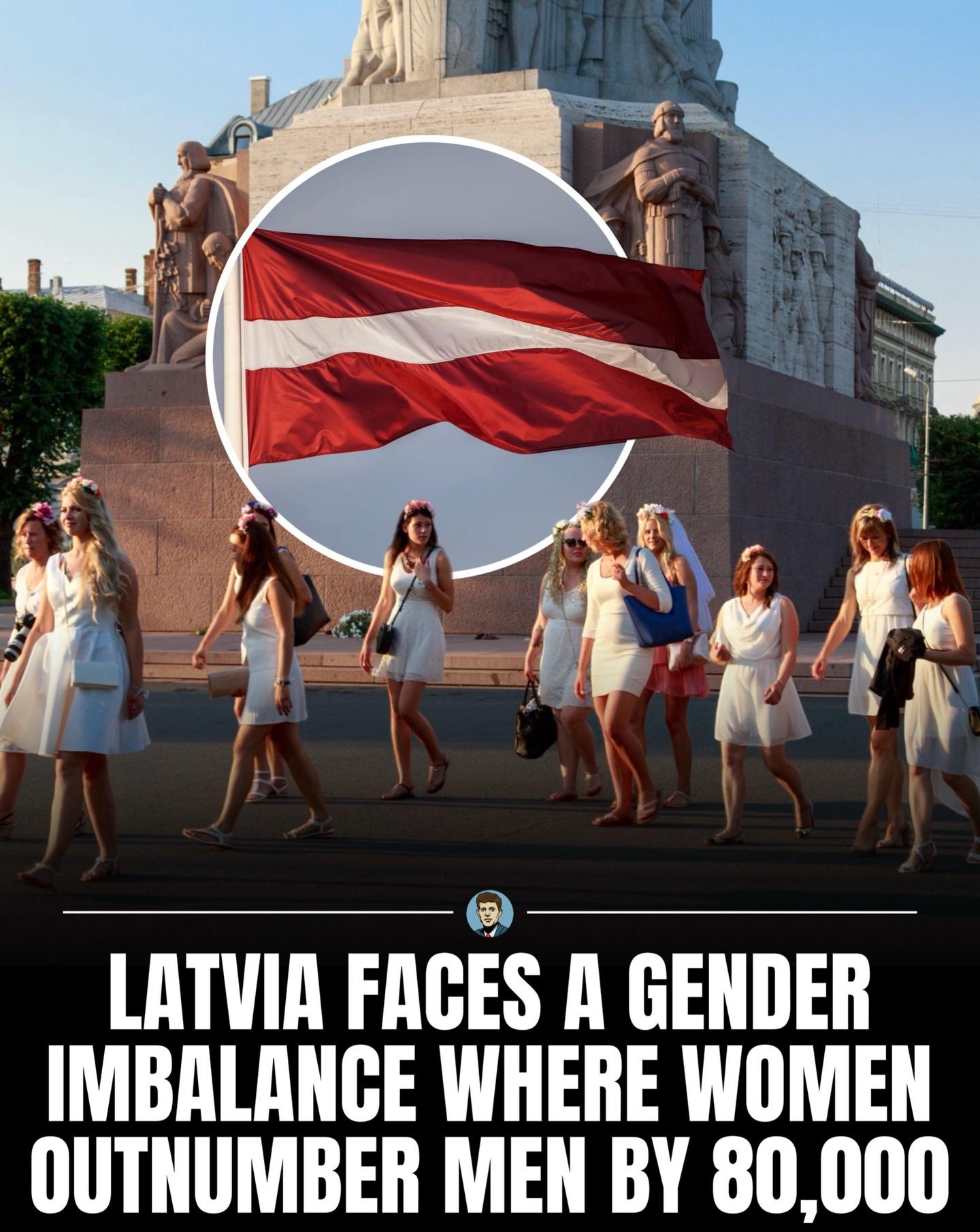
#Latvia is grappling with one of Europe’s most unusual demographic imbalances — a gap so wide that women outnumber men by more than 80,000. The divide stems from decades of migration patterns, health disparities, and population shifts that never fully rebounded after the post-Soviet transition.
For years, young men have emigrated at higher rates, while significantly lower male life expectancy has further skewed the population. Together, these trends have created a demographic ratio that influences everything from dating culture to workforce stability and long-term economic planning.
Now, the government must confront a shrinking labor force and a deepening gender gap that shows no sign of reversing. It’s a stark reminder that demographics are more than statistics — they shape a nation’s future.
-
#Demographics #Trending #PopulationChange #Europe #History
For years, young men have emigrated at higher rates, while significantly lower male life expectancy has further skewed the population. Together, these trends have created a demographic ratio that influences everything from dating culture to workforce stability and long-term economic planning.
Now, the government must confront a shrinking labor force and a deepening gender gap that shows no sign of reversing. It’s a stark reminder that demographics are more than statistics — they shape a nation’s future.
-
#Demographics #Trending #PopulationChange #Europe #History
#Latvia 🇱🇻 is grappling with one of Europe’s most unusual demographic imbalances — a gap so wide that women outnumber men by more than 80,000. The divide stems from decades of migration patterns, health disparities, and population shifts that never fully rebounded after the post-Soviet transition.
For years, young men have emigrated at higher rates, while significantly lower male life expectancy has further skewed the population. Together, these trends have created a demographic ratio that influences everything from dating culture to workforce stability and long-term economic planning.
Now, the government must confront a shrinking labor force and a deepening gender gap that shows no sign of reversing. It’s a stark reminder that demographics are more than statistics — they shape a nation’s future.
-
#Demographics #Trending #PopulationChange #Europe #History
·163 Visualizações
·0 Anterior