English
 Arabic
 French
 Spanish
 Portuguese
 Deutsch
 Turkish
 Dutch
Dutch
 Italiano
 Russian
 Romaian
 Portuguese (Brazil)
 Greek
Greek
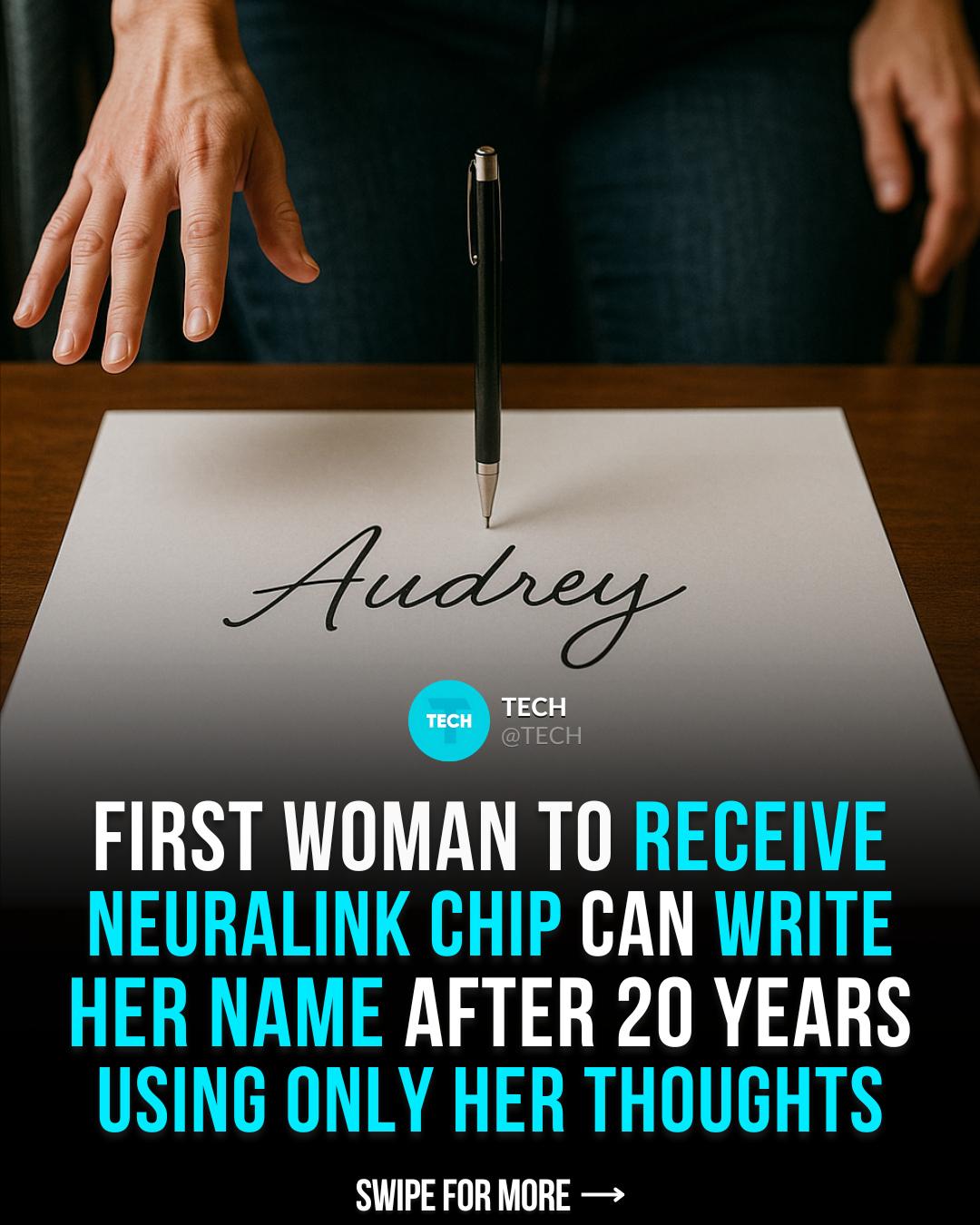
After 20 years of paralysis, Audrey Crews has written her name again—not with her hands, but with her mind. Thanks to a brain-computer interface (BCI) implant from Elon Musk’s company Neuralink, Crews is now able to control her computer purely through thought. The achievement marks a turning point for human-machine interaction and the future of assistive technology.
In a viral post on X, Crews shared a digital signature written telepathically, alongside playful doodles—a heart, a face, even a slice of pizza—all drawn using only her brain signals. The implant, embedded in her motor cortex, includes 128 ultra-thin threads that detect neural activity and translate it into digital commands. Crews, now designated Patient 9 in Neuralink’s PRIME study, called the experience "liberating."
The surgery was performed at the University of Miami, where doctors drilled a small hole in her skull to install the quarter-sized chip. While the implant doesn’t restore movement, it opens the door to "digital autonomy" for those with spinal injuries or neurodegenerative diseases. Elon Musk responded to her demonstration by noting, “She is controlling her computer just by thinking. Most people don’t realize this is possible.”
Neuralink’s team says this is only the beginning. Future versions of the device could enable more complex actions like speaking through a synthetic voice or navigating full digital environments. For Crews, each digital mark she makes is a triumph of persistence and progress. The line between biology and machine is blurring—and for millions, that could mean a new way forward.
Image Credits: Audrey Crews/X
In a viral post on X, Crews shared a digital signature written telepathically, alongside playful doodles—a heart, a face, even a slice of pizza—all drawn using only her brain signals. The implant, embedded in her motor cortex, includes 128 ultra-thin threads that detect neural activity and translate it into digital commands. Crews, now designated Patient 9 in Neuralink’s PRIME study, called the experience "liberating."
The surgery was performed at the University of Miami, where doctors drilled a small hole in her skull to install the quarter-sized chip. While the implant doesn’t restore movement, it opens the door to "digital autonomy" for those with spinal injuries or neurodegenerative diseases. Elon Musk responded to her demonstration by noting, “She is controlling her computer just by thinking. Most people don’t realize this is possible.”
Neuralink’s team says this is only the beginning. Future versions of the device could enable more complex actions like speaking through a synthetic voice or navigating full digital environments. For Crews, each digital mark she makes is a triumph of persistence and progress. The line between biology and machine is blurring—and for millions, that could mean a new way forward.
Image Credits: Audrey Crews/X
After 20 years of paralysis, Audrey Crews has written her name again—not with her hands, but with her mind. Thanks to a brain-computer interface (BCI) implant from Elon Musk’s company Neuralink, Crews is now able to control her computer purely through thought. The achievement marks a turning point for human-machine interaction and the future of assistive technology.
In a viral post on X, Crews shared a digital signature written telepathically, alongside playful doodles—a heart, a face, even a slice of pizza—all drawn using only her brain signals. The implant, embedded in her motor cortex, includes 128 ultra-thin threads that detect neural activity and translate it into digital commands. Crews, now designated Patient 9 in Neuralink’s PRIME study, called the experience "liberating."
The surgery was performed at the University of Miami, where doctors drilled a small hole in her skull to install the quarter-sized chip. While the implant doesn’t restore movement, it opens the door to "digital autonomy" for those with spinal injuries or neurodegenerative diseases. Elon Musk responded to her demonstration by noting, “She is controlling her computer just by thinking. Most people don’t realize this is possible.”
Neuralink’s team says this is only the beginning. Future versions of the device could enable more complex actions like speaking through a synthetic voice or navigating full digital environments. For Crews, each digital mark she makes is a triumph of persistence and progress. The line between biology and machine is blurring—and for millions, that could mean a new way forward.
Image Credits: Audrey Crews/X
·94 Vue
·0 Aperçu