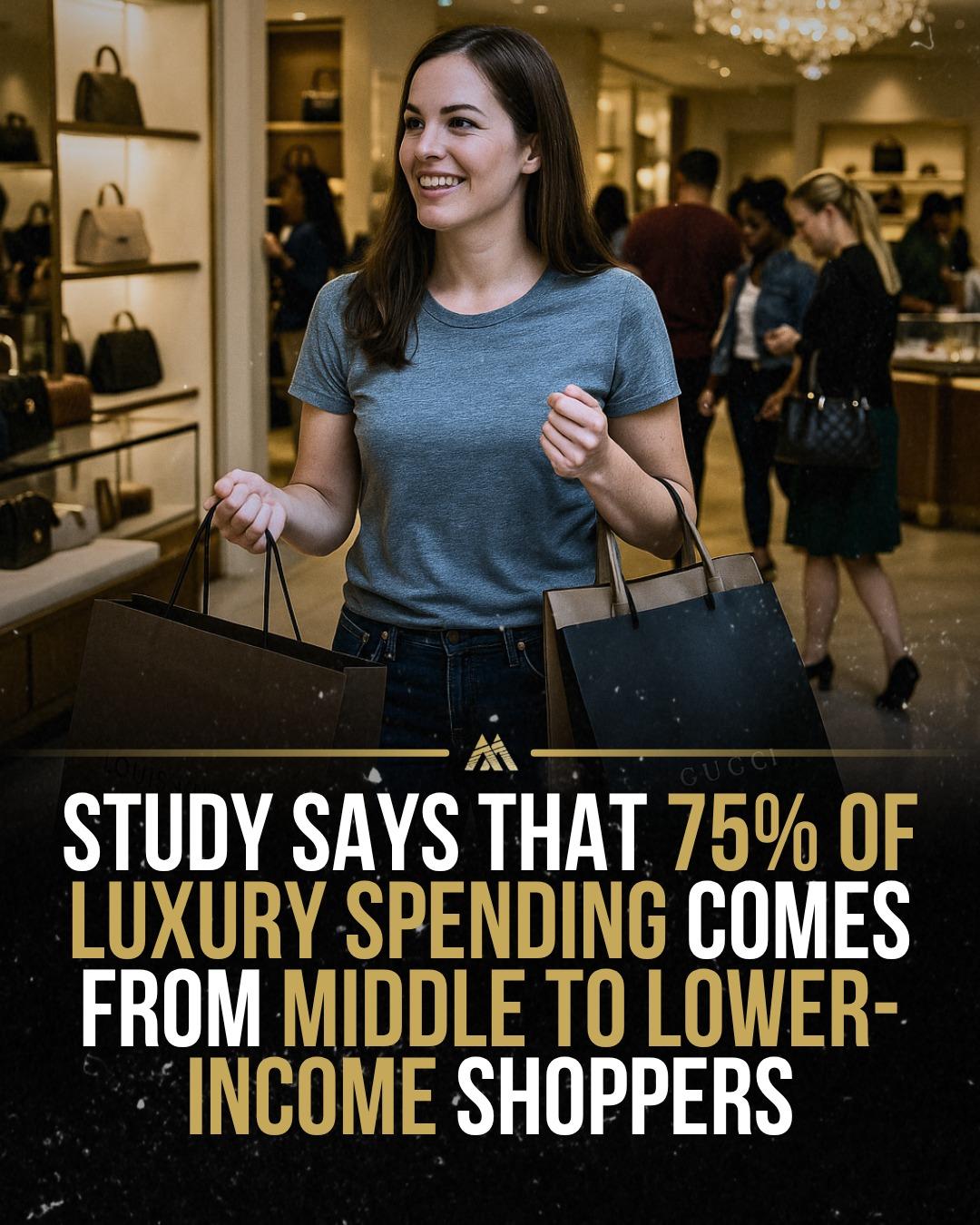
A study reveals that nearly 75% of luxury spending comes from middle- to lower-income shoppers, not the ultra-wealthy, according to research from École des Hautes Études Commerciales de Paris (HEC Paris) and Princeton University.
Published in the Journal of Consumer Research, the study found that aspirational consumers—those earning modest incomes but seeking status—drive the majority of global luxury purchases. These buyers often spend disproportionately on designer goods, cosmetics, or accessories to signal success and social mobility, even if it strains their budget.
Researchers call this phenomenon “status consumption,” where emotional reward and perceived prestige outweigh financial logic.
Follow for more @mindset.therapy
A study reveals that nearly 75% of luxury spending comes from middle- to lower-income shoppers, not the ultra-wealthy, according to research from École des Hautes Études Commerciales de Paris (HEC Paris) and Princeton University.
Published in the Journal of Consumer Research, the study found that aspirational consumers—those earning modest incomes but seeking status—drive the majority of global luxury purchases. These buyers often spend disproportionately on designer goods, cosmetics, or accessories to signal success and social mobility, even if it strains their budget.
Researchers call this phenomenon “status consumption,” where emotional reward and perceived prestige outweigh financial logic.
Follow for more 👉 @mindset.therapy
·67 Views
·0 Vista previa
 English
 Arabic
 French
 Spanish
 Portuguese
 Deutsch
 Turkish
 Dutch
Dutch
 Italiano
 Russian
 Romaian
 Portuguese (Brazil)
 Greek
Greek