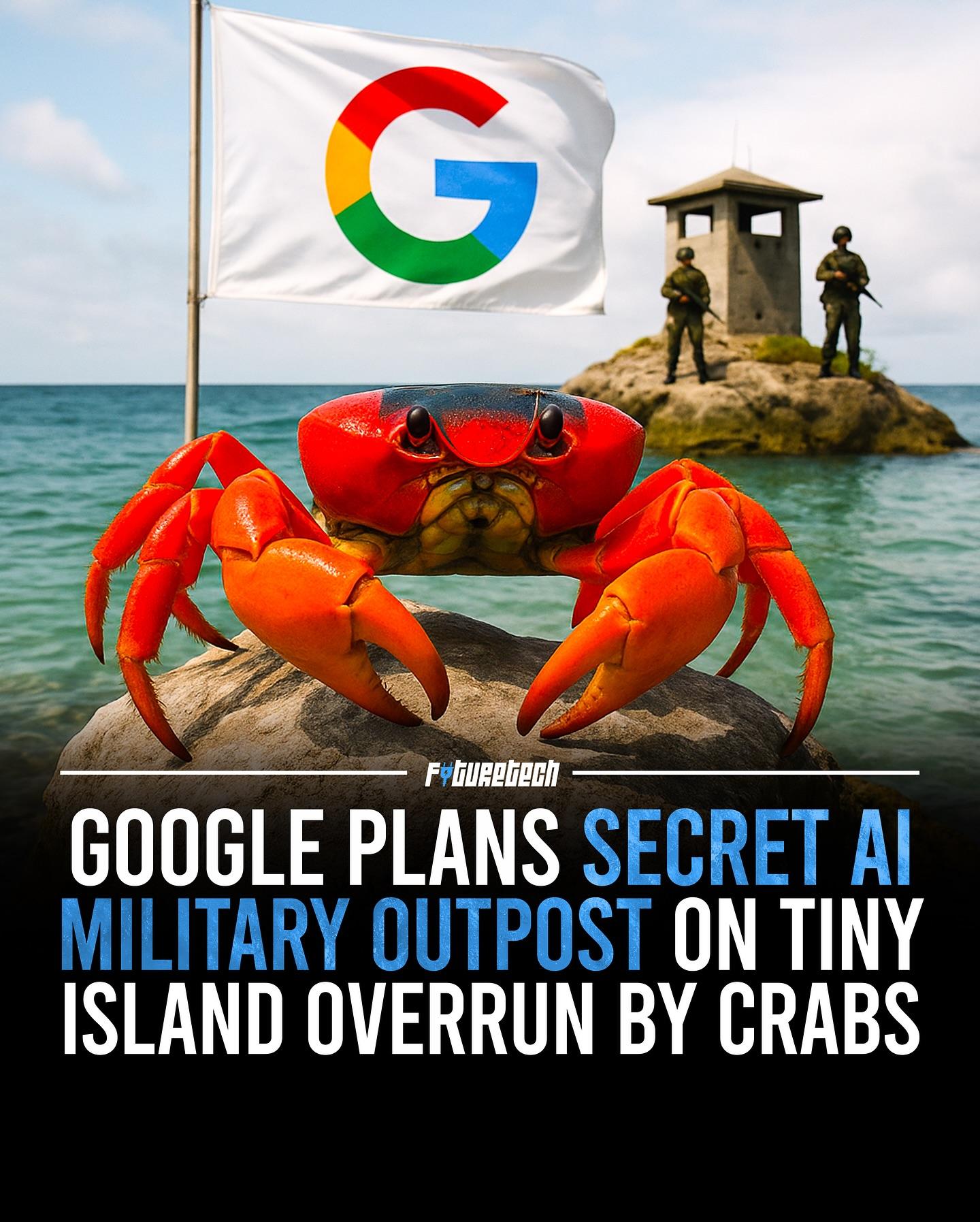
Google is reportedly developing a major infrastructure project on Christmas Island, a small Australian territory in the Indian Ocean that’s better known for being overrun by millions of migrating red crabs than for hosting cutting-edge technology.
The initiative, part of Google’s broader Australia Connect program, centers on the construction of subsea cable systems designed to boost connectivity across the Indo-Pacific, but the island’s strategic location has fueled speculation that the site could serve as a covert AI or military-linked outpost.
The project’s core feature, the Bosun subsea cable, will connect Darwin to Christmas Island and onward to Singapore, while additional interlink cables will tie Melbourne and Perth into the network. Analysts note that the island sits in a geopolitically sensitive region frequently monitored for Chinese naval activity, making the expansion of advanced digital infrastructure there especially significant.
Beyond the high-tech ambitions, Christmas Island’s natural world offers a striking contrast. Every year, around 100 million red crabs emerge from the jungle to swarm roads and beaches in a spectacular migration to the sea. This year’s spawning peak, expected around November 15–16, coincides with Google’s push for environmental approvals for the subsea project, raising concerns over potential disruptions to the delicate ecosystem.
As Google lays the groundwork for what could become one of the world’s most remote hubs of digital power, it faces a surreal challenge: balancing strategic technology expansion with the unstoppable march of millions of crabs that call the island home.
Follow us @FutureTech for more!
Google is reportedly developing a major infrastructure project on Christmas Island, a small Australian territory in the Indian Ocean that’s better known for being overrun by millions of migrating red crabs than for hosting cutting-edge technology.
The initiative, part of Google’s broader Australia Connect program, centers on the construction of subsea cable systems designed to boost connectivity across the Indo-Pacific, but the island’s strategic location has fueled speculation that the site could serve as a covert AI or military-linked outpost.
The project’s core feature, the Bosun subsea cable, will connect Darwin to Christmas Island and onward to Singapore, while additional interlink cables will tie Melbourne and Perth into the network. Analysts note that the island sits in a geopolitically sensitive region frequently monitored for Chinese naval activity, making the expansion of advanced digital infrastructure there especially significant.
Beyond the high-tech ambitions, Christmas Island’s natural world offers a striking contrast. Every year, around 100 million red crabs emerge from the jungle to swarm roads and beaches in a spectacular migration to the sea. This year’s spawning peak, expected around November 15–16, coincides with Google’s push for environmental approvals for the subsea project, raising concerns over potential disruptions to the delicate ecosystem.
As Google lays the groundwork for what could become one of the world’s most remote hubs of digital power, it faces a surreal challenge: balancing strategic technology expansion with the unstoppable march of millions of crabs that call the island home.
Follow us 👉 @FutureTech for more! 🔌
 English
 Arabic
 French
 Spanish
 Portuguese
 Deutsch
 Turkish
 Dutch
Dutch
 Italiano
 Russian
 Romaian
 Portuguese (Brazil)
 Greek
Greek