• How to Build a High-Impact Developer Portfolio Project from Scratch: A Step-by-Step Guide
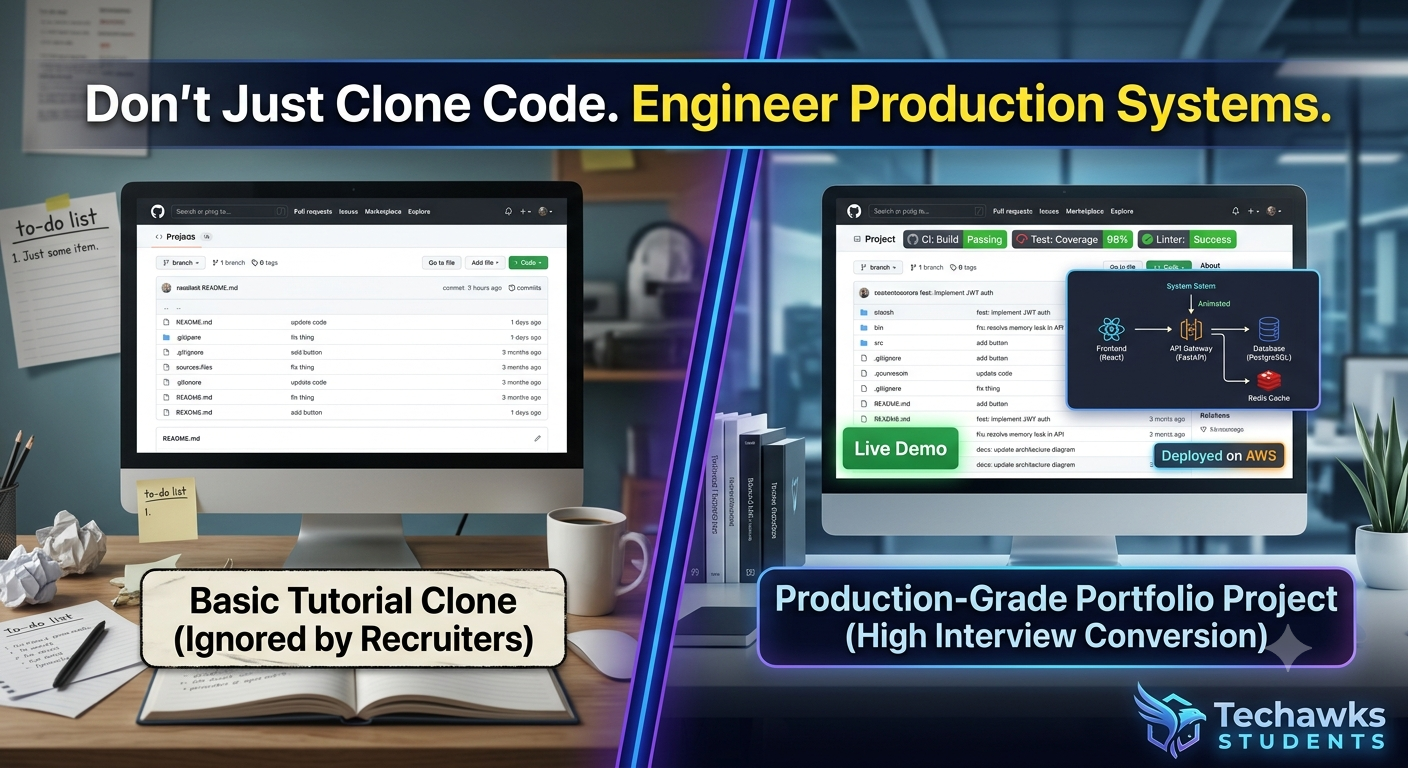
    Building a portfolio project that actually lands job interviews requires treating your side project like a production software system. Instead of following a step-by-step video tutorial, build an original application using industry-standard engineering practices.


    Follow this 5-step tutorial to transform your next coding idea into a hiring-manager-grade portfolio asset:


    Step 1: Solve a Real Problem with a Defined Scope
    Avoid generic clone tutorials. Identify a niche workflow problem you or a local organization experience:
    Scope It Tight: Limit your core MVP (Minimum Viable Product) to 2–3 core user workflows (e.g., user authentication, data processing, and a visual dashboard).
    Define Key Requirements: Document your API endpoints, database models, and application flow before writing a single line of code.


    Step 2: Establish a Professional Git Workflow
    Hiring managers inspect your GitHub repository commit history to evaluate your daily coding habits.
    Write Meaningful Commits: Avoid fixed stuff or update. Use conventional commit messaging (e.g., feat: add JWT authentication endpoint or fix: resolve race condition in queue).
    Use Feature Branches: Create pull requests for new features rather than committing directly to the main branch.


    Step 3: Integrate Automated Testing and CI/CD
    Building code that works on your local machine isn't enough—prove your app is reliable in automated environments.
    Write Unit and Integration Tests: Aim for test coverage on critical business logic using frameworks like Jest, PyTest, or JUnit.
    Set Up Continuous Integration (CI): Configure GitHub Actions or GitLab CI to run test suites and linter checks automatically on every pull request.


    Step 4: Deploy to Production & Instrument Monitoring
    A repository without a live demo link significantly reduces engagement from recruiters.
    Deploy to Cloud Hosting: Host your frontend and backend on cloud platforms like Vercel, Render, AWS, or GCP with custom environment variables.
    Add Health Checks & Logging: Implement structured error logging and basic uptime monitoring to ensure your application remains operational.


    Step 5: Write an Executive-Level README
    Your README is the documentation homepage for your project. Structure it with clear, professional sections:
    Live Demo Link & Screenshots/GIFs: Show the working application immediately at the top.
    Architecture Diagram: Include a visual diagram mapping frontend, backend API, database, and third-party services.
    Engineering Trade-offs: Briefly document why you chose specific databases, state management tools, or frameworks over alternatives.
    Local Setup Instructions: Provide single-command setup steps (docker-compose up or npm install && npm start).


    Key Takeaways
    Ditch Tutorial Clones: Build original applications that solve specific problems to stand out from generic applicant pools.
    Prioritize Engineering Practices: Implement CI/CD pipelines, unit testing, and proper Git branch workflows to prove deployment readiness.
    Document Trade-offs: A clear README with architecture diagrams and trade-off explanations demonstrates senior-level critical thinking.


    CTA
    What portfolio project are you building this semester? Join Students in Tech to get code reviews on your pull requests, collaborate on open-source projects, and get feedback on your portfolio READMEs from experienced engineers.
    How to Build a High-Impact Developer Portfolio Project from Scratch: A Step-by-Step Guide Building a portfolio project that actually lands job interviews requires treating your side project like a production software system. Instead of following a step-by-step video tutorial, build an original application using industry-standard engineering practices. Follow this 5-step tutorial to transform your next coding idea into a hiring-manager-grade portfolio asset: Step 1: Solve a Real Problem with a Defined Scope Avoid generic clone tutorials. Identify a niche workflow problem you or a local organization experience: Scope It Tight: Limit your core MVP (Minimum Viable Product) to 2–3 core user workflows (e.g., user authentication, data processing, and a visual dashboard). Define Key Requirements: Document your API endpoints, database models, and application flow before writing a single line of code. Step 2: Establish a Professional Git Workflow Hiring managers inspect your GitHub repository commit history to evaluate your daily coding habits. Write Meaningful Commits: Avoid fixed stuff or update. Use conventional commit messaging (e.g., feat: add JWT authentication endpoint or fix: resolve race condition in queue). Use Feature Branches: Create pull requests for new features rather than committing directly to the main branch. Step 3: Integrate Automated Testing and CI/CD Building code that works on your local machine isn't enough—prove your app is reliable in automated environments. Write Unit and Integration Tests: Aim for test coverage on critical business logic using frameworks like Jest, PyTest, or JUnit. Set Up Continuous Integration (CI): Configure GitHub Actions or GitLab CI to run test suites and linter checks automatically on every pull request. Step 4: Deploy to Production & Instrument Monitoring A repository without a live demo link significantly reduces engagement from recruiters. Deploy to Cloud Hosting: Host your frontend and backend on cloud platforms like Vercel, Render, AWS, or GCP with custom environment variables. Add Health Checks & Logging: Implement structured error logging and basic uptime monitoring to ensure your application remains operational. Step 5: Write an Executive-Level README Your README is the documentation homepage for your project. Structure it with clear, professional sections: Live Demo Link & Screenshots/GIFs: Show the working application immediately at the top. Architecture Diagram: Include a visual diagram mapping frontend, backend API, database, and third-party services. Engineering Trade-offs: Briefly document why you chose specific databases, state management tools, or frameworks over alternatives. Local Setup Instructions: Provide single-command setup steps (docker-compose up or npm install && npm start). Key Takeaways Ditch Tutorial Clones: Build original applications that solve specific problems to stand out from generic applicant pools. Prioritize Engineering Practices: Implement CI/CD pipelines, unit testing, and proper Git branch workflows to prove deployment readiness. Document Trade-offs: A clear README with architecture diagrams and trade-off explanations demonstrates senior-level critical thinking. CTA What portfolio project are you building this semester? Join Students in Tech to get code reviews on your pull requests, collaborate on open-source projects, and get feedback on your portfolio READMEs from experienced engineers.
    0 Комментарии 0 Поделились 1Кб Просмотры 0 предпросмотр
  • The Ultimate Technical Resume Checklist: 10 Actionable Checks to Pass ATS and Land Engineering Interviews
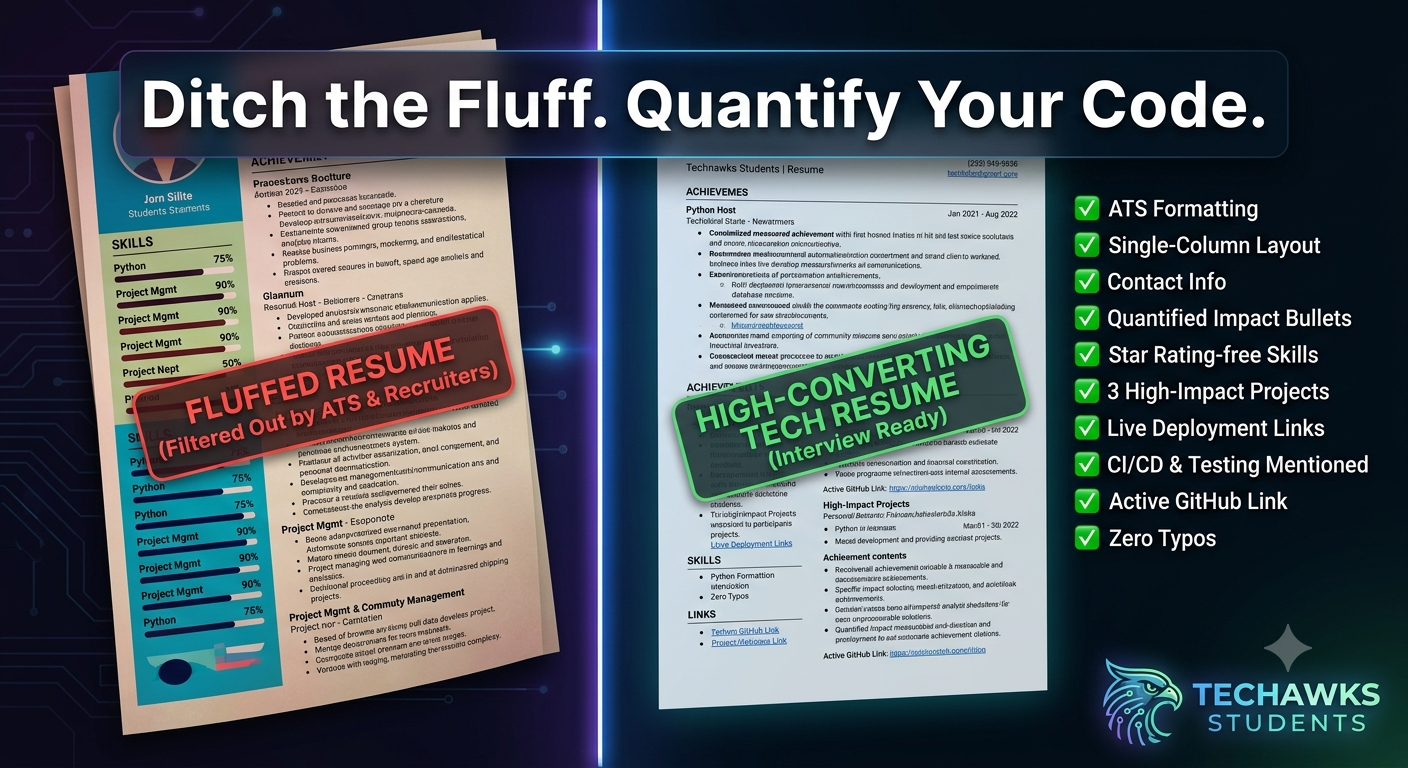
    Writing a high-converting technical resume is about removing fluff and highlighting quantifiable impact, relevant stack experience, and deployed code. Whether you're applying to major tech enterprises or fast-growing startups, run your resume through this battle-tested checklist:


    Phase 1: Formatting & Structure
    1. Clean, Single-Column Layout: Use a single-column, plain-text-friendly layout without tables, graphic progress bars, or profile photos to ensure ATS parsers process your data seamlessly.
    2. Strictly One Page: Keep your resume strictly to a single page. Prioritize recent, high-impact technical projects and relevant coursework over unrelated jobs.
    3. Active Web & Repository Links: Hyperlink your GitHub profile, LinkedIn, and live project demos at the top under your contact details. Ensure every link is clickable and leads to a live site or active repository.


    Phase 2: Technical Skills & Projects
    4. Categorized Skills Section: Group your skills clearly (e.g., Languages: Python, TypeScript; Frameworks: React, Node.js; Tools & Databases: Docker, PostgreSQL, AWS). Avoid rating scales or "skill meters."
    5. High-Impact Project Titles: Name your personal or open-source projects clearly, accompanied by the primary tech stack used in parentheses (e.g., Distributed Task Queue System — Go, Redis, Docker).
    6. The Action-Impact Bullet Formula: Write project bullet points using the Google "XYZ" formula: Accomplished [X], as measured by [Y], by doing [Z]. (e.g., "Reduced API latency by 35% by implementing Redis caching across 5 core endpoints").


    Phase 3: Experience & Technical Depth
    7. Highlight Industry Toolchains: Include practical engineering tools like Git workflow, CI/CD pipelines, unit testing frameworks, and deployment platforms (e.g., Vercel, AWS, GCP).
    8. Relevant Coursework & Achievements: List relevant upper-level computer science electives (e.g., Distributed Systems, Database Management, Operating Systems) rather than entry-level general requirements.
    9. Quantified Open-Source & Leadership Contributions: Detail hackathon awards, open-source pull requests, or student tech club leadership roles with specific participant or user counts.
    10. Zero Grammar or Syntax Typos: Review code syntax, framework capitalizations (e.g., "JavaScript" instead of "javascript", "PostgreSQL" instead of "postgres"), and grammar before exporting as a standard PDF.


    Key Takeaways
    Optimize for Parsing First: ATS software and recruiters both favor simple single-column PDF formatting over complex graphic designs.
    Quantify Results: Every project bullet point should connect your technical decisions to a measurable output (speed, memory, test coverage, user numbers).
    Proof Over Claims: Passive skill lists don't convince hiring managers—showing deployed projects with active links and automated tests does.


    CTA
    Are you preparing your technical resume for upcoming internship applications or campus hiring drives? Join Students in Tech to get peer resume reviews, trade ATS optimization tips, and benchmark your portfolio with fellow student engineers.
    The Ultimate Technical Resume Checklist: 10 Actionable Checks to Pass ATS and Land Engineering Interviews Writing a high-converting technical resume is about removing fluff and highlighting quantifiable impact, relevant stack experience, and deployed code. Whether you're applying to major tech enterprises or fast-growing startups, run your resume through this battle-tested checklist: Phase 1: Formatting & Structure 1. Clean, Single-Column Layout: Use a single-column, plain-text-friendly layout without tables, graphic progress bars, or profile photos to ensure ATS parsers process your data seamlessly. 2. Strictly One Page: Keep your resume strictly to a single page. Prioritize recent, high-impact technical projects and relevant coursework over unrelated jobs. 3. Active Web & Repository Links: Hyperlink your GitHub profile, LinkedIn, and live project demos at the top under your contact details. Ensure every link is clickable and leads to a live site or active repository. Phase 2: Technical Skills & Projects 4. Categorized Skills Section: Group your skills clearly (e.g., Languages: Python, TypeScript; Frameworks: React, Node.js; Tools & Databases: Docker, PostgreSQL, AWS). Avoid rating scales or "skill meters." 5. High-Impact Project Titles: Name your personal or open-source projects clearly, accompanied by the primary tech stack used in parentheses (e.g., Distributed Task Queue System — Go, Redis, Docker). 6. The Action-Impact Bullet Formula: Write project bullet points using the Google "XYZ" formula: Accomplished [X], as measured by [Y], by doing [Z]. (e.g., "Reduced API latency by 35% by implementing Redis caching across 5 core endpoints"). Phase 3: Experience & Technical Depth 7. Highlight Industry Toolchains: Include practical engineering tools like Git workflow, CI/CD pipelines, unit testing frameworks, and deployment platforms (e.g., Vercel, AWS, GCP). 8. Relevant Coursework & Achievements: List relevant upper-level computer science electives (e.g., Distributed Systems, Database Management, Operating Systems) rather than entry-level general requirements. 9. Quantified Open-Source & Leadership Contributions: Detail hackathon awards, open-source pull requests, or student tech club leadership roles with specific participant or user counts. 10. Zero Grammar or Syntax Typos: Review code syntax, framework capitalizations (e.g., "JavaScript" instead of "javascript", "PostgreSQL" instead of "postgres"), and grammar before exporting as a standard PDF. Key Takeaways Optimize for Parsing First: ATS software and recruiters both favor simple single-column PDF formatting over complex graphic designs. Quantify Results: Every project bullet point should connect your technical decisions to a measurable output (speed, memory, test coverage, user numbers). Proof Over Claims: Passive skill lists don't convince hiring managers—showing deployed projects with active links and automated tests does. CTA Are you preparing your technical resume for upcoming internship applications or campus hiring drives? Join Students in Tech to get peer resume reviews, trade ATS optimization tips, and benchmark your portfolio with fellow student engineers.
    0 Комментарии 0 Поделились 1Кб Просмотры 0 предпросмотр
  • Understanding the Anatomy of a Social Engineering Attack: How Human Vulnerabilities Are Exploited.
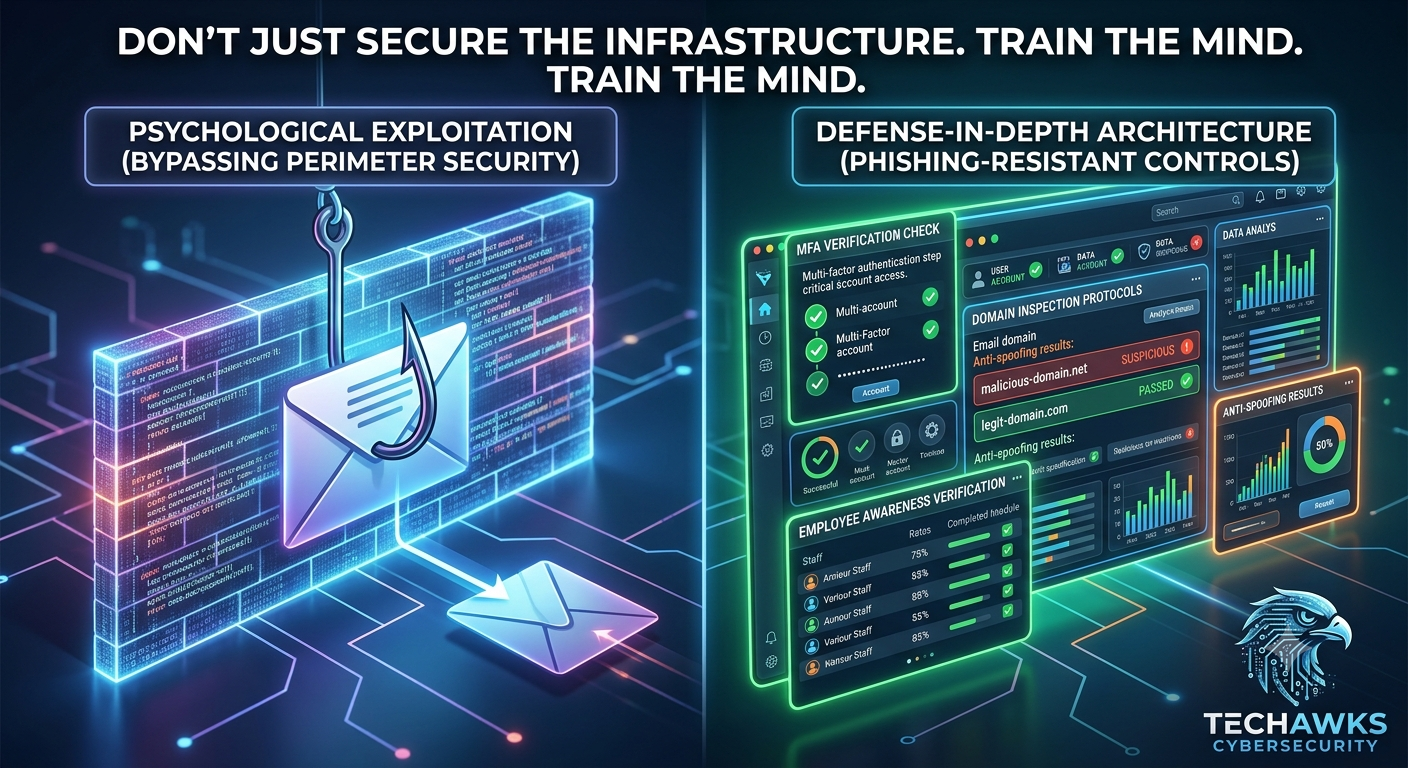
    In cybersecurity, social engineering refers to manipulating individuals into performing actions or divulging confidential information. Rather than finding a zero-day software exploit, attackers exploit human cognitive biases—such as trust, fear, urgency, and authority—to gain unauthorized network access.


    Here is an educational breakdown of the core psychological triggers used in social engineering and how security professionals defend against them:


    1. Phishing & Spear Phishing (Exploiting Trust & Urgency)
    The Mechanism: Phishing involves sending deceptive communications (emails, SMS, or messages) designed to mimic legitimate organizations like banks, cloud providers, or internal IT departments. Spear phishing targets specific high-value individuals using personalized intelligence.
    The Psychological Trigger: Urgency and Fear. Attackers use high-pressure phrasing like "Your account will be suspended within 24 hours" or "Urgent password reset required" to bypass critical thinking and force immediate action.
    The Defense: Verify domain names carefully (looking for typosquatting), inspect raw email headers, and enforce Multi-Factor Authentication (MFA) via FIDO2 hardware keys that resist phishing.


    2. Pretexting (Exploiting Authority & Familiarity)
    The Mechanism: An attacker invents a fabricated scenario (a pretext) to trick a victim into leaking sensitive data. For example, impersonating an external auditor, an HR representative, or an executive requesting urgent access to payroll records.
    The Psychological Trigger: Authority. Employees are naturally conditioned to comply with requests coming from senior leadership or compliance authorities without secondary verification.
    The Defense: Implement strict Out-of-Band (OOB) verification protocols. Require employees to confirm unusual requests through a separate, pre-established communication channel before sharing data or changing access permissions.


    3. Baiting & Quid Pro Quo (Exploiting Curiosity & Greed)
    The Mechanism: Baiting relies on physical or digital traps—such as leaving infected USB drives in corporate parking lots labeled "Q4 Compensation Plan" or offering free software downloads bundled with trojans. Quid pro quo offers a service or benefit in exchange for credentials (e.g., rogue IT support calls offering "free system speedups").
    The Psychological Trigger: Curiosity and Gain. Victims are enticed by the promise of exclusive information or free technical assistance.
    The Defense: Disable USB auto-run policies across endpoints, restrict administrative installation privileges, and implement Endpoint Detection and Response (EDR) solutions to flag unauthorized executable runs.


    How to Build a Defense-in-Depth Mindset
    Security awareness is not about paranoia; it is about establishing habitual verification. Always slow down when a digital request combines urgency, authority, and unsolicited links or attachments.


    Key Takeaways
    Humans Are the Primary Vector: Threat actors frequently target human decision-making rather than attempting to crack cryptographic systems directly.
    Recognize the Red Flags: High urgency, fear of penalty, and requests to bypass standard security procedures are primary indicators of social engineering.
    Verify Out-of-Band: Never use the contact details or links provided inside a suspicious message to confirm its authenticity.


    CTA
    Want to learn how security professionals audit corporate defenses and train teams against social engineering tactics? Join Cybersecurity & Ethical Hacking to analyze attack vectors, practice hands-on lab scenarios, and master modern defense-in-depth strategies.
    Understanding the Anatomy of a Social Engineering Attack: How Human Vulnerabilities Are Exploited. In cybersecurity, social engineering refers to manipulating individuals into performing actions or divulging confidential information. Rather than finding a zero-day software exploit, attackers exploit human cognitive biases—such as trust, fear, urgency, and authority—to gain unauthorized network access. Here is an educational breakdown of the core psychological triggers used in social engineering and how security professionals defend against them: 1. Phishing & Spear Phishing (Exploiting Trust & Urgency) The Mechanism: Phishing involves sending deceptive communications (emails, SMS, or messages) designed to mimic legitimate organizations like banks, cloud providers, or internal IT departments. Spear phishing targets specific high-value individuals using personalized intelligence. The Psychological Trigger: Urgency and Fear. Attackers use high-pressure phrasing like "Your account will be suspended within 24 hours" or "Urgent password reset required" to bypass critical thinking and force immediate action. The Defense: Verify domain names carefully (looking for typosquatting), inspect raw email headers, and enforce Multi-Factor Authentication (MFA) via FIDO2 hardware keys that resist phishing. 2. Pretexting (Exploiting Authority & Familiarity) The Mechanism: An attacker invents a fabricated scenario (a pretext) to trick a victim into leaking sensitive data. For example, impersonating an external auditor, an HR representative, or an executive requesting urgent access to payroll records. The Psychological Trigger: Authority. Employees are naturally conditioned to comply with requests coming from senior leadership or compliance authorities without secondary verification. The Defense: Implement strict Out-of-Band (OOB) verification protocols. Require employees to confirm unusual requests through a separate, pre-established communication channel before sharing data or changing access permissions. 3. Baiting & Quid Pro Quo (Exploiting Curiosity & Greed) The Mechanism: Baiting relies on physical or digital traps—such as leaving infected USB drives in corporate parking lots labeled "Q4 Compensation Plan" or offering free software downloads bundled with trojans. Quid pro quo offers a service or benefit in exchange for credentials (e.g., rogue IT support calls offering "free system speedups"). The Psychological Trigger: Curiosity and Gain. Victims are enticed by the promise of exclusive information or free technical assistance. The Defense: Disable USB auto-run policies across endpoints, restrict administrative installation privileges, and implement Endpoint Detection and Response (EDR) solutions to flag unauthorized executable runs. How to Build a Defense-in-Depth Mindset Security awareness is not about paranoia; it is about establishing habitual verification. Always slow down when a digital request combines urgency, authority, and unsolicited links or attachments. Key Takeaways Humans Are the Primary Vector: Threat actors frequently target human decision-making rather than attempting to crack cryptographic systems directly. Recognize the Red Flags: High urgency, fear of penalty, and requests to bypass standard security procedures are primary indicators of social engineering. Verify Out-of-Band: Never use the contact details or links provided inside a suspicious message to confirm its authenticity. CTA Want to learn how security professionals audit corporate defenses and train teams against social engineering tactics? Join Cybersecurity & Ethical Hacking to analyze attack vectors, practice hands-on lab scenarios, and master modern defense-in-depth strategies.
    0 Комментарии 0 Поделились 2Кб Просмотры 0 предпросмотр
  • Zero Trust Architecture vs. Perimeter Security: Is the Traditional Network Defense Dead?
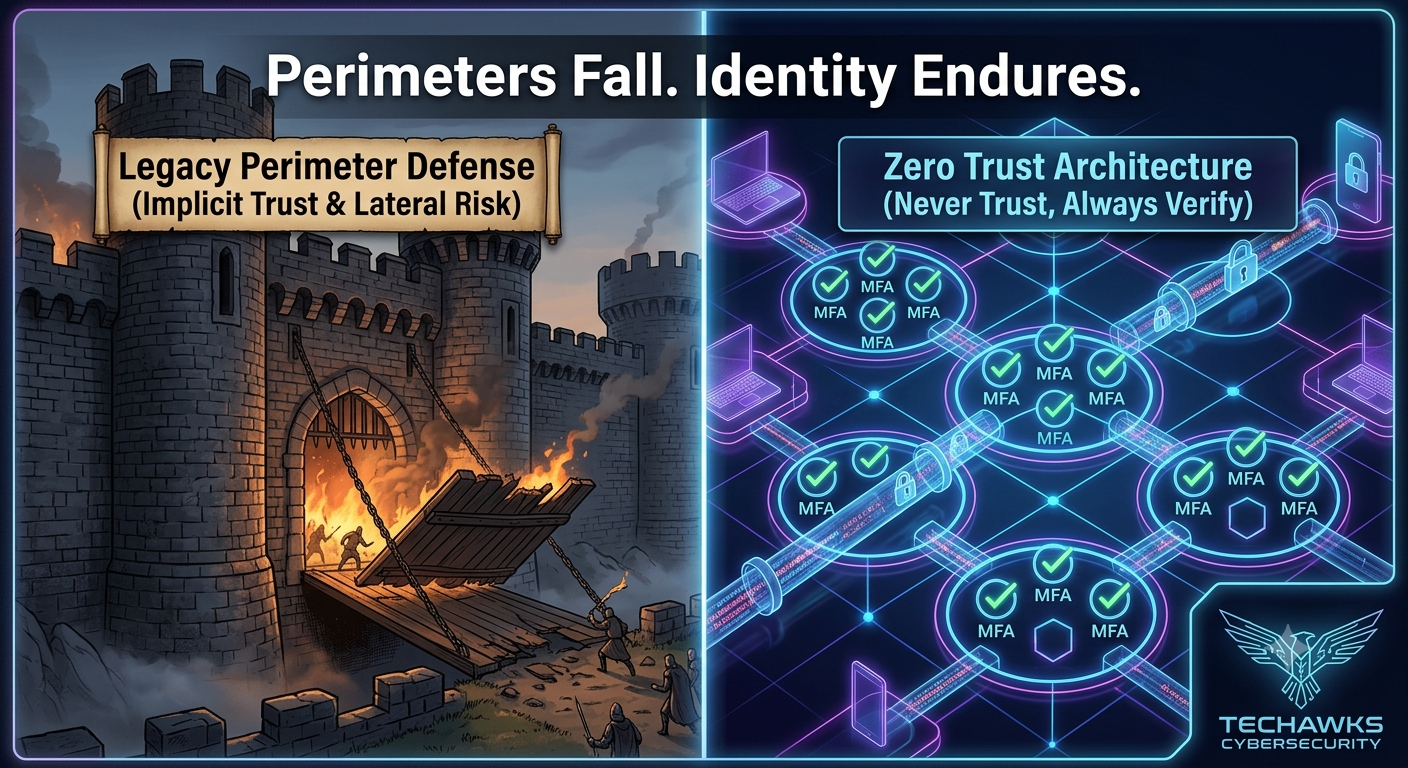
    The shift toward Zero Trust Architecture (ZTA) represents a fundamental evolution in how security teams approach network access and identity verification. Rather than assuming internal traffic is inherently safe, Zero Trust operates on a simple mandate: "Never trust, always verify."


    To evaluate where cybersecurity strategy is heading, it is crucial to analyze how these two models compare in production environments:


    1. Perimeter Security (Castle-and-Moat)
    The Core Premise: Focuses heavily on defending the boundary of a network. Once a user or device passes initial authentication (via VPN, firewall, or gateway), they are granted broad access to internal resources.
    The Vulnerability: If an attacker compromises a single endpoint or steals internal VPN credentials, they gain lateral movement privileges, allowing them to scan databases, pivot across servers, and exfiltrate sensitive data undetected.


    2. Zero Trust Architecture (Micro-Segmentation & Continuous Auth)
    The Core Premise: Removes implicit trust based on network location. Every access request—whether originating inside or outside the corporate network—must be authenticated, authorized, and encrypted before access is granted.


    Key Mechanisms:
    Identity-First Security: Access is granted based on verified identity, device health, and context rather than IP addresses.
    Least Privilege Access: Users only receive the minimum permissions necessary to perform their specific role (Role-Based Access Control / ABAC).
    Micro-segmentation: Networks are isolated into tiny zones to prevent lateral movement during a breach.


    Actionable Advice for Security Learners & Analysts
    Moving to Zero Trust doesn't mean firewalls and perimeter tools are useless—it means they can no longer stand alone as your primary defense:
    Start with Identity Management: Prioritize learning identity and access management (IAM) platforms, multi-factor authentication (MFA) protocols, and Single Sign-On (SSO) integrations.
    Master Micro-Segmentation: Understand how cloud networks (AWS VPCs, Azure VNets) use security groups and network policies to isolate microservices.
    Assume Breach: Design network policies under the assumption that an attacker is already inside the network segment.


    Key Takeaways
    Perimeter Alone Is Insufficient: Internal network location no longer guarantees that a device or user is benign.
    Verify Continuously: Zero Trust relies on continuous identity verification, device compliance checks, and least-privilege access rules.
    Contain Lateral Movement: Implementing micro-segmentation limits the blast radius if an individual endpoint or account is compromised.


    CTA
    How is your organization or lab environment balancing traditional firewalls with Zero Trust access controls? Join Cybersecurity & Ethical Hacking to share your architecture diagrams, discuss IAM strategies, and collaborate with fellow security researchers.
    Zero Trust Architecture vs. Perimeter Security: Is the Traditional Network Defense Dead? The shift toward Zero Trust Architecture (ZTA) represents a fundamental evolution in how security teams approach network access and identity verification. Rather than assuming internal traffic is inherently safe, Zero Trust operates on a simple mandate: "Never trust, always verify." To evaluate where cybersecurity strategy is heading, it is crucial to analyze how these two models compare in production environments: 1. Perimeter Security (Castle-and-Moat) The Core Premise: Focuses heavily on defending the boundary of a network. Once a user or device passes initial authentication (via VPN, firewall, or gateway), they are granted broad access to internal resources. The Vulnerability: If an attacker compromises a single endpoint or steals internal VPN credentials, they gain lateral movement privileges, allowing them to scan databases, pivot across servers, and exfiltrate sensitive data undetected. 2. Zero Trust Architecture (Micro-Segmentation & Continuous Auth) The Core Premise: Removes implicit trust based on network location. Every access request—whether originating inside or outside the corporate network—must be authenticated, authorized, and encrypted before access is granted. Key Mechanisms: Identity-First Security: Access is granted based on verified identity, device health, and context rather than IP addresses. Least Privilege Access: Users only receive the minimum permissions necessary to perform their specific role (Role-Based Access Control / ABAC). Micro-segmentation: Networks are isolated into tiny zones to prevent lateral movement during a breach. Actionable Advice for Security Learners & Analysts Moving to Zero Trust doesn't mean firewalls and perimeter tools are useless—it means they can no longer stand alone as your primary defense: Start with Identity Management: Prioritize learning identity and access management (IAM) platforms, multi-factor authentication (MFA) protocols, and Single Sign-On (SSO) integrations. Master Micro-Segmentation: Understand how cloud networks (AWS VPCs, Azure VNets) use security groups and network policies to isolate microservices. Assume Breach: Design network policies under the assumption that an attacker is already inside the network segment. Key Takeaways Perimeter Alone Is Insufficient: Internal network location no longer guarantees that a device or user is benign. Verify Continuously: Zero Trust relies on continuous identity verification, device compliance checks, and least-privilege access rules. Contain Lateral Movement: Implementing micro-segmentation limits the blast radius if an individual endpoint or account is compromised. CTA How is your organization or lab environment balancing traditional firewalls with Zero Trust access controls? Join Cybersecurity & Ethical Hacking to share your architecture diagrams, discuss IAM strategies, and collaborate with fellow security researchers.
    0 Комментарии 0 Поделились 2Кб Просмотры 0 предпросмотр
  • Passwordless Authentication vs. Multi-Factor Authentication: Is the Master Password Era Finally Ending?
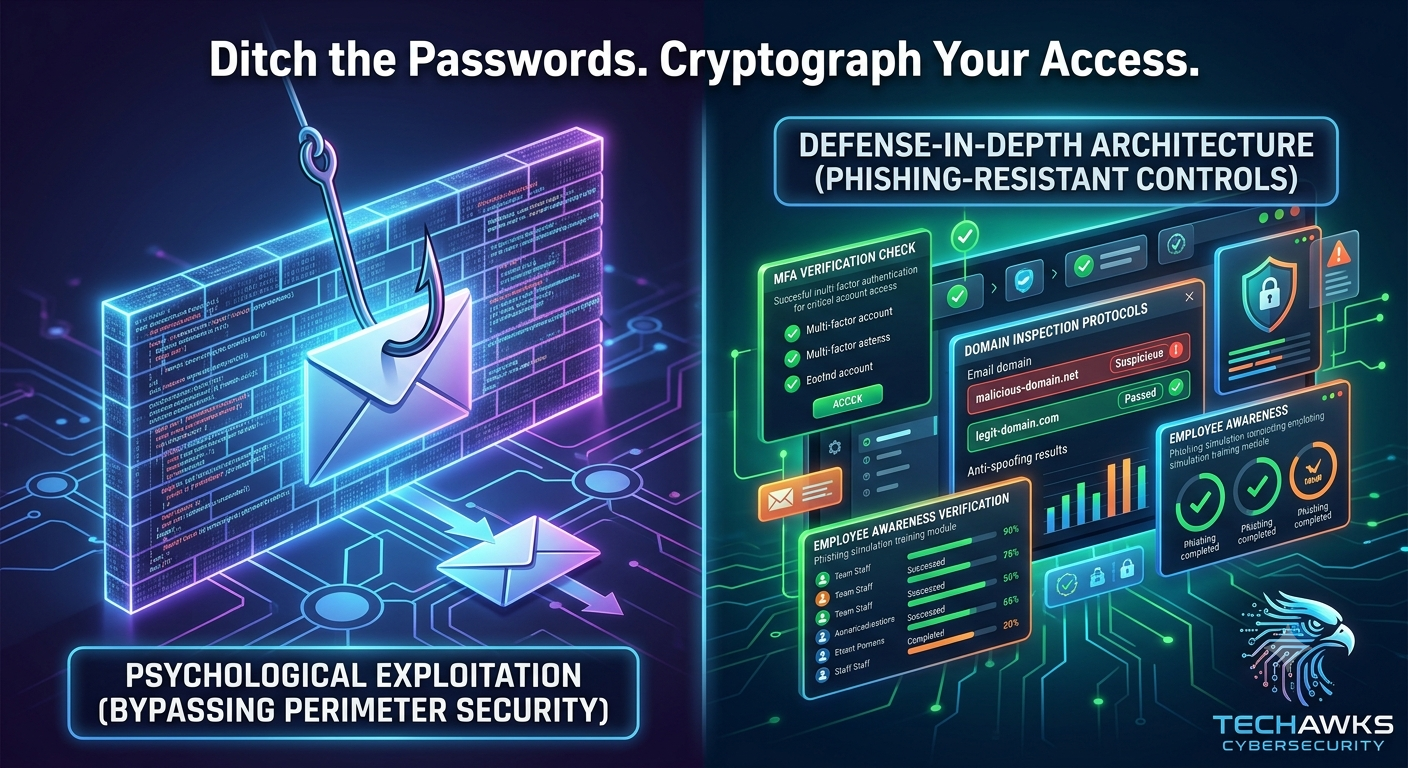
    Authentication is undergoing its biggest structural shift in decades. While Multi-Factor Authentication (MFA) added a crucial layer of security on top of passwords, traditional MFA methods—like SMS codes or push notifications—are increasingly vulnerable to SIM swapping, adversary-in-the-middle (AitM) phishing kits, and MFA fatigue attacks.


    To understand where identity management is heading, let's examine how traditional MFA compares to modern Passwordless standards in production environments:


    1. Traditional MFA (Passwords + Secondary Factors)
    The Mechanism: Users enter a static knowledge-based factor (password) paired with something they have (authenticator app OTP, SMS code, or push prompt).
    Where It Succeeds: Widespread compatibility across legacy applications, easy user onboarding, and low implementation overhead for older software architectures.
    The Vulnerability: Passwords can still be keylogged or reused. Secondary factors like SMS or time-based one-time passwords (TOTP) can be intercepted or phished via reverse-proxy toolkits that capture session cookies in real time.


    2. Passwordless Authentication (FIDO2 / WebAuthn Passkeys)
    The Mechanism: Replaces passwords with asymmetric cryptography. A private key is stored securely inside the hardware (Secure Enclave, TPM, or YubiKey), unlocked locally via biometrics or a PIN, while the public key rests on the server.
    Where It Succeeds: Phishing Resistance. Because the cryptographic key pair is strictly bound to the specific domain name in the browser, users cannot accidentally send credentials to a spoofed phishing site.
    The Trade-Off: Device loss recovery protocols are complex, cross-platform synchronization requires careful management, and enterprise migration from legacy database schemas takes significant effort.


    Actionable Advice for Security Teams & Analysts
    Transitioning to stronger identity systems isn't an all-or-nothing switch overnight:
    Upgrade MFA Methods Immediately: Phase out SMS and email-based OTPs in favor of app-based TOTP or hardware security keys wherever possible.
    Implement Number Matching: If using push notifications, enable number matching to mitigate MFA fatigue (prompt spam) attacks.
    Audit for WebAuthn Support: Map your critical internal systems and cloud services to identify platforms ready for FIDO2/WebAuthn integration.


    Key Takeaways
    Passwords Remain a Weak Link: Even strong passwords fall victim to credential reuse and modern phishing proxies.
    FIDO2 Is Domain-Bound: Passkeys eliminate phishing vulnerabilities by validating domain origin cryptographically before authenticating.
    Layer Security During Transition: As systems evolve toward passwordless standards, enforce phish-resistant MFA as the baseline for all critical accounts.


    CTA
    Where does your security stack stand in the shift toward passwordless authentication? Join Cybersecurity & Ethical Hacking to test WebAuthn implementations in hands-on labs, discuss identity migration strategies, and connect with fellow security researchers.
    Passwordless Authentication vs. Multi-Factor Authentication: Is the Master Password Era Finally Ending? Authentication is undergoing its biggest structural shift in decades. While Multi-Factor Authentication (MFA) added a crucial layer of security on top of passwords, traditional MFA methods—like SMS codes or push notifications—are increasingly vulnerable to SIM swapping, adversary-in-the-middle (AitM) phishing kits, and MFA fatigue attacks. To understand where identity management is heading, let's examine how traditional MFA compares to modern Passwordless standards in production environments: 1. Traditional MFA (Passwords + Secondary Factors) The Mechanism: Users enter a static knowledge-based factor (password) paired with something they have (authenticator app OTP, SMS code, or push prompt). Where It Succeeds: Widespread compatibility across legacy applications, easy user onboarding, and low implementation overhead for older software architectures. The Vulnerability: Passwords can still be keylogged or reused. Secondary factors like SMS or time-based one-time passwords (TOTP) can be intercepted or phished via reverse-proxy toolkits that capture session cookies in real time. 2. Passwordless Authentication (FIDO2 / WebAuthn Passkeys) The Mechanism: Replaces passwords with asymmetric cryptography. A private key is stored securely inside the hardware (Secure Enclave, TPM, or YubiKey), unlocked locally via biometrics or a PIN, while the public key rests on the server. Where It Succeeds: Phishing Resistance. Because the cryptographic key pair is strictly bound to the specific domain name in the browser, users cannot accidentally send credentials to a spoofed phishing site. The Trade-Off: Device loss recovery protocols are complex, cross-platform synchronization requires careful management, and enterprise migration from legacy database schemas takes significant effort. Actionable Advice for Security Teams & Analysts Transitioning to stronger identity systems isn't an all-or-nothing switch overnight: Upgrade MFA Methods Immediately: Phase out SMS and email-based OTPs in favor of app-based TOTP or hardware security keys wherever possible. Implement Number Matching: If using push notifications, enable number matching to mitigate MFA fatigue (prompt spam) attacks. Audit for WebAuthn Support: Map your critical internal systems and cloud services to identify platforms ready for FIDO2/WebAuthn integration. Key Takeaways Passwords Remain a Weak Link: Even strong passwords fall victim to credential reuse and modern phishing proxies. FIDO2 Is Domain-Bound: Passkeys eliminate phishing vulnerabilities by validating domain origin cryptographically before authenticating. Layer Security During Transition: As systems evolve toward passwordless standards, enforce phish-resistant MFA as the baseline for all critical accounts. CTA Where does your security stack stand in the shift toward passwordless authentication? Join Cybersecurity & Ethical Hacking to test WebAuthn implementations in hands-on labs, discuss identity migration strategies, and connect with fellow security researchers.
    0 Комментарии 0 Поделились 1Кб Просмотры 0 предпросмотр
  • The Ultimate Personal & Home Network Hardening Checklist: 10 Actionable Steps to Secure Your Digital Footprint
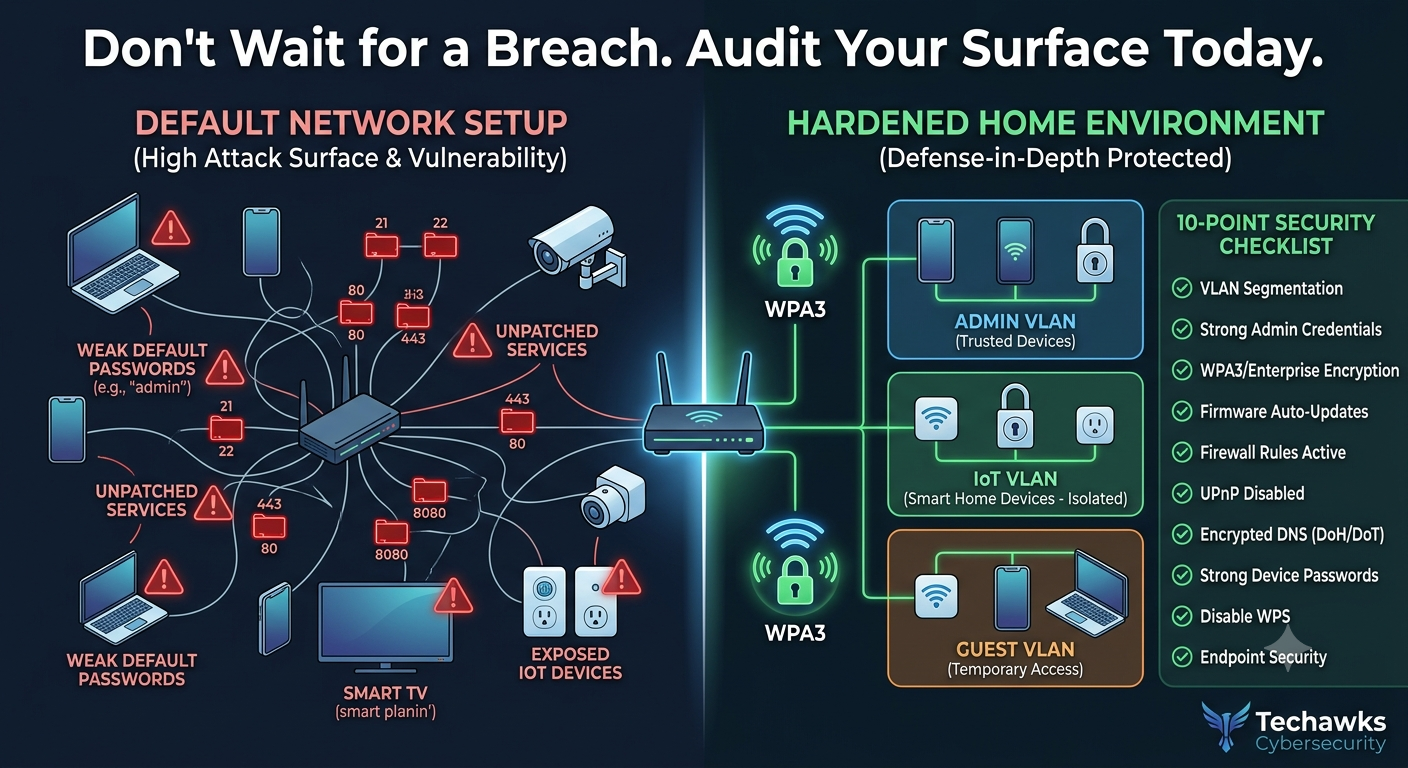
    Securing your digital environment requires a defense-in-depth approach. Whether you are a cybersecurity student setting up a home lab or a professional safeguarding personal data, run your infrastructure through this battle-tested checklist:


    Phase 1: Network & Router Security
    1. Change Default Router Admin Credentials: Replace factory default usernames (admin) and passwords on your home router to block automated brute-force attacks across local gateway IPs.
    2. Upgrade Wi-Fi Encryption to WPA3 / WPA2-Enterprise: Ensure your wireless access point uses at least WPA2-AES (CCMP) or WPA3. Disable obsolete WEP and original WPA standards, as well as WPS (Wi-Fi Protected Setup).
    3. Isolate IoT Devices on a Separate VLAN/Guest Network: Segment smart TVs, security cameras, and IoT devices onto a dedicated guest network or VLAN to prevent compromised devices from reaching personal laptops and storage servers.
    4. Disable Remote Router Management & UPnP: Turn off Universal Plug and Play (UPnP) and disable WAN-side router management interfaces to block unsolicited inbound connections from the public internet.


    Phase 2: Endpoint & Account Hardening
    5. Implement Phishing-Resistant MFA: Enforce Multi-Factor Authentication across all critical accounts (email, cloud storage, banking), prioritizing security keys (FIDO2/YubiKey) or app-based authenticator codes over SMS/text messages.
    6. Enforce Full Disk Encryption (FDE): Enable BitLocker (Windows) or FileVault (macOS) on all laptops and removable drives to protect data at rest in the event of device theft or loss.
    7. Enable Automated Operating System & Application Patching: Set OS updates, web browsers, and core software tools to auto-update to eliminate known software vulnerabilities (CVEs).


    Phase 3: Privacy & Data Integrity
    8. Deploy Encrypted DNS (DoH/DoT) & Ad-Blocking: Configure DNS-over-HTTPS (DoH) or DNS-over-TLS (DoT) via privacy-focused DNS providers (e.g., Cloudflare 1.1.1.1 or Quad9) to encrypt lookup queries and filter malicious domains.
    9. Adopt a Dedicated Password Manager: Transition off stored browser credentials to a dedicated password manager to generate unique, 16+ character passwords for every service.
    10. Automate Off-Site 3-2-1 Backups: Follow the 3-2-1 backup rule (3 copies of critical data, across 2 different media types, with 1 stored securely off-site/cloud) to maintain resilience against ransomware.


    Key Takeaways
    Network Segmentation Contains Threats: Isolating IoT devices onto separate VLANs stops lateral movement if a smart device is breached.
    Credentials Are the Perimeter: Moving from SMS-based MFA to hardware keys or TOTP authenticators removes the biggest vector for credential theft.
    Resilience Requires Off-Site Backups: A strong backup strategy ensures quick recovery without relying on decryptors if ransomware strikes.


    CTA
    How many checks did your home lab or personal network pass today? Join Cybersecurity & Ethical Hacking to share your hardening progress, discuss router configurations, and test network security practices in hands-on labs.
    The Ultimate Personal & Home Network Hardening Checklist: 10 Actionable Steps to Secure Your Digital Footprint Securing your digital environment requires a defense-in-depth approach. Whether you are a cybersecurity student setting up a home lab or a professional safeguarding personal data, run your infrastructure through this battle-tested checklist: Phase 1: Network & Router Security 1. Change Default Router Admin Credentials: Replace factory default usernames (admin) and passwords on your home router to block automated brute-force attacks across local gateway IPs. 2. Upgrade Wi-Fi Encryption to WPA3 / WPA2-Enterprise: Ensure your wireless access point uses at least WPA2-AES (CCMP) or WPA3. Disable obsolete WEP and original WPA standards, as well as WPS (Wi-Fi Protected Setup). 3. Isolate IoT Devices on a Separate VLAN/Guest Network: Segment smart TVs, security cameras, and IoT devices onto a dedicated guest network or VLAN to prevent compromised devices from reaching personal laptops and storage servers. 4. Disable Remote Router Management & UPnP: Turn off Universal Plug and Play (UPnP) and disable WAN-side router management interfaces to block unsolicited inbound connections from the public internet. Phase 2: Endpoint & Account Hardening 5. Implement Phishing-Resistant MFA: Enforce Multi-Factor Authentication across all critical accounts (email, cloud storage, banking), prioritizing security keys (FIDO2/YubiKey) or app-based authenticator codes over SMS/text messages. 6. Enforce Full Disk Encryption (FDE): Enable BitLocker (Windows) or FileVault (macOS) on all laptops and removable drives to protect data at rest in the event of device theft or loss. 7. Enable Automated Operating System & Application Patching: Set OS updates, web browsers, and core software tools to auto-update to eliminate known software vulnerabilities (CVEs). Phase 3: Privacy & Data Integrity 8. Deploy Encrypted DNS (DoH/DoT) & Ad-Blocking: Configure DNS-over-HTTPS (DoH) or DNS-over-TLS (DoT) via privacy-focused DNS providers (e.g., Cloudflare 1.1.1.1 or Quad9) to encrypt lookup queries and filter malicious domains. 9. Adopt a Dedicated Password Manager: Transition off stored browser credentials to a dedicated password manager to generate unique, 16+ character passwords for every service. 10. Automate Off-Site 3-2-1 Backups: Follow the 3-2-1 backup rule (3 copies of critical data, across 2 different media types, with 1 stored securely off-site/cloud) to maintain resilience against ransomware. Key Takeaways Network Segmentation Contains Threats: Isolating IoT devices onto separate VLANs stops lateral movement if a smart device is breached. Credentials Are the Perimeter: Moving from SMS-based MFA to hardware keys or TOTP authenticators removes the biggest vector for credential theft. Resilience Requires Off-Site Backups: A strong backup strategy ensures quick recovery without relying on decryptors if ransomware strikes. CTA How many checks did your home lab or personal network pass today? Join Cybersecurity & Ethical Hacking to share your hardening progress, discuss router configurations, and test network security practices in hands-on labs.
    0 Комментарии 0 Поделились 982 Просмотры 0 предпросмотр
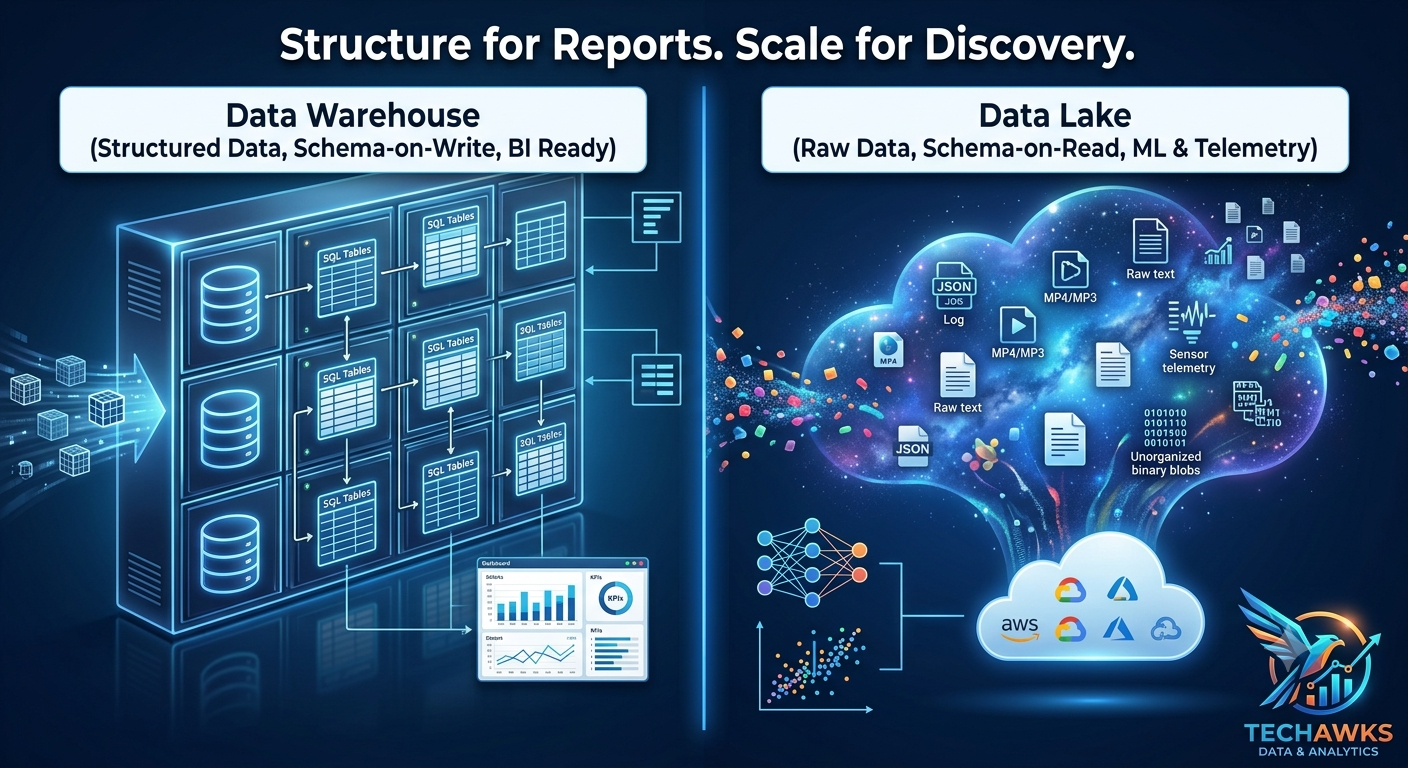
  • Data Warehouse vs. Data Lake: Choosing the Right Storage Architecture for Your Analytics Pipeline
    Choosing between a Data Warehouse and a Data Lake depends entirely on your data structure, processing requirements, and analytical use cases. Understanding the structural differences enables data teams to build performant, cost-effective pipelines.


    Here is an educational breakdown of how both storage paradigms operate and when to implement each:


    1. Data Warehouse (Schema-on-Write)
    A Data Warehouse is a centralized repository engineered specifically for transactional, structured business data. Data is extracted, transformed, and loaded (ETL) into predefined schemas before storage.
    Core Characteristics: Optimized for fast SQL queries, complex joins, high concurrency, and business intelligence (BI) reporting tools.
    Best Used For: Clean, highly structured data needed for executive dashboards, financial reporting, and operational KPIs where low query latency and strict data consistency (ACID compliance) are mandatory.
    Popular Technologies: Snowflake, Google BigQuery, Amazon Redshift.


    2. Data Lake (Schema-on-Read)
    A Data Lake is a scalable storage repository designed to hold vast amounts of raw data in its native format—whether structured, semi-structured (JSON, XML), or unstructured (images, audio, logs).
    Core Characteristics: Follows an ELT (Extract, Load, Transform) pattern. Schema definition is deferred until the data is queried or processed by downstream applications.
    Best Used For: Storing high-volume telemetry, clickstream data, machine learning model training datasets, and exploratory data analysis where upfront schema design is impractical.
    Popular Technologies: Amazon S3, Google Cloud Storage, Azure Blob Storage, Apache Iceberg.


    How to Build a Hybrid Modern Data Stack
    Modern enterprise architectures rarely use one exclusively. Instead, they implement the Data Lakehouse model or a hybrid pipeline:
    Ingest to the Lake: Store high-volume raw streams and logs directly in cost-effective Object Storage (Data Lake).
    Transform and Load to the Warehouse: Clean, aggregate, and model core business entities (using dbt or Spark) before loading curated datasets into a Data Warehouse for business users.
    Decouple Storage and Compute: Choose engine architectures that allow independent scaling of compute instances from underlying storage layers.


    Key Takeaways
    Schema-on-Write vs. Schema-on-Read: Warehouses require upfront schema modeling for fast SQL queries; Lakes preserve raw data formats for downstream flexibility.
    Match Purpose to Architecture: Use Warehouses for structured BI reporting and Lakes for unstructured ML training and telemetry ingestion.
    Combine Strengths: Modern data stacks often use Data Lakes as raw staging layers and Data Warehouses as curated analytical engines.


    CTA
    How is your organization structuring its data architecture this year? Join Data Science & Analytics to discuss pipeline optimization, compare data modeling techniques, and build hands-on projects with experienced data engineers.
    Data Warehouse vs. Data Lake: Choosing the Right Storage Architecture for Your Analytics Pipeline Choosing between a Data Warehouse and a Data Lake depends entirely on your data structure, processing requirements, and analytical use cases. Understanding the structural differences enables data teams to build performant, cost-effective pipelines. Here is an educational breakdown of how both storage paradigms operate and when to implement each: 1. Data Warehouse (Schema-on-Write) A Data Warehouse is a centralized repository engineered specifically for transactional, structured business data. Data is extracted, transformed, and loaded (ETL) into predefined schemas before storage. Core Characteristics: Optimized for fast SQL queries, complex joins, high concurrency, and business intelligence (BI) reporting tools. Best Used For: Clean, highly structured data needed for executive dashboards, financial reporting, and operational KPIs where low query latency and strict data consistency (ACID compliance) are mandatory. Popular Technologies: Snowflake, Google BigQuery, Amazon Redshift. 2. Data Lake (Schema-on-Read) A Data Lake is a scalable storage repository designed to hold vast amounts of raw data in its native format—whether structured, semi-structured (JSON, XML), or unstructured (images, audio, logs). Core Characteristics: Follows an ELT (Extract, Load, Transform) pattern. Schema definition is deferred until the data is queried or processed by downstream applications. Best Used For: Storing high-volume telemetry, clickstream data, machine learning model training datasets, and exploratory data analysis where upfront schema design is impractical. Popular Technologies: Amazon S3, Google Cloud Storage, Azure Blob Storage, Apache Iceberg. How to Build a Hybrid Modern Data Stack Modern enterprise architectures rarely use one exclusively. Instead, they implement the Data Lakehouse model or a hybrid pipeline: Ingest to the Lake: Store high-volume raw streams and logs directly in cost-effective Object Storage (Data Lake). Transform and Load to the Warehouse: Clean, aggregate, and model core business entities (using dbt or Spark) before loading curated datasets into a Data Warehouse for business users. Decouple Storage and Compute: Choose engine architectures that allow independent scaling of compute instances from underlying storage layers. Key Takeaways Schema-on-Write vs. Schema-on-Read: Warehouses require upfront schema modeling for fast SQL queries; Lakes preserve raw data formats for downstream flexibility. Match Purpose to Architecture: Use Warehouses for structured BI reporting and Lakes for unstructured ML training and telemetry ingestion. Combine Strengths: Modern data stacks often use Data Lakes as raw staging layers and Data Warehouses as curated analytical engines. CTA How is your organization structuring its data architecture this year? Join Data Science & Analytics to discuss pipeline optimization, compare data modeling techniques, and build hands-on projects with experienced data engineers.
    0 Комментарии 0 Поделились 1Кб Просмотры 0 предпросмотр
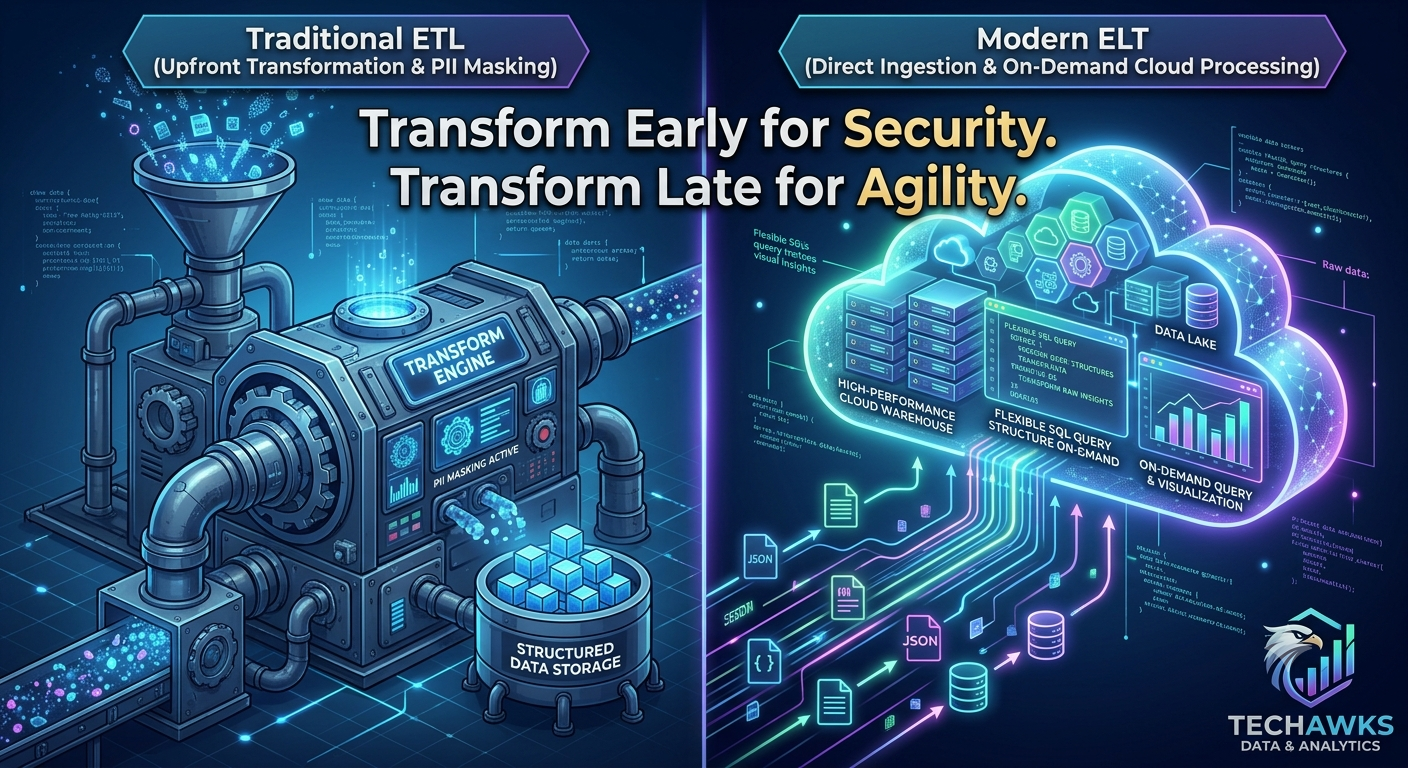
  • ETL vs. ELT: Is Modern Cloud Computing rendering Traditional Data Pipelines Obsolete?
    The ongoing debate between Extract-Transform-Load (ETL) and Extract-Load-Transform (ELT) isn't just about letter order—it defines how an organization manages compute costs, pipeline latency, and data governance.
    Understanding where each architecture excels allows data engineers to build resilient, cost-effective data pipelines:


    1. Traditional ETL (Extract, Transform, Load)
    The Mechanism: Raw data is extracted from source systems, processed and transformed in an intermediate staging server (or ETL engine), and then loaded into a target database or data warehouse.
    Where It Succeeds: Strict compliance and privacy workflows. Transforming data before loading ensures sensitive personally identifiable information (PII) is masked or encrypted before reaching storage. It also saves expensive storage space by filtering out junk data early.
    The Drawbacks: Compute-heavy staging environments, slower pipeline speeds for large datasets, and rigid schema restrictions that make ad-hoc exploration difficult for analysts.


    2. Modern ELT (Extract, Load, Transform)
    The Mechanism: Raw data is extracted and loaded directly into a high-performance cloud data warehouse or lakehouse first. Transformations are executed on-demand inside the target warehouse using tools like SQL or dbt.
    Where It Succeeds: Scalability and speed. Cloud warehouses handle massive parallel processing (MPP), allowing analysts to iterate on raw data without breaking underlying pipelines. It enables true "schema-on-read" flexibility.
    The Drawbacks: Uncontrolled query costs if transformation queries are unoptimized, potential storage bloat from raw data, and higher exposure risks if raw security controls are weak.


    Actionable Advice for Pipeline Architects
    Instead of viewing this as a binary choice, modern data teams build hybrid architectures based on data sensitivity and query requirements:
    Use ETL for Sensitive Ingestion: Mask healthcare, financial, or personal user data via microservices or edge workers before landing it in central storage.
    Use ELT for Business Intelligence: Load raw product logs, clickstreams, and application databases directly into cloud storage, enabling SQL-driven transformations (dbt) for flexible BI modeling.
    Monitor Compute Costs: In ELT models, strictly govern warehouse compute usage by setting query timeouts, auto-suspending idle clusters, and indexing high-cardinality columns.


    Key Takeaways
    Compute Power Drove the Shift: ELT gained dominance because cloud warehouses can process transformations faster and cheaper than separate ETL servers.
    Data Governance Dictates Choice: Highly regulated data (HIPAA, GDPR) often demands upfront transformation (ETL) to prevent unmasked PII exposure.
    Transformation Decoupling: Modern stack setups leverage ELT to separate raw data ingestion from analytical logic, making code maintenance vastly easier.


    CTA
    How is your team structuring its pipeline architecture this year? Are you sticking with traditional ETL for security, or fully committed to ELT with dbt? Join Data Science & Analytics to share your pipeline benchmarks, discuss data modeling strategies, and collaborate with fellow data professionals.
    ETL vs. ELT: Is Modern Cloud Computing rendering Traditional Data Pipelines Obsolete? The ongoing debate between Extract-Transform-Load (ETL) and Extract-Load-Transform (ELT) isn't just about letter order—it defines how an organization manages compute costs, pipeline latency, and data governance. Understanding where each architecture excels allows data engineers to build resilient, cost-effective data pipelines: 1. Traditional ETL (Extract, Transform, Load) The Mechanism: Raw data is extracted from source systems, processed and transformed in an intermediate staging server (or ETL engine), and then loaded into a target database or data warehouse. Where It Succeeds: Strict compliance and privacy workflows. Transforming data before loading ensures sensitive personally identifiable information (PII) is masked or encrypted before reaching storage. It also saves expensive storage space by filtering out junk data early. The Drawbacks: Compute-heavy staging environments, slower pipeline speeds for large datasets, and rigid schema restrictions that make ad-hoc exploration difficult for analysts. 2. Modern ELT (Extract, Load, Transform) The Mechanism: Raw data is extracted and loaded directly into a high-performance cloud data warehouse or lakehouse first. Transformations are executed on-demand inside the target warehouse using tools like SQL or dbt. Where It Succeeds: Scalability and speed. Cloud warehouses handle massive parallel processing (MPP), allowing analysts to iterate on raw data without breaking underlying pipelines. It enables true "schema-on-read" flexibility. The Drawbacks: Uncontrolled query costs if transformation queries are unoptimized, potential storage bloat from raw data, and higher exposure risks if raw security controls are weak. Actionable Advice for Pipeline Architects Instead of viewing this as a binary choice, modern data teams build hybrid architectures based on data sensitivity and query requirements: Use ETL for Sensitive Ingestion: Mask healthcare, financial, or personal user data via microservices or edge workers before landing it in central storage. Use ELT for Business Intelligence: Load raw product logs, clickstreams, and application databases directly into cloud storage, enabling SQL-driven transformations (dbt) for flexible BI modeling. Monitor Compute Costs: In ELT models, strictly govern warehouse compute usage by setting query timeouts, auto-suspending idle clusters, and indexing high-cardinality columns. Key Takeaways Compute Power Drove the Shift: ELT gained dominance because cloud warehouses can process transformations faster and cheaper than separate ETL servers. Data Governance Dictates Choice: Highly regulated data (HIPAA, GDPR) often demands upfront transformation (ETL) to prevent unmasked PII exposure. Transformation Decoupling: Modern stack setups leverage ELT to separate raw data ingestion from analytical logic, making code maintenance vastly easier. CTA How is your team structuring its pipeline architecture this year? Are you sticking with traditional ETL for security, or fully committed to ELT with dbt? Join Data Science & Analytics to share your pipeline benchmarks, discuss data modeling strategies, and collaborate with fellow data professionals.
    0 Комментарии 0 Поделились 1Кб Просмотры 0 предпросмотр
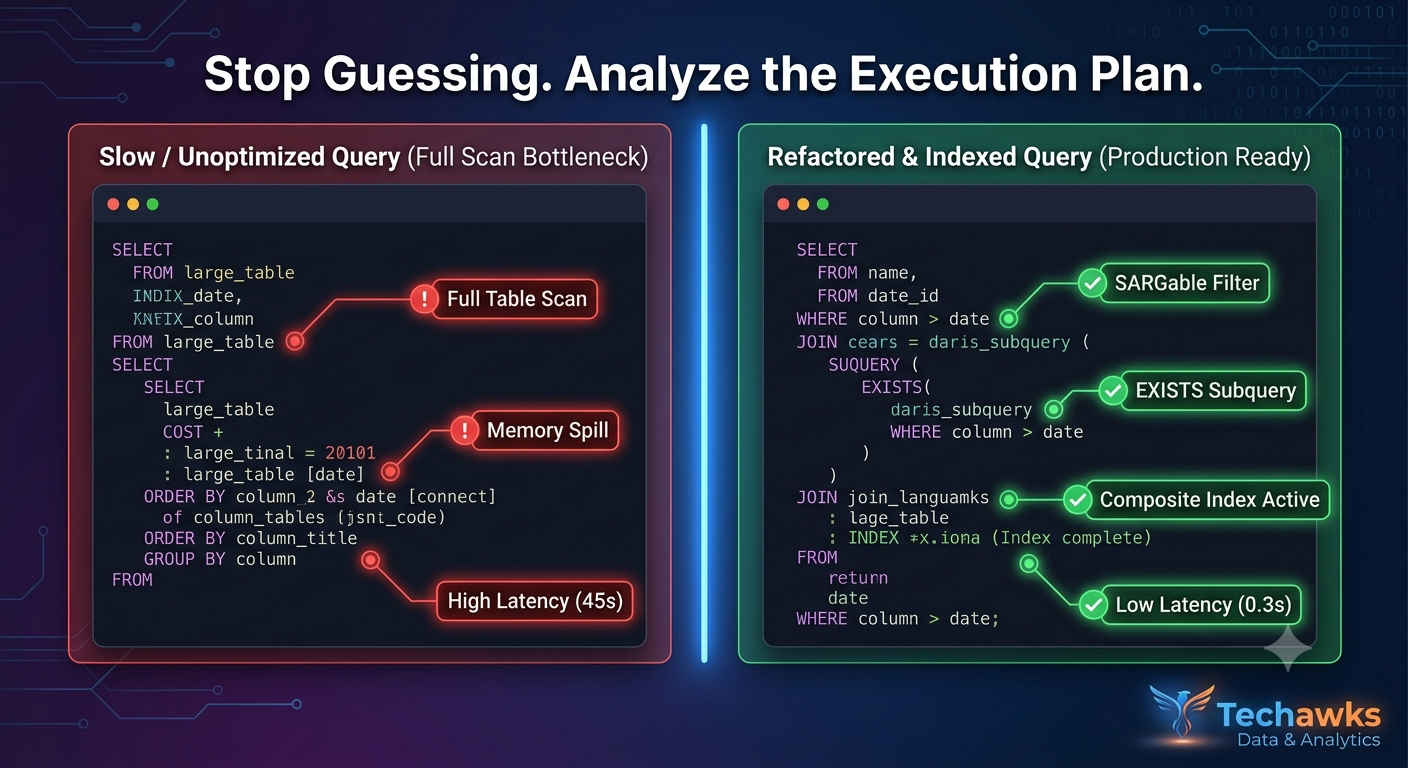
  • How to Optimize Slow SQL Queries: A 4-Step Tutorial for Data Analysts and Engineers
    Writing functional SQL is easy; writing performant, production-ready SQL requires an understanding of how query engines scan and filter data under the hood. Follow this step-by-step refactoring workflow to eliminate query bottlenecks.


    Step 1: Analyze the Query Execution Plan
    Before changing any code, run your engine’s diagnostic tool (EXPLAIN or EXPLAIN ANALYZE in PostgreSQL/MySQL, or inspect the Execution Visualizer in Snowflake/BigQuery).
    What to look for: Look for "Full Table Scans" (or Seq Scan) on large tables, costly Sort operations, and high disk I/O spilled to temporary storage.
    Action: Identify which specific join or aggregation node is responsible for the highest percentage of total runtime cost.


    Step 2: Eliminate SELECT * and Apply Early Filtering
    Fetching unused columns prevents the database from using index-only scans and increases network transfer overhead.
    Bad Practice:
    SQL
    SELECT *
    FROM orders o
    JOIN customers c ON o.customer_id = c.id
    WHERE YEAR(o.order_date) = 2025;
    Optimized Refactor:


    SQL
    SELECT o.order_id, o.amount, c.customer_name
    FROM orders o
    JOIN customers c ON o.customer_id = c.id
    WHERE o.order_date >= '2025-01-01' AND o.order_date < '2026-01-01';
    Why it works: Selecting only needed columns reduces memory footprint. Avoiding scalar functions like YEAR() on indexed columns enables the engine to use existing date indexes directly (SARGable queries).


    Step 3: Replace Subqueries in WHERE with EXISTS or Explicit Joins
    Correlated subqueries or large IN (SELECT ...) clauses evaluate row-by-row, slowing down processing on multi-million row tables.
    Bad Practice:


    SQL
    SELECT name FROM users
    WHERE id IN (SELECT user_id FROM subscriptions WHERE status = 'active');
    Optimized Refactor:


    SQL
    SELECT u.name
    FROM users u
    WHERE EXISTS
    SELECT 1 FROM subscriptions s
    WHERE s.user_id = u.id AND s.status = 'active'
    Why it works: EXISTS short-circuits execution as soon as the first matching row is found rather than materializing the full subquery result set in memory.


    Step 4: Index High-Cardinality Join and Filter Columns
    Ensure columns frequently used in JOIN, WHERE, and GROUP BY clauses are properly indexed or partitioned.
    Action: Create composite indexes for queries filtering across multiple columns simultaneously:


    SQL
    CREATE INDEX idx_orders_customer_date ON orders (customer_id, order_date);
    Cloud Warehouse Note: In columnar systems like BigQuery or Snowflake, use Partitioning (e.g., by order_date) and Clustering (e.g., by customer_id) instead of traditional B-tree indexes to minimize data scanned.


    Key Takeaways
    Diagnose Before Fixing: Always run EXPLAIN ANALYZE to locate exact execution bottlenecks instead of guessing.
    Make Queries SARGable: Avoid applying functions (YEAR(), LOWER(), CAST()) directly to indexed columns in WHERE clauses.
    Prune Unnecessary Scans: Explicitly list required columns and leverage EXISTS over large IN () subqueries to free up memory.


    CTA
    Struggling with a stubborn query that won't run efficiently? Join Data Science & Analytics to post your execution plans, trade indexing tips, and master advanced SQL optimization with experienced data engineers.
    How to Optimize Slow SQL Queries: A 4-Step Tutorial for Data Analysts and Engineers Writing functional SQL is easy; writing performant, production-ready SQL requires an understanding of how query engines scan and filter data under the hood. Follow this step-by-step refactoring workflow to eliminate query bottlenecks. Step 1: Analyze the Query Execution Plan Before changing any code, run your engine’s diagnostic tool (EXPLAIN or EXPLAIN ANALYZE in PostgreSQL/MySQL, or inspect the Execution Visualizer in Snowflake/BigQuery). What to look for: Look for "Full Table Scans" (or Seq Scan) on large tables, costly Sort operations, and high disk I/O spilled to temporary storage. Action: Identify which specific join or aggregation node is responsible for the highest percentage of total runtime cost. Step 2: Eliminate SELECT * and Apply Early Filtering Fetching unused columns prevents the database from using index-only scans and increases network transfer overhead. Bad Practice: SQL SELECT * FROM orders o JOIN customers c ON o.customer_id = c.id WHERE YEAR(o.order_date) = 2025; Optimized Refactor: SQL SELECT o.order_id, o.amount, c.customer_name FROM orders o JOIN customers c ON o.customer_id = c.id WHERE o.order_date >= '2025-01-01' AND o.order_date < '2026-01-01'; Why it works: Selecting only needed columns reduces memory footprint. Avoiding scalar functions like YEAR() on indexed columns enables the engine to use existing date indexes directly (SARGable queries). Step 3: Replace Subqueries in WHERE with EXISTS or Explicit Joins Correlated subqueries or large IN (SELECT ...) clauses evaluate row-by-row, slowing down processing on multi-million row tables. Bad Practice: SQL SELECT name FROM users WHERE id IN (SELECT user_id FROM subscriptions WHERE status = 'active'); Optimized Refactor: SQL SELECT u.name FROM users u WHERE EXISTS SELECT 1 FROM subscriptions s WHERE s.user_id = u.id AND s.status = 'active' Why it works: EXISTS short-circuits execution as soon as the first matching row is found rather than materializing the full subquery result set in memory. Step 4: Index High-Cardinality Join and Filter Columns Ensure columns frequently used in JOIN, WHERE, and GROUP BY clauses are properly indexed or partitioned. Action: Create composite indexes for queries filtering across multiple columns simultaneously: SQL CREATE INDEX idx_orders_customer_date ON orders (customer_id, order_date); Cloud Warehouse Note: In columnar systems like BigQuery or Snowflake, use Partitioning (e.g., by order_date) and Clustering (e.g., by customer_id) instead of traditional B-tree indexes to minimize data scanned. Key Takeaways Diagnose Before Fixing: Always run EXPLAIN ANALYZE to locate exact execution bottlenecks instead of guessing. Make Queries SARGable: Avoid applying functions (YEAR(), LOWER(), CAST()) directly to indexed columns in WHERE clauses. Prune Unnecessary Scans: Explicitly list required columns and leverage EXISTS over large IN () subqueries to free up memory. CTA Struggling with a stubborn query that won't run efficiently? Join Data Science & Analytics to post your execution plans, trade indexing tips, and master advanced SQL optimization with experienced data engineers.
    0 Комментарии 0 Поделились 972 Просмотры 0 предпросмотр
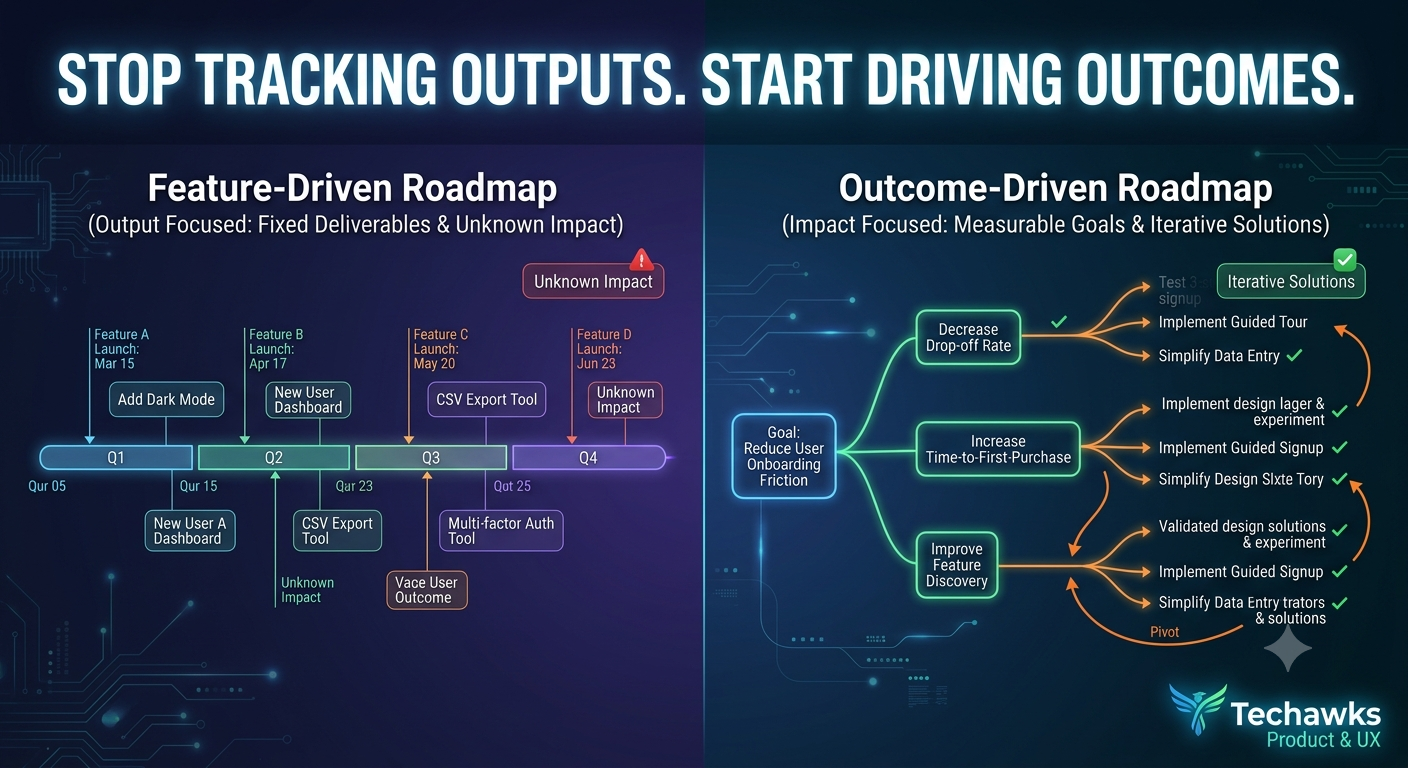
  • Feature-Driven vs. Outcome-Driven Product Roadmaps: Shipping Code vs. Delivering Value
    The difference between average product teams and high-performing ones lies in how they define success. Feature-driven roadmaps commit to building specific solutions before fully understanding the problem, whereas outcome-driven roadmaps align the team around solving core user friction.Here is an educational breakdown of how both approaches operate and how to transition your product strategy:


    1. Feature-Driven Roadmaps (The Output Trap)
    The Mechanism: Focuses on shipping specific deliverables within fixed timeframes (e.g., "Q3 Deliverables: Multi-factor authentication, export to CSV, redesign dashboard").
    Why It Fails: It assumes chosen solutions will automatically solve business problems. If a feature launches on time but fails to move activation or retention metrics, the team still celebrates "shipping" while value remains zero.


    2. Outcome-Driven Roadmaps (The Impact Model)
    The Mechanism: Structures goals around measurable user behaviors and business impact using frameworks like OKRs or Opportunity Solution Trees (e.g., "Q3 Goal: Reduce onboarding drop-off rate from 40% to 20%").
    Why It Succeeds: It grants design and engineering teams the autonomy to experiment with multiple solutions. If the first feature iteration fails to hit the target metric, the team pivots and refines until the desired user behavior is achieved.


    How to Refactor Your Roadmap into OutcomesTo transition your team from an output factory to an outcome-driven engine, follow these three practical steps:
    Reframe Feature Requests into Hypotheses: Instead of stating "We need to add a search filter," write "We believe adding category filters will decrease time-to-first-purchase by 15% for new users.
    "Pair Key Results with Solution Tracks: Group potential features under explicit outcome metrics. Treat features as hypotheses to test rather than non-negotiable commitments.
    Decouple Discovery from Delivery: Run continuous user discovery (interviews, usability tests, product analytics) alongside delivery sprints to validate problems before committing full engineering resources.


    Key Takeaways
    Outputs $\neq$ Outcomes: Shipping a feature on time is an operational milestone; changing user behavior for the better is a product outcome.
    Empower Through Problem Statements: Outcome roadmaps give cross-functional teams the freedom to iterate on the best solution rather than locking them into rigid feature lists.
    Validate Hypotheses Early: Treat every proposed feature as an unverified hypothesis until user analytics prove it moves the target metric.


    CTA
    How does your team structure its quarterly product goals? Join Product, UX & Design to share roadmap templates, debate discovery frameworks, and learn how leading product strategists drive measurable user impact.
    Feature-Driven vs. Outcome-Driven Product Roadmaps: Shipping Code vs. Delivering Value The difference between average product teams and high-performing ones lies in how they define success. Feature-driven roadmaps commit to building specific solutions before fully understanding the problem, whereas outcome-driven roadmaps align the team around solving core user friction.Here is an educational breakdown of how both approaches operate and how to transition your product strategy: 1. Feature-Driven Roadmaps (The Output Trap) The Mechanism: Focuses on shipping specific deliverables within fixed timeframes (e.g., "Q3 Deliverables: Multi-factor authentication, export to CSV, redesign dashboard"). Why It Fails: It assumes chosen solutions will automatically solve business problems. If a feature launches on time but fails to move activation or retention metrics, the team still celebrates "shipping" while value remains zero. 2. Outcome-Driven Roadmaps (The Impact Model) The Mechanism: Structures goals around measurable user behaviors and business impact using frameworks like OKRs or Opportunity Solution Trees (e.g., "Q3 Goal: Reduce onboarding drop-off rate from 40% to 20%"). Why It Succeeds: It grants design and engineering teams the autonomy to experiment with multiple solutions. If the first feature iteration fails to hit the target metric, the team pivots and refines until the desired user behavior is achieved. How to Refactor Your Roadmap into OutcomesTo transition your team from an output factory to an outcome-driven engine, follow these three practical steps: Reframe Feature Requests into Hypotheses: Instead of stating "We need to add a search filter," write "We believe adding category filters will decrease time-to-first-purchase by 15% for new users. "Pair Key Results with Solution Tracks: Group potential features under explicit outcome metrics. Treat features as hypotheses to test rather than non-negotiable commitments. Decouple Discovery from Delivery: Run continuous user discovery (interviews, usability tests, product analytics) alongside delivery sprints to validate problems before committing full engineering resources. Key Takeaways Outputs $\neq$ Outcomes: Shipping a feature on time is an operational milestone; changing user behavior for the better is a product outcome. Empower Through Problem Statements: Outcome roadmaps give cross-functional teams the freedom to iterate on the best solution rather than locking them into rigid feature lists. Validate Hypotheses Early: Treat every proposed feature as an unverified hypothesis until user analytics prove it moves the target metric. CTA How does your team structure its quarterly product goals? Join Product, UX & Design to share roadmap templates, debate discovery frameworks, and learn how leading product strategists drive measurable user impact.
    0 Комментарии 0 Поделились 2Кб Просмотры 0 предпросмотр