


Techawks Canada is the official Techawks community connecting developers, AI engineers, startup founders, students, researchers, designers, and technology professionals across Canada. Explore the latest in artificial intelligence, software engineering, cloud computing, cybersecurity, data science, clean technology, and emerging technologies.
Discover practical tutorials, industry insights, startup discussions, open-source projects, networking opportunities, tech events, job updates, product launches, and expert knowledge sharing. Learn new skills, collaborate on innovative ideas, showcase your work, and grow with a community focused on technology, innovation, and professional development.
Discover practical tutorials, industry insights, startup discussions, open-source projects, networking opportunities, tech events, job updates, product launches, and expert knowledge sharing. Learn new skills, collaborate on innovative ideas, showcase your work, and grow with a community focused on technology, innovation, and professional development.
-
Public Group
-
62 Posts
-
62 Photos
-
0 Videos
-
Reviews
-
People and Nations
Search

 Arabic
 French
 Spanish
 Portuguese
 Deutsch
 Turkish
 Dutch
Dutch
 Italiano
 Russian
 Romaian
 Portuguese (Brazil)
 Greek
Greek
Recent Updates
-
Beyond GPU Subsidies: Why Canada’s Sovereign AI Push Hinges on Federated Data Lineage
Canada's AI Sovereign Compute Infrastructure Program (SCIP) marks a decisive commitment to domestic infrastructure: keeping compute capacity, model training, and IP retention inside Canadian borders.
However, building domestic GPU superclusters only solves the hardware layer. In practice, Canadian technology teams face a unique regulatory architecture: federal frameworks like PIPEDA and the Artificial Intelligence and Data Act (AIDA / Bill C-27) layered directly on top of provincial mandates (such as Quebec’s strict Law 25).
If an engineering team in Montreal, Toronto, or Vancouver wants to fine-tune a model on domestic public infrastructure, aggregating enterprise or public-sector data into a centralized training bucket frequently triggers cross-provincial compliance violations.
Here is how Canadian data engineers and systems architects must adapt:
1. The End of the Monolithic Training Lakehouse
Aggregating healthcare records, banking transactions, or municipal telemetry from Ontario, Quebec, and British Columbia into a single central data warehouse is increasingly untenable due to strict purpose-limitation, consent tracking, and provincial data transfer rules.
The Architecture Shift: Teams must transition to Federated Learning (FL) and Distributed Parameter Orchestration. Rather than moving raw datasets to the compute cluster, orchestrators push gradient aggregation jobs to isolated provincial nodes, returning only parameter updates back to the national sovereign core.
2. Verifiable Data Lineage as an AIDA/Law 25 Primitive
Under high-impact AI definitions, Canadian regulators require auditable documentation of data provenance, bias mitigation, and systemic risk. A standard metadata catalog or Git commit hash is no longer sufficient.
The Implementation: Modern data engineering pipelines require immutable, cryptographic provenance tracing (such as OpenLineage integrated with signed software bill of materials / SBOM-like schemas for datasets). Every feature transformation, tokenization rule, and data filtering step must be permanently paired with the model artifact to withstand algorithmic transparency audits.
3. Privacy-Preserving Synthetic Twins for Cross-Border R&D
Canadian teams operating across the US–Canada border or running multi-national pipelines cannot treat raw domestic data as globally portable.
The Implementation: Production pipelines are implementing differential privacy (DP) pipelines at the ingestion gateway. By generating mathematically bounded synthetic datasets (DP-SGD) inside the Canadian sovereign enclave, engineers can develop, debug, and benchmark architectures across distributed teams without ever exporting regulated Canadian PII.
Discussion Question
For engineering leads and architects building across Toronto, Montreal, Vancouver, Calgary, and Ottawa: Is your organization moving toward federated data orchestration to navigate provincial privacy laws (like Quebec Law 25), or are you solving data isolation through synthetic generation and localized private cloud zones?
CTA (Join Techawks Canada)
Join Techawks Canada to participate in deep-dive architecture discussions, data engineering meetups, and technical roundtables defining Canada’s sovereign tech future.Beyond GPU Subsidies: Why Canada’s Sovereign AI Push Hinges on Federated Data Lineage Canada's AI Sovereign Compute Infrastructure Program (SCIP) marks a decisive commitment to domestic infrastructure: keeping compute capacity, model training, and IP retention inside Canadian borders. However, building domestic GPU superclusters only solves the hardware layer. In practice, Canadian technology teams face a unique regulatory architecture: federal frameworks like PIPEDA and the Artificial Intelligence and Data Act (AIDA / Bill C-27) layered directly on top of provincial mandates (such as Quebec’s strict Law 25). If an engineering team in Montreal, Toronto, or Vancouver wants to fine-tune a model on domestic public infrastructure, aggregating enterprise or public-sector data into a centralized training bucket frequently triggers cross-provincial compliance violations. Here is how Canadian data engineers and systems architects must adapt: 1. The End of the Monolithic Training Lakehouse Aggregating healthcare records, banking transactions, or municipal telemetry from Ontario, Quebec, and British Columbia into a single central data warehouse is increasingly untenable due to strict purpose-limitation, consent tracking, and provincial data transfer rules. The Architecture Shift: Teams must transition to Federated Learning (FL) and Distributed Parameter Orchestration. Rather than moving raw datasets to the compute cluster, orchestrators push gradient aggregation jobs to isolated provincial nodes, returning only parameter updates back to the national sovereign core. 2. Verifiable Data Lineage as an AIDA/Law 25 Primitive Under high-impact AI definitions, Canadian regulators require auditable documentation of data provenance, bias mitigation, and systemic risk. A standard metadata catalog or Git commit hash is no longer sufficient. The Implementation: Modern data engineering pipelines require immutable, cryptographic provenance tracing (such as OpenLineage integrated with signed software bill of materials / SBOM-like schemas for datasets). Every feature transformation, tokenization rule, and data filtering step must be permanently paired with the model artifact to withstand algorithmic transparency audits. 3. Privacy-Preserving Synthetic Twins for Cross-Border R&D Canadian teams operating across the US–Canada border or running multi-national pipelines cannot treat raw domestic data as globally portable. The Implementation: Production pipelines are implementing differential privacy (DP) pipelines at the ingestion gateway. By generating mathematically bounded synthetic datasets (DP-SGD) inside the Canadian sovereign enclave, engineers can develop, debug, and benchmark architectures across distributed teams without ever exporting regulated Canadian PII. Discussion Question For engineering leads and architects building across Toronto, Montreal, Vancouver, Calgary, and Ottawa: Is your organization moving toward federated data orchestration to navigate provincial privacy laws (like Quebec Law 25), or are you solving data isolation through synthetic generation and localized private cloud zones? CTA (Join Techawks Canada) Join Techawks Canada to participate in deep-dive architecture discussions, data engineering meetups, and technical roundtables defining Canada’s sovereign tech future.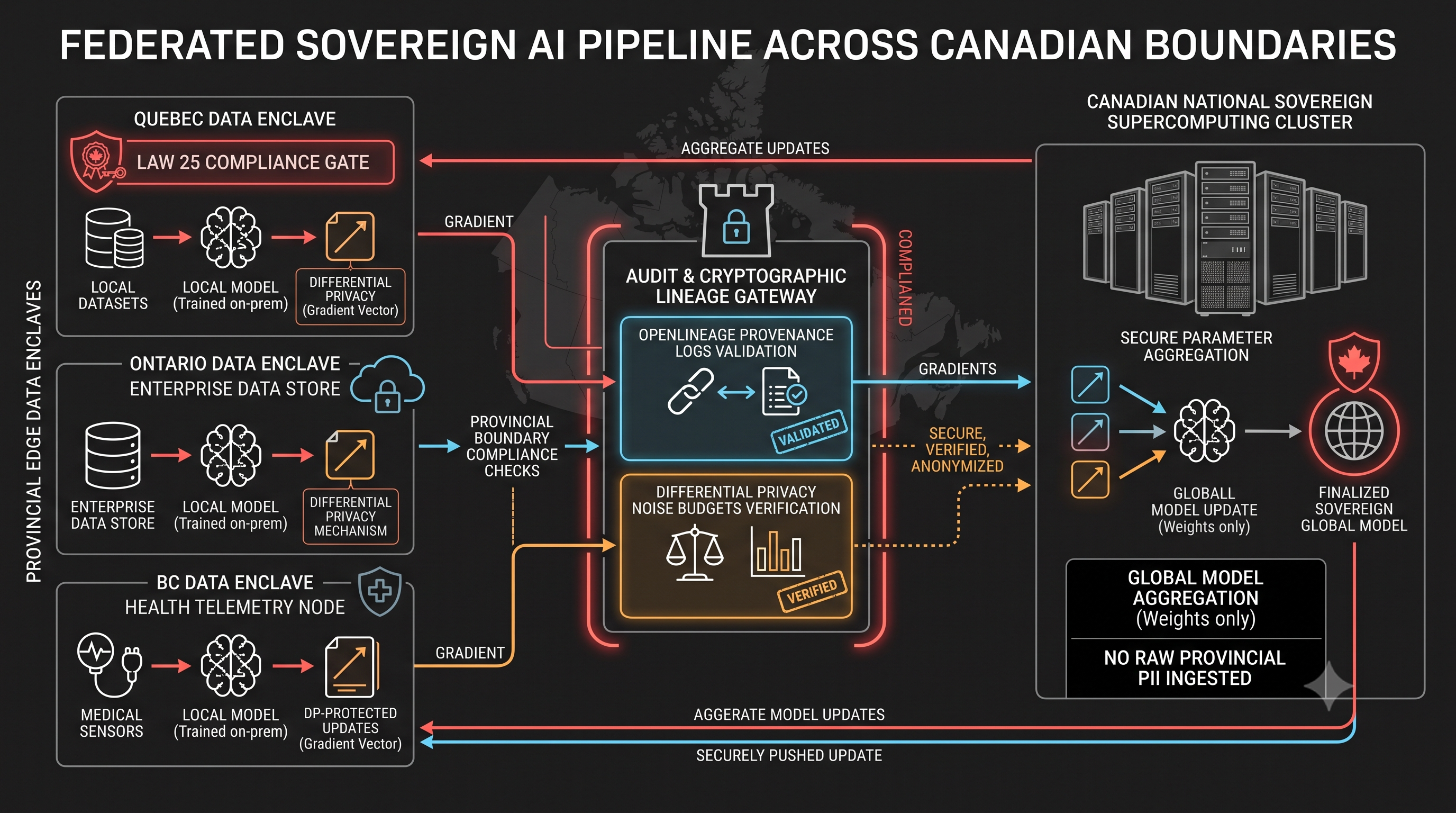 0 Comments 0 Shares 0 Views 0 Reviews
 -
Architecting for Canadian Data Sovereignty: Building a Dual-Region ca-central-1 / ca-west-1 Pipeline for PIPEDA & Quebec Law 25 Compliance
Building Canadian software services requires a clear boundary: citizen personal information (PII) cannot quietly flow across the southern border without strict cross-border transfer assessments and potential US CLOUD Act exposure. At the same time, single-region deployments in Central Canada (Montreal) leave mission-critical workloads vulnerable to regional outages.
Achieving high availability while keeping compliance deterministic means designing a purely domestic, dual-region active-passive or active-active topology across Canadian cloud regions (ca-central-1 in Montreal and ca-west-1 in Calgary).Here is a practical guide to engineering sovereign, resilient Canadian cloud infrastructure.1. In-Country Infrastructure Fencing via Policy-as-Code Prevent inadvertent cross-border provisioning directly at the deployment pipeline layer.
Service Control Policies (SCPs) & Terraform Guardrails: Implement hard preventative controls restricting resource creation exclusively to Canadian regions:JSON{
"Effect": "Deny",
"Action": "*",
"Resource": "*",
"Condition": {
"StringNotEquals": {
"aws:RequestedRegion": ["ca-central-1", "ca-west-1"]
}
}
}
Enforce this rule across compute instances, S3 buckets, and RDS instances so that accidental deployment into US regions fails at CI/CD validation.2. Domestic Multi-Region Failover (ca-central-1 $\leftrightarrow$ ca-west-1)Historically, Canadian workloads lacked a secondary domestic cloud region, forcing teams to fail over to US regions during disasters.
Configure your primary transactional database (e.g., Amazon Aurora PostgreSQL or Azure SQL) in ca-central-1 (Central) with an asynchronous read replica in ca-west-1 (West).Route S3 Cross-Region Replication (CRR) strictly between Canadian sovereign buckets.
This provides full disaster recovery (DR) capability across geographic fault lines (~3,000 km separation) without a single byte of sensitive personal data ever leaving Canadian jurisdiction.3. Cryptographic Sovereignty with Canadian-Domiciled CMKs Encryption at rest is insufficient if encryption keys are managed under broad multi-tenant scopes or foreign jurisdictions.
Use dedicated Customer Managed Keys (CMK) generated and stored in regional Hardware Security Modules (AWS KMS / Azure Key Vault HSM) residing exclusively in Canadian regions.
Envelope encrypt sensitive PII fields prior to ingestion into data lakes. If a cross-border microservice call is strictly required for non-regulated business logic, tokenize or pseudonymize the payload inside the Canadian boundary first.4. Edge Ingestion & Automated Consent Tagging (Quebec Law 25)Quebec’s Law 25 enforces strict requirements around transparency, purpose-specific consent, and mandatory privacy impact assessments for cross-border data movements.
Attach metadata headers at your API Gateway (x-consent-purpose: analytics, x-data-origin: ca-qc).Route requests through dynamic policy filters: if a service requests external processing and the origin is flagged for strict domestic handling, automatically intercept and mask PII fields using an in-process Lua filter or Envoy WebAssembly (Wasm) plugin before dispatch.
Key Takeaways
Hard-Lock Regions: Use cloud SCPs and GitOps policy checks to restrict resource deployment strictly to ca-central-1 and ca-west-1.Domestic DR Topology: Pair Montreal and Calgary zones for disaster recovery to maintain sub-minute failovers without crossing national borders.Customer-Managed Cryptography: Ensure envelope encryption keys (CMKs) reside within domestic HSMs to protect data sovereignty.
Edge Consent Interception: Use API gateway filters to parse Law 25 consent tags and mask sensitive attributes before data reaches downstream analytics.
CTA
Building high-scale, resilient, and compliant distributed systems across Canada's tech landscape?Join Techawks Canada to exchange blueprints, production post-mortems, and architectural best practices with senior engineers, cloud architects, and tech leaders across Toronto, Vancouver, Montreal, and Calgary. Link in the comments.Architecting for Canadian Data Sovereignty: Building a Dual-Region ca-central-1 / ca-west-1 Pipeline for PIPEDA & Quebec Law 25 Compliance Building Canadian software services requires a clear boundary: citizen personal information (PII) cannot quietly flow across the southern border without strict cross-border transfer assessments and potential US CLOUD Act exposure. At the same time, single-region deployments in Central Canada (Montreal) leave mission-critical workloads vulnerable to regional outages. Achieving high availability while keeping compliance deterministic means designing a purely domestic, dual-region active-passive or active-active topology across Canadian cloud regions (ca-central-1 in Montreal and ca-west-1 in Calgary).Here is a practical guide to engineering sovereign, resilient Canadian cloud infrastructure.1. In-Country Infrastructure Fencing via Policy-as-Code Prevent inadvertent cross-border provisioning directly at the deployment pipeline layer. Service Control Policies (SCPs) & Terraform Guardrails: Implement hard preventative controls restricting resource creation exclusively to Canadian regions:JSON{ "Effect": "Deny", "Action": "*", "Resource": "*", "Condition": { "StringNotEquals": { "aws:RequestedRegion": ["ca-central-1", "ca-west-1"] } } } Enforce this rule across compute instances, S3 buckets, and RDS instances so that accidental deployment into US regions fails at CI/CD validation.2. Domestic Multi-Region Failover (ca-central-1 $\leftrightarrow$ ca-west-1)Historically, Canadian workloads lacked a secondary domestic cloud region, forcing teams to fail over to US regions during disasters. Configure your primary transactional database (e.g., Amazon Aurora PostgreSQL or Azure SQL) in ca-central-1 (Central) with an asynchronous read replica in ca-west-1 (West).Route S3 Cross-Region Replication (CRR) strictly between Canadian sovereign buckets. This provides full disaster recovery (DR) capability across geographic fault lines (~3,000 km separation) without a single byte of sensitive personal data ever leaving Canadian jurisdiction.3. Cryptographic Sovereignty with Canadian-Domiciled CMKs Encryption at rest is insufficient if encryption keys are managed under broad multi-tenant scopes or foreign jurisdictions. Use dedicated Customer Managed Keys (CMK) generated and stored in regional Hardware Security Modules (AWS KMS / Azure Key Vault HSM) residing exclusively in Canadian regions. Envelope encrypt sensitive PII fields prior to ingestion into data lakes. If a cross-border microservice call is strictly required for non-regulated business logic, tokenize or pseudonymize the payload inside the Canadian boundary first.4. Edge Ingestion & Automated Consent Tagging (Quebec Law 25)Quebec’s Law 25 enforces strict requirements around transparency, purpose-specific consent, and mandatory privacy impact assessments for cross-border data movements. Attach metadata headers at your API Gateway (x-consent-purpose: analytics, x-data-origin: ca-qc).Route requests through dynamic policy filters: if a service requests external processing and the origin is flagged for strict domestic handling, automatically intercept and mask PII fields using an in-process Lua filter or Envoy WebAssembly (Wasm) plugin before dispatch. Key Takeaways Hard-Lock Regions: Use cloud SCPs and GitOps policy checks to restrict resource deployment strictly to ca-central-1 and ca-west-1.Domestic DR Topology: Pair Montreal and Calgary zones for disaster recovery to maintain sub-minute failovers without crossing national borders.Customer-Managed Cryptography: Ensure envelope encryption keys (CMKs) reside within domestic HSMs to protect data sovereignty. Edge Consent Interception: Use API gateway filters to parse Law 25 consent tags and mask sensitive attributes before data reaches downstream analytics. CTA Building high-scale, resilient, and compliant distributed systems across Canada's tech landscape?Join Techawks Canada to exchange blueprints, production post-mortems, and architectural best practices with senior engineers, cloud architects, and tech leaders across Toronto, Vancouver, Montreal, and Calgary. Link in the comments. 0 Comments 0 Shares 65 Views 0 Reviews
 -
Engineering Beyond PIPEDA: The 5-Point Canadian Privacy & AI Pipeline Checklist
Across Canada's tech corridor—from Toronto-Waterloo to Montreal and Vancouver—engineering teams are aggressively scaling LLMs, RAG pipelines, and automated decision engines. However, the regulatory ground has fundamentally shifted.
Between Quebec’s Law 25 carrying enforcement penalties up to C$25M or 4% of global turnover and Ottawa’s push toward modernized private-sector privacy regimes, Canadian engineering teams can no longer rely on legacy PIPEDA "check-the-box" consent forms.
When your data pipeline feeds automated decision systems or customer embeddings, architecture is compliance. Here is your 5-point production checklist to audit your pipelines:
1. Architect for the Statutory Anonymization vs. De-Identification Boundary
De-identified data (hashed user IDs, masked emails) remains personal data under Canadian standards and cannot be used freely without explicit purpose binding.
Anonymized data requires meeting a high technical standard: irreversible de-linkability under reasonable state-of-the-art re-identification risk analysis.
Enforce automated k-anonymity / differential privacy gates before datasets are pushed to vector stores or internal model fine-tuning jobs.
2. Implement Automated Decision System (ADS) Explainability Hooks
Under Law 25, individuals subjected to an automated decision have the statutory right to know the parameters, key reasons, and personal data that drove the outcome.
Store decision metadata (model version, prompt context snapshot, weights/heuristics scores, and retrieved vector chunk IDs) alongside the business transaction so support and compliance teams can reconstruct the exact decision path on demand.
3. Enforce Human-in-the-Loop Override Interfaces
Automated systems making high-impact decisions (credit assessment, fraud flagging, hiring triage) must provide an immediate human review mechanism.
Build direct API webhooks and internal dashboard tooling allowing authorized human operators to inspect, review, and countermand an algorithmic decision before downstream actions settle.
4. Pre-Egress Cross-Border Data Flow Auditing
Shipping user telemetry or RAG embeddings to US-hosted third-party inference endpoints without an upfront Privacy Impact Assessment (PIA) violates current provincial and evolving federal directives.
Implement proxy-level egress scanners that inspect outbound payloads for Canadian PII (SINs, health data, contact information) and route sensitive inference workloads exclusively to Canadian cloud availability zones (e.g., ca-central-1).
5. Deterministic Right-to-Erasure in Vector & Cache Stores
When a Canadian user exercises their right to deletion, clearing the transactional PostgreSQL row is not enough.
Design your RAG ingestion pipeline with deterministic chunk-to-user mappings. Implement deletion cascades that scrub orphaned embedding vectors, semantic caches, and transient queue logs across your cluster.
Discussion Question
When processing personal data in your RAG and machine learning pipelines, how is your team handling vector-level right-to-erasure and algorithmic explainability across provincial jurisdictions?
CTA (Join Techawks Canada)
Building robust, production-grade cloud architectures, AI systems, and secure data pipelines across the Canadian tech ecosystem? Join Techawks Canada to share blueprints, engineering practices, and system design patterns with peers nationwide.Engineering Beyond PIPEDA: The 5-Point Canadian Privacy & AI Pipeline Checklist Across Canada's tech corridor—from Toronto-Waterloo to Montreal and Vancouver—engineering teams are aggressively scaling LLMs, RAG pipelines, and automated decision engines. However, the regulatory ground has fundamentally shifted. Between Quebec’s Law 25 carrying enforcement penalties up to C$25M or 4% of global turnover and Ottawa’s push toward modernized private-sector privacy regimes, Canadian engineering teams can no longer rely on legacy PIPEDA "check-the-box" consent forms. When your data pipeline feeds automated decision systems or customer embeddings, architecture is compliance. Here is your 5-point production checklist to audit your pipelines: 1. Architect for the Statutory Anonymization vs. De-Identification Boundary De-identified data (hashed user IDs, masked emails) remains personal data under Canadian standards and cannot be used freely without explicit purpose binding. Anonymized data requires meeting a high technical standard: irreversible de-linkability under reasonable state-of-the-art re-identification risk analysis. Enforce automated k-anonymity / differential privacy gates before datasets are pushed to vector stores or internal model fine-tuning jobs. 2. Implement Automated Decision System (ADS) Explainability Hooks Under Law 25, individuals subjected to an automated decision have the statutory right to know the parameters, key reasons, and personal data that drove the outcome. Store decision metadata (model version, prompt context snapshot, weights/heuristics scores, and retrieved vector chunk IDs) alongside the business transaction so support and compliance teams can reconstruct the exact decision path on demand. 3. Enforce Human-in-the-Loop Override Interfaces Automated systems making high-impact decisions (credit assessment, fraud flagging, hiring triage) must provide an immediate human review mechanism. Build direct API webhooks and internal dashboard tooling allowing authorized human operators to inspect, review, and countermand an algorithmic decision before downstream actions settle. 4. Pre-Egress Cross-Border Data Flow Auditing Shipping user telemetry or RAG embeddings to US-hosted third-party inference endpoints without an upfront Privacy Impact Assessment (PIA) violates current provincial and evolving federal directives. Implement proxy-level egress scanners that inspect outbound payloads for Canadian PII (SINs, health data, contact information) and route sensitive inference workloads exclusively to Canadian cloud availability zones (e.g., ca-central-1). 5. Deterministic Right-to-Erasure in Vector & Cache Stores When a Canadian user exercises their right to deletion, clearing the transactional PostgreSQL row is not enough. Design your RAG ingestion pipeline with deterministic chunk-to-user mappings. Implement deletion cascades that scrub orphaned embedding vectors, semantic caches, and transient queue logs across your cluster. Discussion Question When processing personal data in your RAG and machine learning pipelines, how is your team handling vector-level right-to-erasure and algorithmic explainability across provincial jurisdictions? CTA (Join Techawks Canada) Building robust, production-grade cloud architectures, AI systems, and secure data pipelines across the Canadian tech ecosystem? Join Techawks Canada to share blueprints, engineering practices, and system design patterns with peers nationwide.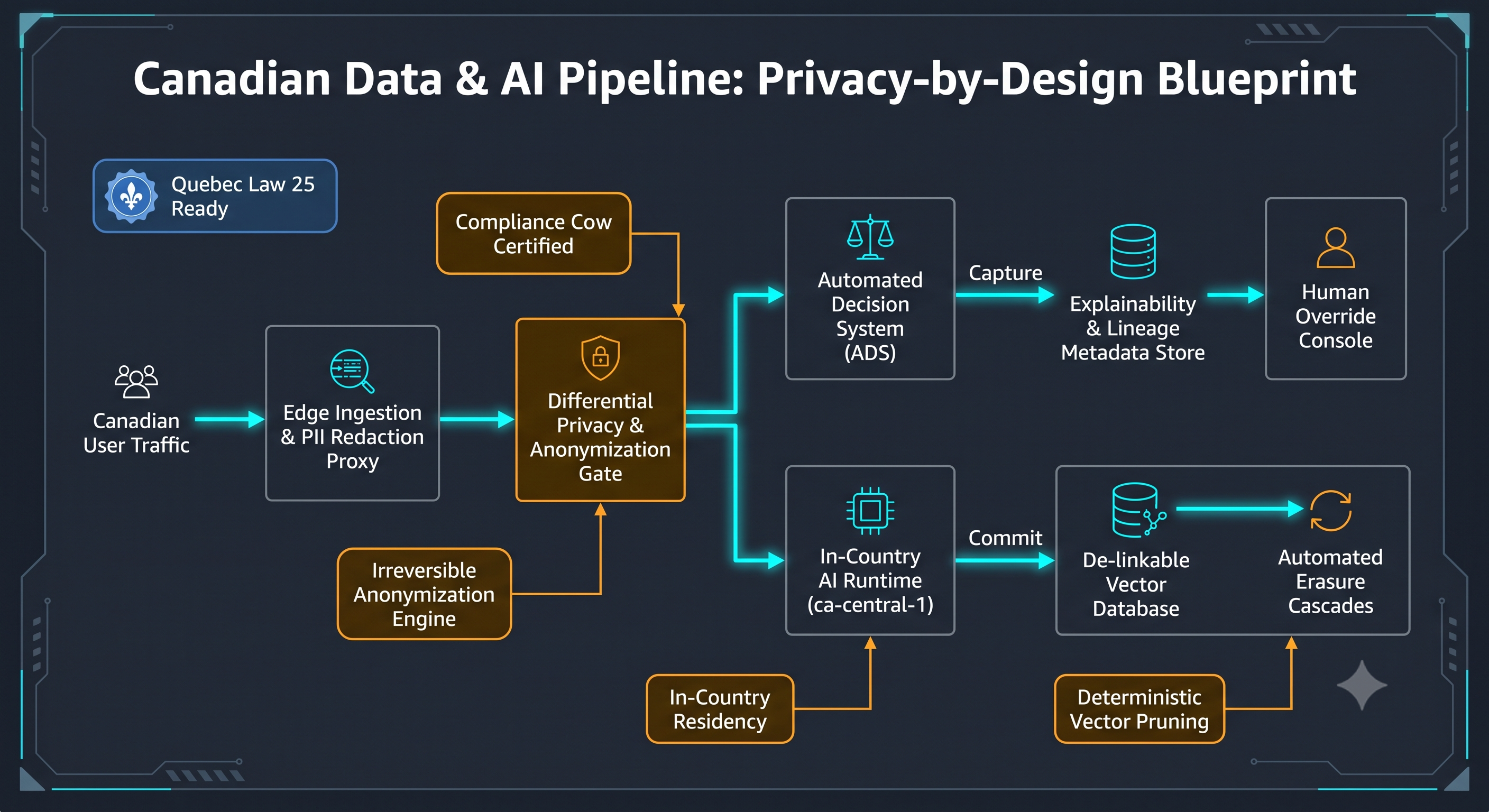 0 Comments 0 Shares 4 Views 0 Reviews
 -
Can Your Trans-Canada Architecture Survive a Cross-Country Partition? The 72-Hour PIPEDA & Latency Challenge.
Designing for Canada’s unique geographic footprint requires balancing strict data residency (PIPEDA, provincial public-sector mandates, and Quebec’s Law 25) with ~3,000 km of physical transit distance. When domestic pipelines falter, resilience shouldn't come at the cost of legal compliance.
Take the Techawks 72-Hour Canadian Resilience Challenge to verify whether your distributed stack can handle trans-continental latency spikes without breaking:
Audit BGP Routing and US-Transit Border Bleed
The Problem: When domestic cross-country leased lines or direct connects experience route flap, dynamic routing protocols frequently reroute East-West traffic via lower-cost, high-capacity US transit hubs (e.g., through Chicago or Seattle)—inadvertently crossing sovereign borders unencrypted.
The Fix: Enforce deterministic IP routing and apply strict AWS Direct Connect / Azure ExpressRoute traffic pathing. Mandate MACsec or IPsec overlay encryption across all inter-region peering, and configure BGP route policies to drop rather than spill over into foreign ASNs during trans-Canada transit blips.
Decouple Synchronous Writes Across the Montreal-Calgary Divide
The Problem: Forcing synchronous cross-region replication over a ~50–65 ms round-trip time (RTT) chokes transaction throughput under peak load, leading application servers to exhaust their worker pools while waiting on database ACKs.
The Fix: Adopt localized read/write boundaries with asynchronous replication. Use conflict-free replicated data types (CRDTs) or strict event sourcing with Kafka mirrors, pinning user writes to their geographically nearest region and resolving replication state asynchronously.
Validate In-Country Secret & Identity Independence
The Problem: Multi-region stacks often retain centralized dependency on an IAM control plane, vault, or single-region KMS cluster hosted exclusively in Montreal, rendering the Calgary disaster recovery site unable to decrypt configuration secrets if central connectivity drops.
The Fix: Implement multi-region localized key replication using primary and replica KMS keys anchored strictly within ca-central-1 and ca-west-1. Test an explicit partition drill where external IAM calls fail, ensuring local service accounts authenticate via cached runtime tokens.
Key Takeaways
Geography Dictates Architecture: At 50+ ms cross-region RTT, synchronous ACID transactions across Canadian hubs degrade throughput; embrace asynchronous consensus by design.
Inspect the Network Route, Not Just the Endpoint: Ensure domestic failover routes never bleed across US transit corridors without active cryptographic isolation.
Decouple Secret Enclaves: Make each Canadian region independently capable of bootstrapping without depending on an East-Coast identity master.
CTA
Building fault-tolerant, compliant, and low-latency infrastructure across the Canadian tech landscape? Connect with senior architects, platform engineers, and DevOps leads building resilient systems coast to coast.
👉 Join the Techawks Canada community today: [link]Can Your Trans-Canada Architecture Survive a Cross-Country Partition? The 72-Hour PIPEDA & Latency Challenge. Designing for Canada’s unique geographic footprint requires balancing strict data residency (PIPEDA, provincial public-sector mandates, and Quebec’s Law 25) with ~3,000 km of physical transit distance. When domestic pipelines falter, resilience shouldn't come at the cost of legal compliance. Take the Techawks 72-Hour Canadian Resilience Challenge to verify whether your distributed stack can handle trans-continental latency spikes without breaking: Audit BGP Routing and US-Transit Border Bleed The Problem: When domestic cross-country leased lines or direct connects experience route flap, dynamic routing protocols frequently reroute East-West traffic via lower-cost, high-capacity US transit hubs (e.g., through Chicago or Seattle)—inadvertently crossing sovereign borders unencrypted. The Fix: Enforce deterministic IP routing and apply strict AWS Direct Connect / Azure ExpressRoute traffic pathing. Mandate MACsec or IPsec overlay encryption across all inter-region peering, and configure BGP route policies to drop rather than spill over into foreign ASNs during trans-Canada transit blips. Decouple Synchronous Writes Across the Montreal-Calgary Divide The Problem: Forcing synchronous cross-region replication over a ~50–65 ms round-trip time (RTT) chokes transaction throughput under peak load, leading application servers to exhaust their worker pools while waiting on database ACKs. The Fix: Adopt localized read/write boundaries with asynchronous replication. Use conflict-free replicated data types (CRDTs) or strict event sourcing with Kafka mirrors, pinning user writes to their geographically nearest region and resolving replication state asynchronously. Validate In-Country Secret & Identity Independence The Problem: Multi-region stacks often retain centralized dependency on an IAM control plane, vault, or single-region KMS cluster hosted exclusively in Montreal, rendering the Calgary disaster recovery site unable to decrypt configuration secrets if central connectivity drops. The Fix: Implement multi-region localized key replication using primary and replica KMS keys anchored strictly within ca-central-1 and ca-west-1. Test an explicit partition drill where external IAM calls fail, ensuring local service accounts authenticate via cached runtime tokens. Key Takeaways Geography Dictates Architecture: At 50+ ms cross-region RTT, synchronous ACID transactions across Canadian hubs degrade throughput; embrace asynchronous consensus by design. Inspect the Network Route, Not Just the Endpoint: Ensure domestic failover routes never bleed across US transit corridors without active cryptographic isolation. Decouple Secret Enclaves: Make each Canadian region independently capable of bootstrapping without depending on an East-Coast identity master. CTA Building fault-tolerant, compliant, and low-latency infrastructure across the Canadian tech landscape? Connect with senior architects, platform engineers, and DevOps leads building resilient systems coast to coast. 👉 Join the Techawks Canada community today: [link]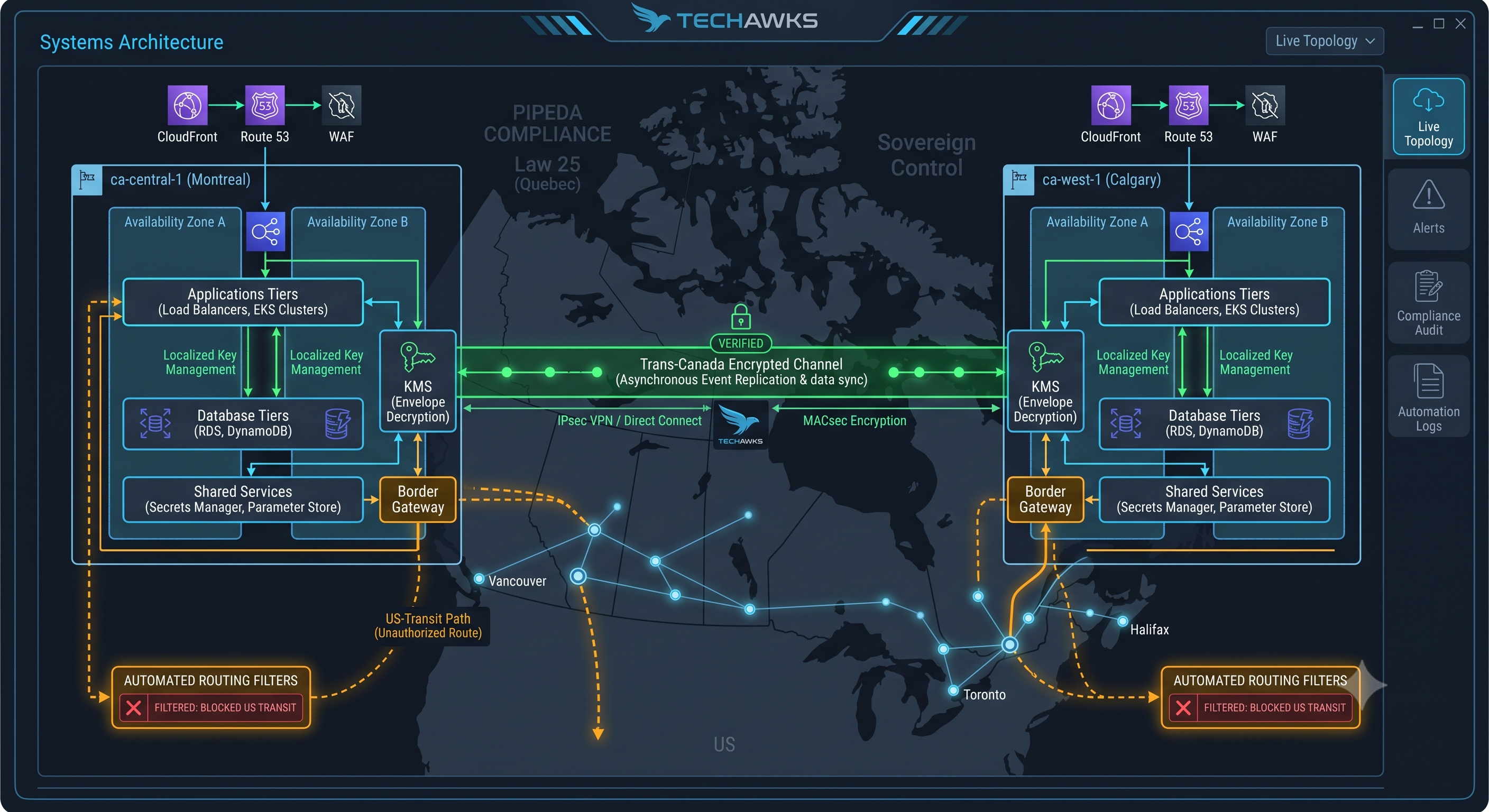 0 Comments 0 Shares 92 Views 0 Reviews
 -
Myth vs Fact: Is Canada Losing Its AI Lead to the US, or Reinventing the Deep-Tech Stack?
❌ Myth 1: "Canada has no sovereign compute; every Canadian AI startup is trapped on US cloud infrastructure."
The Reality: The historical gap between world-class Canadian algorithm research and domestic compute availability is closing. Under the federal $2 Billion Sovereign AI Compute Strategy, Canada launched the AI Sovereign Compute Infrastructure Program (AI SCIP) and the AI Compute Access Fund to build public, Canadian-operated AI supercomputing systems and commercial data center capacity. Combined with recent Responsible Data Centre Development Principles signed by major cloud and frontier AI players, Canada is actively deploying domestic compute powered by provincial green grids (hydroelectric in Quebec, clean firm power in Ontario) to host sovereign enterprise workloads locally.
❌ Myth 2: "SR&ED tax credits are only for academic research and low-margin software contracts."
The Reality: Recent legislative expansions transformed Canada's Scientific Research and Experimental Development (SR&ED) program for technical builders:
Capital Cost Reinstatement: Physical hardware, specialized prototyping rigs, and dedicated compute infrastructure are once again eligible for claims.
Doubled Expenditure Cap: Canadian-Controlled Private Corporations (CCPCs) saw the enhanced refundable limit double from $3M to $6M—unlocking up to $2.1M in direct, non-dilutive cash refunds.
Engineering Uncertainty vs. CRUD: Calling third-party APIs doesn't qualify, but designing novel distributed architectures, overcoming latency in multi-agent routing, or custom model quantization under resource constraints directly meets the CRA’s "technological uncertainty" test.
❌ Myth 3: "Canadian tech can't compete with US hyperscalers on foundation models."
The Reality: Trying to outspend Silicon Valley on brute-force, trillion-parameter commodity LLMs was never a viable playbook. The Canadian advantage is in high-leverage vertical AI and quantum-adjacent systems:
Enterprise NLP & Agentic Workflows: Champions like Cohere and local enterprise builders focus on retrieval-augmented generation (RAG), embeddings, and data-private on-prem deployments.
Photonic Quantum & Deep Physics: From Xanadu’s public TSX/Nasdaq milestones to clean-energy materials design, Canadian teams build at the intersection of algorithmic theory and physical hardware.
Why It Matters for Canadian Builders
Building tech in Canada no longer means accepting a discount valuation or an inevitable talent drain. The teams capturing outsized returns in 2026 are those taking advantage of domestic compute allocations, tapping non-dilutive capital (SR&ED / IRAP) to offset infrastructure costs, and deploying enterprise solutions where strict PIPEDA and data sovereignty compliance are mandatory.
Discussion Question
For Canadian developers and engineering leads: Are you structuring your R&D to claim domestic compute and SR&ED capital allowances, or is the pull toward US hyperscale tooling still unavoidable for your architecture? Let’s debate in the comments! 👇
CTA
Join Techawks Canada — The premier network uniting Canadian developers, AI researchers, and technical founders scaling defensible systems across the Great White North. 🦅🇨🇦Myth vs Fact: Is Canada Losing Its AI Lead to the US, or Reinventing the Deep-Tech Stack? ❌ Myth 1: "Canada has no sovereign compute; every Canadian AI startup is trapped on US cloud infrastructure." The Reality: The historical gap between world-class Canadian algorithm research and domestic compute availability is closing. Under the federal $2 Billion Sovereign AI Compute Strategy, Canada launched the AI Sovereign Compute Infrastructure Program (AI SCIP) and the AI Compute Access Fund to build public, Canadian-operated AI supercomputing systems and commercial data center capacity. Combined with recent Responsible Data Centre Development Principles signed by major cloud and frontier AI players, Canada is actively deploying domestic compute powered by provincial green grids (hydroelectric in Quebec, clean firm power in Ontario) to host sovereign enterprise workloads locally. ❌ Myth 2: "SR&ED tax credits are only for academic research and low-margin software contracts." The Reality: Recent legislative expansions transformed Canada's Scientific Research and Experimental Development (SR&ED) program for technical builders: Capital Cost Reinstatement: Physical hardware, specialized prototyping rigs, and dedicated compute infrastructure are once again eligible for claims. Doubled Expenditure Cap: Canadian-Controlled Private Corporations (CCPCs) saw the enhanced refundable limit double from $3M to $6M—unlocking up to $2.1M in direct, non-dilutive cash refunds. Engineering Uncertainty vs. CRUD: Calling third-party APIs doesn't qualify, but designing novel distributed architectures, overcoming latency in multi-agent routing, or custom model quantization under resource constraints directly meets the CRA’s "technological uncertainty" test. ❌ Myth 3: "Canadian tech can't compete with US hyperscalers on foundation models." The Reality: Trying to outspend Silicon Valley on brute-force, trillion-parameter commodity LLMs was never a viable playbook. The Canadian advantage is in high-leverage vertical AI and quantum-adjacent systems: Enterprise NLP & Agentic Workflows: Champions like Cohere and local enterprise builders focus on retrieval-augmented generation (RAG), embeddings, and data-private on-prem deployments. Photonic Quantum & Deep Physics: From Xanadu’s public TSX/Nasdaq milestones to clean-energy materials design, Canadian teams build at the intersection of algorithmic theory and physical hardware. Why It Matters for Canadian Builders Building tech in Canada no longer means accepting a discount valuation or an inevitable talent drain. The teams capturing outsized returns in 2026 are those taking advantage of domestic compute allocations, tapping non-dilutive capital (SR&ED / IRAP) to offset infrastructure costs, and deploying enterprise solutions where strict PIPEDA and data sovereignty compliance are mandatory. Discussion Question For Canadian developers and engineering leads: Are you structuring your R&D to claim domestic compute and SR&ED capital allowances, or is the pull toward US hyperscale tooling still unavoidable for your architecture? Let’s debate in the comments! 👇 CTA Join Techawks Canada — The premier network uniting Canadian developers, AI researchers, and technical founders scaling defensible systems across the Great White North. 🦅🇨🇦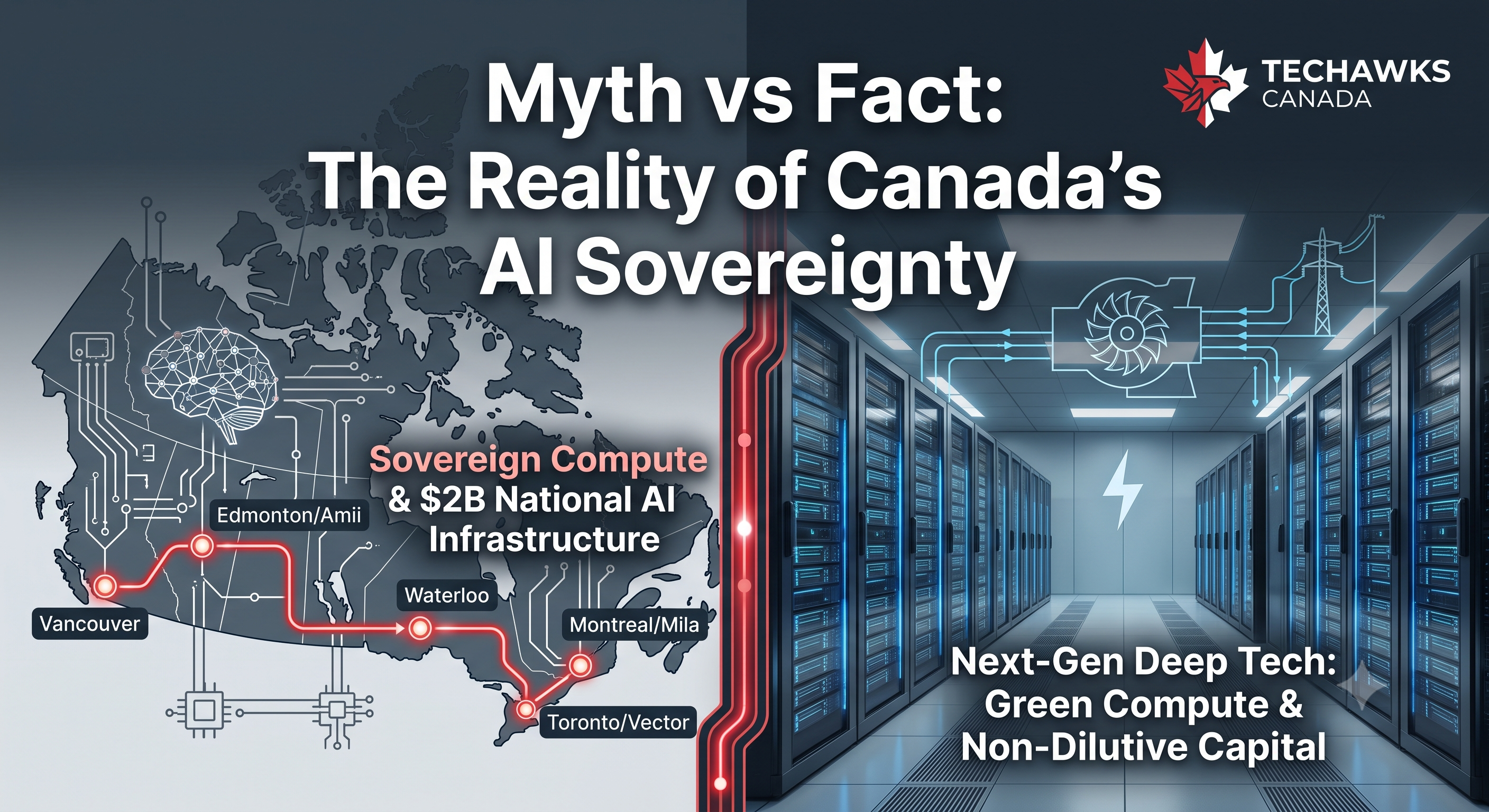 0 Comments 0 Shares 23 Views 0 Reviews
 -
LocalStack Review: How Canadian Dev Teams Test AWS Workloads Locally Without Cloud Creep
Engineering hubs across Toronto, Vancouver, Montreal, and Ottawa are navigating stricter data governance expectations (from PIPEDA accountability models to Quebec’s Law 25). Spinning up cloud sandboxes for every developer branch creates resource sprawl, unpredictable month-end invoices, and the constant risk of synthetic test datasets accidentally touching cross-border regions.
LocalStack solves this by running a fully functional, mock AWS cloud stack directly inside a local Docker container on your workstation or CI runner.
Complete Cloud Parity on localhost: LocalStack emulates core AWS services—including S3, DynamoDB, Lambda, SQS, SNS, IAM, and Step Functions. You can provision infrastructure using your standard Terraform, OpenTofu, or AWS CDK scripts by simply redirecting your endpoint URL to http://localhost:4566.
Guaranteed Data Locality for Testing: When testing data pipelines, developer machines never send payloads across borders or into external cloud VPCs. Test credentials, customer schemas, and synthetic PII remain strictly contained on Canadian developer machines.
Instant Feedback Loops: Testing Lambda event triggers or queue consumers against real AWS environments means waiting for CloudFormation/Terraform deployments, log propagation in CloudWatch, and teardowns. LocalStack runs execution cycles locally in seconds, radically shortening the dev-test loop.
Zero Sandbox Waste: Eliminate "zombie" non-production cloud infrastructure left running over weekends. CI/CD test suites spin up LocalStack via Docker, validate end-to-end integration tests, and tear down immediately with zero AWS billing footprint.
When LocalStack isn't enough: While LocalStack mirrors API contracts accurately, it is an emulator, not a hardware replica. It won’t replicate exact AWS throughput limits, proprietary IAM boundary nuances, or niche edge services. Final staging checks should still run against real cloud regions (such as AWS Canada Central ca-central-1 or Canada West ca-west-1).
Key Takeaways
Shift-left cloud testing: Emulate AWS APIs locally in Docker before committing code to shared staging accounts.
Data protection by design: Prevents non-production synthetic datasets and pipeline tests from crossing sovereign borders.
Tooling compatible: Plugs directly into your existing Terraform, CDK, and AWS SDK scripts using custom endpoint URLs.
Cost containment: Cuts non-production cloud spend by removing developer sandbox sprawl and unused cloud resources.
CTA (Join Techawks Canada)
Building modern, compliant cloud systems across Canada? Join the Techawks Canada community to exchange insights on cloud architecture, FinOps, and developer productivity with tech leaders from coast to coast. Let's discuss below: Does your team test cloud infrastructure entirely in local sandboxes, or do you still provision live AWS accounts for dev branches?LocalStack Review: How Canadian Dev Teams Test AWS Workloads Locally Without Cloud Creep Engineering hubs across Toronto, Vancouver, Montreal, and Ottawa are navigating stricter data governance expectations (from PIPEDA accountability models to Quebec’s Law 25). Spinning up cloud sandboxes for every developer branch creates resource sprawl, unpredictable month-end invoices, and the constant risk of synthetic test datasets accidentally touching cross-border regions. LocalStack solves this by running a fully functional, mock AWS cloud stack directly inside a local Docker container on your workstation or CI runner. Complete Cloud Parity on localhost: LocalStack emulates core AWS services—including S3, DynamoDB, Lambda, SQS, SNS, IAM, and Step Functions. You can provision infrastructure using your standard Terraform, OpenTofu, or AWS CDK scripts by simply redirecting your endpoint URL to http://localhost:4566. Guaranteed Data Locality for Testing: When testing data pipelines, developer machines never send payloads across borders or into external cloud VPCs. Test credentials, customer schemas, and synthetic PII remain strictly contained on Canadian developer machines. Instant Feedback Loops: Testing Lambda event triggers or queue consumers against real AWS environments means waiting for CloudFormation/Terraform deployments, log propagation in CloudWatch, and teardowns. LocalStack runs execution cycles locally in seconds, radically shortening the dev-test loop. Zero Sandbox Waste: Eliminate "zombie" non-production cloud infrastructure left running over weekends. CI/CD test suites spin up LocalStack via Docker, validate end-to-end integration tests, and tear down immediately with zero AWS billing footprint. When LocalStack isn't enough: While LocalStack mirrors API contracts accurately, it is an emulator, not a hardware replica. It won’t replicate exact AWS throughput limits, proprietary IAM boundary nuances, or niche edge services. Final staging checks should still run against real cloud regions (such as AWS Canada Central ca-central-1 or Canada West ca-west-1). Key Takeaways Shift-left cloud testing: Emulate AWS APIs locally in Docker before committing code to shared staging accounts. Data protection by design: Prevents non-production synthetic datasets and pipeline tests from crossing sovereign borders. Tooling compatible: Plugs directly into your existing Terraform, CDK, and AWS SDK scripts using custom endpoint URLs. Cost containment: Cuts non-production cloud spend by removing developer sandbox sprawl and unused cloud resources. CTA (Join Techawks Canada) Building modern, compliant cloud systems across Canada? Join the Techawks Canada community to exchange insights on cloud architecture, FinOps, and developer productivity with tech leaders from coast to coast. Let's discuss below: Does your team test cloud infrastructure entirely in local sandboxes, or do you still provision live AWS accounts for dev branches?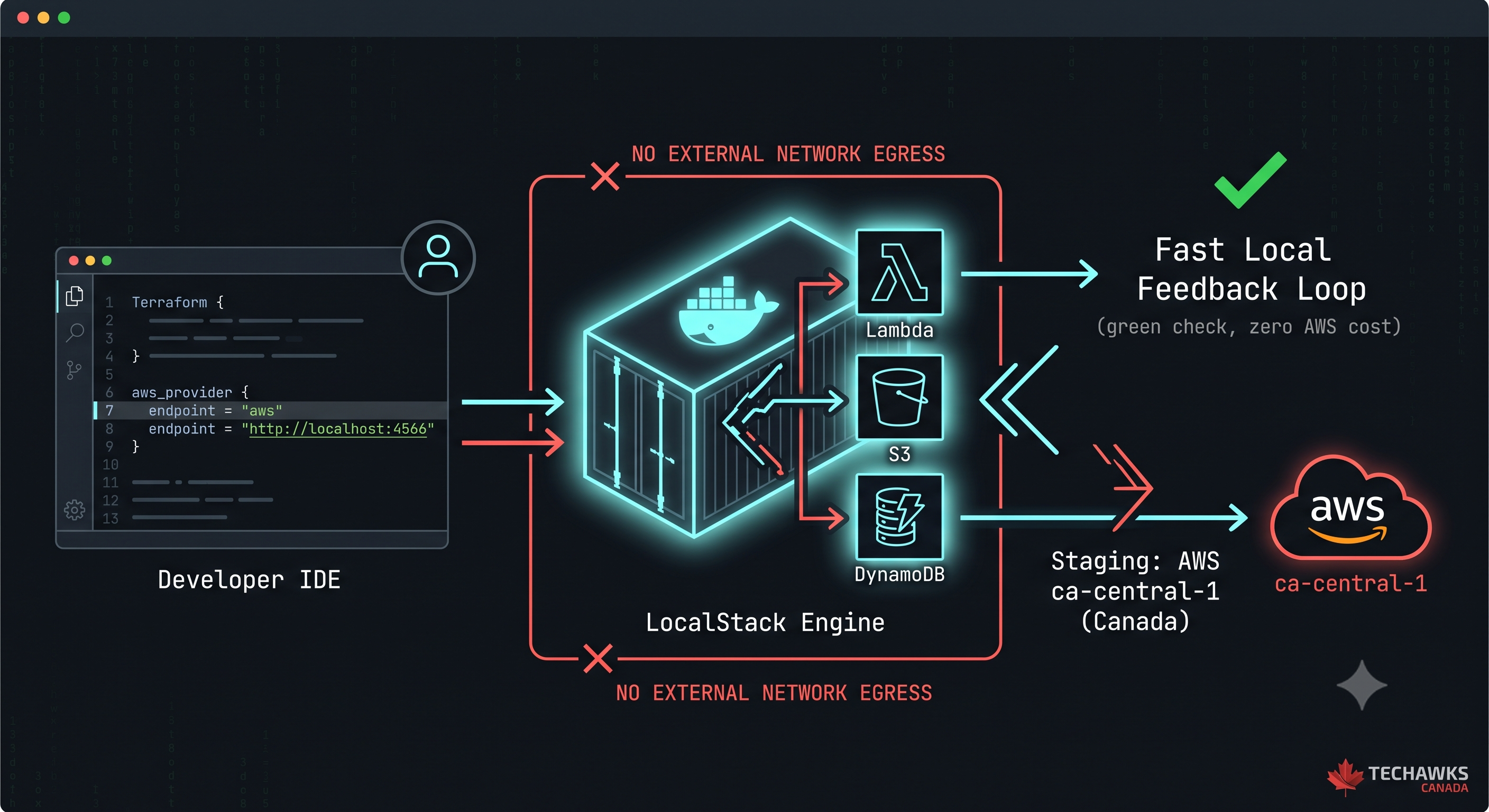 0 Comments 0 Shares 93 Views 0 Reviews
 -
The "Research Trap": Why Canadian Engineers Must Pivot from Model Theory to Production AI Infrastructure
Canada’s tech workforce crossed 1.5 million professionals this year, with Canadian tech talent expanding at 7.6%—four times faster than the US market. Yet beneath this headline growth lies a sharp structural change: hiring panels across Toronto, Montreal, Vancouver, and Calgary are moving away from theoretical AI research and generic full-stack roles. Instead, they are competing aggressively for applied AI platform engineers.
With the federal government’s $2 billion Sovereign AI Compute Strategy and enterprise AI adoption rising across Canadian tier-1 banks, telecoms, and supply chains, the bottleneck is no longer algorithm design. The bottleneck is productionization.
To capture market leverage in Canadian tech right now, focus on three specific capabilities:
Sovereign & Local Compute Provisioning
Federal compliance mandates and data privacy laws (PIPEDA and emerging provincial data frameworks) require sensitive financial and public-sector data to remain within domestic borders. Engineers who know how to optimize inference workloads on regional bare-metal clusters and sovereign clouds—utilizing quantization (AWQ/GGUF), vLLM, and Triton inference servers—are displacing generic cloud architects.
Hybrid Data Pipelines Over Standard APIs
Canada’s enterprise hiring boom isn't coming strictly from pure tech companies—it is driven by institutional enterprises in banking, insurance, and logistics. These organizations sit on massive, fragmented legacy datasets. You gain an immediate edge if you can build automated streaming ingestion pipelines that clean, index, and reconcile unstructured data for retrieval-augmented generation (RAG) using Kafka, Spark, and hybrid vector engines.
Bilingual Production Guardrails
A distinct architectural challenge in the Canadian market is bilingual enterprise deployment. Systems serving enterprise or public services must achieve semantic parity across English and French without context drift or latency penalties. Proving you can implement cross-lingual evaluation harnesses and tokenization benchmarking sets your profile apart from standard US-centric portfolios.
The market has shifted: stop treating AI as an academic exercise. Build deterministic, compliant, and cost-efficient distributed systems.
Discussion Question
For engineers working in Canada: Are your teams shifting toward hosting open-weight models on Canadian infrastructure, or are you still primarily relying on US-hosted hyperscaler APIs?
CTA (Join Techawks Canada)
Stay ahead of Canadian hiring shifts, sovereign compute updates, and production architecture teardowns. Follow Techawks Canada to connect with over 30,000 software engineers and tech leaders building across the country.The "Research Trap": Why Canadian Engineers Must Pivot from Model Theory to Production AI Infrastructure Canada’s tech workforce crossed 1.5 million professionals this year, with Canadian tech talent expanding at 7.6%—four times faster than the US market. Yet beneath this headline growth lies a sharp structural change: hiring panels across Toronto, Montreal, Vancouver, and Calgary are moving away from theoretical AI research and generic full-stack roles. Instead, they are competing aggressively for applied AI platform engineers. With the federal government’s $2 billion Sovereign AI Compute Strategy and enterprise AI adoption rising across Canadian tier-1 banks, telecoms, and supply chains, the bottleneck is no longer algorithm design. The bottleneck is productionization. To capture market leverage in Canadian tech right now, focus on three specific capabilities: Sovereign & Local Compute Provisioning Federal compliance mandates and data privacy laws (PIPEDA and emerging provincial data frameworks) require sensitive financial and public-sector data to remain within domestic borders. Engineers who know how to optimize inference workloads on regional bare-metal clusters and sovereign clouds—utilizing quantization (AWQ/GGUF), vLLM, and Triton inference servers—are displacing generic cloud architects. Hybrid Data Pipelines Over Standard APIs Canada’s enterprise hiring boom isn't coming strictly from pure tech companies—it is driven by institutional enterprises in banking, insurance, and logistics. These organizations sit on massive, fragmented legacy datasets. You gain an immediate edge if you can build automated streaming ingestion pipelines that clean, index, and reconcile unstructured data for retrieval-augmented generation (RAG) using Kafka, Spark, and hybrid vector engines. Bilingual Production Guardrails A distinct architectural challenge in the Canadian market is bilingual enterprise deployment. Systems serving enterprise or public services must achieve semantic parity across English and French without context drift or latency penalties. Proving you can implement cross-lingual evaluation harnesses and tokenization benchmarking sets your profile apart from standard US-centric portfolios. The market has shifted: stop treating AI as an academic exercise. Build deterministic, compliant, and cost-efficient distributed systems. Discussion Question For engineers working in Canada: Are your teams shifting toward hosting open-weight models on Canadian infrastructure, or are you still primarily relying on US-hosted hyperscaler APIs? CTA (Join Techawks Canada) Stay ahead of Canadian hiring shifts, sovereign compute updates, and production architecture teardowns. Follow Techawks Canada to connect with over 30,000 software engineers and tech leaders building across the country. 0 Comments 0 Shares 38 Views 0 Reviews
 -
The Canadian Tech Arbitrage: US Remote vs. Domestic Scale?
From Toronto and Waterloo to Montréal, Vancouver, and Calgary, the Canadian tech landscape occupies a distinct position in North America. World-class engineering talent sits right alongside a stark compensation disparity compared to US counterparts.
Many senior builders opt for remote roles at US-based firms to close the cash-compensation gap. Others double down on domestic innovators and Canadian research hubs, leveraging strong R&D ecosystems, founder networks, and long-term equity upside.
If you are navigating your next career pivot in Canada, where do you see the most sustainable advantage?
Poll Question:
Where is the smartest career bet for a senior engineer in Canada today?
[ ] Remote US Tech (USD cash compensation & Silicon Valley scale)
[ ] Homegrown Scale-ups (Equity upside, localized impact & rapid scope)
[ ] Specialized R&D / AI Labs (Mila, Vector, deep tech commercialization)
[ ] Cross-Border Relocation (TN Visa pathway to Tier-1 hubs)
Key Takeaways
USD compensation offsets Canadian living costs: Working remotely for US employers remains the fastest direct route to doubling baseline net income, though it often caps out at individual contributor (IC) execution rather than strategic leadership.
Domestic scale-ups offer faster leadership tracks: Canadian product companies provide higher visibility, quicker elevation to Staff/Director levels, and tangible ownership in building local tech champions.
Deep tech and AI maintain structural moats: Canada’s heavy concentration of foundational AI institutes and R&D incentives gives specialized engineers a long-term defensible edge in applied machine learning and platform infrastructure.
CTA (Join Techawks Canada)
Cast your vote above, share your rationale in the comments, and follow Techawks Canada for actionable career frameworks built specifically for our tech ecosystem.The Canadian Tech Arbitrage: US Remote vs. Domestic Scale? From Toronto and Waterloo to Montréal, Vancouver, and Calgary, the Canadian tech landscape occupies a distinct position in North America. World-class engineering talent sits right alongside a stark compensation disparity compared to US counterparts. Many senior builders opt for remote roles at US-based firms to close the cash-compensation gap. Others double down on domestic innovators and Canadian research hubs, leveraging strong R&D ecosystems, founder networks, and long-term equity upside. If you are navigating your next career pivot in Canada, where do you see the most sustainable advantage? Poll Question: Where is the smartest career bet for a senior engineer in Canada today? [ ] Remote US Tech (USD cash compensation & Silicon Valley scale) [ ] Homegrown Scale-ups (Equity upside, localized impact & rapid scope) [ ] Specialized R&D / AI Labs (Mila, Vector, deep tech commercialization) [ ] Cross-Border Relocation (TN Visa pathway to Tier-1 hubs) Key Takeaways USD compensation offsets Canadian living costs: Working remotely for US employers remains the fastest direct route to doubling baseline net income, though it often caps out at individual contributor (IC) execution rather than strategic leadership. Domestic scale-ups offer faster leadership tracks: Canadian product companies provide higher visibility, quicker elevation to Staff/Director levels, and tangible ownership in building local tech champions. Deep tech and AI maintain structural moats: Canada’s heavy concentration of foundational AI institutes and R&D incentives gives specialized engineers a long-term defensible edge in applied machine learning and platform infrastructure. CTA (Join Techawks Canada) Cast your vote above, share your rationale in the comments, and follow Techawks Canada for actionable career frameworks built specifically for our tech ecosystem.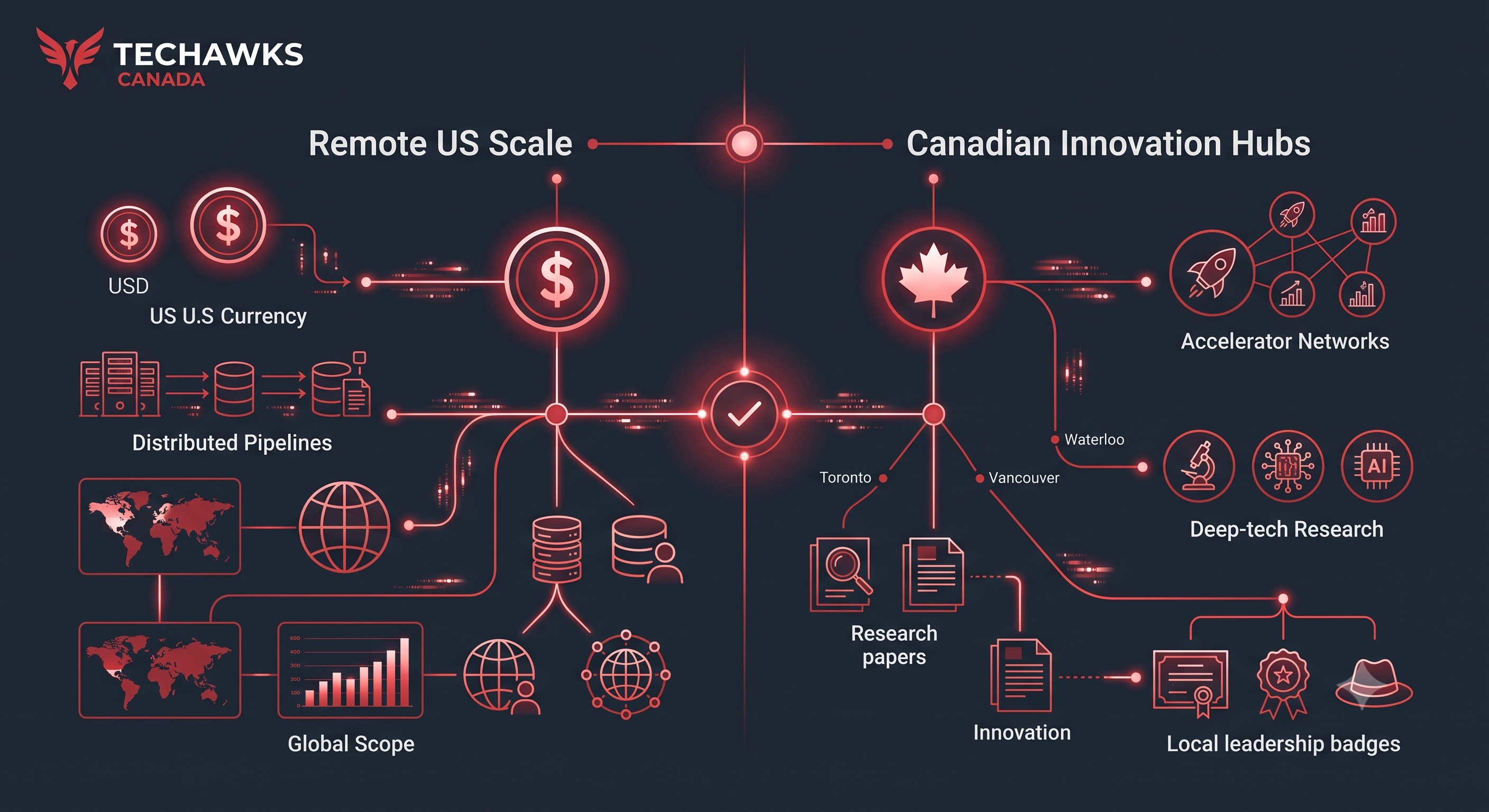 0 Comments 0 Shares 126 Views 0 Reviews
 -
Cross-Border RAG Pipelines in Canada: Why Your Architecture Needs Provincial Boundary Routing
Canadian engineering stacks are navigating a dual reality: scaling AI features while managing the strict operational boundaries between federal PIPEDA and provincial frameworks—most notably Quebec’s Law 25. Under these provisions, sending personal data outside the province or country for automated processing requires a documented Privacy Impact Assessment (PIA), explicit necessity thresholds, and adequate protection equivalency.
If your RAG (Retrieval-Augmented Generation) pipeline sends raw customer support records, banking context, or telemetry across the border to multi-tenant US LLM endpoints without deterministic masking, your system breaches statutory transfer conditions.
Here is how Canadian infrastructure and data teams are structuring compliant, low-latency AI pipelines:
Provincial Ingress & Anonymization at the Edge
Never route un-sanitized user payloads straight to vector databases or foundational model endpoints.
Deploy localized edge proxies (e.g., in Montreal and Toronto zones) that run lightweight local Named Entity Recognition (NER) models.
Tokenize direct identifiers (names, SINs, phone numbers, localized telemetry) into synthetic identifiers before data crosses regional boundaries or enters vector stores.
Decouple Regional Vector Indexes
Avoid deploying single global vector namespaces for Canadian users. If enterprise records contain Quebec-resident data:
Partition vector collections by legal jurisdiction (e.g., vector_db_ca_east vs vector_db_shared).
Enforce strict metadata filtering at retrieval time so an automated agent querying general enterprise knowledge cannot inadvertently fetch protected provincial customer fragments into an external inference prompt context.
Hybrid Fallback: Sovereign Local Compute vs. Global Reasoning
To balance latency, costs, and compliance under emerging sovereign AI compute initiatives:
Route sensitive transactional classifications, KYC processing, and personal data summarization to self-hosted, Canadian-domiciled open weights models.
Route non-sensitive, aggregated, or anonymized reasoning queries upstream to global frontier models through strict egress sanitization gateways.
Compliance is no longer just legal paperwork—it is an infrastructure design pattern. Building regional isolation into your RAG pipelines today saves Canadian engineering teams from massive, disruptive data migration projects as cross-provincial enforcement tightens.
Discussion Question
Has your team audited whether your LLM retrieval pipelines and vector stores are transferring unmasked resident data across borders, or are you treating all North American cloud traffic as a single zone?
CTA
Looking for deep technical teardowns, distributed systems patterns, and data architecture resources tailored to the Canadian ecosystem? Join Techawks Canada to connect with staff engineers, cloud architects, and tech leaders scaling across Canada.Cross-Border RAG Pipelines in Canada: Why Your Architecture Needs Provincial Boundary Routing Canadian engineering stacks are navigating a dual reality: scaling AI features while managing the strict operational boundaries between federal PIPEDA and provincial frameworks—most notably Quebec’s Law 25. Under these provisions, sending personal data outside the province or country for automated processing requires a documented Privacy Impact Assessment (PIA), explicit necessity thresholds, and adequate protection equivalency. If your RAG (Retrieval-Augmented Generation) pipeline sends raw customer support records, banking context, or telemetry across the border to multi-tenant US LLM endpoints without deterministic masking, your system breaches statutory transfer conditions. Here is how Canadian infrastructure and data teams are structuring compliant, low-latency AI pipelines: Provincial Ingress & Anonymization at the Edge Never route un-sanitized user payloads straight to vector databases or foundational model endpoints. Deploy localized edge proxies (e.g., in Montreal and Toronto zones) that run lightweight local Named Entity Recognition (NER) models. Tokenize direct identifiers (names, SINs, phone numbers, localized telemetry) into synthetic identifiers before data crosses regional boundaries or enters vector stores. Decouple Regional Vector Indexes Avoid deploying single global vector namespaces for Canadian users. If enterprise records contain Quebec-resident data: Partition vector collections by legal jurisdiction (e.g., vector_db_ca_east vs vector_db_shared). Enforce strict metadata filtering at retrieval time so an automated agent querying general enterprise knowledge cannot inadvertently fetch protected provincial customer fragments into an external inference prompt context. Hybrid Fallback: Sovereign Local Compute vs. Global Reasoning To balance latency, costs, and compliance under emerging sovereign AI compute initiatives: Route sensitive transactional classifications, KYC processing, and personal data summarization to self-hosted, Canadian-domiciled open weights models. Route non-sensitive, aggregated, or anonymized reasoning queries upstream to global frontier models through strict egress sanitization gateways. Compliance is no longer just legal paperwork—it is an infrastructure design pattern. Building regional isolation into your RAG pipelines today saves Canadian engineering teams from massive, disruptive data migration projects as cross-provincial enforcement tightens. Discussion Question Has your team audited whether your LLM retrieval pipelines and vector stores are transferring unmasked resident data across borders, or are you treating all North American cloud traffic as a single zone? CTA Looking for deep technical teardowns, distributed systems patterns, and data architecture resources tailored to the Canadian ecosystem? Join Techawks Canada to connect with staff engineers, cloud architects, and tech leaders scaling across Canada.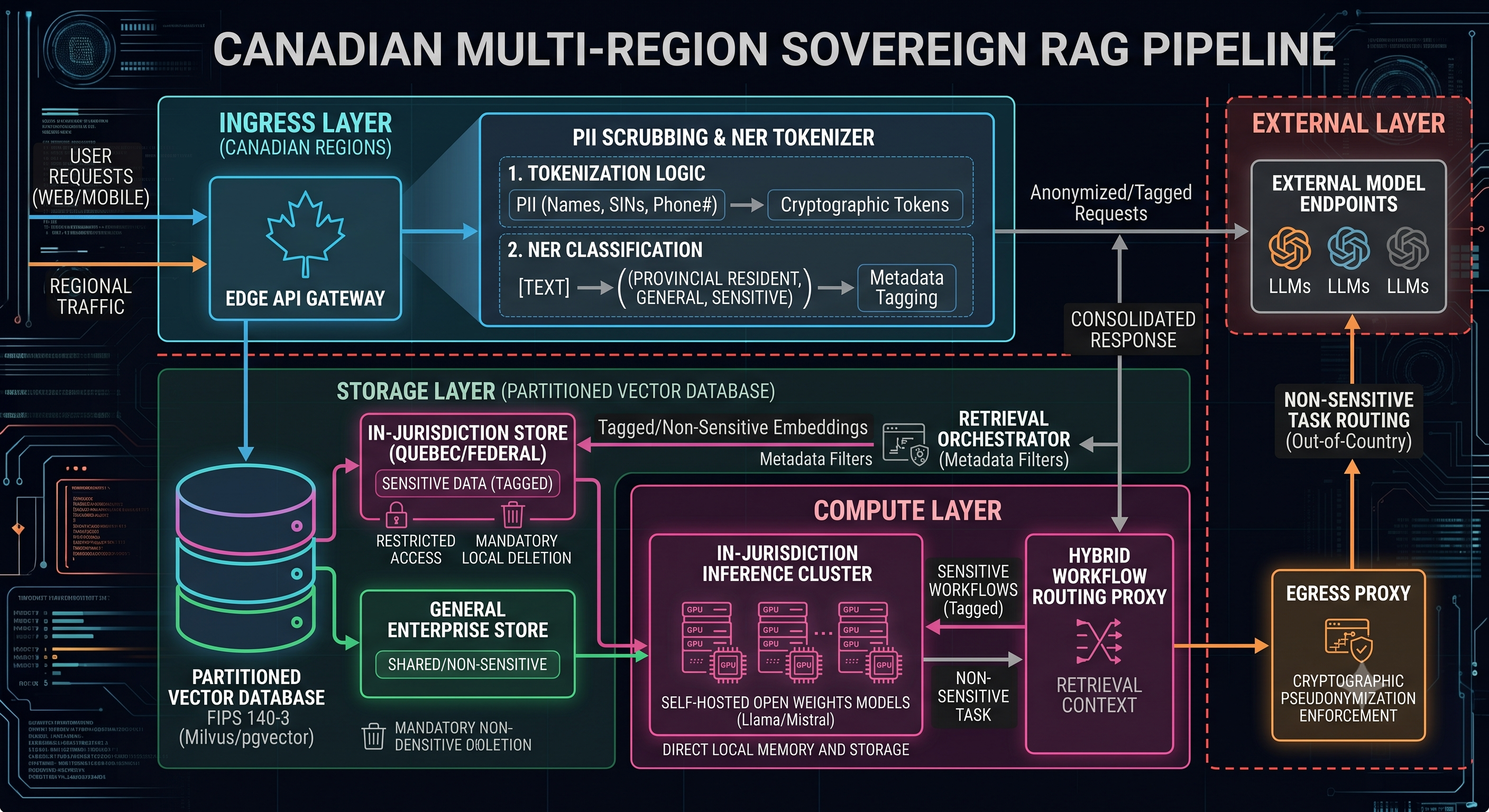 0 Comments 0 Shares 41 Views 0 Reviews
 -
The Cross-Border Dilemma: Designing Canadian Cloud Architectures Under PIPEDA and Québec’s Law 25
Building technology in Canada comes with a distinct geographic and architectural challenge: close commercial proximity to US cloud ecosystems paired with some of the strictest domestic and provincial data governance laws in the world.
Between federal PIPEDA requirements and Québec’s Law 25—which mandates documented privacy impact assessments (PIAs) before personal data ever leaves provincial borders—simply selecting ca-central-1 (Montreal) or ca-west-1 (Calgary) on AWS or Azure is only step one.
If your microservices send unmasked customer analytics, telemetry, or backups across the border, your architecture carries hidden compliance debt. Here are three actionable design patterns Canadian engineering teams use to navigate cross-border data sovereignty:
Isolate Data at the Ingress Edge via Sovereign Tokenization: Instead of piping raw identity attributes into international SaaS tools (like US-based CRM, analytics, or LLM providers), run a stateless tokenization proxy within Canadian borders. Replace names, emails, and financial identifiers with randomized tokens or cryptographic surrogates before payload egress. Only domestic internal services hold the decryption vault.
Segment Québec Data at the Storage Tier: Law 25 requires demonstrable, equivalent safeguards for data transferred outside Québec. Rather than deploying entirely separate application stacks, implement logical schema multi-tenancy with jurisdiction-aware routing. Tag incoming records by resident provenance and enforce storage policies that restrict Québec residents' data to local partitions while allowing anonymized aggregates to flow upstream.
Automate Portability and Retention Lifecycles in Code: Canadian privacy regulations increasingly enforce formal "Right to Portability" and strict retention limits. Move away from manual database scripts. Implement event-driven data export workers (producing standardized, machine-readable JSON/Parquet dumps on request) and tie your primary database records to automated time-to-live (TTL) lifecycle rules that trigger cryptographically verified purge jobs upon contract expiration.
How is your engineering team balancing US cloud tooling integration with strict domestic Canadian data sovereignty?
Key Takeaways
Edge Tokenization Protects Cross-Border Flows: Sanitize PII with domestic token proxies before external SaaS or US-region services process it.
Jurisdiction-Aware Storage: Partition sensitive regional data (such as Québec-governed records) while keeping unified application runtimes.
Automate Portability & TTLs: Treat data exports and regulatory retention periods as native architectural requirements rather than manual database chores.
CTA (Join Techawks Canada)
Building resilient, compliant engineering systems across the Canadian tech ecosystem requires balancing speed with rigorous data architecture. Join Techawks Canada to exchange insights with leading Canadian software engineers, cloud architects, and tech leaders solving production challenges from Vancouver to Halifax. Join the discussion below.The Cross-Border Dilemma: Designing Canadian Cloud Architectures Under PIPEDA and Québec’s Law 25 Building technology in Canada comes with a distinct geographic and architectural challenge: close commercial proximity to US cloud ecosystems paired with some of the strictest domestic and provincial data governance laws in the world. Between federal PIPEDA requirements and Québec’s Law 25—which mandates documented privacy impact assessments (PIAs) before personal data ever leaves provincial borders—simply selecting ca-central-1 (Montreal) or ca-west-1 (Calgary) on AWS or Azure is only step one. If your microservices send unmasked customer analytics, telemetry, or backups across the border, your architecture carries hidden compliance debt. Here are three actionable design patterns Canadian engineering teams use to navigate cross-border data sovereignty: Isolate Data at the Ingress Edge via Sovereign Tokenization: Instead of piping raw identity attributes into international SaaS tools (like US-based CRM, analytics, or LLM providers), run a stateless tokenization proxy within Canadian borders. Replace names, emails, and financial identifiers with randomized tokens or cryptographic surrogates before payload egress. Only domestic internal services hold the decryption vault. Segment Québec Data at the Storage Tier: Law 25 requires demonstrable, equivalent safeguards for data transferred outside Québec. Rather than deploying entirely separate application stacks, implement logical schema multi-tenancy with jurisdiction-aware routing. Tag incoming records by resident provenance and enforce storage policies that restrict Québec residents' data to local partitions while allowing anonymized aggregates to flow upstream. Automate Portability and Retention Lifecycles in Code: Canadian privacy regulations increasingly enforce formal "Right to Portability" and strict retention limits. Move away from manual database scripts. Implement event-driven data export workers (producing standardized, machine-readable JSON/Parquet dumps on request) and tie your primary database records to automated time-to-live (TTL) lifecycle rules that trigger cryptographically verified purge jobs upon contract expiration. How is your engineering team balancing US cloud tooling integration with strict domestic Canadian data sovereignty? Key Takeaways Edge Tokenization Protects Cross-Border Flows: Sanitize PII with domestic token proxies before external SaaS or US-region services process it. Jurisdiction-Aware Storage: Partition sensitive regional data (such as Québec-governed records) while keeping unified application runtimes. Automate Portability & TTLs: Treat data exports and regulatory retention periods as native architectural requirements rather than manual database chores. CTA (Join Techawks Canada) Building resilient, compliant engineering systems across the Canadian tech ecosystem requires balancing speed with rigorous data architecture. Join Techawks Canada to exchange insights with leading Canadian software engineers, cloud architects, and tech leaders solving production challenges from Vancouver to Halifax. Join the discussion below. 0 Comments 0 Shares 104 Views 0 Reviews
 -
Architecting for PIPEDA and Provincial Privacy Laws: Solving Multi-Jurisdiction Data Pipelines in Canada
Building compliant cloud systems in Canada requires navigating a dual-layer regulatory framework. While PIPEDA governs private-sector commercial data federally, provincial legislation—most notably Québec’s Law 25, along with strict public-sector data sovereignty rules in British Columbia and Nova Scotia—imposes distinct operational obligations on distributed systems.
Simply locating a server in Montreal or Toronto does not guarantee compliance if your logging, analytics, and authentication flows route sensitive payloads beyond defined borders.
Here is how Canadian infrastructure teams build resilient, multi-jurisdictional data pipelines:
Implement Context-Aware Dynamic Consent Tagging: Under Law 25, implied consent is insufficient for sensitive tracking or profiling. Tag user records with immutable metadata flags at authentication (consent_scope: strict_local). Pass these flags through your API gateway to dynamically toggle downstream third-party telemetry, behavioral trackers, and cross-border analytics.
Establish Provincial Data Pinning for Regulated Entities: For health, educational, or public sector workloads, cross-provincial transfers often require formal privacy impact assessments (PIAs). Configure storage buckets and managed databases with resource-based IAM policies that explicitly restrict replication to specific localized zones (e.g., locking Québec-regulated records strictly within ca-east-1 or designated local outposts).
Enforce Automated Data Retention & De-indexing: Law 25 grants users explicit rights around computerized profiling and algorithmic de-indexing. Implement TTL-based automated lifecycle policies on raw transactional logs, paired with automated deletion workflows across all secondary analytical datastores.
Isolate Telemetry from Core PII: Modern APM tools (Datadog, OpenTelemetry collectors) often default to US-based SaaS endpoints. Implement edge-level scrubbing proxies within your Canadian VPC to sanitize stack traces, query parameters, and error logs of all Canadian resident PII before telemetry egress occurs.
Key Takeaways
Federal compliance (PIPEDA) does not automatically satisfy provincial standards like Québec's Law 25.
Use dynamic consent tags at the gateway layer to automatically restrict non-essential tracking and downstream analytics.
Scrub APM and error telemetry at your local VPC edge to avoid accidental cross-border PII leakage to foreign SaaS endpoints.
CTA
Navigating Canadian cloud architecture, compliance engineering, and high-scale system design?
Join Techawks Canada to connect with software architects, DevOps specialists, and engineering leaders building across Toronto, Vancouver, Montreal, and beyond. Link in bio.Architecting for PIPEDA and Provincial Privacy Laws: Solving Multi-Jurisdiction Data Pipelines in Canada Building compliant cloud systems in Canada requires navigating a dual-layer regulatory framework. While PIPEDA governs private-sector commercial data federally, provincial legislation—most notably Québec’s Law 25, along with strict public-sector data sovereignty rules in British Columbia and Nova Scotia—imposes distinct operational obligations on distributed systems. Simply locating a server in Montreal or Toronto does not guarantee compliance if your logging, analytics, and authentication flows route sensitive payloads beyond defined borders. Here is how Canadian infrastructure teams build resilient, multi-jurisdictional data pipelines: Implement Context-Aware Dynamic Consent Tagging: Under Law 25, implied consent is insufficient for sensitive tracking or profiling. Tag user records with immutable metadata flags at authentication (consent_scope: strict_local). Pass these flags through your API gateway to dynamically toggle downstream third-party telemetry, behavioral trackers, and cross-border analytics. Establish Provincial Data Pinning for Regulated Entities: For health, educational, or public sector workloads, cross-provincial transfers often require formal privacy impact assessments (PIAs). Configure storage buckets and managed databases with resource-based IAM policies that explicitly restrict replication to specific localized zones (e.g., locking Québec-regulated records strictly within ca-east-1 or designated local outposts). Enforce Automated Data Retention & De-indexing: Law 25 grants users explicit rights around computerized profiling and algorithmic de-indexing. Implement TTL-based automated lifecycle policies on raw transactional logs, paired with automated deletion workflows across all secondary analytical datastores. Isolate Telemetry from Core PII: Modern APM tools (Datadog, OpenTelemetry collectors) often default to US-based SaaS endpoints. Implement edge-level scrubbing proxies within your Canadian VPC to sanitize stack traces, query parameters, and error logs of all Canadian resident PII before telemetry egress occurs. Key Takeaways Federal compliance (PIPEDA) does not automatically satisfy provincial standards like Québec's Law 25. Use dynamic consent tags at the gateway layer to automatically restrict non-essential tracking and downstream analytics. Scrub APM and error telemetry at your local VPC edge to avoid accidental cross-border PII leakage to foreign SaaS endpoints. CTA Navigating Canadian cloud architecture, compliance engineering, and high-scale system design? Join Techawks Canada to connect with software architects, DevOps specialists, and engineering leaders building across Toronto, Vancouver, Montreal, and beyond. Link in bio.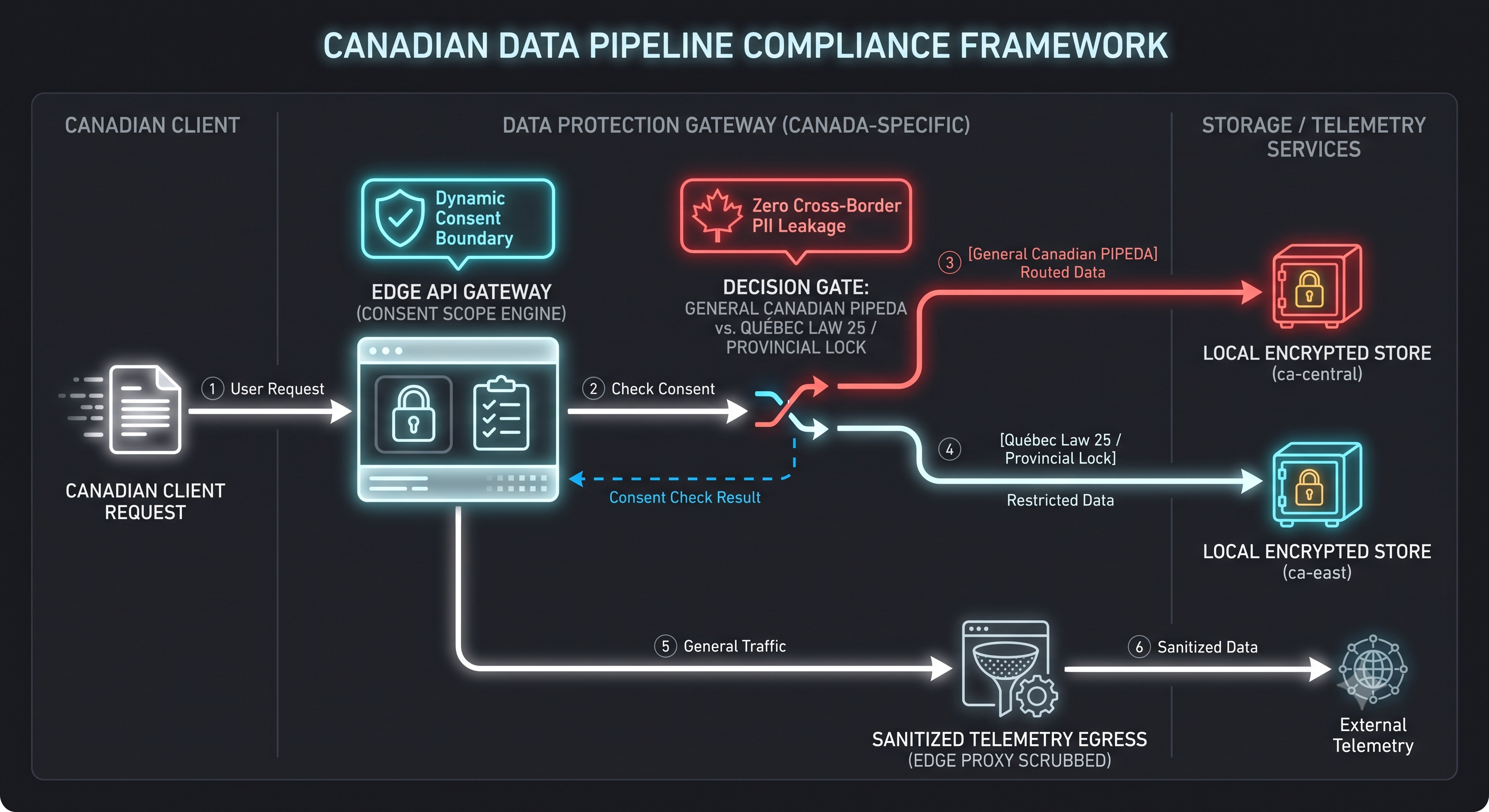 0 Comments 0 Shares 152 Views 0 Reviews
 -
Canada’s New Responsible Data Centre Principles: The Engineering Impact for AI Builders
Enterprise data centre and AI compute deployment in Canada just hit a regulatory turning point.
Between the multi-billion-dollar Sovereign AI Compute Strategy and federal efforts to anchor compute at home, the constraint is no longer just securing GPUs—it is passing local power, environmental, and sovereignty checks.
The new federal principles require data centres to protect local electricity ratepayers, restrict water consumption, and demonstrate tangible domestic economic returns before breaking ground or expanding capacity. For Canadian engineering leaders, platform architects, and DevOps teams, this fundamentally changes infrastructure roadmaps.
Architectural Takeaways for Canadian Tech Teams:
Grid-Aware Workload Orchestration: Data centres must prove they won’t drive up municipal ratepayer costs. AI teams should implement dynamic compute scheduling that shifts non-urgent, high-throughput batch training and fine-tuning jobs to off-peak grid hours (leveraging provincial clean energy peaks in Quebec, Ontario, or BC).
Cooling and PUE/WUE Metric Auditing: Water-use minimization is now explicit. When selecting local colocation or private cloud providers, prioritize facilities with closed-loop direct-to-chip liquid cooling or rear-door heat exchangers over open evaporative cooling towers.
True Domestic Data Sovereignty (Avoiding the CLOUD Act Loophole): Keeping data in a Canadian hyperscaler region does not automatically shield enterprise workloads from extraterritorial reach under foreign legislation like the U.S. CLOUD Act. Teams handling sensitive data (healthcare, fintech, and public sector) must evaluate bare-metal sovereign clusters or Canadian-controlled cloud environments for enterprise deployments.
Decoupled Fallback Pipelines: If your primary pipeline relies on local sovereign compute nodes, audit your API orchestration layers. Ensure agentic loops and vector retrieval processes do not trigger cross-border failovers that violate domestic privacy frameworks (PIPEDA / Law 25).
Discussion Question
For Canadian CTOs and cloud architects: Does your team factor local grid carbon-intensity and municipal data residency into your model training pipelines, or are you still relying primarily on generic North American hyperscaler regions?
CTA
Join Techawks Canada — Connect with founders, engineering leads, and tech innovators across Toronto, Montreal, Vancouver, and beyond. Access local architecture playbooks, sovereign compute insights, and peer discussions shaping the future of Canadian tech. Link in bio / comments.Canada’s New Responsible Data Centre Principles: The Engineering Impact for AI Builders Enterprise data centre and AI compute deployment in Canada just hit a regulatory turning point. Between the multi-billion-dollar Sovereign AI Compute Strategy and federal efforts to anchor compute at home, the constraint is no longer just securing GPUs—it is passing local power, environmental, and sovereignty checks. The new federal principles require data centres to protect local electricity ratepayers, restrict water consumption, and demonstrate tangible domestic economic returns before breaking ground or expanding capacity. For Canadian engineering leaders, platform architects, and DevOps teams, this fundamentally changes infrastructure roadmaps. Architectural Takeaways for Canadian Tech Teams: Grid-Aware Workload Orchestration: Data centres must prove they won’t drive up municipal ratepayer costs. AI teams should implement dynamic compute scheduling that shifts non-urgent, high-throughput batch training and fine-tuning jobs to off-peak grid hours (leveraging provincial clean energy peaks in Quebec, Ontario, or BC). Cooling and PUE/WUE Metric Auditing: Water-use minimization is now explicit. When selecting local colocation or private cloud providers, prioritize facilities with closed-loop direct-to-chip liquid cooling or rear-door heat exchangers over open evaporative cooling towers. True Domestic Data Sovereignty (Avoiding the CLOUD Act Loophole): Keeping data in a Canadian hyperscaler region does not automatically shield enterprise workloads from extraterritorial reach under foreign legislation like the U.S. CLOUD Act. Teams handling sensitive data (healthcare, fintech, and public sector) must evaluate bare-metal sovereign clusters or Canadian-controlled cloud environments for enterprise deployments. Decoupled Fallback Pipelines: If your primary pipeline relies on local sovereign compute nodes, audit your API orchestration layers. Ensure agentic loops and vector retrieval processes do not trigger cross-border failovers that violate domestic privacy frameworks (PIPEDA / Law 25). Discussion Question For Canadian CTOs and cloud architects: Does your team factor local grid carbon-intensity and municipal data residency into your model training pipelines, or are you still relying primarily on generic North American hyperscaler regions? CTA Join Techawks Canada — Connect with founders, engineering leads, and tech innovators across Toronto, Montreal, Vancouver, and beyond. Access local architecture playbooks, sovereign compute insights, and peer discussions shaping the future of Canadian tech. Link in bio / comments.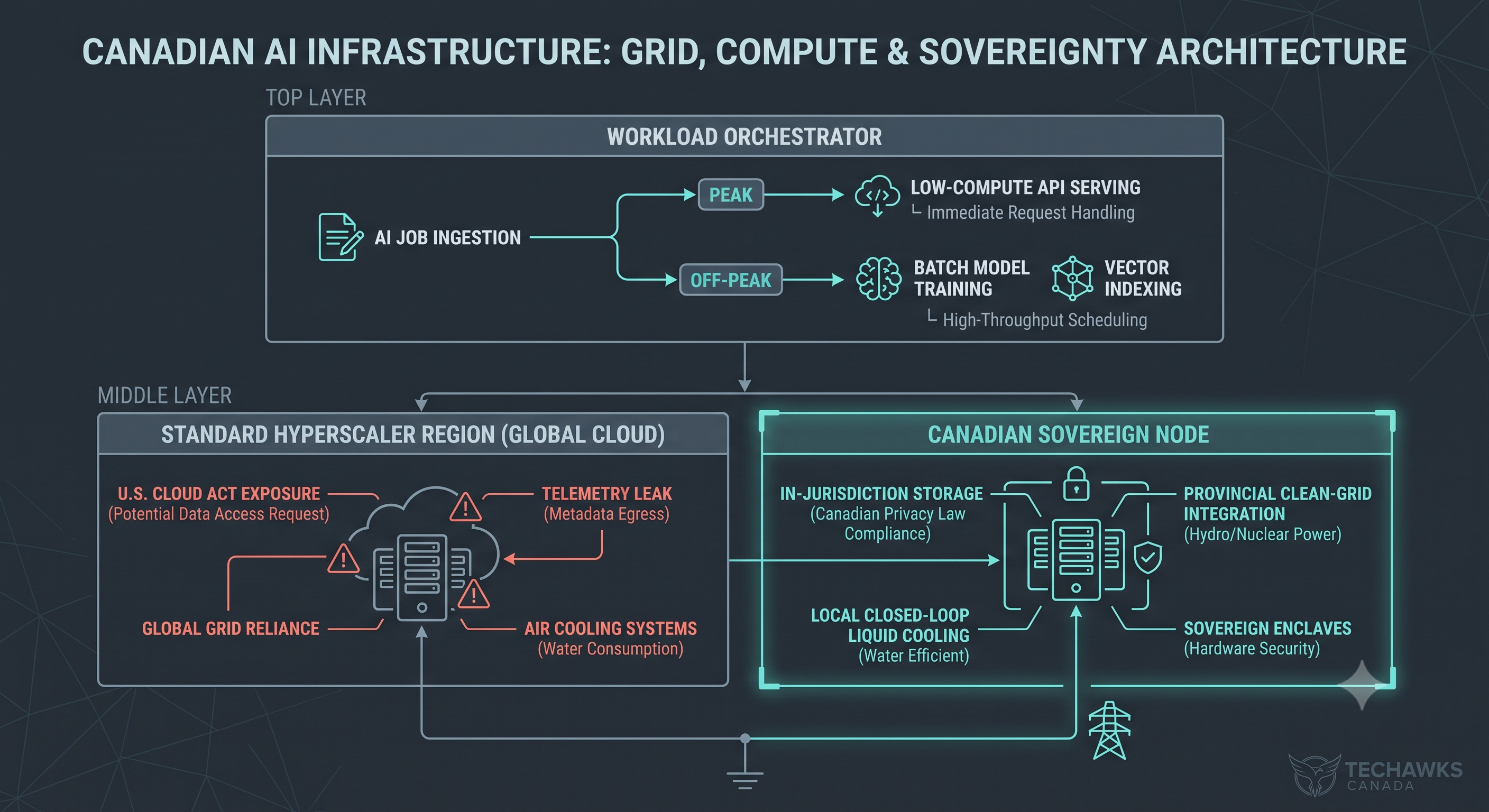 0 Comments 0 Shares 49 Views 0 Reviews
More Stories