



Techawks USA is the official Techawks community connecting developers, AI engineers, startup founders, students, researchers, designers, and technology professionals across the United States. Explore the latest in artificial intelligence, software engineering, cloud computing, cybersecurity, data science, product development, and emerging technologies.
Discover practical tutorials, industry insights, startup discussions, open-source projects, networking opportunities, tech events, job updates, product launches, and expert knowledge sharing. Learn new skills, collaborate on innovative ideas, showcase your work, and grow with a community focused on technology, innovation, and professional development.
Discover practical tutorials, industry insights, startup discussions, open-source projects, networking opportunities, tech events, job updates, product launches, and expert knowledge sharing. Learn new skills, collaborate on innovative ideas, showcase your work, and grow with a community focused on technology, innovation, and professional development.
-
Public Group
-
62 Posts
-
62 Photos
-
0 Videos
-
Reviews
-
People and Nations
Search

 Arabic
 French
 Spanish
 Portuguese
 Deutsch
 Turkish
 Dutch
Dutch
 Italiano
 Russian
 Romaian
 Portuguese (Brazil)
 Greek
Greek
Recent Updates
-
The Interconnection Queue Trap: Why US Cloud Architects Must Design for Megawatts, Not Just Flops
The conversation in US enterprise infrastructure has quietly pivoted from silicon procurement to energized capacity. Hyperscalers and tier-1 colocation hubs across Northern Virginia, Texas (ERCOT), and the Pacific Northwest are hitting hard interconnection walls with local utilities.
If your team is deploying dense training clusters or hosting private enterprise inference nodes, capacity planning can no longer treat the data center as an abstract, infinite utility.
Here is what infrastructure and platform leads must understand about the new constraints:
1. The Geography of Compute Has Decoupled from Latency
Historically, US engineering teams colocated data centers near primary fiber routes (Ashburn, Silicon Valley, Dallas) to preserve single-digit millisecond round trips. Today, massive parameter pre-training and batch fine-tuning workloads are shifting to stranded energy zones—secondary markets in the Midwest and Mountain West where behind-the-meter nuclear, hydroelectric, or wind generation bypasses public grid transmission delays.
2. Workload Bifurcation: Asynchronous vs. Synchronous
Because power is distributed unevenly, cloud architects must architect around a strict dichotomy:
Latency-Insensitive Asynchronous Workloads (Training/Batch Embeddings): Routed to "power-first" geographical regions. These clusters prioritize high Power Usage Effectiveness (PUE) and raw megawatt availability over edge proximity.
Latency-Sensitive Synchronous Workloads (Real-Time Agentic Loops/Inference): Retained in dense edge or metro centers, requiring heavy model compression (FP4/INT4 quantization, speculative decoding, and flash-attention kernels) to minimize rack thermal density (kW/rack) within legacy power limits.
3. The Takeaway for Systems Architects
Designing resilient distributed systems today means factoring power budgets directly into your infrastructure-as-code and scheduling layers. Tools like Kubernetes-native custom schedulers must now balance not just CPU/GPU memory, but thermal throttling boundaries, dynamic power draw limits, and inter-region egress costs across geographically fragmented clusters.
Discussion Question
US engineering leads and cloud architects: Is the regional grid power squeeze currently forcing your organization to rethink multi-region deployment strategies, or are you solving the thermal/power bottleneck purely through model quantization and software-level efficiency?
CTA (Join Techawks USA)
Join Techawks USA for engineering roundtables, system architecture breakdowns, and peer discussions tackling modern cloud infrastructure challenges.The Interconnection Queue Trap: Why US Cloud Architects Must Design for Megawatts, Not Just Flops The conversation in US enterprise infrastructure has quietly pivoted from silicon procurement to energized capacity. Hyperscalers and tier-1 colocation hubs across Northern Virginia, Texas (ERCOT), and the Pacific Northwest are hitting hard interconnection walls with local utilities. If your team is deploying dense training clusters or hosting private enterprise inference nodes, capacity planning can no longer treat the data center as an abstract, infinite utility. Here is what infrastructure and platform leads must understand about the new constraints: 1. The Geography of Compute Has Decoupled from Latency Historically, US engineering teams colocated data centers near primary fiber routes (Ashburn, Silicon Valley, Dallas) to preserve single-digit millisecond round trips. Today, massive parameter pre-training and batch fine-tuning workloads are shifting to stranded energy zones—secondary markets in the Midwest and Mountain West where behind-the-meter nuclear, hydroelectric, or wind generation bypasses public grid transmission delays. 2. Workload Bifurcation: Asynchronous vs. Synchronous Because power is distributed unevenly, cloud architects must architect around a strict dichotomy: Latency-Insensitive Asynchronous Workloads (Training/Batch Embeddings): Routed to "power-first" geographical regions. These clusters prioritize high Power Usage Effectiveness (PUE) and raw megawatt availability over edge proximity. Latency-Sensitive Synchronous Workloads (Real-Time Agentic Loops/Inference): Retained in dense edge or metro centers, requiring heavy model compression (FP4/INT4 quantization, speculative decoding, and flash-attention kernels) to minimize rack thermal density (kW/rack) within legacy power limits. 3. The Takeaway for Systems Architects Designing resilient distributed systems today means factoring power budgets directly into your infrastructure-as-code and scheduling layers. Tools like Kubernetes-native custom schedulers must now balance not just CPU/GPU memory, but thermal throttling boundaries, dynamic power draw limits, and inter-region egress costs across geographically fragmented clusters. Discussion Question US engineering leads and cloud architects: Is the regional grid power squeeze currently forcing your organization to rethink multi-region deployment strategies, or are you solving the thermal/power bottleneck purely through model quantization and software-level efficiency? CTA (Join Techawks USA) Join Techawks USA for engineering roundtables, system architecture breakdowns, and peer discussions tackling modern cloud infrastructure challenges.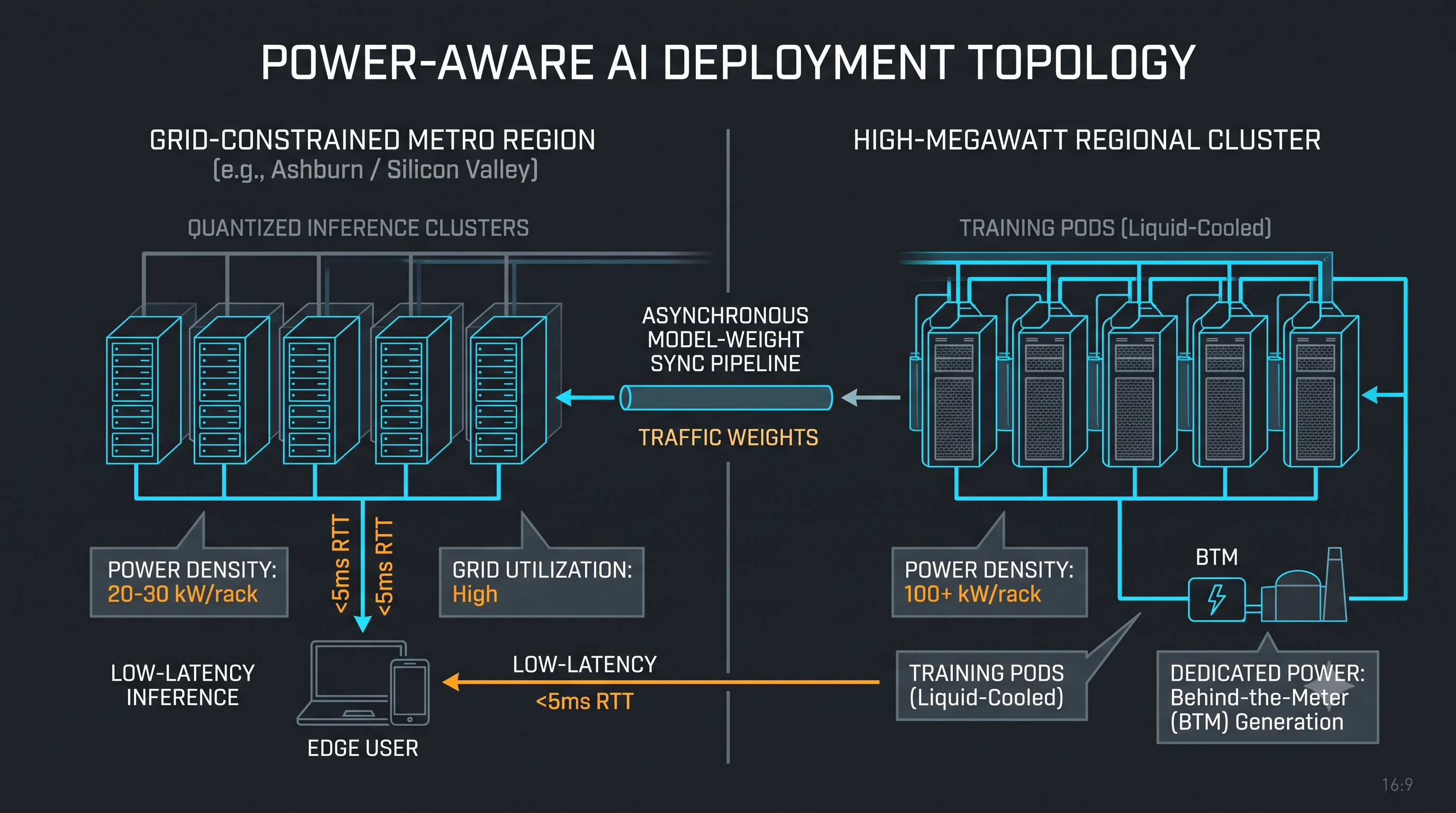 0 Comments 0 Shares 0 Views 0 Reviews
 -
Cutting Cloud Costs Without Degrading Latency: A 4-Step FinOps Strategy for Multi-AZ Egress
In large-scale US cloud deployments, cross-AZ traffic often accounts for 15% to 25% of total infrastructure spend. Standard Kubernetes deployments schedule pods across failure zones for high availability, but without traffic locality, simple service-to-service RPC calls rack up unnecessary per-gigabyte transfer fees and cross-datacenter latency penalties.
Here is a practical guide to re-architecting your internal routing for network cost efficiency without compromising fault tolerance.
1. Enforce Kubernetes Topology-Aware Routing
By default, kube-proxy distributes service traffic evenly across all ready endpoints, regardless of zone.
The Problem: A pod in us-east-1a making a call to a service often hits a pod in us-east-1b, incurring cross-AZ egress costs and adding 1–2ms of latency.
The Fix: Enable topology-aware routing in your Service manifests:
YAML
apiVersion: v1
kind: Service
metadata:
name: order-service
annotations:
service.kubernetes.io/topology-mode: Auto
spec:
trafficDistribution: PreferClose
This forces the control plane to route requests to endpoints residing within the same AZ, keeping traffic local unless a zone failure triggers automatic cross-zone failover.
2. Route S3 and DynamoDB via Gateway VPC Endpoints
One of the most common configuration misses is letting microservices communicate with object storage over public NAT Gateways.
NAT Gateways charge both an hourly rate and a per-GB data processing fee, plus standard internet data transfer charges.
Provision an AWS Gateway VPC Endpoint for Amazon S3 and DynamoDB directly inside your route tables.
Traffic routes over private AWS backbone networking with zero data processing charges and zero NAT Gateway egress fees.
3. Consolidate State Transfer with Read Replicas per Zone
If your architecture relies heavily on centralized caches (e.g., a Redis cluster in us-west-2a), every read from services in us-west-2b and us-west-2c traverses the zone boundary.
Place local read replicas in each active zone for high-read, low-write data patterns.
While you pay cross-AZ replication costs once on the write path, you save millions of cross-zone roundtrips on high-frequency read operations.
4. Continuous Network Telemetry via VPC Flow Logs
You cannot optimize what you do not trace.
Enable VPC Flow Logs with custom format fields (srcaddr, dstaddr, pkt-srcaddr, pkt-dstaddr, action).
Query your flow logs using Athena or BigQuery to identify which microservices account for the top 5% of cross-subnet bytes transferred.
Target those specific service pairs for pod affinity or colocation in your next deployment sprint.
Key Takeaways
Keep Service RPCs Local: Use service.kubernetes.io/topology-mode: Auto or trafficDistribution: PreferClose to keep traffic within the same AZ.
Bypass NAT Gateways: Route S3 and managed database traffic through Gateway VPC Endpoints to eliminate data processing fees entirely.
Locality-First Reads: Distribute cache read replicas into active zones to swap recurring read egress for single-pass write replication.
Profile Flow Logs: Run Athena queries on VPC flow logs monthly to catch new chatty cross-zone service dependencies before billing closes.
CTA
Navigating multi-region scale, FinOps pipelines, and modern cloud architecture across the US tech scene?
Join Techawks USA to exchange battle-tested system designs, production playbooks, and cost-efficiency architectures with leading backend engineers and infrastructure leads. Link in the comments.Cutting Cloud Costs Without Degrading Latency: A 4-Step FinOps Strategy for Multi-AZ Egress In large-scale US cloud deployments, cross-AZ traffic often accounts for 15% to 25% of total infrastructure spend. Standard Kubernetes deployments schedule pods across failure zones for high availability, but without traffic locality, simple service-to-service RPC calls rack up unnecessary per-gigabyte transfer fees and cross-datacenter latency penalties. Here is a practical guide to re-architecting your internal routing for network cost efficiency without compromising fault tolerance. 1. Enforce Kubernetes Topology-Aware Routing By default, kube-proxy distributes service traffic evenly across all ready endpoints, regardless of zone. The Problem: A pod in us-east-1a making a call to a service often hits a pod in us-east-1b, incurring cross-AZ egress costs and adding 1–2ms of latency. The Fix: Enable topology-aware routing in your Service manifests: YAML apiVersion: v1 kind: Service metadata: name: order-service annotations: service.kubernetes.io/topology-mode: Auto spec: trafficDistribution: PreferClose This forces the control plane to route requests to endpoints residing within the same AZ, keeping traffic local unless a zone failure triggers automatic cross-zone failover. 2. Route S3 and DynamoDB via Gateway VPC Endpoints One of the most common configuration misses is letting microservices communicate with object storage over public NAT Gateways. NAT Gateways charge both an hourly rate and a per-GB data processing fee, plus standard internet data transfer charges. Provision an AWS Gateway VPC Endpoint for Amazon S3 and DynamoDB directly inside your route tables. Traffic routes over private AWS backbone networking with zero data processing charges and zero NAT Gateway egress fees. 3. Consolidate State Transfer with Read Replicas per Zone If your architecture relies heavily on centralized caches (e.g., a Redis cluster in us-west-2a), every read from services in us-west-2b and us-west-2c traverses the zone boundary. Place local read replicas in each active zone for high-read, low-write data patterns. While you pay cross-AZ replication costs once on the write path, you save millions of cross-zone roundtrips on high-frequency read operations. 4. Continuous Network Telemetry via VPC Flow Logs You cannot optimize what you do not trace. Enable VPC Flow Logs with custom format fields (srcaddr, dstaddr, pkt-srcaddr, pkt-dstaddr, action). Query your flow logs using Athena or BigQuery to identify which microservices account for the top 5% of cross-subnet bytes transferred. Target those specific service pairs for pod affinity or colocation in your next deployment sprint. Key Takeaways Keep Service RPCs Local: Use service.kubernetes.io/topology-mode: Auto or trafficDistribution: PreferClose to keep traffic within the same AZ. Bypass NAT Gateways: Route S3 and managed database traffic through Gateway VPC Endpoints to eliminate data processing fees entirely. Locality-First Reads: Distribute cache read replicas into active zones to swap recurring read egress for single-pass write replication. Profile Flow Logs: Run Athena queries on VPC flow logs monthly to catch new chatty cross-zone service dependencies before billing closes. CTA Navigating multi-region scale, FinOps pipelines, and modern cloud architecture across the US tech scene? Join Techawks USA to exchange battle-tested system designs, production playbooks, and cost-efficiency architectures with leading backend engineers and infrastructure leads. Link in the comments.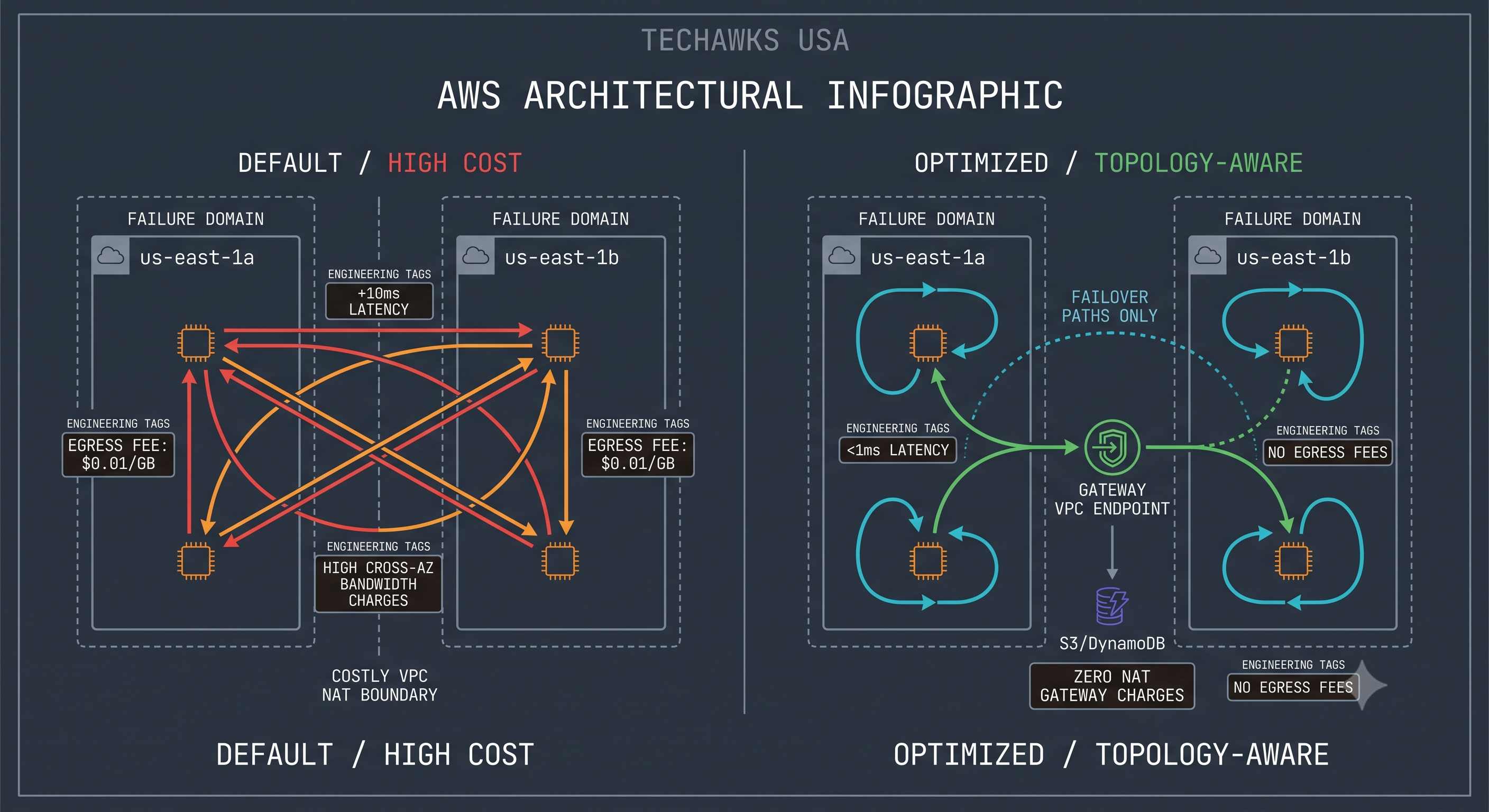 0 Comments 0 Shares 83 Views 0 Reviews
 -
Non-Human Identities in the Agentic Era: The 5-Point NHI Security Checklist
As enterprises across North America transition autonomous AI agents from experimental pilots into cloud production pipelines, engineering architectures face an unprecedented identity crisis.
Traditional Identity and Access Management (IAM) was engineered around human sessions: SSO, Okta handshakes, MFA challenges, and business-hours telemetry. AI agents operate 24/7, invoke external APIs via Model Context Protocol (MCP) or custom tool loops, and often require just-in-time access across distributed clouds.
When service credentials or delegated tokens leak in an autonomous loop, compromise happens in seconds—not days. Here is your production engineering checklist to harden Non-Human Identity (NHI) governance:
1. Eliminate Long-Lived API Keys via Short-Lived OIDC Federation
Deprecate hardcoded secrets, static .env keys, and persistent cloud tokens in agent runtime containers.
Implement OpenID Connect (OIDC) workload identity federation to issue ephemeral tokens scoped down to minutes instead of days or months.
2. Downscope Agent Execution Contexts (Micro-Roles)
Avoid attaching blanket administrator or wildcard * read/write policies to agent execution runtimes.
Segment autonomous privileges into granular micro-roles: an agent triaging Jira tickets should have zero network path or role-assumption rights toward your production database or vector store write plane.
3. Enforce Step-Up Human Delegation for High-Blast-Radius Tools
Maintain a strict boundary between analytical actions (search, fetch, transform) and state-mutating actions (schema migration, wire transfer, credential update).
Require signed human-in-the-loop approvals (via Webhook, Slack interactive modal, or signed JWT payload) whenever an agent attempts to invoke state-altering tools.
4. Establish Tokenomics & Velocity Anomaly Throttles
Autonomous loops caught in non-deterministic recursion can exhaust API budgets or flood downstream SaaS control planes.
Enforce hard request rate limits, dynamic concurrency ceilings, and automated circuit breakers that immediately revoke identity sessions when sudden token-consumption spikes occur.
5. Build Unified NHI Inventory & Lineage Observability
You cannot protect what you cannot inventory.
Centralize NHI lifecycle management to catalog every active service principal, OAuth grant, MCP server connector, and agent runtime identity. Automatically quarantine orphaned identities that show no telemetry for over 14 days.
Discussion Question
As multi-agent workflows proliferate across US cloud infrastructure, how is your engineering team solving for identity boundaries—ephemeral credentials via OIDC, dedicated proxy gateways, or hard human-in-the-loop gates?
CTA (Join Techawks USA)
Architecting secure, resilient cloud and agentic infrastructure at enterprise scale? Join Techawks USA to collaborate with staff engineers, systems architects, and DevSecOps leaders pushing the frontier of cloud computing.Non-Human Identities in the Agentic Era: The 5-Point NHI Security Checklist As enterprises across North America transition autonomous AI agents from experimental pilots into cloud production pipelines, engineering architectures face an unprecedented identity crisis. Traditional Identity and Access Management (IAM) was engineered around human sessions: SSO, Okta handshakes, MFA challenges, and business-hours telemetry. AI agents operate 24/7, invoke external APIs via Model Context Protocol (MCP) or custom tool loops, and often require just-in-time access across distributed clouds. When service credentials or delegated tokens leak in an autonomous loop, compromise happens in seconds—not days. Here is your production engineering checklist to harden Non-Human Identity (NHI) governance: 1. Eliminate Long-Lived API Keys via Short-Lived OIDC Federation Deprecate hardcoded secrets, static .env keys, and persistent cloud tokens in agent runtime containers. Implement OpenID Connect (OIDC) workload identity federation to issue ephemeral tokens scoped down to minutes instead of days or months. 2. Downscope Agent Execution Contexts (Micro-Roles) Avoid attaching blanket administrator or wildcard * read/write policies to agent execution runtimes. Segment autonomous privileges into granular micro-roles: an agent triaging Jira tickets should have zero network path or role-assumption rights toward your production database or vector store write plane. 3. Enforce Step-Up Human Delegation for High-Blast-Radius Tools Maintain a strict boundary between analytical actions (search, fetch, transform) and state-mutating actions (schema migration, wire transfer, credential update). Require signed human-in-the-loop approvals (via Webhook, Slack interactive modal, or signed JWT payload) whenever an agent attempts to invoke state-altering tools. 4. Establish Tokenomics & Velocity Anomaly Throttles Autonomous loops caught in non-deterministic recursion can exhaust API budgets or flood downstream SaaS control planes. Enforce hard request rate limits, dynamic concurrency ceilings, and automated circuit breakers that immediately revoke identity sessions when sudden token-consumption spikes occur. 5. Build Unified NHI Inventory & Lineage Observability You cannot protect what you cannot inventory. Centralize NHI lifecycle management to catalog every active service principal, OAuth grant, MCP server connector, and agent runtime identity. Automatically quarantine orphaned identities that show no telemetry for over 14 days. Discussion Question As multi-agent workflows proliferate across US cloud infrastructure, how is your engineering team solving for identity boundaries—ephemeral credentials via OIDC, dedicated proxy gateways, or hard human-in-the-loop gates? CTA (Join Techawks USA) Architecting secure, resilient cloud and agentic infrastructure at enterprise scale? Join Techawks USA to collaborate with staff engineers, systems architects, and DevSecOps leaders pushing the frontier of cloud computing. 0 Comments 0 Shares 4 Views 0 Reviews
 -
Can Your Architecture Survive a Cross-AZ Blackout? The 48-Hour Multi-AZ Reality Check.
If you run production workloads in us-east-1, us-west-2, or central regional hubs, regional resilience is your primary operational benchmark. But deployment across three subnets does not guarantee survival.
Take the Techawks 48-Hour Resilience Challenge to test whether your setup is truly fault-tolerant or just expensive:
Audit Your Cross-AZ Latency Tax
The Problem: Chatty microservices distributed indiscriminately across zones run into a 1–2 ms cross-zone penalty per network hop. During peak traffic, this compounds into cascading timeouts.
The Fix: Implement AZ-affinity routing using service mesh topologies or client-side load balancing. Keep read/write request-reply loops within the same AZ, routing across boundaries only for consensus and data replication.
Test Your Read-Replica Promotion Under Load
The Problem: Managed databases promise automated failover. However, if your primary zone fails under heavy I/O, replica lag can spike, causing automated promotion to hang or drop uncommitted transactions.
The Fix: Simulate a forced failover during staging peak hours. Track your Mean Time to Recovery (MTTR) and confirm your application connection pools handle DNS cache purges without requiring manual pod restarts.
Validate Stateless Ingress Failover
The Problem: Load balancers often continue directing traffic to degraded compute targets until health checks register multiple consecutive failures—saturating retry queues.
The Fix: Tighten interval thresholds: drop health-check intervals to 5 seconds with a 2-strike unhealthy threshold. Pair this with client-side exponential backoff and jitter to prevent thundering herd problems on healthy zones.
Key Takeaways
Network Topology Over Proximity: Ensure traffic stays localized within an AZ to reduce latency and eliminate avoidable cross-AZ data egress charges.
Failover Requires Muscle Memory: If failover is not verified under sustained load, your failover automation is merely a theory.
Decouple DNS from Health: Ensure application client pools flush stale IP addresses immediately upon ingress health transitions.
CTA
Tackling resilience, cloud architecture, and high-scale systems design across the US tech landscape? Connect with lead architects and senior engineers building reliable infrastructure.Can Your Architecture Survive a Cross-AZ Blackout? The 48-Hour Multi-AZ Reality Check. If you run production workloads in us-east-1, us-west-2, or central regional hubs, regional resilience is your primary operational benchmark. But deployment across three subnets does not guarantee survival. Take the Techawks 48-Hour Resilience Challenge to test whether your setup is truly fault-tolerant or just expensive: Audit Your Cross-AZ Latency Tax The Problem: Chatty microservices distributed indiscriminately across zones run into a 1–2 ms cross-zone penalty per network hop. During peak traffic, this compounds into cascading timeouts. The Fix: Implement AZ-affinity routing using service mesh topologies or client-side load balancing. Keep read/write request-reply loops within the same AZ, routing across boundaries only for consensus and data replication. Test Your Read-Replica Promotion Under Load The Problem: Managed databases promise automated failover. However, if your primary zone fails under heavy I/O, replica lag can spike, causing automated promotion to hang or drop uncommitted transactions. The Fix: Simulate a forced failover during staging peak hours. Track your Mean Time to Recovery (MTTR) and confirm your application connection pools handle DNS cache purges without requiring manual pod restarts. Validate Stateless Ingress Failover The Problem: Load balancers often continue directing traffic to degraded compute targets until health checks register multiple consecutive failures—saturating retry queues. The Fix: Tighten interval thresholds: drop health-check intervals to 5 seconds with a 2-strike unhealthy threshold. Pair this with client-side exponential backoff and jitter to prevent thundering herd problems on healthy zones. Key Takeaways Network Topology Over Proximity: Ensure traffic stays localized within an AZ to reduce latency and eliminate avoidable cross-AZ data egress charges. Failover Requires Muscle Memory: If failover is not verified under sustained load, your failover automation is merely a theory. Decouple DNS from Health: Ensure application client pools flush stale IP addresses immediately upon ingress health transitions. CTA Tackling resilience, cloud architecture, and high-scale systems design across the US tech landscape? Connect with lead architects and senior engineers building reliable infrastructure.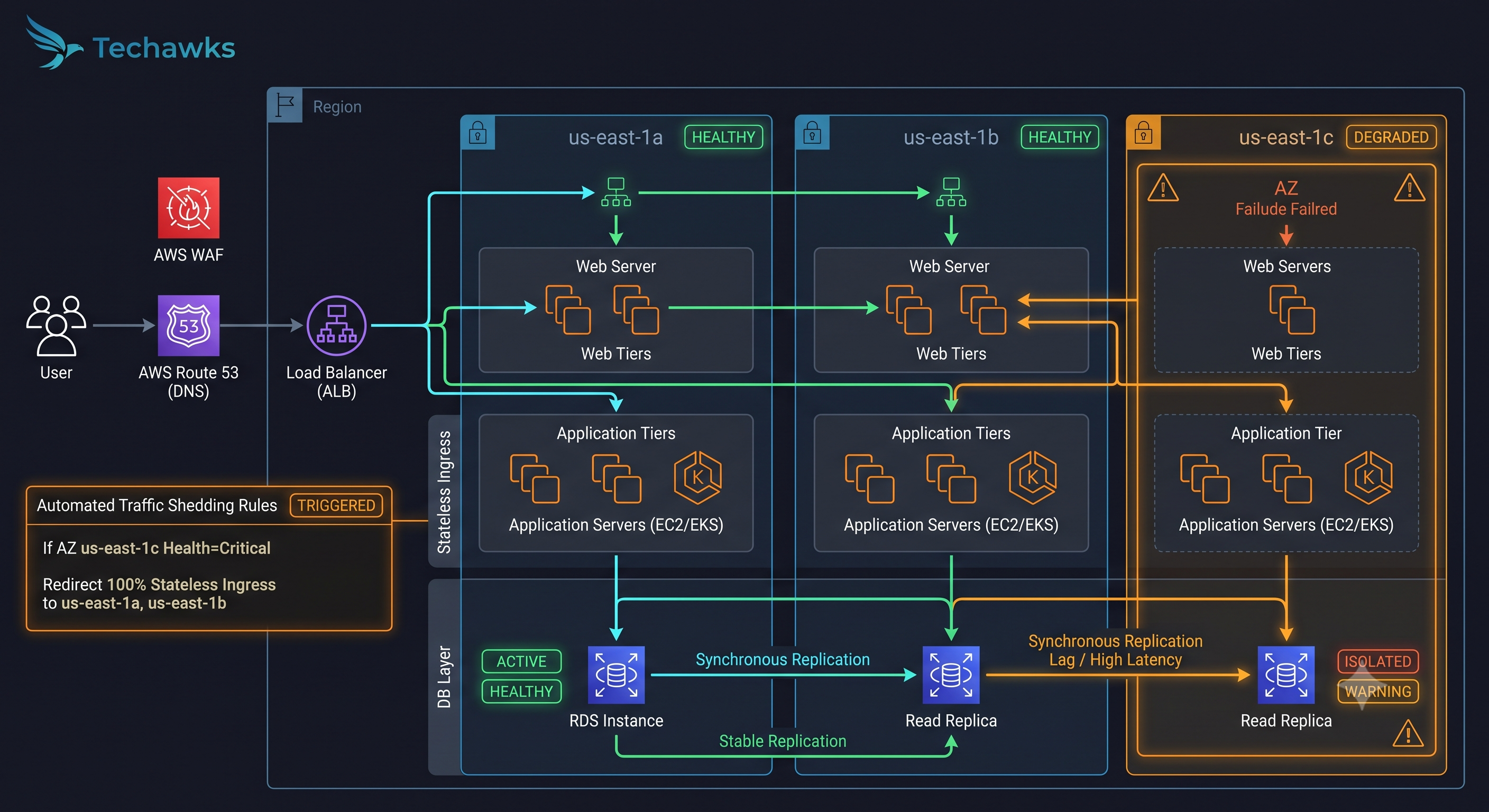 0 Comments 0 Shares 33 Views 0 Reviews
 -
Myth vs Fact: Why the Real AI Bottleneck in the US Is No Longer Silicon
❌ Myth 1: "AI capacity in the US is bottlenecked by chip shortages."
The Reality: The GPU supply squeeze of 2023–2024 has largely given way to a physical infrastructure bottleneck: power delivery and thermal density. Modern gigawatt-scale data center campuses require 100MW to 1GW+ of dedicated, continuous baseload electricity. Across major US regional transmission organizations (like PJM in the Mid-Atlantic and ERCOT in Texas), interconnection queues now stretch between 4 to 7 years. You can acquire 50,000 liquid-cooled accelerators, but if local high-voltage substations and step-up transformers (which have 3- to 4-year procurement lead times) aren't energised, your cluster remains dark iron.
❌ Myth 2: "US tech layoffs and restructuring are just residual post-pandemic corrections."
The Reality: The continuing workforce adjustments across US tech aren't just belt-tightening—they represent a massive, structural capex reallocation. Enterprise budgets and hyperscaler balance sheets are siphoning capital away from redundant SaaS seats and middle-tier app layers to fund capital-intensive physical infrastructure: custom ASICs, high-density cooling facilities, and long-term power purchase agreements (PPAs) spanning nuclear, geothermal, and advanced gas plants.
❌ Myth 3: "Energy and physical infra don't impact day-to-day software engineers."
The Reality: Compute scarcity is actively redefining software architecture:
Inference-Time Compute vs. Training: When training runs consume prohibitive megawatts, architectural optimization pivots toward runtime reasoning, speculative decoding, and model distillation.
Geographic Latency vs. Power Locality: Data centers are increasingly built where power is available (e.g., rust-belt nuclear sites, wind-heavy West Texas) rather than adjacent to primary user edge hubs, forcing engineers to master distributed state management and asynchronous pipeline design.
Efficiency as a First-Class Metric: Profiling code for FLOP-per-watt and memory bandwidth is no longer a niche embedded systems problem; it dictates cloud deployment viability at scale.
Why It Matters
For US engineers, engineering managers, and founders, the era of treating cloud compute as an infinite, frictionless abstraction is officially over. The most defensible engineering stacks are those built with mechanical sympathy—optimizing model efficiency, caching, and edge inference to bypass utility grid constraints.
Discussion Question
Is your engineering team feeling the downstream effects of rising inference and cloud compute costs, or are infrastructure constraints already changing how you choose between hosted foundation models vs. fine-tuned, localized small models? Drop your thoughts below! 👇
CTA
Join Techawks USA — Connecting engineers, architects, and founders building the future of American deep-tech, cloud infrastructure, and intelligent systems. 🦅🇺🇸Myth vs Fact: Why the Real AI Bottleneck in the US Is No Longer Silicon ❌ Myth 1: "AI capacity in the US is bottlenecked by chip shortages." The Reality: The GPU supply squeeze of 2023–2024 has largely given way to a physical infrastructure bottleneck: power delivery and thermal density. Modern gigawatt-scale data center campuses require 100MW to 1GW+ of dedicated, continuous baseload electricity. Across major US regional transmission organizations (like PJM in the Mid-Atlantic and ERCOT in Texas), interconnection queues now stretch between 4 to 7 years. You can acquire 50,000 liquid-cooled accelerators, but if local high-voltage substations and step-up transformers (which have 3- to 4-year procurement lead times) aren't energised, your cluster remains dark iron. ❌ Myth 2: "US tech layoffs and restructuring are just residual post-pandemic corrections." The Reality: The continuing workforce adjustments across US tech aren't just belt-tightening—they represent a massive, structural capex reallocation. Enterprise budgets and hyperscaler balance sheets are siphoning capital away from redundant SaaS seats and middle-tier app layers to fund capital-intensive physical infrastructure: custom ASICs, high-density cooling facilities, and long-term power purchase agreements (PPAs) spanning nuclear, geothermal, and advanced gas plants. ❌ Myth 3: "Energy and physical infra don't impact day-to-day software engineers." The Reality: Compute scarcity is actively redefining software architecture: Inference-Time Compute vs. Training: When training runs consume prohibitive megawatts, architectural optimization pivots toward runtime reasoning, speculative decoding, and model distillation. Geographic Latency vs. Power Locality: Data centers are increasingly built where power is available (e.g., rust-belt nuclear sites, wind-heavy West Texas) rather than adjacent to primary user edge hubs, forcing engineers to master distributed state management and asynchronous pipeline design. Efficiency as a First-Class Metric: Profiling code for FLOP-per-watt and memory bandwidth is no longer a niche embedded systems problem; it dictates cloud deployment viability at scale. Why It Matters For US engineers, engineering managers, and founders, the era of treating cloud compute as an infinite, frictionless abstraction is officially over. The most defensible engineering stacks are those built with mechanical sympathy—optimizing model efficiency, caching, and edge inference to bypass utility grid constraints. Discussion Question Is your engineering team feeling the downstream effects of rising inference and cloud compute costs, or are infrastructure constraints already changing how you choose between hosted foundation models vs. fine-tuned, localized small models? Drop your thoughts below! 👇 CTA Join Techawks USA — Connecting engineers, architects, and founders building the future of American deep-tech, cloud infrastructure, and intelligent systems. 🦅🇺🇸 0 Comments 0 Shares 7 Views 0 Reviews
 -
OpenTofu vs. Terraform: How US Engineering Teams Are Navigating the Fork
For enterprise platform teams in Seattle, Austin, and the Bay Area, Infrastructure as Code (IaC) isn't just about provisioning VMs—it’s about auditability, licensing risk, and CI/CD integration.
OpenTofu emerged as the community-driven, truly open-source drop-in replacement for Terraform under the Linux Foundation. But moving beyond the license debate, how does it actually hold up in production environments?
True Drop-In Parity: OpenTofu maintains backward compatibility with Terraform configuration files (.tf), existing providers, and remote state backends (S3, GCS, Azure Blob). Teams running standard AWS or GCP stacks can often switch binaries with zero rewrite of existing code.
Licensing Safety for Platform Builders: If your company builds commercial SaaS, developer platforms, or internal developer portals (IDPs) that wrap around IaC tooling, OpenTofu eliminates the ambiguous competitive-use clauses introduced by the BSL.
State Encryption Built-In: Unlike legacy Terraform which historically required third-party tooling or raw bucket permissions to secure state files, OpenTofu introduced native client-side state encryption out of the box, strengthening SOC 2 and HIPAA compliance workflows.
Registry Independence: OpenTofu maintains its own decentralized, openly accessible provider registry, shielding pipelines from upstream policy changes or potential access throttling.
When to stay with Terraform: If your enterprise relies heavily on Terraform Cloud/Enterprise SaaS capabilities (like hosted run tasks, native VCS drift triggers, or proprietary Sentinel policies), the operational cost of migrating to self-hosted orchestration on OpenTofu may outweigh the licensing savings.
Key Takeaways
Drop-in compatibility: Zero syntax changes required for standard HCL infrastructure configurations.
Enterprise compliance: Native state encryption simplifies data security for regulated US industries (healthcare, fintech).
Vendor-neutral governance: Hosted under the Linux Foundation, preventing sudden licensing shifts or commercial usage locks.
Ecosystem parity: Full access to existing cloud provider registries (AWS, GCP, Azure, Cloudflare).
CTA (Join Techawks USA)
Scaling cloud platforms and modern infrastructure? Join the Techawks USA community to trade notes on platform engineering, open-source governance, and production architecture. Drop your thoughts below: HasOpenTofu vs. Terraform: How US Engineering Teams Are Navigating the Fork For enterprise platform teams in Seattle, Austin, and the Bay Area, Infrastructure as Code (IaC) isn't just about provisioning VMs—it’s about auditability, licensing risk, and CI/CD integration. OpenTofu emerged as the community-driven, truly open-source drop-in replacement for Terraform under the Linux Foundation. But moving beyond the license debate, how does it actually hold up in production environments? True Drop-In Parity: OpenTofu maintains backward compatibility with Terraform configuration files (.tf), existing providers, and remote state backends (S3, GCS, Azure Blob). Teams running standard AWS or GCP stacks can often switch binaries with zero rewrite of existing code. Licensing Safety for Platform Builders: If your company builds commercial SaaS, developer platforms, or internal developer portals (IDPs) that wrap around IaC tooling, OpenTofu eliminates the ambiguous competitive-use clauses introduced by the BSL. State Encryption Built-In: Unlike legacy Terraform which historically required third-party tooling or raw bucket permissions to secure state files, OpenTofu introduced native client-side state encryption out of the box, strengthening SOC 2 and HIPAA compliance workflows. Registry Independence: OpenTofu maintains its own decentralized, openly accessible provider registry, shielding pipelines from upstream policy changes or potential access throttling. When to stay with Terraform: If your enterprise relies heavily on Terraform Cloud/Enterprise SaaS capabilities (like hosted run tasks, native VCS drift triggers, or proprietary Sentinel policies), the operational cost of migrating to self-hosted orchestration on OpenTofu may outweigh the licensing savings. Key Takeaways Drop-in compatibility: Zero syntax changes required for standard HCL infrastructure configurations. Enterprise compliance: Native state encryption simplifies data security for regulated US industries (healthcare, fintech). Vendor-neutral governance: Hosted under the Linux Foundation, preventing sudden licensing shifts or commercial usage locks. Ecosystem parity: Full access to existing cloud provider registries (AWS, GCP, Azure, Cloudflare). CTA (Join Techawks USA) Scaling cloud platforms and modern infrastructure? Join the Techawks USA community to trade notes on platform engineering, open-source governance, and production architecture. Drop your thoughts below: Has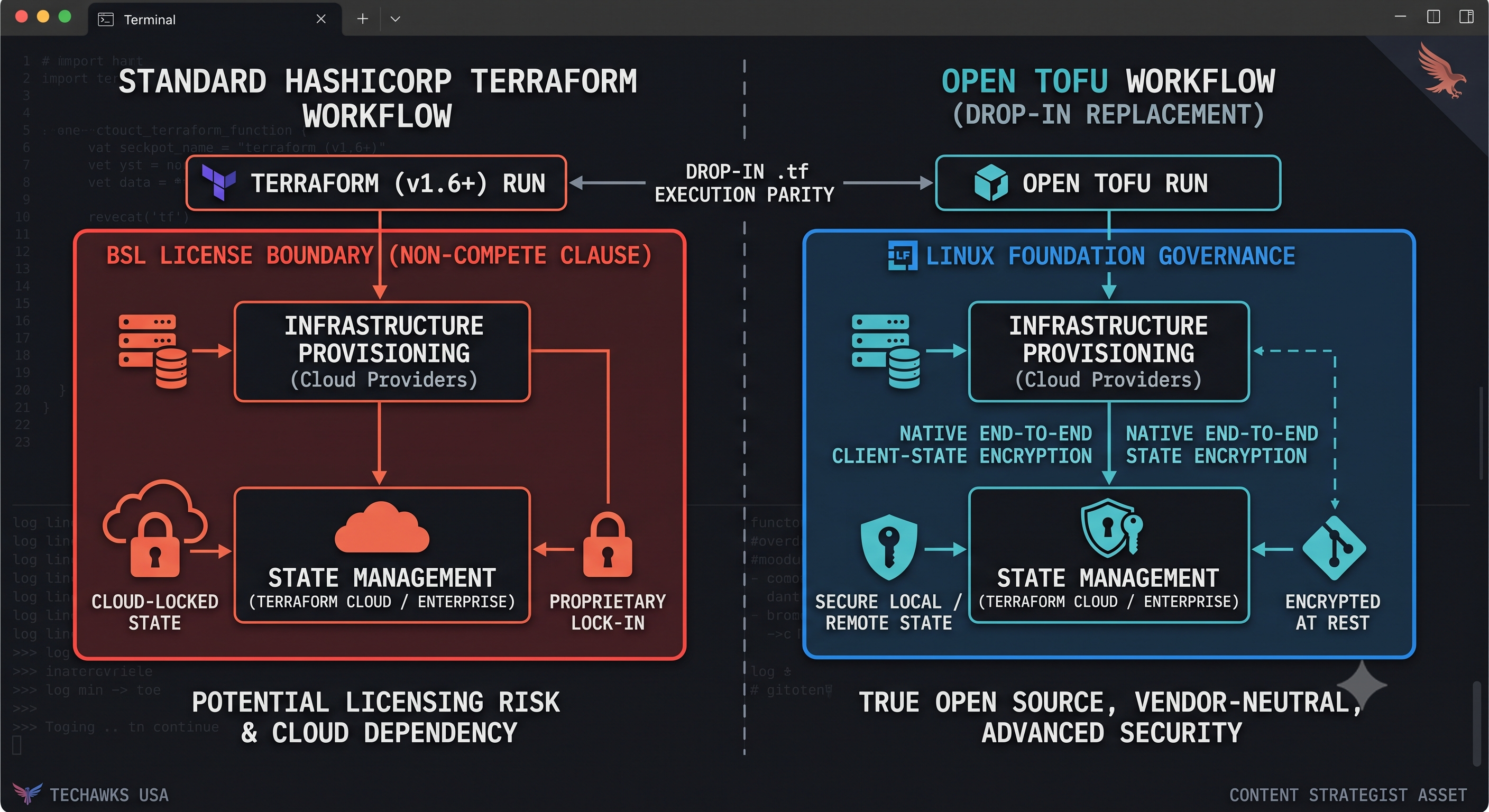 0 Comments 0 Shares 81 Views 0 Reviews
 -
The "Generalist SWE" Squeeze: Why 31% of US Tech Postings Are Demanding AI System Design
The US software job market hasn't evaporated; it has bifurcated. Across major tech hubs—from Seattle to Silicon Valley—non-AI software postings have fallen sharply from their 2022 peak, while AI-specialized software roles now make up over 31% of total US tech job openings (and over 55% in the Bay Area alone).
Hiring managers at Tier-1 tech firms and well-capitalized startups are no longer looking for engineers who simply write code—generative tooling already handles the boilerplate. The modern hiring bar has shifted toward compound AI engineering: building reliable, deterministic systems on top of non-deterministic models.
To stand out in US technical screens right now, focus on three specific capabilities:
Production Evals Over Prompting
Interviewers don't care if you know how to write a prompt. They care if you know how to benchmark it. Demonstrate how you build automated regression tests for LLM outputs, track context drift, and implement deterministic fallback chains using tools like LangSmith, Braintrust, or custom evaluation harnesses.
Mastering the P95 Latency & Token Economy
Real-world engineering is constrained by margins. Senior candidates are evaluated on operational trade-offs: when to leverage semantic caching, how to route between small open-weights (e.g., Llama 3) for inference vs. frontier reasoning models, and how to keep tail latency (p95) under 500ms in user-facing flows.
Data Ingestion and Vector Infrastructure
Modern software architecture is tightly coupled with the data plane. Show verifiable experience orchestrating high-throughput ingestion pipelines, handling hybrid search (dense vector retrieval alongside BM25 keyword matching), and mitigating vector database index fragmentation at scale.
Ship verifiable, production-grade architectures with measurable metrics—latency, cost-per-query, and accuracy drift—rather than generic side projects.
Discussion Question
For engineers currently interviewing in the US: Are your system design rounds pivoting more toward distributed AI pipelines and evals, or are companies still sticking to traditional microservice designs?
CTA (Join Techawks USA)
Level up your career with deep architectural breakdowns and direct insights into the US hiring market. Follow Techawks USA and connect with top engineers building the future of enterprise software.The "Generalist SWE" Squeeze: Why 31% of US Tech Postings Are Demanding AI System Design The US software job market hasn't evaporated; it has bifurcated. Across major tech hubs—from Seattle to Silicon Valley—non-AI software postings have fallen sharply from their 2022 peak, while AI-specialized software roles now make up over 31% of total US tech job openings (and over 55% in the Bay Area alone). Hiring managers at Tier-1 tech firms and well-capitalized startups are no longer looking for engineers who simply write code—generative tooling already handles the boilerplate. The modern hiring bar has shifted toward compound AI engineering: building reliable, deterministic systems on top of non-deterministic models. To stand out in US technical screens right now, focus on three specific capabilities: Production Evals Over Prompting Interviewers don't care if you know how to write a prompt. They care if you know how to benchmark it. Demonstrate how you build automated regression tests for LLM outputs, track context drift, and implement deterministic fallback chains using tools like LangSmith, Braintrust, or custom evaluation harnesses. Mastering the P95 Latency & Token Economy Real-world engineering is constrained by margins. Senior candidates are evaluated on operational trade-offs: when to leverage semantic caching, how to route between small open-weights (e.g., Llama 3) for inference vs. frontier reasoning models, and how to keep tail latency (p95) under 500ms in user-facing flows. Data Ingestion and Vector Infrastructure Modern software architecture is tightly coupled with the data plane. Show verifiable experience orchestrating high-throughput ingestion pipelines, handling hybrid search (dense vector retrieval alongside BM25 keyword matching), and mitigating vector database index fragmentation at scale. Ship verifiable, production-grade architectures with measurable metrics—latency, cost-per-query, and accuracy drift—rather than generic side projects. Discussion Question For engineers currently interviewing in the US: Are your system design rounds pivoting more toward distributed AI pipelines and evals, or are companies still sticking to traditional microservice designs? CTA (Join Techawks USA) Level up your career with deep architectural breakdowns and direct insights into the US hiring market. Follow Techawks USA and connect with top engineers building the future of enterprise software.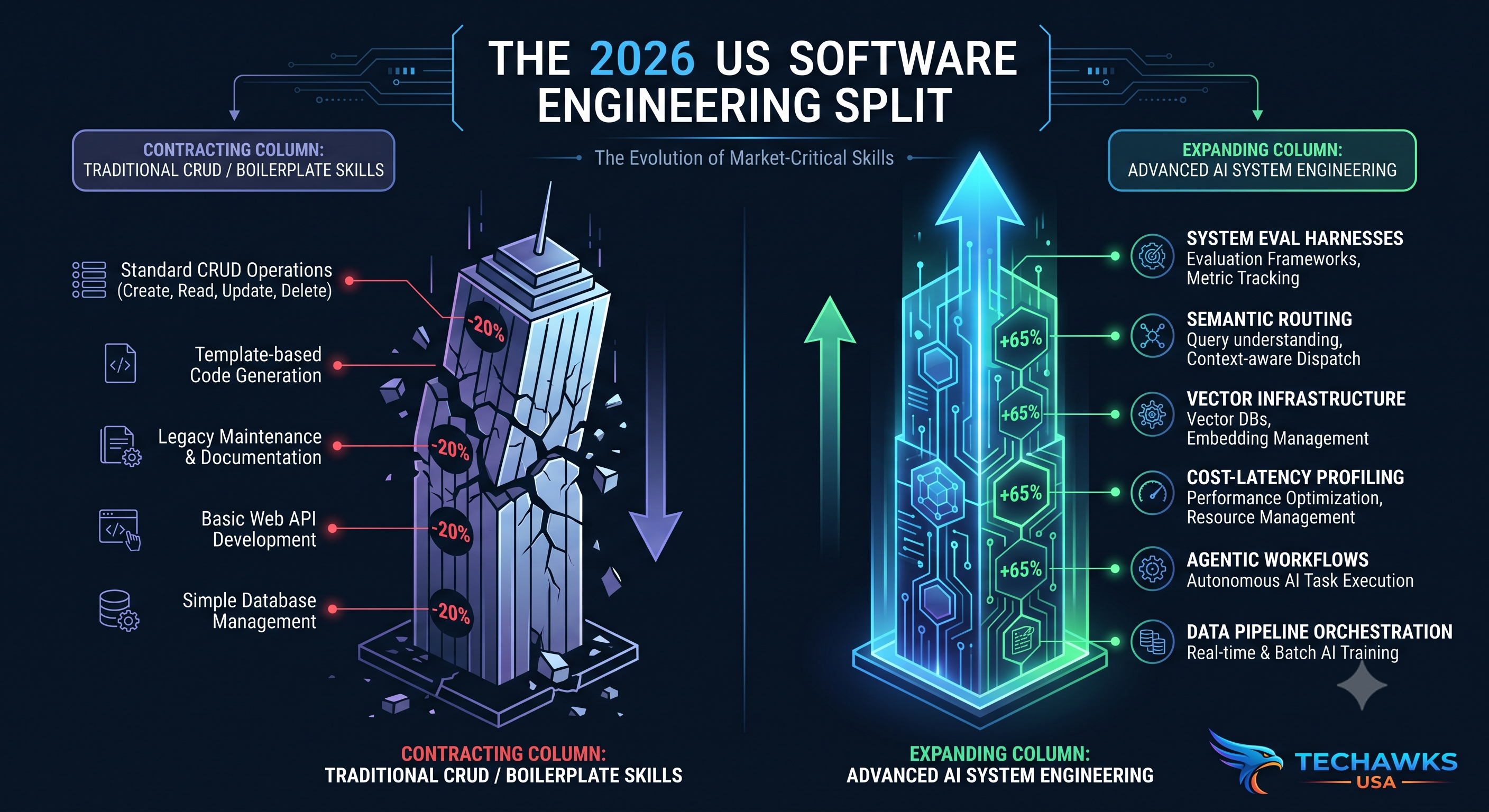 0 Comments 0 Shares 42 Views 0 Reviews
 -
The Seniority Trap: What actually gets an engineer promoted to Staff in the US?
Across US tech hubs—from the Bay Area and Seattle to Austin and NYC—the expectations between Senior (L5) and Staff (L6+) are fundamentally misunderstood.
Senior engineers execute projects autonomously. Staff engineers define what gets built, align divergent teams, and eliminate architectural risk before it hits production.
If you are looking to cross this compensation and scope threshold, which area gives you the greatest leverage?
Poll Question:
What skill was the single biggest catalyst in moving from Senior to Staff+?
[ ] Cross-team influence & technical alignment (RFCs)
[ ] Translating engineering trade-offs to executive ROI
[ ] Designing multi-year architectural roadmaps
[ ] Mentoring mid-level engineers into independent leads
Key Takeaways
Influence without authority is the core metric: Staff engineers rarely manage direct reports; your impact is measured by how well your RFCs guide decisions across three or more teams.
Speak the language of product and finance: Frame architectural refactors around cloud spend, latency impact on conversion, or cycle-time velocity, not just technical purity.
Force multiplication over heroics: Writing the entire service yourself creates a bottleneck; building the tooling and guardrails that unblock ten other engineers creates leverage.
CTA (Join Techawks USA)
Vote in the poll above, share your experience in the replies, and follow Techawks USA for practical, no-fluff playbooks on navigating the US engineering ladder.The Seniority Trap: What actually gets an engineer promoted to Staff in the US? Across US tech hubs—from the Bay Area and Seattle to Austin and NYC—the expectations between Senior (L5) and Staff (L6+) are fundamentally misunderstood. Senior engineers execute projects autonomously. Staff engineers define what gets built, align divergent teams, and eliminate architectural risk before it hits production. If you are looking to cross this compensation and scope threshold, which area gives you the greatest leverage? Poll Question: What skill was the single biggest catalyst in moving from Senior to Staff+? [ ] Cross-team influence & technical alignment (RFCs) [ ] Translating engineering trade-offs to executive ROI [ ] Designing multi-year architectural roadmaps [ ] Mentoring mid-level engineers into independent leads Key Takeaways Influence without authority is the core metric: Staff engineers rarely manage direct reports; your impact is measured by how well your RFCs guide decisions across three or more teams. Speak the language of product and finance: Frame architectural refactors around cloud spend, latency impact on conversion, or cycle-time velocity, not just technical purity. Force multiplication over heroics: Writing the entire service yourself creates a bottleneck; building the tooling and guardrails that unblock ten other engineers creates leverage. CTA (Join Techawks USA) Vote in the poll above, share your experience in the replies, and follow Techawks USA for practical, no-fluff playbooks on navigating the US engineering ladder. 0 Comments 0 Shares 137 Views 0 Reviews
 -
Post-Quantum Cryptography in Production: Why Your TLS Stack Needs a Packet Size Audit
With NIST finalizing FIPS 203 (ML-KEM) for key exchange and FIPS 204 (ML-DSA) for digital signatures, engineering teams across enterprise cloud, defense tech, and fintech are moving from cryptographic discovery into operational rollout. The central engineering challenge is not the underlying lattice mathematics—it is the physical footprint of the keys.
Classic elliptic-curve keys (X25519) require just 32 bytes for a public key and 32 bytes for a shared secret. Under ML-KEM-768, public keys balloon to 1,184 bytes, and ciphertexts reach 1,088 bytes. When combined with ML-DSA signatures (which exceed 2.4 KB to 3.3 KB), TLS handshakes routinely break single-packet Maximum Transmission Unit (MTU) boundaries.
If an ingress gateway, middlebox, or legacy load balancer is not tuned for multi-packet ClientHello and Certificate payloads, latency spikes or silent TCP connection drops will occur. Here is how systems architects are addressing crypto-agility in production:
Deploy Hybrid Key Exchange (X25519 + ML-KEM-768)
Do not jump straight to pure post-quantum handshakes. Standardize on hybrid key encapsulation mechanisms (KEMs) within your TLS 1.3 edge termination layer. This preserves existing FIPS/FedRAMP compliance baselines while defending against "harvest now, decrypt later" adversary campaigns targeting long-lived secrets.
Mitigate TCP Handshake Fragmentation
Because ML-KEM handshakes exceed standard 1,500-byte Ethernet MTUs, the initial TLS flight requires fragmentation over multiple packets:
Audit your ingress controllers (Envoy, NGINX, or Cloudflare edge endpoints) to ensure TCP window sizes accommodate early multi-packet bursts.
Enforce TCP Fast Open (TFO) and evaluate QUIC/HTTP/3, where loss recovery and flow control handle out-of-order handshake packets more gracefully than legacy middleboxes.
Separate Signature Lifecycles from Ephemeral KEMs
Focus KEM migration on dynamic transport traffic today (to prevent retrospective eavesdropping), but isolate signature algorithm upgrades (FIPS 204 / ML-DSA) to internal code signing and certificate authorities first. Upgrading edge leaf certificates before verifying intermediate CA chain compatibility risks breaking external client connections across unmanaged devices.
Crypto-agility is an infrastructure performance benchmark. Teams that build transport-layer headroom and modular cryptographic libraries today will avoid emergency rewrites as federal timelines and browser enforcement tighten.Post-Quantum Cryptography in Production: Why Your TLS Stack Needs a Packet Size Audit With NIST finalizing FIPS 203 (ML-KEM) for key exchange and FIPS 204 (ML-DSA) for digital signatures, engineering teams across enterprise cloud, defense tech, and fintech are moving from cryptographic discovery into operational rollout. The central engineering challenge is not the underlying lattice mathematics—it is the physical footprint of the keys. Classic elliptic-curve keys (X25519) require just 32 bytes for a public key and 32 bytes for a shared secret. Under ML-KEM-768, public keys balloon to 1,184 bytes, and ciphertexts reach 1,088 bytes. When combined with ML-DSA signatures (which exceed 2.4 KB to 3.3 KB), TLS handshakes routinely break single-packet Maximum Transmission Unit (MTU) boundaries. If an ingress gateway, middlebox, or legacy load balancer is not tuned for multi-packet ClientHello and Certificate payloads, latency spikes or silent TCP connection drops will occur. Here is how systems architects are addressing crypto-agility in production: Deploy Hybrid Key Exchange (X25519 + ML-KEM-768) Do not jump straight to pure post-quantum handshakes. Standardize on hybrid key encapsulation mechanisms (KEMs) within your TLS 1.3 edge termination layer. This preserves existing FIPS/FedRAMP compliance baselines while defending against "harvest now, decrypt later" adversary campaigns targeting long-lived secrets. Mitigate TCP Handshake Fragmentation Because ML-KEM handshakes exceed standard 1,500-byte Ethernet MTUs, the initial TLS flight requires fragmentation over multiple packets: Audit your ingress controllers (Envoy, NGINX, or Cloudflare edge endpoints) to ensure TCP window sizes accommodate early multi-packet bursts. Enforce TCP Fast Open (TFO) and evaluate QUIC/HTTP/3, where loss recovery and flow control handle out-of-order handshake packets more gracefully than legacy middleboxes. Separate Signature Lifecycles from Ephemeral KEMs Focus KEM migration on dynamic transport traffic today (to prevent retrospective eavesdropping), but isolate signature algorithm upgrades (FIPS 204 / ML-DSA) to internal code signing and certificate authorities first. Upgrading edge leaf certificates before verifying intermediate CA chain compatibility risks breaking external client connections across unmanaged devices. Crypto-agility is an infrastructure performance benchmark. Teams that build transport-layer headroom and modular cryptographic libraries today will avoid emergency rewrites as federal timelines and browser enforcement tighten.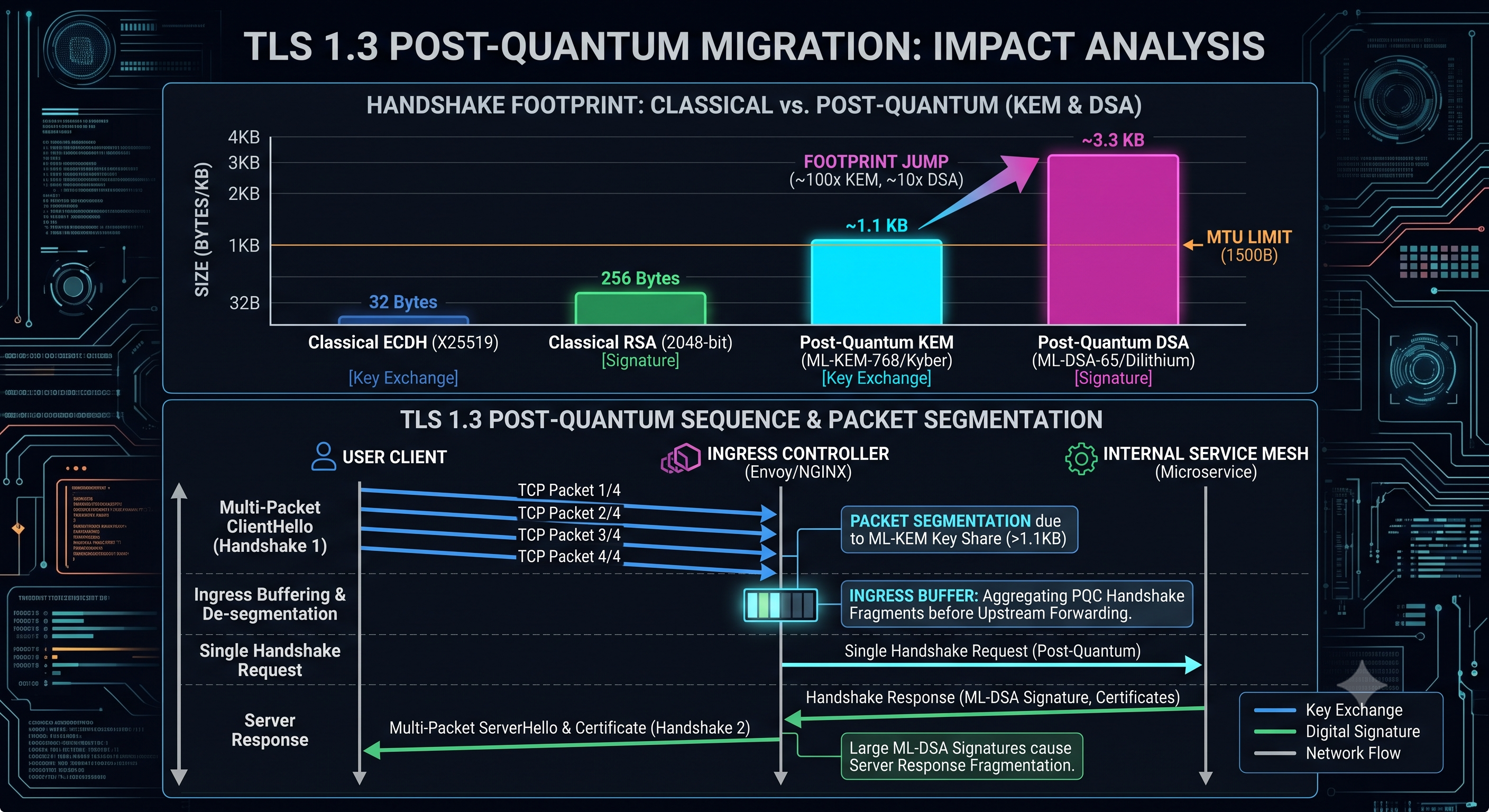 0 Comments 0 Shares 48 Views 0 Reviews
 -
The Cloud Spend Paradox: Why FinOps Fails Without Engineering Ownership
In the US tech ecosystem, the era of growth-at-all-costs cloud budgeting is gone. Yet most engineering teams still treat FinOps as an accounting audit rather than an architectural discipline.
When cloud cost governance lives in finance spreadsheets instead of pull requests, teams default to superficial fixes: buying one-year Reserved Instances (RIs) to mask inefficient code, or deleting orphaned EBS volumes once a quarter. True cloud efficiency happens when unit economics are treated like latency or uptime—a core non-functional requirement.
Here are three tactical changes high-performing engineering orgs are implementing to build cost-aware architecture:
Shift Cost Metrics Left into the CI/CD Pipeline: Stop waiting for end-of-month invoice breakdowns. Implement tools like Infracost to calculate delta cloud expenditure directly on every pull request. If a Terraform or CDK diff increases monthly projected spend by more than $500, require an explicit architectural sign-off before merge.
Tie Spend to Unit Economics, Not Total Dollars: A $40,000 monthly Datadog or AWS spend means nothing in isolation. Track Cost per Active Tenant, Cost per 1,000 API Transactions, or Cost per Core Compute Cycle. If overall spend grows 20% while your active user base triples, your architecture is efficient. If cost per transaction is climbing, you have an unindexed query or an unbuffered pipeline bleeding cash.
Enforce Aggressive TTLs and Ephemeral Previews: US engineering orgs waste millions running persistent, idle dev and staging environments. Move non-production workloads entirely to ephemeral preview environments (deployed via Kubernetes namespaces or serverless branches) configured with automatic 4-hour time-to-live (TTL) teardown policies.
Where does your engineering team draw the line between rapid prototyping speed and architectural cost efficiency?
Key Takeaways
Automate Cost Visibility: Expose infrastructure cost deltas directly inside pull requests before code merges.
Measure Unit Economics: Track cost-per-transaction or cost-per-tenant rather than top-line dollar amounts.
Kill Persistent Staging: Standardize on ephemeral, auto-terminating preview environments for internal testing.
CTA (Join Techawks USA)
Building systems in the US tech market requires balancing raw velocity with sustainable infrastructure economics. Join Techawks USA to connect with engineering leaders, exchange real-world architectural playbooks, and debate technical trade-offs that impact production. Join the conversation below.The Cloud Spend Paradox: Why FinOps Fails Without Engineering Ownership In the US tech ecosystem, the era of growth-at-all-costs cloud budgeting is gone. Yet most engineering teams still treat FinOps as an accounting audit rather than an architectural discipline. When cloud cost governance lives in finance spreadsheets instead of pull requests, teams default to superficial fixes: buying one-year Reserved Instances (RIs) to mask inefficient code, or deleting orphaned EBS volumes once a quarter. True cloud efficiency happens when unit economics are treated like latency or uptime—a core non-functional requirement. Here are three tactical changes high-performing engineering orgs are implementing to build cost-aware architecture: Shift Cost Metrics Left into the CI/CD Pipeline: Stop waiting for end-of-month invoice breakdowns. Implement tools like Infracost to calculate delta cloud expenditure directly on every pull request. If a Terraform or CDK diff increases monthly projected spend by more than $500, require an explicit architectural sign-off before merge. Tie Spend to Unit Economics, Not Total Dollars: A $40,000 monthly Datadog or AWS spend means nothing in isolation. Track Cost per Active Tenant, Cost per 1,000 API Transactions, or Cost per Core Compute Cycle. If overall spend grows 20% while your active user base triples, your architecture is efficient. If cost per transaction is climbing, you have an unindexed query or an unbuffered pipeline bleeding cash. Enforce Aggressive TTLs and Ephemeral Previews: US engineering orgs waste millions running persistent, idle dev and staging environments. Move non-production workloads entirely to ephemeral preview environments (deployed via Kubernetes namespaces or serverless branches) configured with automatic 4-hour time-to-live (TTL) teardown policies. Where does your engineering team draw the line between rapid prototyping speed and architectural cost efficiency? Key Takeaways Automate Cost Visibility: Expose infrastructure cost deltas directly inside pull requests before code merges. Measure Unit Economics: Track cost-per-transaction or cost-per-tenant rather than top-line dollar amounts. Kill Persistent Staging: Standardize on ephemeral, auto-terminating preview environments for internal testing. CTA (Join Techawks USA) Building systems in the US tech market requires balancing raw velocity with sustainable infrastructure economics. Join Techawks USA to connect with engineering leaders, exchange real-world architectural playbooks, and debate technical trade-offs that impact production. Join the conversation below. 0 Comments 0 Shares 79 Views 0 Reviews
 -
The Multi-Region Trap: Why Cross-AZ Egress Fees Are Quietly Draining Your Cloud Budget
Building on AWS, GCP, or Azure in the US enterprise space often emphasizes high availability (HA) by default. Engineering teams distribute microservices across multiple Availability Zones (AZs) to survive localized outages. However, distributed architectures introduce hidden inter-AZ network egress costs that scale silently with traffic.
Cross-zone data transfer within the same cloud region typically costs around $0.01 to $0.02 per gigabyte. At terabyte scale, chatty microservices and unoptimized cache topologies quickly blow through operating budgets.
Here is how infrastructure and platform teams design resilient architectures without paying a cross-zone tax:
Implement Topology-Aware Routing: Configure Kubernetes service routing (topologyKeys or service.kubernetes.io/topology-mode: Auto) to prefer endpoints within the same availability zone. Traffic routes cross-AZ only when local pods are degraded or saturated.
Colocate Read Replicas and In-Memory Caches: If your compute cluster queries a shared cache pool across AZ boundaries, you pay network latency and transfer fees on every read. Deploy zone-local Redis/Memcached read replicas or run sidecar caching layers for static lookups.
Enforce VPC Endpoints for Managed Services: Avoid routing traffic to internal object storage (e.g., S3, Cloud Storage) or logging aggregators through public NAT gateways. Use Gateway VPC Endpoints to route traffic entirely over the cloud provider’s private network at zero data transfer cost.
Compress Payload Over Cross-Zone Boundaries: For high-volume event streams (Kafka, Kinesis), enable Snappy or Zstandard compression at the producer level before messages cross AZ boundaries. A 60% compression ratio directly translates to a 60% reduction in inter-zone transit cost.
Key Takeaways
Inter-AZ data transfer is not free; unoptimized microservice traffic quietly inflates cloud infrastructure bills.
Keep service communication zone-local by default using Kubernetes topology-aware routing.
Route cloud-native storage and telemetry traffic through free VPC Endpoints instead of fee-generating NAT gateways.
CTA
Looking to optimize cloud spend, master distributed systems, and exchange production battle stories with senior engineers across the states?
Join Techawks USA to connect with backend leads, platform engineers, and cloud architects solving modern infrastructure challenges. Link in bio.The Multi-Region Trap: Why Cross-AZ Egress Fees Are Quietly Draining Your Cloud Budget Building on AWS, GCP, or Azure in the US enterprise space often emphasizes high availability (HA) by default. Engineering teams distribute microservices across multiple Availability Zones (AZs) to survive localized outages. However, distributed architectures introduce hidden inter-AZ network egress costs that scale silently with traffic. Cross-zone data transfer within the same cloud region typically costs around $0.01 to $0.02 per gigabyte. At terabyte scale, chatty microservices and unoptimized cache topologies quickly blow through operating budgets. Here is how infrastructure and platform teams design resilient architectures without paying a cross-zone tax: Implement Topology-Aware Routing: Configure Kubernetes service routing (topologyKeys or service.kubernetes.io/topology-mode: Auto) to prefer endpoints within the same availability zone. Traffic routes cross-AZ only when local pods are degraded or saturated. Colocate Read Replicas and In-Memory Caches: If your compute cluster queries a shared cache pool across AZ boundaries, you pay network latency and transfer fees on every read. Deploy zone-local Redis/Memcached read replicas or run sidecar caching layers for static lookups. Enforce VPC Endpoints for Managed Services: Avoid routing traffic to internal object storage (e.g., S3, Cloud Storage) or logging aggregators through public NAT gateways. Use Gateway VPC Endpoints to route traffic entirely over the cloud provider’s private network at zero data transfer cost. Compress Payload Over Cross-Zone Boundaries: For high-volume event streams (Kafka, Kinesis), enable Snappy or Zstandard compression at the producer level before messages cross AZ boundaries. A 60% compression ratio directly translates to a 60% reduction in inter-zone transit cost. Key Takeaways Inter-AZ data transfer is not free; unoptimized microservice traffic quietly inflates cloud infrastructure bills. Keep service communication zone-local by default using Kubernetes topology-aware routing. Route cloud-native storage and telemetry traffic through free VPC Endpoints instead of fee-generating NAT gateways. CTA Looking to optimize cloud spend, master distributed systems, and exchange production battle stories with senior engineers across the states? Join Techawks USA to connect with backend leads, platform engineers, and cloud architects solving modern infrastructure challenges. Link in bio.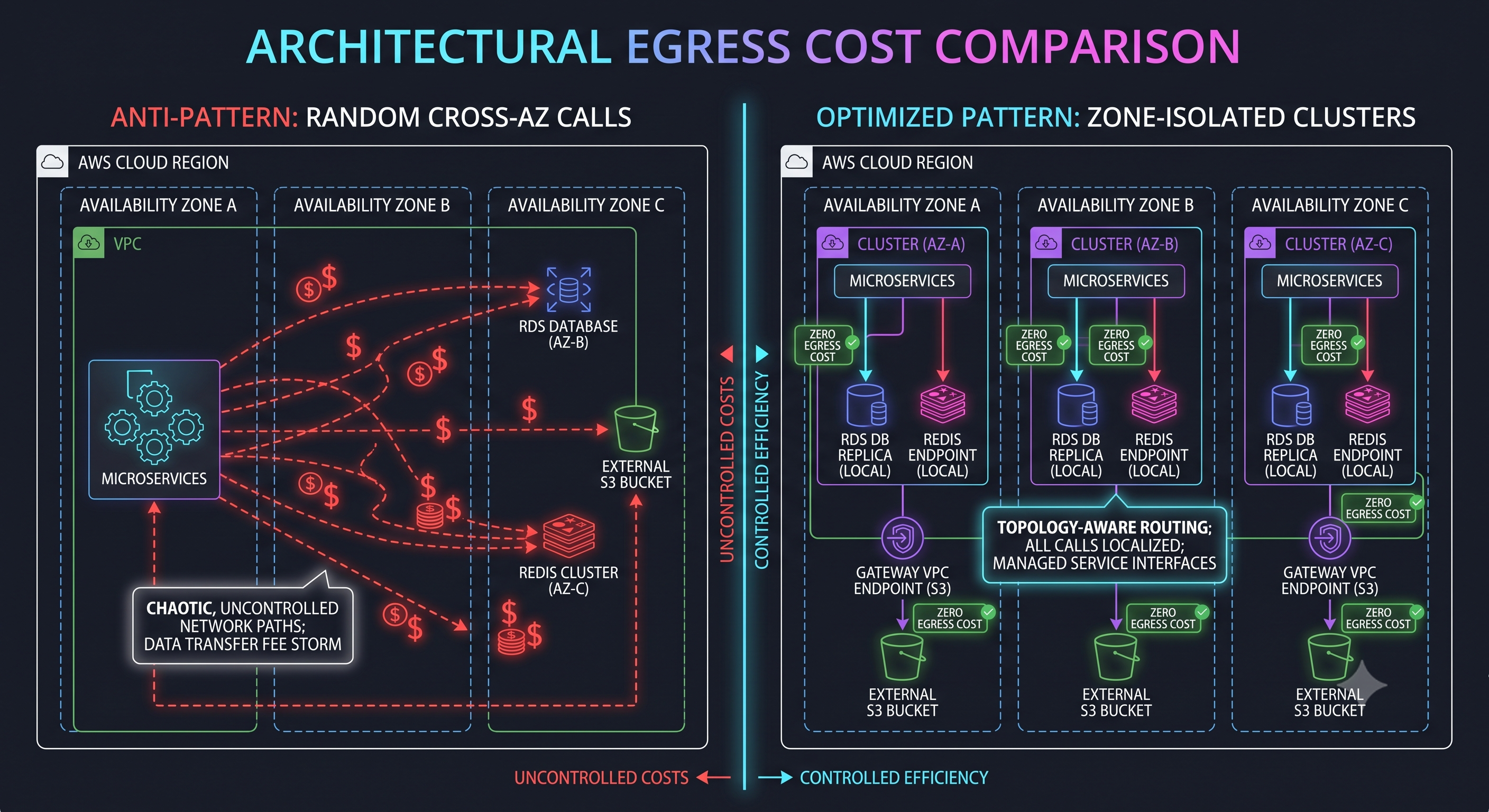 0 Comments 0 Shares 286 Views 0 Reviews
 -
The End of "Wrapper Engineering": How Agentic Orchestration is Rewriting the US Enterprise Cloud Stack
US engineering teams are facing an undeniable inflection point. The experimental phase of Generative AI is over. Today, enterprise leadership isn't asking for novel demos; they are demanding deterministic, production-grade autonomy that directly impacts operational margins.
The industry conversation has moved past Foundation Models into Agentic Orchestration Systems—autonomous multi-step execution graphs that interface with legacy enterprise databases, APIs, and cloud microservices.
Why This Matters to You
Generic RAG (Retrieval-Augmented Generation) setups and linear pipelines fail when exposed to edge cases, multi-tenant state management, and high-concurrency environments. The leverage has shifted from model capability alone to context engineering, stateful execution, and deterministic routing.
The Architectural Shift (What Engineers Need to Know):
From Linear Chains to Directed Cyclic Graphs (DCGs): Production agents cannot follow fixed, step-by-step logic. Modern frameworks require stateful graphs where agents inspect intermediate outputs, handle runtime errors, retry failed tool calls, and branch conditionally based on deterministic schemas.
Tool-Calling Over Parameter Bloat: Throwing larger frontier models at standard business logic is cost-inefficient. High-performing engineering teams are pairing lightweight Small Language Models (SLMs) with strict JSON-schema function calling to execute SQL queries, trigger Kubernetes jobs, or modify enterprise state safely.
Idempotency and Rollback Protocols: When an autonomous agent touches production write-paths, failure without recovery is catastrophic. Production architectures must enforce transactional boundaries—every external API action must support verification, idempotency keys, and explicit rollbacks.
Context Optimization & Eviction: Naive context stuffing degrades attention heads and drives astronomical token bills. Effective systems implement aggressive memory eviction strategies: semantic caching, summarized scratchpads, and persistent key-value state engines.
The future of software engineering isn't just writing procedural code; it’s architecting the boundary conditions, guardrails, and validation harnesses that allow non-deterministic agents to operate reliably.
Discussion Question
When deploying autonomous multi-agent workflows into production, what is your primary mitigation strategy for handling non-deterministic state mutations and cascading tool-call failures?
CTA (Join Techawks USA)
Join Techawks USA—the dedicated community for US-based software engineers, cloud architects, and systems leaders building the next generation of resilient, production-ready deep tech.
👉 [Join Techawks USA on LinkedIn/Discord – Link in Bio]The End of "Wrapper Engineering": How Agentic Orchestration is Rewriting the US Enterprise Cloud Stack US engineering teams are facing an undeniable inflection point. The experimental phase of Generative AI is over. Today, enterprise leadership isn't asking for novel demos; they are demanding deterministic, production-grade autonomy that directly impacts operational margins. The industry conversation has moved past Foundation Models into Agentic Orchestration Systems—autonomous multi-step execution graphs that interface with legacy enterprise databases, APIs, and cloud microservices. Why This Matters to You Generic RAG (Retrieval-Augmented Generation) setups and linear pipelines fail when exposed to edge cases, multi-tenant state management, and high-concurrency environments. The leverage has shifted from model capability alone to context engineering, stateful execution, and deterministic routing. The Architectural Shift (What Engineers Need to Know): From Linear Chains to Directed Cyclic Graphs (DCGs): Production agents cannot follow fixed, step-by-step logic. Modern frameworks require stateful graphs where agents inspect intermediate outputs, handle runtime errors, retry failed tool calls, and branch conditionally based on deterministic schemas. Tool-Calling Over Parameter Bloat: Throwing larger frontier models at standard business logic is cost-inefficient. High-performing engineering teams are pairing lightweight Small Language Models (SLMs) with strict JSON-schema function calling to execute SQL queries, trigger Kubernetes jobs, or modify enterprise state safely. Idempotency and Rollback Protocols: When an autonomous agent touches production write-paths, failure without recovery is catastrophic. Production architectures must enforce transactional boundaries—every external API action must support verification, idempotency keys, and explicit rollbacks. Context Optimization & Eviction: Naive context stuffing degrades attention heads and drives astronomical token bills. Effective systems implement aggressive memory eviction strategies: semantic caching, summarized scratchpads, and persistent key-value state engines. The future of software engineering isn't just writing procedural code; it’s architecting the boundary conditions, guardrails, and validation harnesses that allow non-deterministic agents to operate reliably. Discussion Question When deploying autonomous multi-agent workflows into production, what is your primary mitigation strategy for handling non-deterministic state mutations and cascading tool-call failures? CTA (Join Techawks USA) Join Techawks USA—the dedicated community for US-based software engineers, cloud architects, and systems leaders building the next generation of resilient, production-ready deep tech. 👉 [Join Techawks USA on LinkedIn/Discord – Link in Bio] 0 Comments 0 Shares 52 Views 0 Reviews
More Stories