 English
 Arabic
 French
 Spanish
 Portuguese
 Deutsch
 Turkish
 Dutch
Dutch
 Italiano
 Russian
 Romaian
 Portuguese (Brazil)
 Greek
Greek
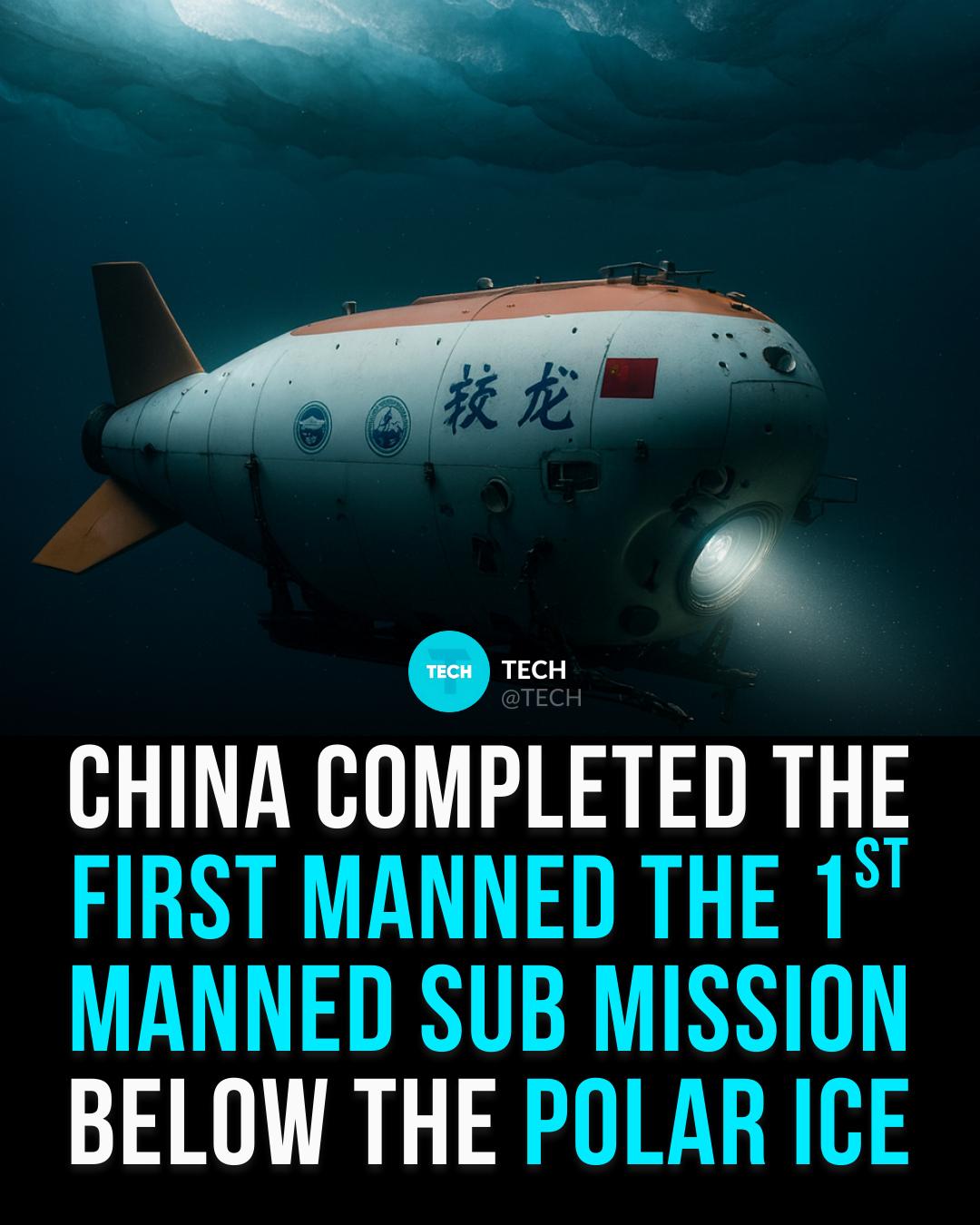
China has sent a crewed submersible beneath Arctic pack ice for the first time, marking a new phase in polar exploration and great-power competition. The dive, carried out by the Jiaolong on August 6 in the Chukchi Sea roughly 300 nautical miles northwest of Alaska, capped China’s largest Arctic mission to date and underscored its ambition to be a scientific and strategic player in the High North.
Four research vessels, led by the icebreaker Xuelong-2, spent the summer completing marine surveys across the Chukchi Plateau, Canada Basin, and central Arctic. The fleet returned to Shanghai on September 26, having executed coordinated “atmosphere-ice-ocean” observations and supported deep-sea operations designed to fill critical data gaps as sea ice thins and retreats.
Operating under ice is notoriously hard. Satellite links fade, radio is unreliable, and navigation becomes a puzzle without open-sky fixes. Ice floes can shift suddenly and temperatures punish machinery. Only a handful of nations have managed it, a lineage that includes the USS Nautilus crossing the North Pole in 1958 and subsequent Cold War dives by Soviet and British boats.
The scientific takeaways are starting to surface. Teams reported stark regional differences in seafloor life, from organism density to biodiversity and body size. Those measurements will refine maps of deep-sea habitats and help track how warming, acidification, and changing ice cover are reshaping Arctic ecosystems. The mission also advanced China’s polar toolset, pairing submersibles with ice-edge surveys to sharpen forecasting for hazards and shipping.
All of this unfolds amid mounting geopolitical interest. China calls the Arctic a “new strategic frontier,” the United States is upping patrols, and melting ice is opening routes and resources long out of reach. Science is the visible face, but strategy is never far below the surface.
#arctic #deepsea #china #oceanography #geopolitics #submersible #climate #polarresearch #technology
Four research vessels, led by the icebreaker Xuelong-2, spent the summer completing marine surveys across the Chukchi Plateau, Canada Basin, and central Arctic. The fleet returned to Shanghai on September 26, having executed coordinated “atmosphere-ice-ocean” observations and supported deep-sea operations designed to fill critical data gaps as sea ice thins and retreats.
Operating under ice is notoriously hard. Satellite links fade, radio is unreliable, and navigation becomes a puzzle without open-sky fixes. Ice floes can shift suddenly and temperatures punish machinery. Only a handful of nations have managed it, a lineage that includes the USS Nautilus crossing the North Pole in 1958 and subsequent Cold War dives by Soviet and British boats.
The scientific takeaways are starting to surface. Teams reported stark regional differences in seafloor life, from organism density to biodiversity and body size. Those measurements will refine maps of deep-sea habitats and help track how warming, acidification, and changing ice cover are reshaping Arctic ecosystems. The mission also advanced China’s polar toolset, pairing submersibles with ice-edge surveys to sharpen forecasting for hazards and shipping.
All of this unfolds amid mounting geopolitical interest. China calls the Arctic a “new strategic frontier,” the United States is upping patrols, and melting ice is opening routes and resources long out of reach. Science is the visible face, but strategy is never far below the surface.
#arctic #deepsea #china #oceanography #geopolitics #submersible #climate #polarresearch #technology
China has sent a crewed submersible beneath Arctic pack ice for the first time, marking a new phase in polar exploration and great-power competition. The dive, carried out by the Jiaolong on August 6 in the Chukchi Sea roughly 300 nautical miles northwest of Alaska, capped China’s largest Arctic mission to date and underscored its ambition to be a scientific and strategic player in the High North.
Four research vessels, led by the icebreaker Xuelong-2, spent the summer completing marine surveys across the Chukchi Plateau, Canada Basin, and central Arctic. The fleet returned to Shanghai on September 26, having executed coordinated “atmosphere-ice-ocean” observations and supported deep-sea operations designed to fill critical data gaps as sea ice thins and retreats.
Operating under ice is notoriously hard. Satellite links fade, radio is unreliable, and navigation becomes a puzzle without open-sky fixes. Ice floes can shift suddenly and temperatures punish machinery. Only a handful of nations have managed it, a lineage that includes the USS Nautilus crossing the North Pole in 1958 and subsequent Cold War dives by Soviet and British boats.
The scientific takeaways are starting to surface. Teams reported stark regional differences in seafloor life, from organism density to biodiversity and body size. Those measurements will refine maps of deep-sea habitats and help track how warming, acidification, and changing ice cover are reshaping Arctic ecosystems. The mission also advanced China’s polar toolset, pairing submersibles with ice-edge surveys to sharpen forecasting for hazards and shipping.
All of this unfolds amid mounting geopolitical interest. China calls the Arctic a “new strategic frontier,” the United States is upping patrols, and melting ice is opening routes and resources long out of reach. Science is the visible face, but strategy is never far below the surface.
#arctic #deepsea #china #oceanography #geopolitics #submersible #climate #polarresearch #technology
·210 Views
·0 Reviews
