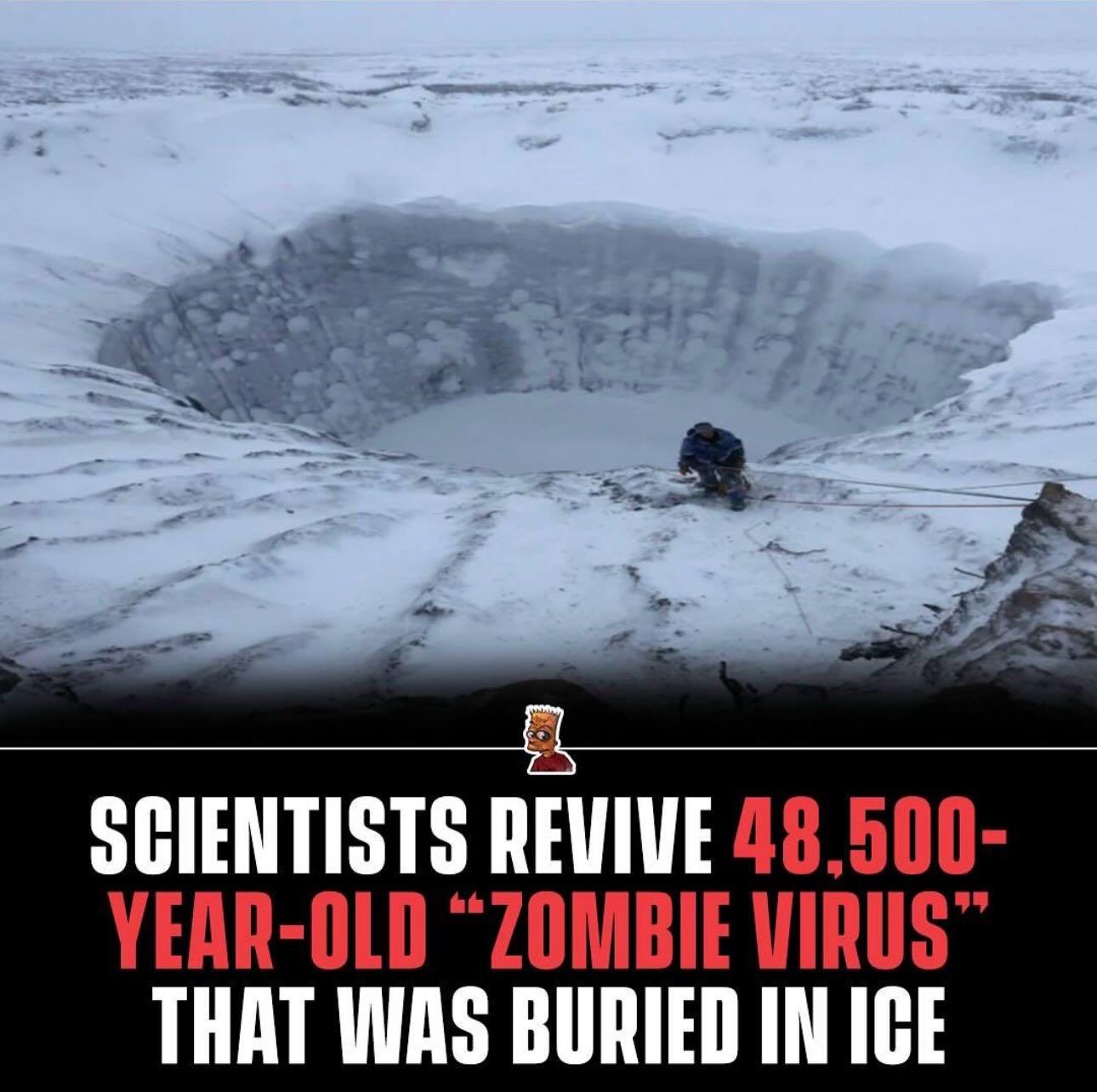
• Scientists have discovered & revived a 48,500-year-old “zombie virus” in Russia as a result of climate change.

    Samples were collected from permafrost in the Siberia region of Russia, reviving 13 new pathogens “including one frozen under a lake more than 48,500 years ago.” They found that these viruses remain infectious despite being dormant for hundreds of millennia.
    Scientists have discovered & revived a 48,500-year-old “zombie virus” in Russia as a result of climate change. Samples were collected from permafrost in the Siberia region of Russia, reviving 13 new pathogens “including one frozen under a lake more than 48,500 years ago.” They found that these viruses remain infectious despite being dormant for hundreds of millennia.
    ·52 Views ·0 Reviews
  • New York is not just rising in the skyline, it is very slowly sinking too

    Scientists estimate New York City has over a million buildings weighing roughly 1.7 trillion pounds. That kind of load helps pull the city down around 1 to 2 millimeters each year, on top of natural subsidence and rising seas.

    When you stack that much concrete, steel, and wealth on a city, it slowly starts to sink into the ground.

    #NewYork #ClimateRisk #CityFacts #UrbanWealth #FutureProof
    New York is not just rising in the skyline, it is very slowly sinking too 🤯 Scientists estimate New York City has over a million buildings weighing roughly 1.7 trillion pounds. That kind of load helps pull the city down around 1 to 2 millimeters each year, on top of natural subsidence and rising seas. When you stack that much concrete, steel, and wealth on a city, it slowly starts to sink into the ground. #NewYork #ClimateRisk #CityFacts #UrbanWealth #FutureProof
    ·104 Views ·0 Reviews
  • Despite official US boycott, participants agreed for shared responsibilities in dealing with the challenges of climate change and reforms in the UN with the objective of equitable global governance

    The first ever G20 summit on the African continent concluded on Sunday, November 23 on a note of shared responsibilities to deal with global inequality and growing debt crisis among the poor and developing countries.

    Read the full article on our website.
    Despite official US boycott, participants agreed for shared responsibilities in dealing with the challenges of climate change and reforms in the UN with the objective of equitable global governance The first ever G20 summit on the African continent concluded on Sunday, November 23 on a note of shared responsibilities to deal with global inequality and growing debt crisis among the poor and developing countries. 📲 Read the full article on our website.
    ·56 Views ·0 Reviews
  • Cities are learning to cool with time, not just power. So-called ice batteries, thermal energy storage tanks that freeze liquid overnight, let buildings ride the next day’s heat on yesterday’s cold. Shifting chillers to off-peak hours trims grid stress when temperatures spike and electricity is priciest, creating a smoother balance between supply and demand.⁠

    The numbers are real, not theoretical. Manhattan’s 30-story Eleven Madison freezes roughly 500,000 pounds of ice each night and reports up to a 40% cut in cooling costs. Trane and others have installed more than 4,000 systems worldwide, a tiny slice of six million U.S. commercial buildings but a proof that scaling is possible and increasingly attractive in hotter climates.⁠

    The tech is getting smarter at the material level. In The Journal of Physical Chemistry C, a Texas A&M team led by Patrick Shamberger tuned salt hydrates, salts that lock in water molecules, to freeze and thaw at HVAC-friendly temperatures without degrading. Their focus is phase segregation, the tendency for the material to split into solid and liquid zones over many cycles. By optimizing “nucleation particles,” especially those containing barium, the system triggers cleaner, repeatable freezing with higher efficiency.⁠

    Why this matters now: cooling already eats about 20% of building electricity, and AI data centers are adding heavy, always-on thermal loads. Ice batteries do not eliminate energy use, but they move it to when power is cleaner and cheaper, lowering peak demand and postponing the need for new plants.⁠

    A century after barges hauled river ice down the Hudson, engineered ice may again be the quiet workhorse that keeps modern life comfortable, only this time with chemistry doing the steering and research ensuring decades of reliable performance.⁠

    #tech #energy #hvac #buildings #energystorage #grid #climate #datacenters #materials
    Cities are learning to cool with time, not just power. So-called ice batteries, thermal energy storage tanks that freeze liquid overnight, let buildings ride the next day’s heat on yesterday’s cold. Shifting chillers to off-peak hours trims grid stress when temperatures spike and electricity is priciest, creating a smoother balance between supply and demand.⁠ ⁠ The numbers are real, not theoretical. Manhattan’s 30-story Eleven Madison freezes roughly 500,000 pounds of ice each night and reports up to a 40% cut in cooling costs. Trane and others have installed more than 4,000 systems worldwide, a tiny slice of six million U.S. commercial buildings but a proof that scaling is possible and increasingly attractive in hotter climates.⁠ ⁠ The tech is getting smarter at the material level. In The Journal of Physical Chemistry C, a Texas A&M team led by Patrick Shamberger tuned salt hydrates, salts that lock in water molecules, to freeze and thaw at HVAC-friendly temperatures without degrading. Their focus is phase segregation, the tendency for the material to split into solid and liquid zones over many cycles. By optimizing “nucleation particles,” especially those containing barium, the system triggers cleaner, repeatable freezing with higher efficiency.⁠ ⁠ Why this matters now: cooling already eats about 20% of building electricity, and AI data centers are adding heavy, always-on thermal loads. Ice batteries do not eliminate energy use, but they move it to when power is cleaner and cheaper, lowering peak demand and postponing the need for new plants.⁠ ⁠ A century after barges hauled river ice down the Hudson, engineered ice may again be the quiet workhorse that keeps modern life comfortable, only this time with chemistry doing the steering and research ensuring decades of reliable performance.⁠ ⁠ #tech #energy #hvac #buildings #energystorage #grid #climate #datacenters #materials
    ·133 Views ·0 Reviews
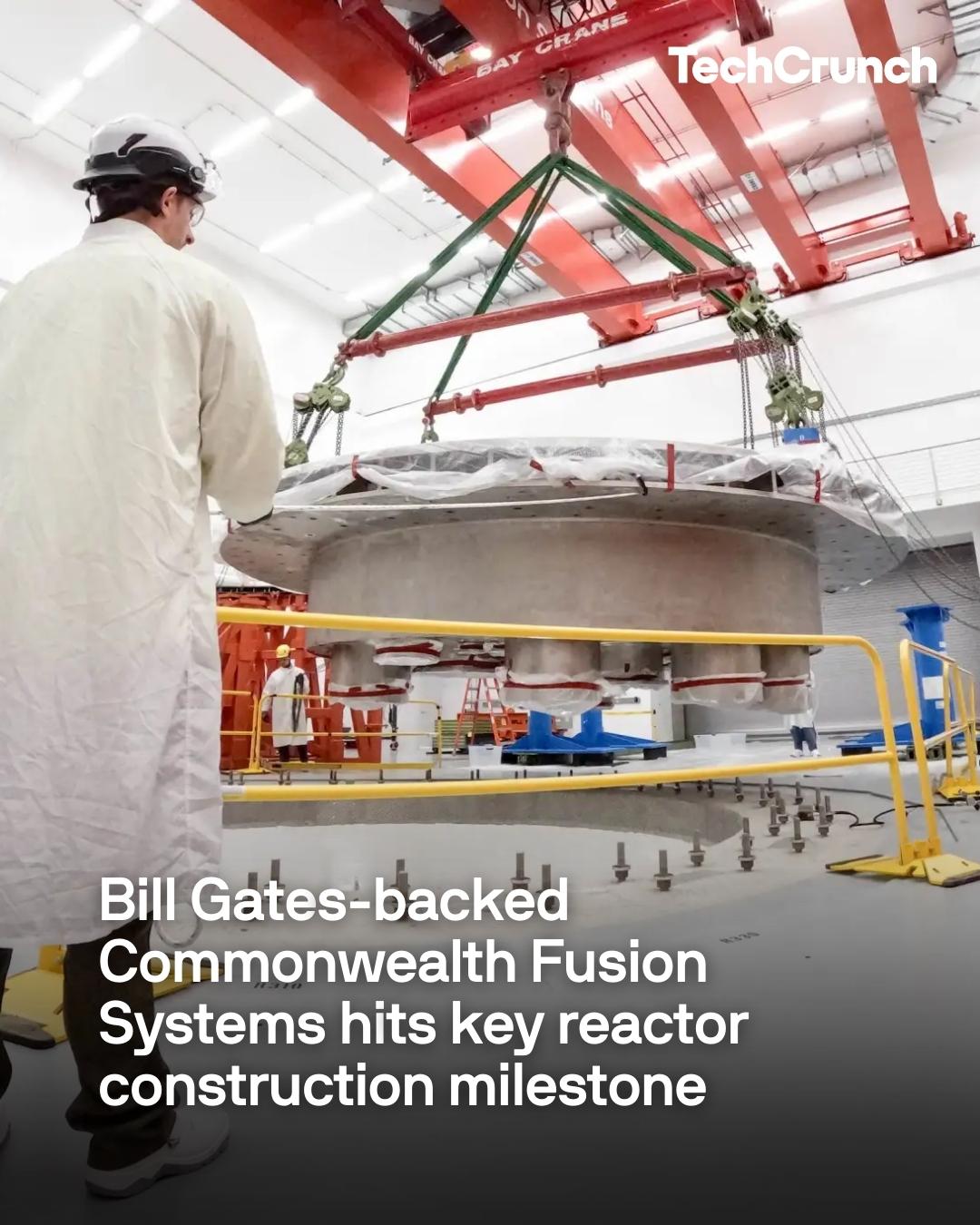
  • Commonwealth Fusion Systems marked a major milestone Tuesday morning, announcing the installation of a key component of its Sparc demonstration reactor.

    The new part is a 24-foot wide, 75-ton stainless steel circle that forms the foundation of the tokamak, the doughnut-shaped heart of a fusion reactor that CFS hopes will be the first of its kind to generate more power than it consumes.

    Called the cryostat base, it was made in Italy and shipped halfway around the world to CFS’s site in Devens, Massachusetts.

    “It is the first piece of the actual fusion machine,” Alex Creely, director of tokamak operations at CFS, told TechCrunch. Work at the site has been underway now for more than three years as the company constructs the buildings and machinery that will support the reactor’s core.

    Read more on the cryostat base at the link in the bio

    Article by Tim De Chant

    Image Credits: Commonwealth Fusion Systems

    #TechCrunch #technews #climatetech #fusionpower #nuclearpower
    Commonwealth Fusion Systems marked a major milestone Tuesday morning, announcing the installation of a key component of its Sparc demonstration reactor. The new part is a 24-foot wide, 75-ton stainless steel circle that forms the foundation of the tokamak, the doughnut-shaped heart of a fusion reactor that CFS hopes will be the first of its kind to generate more power than it consumes. Called the cryostat base, it was made in Italy and shipped halfway around the world to CFS’s site in Devens, Massachusetts. “It is the first piece of the actual fusion machine,” Alex Creely, director of tokamak operations at CFS, told TechCrunch. Work at the site has been underway now for more than three years as the company constructs the buildings and machinery that will support the reactor’s core. Read more on the cryostat base at the link in the bio 👆 Article by Tim De Chant Image Credits: Commonwealth Fusion Systems #TechCrunch #technews #climatetech #fusionpower #nuclearpower
    ·135 Views ·0 Reviews
  • Last summer, mining startup KoBold made a splash when it said it had discovered in Zambia one of the world’s largest copper deposits in more than a decade.

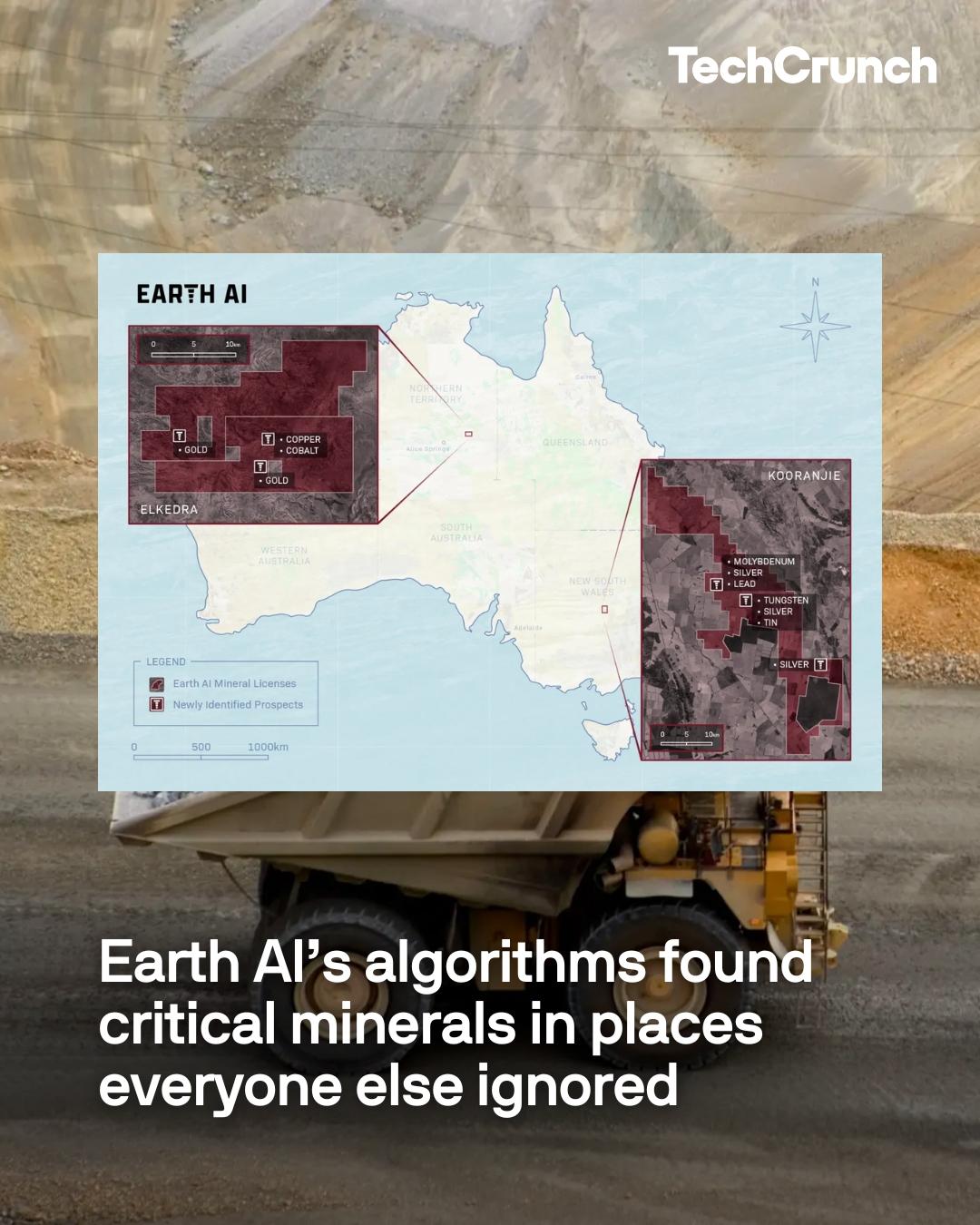
    Now, another startup, Earth AI, exclusively told TechCrunch about its own discovery: promising deposits of critical minerals in parts of Australia that other mining outfits had ignored for decades.

    While it’s still not known whether they are as large as KoBold’s, the news suggests that future supplies of critical minerals are likely to emerge from a combination of field data parsed by artificial intelligence.

    Earth AI has identified deposits of copper, cobalt, and gold in the Northern Territory and silver, molybdenum, and tin at another site in New South Wales, 310 miles (500 kilometers) northwest of Sydney.

    Read more on Earth AI at the link in the bio

    Article by Tim De Chant

    Image Credits: RiverRockPhotos / Getty Images; Earth AI

    #TechCrunch #technews #artificialintelligence #EarthAI #startup #climatetech
    Last summer, mining startup KoBold made a splash when it said it had discovered in Zambia one of the world’s largest copper deposits in more than a decade. Now, another startup, Earth AI, exclusively told TechCrunch about its own discovery: promising deposits of critical minerals in parts of Australia that other mining outfits had ignored for decades. While it’s still not known whether they are as large as KoBold’s, the news suggests that future supplies of critical minerals are likely to emerge from a combination of field data parsed by artificial intelligence. Earth AI has identified deposits of copper, cobalt, and gold in the Northern Territory and silver, molybdenum, and tin at another site in New South Wales, 310 miles (500 kilometers) northwest of Sydney. Read more on Earth AI at the link in the bio 👆 Article by Tim De Chant Image Credits: RiverRockPhotos / Getty Images; Earth AI #TechCrunch #technews #artificialintelligence #EarthAI #startup #climatetech
    ·178 Views ·0 Reviews
  • The streets of Belém were occupied by more than 70,000 people, according to organizers, for the historic Global Climate March. Unlike the official COP30 spaces, the march brought together the diversity of peoples and demands from civil society in defense of climate justice.
    Read the full article by Mariana Castro of Brasil de Fato on our website.
    The streets of Belém were occupied by more than 70,000 people, according to organizers, for the historic Global Climate March. Unlike the official COP30 spaces, the march brought together the diversity of peoples and demands from civil society in defense of climate justice. 📲 Read the full article by Mariana Castro of Brasil de Fato on our website.
    ·71 Views ·0 Reviews
  • Dependence on foreign aid, political instability, chronic poverty, and the effects of climate change are among the obstacles preventing Burkina Faso from achieving its longed-for food sovereignty.

    The government of Ibrahim Traoré seeks to reduce dependence on imports in a country where 80% of the population are farmers.

    Read the full article by Pedro Stropasolas of Brasil de Fato⬇
    https://peoplesdispatch.org/2025/11/13/agricultural-offensive-how-burkina-faso-is-moving-towards-self-sufficiency-in-food-production/
    Dependence on foreign aid, political instability, chronic poverty, and the effects of climate change are among the obstacles preventing Burkina Faso from achieving its longed-for food sovereignty. The government of Ibrahim Traoré seeks to reduce dependence on imports in a country where 80% of the population are farmers. 📲 Read the full article by Pedro Stropasolas of Brasil de Fato⬇ https://peoplesdispatch.org/2025/11/13/agricultural-offensive-how-burkina-faso-is-moving-towards-self-sufficiency-in-food-production/
    ·87 Views ·0 Reviews
  • It has become increasingly clear that, just as the Landless Rural Workers’ Movement (MST) and several other organizations, movements, collectives, and groups warned, agribusiness is at the forefront of the supposed search for solutions to the environmental crisis.

    Embrapa’s (the Brazilian Agricultural Research Corporation, a state entity) event at the Climate Conference is sponsored by giants such as Bayer, Nestlé, and Syngenta, accused of practices that exacerbate socio-environmental damage

    Read the full article by Fernanda Alcântara of the MST (@movimentosemterra) on our website.
    It has become increasingly clear that, just as the Landless Rural Workers’ Movement (MST) and several other organizations, movements, collectives, and groups warned, agribusiness is at the forefront of the supposed search for solutions to the environmental crisis. Embrapa’s (the Brazilian Agricultural Research Corporation, a state entity) event at the Climate Conference is sponsored by giants such as Bayer, Nestlé, and Syngenta, accused of practices that exacerbate socio-environmental damage 📲 Read the full article by Fernanda Alcântara of the MST (@movimentosemterra) on our website.
    ·136 Views ·0 Reviews
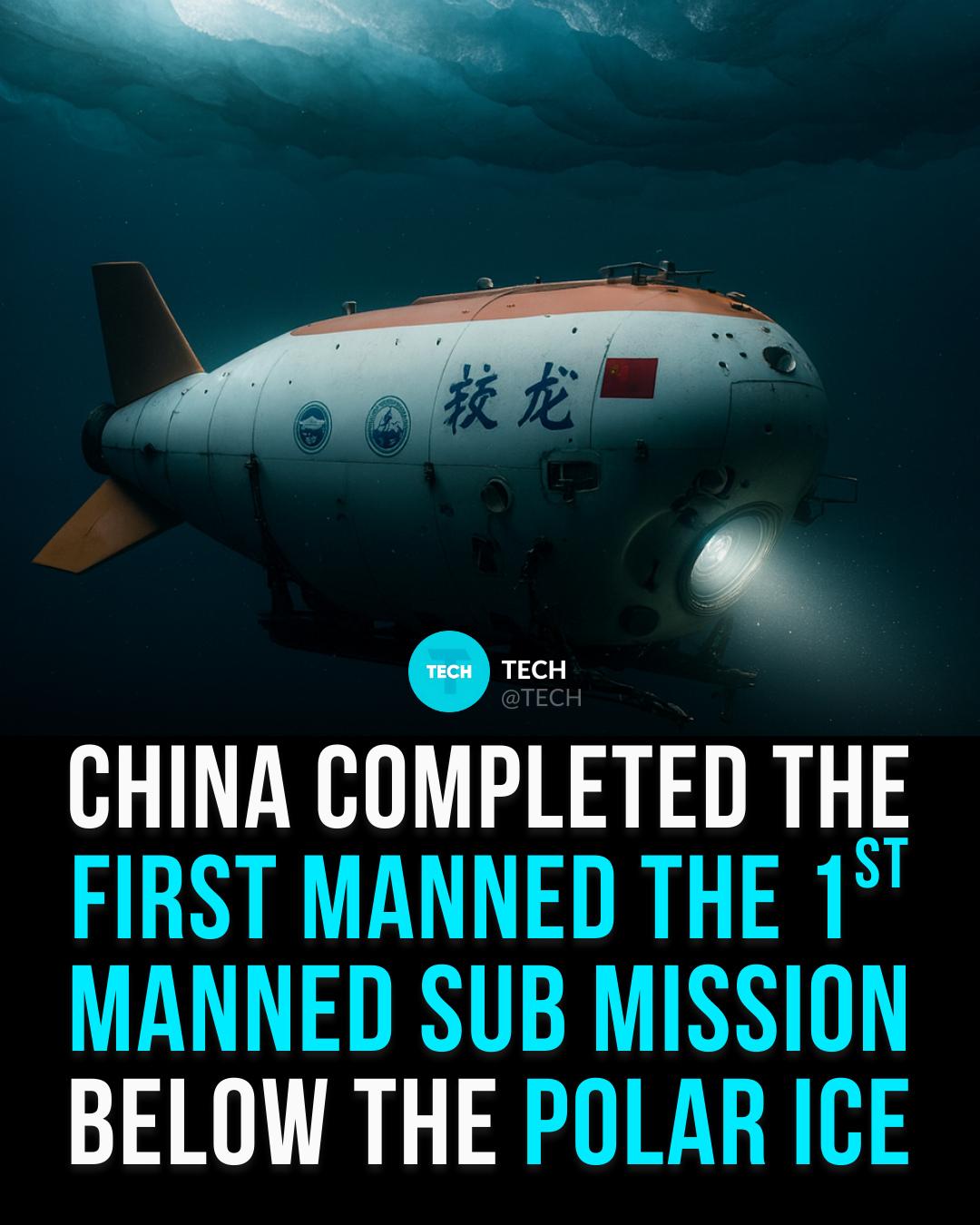
  • China has sent a crewed submersible beneath Arctic pack ice for the first time, marking a new phase in polar exploration and great-power competition. The dive, carried out by the Jiaolong on August 6 in the Chukchi Sea roughly 300 nautical miles northwest of Alaska, capped China’s largest Arctic mission to date and underscored its ambition to be a scientific and strategic player in the High North.⁠

    Four research vessels, led by the icebreaker Xuelong-2, spent the summer completing marine surveys across the Chukchi Plateau, Canada Basin, and central Arctic. The fleet returned to Shanghai on September 26, having executed coordinated “atmosphere-ice-ocean” observations and supported deep-sea operations designed to fill critical data gaps as sea ice thins and retreats.⁠

    Operating under ice is notoriously hard. Satellite links fade, radio is unreliable, and navigation becomes a puzzle without open-sky fixes. Ice floes can shift suddenly and temperatures punish machinery. Only a handful of nations have managed it, a lineage that includes the USS Nautilus crossing the North Pole in 1958 and subsequent Cold War dives by Soviet and British boats.⁠

    The scientific takeaways are starting to surface. Teams reported stark regional differences in seafloor life, from organism density to biodiversity and body size. Those measurements will refine maps of deep-sea habitats and help track how warming, acidification, and changing ice cover are reshaping Arctic ecosystems. The mission also advanced China’s polar toolset, pairing submersibles with ice-edge surveys to sharpen forecasting for hazards and shipping.⁠

    All of this unfolds amid mounting geopolitical interest. China calls the Arctic a “new strategic frontier,” the United States is upping patrols, and melting ice is opening routes and resources long out of reach. Science is the visible face, but strategy is never far below the surface.⁠

    #arctic #deepsea #china #oceanography #geopolitics #submersible #climate #polarresearch #technology
    China has sent a crewed submersible beneath Arctic pack ice for the first time, marking a new phase in polar exploration and great-power competition. The dive, carried out by the Jiaolong on August 6 in the Chukchi Sea roughly 300 nautical miles northwest of Alaska, capped China’s largest Arctic mission to date and underscored its ambition to be a scientific and strategic player in the High North.⁠ ⁠ Four research vessels, led by the icebreaker Xuelong-2, spent the summer completing marine surveys across the Chukchi Plateau, Canada Basin, and central Arctic. The fleet returned to Shanghai on September 26, having executed coordinated “atmosphere-ice-ocean” observations and supported deep-sea operations designed to fill critical data gaps as sea ice thins and retreats.⁠ ⁠ Operating under ice is notoriously hard. Satellite links fade, radio is unreliable, and navigation becomes a puzzle without open-sky fixes. Ice floes can shift suddenly and temperatures punish machinery. Only a handful of nations have managed it, a lineage that includes the USS Nautilus crossing the North Pole in 1958 and subsequent Cold War dives by Soviet and British boats.⁠ ⁠ The scientific takeaways are starting to surface. Teams reported stark regional differences in seafloor life, from organism density to biodiversity and body size. Those measurements will refine maps of deep-sea habitats and help track how warming, acidification, and changing ice cover are reshaping Arctic ecosystems. The mission also advanced China’s polar toolset, pairing submersibles with ice-edge surveys to sharpen forecasting for hazards and shipping.⁠ ⁠ All of this unfolds amid mounting geopolitical interest. China calls the Arctic a “new strategic frontier,” the United States is upping patrols, and melting ice is opening routes and resources long out of reach. Science is the visible face, but strategy is never far below the surface.⁠ ⁠ #arctic #deepsea #china #oceanography #geopolitics #submersible #climate #polarresearch #technology
    ·201 Views ·0 Reviews
More Results
Techawks - Powered By Pantrade Blockchain https://techawks.com