• Mastering Async Control Flow: How to Avoid Callback Hell and Promise Race Conditions


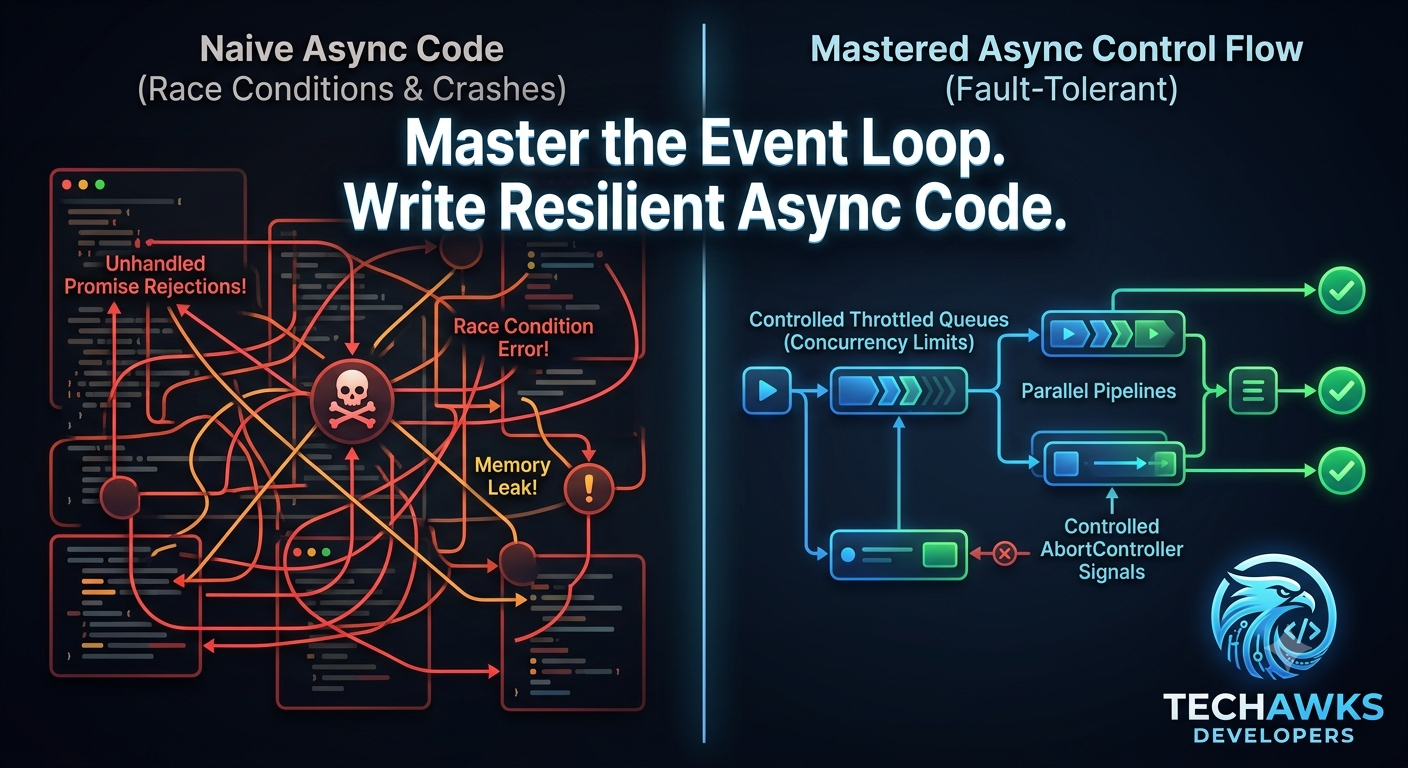
    Writing robust asynchronous code requires moving beyond simple async/await syntax to master control flow execution patterns. When dealing with parallel requests, resource limits, and error handling, relying on naive loops can paralyze your application.


    Here is how to write clean, predictable async code that scales:
    1. Execute Parallel Requests Concurrently with Promise.allSettled
    The Pitfall: Using Promise.all() fails fast—if a single promise rejects, the entire execution throws, ignoring successful responses from parallel calls.
    The Solution: Use Promise.allSettled(). It waits for all promises to finish regardless of individual success or failure, returning an array of objects describing the outcome of each.
    2. Prevent Memory Exhaustion with Concurrency Limits
    The Pitfall: Running Promise.all() over thousands of items fires thousands of network requests or database queries simultaneously, crashing your server or triggering rate limits.
    The Solution: Batch executions or use a concurrency queue (like p-limit). Limit concurrent active promises to a manageable pool size (e.g., 5 to 10 at a time).
    3. Handle Race Conditions with Cancellation Signals (AbortController)
    The Pitfall: Triggering rapid state changes or rapid UI fetches allows older, slower network responses to overwrite newer, faster data.
    The Solution: Pass an AbortSignal to your fetch calls and cancel pending requests when new operations kick off.
    4. Avoid Forgetting Return Statements in Async Wrappers
    The Pitfall: Omitting return or await inside try-catch blocks causes errors inside promises to escape unhandled, bypassing local catch blocks.


    The Solution: Always explicitly return await inside try-catch blocks when you need to catch rejections locally before passing the result upstream.


    Key Takeaways
    Choose the Right Combinator: Use Promise.allSettled() for fault-tolerant parallel executions where partial success is acceptable.
    Throttle Concurrency: Never map unbounded arrays directly into Promise.all(); always control parallel execution limits.
    Cancel Outdated Requests: Use AbortController to prevent race conditions and conserve bandwidth.


    CTA
    Struggling with async bugs or optimizing your Node.js backend performance? Join Developers & Coding to share code snippets, review design patterns, and grow your software engineering skills alongside developers worldwide.
    Mastering Async Control Flow: How to Avoid Callback Hell and Promise Race Conditions Writing robust asynchronous code requires moving beyond simple async/await syntax to master control flow execution patterns. When dealing with parallel requests, resource limits, and error handling, relying on naive loops can paralyze your application. Here is how to write clean, predictable async code that scales: 1. Execute Parallel Requests Concurrently with Promise.allSettled The Pitfall: Using Promise.all() fails fast—if a single promise rejects, the entire execution throws, ignoring successful responses from parallel calls. The Solution: Use Promise.allSettled(). It waits for all promises to finish regardless of individual success or failure, returning an array of objects describing the outcome of each. 2. Prevent Memory Exhaustion with Concurrency Limits The Pitfall: Running Promise.all() over thousands of items fires thousands of network requests or database queries simultaneously, crashing your server or triggering rate limits. The Solution: Batch executions or use a concurrency queue (like p-limit). Limit concurrent active promises to a manageable pool size (e.g., 5 to 10 at a time). 3. Handle Race Conditions with Cancellation Signals (AbortController) The Pitfall: Triggering rapid state changes or rapid UI fetches allows older, slower network responses to overwrite newer, faster data. The Solution: Pass an AbortSignal to your fetch calls and cancel pending requests when new operations kick off. 4. Avoid Forgetting Return Statements in Async Wrappers The Pitfall: Omitting return or await inside try-catch blocks causes errors inside promises to escape unhandled, bypassing local catch blocks. The Solution: Always explicitly return await inside try-catch blocks when you need to catch rejections locally before passing the result upstream. Key Takeaways Choose the Right Combinator: Use Promise.allSettled() for fault-tolerant parallel executions where partial success is acceptable. Throttle Concurrency: Never map unbounded arrays directly into Promise.all(); always control parallel execution limits. Cancel Outdated Requests: Use AbortController to prevent race conditions and conserve bandwidth. CTA Struggling with async bugs or optimizing your Node.js backend performance? Join Developers & Coding to share code snippets, review design patterns, and grow your software engineering skills alongside developers worldwide.
    0 Comments 0 Shares 567 Views 0 Reviews
  • Zero Trust Architecture vs. Perimeter Security: Is the Traditional Network Defense Dead?
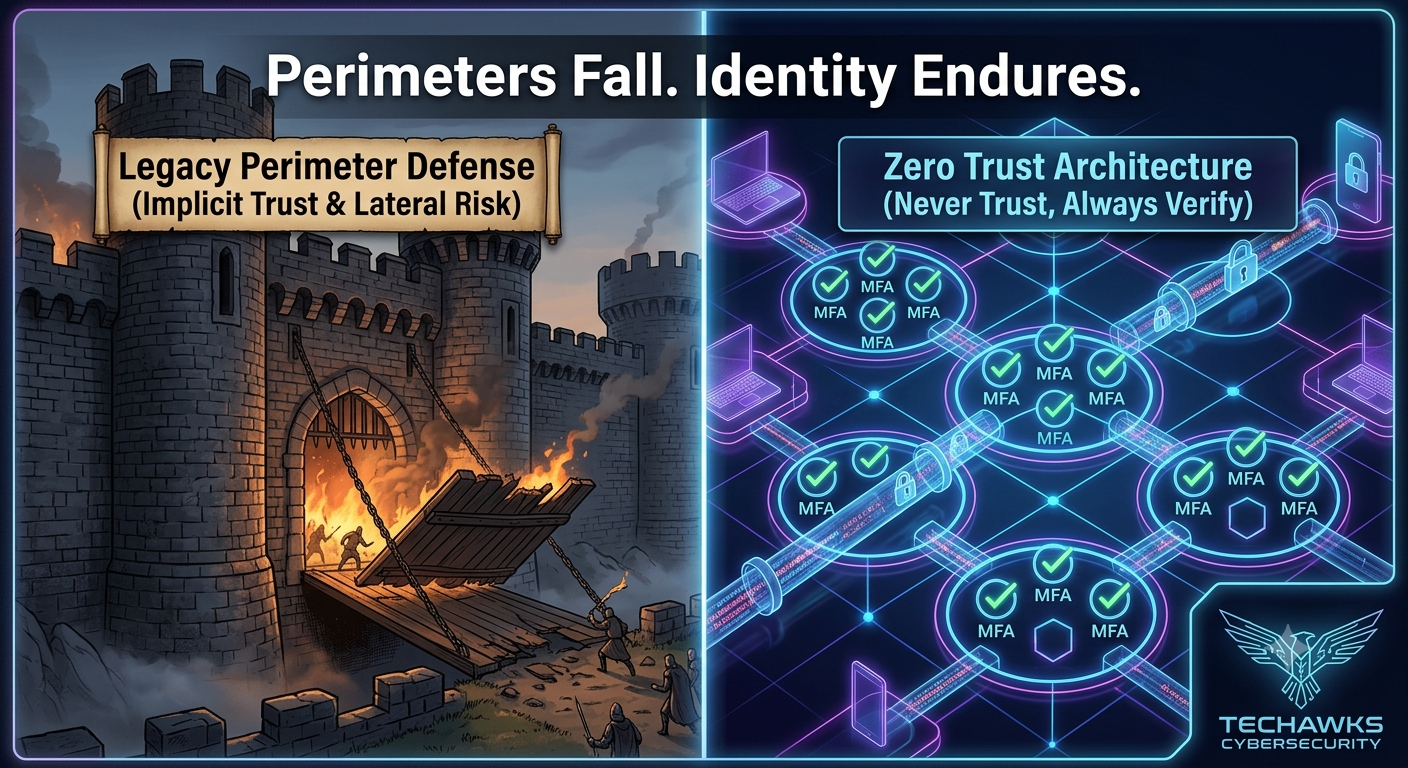
    The shift toward Zero Trust Architecture (ZTA) represents a fundamental evolution in how security teams approach network access and identity verification. Rather than assuming internal traffic is inherently safe, Zero Trust operates on a simple mandate: "Never trust, always verify."


    To evaluate where cybersecurity strategy is heading, it is crucial to analyze how these two models compare in production environments:


    1. Perimeter Security (Castle-and-Moat)
    The Core Premise: Focuses heavily on defending the boundary of a network. Once a user or device passes initial authentication (via VPN, firewall, or gateway), they are granted broad access to internal resources.
    The Vulnerability: If an attacker compromises a single endpoint or steals internal VPN credentials, they gain lateral movement privileges, allowing them to scan databases, pivot across servers, and exfiltrate sensitive data undetected.


    2. Zero Trust Architecture (Micro-Segmentation & Continuous Auth)
    The Core Premise: Removes implicit trust based on network location. Every access request—whether originating inside or outside the corporate network—must be authenticated, authorized, and encrypted before access is granted.


    Key Mechanisms:
    Identity-First Security: Access is granted based on verified identity, device health, and context rather than IP addresses.
    Least Privilege Access: Users only receive the minimum permissions necessary to perform their specific role (Role-Based Access Control / ABAC).
    Micro-segmentation: Networks are isolated into tiny zones to prevent lateral movement during a breach.


    Actionable Advice for Security Learners & Analysts
    Moving to Zero Trust doesn't mean firewalls and perimeter tools are useless—it means they can no longer stand alone as your primary defense:
    Start with Identity Management: Prioritize learning identity and access management (IAM) platforms, multi-factor authentication (MFA) protocols, and Single Sign-On (SSO) integrations.
    Master Micro-Segmentation: Understand how cloud networks (AWS VPCs, Azure VNets) use security groups and network policies to isolate microservices.
    Assume Breach: Design network policies under the assumption that an attacker is already inside the network segment.


    Key Takeaways
    Perimeter Alone Is Insufficient: Internal network location no longer guarantees that a device or user is benign.
    Verify Continuously: Zero Trust relies on continuous identity verification, device compliance checks, and least-privilege access rules.
    Contain Lateral Movement: Implementing micro-segmentation limits the blast radius if an individual endpoint or account is compromised.


    CTA
    How is your organization or lab environment balancing traditional firewalls with Zero Trust access controls? Join Cybersecurity & Ethical Hacking to share your architecture diagrams, discuss IAM strategies, and collaborate with fellow security researchers.
    Zero Trust Architecture vs. Perimeter Security: Is the Traditional Network Defense Dead? The shift toward Zero Trust Architecture (ZTA) represents a fundamental evolution in how security teams approach network access and identity verification. Rather than assuming internal traffic is inherently safe, Zero Trust operates on a simple mandate: "Never trust, always verify." To evaluate where cybersecurity strategy is heading, it is crucial to analyze how these two models compare in production environments: 1. Perimeter Security (Castle-and-Moat) The Core Premise: Focuses heavily on defending the boundary of a network. Once a user or device passes initial authentication (via VPN, firewall, or gateway), they are granted broad access to internal resources. The Vulnerability: If an attacker compromises a single endpoint or steals internal VPN credentials, they gain lateral movement privileges, allowing them to scan databases, pivot across servers, and exfiltrate sensitive data undetected. 2. Zero Trust Architecture (Micro-Segmentation & Continuous Auth) The Core Premise: Removes implicit trust based on network location. Every access request—whether originating inside or outside the corporate network—must be authenticated, authorized, and encrypted before access is granted. Key Mechanisms: Identity-First Security: Access is granted based on verified identity, device health, and context rather than IP addresses. Least Privilege Access: Users only receive the minimum permissions necessary to perform their specific role (Role-Based Access Control / ABAC). Micro-segmentation: Networks are isolated into tiny zones to prevent lateral movement during a breach. Actionable Advice for Security Learners & Analysts Moving to Zero Trust doesn't mean firewalls and perimeter tools are useless—it means they can no longer stand alone as your primary defense: Start with Identity Management: Prioritize learning identity and access management (IAM) platforms, multi-factor authentication (MFA) protocols, and Single Sign-On (SSO) integrations. Master Micro-Segmentation: Understand how cloud networks (AWS VPCs, Azure VNets) use security groups and network policies to isolate microservices. Assume Breach: Design network policies under the assumption that an attacker is already inside the network segment. Key Takeaways Perimeter Alone Is Insufficient: Internal network location no longer guarantees that a device or user is benign. Verify Continuously: Zero Trust relies on continuous identity verification, device compliance checks, and least-privilege access rules. Contain Lateral Movement: Implementing micro-segmentation limits the blast radius if an individual endpoint or account is compromised. CTA How is your organization or lab environment balancing traditional firewalls with Zero Trust access controls? Join Cybersecurity & Ethical Hacking to share your architecture diagrams, discuss IAM strategies, and collaborate with fellow security researchers.
    0 Comments 0 Shares 385 Views 0 Reviews
  • The 3-Layer System Architecture Every Engineer Should Know


    When starting a project, it's tempting to bundle database queries, business logic, and API endpoints into monolithic handlers. While fast initially, this tightly coupled architecture makes updating features risky and scaling individual components impossible.
    To build systems that remain maintainable years into the future, implement the 3-Layer Separation Pattern:


    Presentation Layer (Interface & API Routing)
    Role: Accept incoming client requests (HTTP, WebSockets, gRPC), validate payload structures, and format response outputs.
    Rule: Zero business calculations or database access happen here. This layer only routes requests and handles input serialization.


    Domain/Business Logic Layer (Core Processing)
    Role: Execute core application rules, calculations, permissions, and workflow state transitions.
    Rule: Keep this layer entirely pure and agnostic of external services. It shouldn't care whether data comes from PostgreSQL, Redis, or a third-party API.


    Data Access Layer (Persistence & Adapters)
    Role: Manage interactions with databases, caches, message queues, and external microservices.
    Rule: Wrap external dependencies behind explicit repository interfaces. If you swap your database from SQL to NoSQL tomorrow, only this layer should change.
    The 3-Layer System Architecture Every Engineer Should Know When starting a project, it's tempting to bundle database queries, business logic, and API endpoints into monolithic handlers. While fast initially, this tightly coupled architecture makes updating features risky and scaling individual components impossible. To build systems that remain maintainable years into the future, implement the 3-Layer Separation Pattern: Presentation Layer (Interface & API Routing) Role: Accept incoming client requests (HTTP, WebSockets, gRPC), validate payload structures, and format response outputs. Rule: Zero business calculations or database access happen here. This layer only routes requests and handles input serialization. Domain/Business Logic Layer (Core Processing) Role: Execute core application rules, calculations, permissions, and workflow state transitions. Rule: Keep this layer entirely pure and agnostic of external services. It shouldn't care whether data comes from PostgreSQL, Redis, or a third-party API. Data Access Layer (Persistence & Adapters) Role: Manage interactions with databases, caches, message queues, and external microservices. Rule: Wrap external dependencies behind explicit repository interfaces. If you swap your database from SQL to NoSQL tomorrow, only this layer should change.
    0 Comments 0 Shares 18 Views 0 Reviews
  • Understanding the Anatomy of a Social Engineering Attack: How Human Vulnerabilities Are Exploited.
    In cybersecurity, social engineering refers to manipulating individuals into performing actions or divulging confidential information. Rather than finding a zero-day software exploit, attackers exploit human cognitive biases—such as trust, fear, urgency, and authority—to gain unauthorized network access.


    Here is an educational breakdown of the core psychological triggers used in social engineering and how security professionals defend against them:


    1. Phishing & Spear Phishing (Exploiting Trust & Urgency)
    The Mechanism: Phishing involves sending deceptive communications (emails, SMS, or messages) designed to mimic legitimate organizations like banks, cloud providers, or internal IT departments. Spear phishing targets specific high-value individuals using personalized intelligence.
    The Psychological Trigger: Urgency and Fear. Attackers use high-pressure phrasing like "Your account will be suspended within 24 hours" or "Urgent password reset required" to bypass critical thinking and force immediate action.
    The Defense: Verify domain names carefully (looking for typosquatting), inspect raw email headers, and enforce Multi-Factor Authentication (MFA) via FIDO2 hardware keys that resist phishing.


    2. Pretexting (Exploiting Authority & Familiarity)
    The Mechanism: An attacker invents a fabricated scenario (a pretext) to trick a victim into leaking sensitive data. For example, impersonating an external auditor, an HR representative, or an executive requesting urgent access to payroll records.
    The Psychological Trigger: Authority. Employees are naturally conditioned to comply with requests coming from senior leadership or compliance authorities without secondary verification.
    The Defense: Implement strict Out-of-Band (OOB) verification protocols. Require employees to confirm unusual requests through a separate, pre-established communication channel before sharing data or changing access permissions.


    3. Baiting & Quid Pro Quo (Exploiting Curiosity & Greed)
    The Mechanism: Baiting relies on physical or digital traps—such as leaving infected USB drives in corporate parking lots labeled "Q4 Compensation Plan" or offering free software downloads bundled with trojans. Quid pro quo offers a service or benefit in exchange for credentials (e.g., rogue IT support calls offering "free system speedups").
    The Psychological Trigger: Curiosity and Gain. Victims are enticed by the promise of exclusive information or free technical assistance.
    The Defense: Disable USB auto-run policies across endpoints, restrict administrative installation privileges, and implement Endpoint Detection and Response (EDR) solutions to flag unauthorized executable runs.


    How to Build a Defense-in-Depth Mindset
    Security awareness is not about paranoia; it is about establishing habitual verification. Always slow down when a digital request combines urgency, authority, and unsolicited links or attachments.


    Key Takeaways
    Humans Are the Primary Vector: Threat actors frequently target human decision-making rather than attempting to crack cryptographic systems directly.
    Recognize the Red Flags: High urgency, fear of penalty, and requests to bypass standard security procedures are primary indicators of social engineering.
    Verify Out-of-Band: Never use the contact details or links provided inside a suspicious message to confirm its authenticity.


    CTA
    Want to learn how security professionals audit corporate defenses and train teams against social engineering tactics? Join Cybersecurity & Ethical Hacking to analyze attack vectors, practice hands-on lab scenarios, and master modern defense-in-depth strategies.
    Understanding the Anatomy of a Social Engineering Attack: How Human Vulnerabilities Are Exploited. In cybersecurity, social engineering refers to manipulating individuals into performing actions or divulging confidential information. Rather than finding a zero-day software exploit, attackers exploit human cognitive biases—such as trust, fear, urgency, and authority—to gain unauthorized network access. Here is an educational breakdown of the core psychological triggers used in social engineering and how security professionals defend against them: 1. Phishing & Spear Phishing (Exploiting Trust & Urgency) The Mechanism: Phishing involves sending deceptive communications (emails, SMS, or messages) designed to mimic legitimate organizations like banks, cloud providers, or internal IT departments. Spear phishing targets specific high-value individuals using personalized intelligence. The Psychological Trigger: Urgency and Fear. Attackers use high-pressure phrasing like "Your account will be suspended within 24 hours" or "Urgent password reset required" to bypass critical thinking and force immediate action. The Defense: Verify domain names carefully (looking for typosquatting), inspect raw email headers, and enforce Multi-Factor Authentication (MFA) via FIDO2 hardware keys that resist phishing. 2. Pretexting (Exploiting Authority & Familiarity) The Mechanism: An attacker invents a fabricated scenario (a pretext) to trick a victim into leaking sensitive data. For example, impersonating an external auditor, an HR representative, or an executive requesting urgent access to payroll records. The Psychological Trigger: Authority. Employees are naturally conditioned to comply with requests coming from senior leadership or compliance authorities without secondary verification. The Defense: Implement strict Out-of-Band (OOB) verification protocols. Require employees to confirm unusual requests through a separate, pre-established communication channel before sharing data or changing access permissions. 3. Baiting & Quid Pro Quo (Exploiting Curiosity & Greed) The Mechanism: Baiting relies on physical or digital traps—such as leaving infected USB drives in corporate parking lots labeled "Q4 Compensation Plan" or offering free software downloads bundled with trojans. Quid pro quo offers a service or benefit in exchange for credentials (e.g., rogue IT support calls offering "free system speedups"). The Psychological Trigger: Curiosity and Gain. Victims are enticed by the promise of exclusive information or free technical assistance. The Defense: Disable USB auto-run policies across endpoints, restrict administrative installation privileges, and implement Endpoint Detection and Response (EDR) solutions to flag unauthorized executable runs. How to Build a Defense-in-Depth Mindset Security awareness is not about paranoia; it is about establishing habitual verification. Always slow down when a digital request combines urgency, authority, and unsolicited links or attachments. Key Takeaways Humans Are the Primary Vector: Threat actors frequently target human decision-making rather than attempting to crack cryptographic systems directly. Recognize the Red Flags: High urgency, fear of penalty, and requests to bypass standard security procedures are primary indicators of social engineering. Verify Out-of-Band: Never use the contact details or links provided inside a suspicious message to confirm its authenticity. CTA Want to learn how security professionals audit corporate defenses and train teams against social engineering tactics? Join Cybersecurity & Ethical Hacking to analyze attack vectors, practice hands-on lab scenarios, and master modern defense-in-depth strategies.
    0 Comments 0 Shares 667 Views 0 Reviews
  • How to Transition from Junior to Senior Developer: The 4 Core Competencies You Need
    Reaching the senior developer level isn't about mastering every framework—it's about demonstrating architectural foresight, business acumen, and cross-team leadership. If you want to accelerate your career trajectory, focus on building these four non-technical skills alongside your engineering practice:


    1. Shift from Coding Solutions to Defining Problems
    Junior Mindset: Waits for fully detailed ticket specifications and executes tasks as requested.
    Senior Action: Questions assumptions, identifies edge cases early, and clarifies business goals before writing code. Focus on understanding why a feature matters to end-users rather than just completing tickets.


    2. Communicate Architectural Trade-Offs
    Junior Mindset: Chooses technologies based on popularity or technical novelty.
    Senior Action: Evaluates technical choices through the lens of trade-offs: cost, maintainability, execution speed, and system security. When presenting decisions to managers, explain options in terms of business impact and risk rather than syntax preferences.


    3. Elevate Team Productivity Through Mentorship
    Junior Mindset: Focuses exclusively on individual daily ticket output.
    Senior Action: Acts as a force multiplier for the team. Senior engineers write clear documentation, create reusable tooling, conduct constructive code reviews, and unblock junior team members through pair programming.


    4. Practice System Health & Production Ownership
    Junior Mindset: Considers a task finished once code passes local tests and gets merged.
    Senior Action: Takes responsibility for observability, error logging, CI/CD pipeline reliability, and post-release monitoring. Senior engineers design systems that are easy to debug when failures occur in production.


    Key Takeaways


    Solve Business Problems: Focus on delivering measurable product value, not just closing software tickets.
    Multiply Team Output: Your growth to a senior role is measured by how much better you make the engineers around you.
    Master System Ownership: Take responsibility for operational health, monitoring, and long-term code maintainability.


    CTA
    Ready to take the next step in your tech career? Join Tech Jobs & Opportunities to connect with hiring managers, discover curated engineering roles, and access career growth strategies from industry mentors.
    How to Transition from Junior to Senior Developer: The 4 Core Competencies You Need Reaching the senior developer level isn't about mastering every framework—it's about demonstrating architectural foresight, business acumen, and cross-team leadership. If you want to accelerate your career trajectory, focus on building these four non-technical skills alongside your engineering practice: 1. Shift from Coding Solutions to Defining Problems Junior Mindset: Waits for fully detailed ticket specifications and executes tasks as requested. Senior Action: Questions assumptions, identifies edge cases early, and clarifies business goals before writing code. Focus on understanding why a feature matters to end-users rather than just completing tickets. 2. Communicate Architectural Trade-Offs Junior Mindset: Chooses technologies based on popularity or technical novelty. Senior Action: Evaluates technical choices through the lens of trade-offs: cost, maintainability, execution speed, and system security. When presenting decisions to managers, explain options in terms of business impact and risk rather than syntax preferences. 3. Elevate Team Productivity Through Mentorship Junior Mindset: Focuses exclusively on individual daily ticket output. Senior Action: Acts as a force multiplier for the team. Senior engineers write clear documentation, create reusable tooling, conduct constructive code reviews, and unblock junior team members through pair programming. 4. Practice System Health & Production Ownership Junior Mindset: Considers a task finished once code passes local tests and gets merged. Senior Action: Takes responsibility for observability, error logging, CI/CD pipeline reliability, and post-release monitoring. Senior engineers design systems that are easy to debug when failures occur in production. Key Takeaways Solve Business Problems: Focus on delivering measurable product value, not just closing software tickets. Multiply Team Output: Your growth to a senior role is measured by how much better you make the engineers around you. Master System Ownership: Take responsibility for operational health, monitoring, and long-term code maintainability. CTA Ready to take the next step in your tech career? Join Tech Jobs & Opportunities to connect with hiring managers, discover curated engineering roles, and access career growth strategies from industry mentors.
    0 Comments 0 Shares 523 Views 0 Reviews
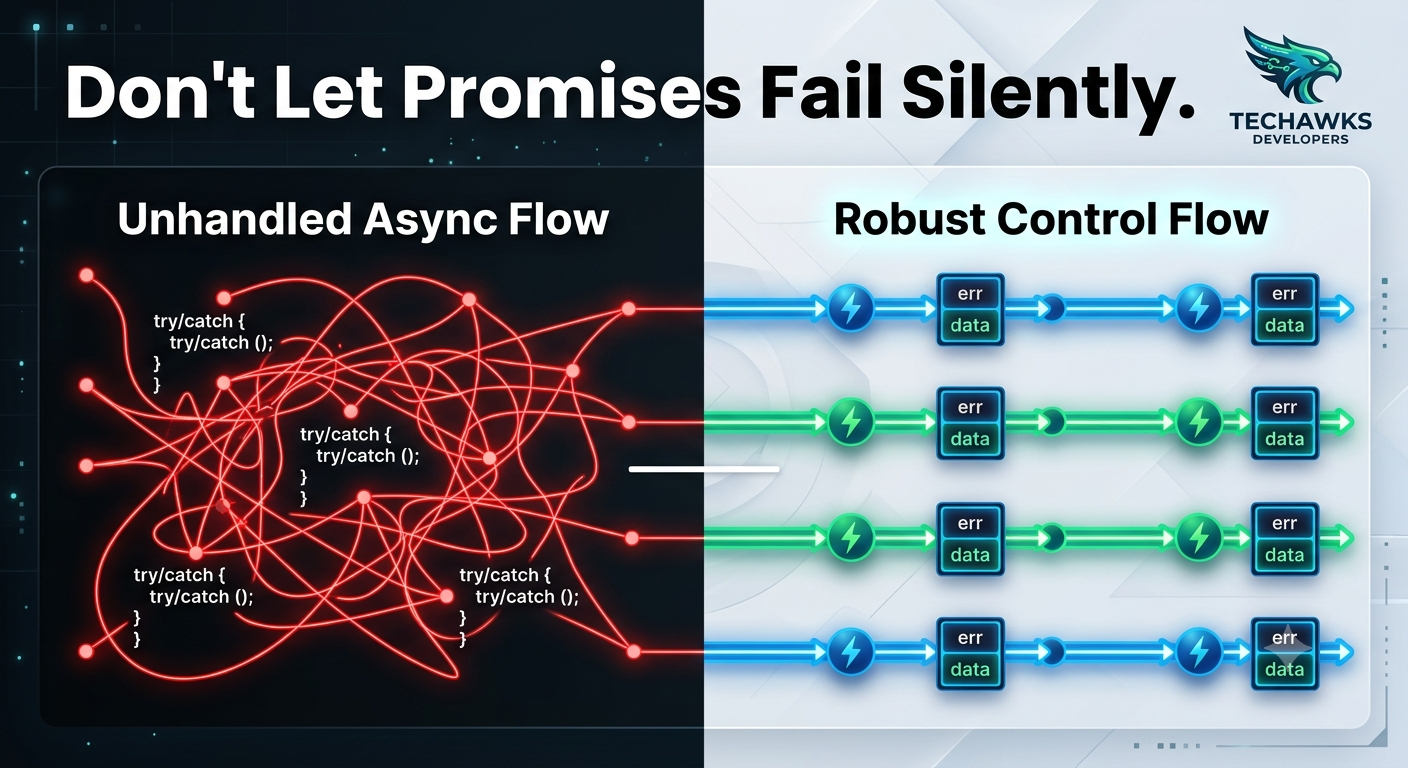
  • Mastering Async Control Flow: Stop Swallowing Errors in Asynchronous JavaScript

    Asynchronous execution is core to modern modern web application development, yet error handling in async code remains one of the most frequent sources of runtime bugs. Relying strictly on basic try/catch blocks around async/await often leads to swallowed exceptions or redundant code.
    Here is a clean, robust pattern for handling asynchronous operations cleanly without falling into common traps:

    Avoid Universal Empty catch Blocks
    Anti-Pattern: Catching an error and doing nothing or merely logging console.log(err). This lets application state fail silently.
    Best Practice: Always rethrow unhandled exceptions or explicitly return a structured error result.

    Adopt the Safe-Await Wrapper Pattern
    Instead of nesting multiple try/catch blocks inside a single function, isolate promise calls using a simple utility function that returns a tuple [error, data]:
    Example:
    JavaScript
    const safeAwait = (promise) => promise
    .then(data => [null, data])
    .catch(err => [err, null]);
    // Usage
    const [err, user] = await safeAwait(fetchUser(id));
    if (err) return handleUserError(err);

    Handle Concurrent Promises Safely
    Avoid Promise.all if you need partial successes when executing multiple parallel requests. One failure will reject the entire batch.
    Use Promise.all Settled instead to evaluate each status individually without halting execution.

    Always Set Timeouts on External Requests
    Never leave a fetch or network promise uncapped. Use AbortController to guarantee that hanging requests timeout gracefully.
    Mastering Async Control Flow: Stop Swallowing Errors in Asynchronous JavaScript Asynchronous execution is core to modern modern web application development, yet error handling in async code remains one of the most frequent sources of runtime bugs. Relying strictly on basic try/catch blocks around async/await often leads to swallowed exceptions or redundant code. Here is a clean, robust pattern for handling asynchronous operations cleanly without falling into common traps: Avoid Universal Empty catch Blocks Anti-Pattern: Catching an error and doing nothing or merely logging console.log(err). This lets application state fail silently. Best Practice: Always rethrow unhandled exceptions or explicitly return a structured error result. Adopt the Safe-Await Wrapper Pattern Instead of nesting multiple try/catch blocks inside a single function, isolate promise calls using a simple utility function that returns a tuple [error, data]: Example: JavaScript const safeAwait = (promise) => promise .then(data => [null, data]) .catch(err => [err, null]); // Usage const [err, user] = await safeAwait(fetchUser(id)); if (err) return handleUserError(err); Handle Concurrent Promises Safely Avoid Promise.all if you need partial successes when executing multiple parallel requests. One failure will reject the entire batch. Use Promise.all Settled instead to evaluate each status individually without halting execution. Always Set Timeouts on External Requests Never leave a fetch or network promise uncapped. Use AbortController to guarantee that hanging requests timeout gracefully.
    0 Comments 0 Shares 985 Views 0 Reviews