• Beijing unveiled two visions of robot retail, one that works today and one that hints at tomorrow. Galbot’s “robodega,” billed as the first fully autonomous humanoid-operated store, opened in early August with a dual-armed G-1 robot greeting customers, picking snacks and drinks, and dispensing basic pharmaceuticals. Galbot says the kiosk runs without teleoperators, guided by its GroceryVLA and GraspVLA systems, and a second site has already opened at the Summer Palace in Beijing.⁠

    The company’s ambitions are explicit. CEO Wen Airong plans to scale to 100 kiosks across ten Chinese cities within a year, while acknowledging the two hardest problems for humanoids in public settings, natural voice interaction and faster, safer manipulation in crowded spaces. For now, the novelty draws lines of spectators, and the pace is more careful than quick.⁠

    A few miles away, “Robot Mall” pushes the consumer side of the same story. The four-story 4S dealership in the capital’s E-Town district sells, services, and supplies more than 100 robot types from as many as 200 brands, including Unitree and Ubtech. Prices span from roughly 2,000 yuan, about 278 dollars, to multi-million yuan humanoids, with showpieces like a life-size Albert Einstein robot around 97,000 dollars.⁠

    The mall doubles as an expo floor, with robot cooks, baristas, and medicine dispensers, a restaurant staffed by robot waiters, and an arena for robot football and track. Its launch timed with the World Robot Conference, August 8 to 12, and ahead of the World Humanoid Robot Games, August 14 to 17, underscoring China’s state backed robotics push, more than 20 billion dollars in recent subsidies and a proposed 1 trillion yuan fund, as it tests how far humanoids can move from pilot to product.⁠

    #robots #humanoids #retailtech #china #automation #robotics #ai #futureofwork #innovation

    Beijing unveiled two visions of robot retail, one that works today and one that hints at tomorrow. Galbot’s “robodega,” billed as the first fully autonomous humanoid-operated store, opened in early August with a dual-armed G-1 robot greeting customers, picking snacks and drinks, and dispensing basic pharmaceuticals. Galbot says the kiosk runs without teleoperators, guided by its GroceryVLA and GraspVLA systems, and a second site has already opened at the Summer Palace in Beijing.⁠ ⁠ The company’s ambitions are explicit. CEO Wen Airong plans to scale to 100 kiosks across ten Chinese cities within a year, while acknowledging the two hardest problems for humanoids in public settings, natural voice interaction and faster, safer manipulation in crowded spaces. For now, the novelty draws lines of spectators, and the pace is more careful than quick.⁠ ⁠ A few miles away, “Robot Mall” pushes the consumer side of the same story. The four-story 4S dealership in the capital’s E-Town district sells, services, and supplies more than 100 robot types from as many as 200 brands, including Unitree and Ubtech. Prices span from roughly 2,000 yuan, about 278 dollars, to multi-million yuan humanoids, with showpieces like a life-size Albert Einstein robot around 97,000 dollars.⁠ ⁠ The mall doubles as an expo floor, with robot cooks, baristas, and medicine dispensers, a restaurant staffed by robot waiters, and an arena for robot football and track. Its launch timed with the World Robot Conference, August 8 to 12, and ahead of the World Humanoid Robot Games, August 14 to 17, underscoring China’s state backed robotics push, more than 20 billion dollars in recent subsidies and a proposed 1 trillion yuan fund, as it tests how far humanoids can move from pilot to product.⁠ ⁠ #robots #humanoids #retailtech #china #automation #robotics #ai #futureofwork #innovation
    ·195 Visualizações ·0 Anterior

  • Bill Gates believes the era of “free intelligence” has begun.
    According to him, AI could replace many doctors and teachers in the next 10 years — making expert advice as accessible as Wi-Fi.

    But here’s the catch
    Experts argue AI won’t fully replace humans. Instead, it will transform roles:
    • Handling diagnosis, admin work, and tutoring
    • Freeing humans for creativity, empathy & critical thinking

    The future isn’t about AI vs Humans.
    It’s about AI + Humans = Better Outcomes.

    So whether you’re a doctor, teacher, engineer, or farmer — adapting to AI will matter more than fearing it.

    Share this with your friends who are studying medicine, teaching, or any profession AI might touch.

    Follow @marketing.growmatics for more stories on tech, startups & the future of work.

    #BillGates #ArtificialIntelligence #FutureOfWork #AIRevolution #Doctors #Teachers #Engineers #Farming #TechVsHuman #FutureJobs
    Bill Gates believes the era of “free intelligence” has begun. According to him, AI could replace many doctors and teachers in the next 10 years — making expert advice as accessible as Wi-Fi. But here’s the catch Experts argue AI won’t fully replace humans. Instead, it will transform roles: • Handling diagnosis, admin work, and tutoring • Freeing humans for creativity, empathy & critical thinking 👉 The future isn’t about AI vs Humans. It’s about AI + Humans = Better Outcomes. So whether you’re a doctor, teacher, engineer, or farmer — adapting to AI will matter more than fearing it. Share this with your friends who are studying medicine, teaching, or any profession AI might touch. Follow @marketing.growmatics for more stories on tech, startups & the future of work. #BillGates #ArtificialIntelligence #FutureOfWork #AIRevolution #Doctors #Teachers #Engineers #Farming #TechVsHuman #FutureJobs
    ·378 Visualizações ·0 Anterior
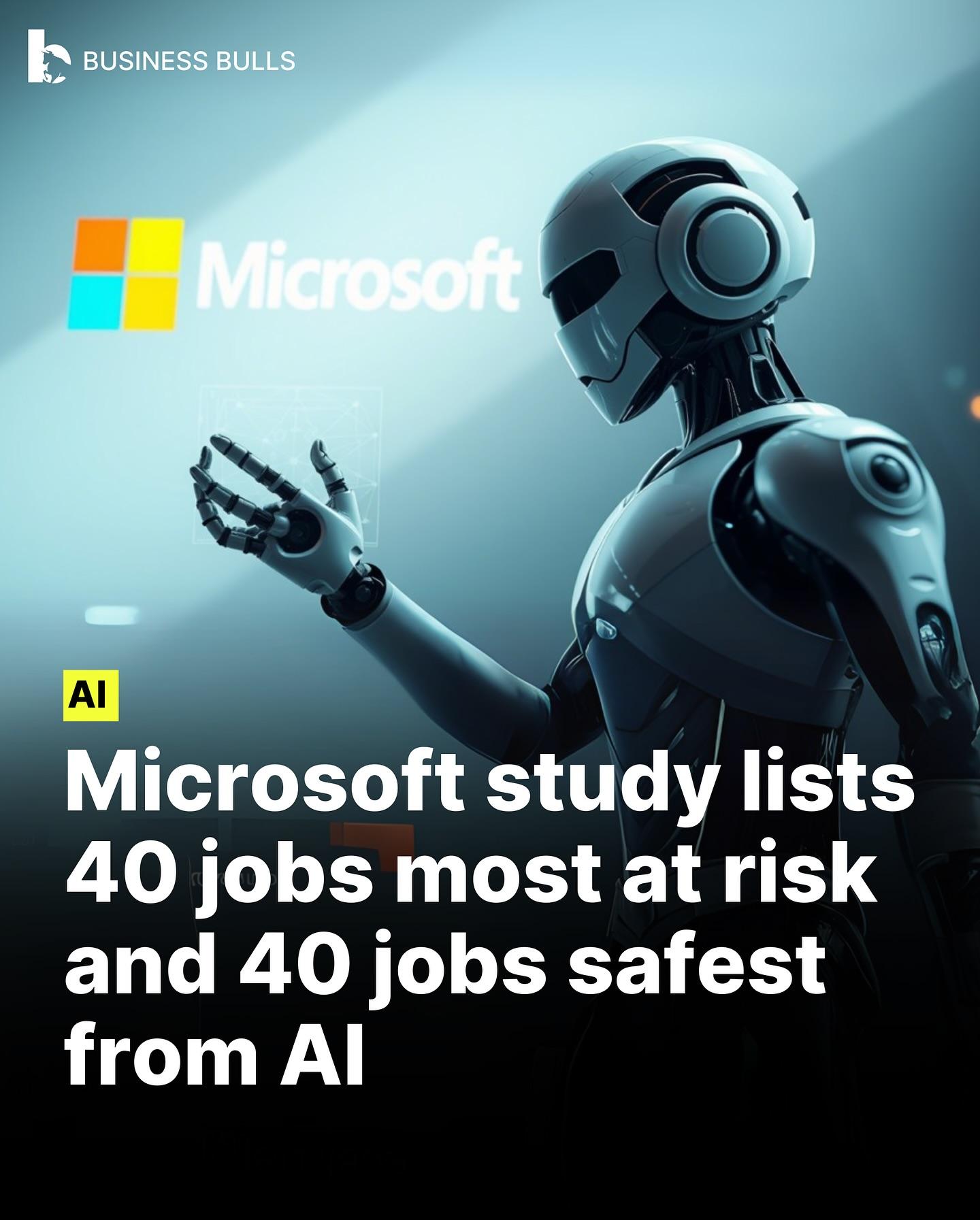
  • Microsoft’s latest study ranks 40 jobs most at risk—and 40 safest—from AI. Roles like data entry, translators, writers, and even accountants face high exposure to AI disruption.

    They involve digital, repetitive, or analytical work AI can easily handle. On the flip side, jobs requiring hands-on skills, empathy, or unpredictability—like EMTs, plumbers, or mechanics—are among the safest.

    The takeaway? AI won’t replace everyone—but it will reshape how many of us work. Stay adaptable. The future belongs to those who evolve with the tools. #AI #Jobs #FutureOfWork #MicrosoftStudy

    Liked this content? Follow @BusinessBulls.in for more.

    #Businessbulls #Business #Microsoft #AI
    Microsoft’s latest study ranks 40 jobs most at risk—and 40 safest—from AI. Roles like data entry, translators, writers, and even accountants face high exposure to AI disruption. They involve digital, repetitive, or analytical work AI can easily handle. On the flip side, jobs requiring hands-on skills, empathy, or unpredictability—like EMTs, plumbers, or mechanics—are among the safest. The takeaway? AI won’t replace everyone—but it will reshape how many of us work. Stay adaptable. The future belongs to those who evolve with the tools. #AI #Jobs #FutureOfWork #MicrosoftStudy Liked this content? Follow @BusinessBulls.in for more. #Businessbulls #Business #Microsoft #AI
    ·447 Visualizações ·0 Anterior
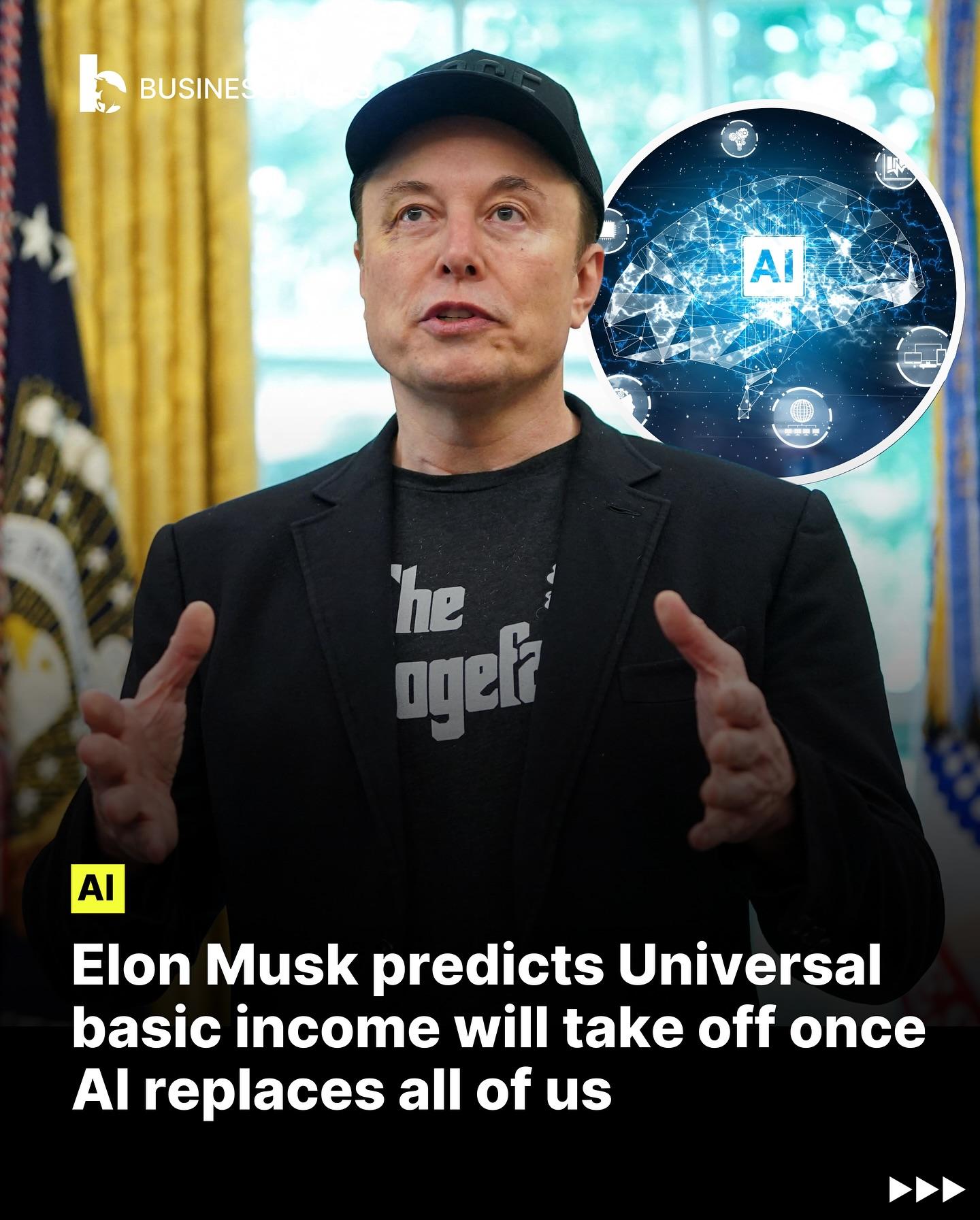
  • As AI evolves faster than ever, Musk believes we could soon live in a world where working is optional—and universal income replaces paychecks.

    Robots handle the labor. Humans get paid anyway. Sounds wild? He thinks it’s inevitable.

    But here’s the twist:
If AI does everything better than us… what gives life meaning?

    #Businessbulls #Business #AIRevolution #TechNews #ElonMusk #FutureOfWork #UBI
    As AI evolves faster than ever, Musk believes we could soon live in a world where working is optional—and universal income replaces paychecks. Robots handle the labor. Humans get paid anyway. Sounds wild? He thinks it’s inevitable. But here’s the twist:
If AI does everything better than us… what gives life meaning? 🧠⚡ #Businessbulls #Business #AIRevolution #TechNews #ElonMusk #FutureOfWork #UBI
    ·736 Visualizações ·0 Anterior
  • Japan is introducing a four-day workweek for Tokyo Metropolitan Government employees starting April 2025, aiming to tackle the country’s declining birth rate and improve work-life balance. Under this new system, employees will work 155 hours per month while enjoying three-day weekends, all without a cut in pay. This move is particularly designed to give people more time for family, rest, and personal activities — especially targeting working parents who struggle to balance childcare with long working hours.

    The initiative is a response to Japan’s rapidly falling birth rate, which currently stands at 1.2 children per woman, with Tokyo’s rate even lower at 0.99. The government sees the intense work culture and lack of support for working families as major contributors to the demographic crisis. By offering more flexible work arrangements, the plan hopes to encourage younger people to start families without having to sacrifice their careers. Governor Yuriko Koike emphasized that individuals should not have to choose between work and family, and this shift could also boost women's participation in the workforce.

    Disclaimer: NO COPYRIGHT INFRINGEMENT INTENDED!
    We do not own the rights to this video and photo used in this reel and post. All credit goes to the original creator. This video is shared for informational purposes only. If you are the owner and wish to discuss this content, please DM or email us.

    FAIR USE: Copyright disclaimer under section 107 of the copyright act 1976. Allowance is made for "fair use" for purposes such as criticism, comment, news reporting, teaching, scholarship infringing." We do not own all the material.
    .
    .
    .
    #news
    #worldnews
    #worldinlast24hr
    #explore
    #explorepage
    #trending
    #JapanNews #FourDayWorkWeek #WorkLifeBalance #DecliningBirthRate #TokyoInitiative #FamilyTime #WorkCultureReform #FutureOfWork
    Japan is introducing a four-day workweek for Tokyo Metropolitan Government employees starting April 2025, aiming to tackle the country’s declining birth rate and improve work-life balance. Under this new system, employees will work 155 hours per month while enjoying three-day weekends, all without a cut in pay. This move is particularly designed to give people more time for family, rest, and personal activities — especially targeting working parents who struggle to balance childcare with long working hours. The initiative is a response to Japan’s rapidly falling birth rate, which currently stands at 1.2 children per woman, with Tokyo’s rate even lower at 0.99. The government sees the intense work culture and lack of support for working families as major contributors to the demographic crisis. By offering more flexible work arrangements, the plan hopes to encourage younger people to start families without having to sacrifice their careers. Governor Yuriko Koike emphasized that individuals should not have to choose between work and family, and this shift could also boost women's participation in the workforce. ⚠️⚠️⚠️ Disclaimer: NO COPYRIGHT INFRINGEMENT INTENDED! We do not own the rights to this video and photo used in this reel and post. All credit goes to the original creator. This video is shared for informational purposes only. If you are the owner and wish to discuss this content, please DM or email us. FAIR USE: Copyright disclaimer under section 107 of the copyright act 1976. Allowance is made for "fair use" for purposes such as criticism, comment, news reporting, teaching, scholarship infringing." We do not own all the material. . . . #news #worldnews #worldinlast24hr #explore #explorepage #trending #JapanNews #FourDayWorkWeek #WorkLifeBalance #DecliningBirthRate #TokyoInitiative #FamilyTime #WorkCultureReform #FutureOfWork
    ·429 Visualizações ·0 Anterior
Techawks - Powered By Pantrade Blockchain https://techawks.com