• Why the UK’s "Divergent" AI Strategy is a Game-Changer for Local Devs
    Today, the UK government published its response to the AI White Paper consultation, outlining its official strategy. While the EU is moving toward heavy, horizontal legislation, the UK has chosen a distinctly different path: a pro-innovation, sector-specific approach governed by existing regulators.


    Why it matters locally:
    For the UK tech community, this divergence is massive. It means:


    No New Blanket Legislation (Yet): Instead of a single, massive AI law, guidance will come from sector regulators (CMA for competition, ICO for data privacy, Ofcom for safety).


    Clarity for Adoption: This avoids the "over-compliance" paralysis that threatens innovation in other regions. It allows UK businesses to adopt AI tools with more confidence, provided they operate within existing legal boundaries.


    The "Sandboxing" Strategy: The government is investing in tools like the AI and Digital Hub to help regulators and businesses navigate compliance together.


    Teach something useful: How to "Shift Left" on AI Governance now.
    Even without a new specific "AI Act," your AI deployment must be legally sound. Don't wait for regulators to knock. Start implementing "AI-specific Privacy by Design" principles now.


    If you are building an AI application, ask yourself these three questions before deployment:


    Provenance: Do you have absolute visibility into the data used to train or fine-tune the model?


    Explainability (XAI): If the model makes a decision that affects a UK citizen (e.g., recruitment, loan approval), can you explain how that decision was reached?


    Human Oversight: Is there a human in the loop capable of overriding automated decisions to prevent bias or error?


    By baking these governance layers into your architecture now, you future-proof your innovation against both UK regulatory scrutiny and reputational risk.


    Discussion Question:
    With the UK diverging from the EU's approach to AI regulation, do you believe this pro-innovation stance will accelerate UK tech growth, or will it create eventual friction for companies doing business internationally? Let’s debate below 👇


    CTA (Join Techawks UK):
    Stay ahead of the UK regulatory curve. We distill the noise into actionable, technical strategy for the British tech scene. Follow Techawks UK for daily insights that matter.
    Why the UK’s "Divergent" AI Strategy is a Game-Changer for Local Devs Today, the UK government published its response to the AI White Paper consultation, outlining its official strategy. While the EU is moving toward heavy, horizontal legislation, the UK has chosen a distinctly different path: a pro-innovation, sector-specific approach governed by existing regulators. Why it matters locally: For the UK tech community, this divergence is massive. It means: No New Blanket Legislation (Yet): Instead of a single, massive AI law, guidance will come from sector regulators (CMA for competition, ICO for data privacy, Ofcom for safety). Clarity for Adoption: This avoids the "over-compliance" paralysis that threatens innovation in other regions. It allows UK businesses to adopt AI tools with more confidence, provided they operate within existing legal boundaries. The "Sandboxing" Strategy: The government is investing in tools like the AI and Digital Hub to help regulators and businesses navigate compliance together. Teach something useful: How to "Shift Left" on AI Governance now. Even without a new specific "AI Act," your AI deployment must be legally sound. Don't wait for regulators to knock. Start implementing "AI-specific Privacy by Design" principles now. If you are building an AI application, ask yourself these three questions before deployment: Provenance: Do you have absolute visibility into the data used to train or fine-tune the model? Explainability (XAI): If the model makes a decision that affects a UK citizen (e.g., recruitment, loan approval), can you explain how that decision was reached? Human Oversight: Is there a human in the loop capable of overriding automated decisions to prevent bias or error? By baking these governance layers into your architecture now, you future-proof your innovation against both UK regulatory scrutiny and reputational risk. Discussion Question: With the UK diverging from the EU's approach to AI regulation, do you believe this pro-innovation stance will accelerate UK tech growth, or will it create eventual friction for companies doing business internationally? Let’s debate below 👇 CTA (Join Techawks UK): Stay ahead of the UK regulatory curve. We distill the noise into actionable, technical strategy for the British tech scene. Follow Techawks UK for daily insights that matter.
    0 Comments 0 Shares 74 Views 0 Reviews
  • Navigating the AI Regulatory Labyrinth: The UK DSIT Pro-Innovation Approach vs. EU AI Act Rigidity for British Scale-ups
    While the EU AI Act imposes heavy horizontal obligations across the entire AI stack, the UK’s emerging strategy delegates oversight to existing regulators (like the ICO, CMA, and FCA) guided by five core principles: safety/security, transparency, fairness, accountability, and contestability.


    British engineering teams and product leads must stop viewing AI governance as a legal "tick-box" exercise and start treating it as an architectural design constraint.


    Checklist: Adapting Your AI Governance for the UK's Pro-Innovation Framework:


    [ ] Map to UK Principles, Not Just EU Risk Categories: Don't just adopt an EU AI Act compliance template. Explicitly document how your model and application architecture addresses the five UK DSIT principles. Can you demonstrate contestability (human review of automated decisions) to the ICO? Can you prove transparency regarding data provenance to the CMA?


    [ ] Adopt "Proportionality" in Documentation: The UK encourages a lighter touch for smaller firms. Ensure your governance documentation is proportionate to the risk and scale of your deployment. A bespoke financial advice agent requires deeper evidential trails than an internal code-completion assistant.


    [ ] Prepare for Regulator Collaboration, Not Just Audit: The UK’s AI & Digital Hub is designed for iterative consultation. Engage with regulators early if you are building novel, high-stakes applications, rather than waiting for a retrospective audit. This is a key differentiator of the UK approach.


    [ ] Build for Data Lineage & Interoperability (Crucial for Cross-Border): Even if prioritizing the UK market, maintain technical compatibility with GDPR/EU AI Act data lineage requirements. A clean data supply chain remains your best insurance policy for pivoting between UK and EU compliance postures as your business expands.


    Discussion Question
    Given the choice, are UK engineering leaders prioritizing immediate alignment with the stringent EU AI Act to secure enterprise contracts across Europe, or are you structuring your governance around the more flexible UK DSIT principles to accelerate R&D velocity?


    CTA (Join Techawks UK)
    Stay Ahead of the Curve in UK Tech. Connect with senior engineers, CTOs, and policymakers navigating the practical realities of building and scaling AI in the UK. 👉 Join Techawks UK today.
    Navigating the AI Regulatory Labyrinth: The UK DSIT Pro-Innovation Approach vs. EU AI Act Rigidity for British Scale-ups While the EU AI Act imposes heavy horizontal obligations across the entire AI stack, the UK’s emerging strategy delegates oversight to existing regulators (like the ICO, CMA, and FCA) guided by five core principles: safety/security, transparency, fairness, accountability, and contestability. British engineering teams and product leads must stop viewing AI governance as a legal "tick-box" exercise and start treating it as an architectural design constraint. Checklist: Adapting Your AI Governance for the UK's Pro-Innovation Framework: [ ] Map to UK Principles, Not Just EU Risk Categories: Don't just adopt an EU AI Act compliance template. Explicitly document how your model and application architecture addresses the five UK DSIT principles. Can you demonstrate contestability (human review of automated decisions) to the ICO? Can you prove transparency regarding data provenance to the CMA? [ ] Adopt "Proportionality" in Documentation: The UK encourages a lighter touch for smaller firms. Ensure your governance documentation is proportionate to the risk and scale of your deployment. A bespoke financial advice agent requires deeper evidential trails than an internal code-completion assistant. [ ] Prepare for Regulator Collaboration, Not Just Audit: The UK’s AI & Digital Hub is designed for iterative consultation. Engage with regulators early if you are building novel, high-stakes applications, rather than waiting for a retrospective audit. This is a key differentiator of the UK approach. [ ] Build for Data Lineage & Interoperability (Crucial for Cross-Border): Even if prioritizing the UK market, maintain technical compatibility with GDPR/EU AI Act data lineage requirements. A clean data supply chain remains your best insurance policy for pivoting between UK and EU compliance postures as your business expands. Discussion Question Given the choice, are UK engineering leaders prioritizing immediate alignment with the stringent EU AI Act to secure enterprise contracts across Europe, or are you structuring your governance around the more flexible UK DSIT principles to accelerate R&D velocity? CTA (Join Techawks UK) Stay Ahead of the Curve in UK Tech. Connect with senior engineers, CTOs, and policymakers navigating the practical realities of building and scaling AI in the UK. 👉 Join Techawks UK today.
    0 Comments 0 Shares 266 Views 0 Reviews
  • Navigating the UAE’s Data Sovereignty Shift: Why 'Local-First' AI Architecture is the New Gold Standard for Senior Engineers
    The Problem & Failure Modes
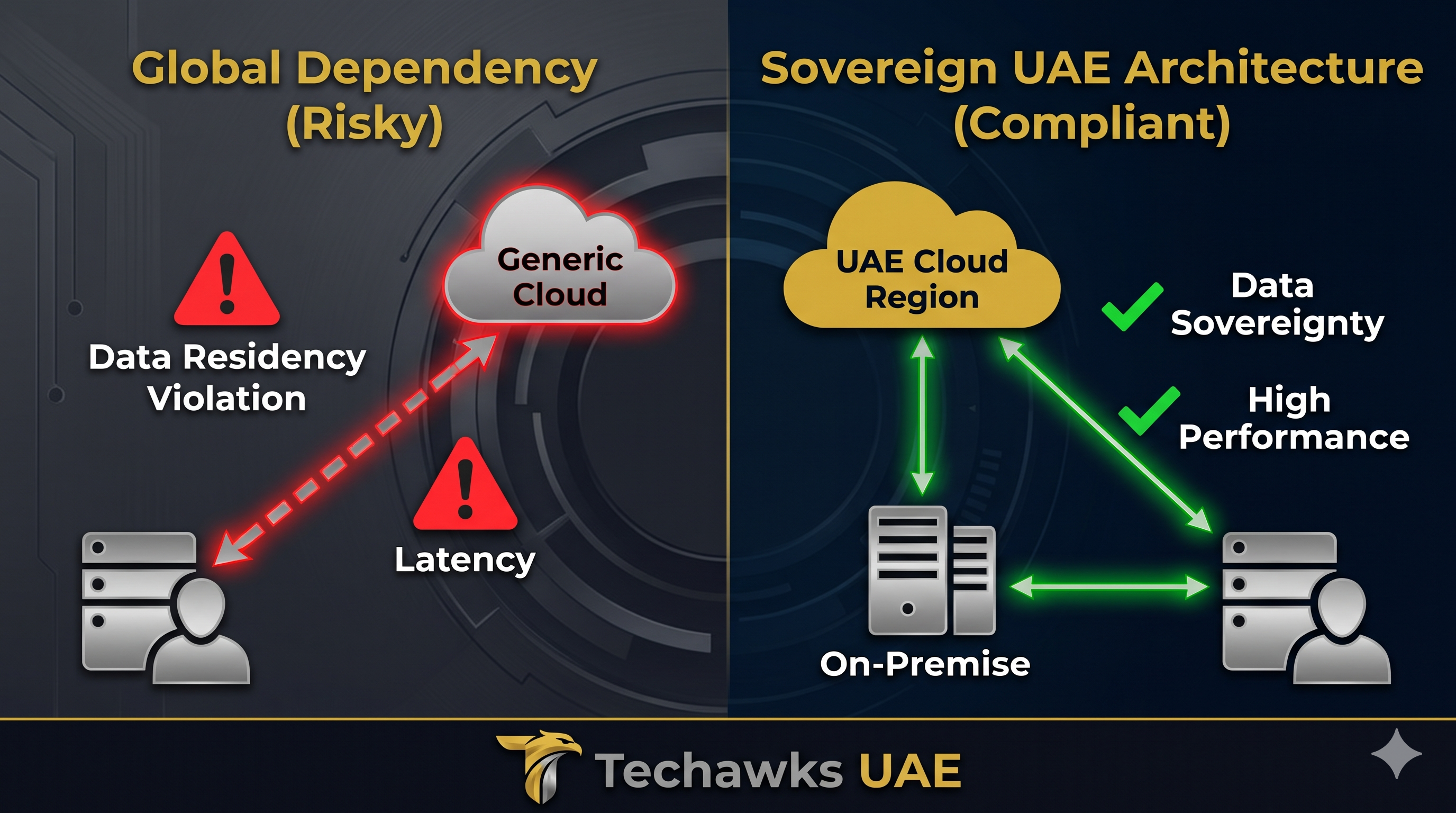
    The UAE is aggressively localizing its critical data infrastructure (think healthcare, finance, government services). For senior engineers, deploying a generic, US-hosted model (e.g., standard OpenAI or Anthropic API) is no longer just a technical choice; it's a potential compliance failure.


    The Latency Trap: Routing user requests to a distant region (e.g., US-East) adds unacceptable latency for real-time UAE applications, killing user experience in fintech or e-commerce.


    The Compliance Chasm: UAE regulators (like the UAE Data Office and sector-specific authorities) mandate that sensitive citizen data must remain within national borders. A simple API call to a global provider puts your organization at risk of severe penalties.


    The Innovation Stagnation: Relying on black-box global APIs prevents your team from fine-tuning models on proprietary Arabic datasets or specific industry knowledge crucial for the UAE market.


    Architecture Workflow
    To succeed, you must design a sovereign, hybrid architecture that keeps data and compute local while leveraging global knowledge safely.


    [ UAE END USER ] <--> [ LOCAL EDGE / PROXY ] <--> [ ON-PREM or UAE CLOUD REGION (e.g., AWS/Azure/G42) ]
    |
    [ SECURE DATA PIPELINES ] <--> [ EMBEDDED VECTOR DB ] <-- [ SECURE LOCAL LLM (e.g., Llama 3, Jais Fine-tune) ]
    3 Production-Grade Engineering Principles
    Master Hybrid Deployment Patterns: Learn to architect solutions where the heavy lifting—RAG (Retrieval-Augmented Generation) and inference—occurs inside a UAE cloud region or on-premises infrastructure. The global API should only be used as a failover, not the primary engine.


    Embrace 'Arabic-First' Fine-Tuning: The UAE market demands excellence in Arabic. Move beyond generic models and learn how to quantize and fine-tune open-source models (like Meta’s Llama 3 or core Arabic models like Jais) on local, secure datasets.


    Implement 'Sovereign Guardrails': As a senior engineer, you own the compliance. Implement strict data loss prevention (DLP) and PII (Personally Identifiable Information) scrubbing before any data is sent to an external model, ensuring privacy-by-design.


    Discussion Question
    As a UAE-based tech professional, what is the biggest hurdle you face in implementing local-first AI architecture: cost of infrastructure, lack of available local GPU compute, or internal resistance from management still pushing for the 'easiest' global API solution?


    CTA
    Join Techawks UAE to master the practical, localized engineering skills—from sovereign AI architecture to regulatory compliance—that are defining high-impact, senior roles across the Emirates.
    Navigating the UAE’s Data Sovereignty Shift: Why 'Local-First' AI Architecture is the New Gold Standard for Senior Engineers The Problem & Failure Modes The UAE is aggressively localizing its critical data infrastructure (think healthcare, finance, government services). For senior engineers, deploying a generic, US-hosted model (e.g., standard OpenAI or Anthropic API) is no longer just a technical choice; it's a potential compliance failure. The Latency Trap: Routing user requests to a distant region (e.g., US-East) adds unacceptable latency for real-time UAE applications, killing user experience in fintech or e-commerce. The Compliance Chasm: UAE regulators (like the UAE Data Office and sector-specific authorities) mandate that sensitive citizen data must remain within national borders. A simple API call to a global provider puts your organization at risk of severe penalties. The Innovation Stagnation: Relying on black-box global APIs prevents your team from fine-tuning models on proprietary Arabic datasets or specific industry knowledge crucial for the UAE market. Architecture Workflow To succeed, you must design a sovereign, hybrid architecture that keeps data and compute local while leveraging global knowledge safely. [ UAE END USER ] <--> [ LOCAL EDGE / PROXY ] <--> [ ON-PREM or UAE CLOUD REGION (e.g., AWS/Azure/G42) ] | [ SECURE DATA PIPELINES ] <--> [ EMBEDDED VECTOR DB ] <-- [ SECURE LOCAL LLM (e.g., Llama 3, Jais Fine-tune) ] 3 Production-Grade Engineering Principles Master Hybrid Deployment Patterns: Learn to architect solutions where the heavy lifting—RAG (Retrieval-Augmented Generation) and inference—occurs inside a UAE cloud region or on-premises infrastructure. The global API should only be used as a failover, not the primary engine. Embrace 'Arabic-First' Fine-Tuning: The UAE market demands excellence in Arabic. Move beyond generic models and learn how to quantize and fine-tune open-source models (like Meta’s Llama 3 or core Arabic models like Jais) on local, secure datasets. Implement 'Sovereign Guardrails': As a senior engineer, you own the compliance. Implement strict data loss prevention (DLP) and PII (Personally Identifiable Information) scrubbing before any data is sent to an external model, ensuring privacy-by-design. Discussion Question As a UAE-based tech professional, what is the biggest hurdle you face in implementing local-first AI architecture: cost of infrastructure, lack of available local GPU compute, or internal resistance from management still pushing for the 'easiest' global API solution? CTA Join Techawks UAE to master the practical, localized engineering skills—from sovereign AI architecture to regulatory compliance—that are defining high-impact, senior roles across the Emirates.
    0 Comments 0 Shares 203 Views 0 Reviews
  • Mastering "India Stack": Why the ONDC Protocol is the Final Boss for Indian E-Commerce
    The Problem: The Walled Garden
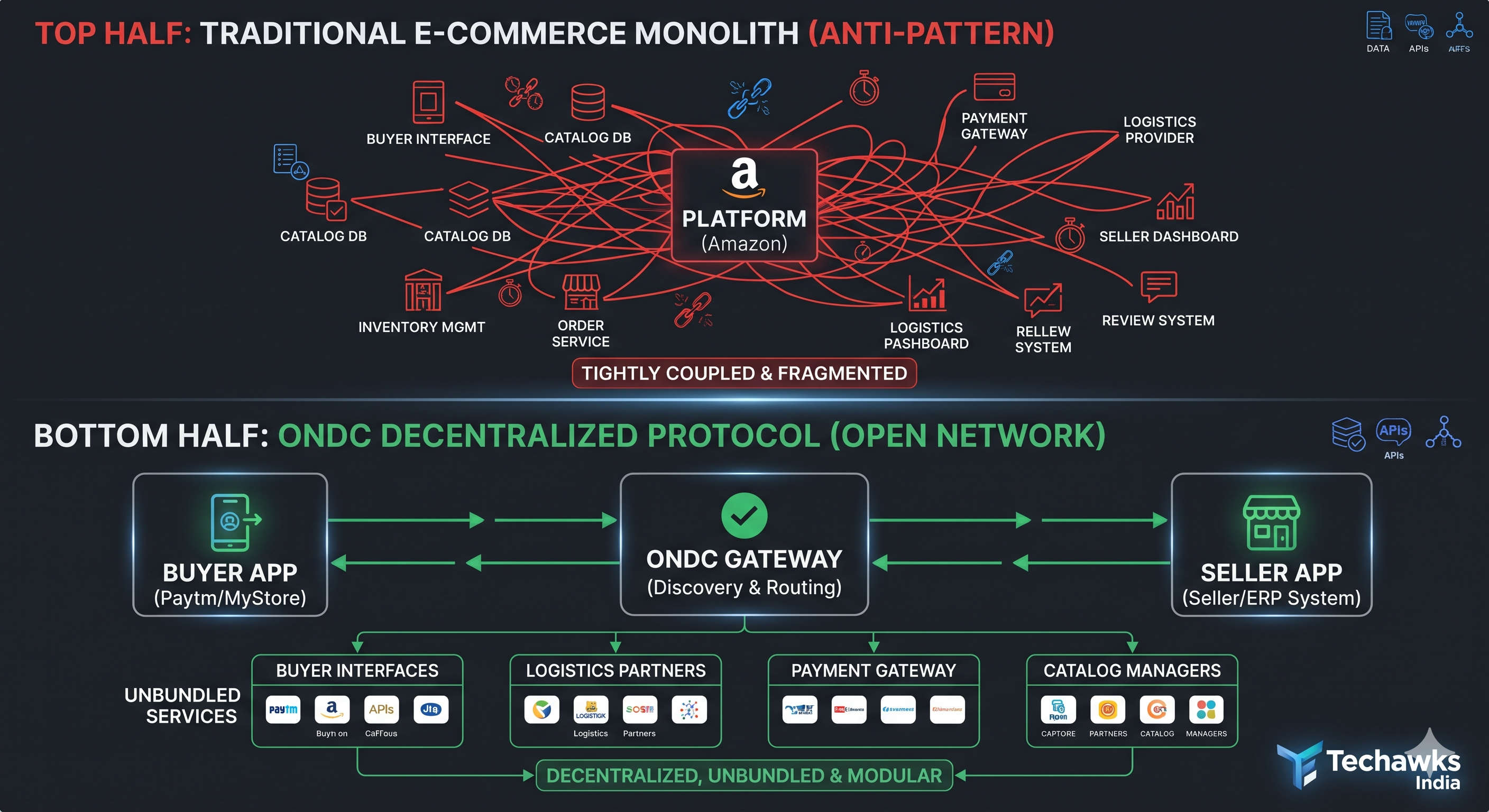
    Traditional e-commerce (Amazon, Flipkart) operates as a "walled garden." As a seller, you are locked into their catalog system, their logistics, and their payment gateway. As a buyer, your data is trapped within their ecosystem. This creates high barriers to entry for small Kirana stores and limits innovation.


    The Solution: The ONDC Unbundling
    ONDC, built on the Beckn protocol, uses a decentralized, gateway-based architecture. It separates the buyer's interface (Buyer App) from the seller's inventory (Seller App).


    The ONDC Workflow (Simplified):


    Plaintext
    [ BUYER (Paytm/MyStore) ]
    │
    ▼
    [ ONDC GATEWAY (Discovery & Routing) ]
    │
    ▼
    [ SELLER (Seller App/ERP System) ]
    When a user searches for "shoes" on a buyer app:


    The Gateway broadcasts the intent to all connected Seller Apps.


    Seller Apps respond with catalog availability and pricing.


    The Gateway presents the aggregated results to the user.


    The transaction (Order, Fulfillment, Payment) happens directly between Buyer App and Seller App.


    4 Actionable Principles for Developing on ONDC:


    Adopt the Beckn Protocol: ONDC is not a monolith; it's a set of APIs based on Beckn. Study the specifications (Search, Select, Init, Confirm, Status, Update) to understand how state is managed across disparate systems.


    Implement Stateless Gateways: Your Seller App must be designed to handle discovery requests from the Gateway without maintaining a persistent session. The protocol uses asynchronous messaging (webhooks) for fulfillment updates.


    Master Catalog Synchronization: As a seller-side developer, your biggest challenge is real-time inventory sync. Your backend must be able to "publish" catalog updates (using the on_search API) to the ONDC network instantly.


    Ensure Trust and Compliance: Every participant must have a valid digital signature (PKI) to interact on the network. Security and non-repudiation are enforced at the protocol level, not by a central authority.


    Discussion Question
    ONDC aims to level the playing field, but it introduces massive complexity in distributed transaction management (Sagas). If an order is confirmed on the Buyer App but the payment fails on the Seller App, who holds the state? Have you faced this "distributed system headache" while building an ONDC-compliant application?


    CTA
    Join Techawks India
    Are you building the future of Indian e-commerce on ONDC? Share your architectural diagrams, your integration war stories, and your solutions to the "state problem" below, and join the most authoritative community for Indian tech professionals at Techawks India!
    Mastering "India Stack": Why the ONDC Protocol is the Final Boss for Indian E-Commerce The Problem: The Walled Garden Traditional e-commerce (Amazon, Flipkart) operates as a "walled garden." As a seller, you are locked into their catalog system, their logistics, and their payment gateway. As a buyer, your data is trapped within their ecosystem. This creates high barriers to entry for small Kirana stores and limits innovation. The Solution: The ONDC Unbundling ONDC, built on the Beckn protocol, uses a decentralized, gateway-based architecture. It separates the buyer's interface (Buyer App) from the seller's inventory (Seller App). The ONDC Workflow (Simplified): Plaintext [ BUYER (Paytm/MyStore) ] │ ▼ [ ONDC GATEWAY (Discovery & Routing) ] │ ▼ [ SELLER (Seller App/ERP System) ] When a user searches for "shoes" on a buyer app: The Gateway broadcasts the intent to all connected Seller Apps. Seller Apps respond with catalog availability and pricing. The Gateway presents the aggregated results to the user. The transaction (Order, Fulfillment, Payment) happens directly between Buyer App and Seller App. 4 Actionable Principles for Developing on ONDC: Adopt the Beckn Protocol: ONDC is not a monolith; it's a set of APIs based on Beckn. Study the specifications (Search, Select, Init, Confirm, Status, Update) to understand how state is managed across disparate systems. Implement Stateless Gateways: Your Seller App must be designed to handle discovery requests from the Gateway without maintaining a persistent session. The protocol uses asynchronous messaging (webhooks) for fulfillment updates. Master Catalog Synchronization: As a seller-side developer, your biggest challenge is real-time inventory sync. Your backend must be able to "publish" catalog updates (using the on_search API) to the ONDC network instantly. Ensure Trust and Compliance: Every participant must have a valid digital signature (PKI) to interact on the network. Security and non-repudiation are enforced at the protocol level, not by a central authority. Discussion Question ONDC aims to level the playing field, but it introduces massive complexity in distributed transaction management (Sagas). If an order is confirmed on the Buyer App but the payment fails on the Seller App, who holds the state? Have you faced this "distributed system headache" while building an ONDC-compliant application? CTA Join Techawks India Are you building the future of Indian e-commerce on ONDC? Share your architectural diagrams, your integration war stories, and your solutions to the "state problem" below, and join the most authoritative community for Indian tech professionals at Techawks India!
    0 Comments 0 Shares 180 Views 0 Reviews
  • Architecting for India's DPDP Act: Why Your Consent Layer Can't Just Be an Afterthought in a Modal
    As India solidifies its compliance roadmap for the DPDP Act alongside sectoral mandates (RBI payment localization, SEBI frameworks, and UIDAI data vaults), engineering orgs across Bengaluru, Hyderabad, Pune, and NCR are facing a major architectural overhaul.


    Consent under DPDP must be free, specific, informed, unconditional, and unambiguously revocable with an easy withdrawal mechanism. For developers building high-throughput consumer tech, fintech, or SaaS platforms, this makes treating user consent as a static boolean flag (is_consented: true) in your SQL users table completely obsolete.


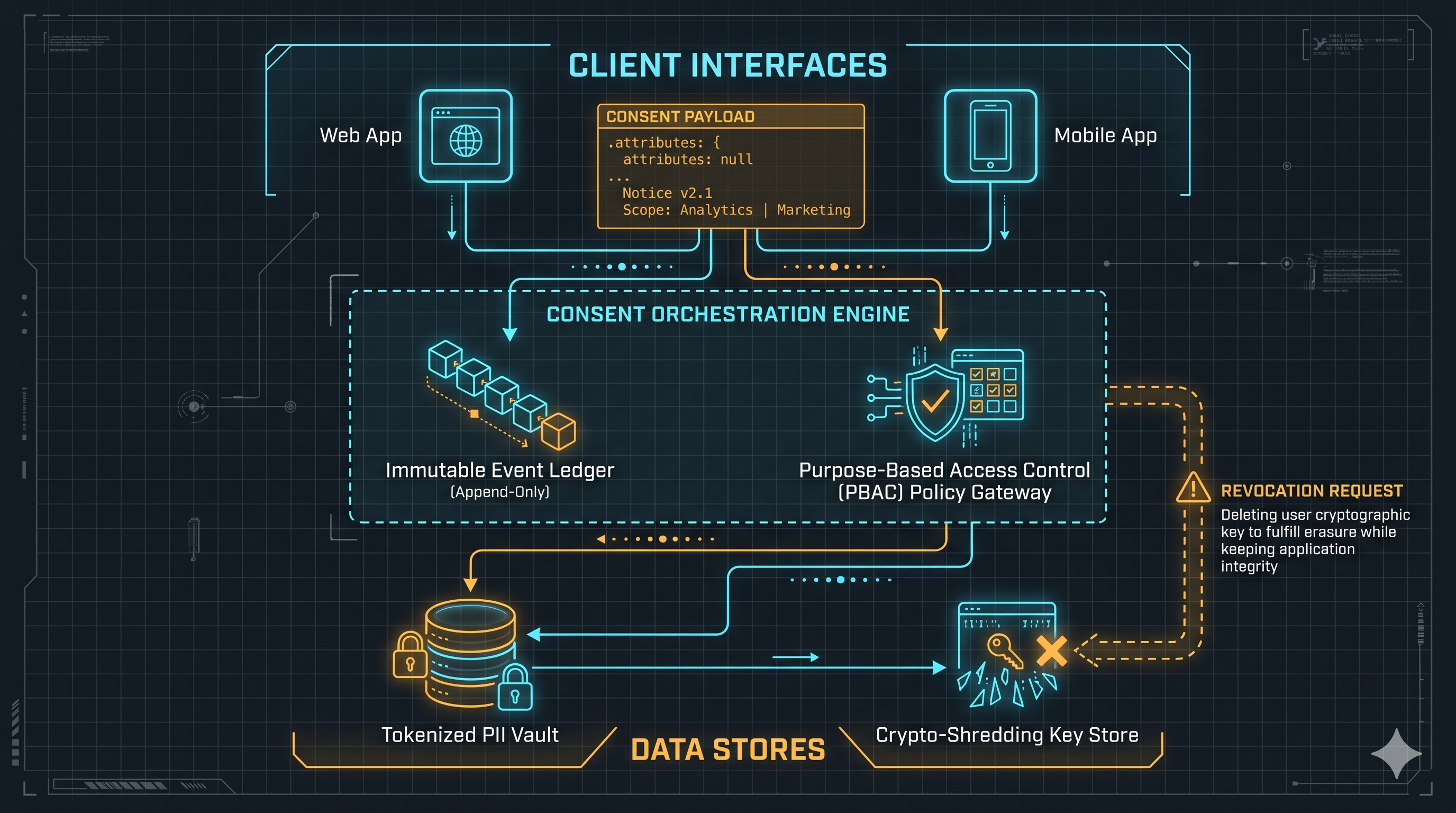
    Here is how systems architects are structuring a modern Consent-Aware Data Pipeline:


    Decouple Consent into an Event-Driven Audit Ledger:


    Treat consent as an immutable time-series event, not mutable user state.


    When a user opts in or revokes consent for a specific processing purpose (e.g., promotional profiling vs. transactional telemetry), publish an event (ConsentUpdatedEvent) to an event stream (such as Kafka or Redpanda).


    Persist every state change with the exact notice version, scope timestamp, and identity hash into an append-only consent registry.


    Downstream Tokenization & Purpose-Based Access Control (PBAC):


    Decouple raw PII from application processing layers using internal tokenization services.


    Inject purpose context into your data access calls:


    Python
    # Enforce purpose-scoped retrieval at the data gateway
    def get_user_profile(user_id, purpose="order_fulfillment"):
    consent_status = consent_service.verify(user_id, purpose)
    if not consent_status.is_valid():
    raise PermissionError("DPDP: Purpose consent missing or revoked")
    return token_vault.resolve_pii(user_id, fields=consent_status.permitted_fields)
    Handling the "Right to Erasure" Across Distributed Systems:


    When an Indian data principal requests data deletion or withdraws consent, your architecture must reliably propagate that deletion to replica stores, analytics data lakes, and vector indices.


    Avoid full table rebuilds by employing cryptographic erasure (crypto-shredding): encrypt individual user records with unique per-user keys. Deleting the specific user's encryption key renders their distributed data unrecoverable, fulfilling compliance without breaking immutable event stores.


    Discussion Question
    For engineering teams and CTOs building for the Indian ecosystem: How is your team handling consent revocation downstream in your analytics lakes and caching layers? Have you opted for crypto-shredding, modular microservices with dedicated consent tokens, or external consent management platforms?


    CTA
    Join Techawks India: Connect with our nationwide network of engineering leads, security researchers, and systems architects as we break down deep-dive engineering patterns, compliance blueprints, and tech innovations shaping the Indian ecosystem. Drop your thoughts below and subscribe to the page!
    Architecting for India's DPDP Act: Why Your Consent Layer Can't Just Be an Afterthought in a Modal As India solidifies its compliance roadmap for the DPDP Act alongside sectoral mandates (RBI payment localization, SEBI frameworks, and UIDAI data vaults), engineering orgs across Bengaluru, Hyderabad, Pune, and NCR are facing a major architectural overhaul. Consent under DPDP must be free, specific, informed, unconditional, and unambiguously revocable with an easy withdrawal mechanism. For developers building high-throughput consumer tech, fintech, or SaaS platforms, this makes treating user consent as a static boolean flag (is_consented: true) in your SQL users table completely obsolete. Here is how systems architects are structuring a modern Consent-Aware Data Pipeline: Decouple Consent into an Event-Driven Audit Ledger: Treat consent as an immutable time-series event, not mutable user state. When a user opts in or revokes consent for a specific processing purpose (e.g., promotional profiling vs. transactional telemetry), publish an event (ConsentUpdatedEvent) to an event stream (such as Kafka or Redpanda). Persist every state change with the exact notice version, scope timestamp, and identity hash into an append-only consent registry. Downstream Tokenization & Purpose-Based Access Control (PBAC): Decouple raw PII from application processing layers using internal tokenization services. Inject purpose context into your data access calls: Python # Enforce purpose-scoped retrieval at the data gateway def get_user_profile(user_id, purpose="order_fulfillment"): consent_status = consent_service.verify(user_id, purpose) if not consent_status.is_valid(): raise PermissionError("DPDP: Purpose consent missing or revoked") return token_vault.resolve_pii(user_id, fields=consent_status.permitted_fields) Handling the "Right to Erasure" Across Distributed Systems: When an Indian data principal requests data deletion or withdraws consent, your architecture must reliably propagate that deletion to replica stores, analytics data lakes, and vector indices. Avoid full table rebuilds by employing cryptographic erasure (crypto-shredding): encrypt individual user records with unique per-user keys. Deleting the specific user's encryption key renders their distributed data unrecoverable, fulfilling compliance without breaking immutable event stores. Discussion Question For engineering teams and CTOs building for the Indian ecosystem: How is your team handling consent revocation downstream in your analytics lakes and caching layers? Have you opted for crypto-shredding, modular microservices with dedicated consent tokens, or external consent management platforms? CTA Join Techawks India: Connect with our nationwide network of engineering leads, security researchers, and systems architects as we break down deep-dive engineering patterns, compliance blueprints, and tech innovations shaping the Indian ecosystem. Drop your thoughts below and subscribe to the page!
    0 Comments 0 Shares 183 Views 0 Reviews
  • Unlocking Offline Digital Payments: Inside NPCI's Tap-to-Pay and the Architecture of Non-Internet UPI
    In India's hyper-digital economy, UPI is the lifeblood of daily commerce. However, there's a major, invisible bottleneck: network dropouts. Whether a customer is in a underground metro, a remote rural area, or a crowded festival, a 1-bar signal means a failing payment gateway and a frustrated customer.


    To bridge this connectivity gap, the National Payments Corporation of India (NPCI) and the Reserve Bank of India (RBI) have introduced native Offline digital payment specifications (utilising UPI Lite X and the latest Tap-to-Pay standards).


    Instead of treating internet availability as a mandatory requirement, these frameworks allow on-device wallets and Near Field Communication (NFC) to process transactions directly between devices, deferring bank-server reconciliation for later.


    [ Offline Buyer (NFC Device) ]
    │
    ▼ (Tap-to-Pay / Bluetooth)
    ┌──────────────────┐
    │ Merchant POS │ (Receives cryptogram offline)
    │ Terminal │
    └──────────────────┘
    │
    (On-device wallet debited)
    │
    ┌──────────────────┐
    │ Delayed Batch │ (Sends to bank when
    │ Reconciliation │ connectivity returns)
    └──────────────────┘
    💡 The Developer’s Blueprint for Designing Offline Digital Payments:
    Leverage the On-Device Ledger (UPI Lite Model)
    You cannot query a remote core banking system (CBS) without network. Instead, the architecture uses an on-device tokenized wallet. The user "pre-loads" up to ₹2,000 into their local UPI Lite pool on their device while online. Small-value transactions (capped up to ₹500 per transaction) are then decremented locally without needing a One-Time Password (OTP) or immediate server authentication—relying on cryptographic device signatures (the Lite Reference Number - LRN) to record transactions.


    Transition via Peer-to-Peer NFC or Bluetooth
    When the buyer taps their phone against an offline or connected Merchant POS terminal, the payment payload is transmitted locally via NFC or Bluetooth. The buyer's device signs the debit and passes the digital signature to the POS or merchant's device offline.


    Incorporate Definite "Delayed Batch" Ledger Settlement
    For true offline-to-offline scenarios, the transaction isn't settled instantly across banks. The signed transaction data (or payment cryptogram) is securely queued on the receiving terminal. Once the merchant device or the POS terminal detects an active network connection, it sends the stored batch back to the central payment switch for backend processing.


    By taking the "real-time network" out of small transactions, you drop technical failure rates to near zero.


    Discussion Question
    With NPCI heavily pushing offline and Tap-to-Pay rails, how is your engineering or product team planning to leverage on-device wallets like UPI Lite for frictionless, offline, or low-signal use cases?


    CTA
    Want to stay at the forefront of Indian fintech innovation and build scalable digital payment systems? Join Techawks India to discuss NPCI specifications, UPI integrations, and high-performance system architectures with top local builders and engineers.
    Unlocking Offline Digital Payments: Inside NPCI's Tap-to-Pay and the Architecture of Non-Internet UPI In India's hyper-digital economy, UPI is the lifeblood of daily commerce. However, there's a major, invisible bottleneck: network dropouts. Whether a customer is in a underground metro, a remote rural area, or a crowded festival, a 1-bar signal means a failing payment gateway and a frustrated customer. To bridge this connectivity gap, the National Payments Corporation of India (NPCI) and the Reserve Bank of India (RBI) have introduced native Offline digital payment specifications (utilising UPI Lite X and the latest Tap-to-Pay standards). Instead of treating internet availability as a mandatory requirement, these frameworks allow on-device wallets and Near Field Communication (NFC) to process transactions directly between devices, deferring bank-server reconciliation for later. [ Offline Buyer (NFC Device) ] │ ▼ (Tap-to-Pay / Bluetooth) ┌──────────────────┐ │ Merchant POS │ (Receives cryptogram offline) │ Terminal │ └──────────────────┘ │ (On-device wallet debited) │ ┌──────────────────┐ │ Delayed Batch │ (Sends to bank when │ Reconciliation │ connectivity returns) └──────────────────┘ 💡 The Developer’s Blueprint for Designing Offline Digital Payments: Leverage the On-Device Ledger (UPI Lite Model) You cannot query a remote core banking system (CBS) without network. Instead, the architecture uses an on-device tokenized wallet. The user "pre-loads" up to ₹2,000 into their local UPI Lite pool on their device while online. Small-value transactions (capped up to ₹500 per transaction) are then decremented locally without needing a One-Time Password (OTP) or immediate server authentication—relying on cryptographic device signatures (the Lite Reference Number - LRN) to record transactions. Transition via Peer-to-Peer NFC or Bluetooth When the buyer taps their phone against an offline or connected Merchant POS terminal, the payment payload is transmitted locally via NFC or Bluetooth. The buyer's device signs the debit and passes the digital signature to the POS or merchant's device offline. Incorporate Definite "Delayed Batch" Ledger Settlement For true offline-to-offline scenarios, the transaction isn't settled instantly across banks. The signed transaction data (or payment cryptogram) is securely queued on the receiving terminal. Once the merchant device or the POS terminal detects an active network connection, it sends the stored batch back to the central payment switch for backend processing. By taking the "real-time network" out of small transactions, you drop technical failure rates to near zero. Discussion Question With NPCI heavily pushing offline and Tap-to-Pay rails, how is your engineering or product team planning to leverage on-device wallets like UPI Lite for frictionless, offline, or low-signal use cases? CTA Want to stay at the forefront of Indian fintech innovation and build scalable digital payment systems? Join Techawks India to discuss NPCI specifications, UPI integrations, and high-performance system architectures with top local builders and engineers.
    0 Comments 0 Shares 254 Views 0 Reviews
  • Beyond the Global Cloud: Why Canadian Tech Leaders are Prioritizing "Sovereign AI & Data Residency" in 2026
    Across Canada’s technology hubs, a major shift is redefining the enterprise playbooks.


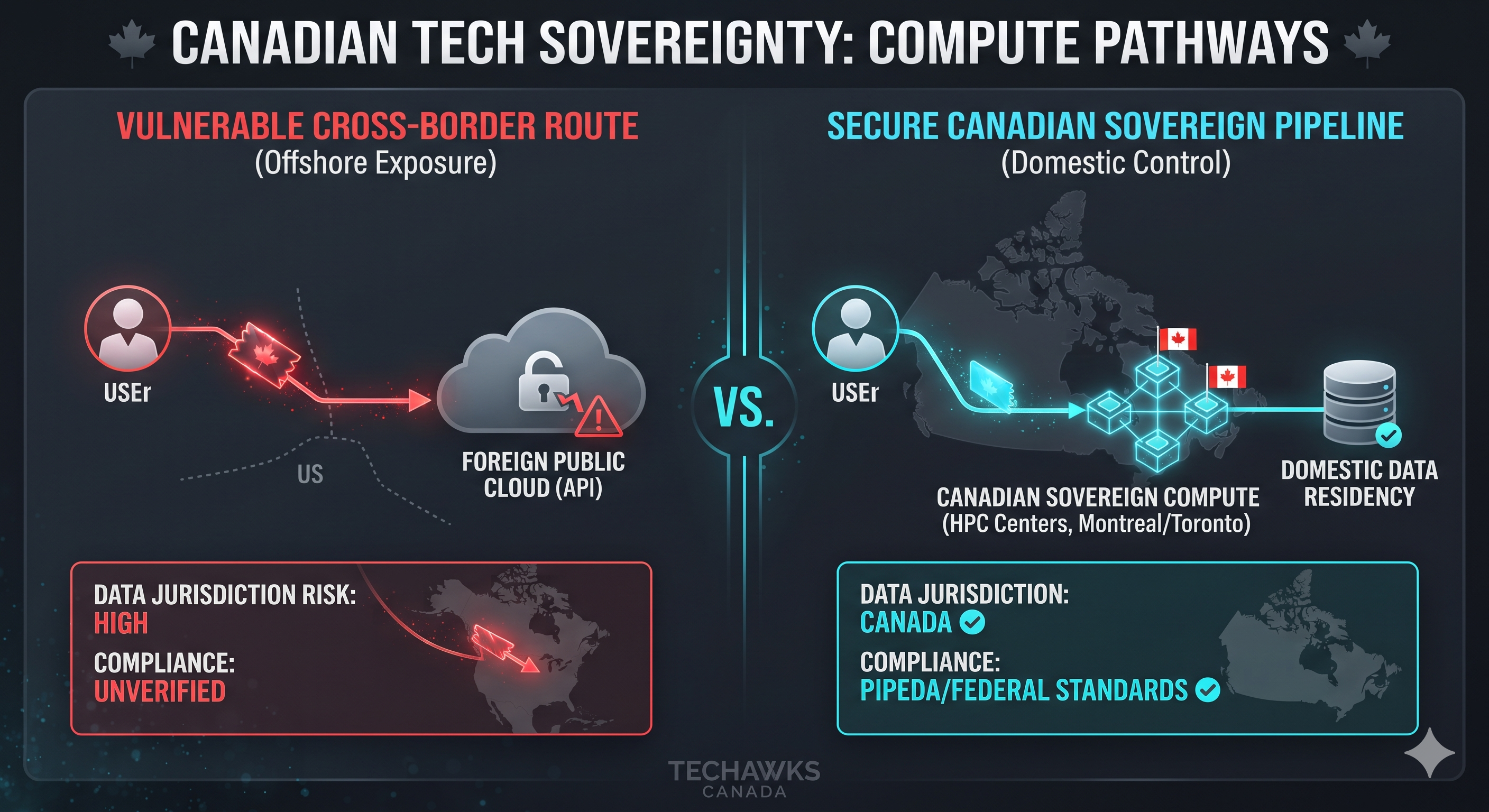
    For years, local devs and architects relied entirely on global, centralized API loops for model deployment. But in late 2026, the boundaries have been firmly redrawn. Driven by the federal Government’s CA$2 Billion Sovereign AI Compute Strategy, strict "Protected B" procurement gates, and sweeping national privacy priorities, organizations have reached a hard limit. They are no longer willing to gamble with cross-border data leakage or expose Canadian intellectual property (IP) and data to foreign jurisdictions.


    The standard has moved toward Domestic Data Sovereign AI Stacks: executing and running models entirely on Canadian soil, within audited, locally-resident data centers (like the growing clusters in Toronto, Montreal, Calgary, and Vancouver), and under Canadian legal and operational jurisdiction.


    For Canadian IT, DevOps, and data professionals, this rebalancing represents a massive career opportunity. The market is aggressively seeking Sovereign Architecture and Governance Engineers who can build secure, high-utility automation without compromising national data residency.


    Here is how to position your career and technical learning to master this paradigm:


    Master Deploying Open-Weights Models on Domestic Compute
    Avoid routing sensitive data via out-of-country API endpoints. Focus on hosting and serving capable open-weights models (such as Falcon, Llama, and Mistral) on sovereign Canadian cloud platforms and private infrastructure. Get hands-on experience with runtime environments, quantization, and secure micro-sandboxing. Show that you can scale internal inference capabilities within Canada's borders.


    Secure the In-Country RAG (Retrieval-Augmented Generation) Boundary
    National privacy rules dictate that employee and customer datasets must have zero non-authorized cross-border exposure. Design RAG systems where data extraction, embedding generation, vector search (using local vector databases), and prompt processing are tightly sandboxed within domestic environments. Master the isolation of pipeline environments (using VPCs, customer-held encryption keys, and continuous monitoring) to assure zero-egress data leakage.


    Master Platform Policy and AI Safety Guardrails
    With Bill C-34 (and online safety/risk regulations) reshaping expectations, simply deploying models isn't enough. Incorporate Policy-as-Code and runtime admission validation (like Kyverno and OPA) to actively scan AI agent behavior and inputs. If you can automate "Involvement Escrow" triggers to pause risky, unvetted workflows and enforce structured debugging/auditing tracks, you will be in high demand for Canada’s enterprise teams.


    The Actionable Takeaway:
    Audit your tech pipeline. Identify where your team or client data slips past Canadian borders for automated processing. This weekend, build a locally-hosted sandbox or VPC-isolated RAG pipeline inside a Canadian cloud region using a compressed, open-weights model on a local runtime (like Ollama). Document the localized data flow, verify zero external data leaks, and showcase your compliance and residency readiness to your leadership team.


    Keep data local. Design for compliance. Own the architecture.


    Discussion Question
    As Data Residency and Sovereign AI become standard requirements across Canadian enterprises and public sectors, has your team started migrating workloads to domestic, sovereign environments, or are you still relying on foreign APIs?


    CTA
    Join Techawks Canada — Connect with forward-thinking Canadian engineers, master sovereign AI architectures and local DevSecOps pipelines, and stay at the forefront of safe, compliant tech innovation.
    Beyond the Global Cloud: Why Canadian Tech Leaders are Prioritizing "Sovereign AI & Data Residency" in 2026 Across Canada’s technology hubs, a major shift is redefining the enterprise playbooks. For years, local devs and architects relied entirely on global, centralized API loops for model deployment. But in late 2026, the boundaries have been firmly redrawn. Driven by the federal Government’s CA$2 Billion Sovereign AI Compute Strategy, strict "Protected B" procurement gates, and sweeping national privacy priorities, organizations have reached a hard limit. They are no longer willing to gamble with cross-border data leakage or expose Canadian intellectual property (IP) and data to foreign jurisdictions. The standard has moved toward Domestic Data Sovereign AI Stacks: executing and running models entirely on Canadian soil, within audited, locally-resident data centers (like the growing clusters in Toronto, Montreal, Calgary, and Vancouver), and under Canadian legal and operational jurisdiction. For Canadian IT, DevOps, and data professionals, this rebalancing represents a massive career opportunity. The market is aggressively seeking Sovereign Architecture and Governance Engineers who can build secure, high-utility automation without compromising national data residency. Here is how to position your career and technical learning to master this paradigm: Master Deploying Open-Weights Models on Domestic Compute Avoid routing sensitive data via out-of-country API endpoints. Focus on hosting and serving capable open-weights models (such as Falcon, Llama, and Mistral) on sovereign Canadian cloud platforms and private infrastructure. Get hands-on experience with runtime environments, quantization, and secure micro-sandboxing. Show that you can scale internal inference capabilities within Canada's borders. Secure the In-Country RAG (Retrieval-Augmented Generation) Boundary National privacy rules dictate that employee and customer datasets must have zero non-authorized cross-border exposure. Design RAG systems where data extraction, embedding generation, vector search (using local vector databases), and prompt processing are tightly sandboxed within domestic environments. Master the isolation of pipeline environments (using VPCs, customer-held encryption keys, and continuous monitoring) to assure zero-egress data leakage. Master Platform Policy and AI Safety Guardrails With Bill C-34 (and online safety/risk regulations) reshaping expectations, simply deploying models isn't enough. Incorporate Policy-as-Code and runtime admission validation (like Kyverno and OPA) to actively scan AI agent behavior and inputs. If you can automate "Involvement Escrow" triggers to pause risky, unvetted workflows and enforce structured debugging/auditing tracks, you will be in high demand for Canada’s enterprise teams. The Actionable Takeaway: Audit your tech pipeline. Identify where your team or client data slips past Canadian borders for automated processing. This weekend, build a locally-hosted sandbox or VPC-isolated RAG pipeline inside a Canadian cloud region using a compressed, open-weights model on a local runtime (like Ollama). Document the localized data flow, verify zero external data leaks, and showcase your compliance and residency readiness to your leadership team. Keep data local. Design for compliance. Own the architecture. Discussion Question As Data Residency and Sovereign AI become standard requirements across Canadian enterprises and public sectors, has your team started migrating workloads to domestic, sovereign environments, or are you still relying on foreign APIs? CTA Join Techawks Canada — Connect with forward-thinking Canadian engineers, master sovereign AI architectures and local DevSecOps pipelines, and stay at the forefront of safe, compliant tech innovation.
    0 Comments 0 Shares 924 Views 0 Reviews
  • The Illusion of the Offshore Sandbox: Why Canadian Tech Scaling Demands Domestic Compute and Data Sovereignty
    Canada has long punched above its weight class as a global powerhouse for foundational AI research and elite technical talent. Yet, for years, Canadian companies faced a frustrating structural bottleneck: scaling local innovations meant relying heavily on foreign cloud infrastructure and cross-border data pipelines.


    With the rollout of domestic initiatives like the AI Sovereign Compute Infrastructure Program (SCIP) and modernized federal data frameworks, the paradigm is shifting. Sovereign control over where your AI models train, where your data rests, and how your systems process personal information is no longer just a legal preference—it's a core competitive moat.


    What you need to implement in your architecture right now:


    Enforce Strict Data Residency by Design: Audit your cloud stack today. Ensure that data ingestion, model fine-tuning, and token inference execute entirely within verified Canadian data center regions to comply with federal and provincial privacy laws.


    Leverage Sovereign Compute Pipelines: Align your long-term infrastructure scaling plans with domestic high-performance computing (HPC) centers and national research networks rather than depending exclusively on foreign hyperscalers.


    Maintain Unified AI Inventories: Build a living register of every model, third-party API, and dataset in your pipeline to easily satisfy emerging Canadian compliance guidelines and audit standards.


    Discussion Question
    Is your Canadian engineering team actively transitioning workloads to domestic sovereign cloud infrastructure, or are your core AI pipelines still dependent on foreign-hosted endpoints?


    CTA (Join Techawks Canada)
    Ready to build resilient architectures, navigate the future of Canadian tech sovereignty, and connect with top-tier builders across the country? Join Techawks Canada today and scale your impact.
    The Illusion of the Offshore Sandbox: Why Canadian Tech Scaling Demands Domestic Compute and Data Sovereignty Canada has long punched above its weight class as a global powerhouse for foundational AI research and elite technical talent. Yet, for years, Canadian companies faced a frustrating structural bottleneck: scaling local innovations meant relying heavily on foreign cloud infrastructure and cross-border data pipelines. With the rollout of domestic initiatives like the AI Sovereign Compute Infrastructure Program (SCIP) and modernized federal data frameworks, the paradigm is shifting. Sovereign control over where your AI models train, where your data rests, and how your systems process personal information is no longer just a legal preference—it's a core competitive moat. What you need to implement in your architecture right now: Enforce Strict Data Residency by Design: Audit your cloud stack today. Ensure that data ingestion, model fine-tuning, and token inference execute entirely within verified Canadian data center regions to comply with federal and provincial privacy laws. Leverage Sovereign Compute Pipelines: Align your long-term infrastructure scaling plans with domestic high-performance computing (HPC) centers and national research networks rather than depending exclusively on foreign hyperscalers. Maintain Unified AI Inventories: Build a living register of every model, third-party API, and dataset in your pipeline to easily satisfy emerging Canadian compliance guidelines and audit standards. Discussion Question Is your Canadian engineering team actively transitioning workloads to domestic sovereign cloud infrastructure, or are your core AI pipelines still dependent on foreign-hosted endpoints? CTA (Join Techawks Canada) Ready to build resilient architectures, navigate the future of Canadian tech sovereignty, and connect with top-tier builders across the country? Join Techawks Canada today and scale your impact.
    0 Comments 0 Shares 301 Views 0 Reviews
  • The Illusion of the Free-Form Sandbox: Why UK Tech Scaling Demands Proactive Data Governance and Cross-Regime Alignment
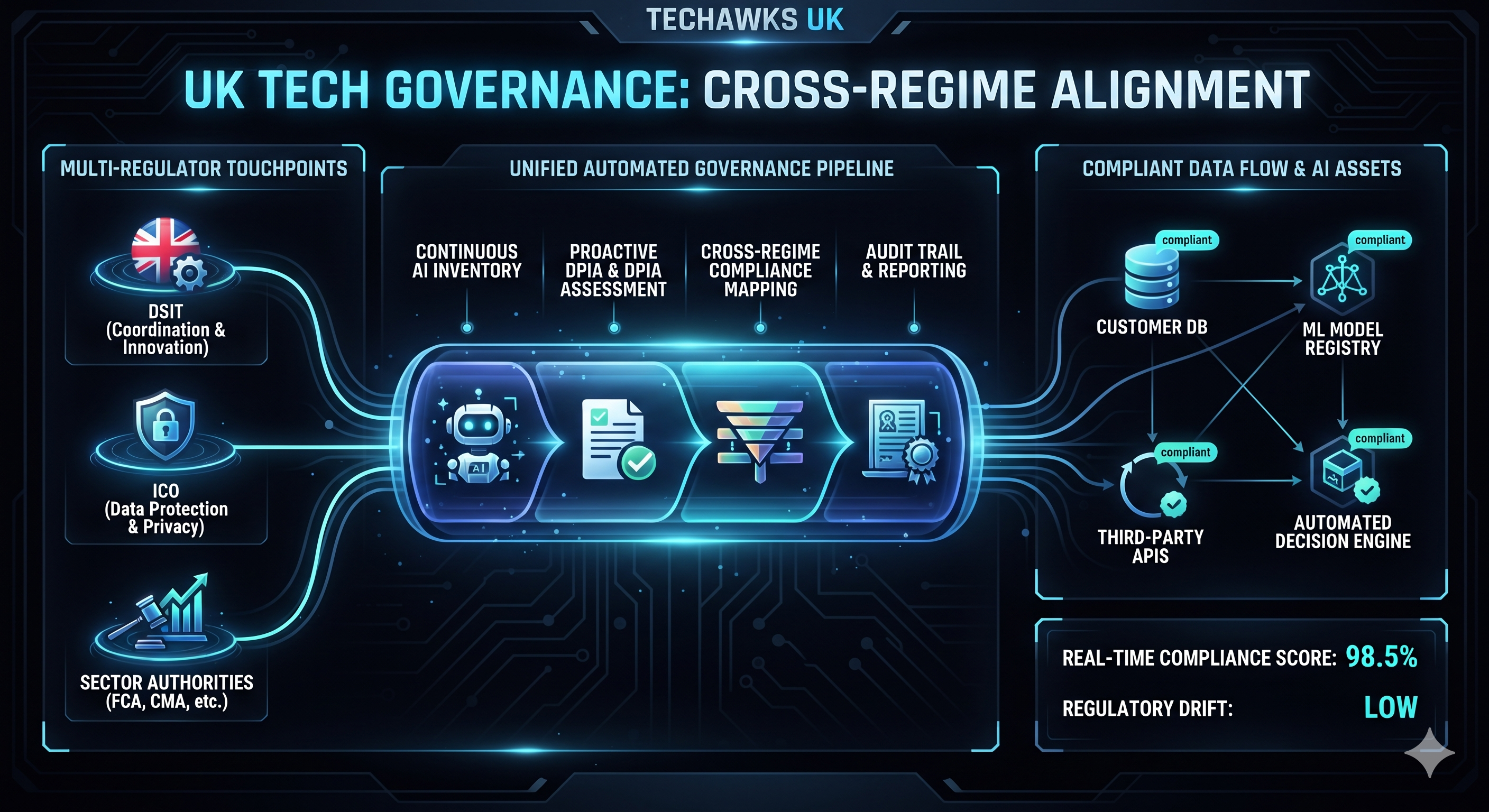
    The UK technology landscape operates under a unique, decentralized model. Rather than waiting for a single monolithic rulebook like the EU AI Act, British innovation relies on sector-led guidance coordinated through the Department for Science, Innovation and Technology (DSIT) and enforced by bodies like the Information Commissioner's Office (ICO) and the FCA.


    With the introduction of the Data (Use and Access) Act and heightened statutory duties around automated decision-making and AI governance, building products without built-in audit trails is a massive liability. When your software processes customer data or deploys automated algorithms across financial, health, or digital services, decentralized oversight means you may have to map compliance across multiple parallel regulatory frameworks simultaneously.


    What you need to implement in your engineering stack right now:


    Continuous AI Discovery & Inventories: You cannot govern what you cannot see. Maintain a living, automated AI and data processing register that tracks every model, dataset, and third-party API utilized across your workflows.


    Embed Data Protection by Design: Move away from retroactive privacy policies. Integrate Data Protection Impact Assessments (DPIAs) and transparent human oversight mechanisms directly into your CI/CD deployment gates.


    Prepare for Multi-Regulator Accountability: Ensure your technical documentation and decision-making trails are robust enough to satisfy cross-cutting principles—spanning safety, transparency, robustness, and fairness.


    Discussion Question
    How is your UK-based team navigating the shift toward decentralized multi-regulator compliance? Are you building active AI inventories, or are you still relying on reactive legal reviews?


    CTA (Join Techawks UK)
    Ready to master compliant engineering, navigate evolving UK tech regulations, and connect with elite British innovators and builders? Join Techawks UK today and scale with confidence.
    The Illusion of the Free-Form Sandbox: Why UK Tech Scaling Demands Proactive Data Governance and Cross-Regime Alignment The UK technology landscape operates under a unique, decentralized model. Rather than waiting for a single monolithic rulebook like the EU AI Act, British innovation relies on sector-led guidance coordinated through the Department for Science, Innovation and Technology (DSIT) and enforced by bodies like the Information Commissioner's Office (ICO) and the FCA. With the introduction of the Data (Use and Access) Act and heightened statutory duties around automated decision-making and AI governance, building products without built-in audit trails is a massive liability. When your software processes customer data or deploys automated algorithms across financial, health, or digital services, decentralized oversight means you may have to map compliance across multiple parallel regulatory frameworks simultaneously. What you need to implement in your engineering stack right now: Continuous AI Discovery & Inventories: You cannot govern what you cannot see. Maintain a living, automated AI and data processing register that tracks every model, dataset, and third-party API utilized across your workflows. Embed Data Protection by Design: Move away from retroactive privacy policies. Integrate Data Protection Impact Assessments (DPIAs) and transparent human oversight mechanisms directly into your CI/CD deployment gates. Prepare for Multi-Regulator Accountability: Ensure your technical documentation and decision-making trails are robust enough to satisfy cross-cutting principles—spanning safety, transparency, robustness, and fairness. Discussion Question How is your UK-based team navigating the shift toward decentralized multi-regulator compliance? Are you building active AI inventories, or are you still relying on reactive legal reviews? CTA (Join Techawks UK) Ready to master compliant engineering, navigate evolving UK tech regulations, and connect with elite British innovators and builders? Join Techawks UK today and scale with confidence.
    0 Comments 0 Shares 302 Views 0 Reviews
  • The Power Grid Bottleneck: Why US Tech Innovation Is Facing a Megawatt Crisis
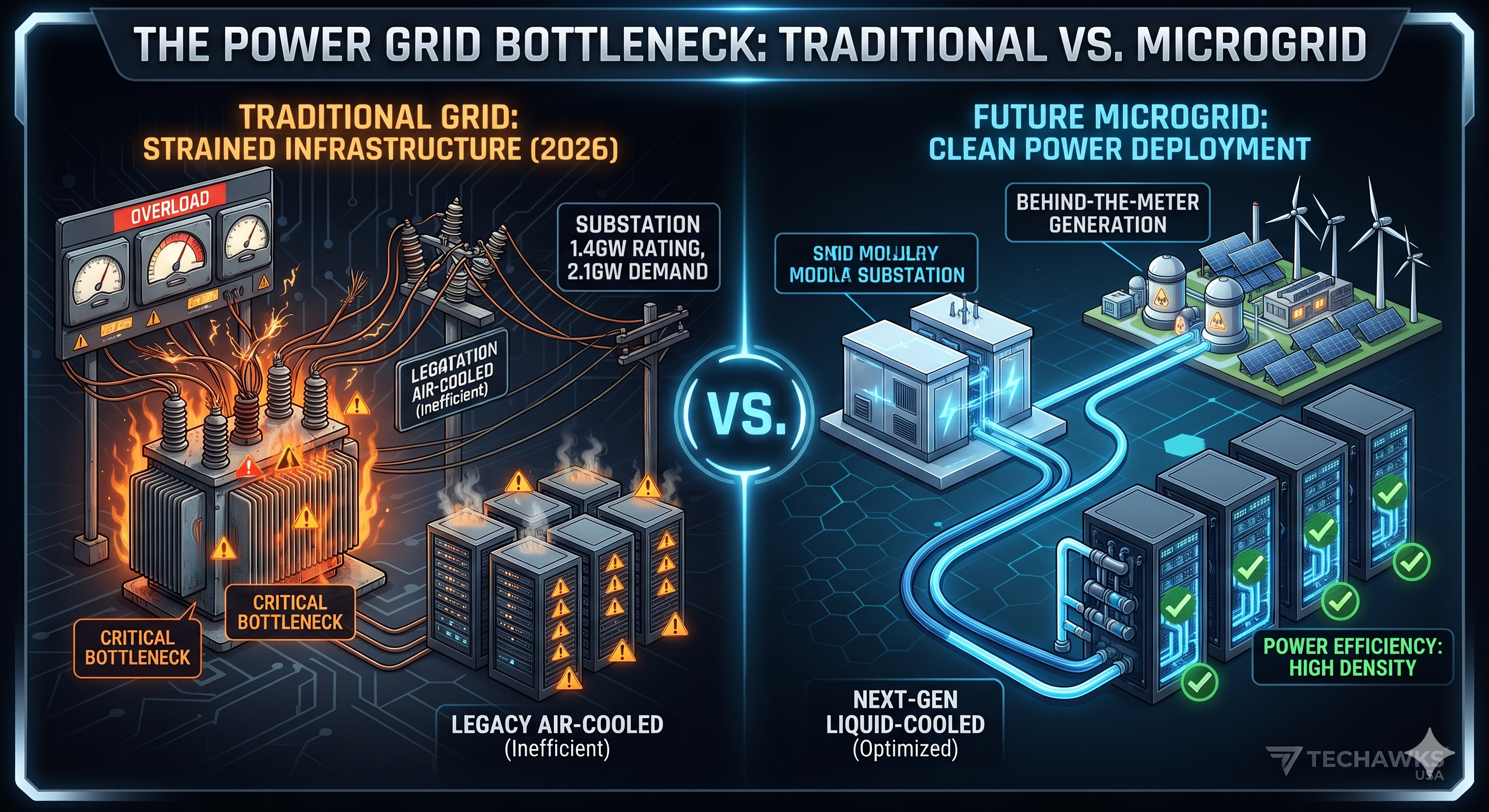
    As Big Four hyperscalers and enterprise AI providers push capital expenditures past historical records to build out massive AI inference factories, they have run into an immovable physical wall: the US power grid.


    With data center electricity demand surging and lead times for large power sub-station transformers stretching past two years, energy availability has officially replaced software talent as the primary bottleneck for tech growth. Facilities that once required a few megawatts now demand hundreds, forcing the industry into an aggressive infrastructure pivot.


    What you need to understand about the infrastructure shift:


    The Rise of Behind-the-Meter Power: To bypass grid congestion and lengthy utility interconnection queues, leading tech campuses are increasingly investing in direct nuclear and clean energy microgrid partnerships.


    Liquid Cooling and Rack Density: With upcoming high-density server racks drawing hundreds of kilowatts, traditional air cooling is obsolete. Engineering teams must redesign software workloads around liquid-cooled, high-voltage data center architectures.


    Inference Efficiency as Cost Control: As power constraints drive up operational costs, writing unoptimized, bloated code is no longer just bad practice—it's an economic liability. Efficiency is the new scale.


    Discussion Question
    How is your engineering or infrastructure team adapting to rising energy constraints and changing cloud economics? Are you seeing power bottlenecks affect your deployment timelines?


    CTA (Join Techawks USA)
    Ready to build resilient architectures, stay ahead of national tech trends, and connect with top-tier US engineers and innovators? Join Techawks USA today and shape the future of American technology.
    The Power Grid Bottleneck: Why US Tech Innovation Is Facing a Megawatt Crisis As Big Four hyperscalers and enterprise AI providers push capital expenditures past historical records to build out massive AI inference factories, they have run into an immovable physical wall: the US power grid. With data center electricity demand surging and lead times for large power sub-station transformers stretching past two years, energy availability has officially replaced software talent as the primary bottleneck for tech growth. Facilities that once required a few megawatts now demand hundreds, forcing the industry into an aggressive infrastructure pivot. What you need to understand about the infrastructure shift: The Rise of Behind-the-Meter Power: To bypass grid congestion and lengthy utility interconnection queues, leading tech campuses are increasingly investing in direct nuclear and clean energy microgrid partnerships. Liquid Cooling and Rack Density: With upcoming high-density server racks drawing hundreds of kilowatts, traditional air cooling is obsolete. Engineering teams must redesign software workloads around liquid-cooled, high-voltage data center architectures. Inference Efficiency as Cost Control: As power constraints drive up operational costs, writing unoptimized, bloated code is no longer just bad practice—it's an economic liability. Efficiency is the new scale. Discussion Question How is your engineering or infrastructure team adapting to rising energy constraints and changing cloud economics? Are you seeing power bottlenecks affect your deployment timelines? CTA (Join Techawks USA) Ready to build resilient architectures, stay ahead of national tech trends, and connect with top-tier US engineers and innovators? Join Techawks USA today and shape the future of American technology.
    0 Comments 0 Shares 309 Views 0 Reviews
  • The Silent Runway Killer: Why Your Cloud Architecture Is Bleeding Cash Before Product-Market Fit
    With early-stage technology startups balancing lean capital and complex modern tech stacks, infrastructure waste has become the hidden tax on innovation. Founders frequently copy enterprise architectural patterns—over-provisioning databases, running staging environments 24/7, and failing to track token or compute overhead—under the assumption that "good engineering" requires maximum scale from day zero.


    Why It Matters
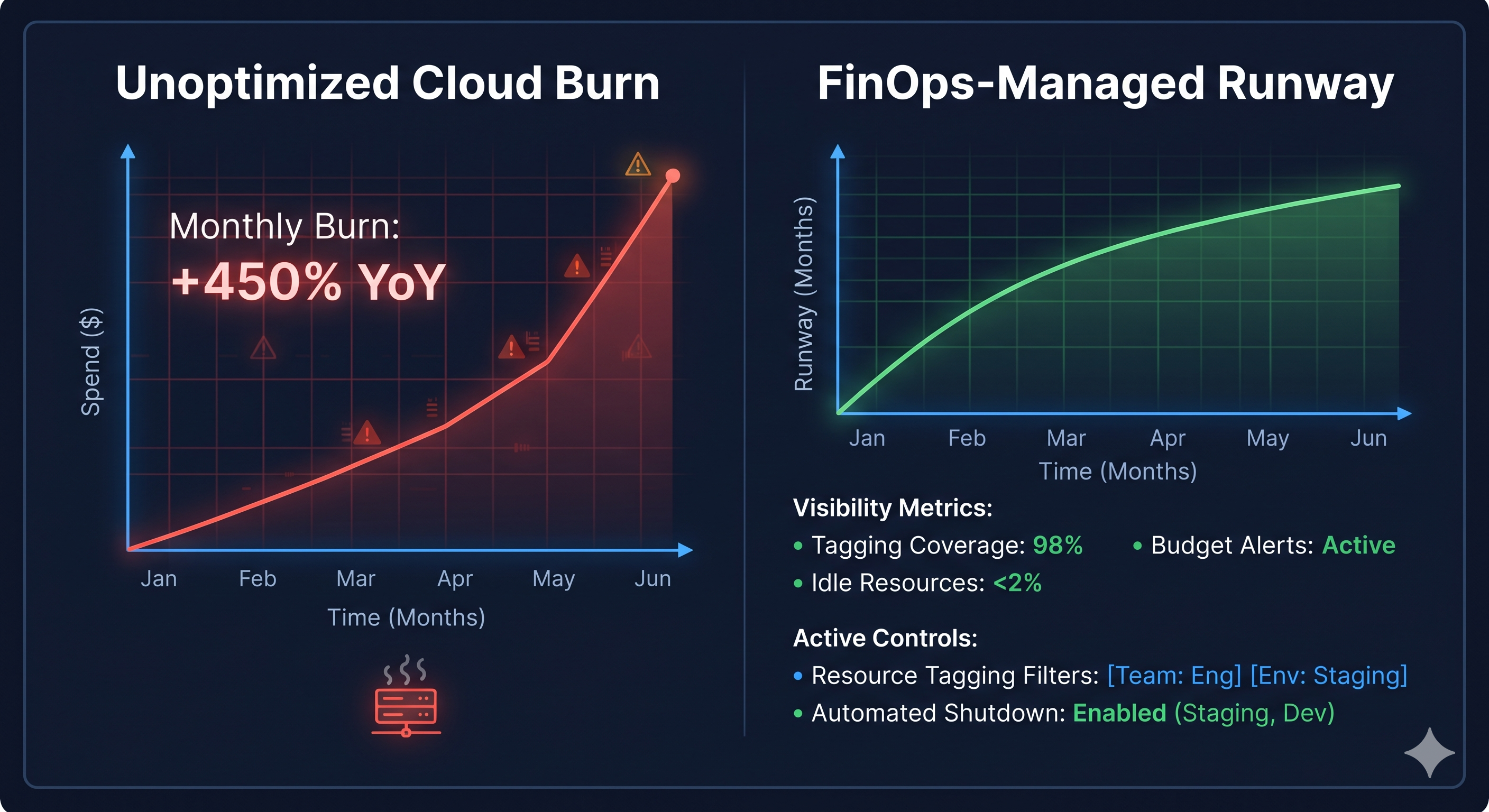
    When cloud and AI token expenditures scale faster than your customer acquisition, your runway shrinks long before you achieve product-market fit. Treating your infrastructure budget as a static utility rather than a managed variable means you are burning precious capital on idle compute, unoptimized database queries, and redundant staging pipelines that no one is looking at.


    What You Need to Know: Financial Guardrails for Technical Founders
    To stretch your runway and build a capital-efficient startup, enforce these foundational FinOps principles early:


    Aggressive Environment Scheduling: Stop paying for 24/7 staging, development, and testing clusters. Implement automated shutdown scripts to spin down non-production environments during off-hours, instantly cutting compute waste by over 50%.


    Granular Resource Tagging: Mandate strict cost-allocation metadata tags (team, environment, service) upon resource creation. If you can't trace an AWS or GCP bill back to a specific feature or customer cohort, you cannot optimize it.


    Decouple Scaling from Architecture: Avoid over-provisioning database instances and microservice clusters for traffic you haven't earned yet. Start with managed serverless or single-instance configurations, and scale horizontally only when real performance bottlenecks demand it.


    Discussion Question
    How are you managing your cloud and AI token burn right now? Have you implemented automated cost-tracking, or are you waiting until your next funding round to look at infrastructure efficiency?


    CTA (Join Startup Founders & Entrepreneurs)
    Want strategic insights, capital-efficient scaling playbooks, and direct connections with fellow founders solving the hardest startup challenges? Join Startup Founders & Entrepreneurs to build smarter and scale faster.
    The Silent Runway Killer: Why Your Cloud Architecture Is Bleeding Cash Before Product-Market Fit With early-stage technology startups balancing lean capital and complex modern tech stacks, infrastructure waste has become the hidden tax on innovation. Founders frequently copy enterprise architectural patterns—over-provisioning databases, running staging environments 24/7, and failing to track token or compute overhead—under the assumption that "good engineering" requires maximum scale from day zero. Why It Matters When cloud and AI token expenditures scale faster than your customer acquisition, your runway shrinks long before you achieve product-market fit. Treating your infrastructure budget as a static utility rather than a managed variable means you are burning precious capital on idle compute, unoptimized database queries, and redundant staging pipelines that no one is looking at. What You Need to Know: Financial Guardrails for Technical Founders To stretch your runway and build a capital-efficient startup, enforce these foundational FinOps principles early: Aggressive Environment Scheduling: Stop paying for 24/7 staging, development, and testing clusters. Implement automated shutdown scripts to spin down non-production environments during off-hours, instantly cutting compute waste by over 50%. Granular Resource Tagging: Mandate strict cost-allocation metadata tags (team, environment, service) upon resource creation. If you can't trace an AWS or GCP bill back to a specific feature or customer cohort, you cannot optimize it. Decouple Scaling from Architecture: Avoid over-provisioning database instances and microservice clusters for traffic you haven't earned yet. Start with managed serverless or single-instance configurations, and scale horizontally only when real performance bottlenecks demand it. Discussion Question How are you managing your cloud and AI token burn right now? Have you implemented automated cost-tracking, or are you waiting until your next funding round to look at infrastructure efficiency? CTA (Join Startup Founders & Entrepreneurs) Want strategic insights, capital-efficient scaling playbooks, and direct connections with fellow founders solving the hardest startup challenges? Join Startup Founders & Entrepreneurs to build smarter and scale faster.
    0 Comments 0 Shares 437 Views 0 Reviews
  • Sovereign AI & Data Governance: The 4-Step UAE Compliance Checklist
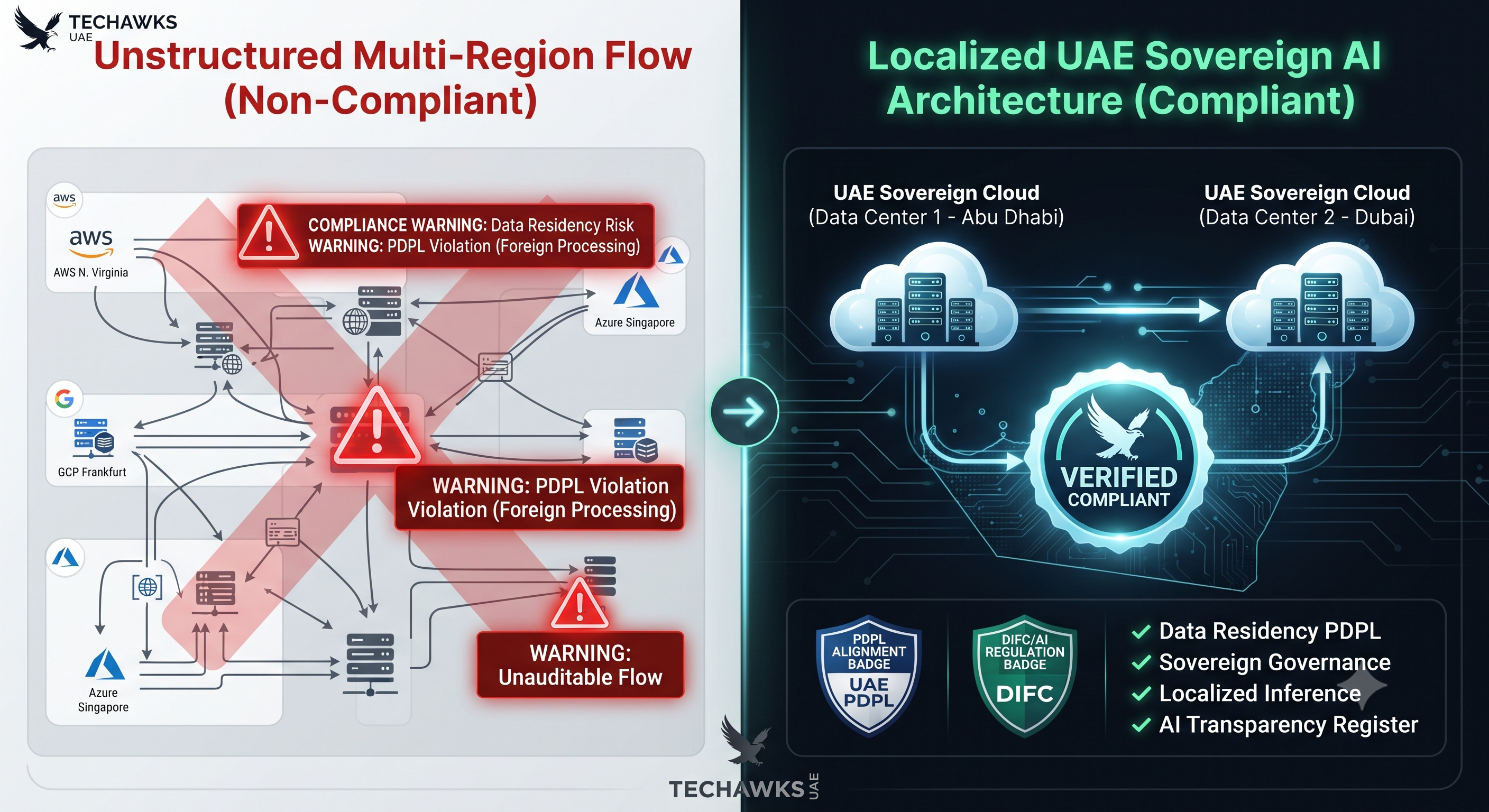
    As organizations across the UAE accelerate the adoption of sovereign AI, cloud infrastructure, and automated workflows, regulatory expectations have matured significantly. Navigating frameworks like the UAE Personal Data Protection Law (PDPL), sector-specific mandates (such as Central Bank regulations for financial institutions), and free zone requirements (like DIFC Regulation 10 for AI systems) requires clear structural control.


    True AI sovereignty is defined by complete control over your data layer, model transparency, and operational auditability across the entire lifecycle.


    Use this 4-step checklist to evaluate your UAE tech stack for compliance readiness:


    Map Your Data Residency & Storage Perimeter: Identify where training datasets, model weights, and inference logs physically reside. Ensure sensitive workloads and master systems of record comply with in-country residency rules.


    Conduct Mandatory AI Impact Assessments (DPIAs): For automated processing or high-risk AI deployments, perform comprehensive Data Protection Impact Assessments to proactively identify and mitigate systemic bias or privacy risks.


    Implement Robust Transparency & User Notices: Provide clear, explicit notices at the point of interaction detailing how AI systems process personal data, what limits govern them, and how users can seek human intervention.


    Maintain an Active AI & Processing Register: Keep structured records of your processing activities, system use cases, third-party data sharing agreements, and lawful compliance bases to streamline audit readiness.


    Discussion Question: How is your team balancing the rapid deployment of generative AI features with UAE data sovereignty and regulatory requirements? Let’s discuss below!


    CTA (Join Techawks UAE): Want to connect with UAE tech leaders, software architects, and engineering pioneers driving regional innovation? Join the Techawks UAE community
    Sovereign AI & Data Governance: The 4-Step UAE Compliance Checklist As organizations across the UAE accelerate the adoption of sovereign AI, cloud infrastructure, and automated workflows, regulatory expectations have matured significantly. Navigating frameworks like the UAE Personal Data Protection Law (PDPL), sector-specific mandates (such as Central Bank regulations for financial institutions), and free zone requirements (like DIFC Regulation 10 for AI systems) requires clear structural control. True AI sovereignty is defined by complete control over your data layer, model transparency, and operational auditability across the entire lifecycle. Use this 4-step checklist to evaluate your UAE tech stack for compliance readiness: Map Your Data Residency & Storage Perimeter: Identify where training datasets, model weights, and inference logs physically reside. Ensure sensitive workloads and master systems of record comply with in-country residency rules. Conduct Mandatory AI Impact Assessments (DPIAs): For automated processing or high-risk AI deployments, perform comprehensive Data Protection Impact Assessments to proactively identify and mitigate systemic bias or privacy risks. Implement Robust Transparency & User Notices: Provide clear, explicit notices at the point of interaction detailing how AI systems process personal data, what limits govern them, and how users can seek human intervention. Maintain an Active AI & Processing Register: Keep structured records of your processing activities, system use cases, third-party data sharing agreements, and lawful compliance bases to streamline audit readiness. Discussion Question: How is your team balancing the rapid deployment of generative AI features with UAE data sovereignty and regulatory requirements? Let’s discuss below! CTA (Join Techawks UAE): Want to connect with UAE tech leaders, software architects, and engineering pioneers driving regional innovation? Join the Techawks UAE community
    0 Comments 0 Shares 527 Views 0 Reviews
More Results