• Mastering "India Stack": Why the ONDC Protocol is the Final Boss for Indian E-Commerce
    The Problem: The Walled Garden
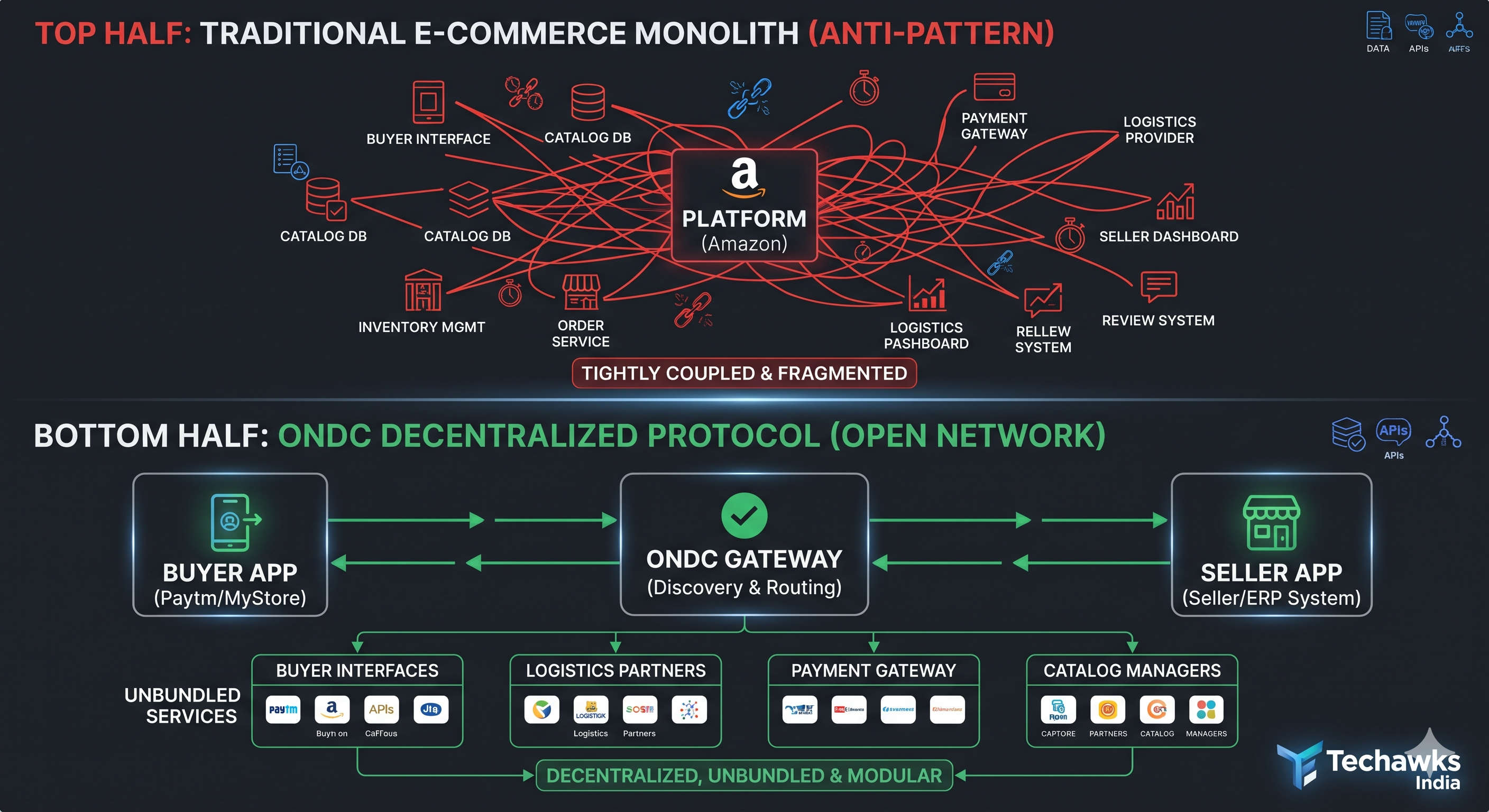
    Traditional e-commerce (Amazon, Flipkart) operates as a "walled garden." As a seller, you are locked into their catalog system, their logistics, and their payment gateway. As a buyer, your data is trapped within their ecosystem. This creates high barriers to entry for small Kirana stores and limits innovation.


    The Solution: The ONDC Unbundling
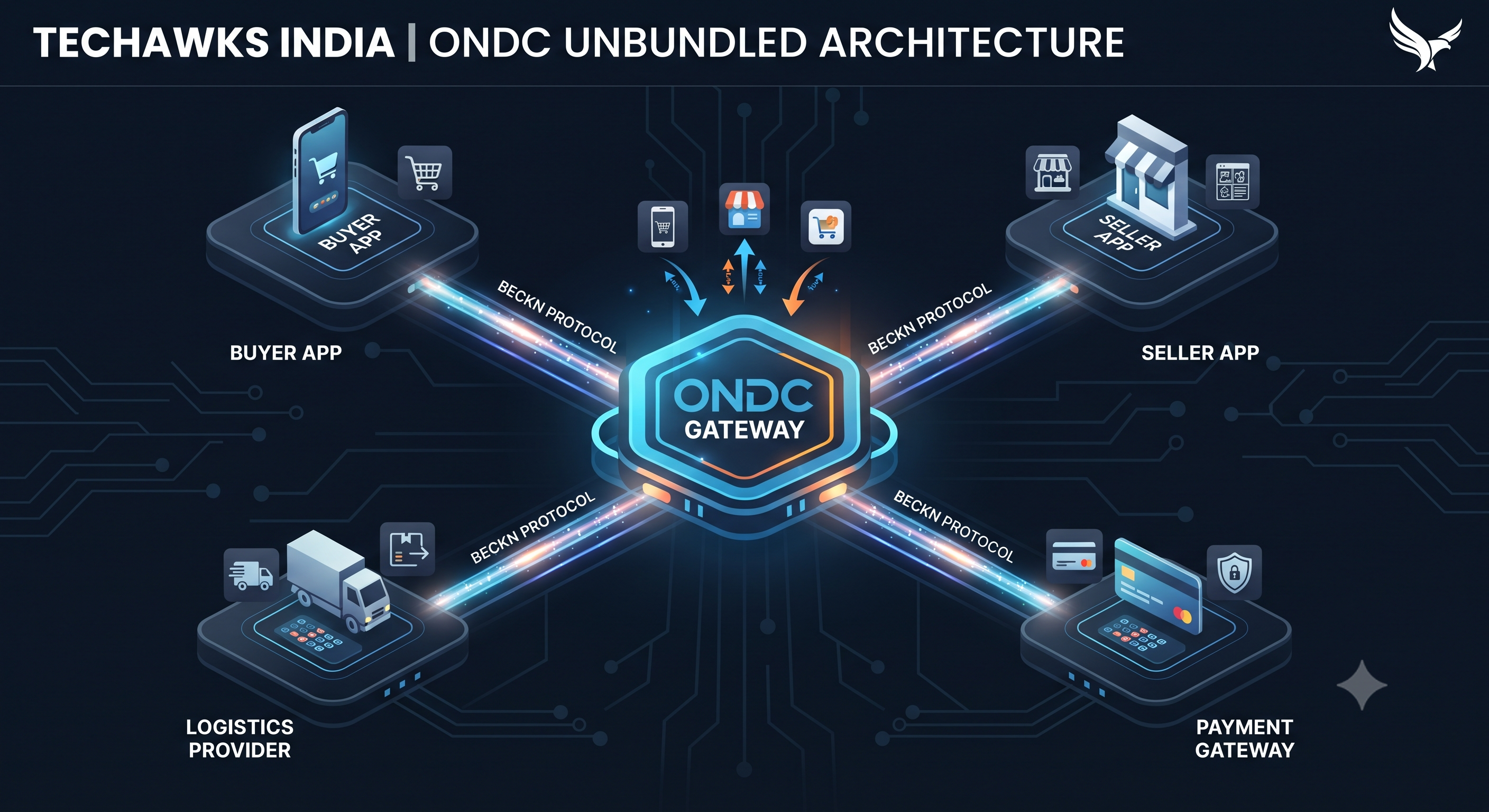
    ONDC, built on the Beckn protocol, uses a decentralized, gateway-based architecture. It separates the buyer's interface (Buyer App) from the seller's inventory (Seller App).


    The ONDC Workflow (Simplified):


    Plaintext
    [ BUYER (Paytm/MyStore) ]
    │
    ▼
    [ ONDC GATEWAY (Discovery & Routing) ]
    │
    ▼
    [ SELLER (Seller App/ERP System) ]
    When a user searches for "shoes" on a buyer app:


    The Gateway broadcasts the intent to all connected Seller Apps.


    Seller Apps respond with catalog availability and pricing.


    The Gateway presents the aggregated results to the user.


    The transaction (Order, Fulfillment, Payment) happens directly between Buyer App and Seller App.


    4 Actionable Principles for Developing on ONDC:


    Adopt the Beckn Protocol: ONDC is not a monolith; it's a set of APIs based on Beckn. Study the specifications (Search, Select, Init, Confirm, Status, Update) to understand how state is managed across disparate systems.


    Implement Stateless Gateways: Your Seller App must be designed to handle discovery requests from the Gateway without maintaining a persistent session. The protocol uses asynchronous messaging (webhooks) for fulfillment updates.


    Master Catalog Synchronization: As a seller-side developer, your biggest challenge is real-time inventory sync. Your backend must be able to "publish" catalog updates (using the on_search API) to the ONDC network instantly.


    Ensure Trust and Compliance: Every participant must have a valid digital signature (PKI) to interact on the network. Security and non-repudiation are enforced at the protocol level, not by a central authority.


    Discussion Question
    ONDC aims to level the playing field, but it introduces massive complexity in distributed transaction management (Sagas). If an order is confirmed on the Buyer App but the payment fails on the Seller App, who holds the state? Have you faced this "distributed system headache" while building an ONDC-compliant application?


    CTA
    Join Techawks India
    Are you building the future of Indian e-commerce on ONDC? Share your architectural diagrams, your integration war stories, and your solutions to the "state problem" below, and join the most authoritative community for Indian tech professionals at Techawks India!
    Mastering "India Stack": Why the ONDC Protocol is the Final Boss for Indian E-Commerce The Problem: The Walled Garden Traditional e-commerce (Amazon, Flipkart) operates as a "walled garden." As a seller, you are locked into their catalog system, their logistics, and their payment gateway. As a buyer, your data is trapped within their ecosystem. This creates high barriers to entry for small Kirana stores and limits innovation. The Solution: The ONDC Unbundling ONDC, built on the Beckn protocol, uses a decentralized, gateway-based architecture. It separates the buyer's interface (Buyer App) from the seller's inventory (Seller App). The ONDC Workflow (Simplified): Plaintext [ BUYER (Paytm/MyStore) ] │ ▼ [ ONDC GATEWAY (Discovery & Routing) ] │ ▼ [ SELLER (Seller App/ERP System) ] When a user searches for "shoes" on a buyer app: The Gateway broadcasts the intent to all connected Seller Apps. Seller Apps respond with catalog availability and pricing. The Gateway presents the aggregated results to the user. The transaction (Order, Fulfillment, Payment) happens directly between Buyer App and Seller App. 4 Actionable Principles for Developing on ONDC: Adopt the Beckn Protocol: ONDC is not a monolith; it's a set of APIs based on Beckn. Study the specifications (Search, Select, Init, Confirm, Status, Update) to understand how state is managed across disparate systems. Implement Stateless Gateways: Your Seller App must be designed to handle discovery requests from the Gateway without maintaining a persistent session. The protocol uses asynchronous messaging (webhooks) for fulfillment updates. Master Catalog Synchronization: As a seller-side developer, your biggest challenge is real-time inventory sync. Your backend must be able to "publish" catalog updates (using the on_search API) to the ONDC network instantly. Ensure Trust and Compliance: Every participant must have a valid digital signature (PKI) to interact on the network. Security and non-repudiation are enforced at the protocol level, not by a central authority. Discussion Question ONDC aims to level the playing field, but it introduces massive complexity in distributed transaction management (Sagas). If an order is confirmed on the Buyer App but the payment fails on the Seller App, who holds the state? Have you faced this "distributed system headache" while building an ONDC-compliant application? CTA Join Techawks India Are you building the future of Indian e-commerce on ONDC? Share your architectural diagrams, your integration war stories, and your solutions to the "state problem" below, and join the most authoritative community for Indian tech professionals at Techawks India!
    0 Commentarii 0 Distribuiri 141 Views 0 previzualizare
  • Breaking Free from Localhost: The 4 Distributed Systems Realities Every CS Student Must Learn
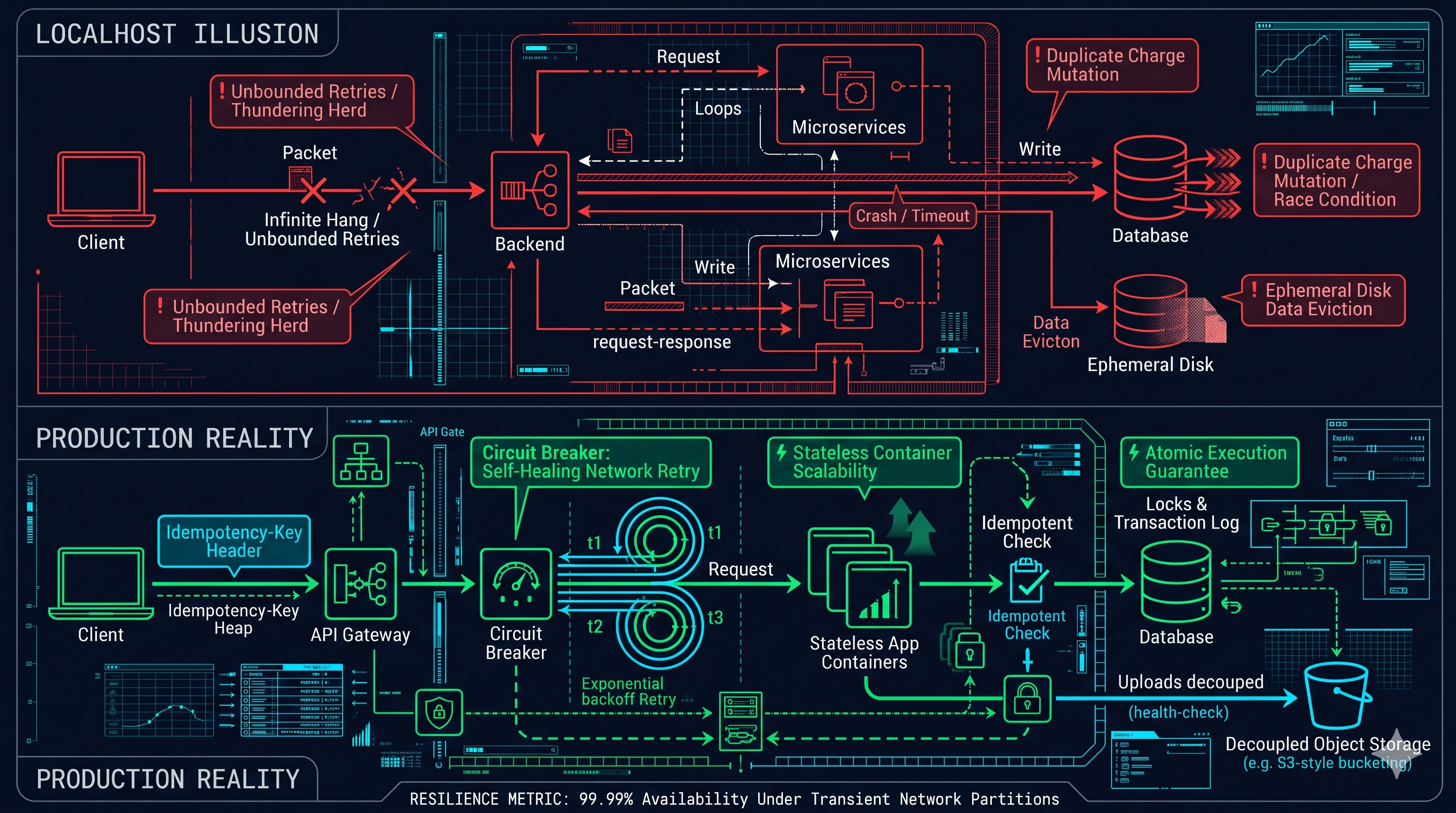
    Computer science curriculums excel at teaching algorithmic complexity, compiler internals, and data structures. However, student side projects often hit a wall during production deployments or technical systems interviews because students treat remote cloud services like local function calls.On localhost, loopback traffic (127.0.0.1) has zero latency, boundless developer RAM, and guaranteed delivery. In production, the eight fallacies of distributed computing take over: packets drop, third-party APIs experience transient timeouts, and serverless runtimes wipe ephemeral disk storage clean between invocations.[❌ The Localhost Student Assumption]
    Client Request ──(Guaranteed 0ms)──> Server ──(Instant)──> In-Memory State
    Result: Any packet loss or crash corrupts session data and triggers duplicate writes.


    [✅ The Production Distributed Architecture]
    Client Request
    │ (Idempotency Key: UUIDv4)
    ▼
    [API Gateway] ──> [Circuit Breaker & Retry with Exponential Backoff]
    │
    ├──> Idempotent Worker ──> Transactional DB (ACID / Rollback Guarantee)
    └──> Ephemeral Storage Isolated ──> S3 / Object Store for Persistent Assets
    Result: Transient network drops self-heal with zero double-execution risk.
    To bridge the gap between academic programming and production software engineering, build these four distributed patterns into your next portfolio project:
    1. Implement Idempotency Keys on Mutating EndpointsWhen an HTTP POST request times out, a browser or mobile client will automatically retry. If your endpoint charges a credit card, increments an inventory count, or provisions a resource, blind retries cause duplicate state mutations.Require an Idempotency-Key: <UUID> header on non-idempotent operations.Check a distributed key-value store (like Redis) before executing: if the key exists, return the cached result instead of executing the side-effect twice.
    2. Replace Blind Retries with Exponential Backoff and JitterIf an external API is struggling under load, hammering it with instant while (!success) retry() loops will trigger a thundering herd problem that completely takes down downstream services.Use exponential backoff ($T_{\text{wait}} = 2^{\text{attempt}} \times \text{base\_delay}$) paired with random jitter (randomized entropy added to wait intervals) to desynchronize retrying clients.
    3. Treat the Local Filesystem as Stateless and EphemeralOn your personal laptop, running fs.writeFileSync('/uploads/avatar.png') writes cleanly to your hard drive. In production environments (like AWS Lambda, Cloud Run, or Kubernetes pods), containers dynamically spin down, auto-scale, and migrate across hosts.Any file written to the local container disk is destroyed on pod recycling.Always stream static assets and file uploads directly to dedicated object storage (such as AWS S3 or Cloudflare R2) using pre-signed upload URLs.
    4. Design for Partial FailureA function call on a single machine either returns a value or throws an exception. A network call can succeed, fail, or—most dangerously—time out after the remote server already executed the write. Always define explicit timeout thresholds and fallback degradations so a slow non-critical microservice does not lock your entire application thread pool.
    Transitioning your portfolio from toy apps to production-grade services shows interviewers that you understand systems resilience, operational boundaries, and real-world failure modes.
    Discussion Question
    What was the first unexpected error or architectural bottleneck you encountered when you moved your first student project from localhost to a live cloud host?
    CTA
    Join Students in Tech to access system design roadmaps, project review clinics, and distributed engineering mentorship to prepare for high-impact software careers.
    Breaking Free from Localhost: The 4 Distributed Systems Realities Every CS Student Must Learn Computer science curriculums excel at teaching algorithmic complexity, compiler internals, and data structures. However, student side projects often hit a wall during production deployments or technical systems interviews because students treat remote cloud services like local function calls.On localhost, loopback traffic (127.0.0.1) has zero latency, boundless developer RAM, and guaranteed delivery. In production, the eight fallacies of distributed computing take over: packets drop, third-party APIs experience transient timeouts, and serverless runtimes wipe ephemeral disk storage clean between invocations.[❌ The Localhost Student Assumption] Client Request ──(Guaranteed 0ms)──> Server ──(Instant)──> In-Memory State Result: Any packet loss or crash corrupts session data and triggers duplicate writes. [✅ The Production Distributed Architecture] Client Request │ (Idempotency Key: UUIDv4) ▼ [API Gateway] ──> [Circuit Breaker & Retry with Exponential Backoff] │ ├──> Idempotent Worker ──> Transactional DB (ACID / Rollback Guarantee) └──> Ephemeral Storage Isolated ──> S3 / Object Store for Persistent Assets Result: Transient network drops self-heal with zero double-execution risk. To bridge the gap between academic programming and production software engineering, build these four distributed patterns into your next portfolio project: 1. Implement Idempotency Keys on Mutating EndpointsWhen an HTTP POST request times out, a browser or mobile client will automatically retry. If your endpoint charges a credit card, increments an inventory count, or provisions a resource, blind retries cause duplicate state mutations.Require an Idempotency-Key: <UUID> header on non-idempotent operations.Check a distributed key-value store (like Redis) before executing: if the key exists, return the cached result instead of executing the side-effect twice. 2. Replace Blind Retries with Exponential Backoff and JitterIf an external API is struggling under load, hammering it with instant while (!success) retry() loops will trigger a thundering herd problem that completely takes down downstream services.Use exponential backoff ($T_{\text{wait}} = 2^{\text{attempt}} \times \text{base\_delay}$) paired with random jitter (randomized entropy added to wait intervals) to desynchronize retrying clients. 3. Treat the Local Filesystem as Stateless and EphemeralOn your personal laptop, running fs.writeFileSync('/uploads/avatar.png') writes cleanly to your hard drive. In production environments (like AWS Lambda, Cloud Run, or Kubernetes pods), containers dynamically spin down, auto-scale, and migrate across hosts.Any file written to the local container disk is destroyed on pod recycling.Always stream static assets and file uploads directly to dedicated object storage (such as AWS S3 or Cloudflare R2) using pre-signed upload URLs. 4. Design for Partial FailureA function call on a single machine either returns a value or throws an exception. A network call can succeed, fail, or—most dangerously—time out after the remote server already executed the write. Always define explicit timeout thresholds and fallback degradations so a slow non-critical microservice does not lock your entire application thread pool. Transitioning your portfolio from toy apps to production-grade services shows interviewers that you understand systems resilience, operational boundaries, and real-world failure modes. Discussion Question What was the first unexpected error or architectural bottleneck you encountered when you moved your first student project from localhost to a live cloud host? CTA Join Students in Tech to access system design roadmaps, project review clinics, and distributed engineering mentorship to prepare for high-impact software careers.
    0 Commentarii 0 Distribuiri 289 Views 0 previzualizare
  • Beyond the Buzz: Why India’s ONDC Protocol is the Sleeping Giant of E-Commerce and How Developers Can Tap In
    ONDC aims to democratize digital commerce by moving away from platform-centric models (like Amazon or Flipkart) to an interoperable, unbundled network. It allows a small artisan in Jaipur to display their products on any ONDC-compliant buyer app in Mumbai without being locked into a single walled garden.


    Why does this matter?
    For years, the "ONDC vs. Zomato/Swiggy" narrative has dominated the news. The real story is the massive shift in system architecture. ONDC breaks the monolithic e-commerce stack into specialized microservices (Buyer Apps, Gateway, Seller Apps, and Logistics Providers) communicating via Beckn protocol APIs. This creates unprecedented competition and innovation opportunities.


    Tutorial: Understanding the ONDC Beckn API Flow (A Simplified Look)
    Instead of trying to reverse-engineer a massive platform, you need to understand the standardized API handshake that powers every transaction on the network:


    The Search (/search): When a user (on a Buyer App like Paytm or Pincode) looks for "shoes," the Buyer App broadcasts a /search request to the ONDC Gateway, which relays it to all relevant Seller Apps (ERP systems, catalogue managers).


    The Selection (/select and /init): The seller apps respond with available items (/on_search). The user selects an item (/select). The buyer app then initializes the order (/init) with fulfillment details.


    The Fulfillment (/confirm and /update): The seller confirms the order (/on_confirm). The ONDC network then triggers logistics discovery, and the tracking begins (/status, /update if details change).


    The Settlement (/track and /cancel): Finally, payment is processed (often via UPI integration) and settlement occurs.


    The key technical challenge developers face is ensuring their app, whether it's a niche hyperlocal store or a logistics tracker, speaks the exact JSON schema of the Beckn protocol. Mastering this standard means your service becomes instantly compatible with the entire Indian e-commerce network, rather than just one platform's ecosystem.


    Discussion Question: What do you see as the biggest technical hurdle for ONDC right now—standardizing complex catalogue schemas across millions of MSMEs, ensuring real-time inventory sync across the network, or managing distributed dispute resolution? Let’s discuss in the comments!


    CTA (Join Techawks India): Ready to build the future of Indian e-commerce? Dive deeper into ONDC protocols, Beckn API tutorials, and connect with fellow builders by joining the Techawks India community today!
    Beyond the Buzz: Why India’s ONDC Protocol is the Sleeping Giant of E-Commerce and How Developers Can Tap In ONDC aims to democratize digital commerce by moving away from platform-centric models (like Amazon or Flipkart) to an interoperable, unbundled network. It allows a small artisan in Jaipur to display their products on any ONDC-compliant buyer app in Mumbai without being locked into a single walled garden. Why does this matter? For years, the "ONDC vs. Zomato/Swiggy" narrative has dominated the news. The real story is the massive shift in system architecture. ONDC breaks the monolithic e-commerce stack into specialized microservices (Buyer Apps, Gateway, Seller Apps, and Logistics Providers) communicating via Beckn protocol APIs. This creates unprecedented competition and innovation opportunities. Tutorial: Understanding the ONDC Beckn API Flow (A Simplified Look) Instead of trying to reverse-engineer a massive platform, you need to understand the standardized API handshake that powers every transaction on the network: The Search (/search): When a user (on a Buyer App like Paytm or Pincode) looks for "shoes," the Buyer App broadcasts a /search request to the ONDC Gateway, which relays it to all relevant Seller Apps (ERP systems, catalogue managers). The Selection (/select and /init): The seller apps respond with available items (/on_search). The user selects an item (/select). The buyer app then initializes the order (/init) with fulfillment details. The Fulfillment (/confirm and /update): The seller confirms the order (/on_confirm). The ONDC network then triggers logistics discovery, and the tracking begins (/status, /update if details change). The Settlement (/track and /cancel): Finally, payment is processed (often via UPI integration) and settlement occurs. The key technical challenge developers face is ensuring their app, whether it's a niche hyperlocal store or a logistics tracker, speaks the exact JSON schema of the Beckn protocol. Mastering this standard means your service becomes instantly compatible with the entire Indian e-commerce network, rather than just one platform's ecosystem. Discussion Question: What do you see as the biggest technical hurdle for ONDC right now—standardizing complex catalogue schemas across millions of MSMEs, ensuring real-time inventory sync across the network, or managing distributed dispute resolution? Let’s discuss in the comments! CTA (Join Techawks India): Ready to build the future of Indian e-commerce? Dive deeper into ONDC protocols, Beckn API tutorials, and connect with fellow builders by joining the Techawks India community today!
    0 Commentarii 0 Distribuiri 368 Views 0 previzualizare
  • Decoding "AI Amnesia": Why Large Language Models Seem to Forget Mid-Task (And How to Fix It)
    As artificial intelligence transitions from simple question-answering tools to autonomous agents executing multi-step workflows, a frustrating bottleneck frequently breaks productivity: AI Amnesia.


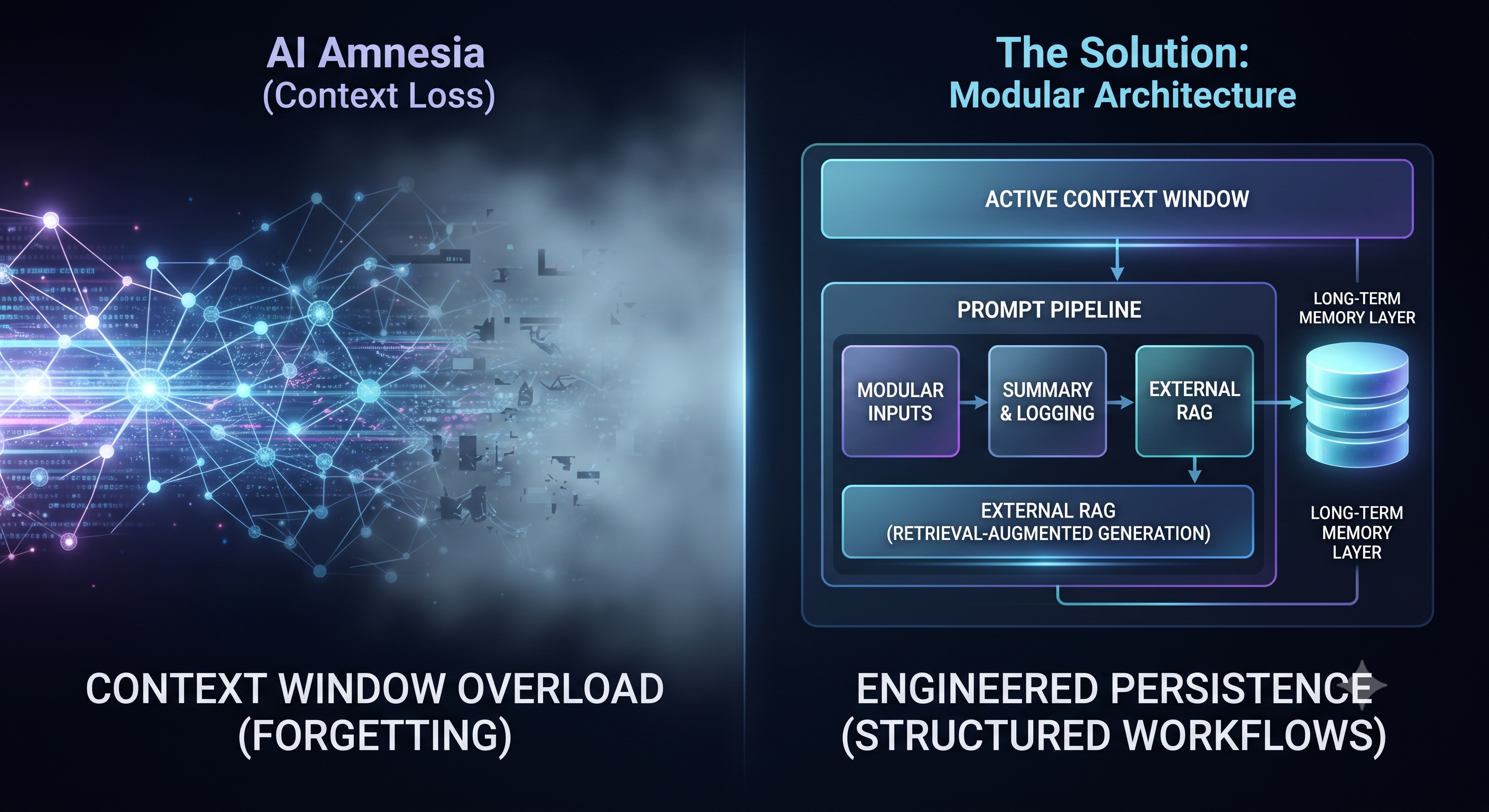
    Unlike human memory, which weaves together past experiences and ongoing thoughts organically, an AI model’s memory is bound by hard structural boundaries. When an AI "forgets," it isn't experiencing cognitive fatigue. Instead, it usually stems from three distinct technical causes:


    Context Window Overload: Every model has a fixed token limit. Once input and output text exceed this capacity, older information drops out of the active working memory.


    Session Boundaries & Vector Drift: In chat interfaces, changing topics or hitting token caps forces the system to compress past dialogue, discarding critical granular details.


    Retrieval Failures: When relying on external databases (RAG), if the search query generated by the AI fails to pull the exact snippet needed, the model behaves as though the data doesn't exist.


    How to combat it: Stop treating AI like a human colleague with continuous memory. Instead, engineer your workflows to be modular. Use explicit summary prompts ("Summarize our progress so far into 3 bullet points before we proceed"), maintain external project markdown logs, and structure prompts to explicitly anchor core constraints at the very bottom of your input block where attention mechanisms weigh them most heavily.


    Discussion Question
    What is the longest workflow or project where you’ve hit a wall due to AI memory limits, and how did you restructure your prompts to get the model back on track?


    CTA (Join Techawks General Community)
    Want to master advanced system prompting, architecture breakdowns, and tech strategy alongside thousands of forward-thinking engineers and creators? Join the Techawks General Community today and level up your tech stack!
    Decoding "AI Amnesia": Why Large Language Models Seem to Forget Mid-Task (And How to Fix It) As artificial intelligence transitions from simple question-answering tools to autonomous agents executing multi-step workflows, a frustrating bottleneck frequently breaks productivity: AI Amnesia. Unlike human memory, which weaves together past experiences and ongoing thoughts organically, an AI model’s memory is bound by hard structural boundaries. When an AI "forgets," it isn't experiencing cognitive fatigue. Instead, it usually stems from three distinct technical causes: Context Window Overload: Every model has a fixed token limit. Once input and output text exceed this capacity, older information drops out of the active working memory. Session Boundaries & Vector Drift: In chat interfaces, changing topics or hitting token caps forces the system to compress past dialogue, discarding critical granular details. Retrieval Failures: When relying on external databases (RAG), if the search query generated by the AI fails to pull the exact snippet needed, the model behaves as though the data doesn't exist. How to combat it: Stop treating AI like a human colleague with continuous memory. Instead, engineer your workflows to be modular. Use explicit summary prompts ("Summarize our progress so far into 3 bullet points before we proceed"), maintain external project markdown logs, and structure prompts to explicitly anchor core constraints at the very bottom of your input block where attention mechanisms weigh them most heavily. Discussion Question What is the longest workflow or project where you’ve hit a wall due to AI memory limits, and how did you restructure your prompts to get the model back on track? CTA (Join Techawks General Community) Want to master advanced system prompting, architecture breakdowns, and tech strategy alongside thousands of forward-thinking engineers and creators? Join the Techawks General Community today and level up your tech stack!
    0 Commentarii 0 Distribuiri 179 Views 0 previzualizare
  • Designing for Strategic Market Status: How the UK’s DMCCA Reshapes App & API Interoperability


    As the UK Competition and Markets Authority (CMA) enforces its Strategic Market Status (SMS) designations and new conduct requirements, the British tech sector is navigating a major shift in how platforms interact. Compliance under the DMCCA is no longer just a legal issue—it directly impacts system architecture, API design, and data portability.


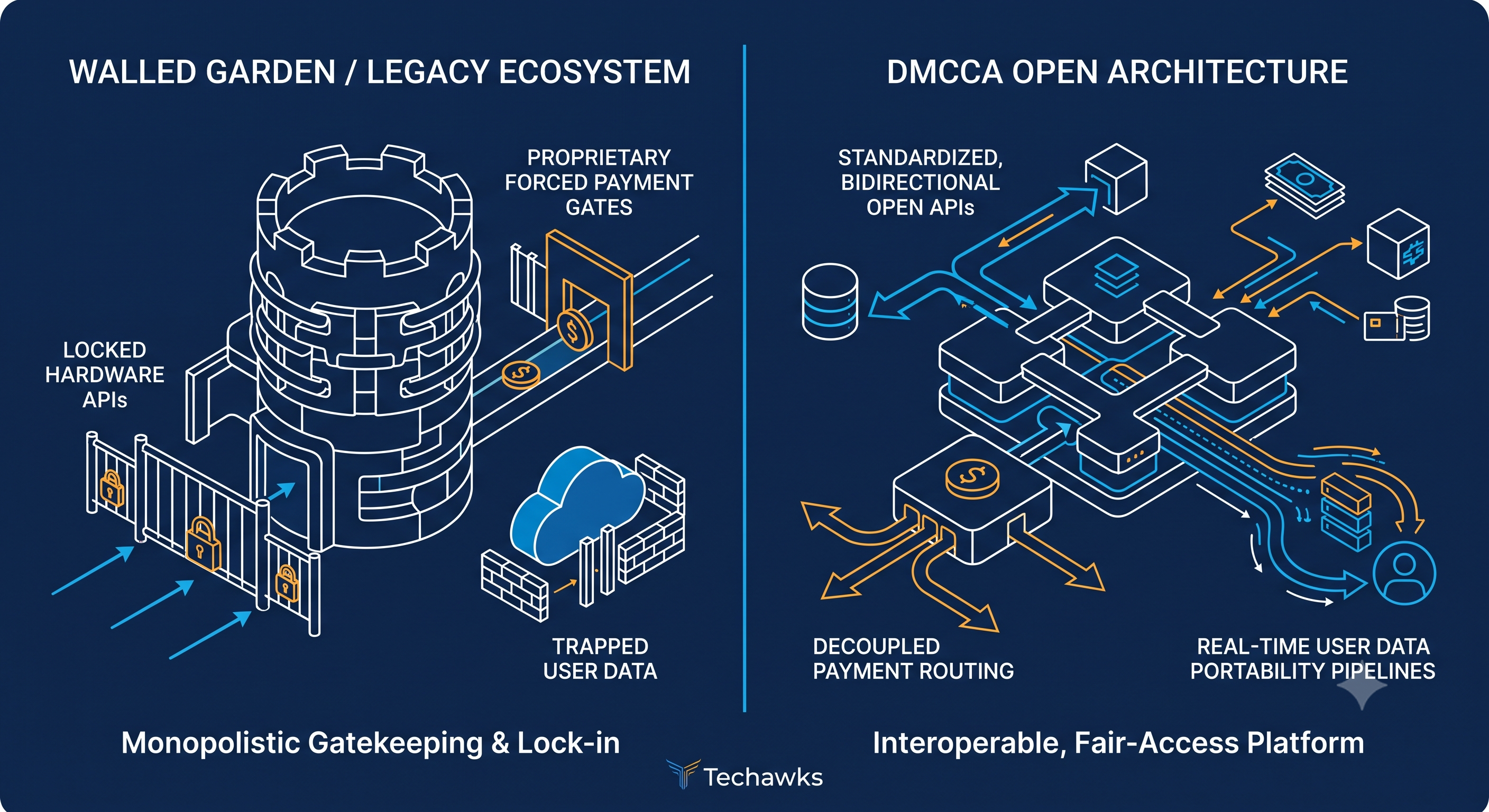
    For UK engineering leads and product builders, the days of proprietary walled gardens and restrictive gatekeeping are shifting toward mandated open interoperability:
    Unbundled Gateways & Fair API Access: Platforms designated with SMS must provide equitable, non-discriminatory API access to core OS and hardware primitives (such as NFC chips, default browser engines, and background execution loops) without self-preferencing their internal apps.
    Standardized Data Portability Pipelines: Systems must support real-time, low-friction data export interfaces rather than bulk batch exports, enabling users and competing apps to migrate state, telemetry, and identity seamlessly.
    Decoupled Billing & Direct Checkout Workflows: Mobile and platform applications must be architected to support alternative payment processors and direct out-of-app customer routing, requiring modular payment orchestration layers at the backend.
    In 2026, designing for the UK market means building open, modular, and unbundled systems from day one.


    Discussion Question (Poll)
    How is your product or engineering team approaching the UK's platform interoperability and open access mandates?
    🔘 A: Actively integrating direct-to-consumer and alternative payment flows
    🔘 B: Building open APIs and modular data export endpoints for portability
    🔘 C: Auditing current platform dependencies (app stores, proprietary cloud locks)
    🔘 D: Waiting for formal CMA conduct remedies to roll out further


    CTA
    Join Techawks UK to collaborate with local tech leads, architects, and engineering executives building scalable, open-ecosystem software across Britain.
    Designing for Strategic Market Status: How the UK’s DMCCA Reshapes App & API Interoperability As the UK Competition and Markets Authority (CMA) enforces its Strategic Market Status (SMS) designations and new conduct requirements, the British tech sector is navigating a major shift in how platforms interact. Compliance under the DMCCA is no longer just a legal issue—it directly impacts system architecture, API design, and data portability. For UK engineering leads and product builders, the days of proprietary walled gardens and restrictive gatekeeping are shifting toward mandated open interoperability: Unbundled Gateways & Fair API Access: Platforms designated with SMS must provide equitable, non-discriminatory API access to core OS and hardware primitives (such as NFC chips, default browser engines, and background execution loops) without self-preferencing their internal apps. Standardized Data Portability Pipelines: Systems must support real-time, low-friction data export interfaces rather than bulk batch exports, enabling users and competing apps to migrate state, telemetry, and identity seamlessly. Decoupled Billing & Direct Checkout Workflows: Mobile and platform applications must be architected to support alternative payment processors and direct out-of-app customer routing, requiring modular payment orchestration layers at the backend. In 2026, designing for the UK market means building open, modular, and unbundled systems from day one. Discussion Question (Poll) How is your product or engineering team approaching the UK's platform interoperability and open access mandates? 🔘 A: Actively integrating direct-to-consumer and alternative payment flows 🔘 B: Building open APIs and modular data export endpoints for portability 🔘 C: Auditing current platform dependencies (app stores, proprietary cloud locks) 🔘 D: Waiting for formal CMA conduct remedies to roll out further CTA Join Techawks UK to collaborate with local tech leads, architects, and engineering executives building scalable, open-ecosystem software across Britain.
    0 Commentarii 0 Distribuiri 554 Views 0 previzualizare