English
 Arabic
 French
 Spanish
 Portuguese
 Deutsch
 Turkish
 Dutch
Dutch
 Italiano
 Russian
 Romaian
 Portuguese (Brazil)
 Greek
Greek
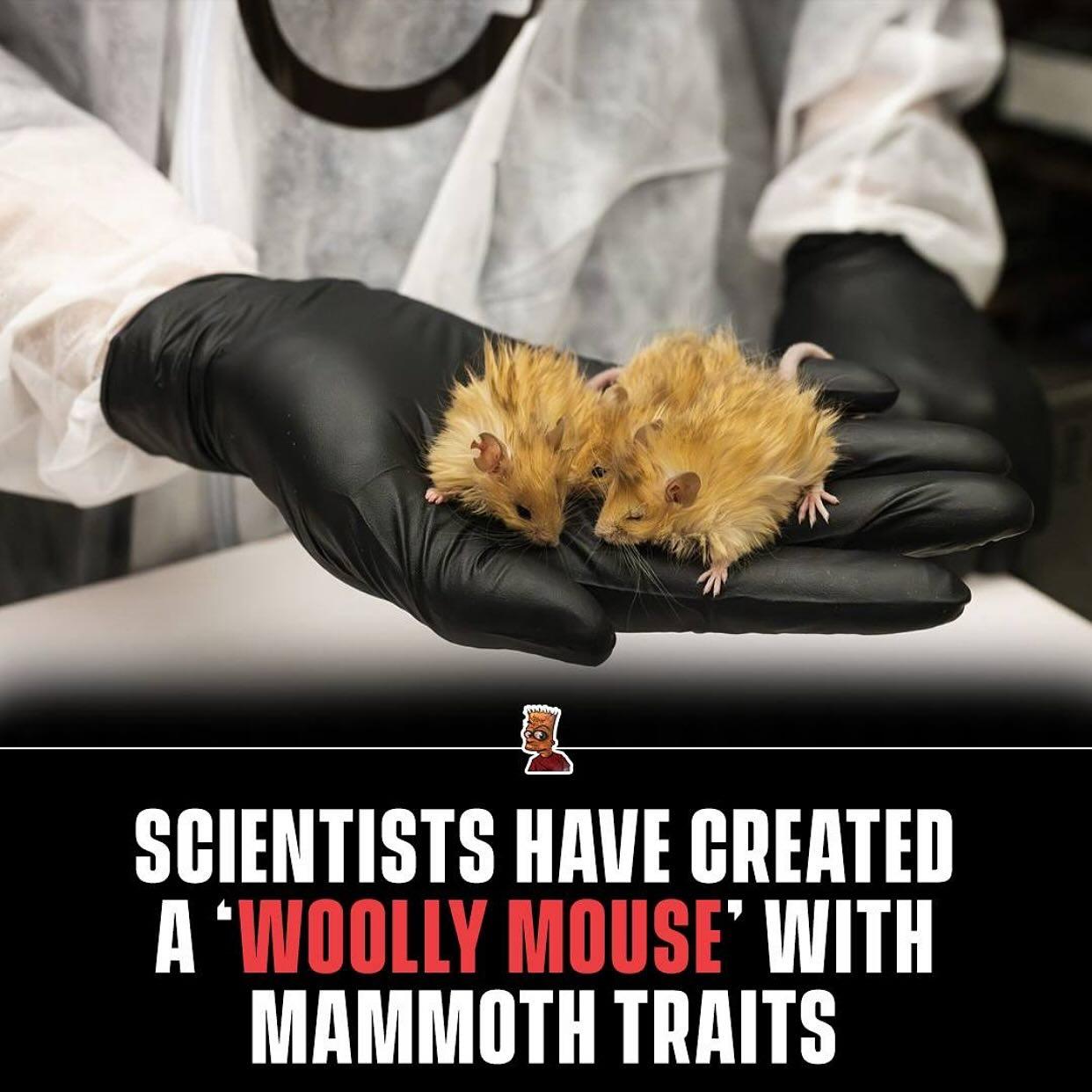
A plan to revive the mammoth is on track, scientists have said after creating a new species: the woolly mouse.
Scientists at the US biotechnology company Colossal Biosciences plan to “de-extinct” the prehistoric pachyderms by genetically modifying Asian elephants to give them woolly mammoth traits. They hope the first calf will be born by the end of 2028.
Now the team say they have fresh support for their approach after creating healthy, genetically modified mice that have traits geared towards cold tolerance, including woolly hair. “It does not accelerate anything but it’s a massive validating point,” Lamm said.
Scientists at the US biotechnology company Colossal Biosciences plan to “de-extinct” the prehistoric pachyderms by genetically modifying Asian elephants to give them woolly mammoth traits. They hope the first calf will be born by the end of 2028.
Now the team say they have fresh support for their approach after creating healthy, genetically modified mice that have traits geared towards cold tolerance, including woolly hair. “It does not accelerate anything but it’s a massive validating point,” Lamm said.
A plan to revive the mammoth is on track, scientists have said after creating a new species: the woolly mouse.
Scientists at the US biotechnology company Colossal Biosciences plan to “de-extinct” the prehistoric pachyderms by genetically modifying Asian elephants to give them woolly mammoth traits. They hope the first calf will be born by the end of 2028.
Now the team say they have fresh support for their approach after creating healthy, genetically modified mice that have traits geared towards cold tolerance, including woolly hair. “It does not accelerate anything but it’s a massive validating point,” Lamm said.
·145 Views
·0 önizleme