English
 Arabic
 French
 Spanish
 Portuguese
 Deutsch
 Turkish
 Dutch
Dutch
 Italiano
 Russian
 Romaian
 Portuguese (Brazil)
 Greek
Greek
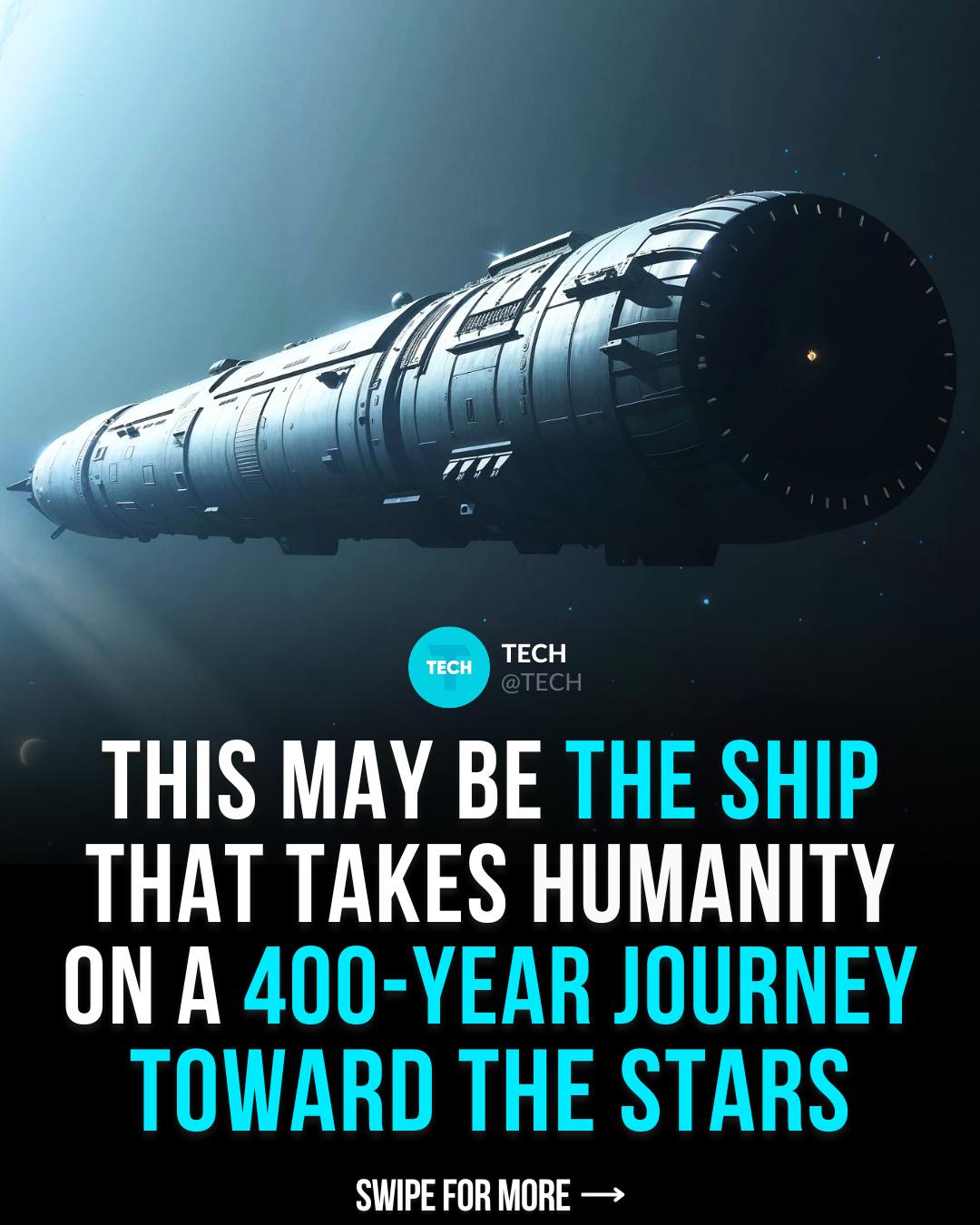
Italian researchers have unveiled Chrysalis, an ambitious generation-ship concept that could ferry humanity to Proxima b, a potentially habitable world 4.24 light-years away, in a 400-year voyage. Winner of the Project Hyperion design competition, Chrysalis is a 58-kilometer-long rotating cylinder built to sustain up to 2,400 passengers, though its population would be carefully managed to around 1,500 for resource balance.
The vessel is arranged like a colossal Russian nesting doll, with concentric shells serving distinct purposes. The outermost layer shields against radiation and micrometeoroids, doubling as a robotic-run warehouse. Moving inward, zones house industrial facilities, residential districts, communal parks, schools, and medical centers. A dedicated agricultural shell sustains biodiverse ecosystems, from tropical forests to boreal zones, alongside closed-loop systems for air, water, and nutrient recycling that could keep the ship habitable for centuries without resupply.
At its core, Chrysalis carries shuttles for planetfall and vital communications gear. A striking “Cosmo Dome” at the bow offers a weightless, panoramic view of deep space, hosting annual gatherings and symbolically facing back toward Earth. Artificial gravity comes from constant rotation, while propulsion would rely on a Direct Fusion Drive using helium-3 and deuterium, a technology still in development but capable of reaching one-tenth light speed.
Crew preparation is as crucial as engineering: the first generation would train for decades in an isolated Antarctic habitat to master self-sufficiency, cultural continuity, and psychological resilience. Governance blends human leadership with AI oversight to preserve knowledge, stability, and adaptability over centuries.
While purely conceptual, Chrysalis addresses the daunting technical, ecological, and social challenges of interstellar migration, and hints at how humanity might one day watch another sun rise over alien skies, carrying Earth’s heritage into the cosmic frontier.
Image Source: Project Hyperion/Chrysalis Planning and Design Team
The vessel is arranged like a colossal Russian nesting doll, with concentric shells serving distinct purposes. The outermost layer shields against radiation and micrometeoroids, doubling as a robotic-run warehouse. Moving inward, zones house industrial facilities, residential districts, communal parks, schools, and medical centers. A dedicated agricultural shell sustains biodiverse ecosystems, from tropical forests to boreal zones, alongside closed-loop systems for air, water, and nutrient recycling that could keep the ship habitable for centuries without resupply.
At its core, Chrysalis carries shuttles for planetfall and vital communications gear. A striking “Cosmo Dome” at the bow offers a weightless, panoramic view of deep space, hosting annual gatherings and symbolically facing back toward Earth. Artificial gravity comes from constant rotation, while propulsion would rely on a Direct Fusion Drive using helium-3 and deuterium, a technology still in development but capable of reaching one-tenth light speed.
Crew preparation is as crucial as engineering: the first generation would train for decades in an isolated Antarctic habitat to master self-sufficiency, cultural continuity, and psychological resilience. Governance blends human leadership with AI oversight to preserve knowledge, stability, and adaptability over centuries.
While purely conceptual, Chrysalis addresses the daunting technical, ecological, and social challenges of interstellar migration, and hints at how humanity might one day watch another sun rise over alien skies, carrying Earth’s heritage into the cosmic frontier.
Image Source: Project Hyperion/Chrysalis Planning and Design Team
Italian researchers have unveiled Chrysalis, an ambitious generation-ship concept that could ferry humanity to Proxima b, a potentially habitable world 4.24 light-years away, in a 400-year voyage. Winner of the Project Hyperion design competition, Chrysalis is a 58-kilometer-long rotating cylinder built to sustain up to 2,400 passengers, though its population would be carefully managed to around 1,500 for resource balance.
The vessel is arranged like a colossal Russian nesting doll, with concentric shells serving distinct purposes. The outermost layer shields against radiation and micrometeoroids, doubling as a robotic-run warehouse. Moving inward, zones house industrial facilities, residential districts, communal parks, schools, and medical centers. A dedicated agricultural shell sustains biodiverse ecosystems, from tropical forests to boreal zones, alongside closed-loop systems for air, water, and nutrient recycling that could keep the ship habitable for centuries without resupply.
At its core, Chrysalis carries shuttles for planetfall and vital communications gear. A striking “Cosmo Dome” at the bow offers a weightless, panoramic view of deep space, hosting annual gatherings and symbolically facing back toward Earth. Artificial gravity comes from constant rotation, while propulsion would rely on a Direct Fusion Drive using helium-3 and deuterium, a technology still in development but capable of reaching one-tenth light speed.
Crew preparation is as crucial as engineering: the first generation would train for decades in an isolated Antarctic habitat to master self-sufficiency, cultural continuity, and psychological resilience. Governance blends human leadership with AI oversight to preserve knowledge, stability, and adaptability over centuries.
While purely conceptual, Chrysalis addresses the daunting technical, ecological, and social challenges of interstellar migration, and hints at how humanity might one day watch another sun rise over alien skies, carrying Earth’s heritage into the cosmic frontier.
Image Source: Project Hyperion/Chrysalis Planning and Design Team
·316 Visualizações
·0 Anterior