• How to Future-Proof Your Tech Career in the UK (Without Endless Job Hopping)


    Whether you are based in London’s fintech hubs, Manchester’s growing digital scene, or working remotely across the UK, standing out in tech requires more than just submitting pull requests or managing Jira boards. The professionals who navigate market shifts smoothly are those who systematically build domain expertise, cross-functional understanding, and local industry presence.
    To future-proof your tech career without relying on constant job-hopping, focus on three actionable strategies:


    1. Master "Business Context," Not Just Tech Stacks
    Tools and frameworks evolve rapidly, but business fundamentals remain constant. The most valuable engineers and product leaders understand why a feature is being built and how it impacts revenue or user retention.
    Actionable Advice: In your next one-on-one, ask your lead or manager: "Which key business metrics are driving our current roadmap?" Frame your daily technical decisions around those business outcomes to position yourself as a strategic problem solver.


    2. Document Your Wins Publicly (Internal & External Personal Branding)
    Doing great work quietly rarely leads to rapid promotion or new opportunities. You need to create a track record that speaks for you when you aren't in the room.
    Actionable Advice: Maintain a private "brag sheet" where you log projects completed, bugs fixed, processes optimized, and performance improvements (with metrics). Share non-sensitive lessons learned via technical blog posts, internal tech talks, or on LinkedIn.


    3. Build a "Micro-Network" in the UK Tech Scene
    Networking doesn't mean collecting hundreds of casual connections. It’s about building deep, high-trust relationships with peers, mentors, and local industry leaders.
    Actionable Advice: Aim to have one meaningful conversation a month with someone outside your immediate team—a peer at another UK tech company, a speaker at a local meetup, or a contributor to an open-source project you follow.
    By shifting your mindset from purely technical execution to strategic visibility and networking, you create job security that belongs to you, not your employer.


    Key Takeaways
    Connect Tech to Revenue: Translate your technical achievements into clear business outcomes.
    Track Your Impact: Maintain a log of quantified wins to use during performance reviews and portfolio building.
    Network Intentionally: Focus on building 10–12 strong regional relationships rather than hundreds of superficial ones.


    CTA (Join Techawks UK)
    Ready to take control of your career and connect with ambitious engineers, founders, and tech leaders across the UK?


    👉 [Join Techawks UK Today] to gain access to peer mentorship, career growth discussions, and exclusive local industry events.

    How to Future-Proof Your Tech Career in the UK (Without Endless Job Hopping) Whether you are based in London’s fintech hubs, Manchester’s growing digital scene, or working remotely across the UK, standing out in tech requires more than just submitting pull requests or managing Jira boards. The professionals who navigate market shifts smoothly are those who systematically build domain expertise, cross-functional understanding, and local industry presence. To future-proof your tech career without relying on constant job-hopping, focus on three actionable strategies: 1. Master "Business Context," Not Just Tech Stacks Tools and frameworks evolve rapidly, but business fundamentals remain constant. The most valuable engineers and product leaders understand why a feature is being built and how it impacts revenue or user retention. Actionable Advice: In your next one-on-one, ask your lead or manager: "Which key business metrics are driving our current roadmap?" Frame your daily technical decisions around those business outcomes to position yourself as a strategic problem solver. 2. Document Your Wins Publicly (Internal & External Personal Branding) Doing great work quietly rarely leads to rapid promotion or new opportunities. You need to create a track record that speaks for you when you aren't in the room. Actionable Advice: Maintain a private "brag sheet" where you log projects completed, bugs fixed, processes optimized, and performance improvements (with metrics). Share non-sensitive lessons learned via technical blog posts, internal tech talks, or on LinkedIn. 3. Build a "Micro-Network" in the UK Tech Scene Networking doesn't mean collecting hundreds of casual connections. It’s about building deep, high-trust relationships with peers, mentors, and local industry leaders. Actionable Advice: Aim to have one meaningful conversation a month with someone outside your immediate team—a peer at another UK tech company, a speaker at a local meetup, or a contributor to an open-source project you follow. By shifting your mindset from purely technical execution to strategic visibility and networking, you create job security that belongs to you, not your employer. Key Takeaways Connect Tech to Revenue: Translate your technical achievements into clear business outcomes. Track Your Impact: Maintain a log of quantified wins to use during performance reviews and portfolio building. Network Intentionally: Focus on building 10–12 strong regional relationships rather than hundreds of superficial ones. CTA (Join Techawks UK) Ready to take control of your career and connect with ambitious engineers, founders, and tech leaders across the UK? 👉 [Join Techawks UK Today] to gain access to peer mentorship, career growth discussions, and exclusive local industry events.
    0 Comments 0 Shares 498 Views 0 Reviews
  • Poll: What Is Your Team’s Biggest Bottleneck to Shipping Fast?


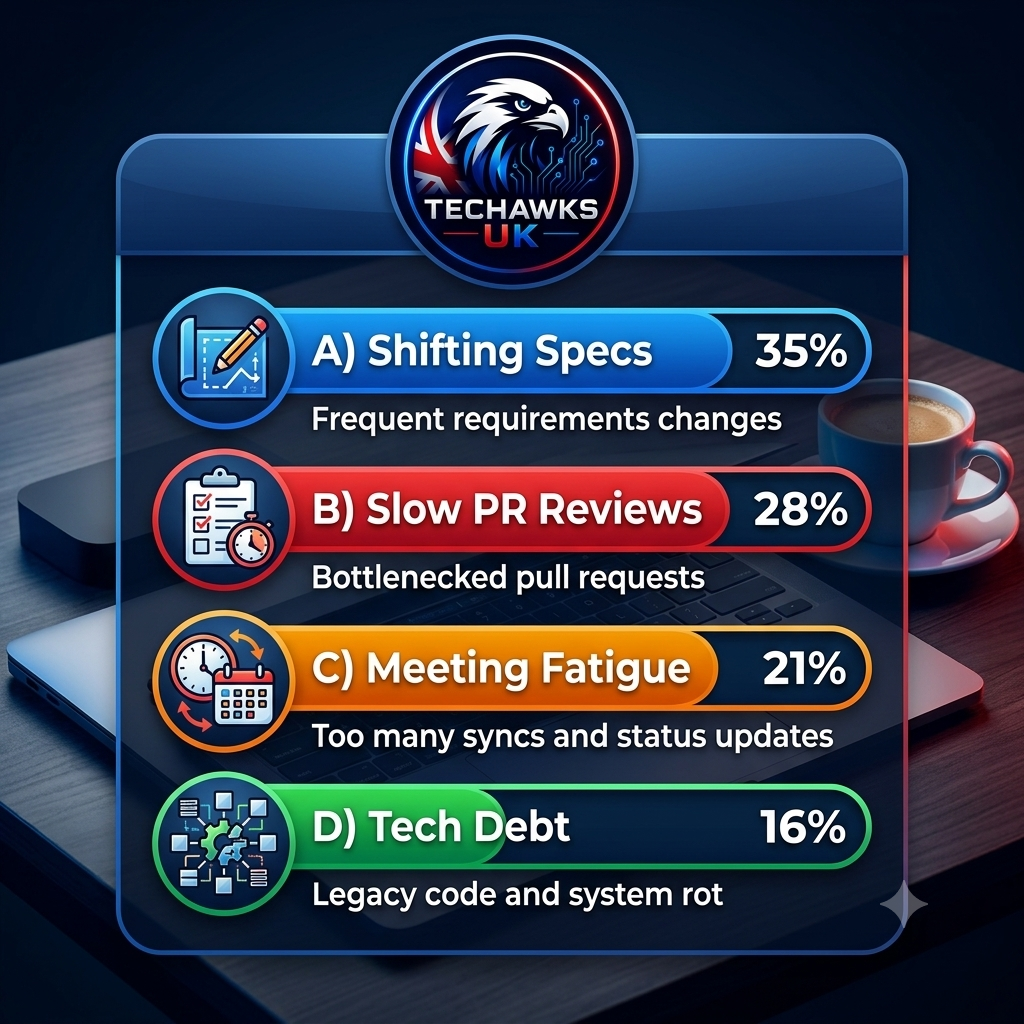
    Speed in tech isn't just about writing code faster; it’s about reducing the friction between an idea and its deployment. When engineering, product, and design teams get stuck in slow delivery cycles, the root cause usually falls into one of four core operational areas:


    Unclear or Changing Requirements: Specs that shift halfway through a sprint, forcing rework.
    Slow Code Reviews & QA: PRs sitting in review queues for days while context fades.
    Meeting Overload: Context-switching every 45 minutes, destroying deep-work state.
    Technical Debt: Legacy architecture and flaky test suites breaking pipeline builds.
    Identifying your team's primary bottleneck is the first step toward building a sustainable engineering pace.


    📊 Quick Poll for the UK Tech Community
    Which of these is currently the biggest obstacle to your team’s delivery speed?
    🔴 A) Moving goalposts & shifting requirements
    🟠 B) PR queues & slow QA loops
    🟡 C) Too many sync meetings & calendar fragmentation
    🟢 D) Tech debt & flaky CI/CD pipelines
    (Drop your answer A, B, C, or D in the comments below!)


    Key Takeaways
    Audit Your Process: Take time each quarter to identify which single bottleneck is draining your team's velocity the most.
    Batch Code Reviews: Set dedicated async review windows (e.g., first thing in the morning and right after lunch) so PRs don't stall for days.
    Protect Focus Blocks: Implement 3- to 4-hour "no-meeting" focus blocks so developers can write complex code without interruption.


    CTA (Join Techawks UK)
    Want to benchmark your engineering processes against top tech teams across the UK?


    👉 [Join Techawks UK Today] to exchange operational playbooks, join technical roundtables, and network with local tech leaders.
    Poll: What Is Your Team’s Biggest Bottleneck to Shipping Fast? Speed in tech isn't just about writing code faster; it’s about reducing the friction between an idea and its deployment. When engineering, product, and design teams get stuck in slow delivery cycles, the root cause usually falls into one of four core operational areas: Unclear or Changing Requirements: Specs that shift halfway through a sprint, forcing rework. Slow Code Reviews & QA: PRs sitting in review queues for days while context fades. Meeting Overload: Context-switching every 45 minutes, destroying deep-work state. Technical Debt: Legacy architecture and flaky test suites breaking pipeline builds. Identifying your team's primary bottleneck is the first step toward building a sustainable engineering pace. 📊 Quick Poll for the UK Tech Community Which of these is currently the biggest obstacle to your team’s delivery speed? 🔴 A) Moving goalposts & shifting requirements 🟠 B) PR queues & slow QA loops 🟡 C) Too many sync meetings & calendar fragmentation 🟢 D) Tech debt & flaky CI/CD pipelines (Drop your answer A, B, C, or D in the comments below!) Key Takeaways Audit Your Process: Take time each quarter to identify which single bottleneck is draining your team's velocity the most. Batch Code Reviews: Set dedicated async review windows (e.g., first thing in the morning and right after lunch) so PRs don't stall for days. Protect Focus Blocks: Implement 3- to 4-hour "no-meeting" focus blocks so developers can write complex code without interruption. CTA (Join Techawks UK) Want to benchmark your engineering processes against top tech teams across the UK? 👉 [Join Techawks UK Today] to exchange operational playbooks, join technical roundtables, and network with local tech leaders.
    0 Comments 0 Shares 741 Views 0 Reviews
  • 3 Essential Tools Every UAE Tech Team Needs for Cross-Border Collaboration


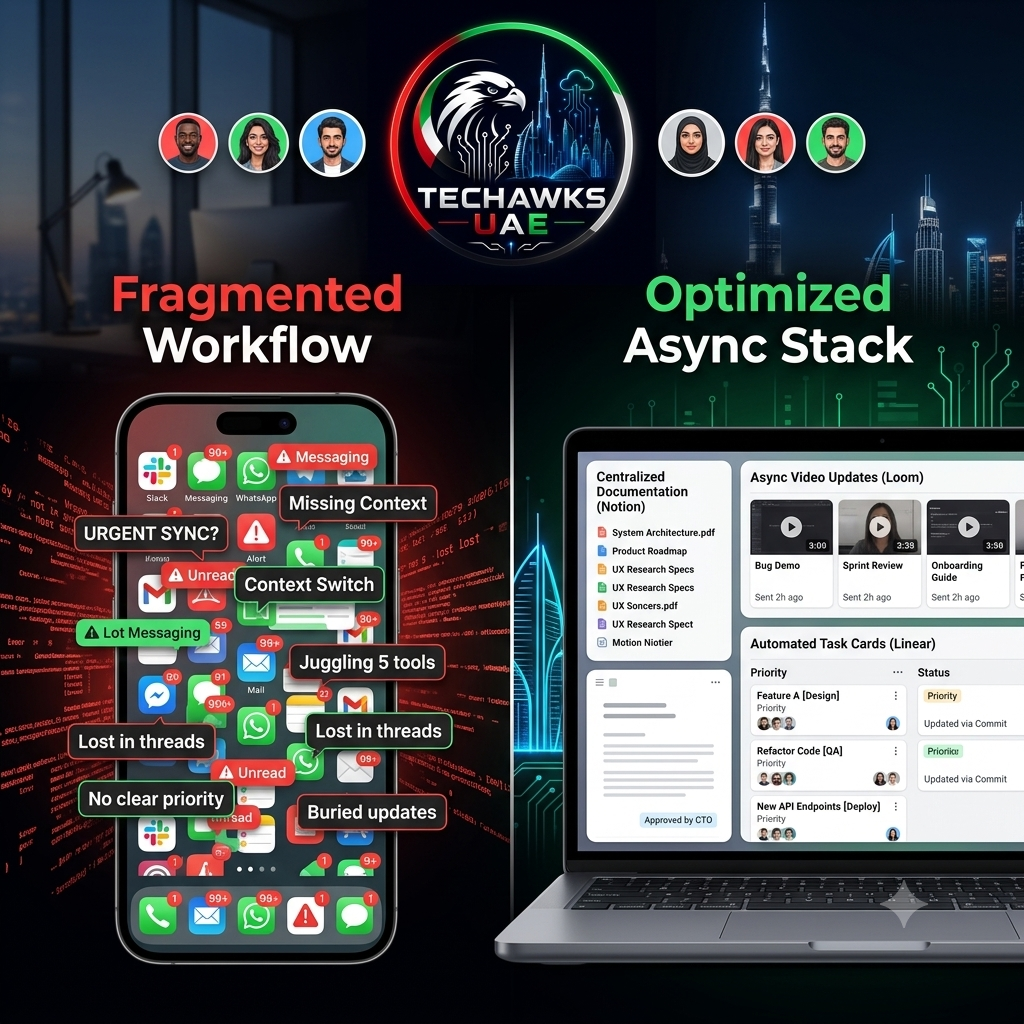
    The UAE’s tech ecosystem thrives on global talent and rapid scaling. However, when your engineering leads are in Dubai, developers are spread across Europe or South Asia, and stakeholders are in Abu Dhabi, relying on real-time meetings creates massive operational bottlenecks.
    To maintain high velocity without burning out your team, you need a workflow built around asynchronous communication and centralized knowledge. Here are three core tools and actionable strategies to optimize your UAE tech operations:


    1. Loom: For Frictionless Technical Alignment
    Instead of blocking 30 minutes on a calendar across conflicting time zones to walk through a pull request or design spec, send a high-context video walk-through.
    Actionable Advice: Keep video updates under 3 minutes. State the core objective in the first 30 seconds, demonstrate the feature or code change visually, and end with specific questions for your team to address asynchronously.


    2. Notion: For Single-Source System Architecture
    In fast-moving regional startups and scale-ups, critical context often gets trapped in WhatsApp groups or Slack threads. Notion provides a structured, searchable home for technical specs, Architecture Decision Records (ADRs), and product roadmaps.
    Actionable Advice: Build a standardized "PRD & Spec" template. Before any major feature build, require a documented spec in Notion where team members can leave comments and async approvals within a set 24-hour window.


    3. Linear: For High-Velocity Issue Tracking
    Traditional project management tools can quickly become bloated. Linear offers a clean, keyboard-first interface that keeps software teams focused on shipping rather than updating status cards.
    Actionable Advice: Set up automated integrations between Linear and GitHub/GitLab. Train your engineering team to auto-close tasks via commit messages so project status updates happen in real time without manual intervention.


    Key Takeaways
    Protect Core Focus Hours: Swap status meetings for 2-minute Loom walk-throughs to accommodate distributed time zones.
    Centralize Knowledge: Use Notion to document technical architecture so new hires and remote contributors can self-serve context.
    Streamline Tracking: Automate issue tracking via Linear to eliminate manual project updates.


    CTA (Join Techawks UAE)
    Looking to optimize your engineering processes and connect with leading founders, CTOs, and developers across the Emirates?


    👉 [Join Techawks UAE Today] to access regional tech discussions, operational playbooks, and exclusive local meetups.
    3 Essential Tools Every UAE Tech Team Needs for Cross-Border Collaboration The UAE’s tech ecosystem thrives on global talent and rapid scaling. However, when your engineering leads are in Dubai, developers are spread across Europe or South Asia, and stakeholders are in Abu Dhabi, relying on real-time meetings creates massive operational bottlenecks. To maintain high velocity without burning out your team, you need a workflow built around asynchronous communication and centralized knowledge. Here are three core tools and actionable strategies to optimize your UAE tech operations: 1. Loom: For Frictionless Technical Alignment Instead of blocking 30 minutes on a calendar across conflicting time zones to walk through a pull request or design spec, send a high-context video walk-through. Actionable Advice: Keep video updates under 3 minutes. State the core objective in the first 30 seconds, demonstrate the feature or code change visually, and end with specific questions for your team to address asynchronously. 2. Notion: For Single-Source System Architecture In fast-moving regional startups and scale-ups, critical context often gets trapped in WhatsApp groups or Slack threads. Notion provides a structured, searchable home for technical specs, Architecture Decision Records (ADRs), and product roadmaps. Actionable Advice: Build a standardized "PRD & Spec" template. Before any major feature build, require a documented spec in Notion where team members can leave comments and async approvals within a set 24-hour window. 3. Linear: For High-Velocity Issue Tracking Traditional project management tools can quickly become bloated. Linear offers a clean, keyboard-first interface that keeps software teams focused on shipping rather than updating status cards. Actionable Advice: Set up automated integrations between Linear and GitHub/GitLab. Train your engineering team to auto-close tasks via commit messages so project status updates happen in real time without manual intervention. Key Takeaways Protect Core Focus Hours: Swap status meetings for 2-minute Loom walk-throughs to accommodate distributed time zones. Centralize Knowledge: Use Notion to document technical architecture so new hires and remote contributors can self-serve context. Streamline Tracking: Automate issue tracking via Linear to eliminate manual project updates. CTA (Join Techawks UAE) Looking to optimize your engineering processes and connect with leading founders, CTOs, and developers across the Emirates? 👉 [Join Techawks UAE Today] to access regional tech discussions, operational playbooks, and exclusive local meetups.
    0 Comments 0 Shares 1K Views 0 Reviews
  • How to Elevate Your Tech Career in the UAE (Beyond Just Switching Jobs)


    Whether you are an engineer, product manager, or technical lead, thriving in the UAE’s competitive tech market demands intentional career positioning. With multinational tech hubs and fast-scaling regional startups coexisting side-by-side, standing out requires demonstrating clear business value and local industry connectivity.
    Here are three actionable strategies to future-proof your tech career in the Emirates:


    1. Position Yourself at the Intersection of Tech & Business Value
    In high-growth regional hubs, companies prioritize professionals who don't just deliver tickets—they drive business outcomes.
    Actionable Advice: In your next team catch-up or performance review, tie your technical projects directly to growth metrics. Instead of saying, "I refactored the checkout API," frame it as, "I optimized the checkout API, reducing latency by 40% and improving mobile conversion rates."


    2. Build a Local Knowledge Footprint
    Subject matter expertise becomes exponentially more valuable when shared. Building a personal brand within the regional tech community establishes you as a go-to authority.
    Actionable Advice: Pick one specific area you excel at—such as async team workflows, cloud architecture, or local fintech integrations—and write concise case studies on LinkedIn or present at regional tech meetups once a quarter.


    3. Cultivate High-Value Regional Relationships
    Networking in the UAE isn't about accumulating contacts; it’s about establishing genuine peer relationships with decision-makers across local hubs.
    Actionable Advice: Reach out to 2 peer professionals or engineering leads in Abu Dhabi or Dubai each month for a virtual coffee chat. Focus on sharing insights about regional engineering challenges rather than asking for job referrals.


    Key Takeaways
    Quantify Your Impact: Always map technical achievements back to business ROI and customer experience.
    Share Expertise Publicly: Document lessons learned and technical insights to establish regional authority.
    Network with Intent: Focus on deep, value-driven connections within the UAE tech community.


    CTA (Join Techawks UAE)
    Ready to accelerate your career and connect with the top engineers, product leaders, and tech innovators across the UAE?


    👉 [Join Techawks UAE Today] to access regional career insights, peer mentorship, and exclusive community events.
    How to Elevate Your Tech Career in the UAE (Beyond Just Switching Jobs) Whether you are an engineer, product manager, or technical lead, thriving in the UAE’s competitive tech market demands intentional career positioning. With multinational tech hubs and fast-scaling regional startups coexisting side-by-side, standing out requires demonstrating clear business value and local industry connectivity. Here are three actionable strategies to future-proof your tech career in the Emirates: 1. Position Yourself at the Intersection of Tech & Business Value In high-growth regional hubs, companies prioritize professionals who don't just deliver tickets—they drive business outcomes. Actionable Advice: In your next team catch-up or performance review, tie your technical projects directly to growth metrics. Instead of saying, "I refactored the checkout API," frame it as, "I optimized the checkout API, reducing latency by 40% and improving mobile conversion rates." 2. Build a Local Knowledge Footprint Subject matter expertise becomes exponentially more valuable when shared. Building a personal brand within the regional tech community establishes you as a go-to authority. Actionable Advice: Pick one specific area you excel at—such as async team workflows, cloud architecture, or local fintech integrations—and write concise case studies on LinkedIn or present at regional tech meetups once a quarter. 3. Cultivate High-Value Regional Relationships Networking in the UAE isn't about accumulating contacts; it’s about establishing genuine peer relationships with decision-makers across local hubs. Actionable Advice: Reach out to 2 peer professionals or engineering leads in Abu Dhabi or Dubai each month for a virtual coffee chat. Focus on sharing insights about regional engineering challenges rather than asking for job referrals. Key Takeaways Quantify Your Impact: Always map technical achievements back to business ROI and customer experience. Share Expertise Publicly: Document lessons learned and technical insights to establish regional authority. Network with Intent: Focus on deep, value-driven connections within the UAE tech community. CTA (Join Techawks UAE) Ready to accelerate your career and connect with the top engineers, product leaders, and tech innovators across the UAE? 👉 [Join Techawks UAE Today] to access regional career insights, peer mentorship, and exclusive community events.
    0 Comments 0 Shares 744 Views 0 Reviews
  • Poll: How Is Your Team Managing Time-Zone Overlap Across Global Hubs?


    Building tech products from hubs like Dubai and Abu Dhabi gives companies incredible access to international talent. However, when your engineering leads are in the UAE, developers are spread across Eastern Europe or South Asia, and product managers are aligned with local business hours, schedule friction can severely delay sprint timelines.
    To keep shipping at high velocity, successful UAE teams move away from real-time dependence and structure their workflows around asynchronous alignment.


    📊 Quick Poll for the UAE Tech Community
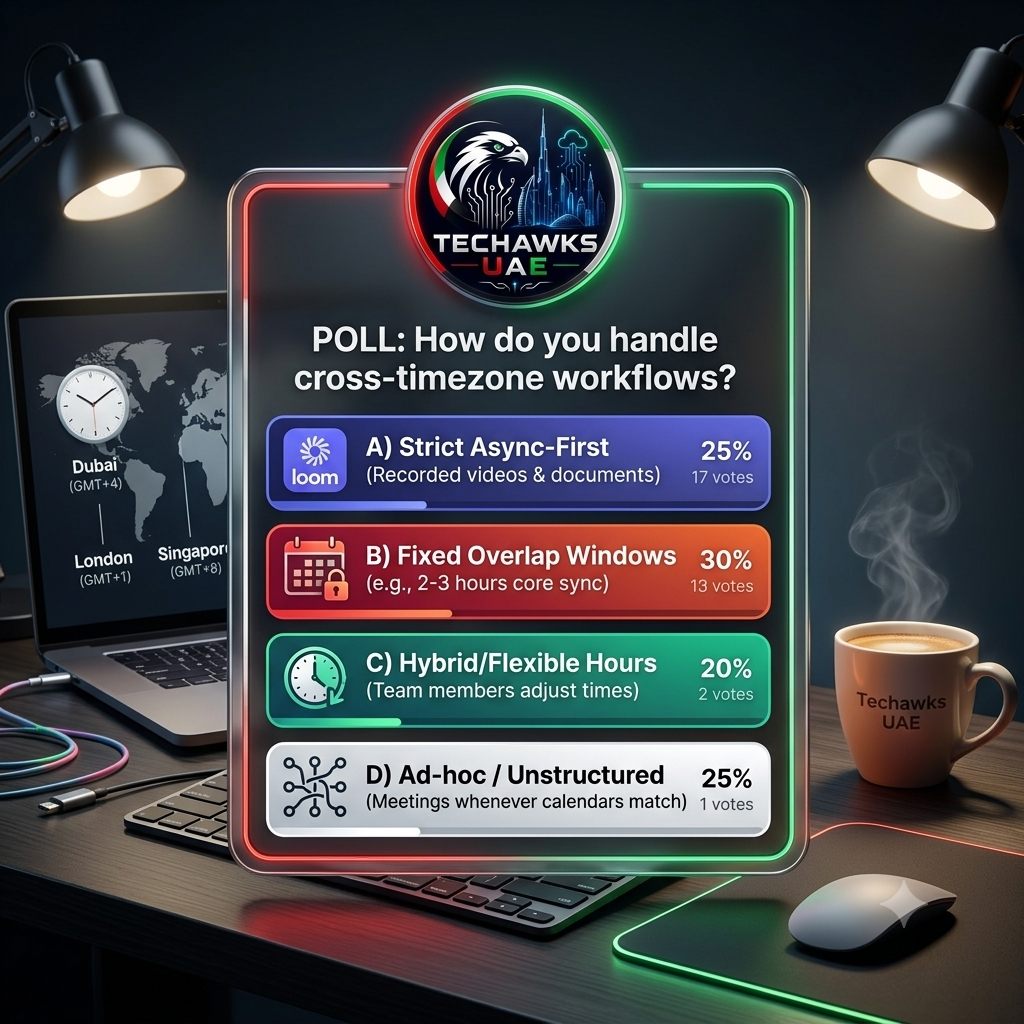
    How does your team currently handle cross-border time-zone differences?
    🔴 A) Strict Async-First (Loom walk-throughs, Notion docs, minimal live syncs)
    🟠 B) Fixed Overlap Windows (Core 2–3 hours daily reserved strictly for live calls)
    🟡 C) Hybrid/Flexible Hours (Team members adjust working hours to match Dubai time)
    🟢 D) Ad-hoc / Unstructured (Meetings scheduled whenever calendars align)
    (Drop your answer A, B, C, or D in the comments below!)


    Key Takeaways
    Define Core Overlap Windows: Reserve a maximum of 2 hours per day for real-time discussions, leaving the rest of the day for deep, uninterrupted work.
    Default to Written Specs: Before jumping on a call to solve an architecture issue, write down the problem and proposed solution in Notion or GitHub for async review.
    Record Visual Updates: Use short video recordings for sprint demos and bug reports to eliminate the need for cross-time-zone status meetings.


    CTA (Join Techawks UAE)
    Want to refine your team's operational playbook and connect with top CTOs, engineering managers, and product leads across the Emirates?


    👉 [Join Techawks UAE Today] to access regional tech discussions, operational strategies, and exclusive community meetups.
    Poll: How Is Your Team Managing Time-Zone Overlap Across Global Hubs? Building tech products from hubs like Dubai and Abu Dhabi gives companies incredible access to international talent. However, when your engineering leads are in the UAE, developers are spread across Eastern Europe or South Asia, and product managers are aligned with local business hours, schedule friction can severely delay sprint timelines. To keep shipping at high velocity, successful UAE teams move away from real-time dependence and structure their workflows around asynchronous alignment. 📊 Quick Poll for the UAE Tech Community How does your team currently handle cross-border time-zone differences? 🔴 A) Strict Async-First (Loom walk-throughs, Notion docs, minimal live syncs) 🟠 B) Fixed Overlap Windows (Core 2–3 hours daily reserved strictly for live calls) 🟡 C) Hybrid/Flexible Hours (Team members adjust working hours to match Dubai time) 🟢 D) Ad-hoc / Unstructured (Meetings scheduled whenever calendars align) (Drop your answer A, B, C, or D in the comments below!) Key Takeaways Define Core Overlap Windows: Reserve a maximum of 2 hours per day for real-time discussions, leaving the rest of the day for deep, uninterrupted work. Default to Written Specs: Before jumping on a call to solve an architecture issue, write down the problem and proposed solution in Notion or GitHub for async review. Record Visual Updates: Use short video recordings for sprint demos and bug reports to eliminate the need for cross-time-zone status meetings. CTA (Join Techawks UAE) Want to refine your team's operational playbook and connect with top CTOs, engineering managers, and product leads across the Emirates? 👉 [Join Techawks UAE Today] to access regional tech discussions, operational strategies, and exclusive community meetups.
    0 Comments 0 Shares 939 Views 0 Reviews
  • 3 Essential Tools for Managing Coast-to-Coast Tech Teams in Canada


    Canada’s tech ecosystem is defined by highly distributed innovation. With engineering hubs spread across Toronto’s AI and fintech sectors, Vancouver’s cloud software scene, and Montreal’s deep-tech clusters, local companies frequently hire top talent nationwide.
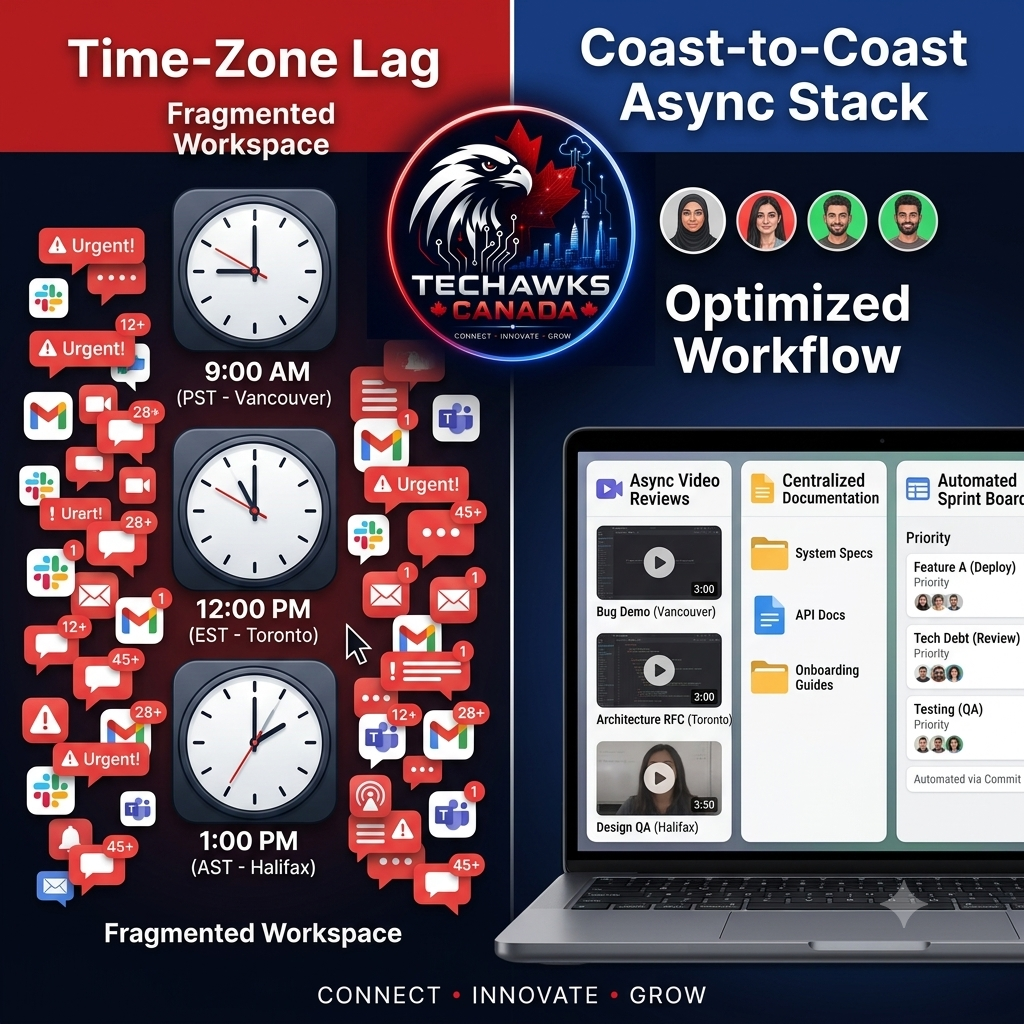
    However, relying on constant live syncs across provincial time zones drains developer energy and stalls delivery. To build a resilient workflow across Canada, engineering and product leaders need tools built for asynchronous context-sharing and centralized knowledge.
    Here are three core tools and actionable strategies to optimize your coast-to-coast operations:


    1. Loom: For Asynchronous Video Code & Spec Reviews
    When it's 9:00 AM in Vancouver, it's already 12:00 PM in Toronto and 1:00 PM in Halifax. Waiting for a schedule overlap just to walk through a pull request or product mockup adds half a day of friction.
    Actionable Advice: Record a 2- to 3-minute video recording explaining the technical context of your PR or spec. Open with the core problem, highlight key visual or code changes, and tag teammates with a clear call-to-action for async feedback.


    2. Notion: For Single-Source System Architecture & Documentation
    Important decisions buried in Slack channels or scattered across regional drives create massive knowledge gaps between teams in different provinces. Notion serves as a single, searchable repository for technical specs, Architecture Decision Records (ADRs), and onboarding guides.
    Actionable Advice: Build standardized templates for feature proposals and ADRs. Establish a rule that all architectural changes must be documented in Notion with a 24-hour async comment period before implementation starts.


    3. Linear: For High-Velocity Issue & Sprint Tracking
    Traditional, heavy project management tools often require endless status syncs to keep track of sprint progress. Linear offers a lightweight, keyboard-first issue tracker that connects developer commits directly to project boards.
    Actionable Advice: Enable GitHub/GitLab automation in Linear. Teach developers to link issues directly in commit messages so cards update status automatically as PRs are created, reviewed, and merged—zero status meetings required.


    Key Takeaways
    Protect Focus Windows: Replace routine status calls with short, high-context video walkthroughs.
    Centralize Team Knowledge: Document system design and project specs in Notion so distributed teams can self-serve context on demand.
    Automate Status Tracking: Sync issue management with code repositories to track sprint velocity without manual updates.


    CTA (Join Techawks Canada)
    Looking to optimize your team's engineering stack and connect with top developers, CTOs, and tech leaders from coast to coast?


    👉 [Join Techawks Canada Today] to access regional playbooks, peer mentorship, and community-led technical discussions across the country.
    3 Essential Tools for Managing Coast-to-Coast Tech Teams in Canada Canada’s tech ecosystem is defined by highly distributed innovation. With engineering hubs spread across Toronto’s AI and fintech sectors, Vancouver’s cloud software scene, and Montreal’s deep-tech clusters, local companies frequently hire top talent nationwide. However, relying on constant live syncs across provincial time zones drains developer energy and stalls delivery. To build a resilient workflow across Canada, engineering and product leaders need tools built for asynchronous context-sharing and centralized knowledge. Here are three core tools and actionable strategies to optimize your coast-to-coast operations: 1. Loom: For Asynchronous Video Code & Spec Reviews When it's 9:00 AM in Vancouver, it's already 12:00 PM in Toronto and 1:00 PM in Halifax. Waiting for a schedule overlap just to walk through a pull request or product mockup adds half a day of friction. Actionable Advice: Record a 2- to 3-minute video recording explaining the technical context of your PR or spec. Open with the core problem, highlight key visual or code changes, and tag teammates with a clear call-to-action for async feedback. 2. Notion: For Single-Source System Architecture & Documentation Important decisions buried in Slack channels or scattered across regional drives create massive knowledge gaps between teams in different provinces. Notion serves as a single, searchable repository for technical specs, Architecture Decision Records (ADRs), and onboarding guides. Actionable Advice: Build standardized templates for feature proposals and ADRs. Establish a rule that all architectural changes must be documented in Notion with a 24-hour async comment period before implementation starts. 3. Linear: For High-Velocity Issue & Sprint Tracking Traditional, heavy project management tools often require endless status syncs to keep track of sprint progress. Linear offers a lightweight, keyboard-first issue tracker that connects developer commits directly to project boards. Actionable Advice: Enable GitHub/GitLab automation in Linear. Teach developers to link issues directly in commit messages so cards update status automatically as PRs are created, reviewed, and merged—zero status meetings required. Key Takeaways Protect Focus Windows: Replace routine status calls with short, high-context video walkthroughs. Centralize Team Knowledge: Document system design and project specs in Notion so distributed teams can self-serve context on demand. Automate Status Tracking: Sync issue management with code repositories to track sprint velocity without manual updates. CTA (Join Techawks Canada) Looking to optimize your team's engineering stack and connect with top developers, CTOs, and tech leaders from coast to coast? 👉 [Join Techawks Canada Today] to access regional playbooks, peer mentorship, and community-led technical discussions across the country.
    0 Comments 0 Shares 843 Views 0 Reviews
  • How to Accelerate Your Tech Career in Canada (Without Switching Jobs Every Year)


    In a competitive national job market, continuous job-hopping isn't the only (or best) route to senior roles and compensation growth. The most sought-after engineers, product leads, and technical architects in Canada share a common trait: they position themselves as high-value, strategic contributors within their local and national ecosystems.
    Here is how you can systematically future-proof your tech career from coast to coast:


    1. Connect Code to Business Metrics
    Writing clean code is expected; understanding how that code drives bottom-line growth is what earns promotions.
    Actionable Advice: In your next 1-on-1, ask your engineering manager or product lead: "What key metric is this quarter's roadmap attempting to move?" Tailor your daily engineering decisions around those outcomes (e.g., reducing latency to lower infrastructure spend or improving user retention).


    2. Maintain a "Public" Track Record
    Relying solely on your resume during performance reviews or job searches puts you at a disadvantage. You need a live, accessible track record of your accomplishments.
    Actionable Advice: Keep a personal "brag document" to track completed features, bug reductions, and process optimizations with exact metrics. Share non-proprietary technical lessons through blog posts, open-source contributions, or internal tech talks.


    3. Build a Cross-Province Tech Network
    Networking isn't about collecting casual contacts on LinkedIn—it’s about cultivating high-trust relationships with peers and leaders across Canadian innovation hubs.
    Actionable Advice: Make it a habit to connect with two tech professionals outside your immediate region each month (e.g., if you are in Toronto, reach out to an engineering manager in Calgary or Vancouver). Discuss shared technical challenges rather than job openings.


    Key Takeaways
    Quantify Value: Frame technical accomplishments in terms of business impact and revenue.
    Document Wins Regularly: Keep an updated log of project metrics for internal reviews and external authority.
    Expand Beyond Your City: Build relationships across major Canadian tech hubs to keep a pulse on national industry trends.


    CTA (Join Techawks Canada)
    Ready to elevate your technical career and build high-value connections with founders, engineers, and product leaders across Canada?


    👉 [Join Techawks Canada Today] to access regional career playbooks, peer mentorship, and exclusive national networking events.
    How to Accelerate Your Tech Career in Canada (Without Switching Jobs Every Year) In a competitive national job market, continuous job-hopping isn't the only (or best) route to senior roles and compensation growth. The most sought-after engineers, product leads, and technical architects in Canada share a common trait: they position themselves as high-value, strategic contributors within their local and national ecosystems. Here is how you can systematically future-proof your tech career from coast to coast: 1. Connect Code to Business Metrics Writing clean code is expected; understanding how that code drives bottom-line growth is what earns promotions. Actionable Advice: In your next 1-on-1, ask your engineering manager or product lead: "What key metric is this quarter's roadmap attempting to move?" Tailor your daily engineering decisions around those outcomes (e.g., reducing latency to lower infrastructure spend or improving user retention). 2. Maintain a "Public" Track Record Relying solely on your resume during performance reviews or job searches puts you at a disadvantage. You need a live, accessible track record of your accomplishments. Actionable Advice: Keep a personal "brag document" to track completed features, bug reductions, and process optimizations with exact metrics. Share non-proprietary technical lessons through blog posts, open-source contributions, or internal tech talks. 3. Build a Cross-Province Tech Network Networking isn't about collecting casual contacts on LinkedIn—it’s about cultivating high-trust relationships with peers and leaders across Canadian innovation hubs. Actionable Advice: Make it a habit to connect with two tech professionals outside your immediate region each month (e.g., if you are in Toronto, reach out to an engineering manager in Calgary or Vancouver). Discuss shared technical challenges rather than job openings. Key Takeaways Quantify Value: Frame technical accomplishments in terms of business impact and revenue. Document Wins Regularly: Keep an updated log of project metrics for internal reviews and external authority. Expand Beyond Your City: Build relationships across major Canadian tech hubs to keep a pulse on national industry trends. CTA (Join Techawks Canada) Ready to elevate your technical career and build high-value connections with founders, engineers, and product leaders across Canada? 👉 [Join Techawks Canada Today] to access regional career playbooks, peer mentorship, and exclusive national networking events.
    0 Comments 0 Shares 674 Views 0 Reviews
  • Poll: What is the Single Largest Challenge Facing Distributed Canadian Tech Teams?


    Building and scaling tech companies in Canada requires balancing provincial talent pools, time-zone spreads, and hybrid work expectations. While distributed setups unlock nationwide talent, they also introduce coordination friction that can slow down product releases if left unaddressed.
    We want to hear from engineering managers, product leads, and developers across the Canadian tech ecosystem:


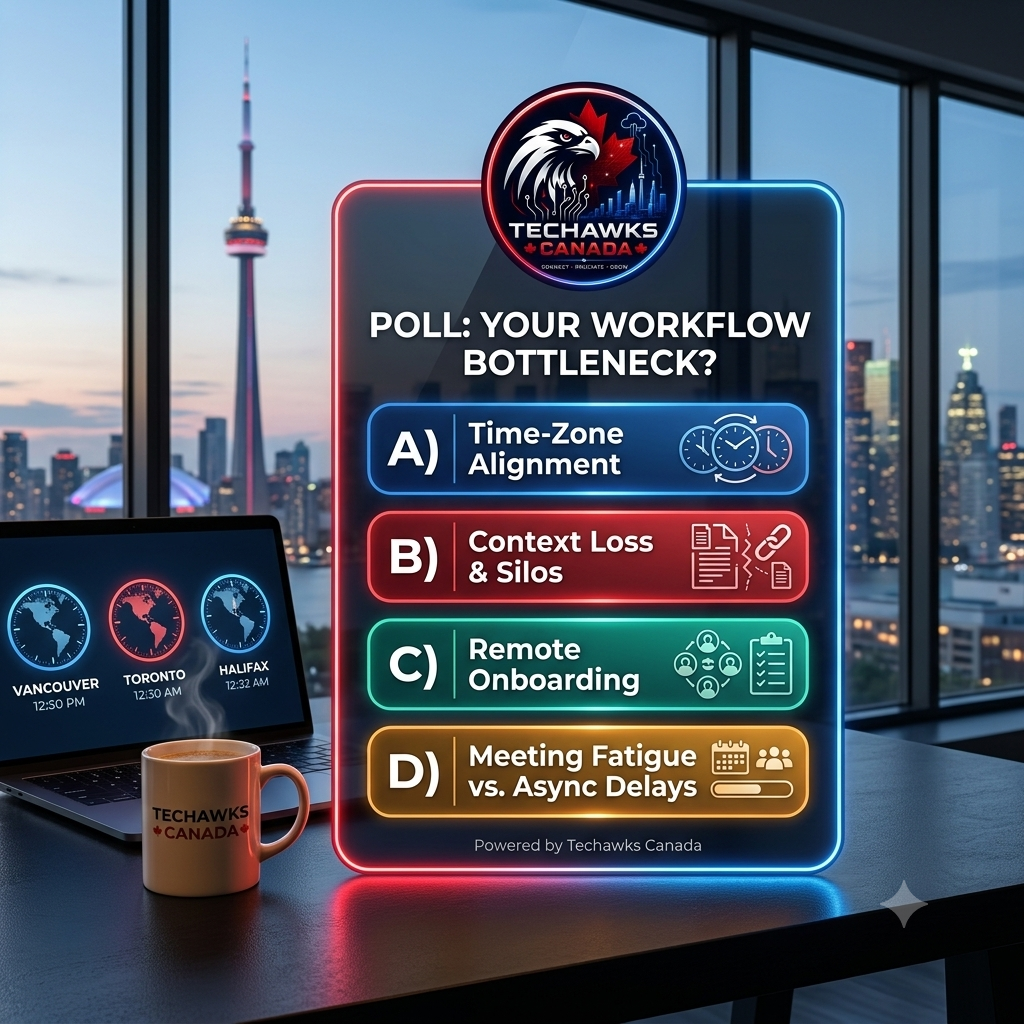
    Which operational challenge creates the biggest bottleneck in your team’s daily workflow?
    A) Time-Zone Alignment: Managing real-time collaboration across PST, EST, and AST without overwhelming team calendars.
    B) Context Loss & Silos: Keeping documentation updated across Slack, Jira, and Notion without losing critical architectural decisions.
    C) Remote Onboarding & Mentorship: Integrating junior developers and new hires into complex codebases without in-person shadow sessions.
    D) Meeting Fatigue vs. Async Delays: Balancing the friction of endless status calls against 24-hour review delays on pull requests.


    Actionable Advice for Each Workflow Bottleneck
    If you selected A or D: Establish strict 2-hour core overlap windows (e.g., 1:00 PM – 3:00 PM EST) for synchronous alignment, leaving the rest of the day for uninterrupted focus work and asynchronous video updates.
    If you selected B: Implement Architecture Decision Records (ADRs) within your repository. Require a brief written spec before code is written, ensuring knowledge stays attached to the codebase rather than fading in chat threads.
    If you selected C: Pair new hires with a dedicated technical mentor for the first month and utilize recorded async walkthroughs for system architecture onboarding.


    Key Takeaways
    Identify the Bottleneck: Isolate whether your team's friction stems from schedule overlap, documentation gaps, or onboarding friction.
    Adopt Async Discipline: Reduce calendar dependency by shifting code walkthroughs and status updates to documented, asynchronous formats.
    Standardize Workflows: Establish explicit team agreements around core communication hours and pull request response times across provinces.


    CTA (Join Techawks Canada)
    Looking to benchmark your team's processes against top engineering leaders across the country?


    👉 [Join Techawks Canada Today] to participate in live industry discussions, access exclusive engineering playbooks, and connect with technical leaders from coast to coast.
    Poll: What is the Single Largest Challenge Facing Distributed Canadian Tech Teams? Building and scaling tech companies in Canada requires balancing provincial talent pools, time-zone spreads, and hybrid work expectations. While distributed setups unlock nationwide talent, they also introduce coordination friction that can slow down product releases if left unaddressed. We want to hear from engineering managers, product leads, and developers across the Canadian tech ecosystem: Which operational challenge creates the biggest bottleneck in your team’s daily workflow? A) Time-Zone Alignment: Managing real-time collaboration across PST, EST, and AST without overwhelming team calendars. B) Context Loss & Silos: Keeping documentation updated across Slack, Jira, and Notion without losing critical architectural decisions. C) Remote Onboarding & Mentorship: Integrating junior developers and new hires into complex codebases without in-person shadow sessions. D) Meeting Fatigue vs. Async Delays: Balancing the friction of endless status calls against 24-hour review delays on pull requests. Actionable Advice for Each Workflow Bottleneck If you selected A or D: Establish strict 2-hour core overlap windows (e.g., 1:00 PM – 3:00 PM EST) for synchronous alignment, leaving the rest of the day for uninterrupted focus work and asynchronous video updates. If you selected B: Implement Architecture Decision Records (ADRs) within your repository. Require a brief written spec before code is written, ensuring knowledge stays attached to the codebase rather than fading in chat threads. If you selected C: Pair new hires with a dedicated technical mentor for the first month and utilize recorded async walkthroughs for system architecture onboarding. Key Takeaways Identify the Bottleneck: Isolate whether your team's friction stems from schedule overlap, documentation gaps, or onboarding friction. Adopt Async Discipline: Reduce calendar dependency by shifting code walkthroughs and status updates to documented, asynchronous formats. Standardize Workflows: Establish explicit team agreements around core communication hours and pull request response times across provinces. CTA (Join Techawks Canada) Looking to benchmark your team's processes against top engineering leaders across the country? 👉 [Join Techawks Canada Today] to participate in live industry discussions, access exclusive engineering playbooks, and connect with technical leaders from coast to coast.
    0 Comments 0 Shares 793 Views 0 Reviews
  • 0 Comments 0 Shares 284 Views 0 Reviews
  • The 5-Step System Architecture Checklist Every Engineer Needs Before Scaling


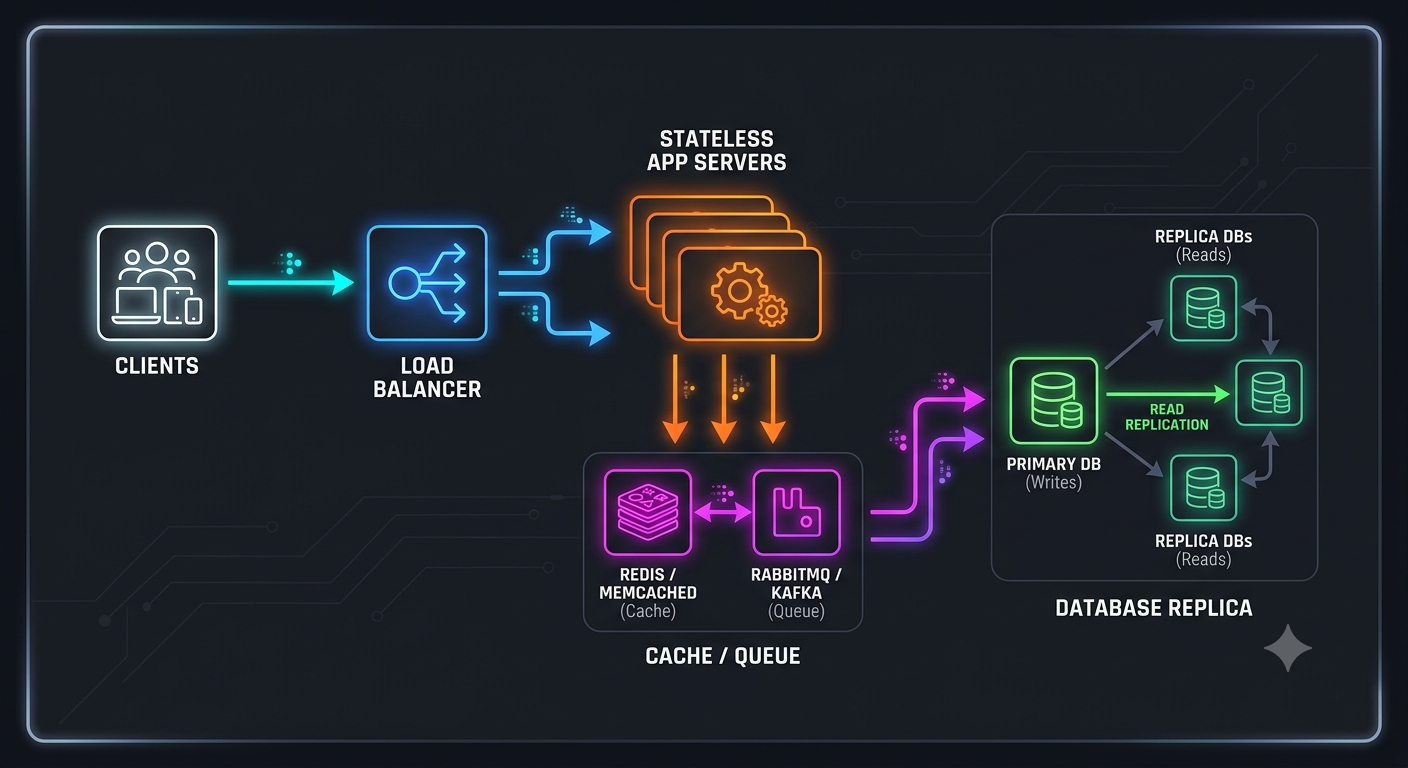
    System design isn't just for senior architects; it’s a muscle every software engineer needs to build. When traffic spikes or data volume grows exponentially, unoptimized architectures fail in predictable ways: database bottlenecks, unhandled latency, and single points of failure.
    To build systems that scale gracefully and remain easy to maintain, evaluate your stack against these five core layers:


    Stateless Application Layers


    Keep your application servers stateless.
    Store user sessions in an in-memory datastore (like Redis) rather than local server memory. This allows you to scale horizontally by simply spinning up extra instances behind a load balancer.


    Database Optimization & Caching
    Never let read-heavy operations hit your primary database directly.
    Implement a caching layer (Write-Through or Cache-Aside pattern) for frequently accessed, slow-changing data. Index your query fields properly to prevent full table scans.


    Asynchronous Processing
    Decouple heavy, non-critical tasks (e.g., sending emails, video processing, generating reports) from the main request-response cycle.
    Use message queues (such as RabbitMQ or Apache Kafka) to handle background jobs without blocking the client.


    Redundancy & Failover Systems
    Identify your Single Points of Failure (SPOFs).
    Ensure multi-region or multi-zone database replication with automated failovers so your system stays operational even if an entire availability zone goes down.


    Observability & Rate Limiting
    You can't fix what you can't see. Implement structured logging, distributed tracing, and real-time metrics.
    Apply API rate limiting at the gateway layer to protect your downstream services from accidental self-DOS or bad actors.


    Key Takeaways
    Decouple everything: Asynchronous queues prevent cascading system failures.
    Cache aggressively, but invalidate wisely: Protect your database from repetitive read loads.
    Design for failure: Assume servers will crash, network calls will time out, and databases will fail over.


    CTA
    Looking to master high-availability systems and refine your tech stack?


    [Join the Techawks General Community] to collaborate with thousands of developers, share architecture blueprints, and elevate your engineering skills daily.
    The 5-Step System Architecture Checklist Every Engineer Needs Before Scaling System design isn't just for senior architects; it’s a muscle every software engineer needs to build. When traffic spikes or data volume grows exponentially, unoptimized architectures fail in predictable ways: database bottlenecks, unhandled latency, and single points of failure. To build systems that scale gracefully and remain easy to maintain, evaluate your stack against these five core layers: Stateless Application Layers Keep your application servers stateless. Store user sessions in an in-memory datastore (like Redis) rather than local server memory. This allows you to scale horizontally by simply spinning up extra instances behind a load balancer. Database Optimization & Caching Never let read-heavy operations hit your primary database directly. Implement a caching layer (Write-Through or Cache-Aside pattern) for frequently accessed, slow-changing data. Index your query fields properly to prevent full table scans. Asynchronous Processing Decouple heavy, non-critical tasks (e.g., sending emails, video processing, generating reports) from the main request-response cycle. Use message queues (such as RabbitMQ or Apache Kafka) to handle background jobs without blocking the client. Redundancy & Failover Systems Identify your Single Points of Failure (SPOFs). Ensure multi-region or multi-zone database replication with automated failovers so your system stays operational even if an entire availability zone goes down. Observability & Rate Limiting You can't fix what you can't see. Implement structured logging, distributed tracing, and real-time metrics. Apply API rate limiting at the gateway layer to protect your downstream services from accidental self-DOS or bad actors. Key Takeaways Decouple everything: Asynchronous queues prevent cascading system failures. Cache aggressively, but invalidate wisely: Protect your database from repetitive read loads. Design for failure: Assume servers will crash, network calls will time out, and databases will fail over. CTA Looking to master high-availability systems and refine your tech stack? [Join the Techawks General Community] to collaborate with thousands of developers, share architecture blueprints, and elevate your engineering skills daily.
    0 Comments 0 Shares 649 Views 0 Reviews