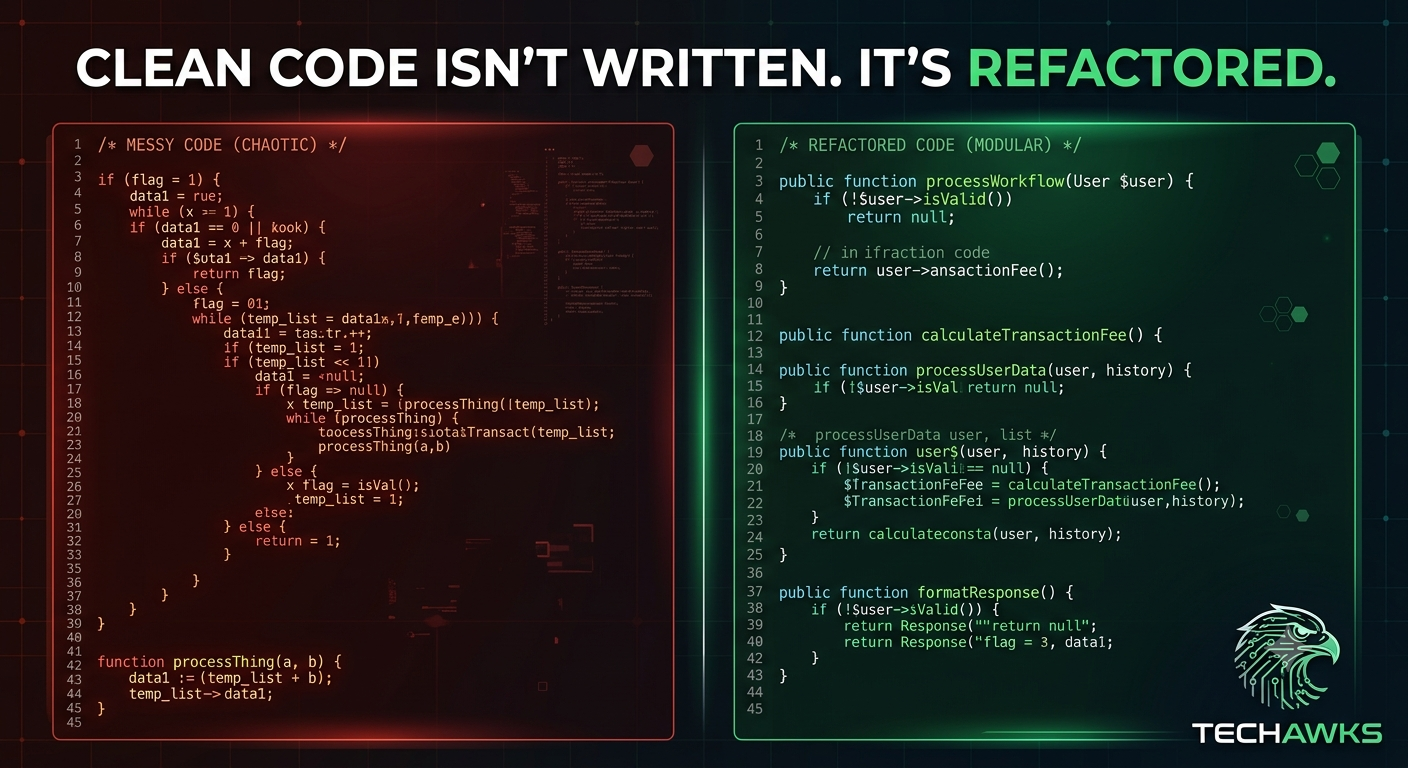
• Waiting for a dedicated "tech debt sprint" to clean up your code is a trap—it almost never happens. Here is how senior engineers maintain high code quality daily without slowing down delivery.


    Technical debt accumulates silently. A quick hack here, an unoptimized function there, and within six months, a once-agile project becomes a fragile nightmare to maintain. The solution isn’t halting feature development for two weeks to rewrite modules; it is practicing Micro-Refactoring.


    Micro-refactoring is the practice of leaving any file you touch slightly better than you found it, adhering to the Boy Scout Rule. By spending just 5 to 10 minutes refactoring during your standard task workflow, you continuously reduce debt without impacting your sprint velocity.


    Here is the 4-step framework to apply micro-refactoring today:


    Extract Complex Conditionals


    Before: if (user.age > 18 && user.hasPaid && !user.isSuspended)


    After: if (user.isEligibleForService())


    Why: Reading intent is vastly faster than evaluating logic.


    Flatten Deep Nesting


    Avoid deeply nested if/else blocks by using early returns (guard clauses). If conditions aren't met, exit the function immediately. This eliminates cognitive overload for the next developer.


    Rename for Intent, Not Mechanism


    Replace vague variable names like data or temp with descriptive domain terms like pendingInvoices or authenticatedUserSession. Code should read like documentation.


    Isolate Pure Functions


    Move side-effect-free logic (like calculations or data transformations) into standalone, pure functions. Pure functions are easier to reason about, reuse, and unit test.
    Waiting for a dedicated "tech debt sprint" to clean up your code is a trap—it almost never happens. Here is how senior engineers maintain high code quality daily without slowing down delivery. Technical debt accumulates silently. A quick hack here, an unoptimized function there, and within six months, a once-agile project becomes a fragile nightmare to maintain. The solution isn’t halting feature development for two weeks to rewrite modules; it is practicing Micro-Refactoring. Micro-refactoring is the practice of leaving any file you touch slightly better than you found it, adhering to the Boy Scout Rule. By spending just 5 to 10 minutes refactoring during your standard task workflow, you continuously reduce debt without impacting your sprint velocity. Here is the 4-step framework to apply micro-refactoring today: Extract Complex Conditionals Before: if (user.age > 18 && user.hasPaid && !user.isSuspended) After: if (user.isEligibleForService()) Why: Reading intent is vastly faster than evaluating logic. Flatten Deep Nesting Avoid deeply nested if/else blocks by using early returns (guard clauses). If conditions aren't met, exit the function immediately. This eliminates cognitive overload for the next developer. Rename for Intent, Not Mechanism Replace vague variable names like data or temp with descriptive domain terms like pendingInvoices or authenticatedUserSession. Code should read like documentation. Isolate Pure Functions Move side-effect-free logic (like calculations or data transformations) into standalone, pure functions. Pure functions are easier to reason about, reuse, and unit test.
    0 Comments 0 Shares 2K Views 0 Reviews
  • How to Stop LLM Hallucinations: A 4-Step Prompt Engineering Strategy

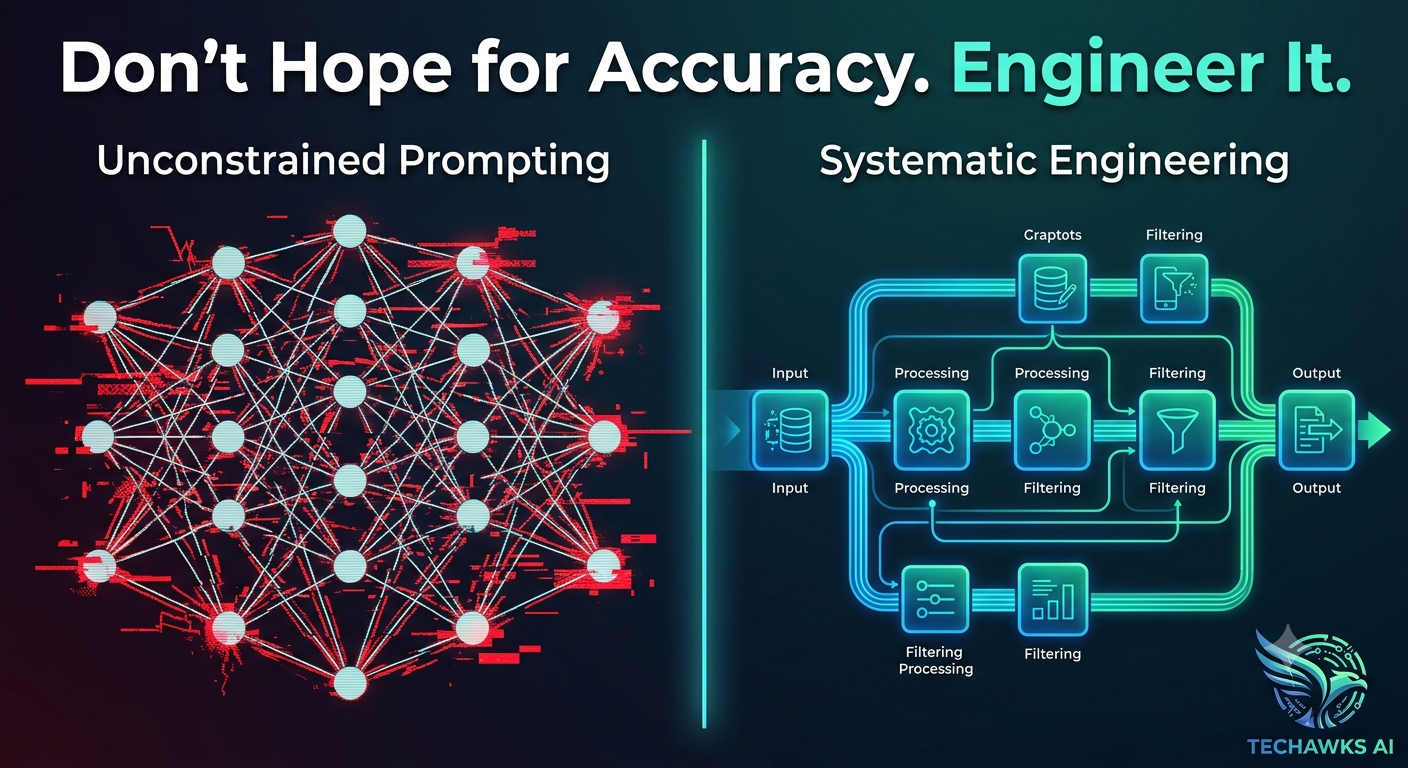
    LLMs are incredible at reasoning and transformation, but notoriously unreliable as knowledge bases. When pushed for specific facts without constraints, models routinely invent believable falsehoods. The secret to reliable output isn't a larger model; it is framing the input to minimize ambiguity.
    Instead of relying on luck, structure your prompts using this 4-step precision framework:

    Supply explicit context (RAG pattern)
    Weak: "Summarize our return policy."
    Strong: "Based strictly on the text provided below, summarize the return policy. If the answer is not contained in the text, reply 'Information not available.'"

    Assign a clear persona & role
    Specify the expertise level, tone, and strict boundaries.
    Example: "Act as a meticulous senior code auditor. Identify performance bottlenecks in the following function. Do not comment on syntax or styling."

    Enforce Chain-of-Thought (CoT) reasoning
    Instruct the model to break down its logic step-by-step before producing the final answer. Forcing step-by-step reasoning significantly reduces logical leaps and errors.
    Example: "First, analyze the input parameters. Second, trace the loop execution. Third, output the final output value."

    Define structured, deterministic output formats
    Ask for outputs in formats like JSON, XML, or Markdown tables with precise keys. This prevents conversational padding and forces the model into structural compliance.
    How to Stop LLM Hallucinations: A 4-Step Prompt Engineering Strategy LLMs are incredible at reasoning and transformation, but notoriously unreliable as knowledge bases. When pushed for specific facts without constraints, models routinely invent believable falsehoods. The secret to reliable output isn't a larger model; it is framing the input to minimize ambiguity. Instead of relying on luck, structure your prompts using this 4-step precision framework: Supply explicit context (RAG pattern) Weak: "Summarize our return policy." Strong: "Based strictly on the text provided below, summarize the return policy. If the answer is not contained in the text, reply 'Information not available.'" Assign a clear persona & role Specify the expertise level, tone, and strict boundaries. Example: "Act as a meticulous senior code auditor. Identify performance bottlenecks in the following function. Do not comment on syntax or styling." Enforce Chain-of-Thought (CoT) reasoning Instruct the model to break down its logic step-by-step before producing the final answer. Forcing step-by-step reasoning significantly reduces logical leaps and errors. Example: "First, analyze the input parameters. Second, trace the loop execution. Third, output the final output value." Define structured, deterministic output formats Ask for outputs in formats like JSON, XML, or Markdown tables with precise keys. This prevents conversational padding and forces the model into structural compliance.
    0 Comments 0 Shares 3K Views 0 Reviews
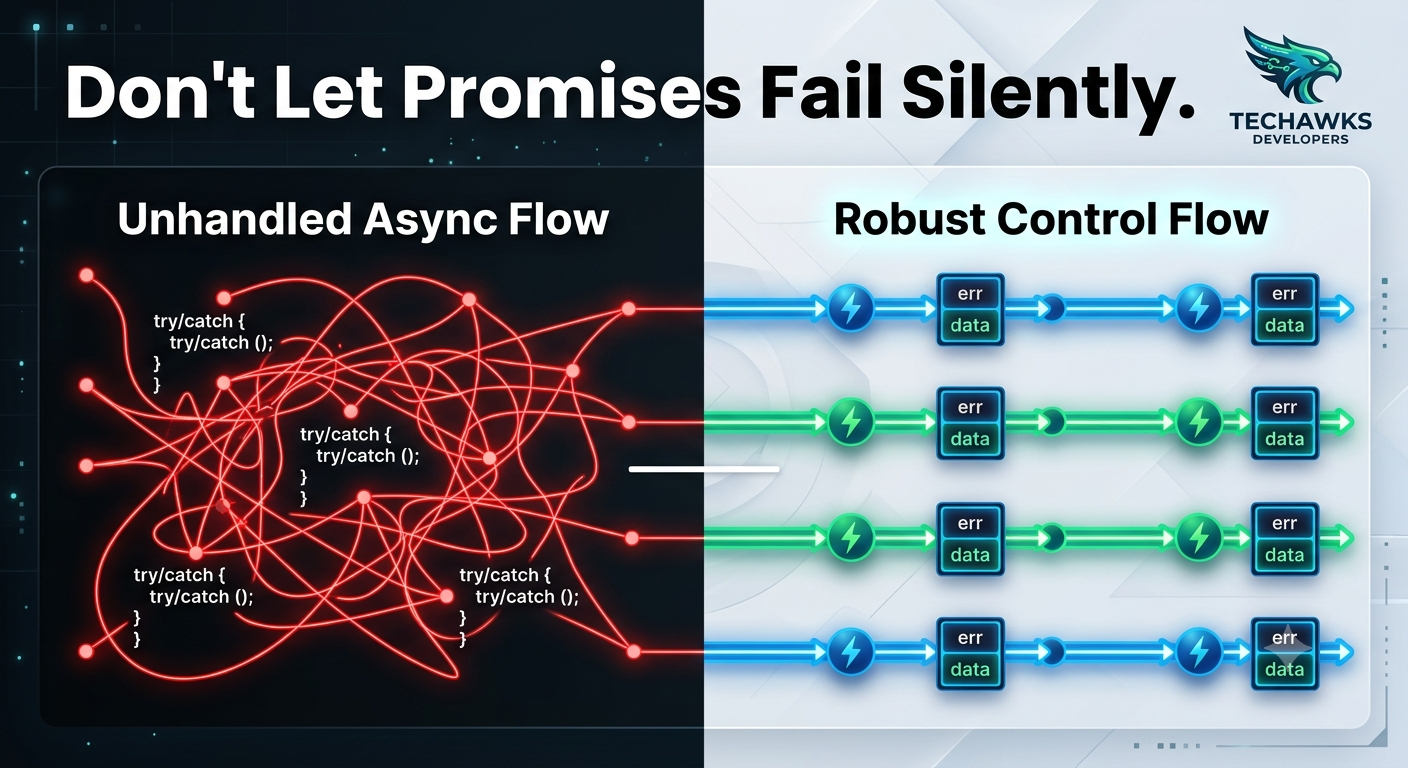
  • Mastering Async Control Flow: Stop Swallowing Errors in Asynchronous JavaScript

    Asynchronous execution is core to modern modern web application development, yet error handling in async code remains one of the most frequent sources of runtime bugs. Relying strictly on basic try/catch blocks around async/await often leads to swallowed exceptions or redundant code.
    Here is a clean, robust pattern for handling asynchronous operations cleanly without falling into common traps:

    Avoid Universal Empty catch Blocks
    Anti-Pattern: Catching an error and doing nothing or merely logging console.log(err). This lets application state fail silently.
    Best Practice: Always rethrow unhandled exceptions or explicitly return a structured error result.

    Adopt the Safe-Await Wrapper Pattern
    Instead of nesting multiple try/catch blocks inside a single function, isolate promise calls using a simple utility function that returns a tuple [error, data]:
    Example:
    JavaScript
    const safeAwait = (promise) => promise
    .then(data => [null, data])
    .catch(err => [err, null]);
    // Usage
    const [err, user] = await safeAwait(fetchUser(id));
    if (err) return handleUserError(err);

    Handle Concurrent Promises Safely
    Avoid Promise.all if you need partial successes when executing multiple parallel requests. One failure will reject the entire batch.
    Use Promise.all Settled instead to evaluate each status individually without halting execution.

    Always Set Timeouts on External Requests
    Never leave a fetch or network promise uncapped. Use AbortController to guarantee that hanging requests timeout gracefully.
    Mastering Async Control Flow: Stop Swallowing Errors in Asynchronous JavaScript Asynchronous execution is core to modern modern web application development, yet error handling in async code remains one of the most frequent sources of runtime bugs. Relying strictly on basic try/catch blocks around async/await often leads to swallowed exceptions or redundant code. Here is a clean, robust pattern for handling asynchronous operations cleanly without falling into common traps: Avoid Universal Empty catch Blocks Anti-Pattern: Catching an error and doing nothing or merely logging console.log(err). This lets application state fail silently. Best Practice: Always rethrow unhandled exceptions or explicitly return a structured error result. Adopt the Safe-Await Wrapper Pattern Instead of nesting multiple try/catch blocks inside a single function, isolate promise calls using a simple utility function that returns a tuple [error, data]: Example: JavaScript const safeAwait = (promise) => promise .then(data => [null, data]) .catch(err => [err, null]); // Usage const [err, user] = await safeAwait(fetchUser(id)); if (err) return handleUserError(err); Handle Concurrent Promises Safely Avoid Promise.all if you need partial successes when executing multiple parallel requests. One failure will reject the entire batch. Use Promise.all Settled instead to evaluate each status individually without halting execution. Always Set Timeouts on External Requests Never leave a fetch or network promise uncapped. Use AbortController to guarantee that hanging requests timeout gracefully.
    0 Comments 0 Shares 2K Views 0 Reviews
  • Waiting for a dedicated "tech debt sprint" to clean up your code is a trap—it almost never happens. Here is how senior engineers maintain high code quality daily without slowing down delivery.
    Waiting for a dedicated "tech debt sprint" to clean up your code is a trap—it almost never happens. Here is how senior engineers maintain high code quality daily without slowing down delivery.
    0 Comments 0 Shares 2K Views 0 Reviews
  • The 3-Layer System Architecture Every Engineer Should Know


    When starting a project, it's tempting to bundle database queries, business logic, and API endpoints into monolithic handlers. While fast initially, this tightly coupled architecture makes updating features risky and scaling individual components impossible.
    To build systems that remain maintainable years into the future, implement the 3-Layer Separation Pattern:


    Presentation Layer (Interface & API Routing)
    Role: Accept incoming client requests (HTTP, WebSockets, gRPC), validate payload structures, and format response outputs.
    Rule: Zero business calculations or database access happen here. This layer only routes requests and handles input serialization.


    Domain/Business Logic Layer (Core Processing)
    Role: Execute core application rules, calculations, permissions, and workflow state transitions.
    Rule: Keep this layer entirely pure and agnostic of external services. It shouldn't care whether data comes from PostgreSQL, Redis, or a third-party API.


    Data Access Layer (Persistence & Adapters)
    Role: Manage interactions with databases, caches, message queues, and external microservices.
    Rule: Wrap external dependencies behind explicit repository interfaces. If you swap your database from SQL to NoSQL tomorrow, only this layer should change.
    The 3-Layer System Architecture Every Engineer Should Know When starting a project, it's tempting to bundle database queries, business logic, and API endpoints into monolithic handlers. While fast initially, this tightly coupled architecture makes updating features risky and scaling individual components impossible. To build systems that remain maintainable years into the future, implement the 3-Layer Separation Pattern: Presentation Layer (Interface & API Routing) Role: Accept incoming client requests (HTTP, WebSockets, gRPC), validate payload structures, and format response outputs. Rule: Zero business calculations or database access happen here. This layer only routes requests and handles input serialization. Domain/Business Logic Layer (Core Processing) Role: Execute core application rules, calculations, permissions, and workflow state transitions. Rule: Keep this layer entirely pure and agnostic of external services. It shouldn't care whether data comes from PostgreSQL, Redis, or a third-party API. Data Access Layer (Persistence & Adapters) Role: Manage interactions with databases, caches, message queues, and external microservices. Rule: Wrap external dependencies behind explicit repository interfaces. If you swap your database from SQL to NoSQL tomorrow, only this layer should change.
    0 Comments 0 Shares 1K Views 0 Reviews
  • Monolith vs. Microservices: How Do You Decide When It’s Time to Split?


    The debate between monolithic and microservice architectures often gets reduced to black-and-white dogmatism. Advocates on one side champion the simplicity of single-repo deployments, while others insist that distributed systems are the only way to scale modern engineering organizations.
    In reality, architecture should follow organizational capability and business needs—not industry trends.
    Here is a practical framework to help evaluate whether your application actually needs to be split:


    Evaluate Domain Boundaries First
    The Problem: Splitting a monolithic database before you clearly understand domain context results in distributed monoliths—giving you all the network latency of microservices with none of the autonomy.
    Action: Ensure your domain boundaries (e.g., Auth, Payments, Inventory) are cleanly separated in code before separating them in infrastructure.


    Identify True Scaling Bottlenecks
    The Problem: Splitting a system because a single feature requires heavy CPU cycles (like video rendering or heavy analytics) is inefficient if 90% of your codebase runs fine on a standard web server.
    Action: Keep core business operations monolithic and only extract specific, high-load worker services that require independent scaling.


    Count the Operational Overhead
    The Problem: Microservices require dedicated investment in observability, distributed tracing, automated deployment pipelines, and service meshes.
    Action: If your team spends more time managing deployment infrastructure than delivering user features, your architecture is too complex for your current scale.
    Monolith vs. Microservices: How Do You Decide When It’s Time to Split? The debate between monolithic and microservice architectures often gets reduced to black-and-white dogmatism. Advocates on one side champion the simplicity of single-repo deployments, while others insist that distributed systems are the only way to scale modern engineering organizations. In reality, architecture should follow organizational capability and business needs—not industry trends. Here is a practical framework to help evaluate whether your application actually needs to be split: Evaluate Domain Boundaries First The Problem: Splitting a monolithic database before you clearly understand domain context results in distributed monoliths—giving you all the network latency of microservices with none of the autonomy. Action: Ensure your domain boundaries (e.g., Auth, Payments, Inventory) are cleanly separated in code before separating them in infrastructure. Identify True Scaling Bottlenecks The Problem: Splitting a system because a single feature requires heavy CPU cycles (like video rendering or heavy analytics) is inefficient if 90% of your codebase runs fine on a standard web server. Action: Keep core business operations monolithic and only extract specific, high-load worker services that require independent scaling. Count the Operational Overhead The Problem: Microservices require dedicated investment in observability, distributed tracing, automated deployment pipelines, and service meshes. Action: If your team spends more time managing deployment infrastructure than delivering user features, your architecture is too complex for your current scale.
    0 Comments 0 Shares 1K Views 0 Reviews
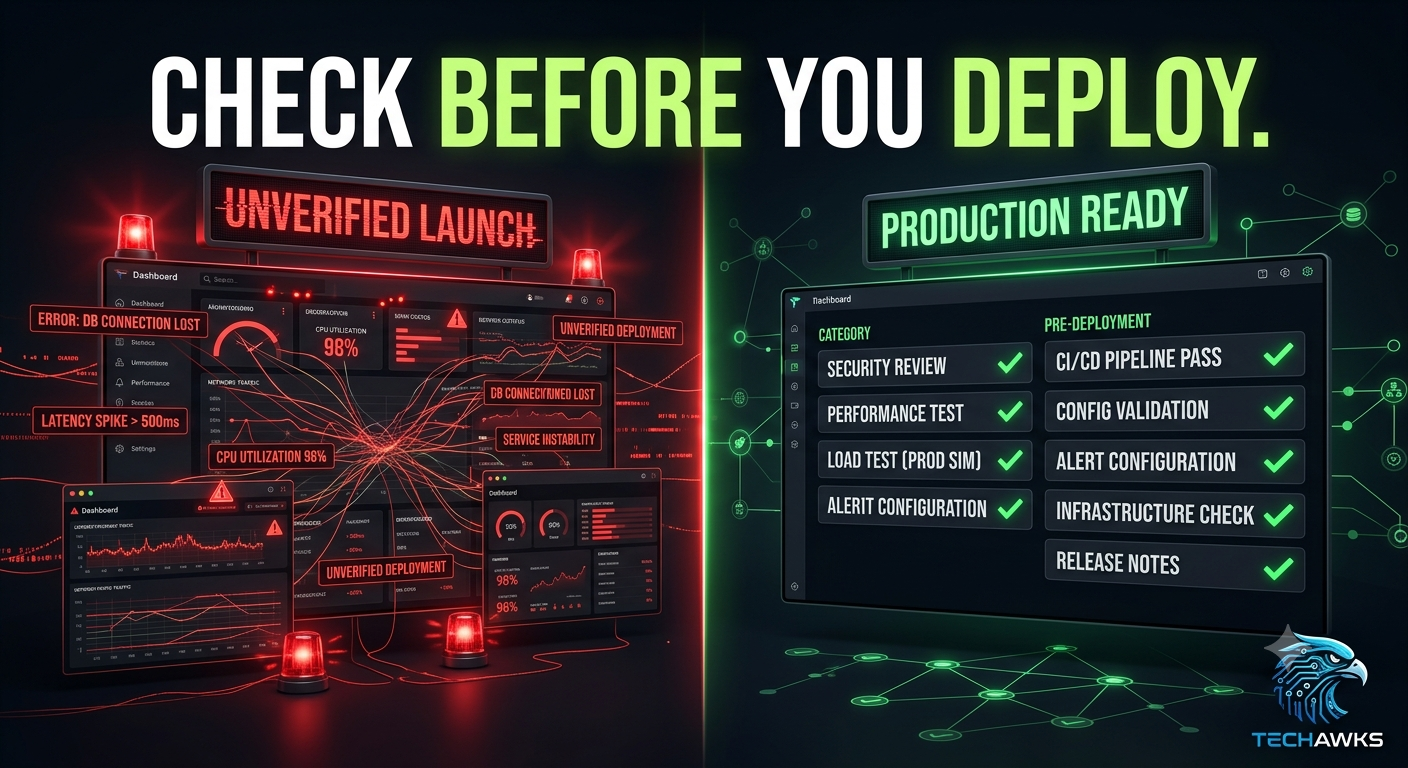
  • The Production Readiness Checklist: 8 Essential Checks Before You Deploy


    Shipping features quickly is vital, but shipping them reliably is what builds long-term user trust. Before pushing your next release to production, run your code and infrastructure through this actionable checklist to catch critical issues early:
    1. Security & Access Control
    Secrets Managed: Ensure zero hardcoded API keys, tokens, or credentials exist in source code or configuration files.[ ] Least Privilege: Confirm that database users and API keys have only the minimal permissions required for operation.


    2. Reliability & Resilience
    Graceful Fallbacks: Verify that external dependencies (3rd party APIs, payment gateways) have set timeouts and fallback handling.[ ] Health Check Endpoints: Confirm /health or /liveness endpoints are configured for automated load balancer probes.


    3. Observability & Monitoring
    Structured Logging: Ensure logs are output in structured formats (e.g., JSON) with context like userId or requestId for easy querying.[ ] Alert Triggers: Set up automated alerts for high error rates ($>1\%$), elevated latency (P99 spikes), or CPU/memory exhaustion.


    4. Performance & Scalability
    Database Indexing: Audit slow or unindexed database queries triggered by new features.
    Cache Invalidation: Verify caching policies to avoid serving stale or corrupted data after deployment.
    The Production Readiness Checklist: 8 Essential Checks Before You Deploy Shipping features quickly is vital, but shipping them reliably is what builds long-term user trust. Before pushing your next release to production, run your code and infrastructure through this actionable checklist to catch critical issues early: 1. Security & Access Control Secrets Managed: Ensure zero hardcoded API keys, tokens, or credentials exist in source code or configuration files.[ ] Least Privilege: Confirm that database users and API keys have only the minimal permissions required for operation. 2. Reliability & Resilience Graceful Fallbacks: Verify that external dependencies (3rd party APIs, payment gateways) have set timeouts and fallback handling.[ ] Health Check Endpoints: Confirm /health or /liveness endpoints are configured for automated load balancer probes. 3. Observability & Monitoring Structured Logging: Ensure logs are output in structured formats (e.g., JSON) with context like userId or requestId for easy querying.[ ] Alert Triggers: Set up automated alerts for high error rates ($>1\%$), elevated latency (P99 spikes), or CPU/memory exhaustion. 4. Performance & Scalability Database Indexing: Audit slow or unindexed database queries triggered by new features. Cache Invalidation: Verify caching policies to avoid serving stale or corrupted data after deployment.
    0 Comments 0 Shares 1K Views 0 Reviews
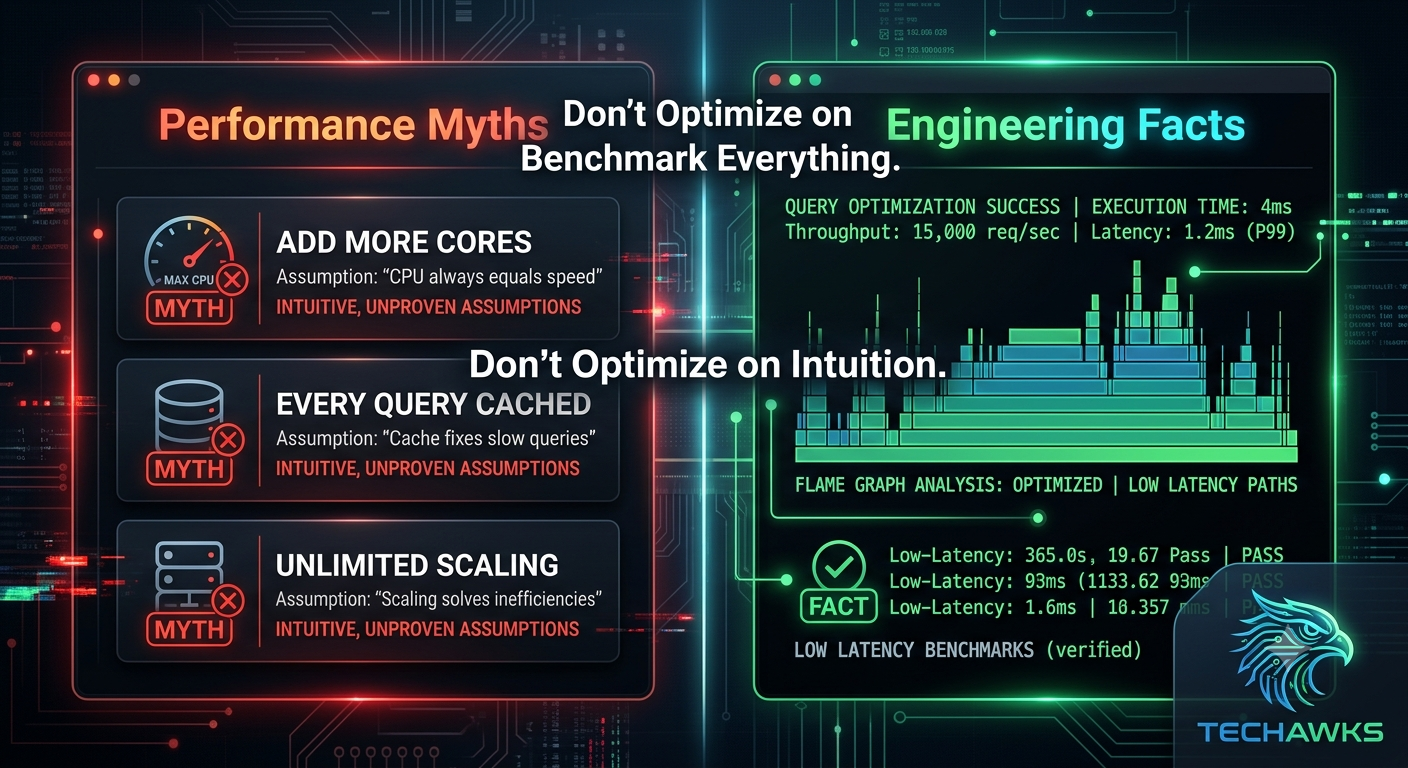
  • Myth vs. Fact: 4 System Performance Traps That Fooled Senior Engineers


    Optimizing software performance requires diagnosing actual bottlenecks rather than relying on common assumptions. Relying on intuition instead of profiling tools often introduces unnecessary system complexity while leaving performance issues untouched.
    Here are four widespread performance myths debunked with practical engineering realities:


    Myth 1: "Adding more server nodes will fix slow API endpoints."
    Fact: Scale-out horizontal scaling only helps when your bottleneck is CPU or memory consumption on the application server. If your database queries lack proper indexes, adding ten extra server instances will only multiply concurrent connections and degrade database performance faster.
    Action: Profile your requests using APM tools. Fix underlying slow database queries and locking issues before adding infrastructure nodes.


    Myth 2: "Caching everything in Redis guarantees low latency."
    Fact: Inefficient cache usage can degrade performance. Unindexed cache keys, massive payload sizes, and high serialization/deserialization overhead can make Redis lookups slower than optimized local database reads.
    Action: Cache selectively. Store pre-parsed, minimal data structures rather than full raw objects, and always enforce TTLs (Time-To-Live) to avoid memory bloat.


    Myth 3: "Asynchronous code is always faster than synchronous code."
    Fact: Asynchronous processing improves throughput and resource utilization by preventing thread blocking, but it does not reduce single-request execution latency. In fact, task scheduling and event loop context switching add small overheads.
    Action: Use async/non-blocking I/O to handle high concurrency, but do not rely on it to make heavy computational tasks process faster.


    Myth 4: "Microservices are faster than monolithic applications."
    Fact: Microservices trade single-process memory calls for network HTTP/gRPC calls. Network latency, serialization overhead, and retries mean microservices are inherently slower on a single-request level than a clean monolith.


    Action: Adopt microservices for team autonomy and isolated deployment scale, not for raw execution speed.


    Key Takeaways
    Measure First, Optimize Second: Never guess where latency originates; use profiling, flame graphs, and APM tools to isolate bottlenecks.
    Fix the Root Cause: Infrastructure scaling cannot compensate for inefficient algorithms or missing database indexes.
    Factor in Network Overhead: Moving logic across network boundaries always introduces latency—design interfaces to minimize round trips.


    CTA
    Tired of engineering myths wasting your team's sprint cycles? Join the Techawks General Community to discuss system design trade-offs, share real-world profiling benchmarks, and sharpen your architectural skills with peers worldwide.
    Myth vs. Fact: 4 System Performance Traps That Fooled Senior Engineers Optimizing software performance requires diagnosing actual bottlenecks rather than relying on common assumptions. Relying on intuition instead of profiling tools often introduces unnecessary system complexity while leaving performance issues untouched. Here are four widespread performance myths debunked with practical engineering realities: Myth 1: "Adding more server nodes will fix slow API endpoints." Fact: Scale-out horizontal scaling only helps when your bottleneck is CPU or memory consumption on the application server. If your database queries lack proper indexes, adding ten extra server instances will only multiply concurrent connections and degrade database performance faster. Action: Profile your requests using APM tools. Fix underlying slow database queries and locking issues before adding infrastructure nodes. Myth 2: "Caching everything in Redis guarantees low latency." Fact: Inefficient cache usage can degrade performance. Unindexed cache keys, massive payload sizes, and high serialization/deserialization overhead can make Redis lookups slower than optimized local database reads. Action: Cache selectively. Store pre-parsed, minimal data structures rather than full raw objects, and always enforce TTLs (Time-To-Live) to avoid memory bloat. Myth 3: "Asynchronous code is always faster than synchronous code." Fact: Asynchronous processing improves throughput and resource utilization by preventing thread blocking, but it does not reduce single-request execution latency. In fact, task scheduling and event loop context switching add small overheads. Action: Use async/non-blocking I/O to handle high concurrency, but do not rely on it to make heavy computational tasks process faster. Myth 4: "Microservices are faster than monolithic applications." Fact: Microservices trade single-process memory calls for network HTTP/gRPC calls. Network latency, serialization overhead, and retries mean microservices are inherently slower on a single-request level than a clean monolith. Action: Adopt microservices for team autonomy and isolated deployment scale, not for raw execution speed. Key Takeaways Measure First, Optimize Second: Never guess where latency originates; use profiling, flame graphs, and APM tools to isolate bottlenecks. Fix the Root Cause: Infrastructure scaling cannot compensate for inefficient algorithms or missing database indexes. Factor in Network Overhead: Moving logic across network boundaries always introduces latency—design interfaces to minimize round trips. CTA Tired of engineering myths wasting your team's sprint cycles? Join the Techawks General Community to discuss system design trade-offs, share real-world profiling benchmarks, and sharpen your architectural skills with peers worldwide.
    0 Comments 0 Shares 1K Views 0 Reviews
  • Postman vs. Bruno: Why Offline-First API Clients Are Winning Senior Engineers


    For years, Postman was the undisputed default tool for testing and documenting REST and GraphQL APIs. However, recent architectural shifts—specifically mandating cloud accounts, removing local collection storage, and introducing complex workspace syncs—have introduced security friction for teams handling sensitive endpoints.
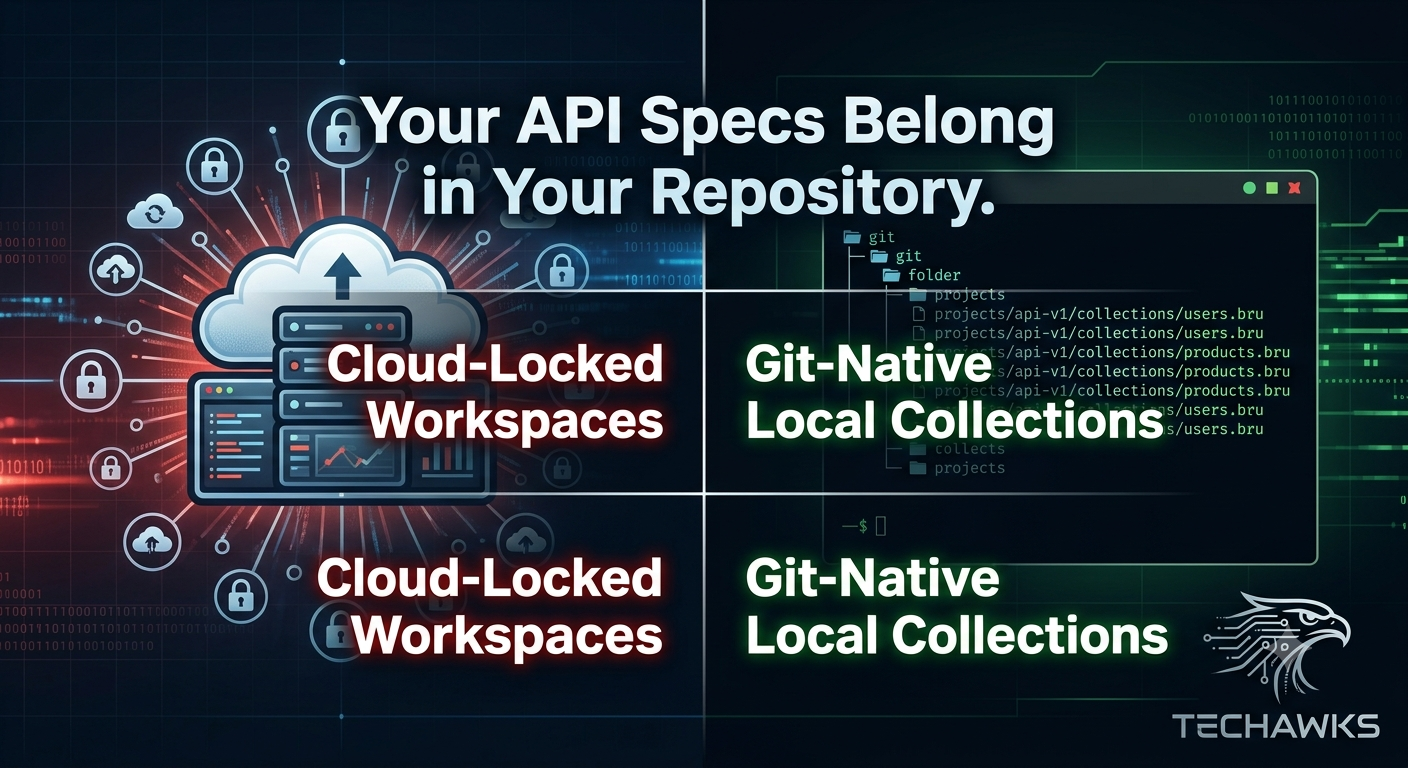
    Enter Bruno: an open-source, offline-first API client designed to store collections directly in your codebase.


    Here is a practical comparison to help you choose the right tool for your engineering workflow:


    1. Data Storage & Privacy
    Postman: Syncs collections, environments, and tokens to cloud servers by default. Storing sensitive staging keys or JWTs requires careful configuration to avoid accidental cloud exposure.
    Bruno: Stores collections directly as plain text files (.bru format) inside your git repository. Your API specs never leave your local environment or version control system.


    2. Version Control & Collaboration
    Postman: Uses built-in cloud workspace permissions, requiring team invites and paid enterprise seats for large teams.
    Bruno: Leverages standard Git workflows (git commit, git pull, PR reviews). Merging changes or resolving conflicts across API requests works identically to standard source code changes.


    3. CI/CD & Test Automation
    Postman: Relies on Newman CLI or Postman Cloud APIs, often requiring API keys and external network access during build pipelines.
    Bruno: Offers @usebruno/cli out of the box, allowing you to run API test suites directly inside isolated, offline CI/CD runners without external network calls.


    When to use which:
    Use Postman if your team heavily relies on non-technical stakeholders (e.g., product managers testing APIs via web UI) and public API network discovery.
    Switch to Bruno if security compliance, local-first development, git versioning, and zero cloud lock-in are top priorities for your dev team.


    Key Takeaways
    Git-Native Storage: Storing API collections directly in source code keeps documentation in sync with codebase releases.
    Zero Cloud Lock-in: Offline-first tools eliminate vendor dependency and prevent credential leaks on third-party servers.
    Lightweight Performance: Local text-based tools consume significantly fewer system resources during local development.


    CTA
    What API client does your team use in production daily? Join the Techawks General Community to share your developer setup, evaluate emerging dev tools, and connect with engineers around the world.
    Postman vs. Bruno: Why Offline-First API Clients Are Winning Senior Engineers For years, Postman was the undisputed default tool for testing and documenting REST and GraphQL APIs. However, recent architectural shifts—specifically mandating cloud accounts, removing local collection storage, and introducing complex workspace syncs—have introduced security friction for teams handling sensitive endpoints. Enter Bruno: an open-source, offline-first API client designed to store collections directly in your codebase. Here is a practical comparison to help you choose the right tool for your engineering workflow: 1. Data Storage & Privacy Postman: Syncs collections, environments, and tokens to cloud servers by default. Storing sensitive staging keys or JWTs requires careful configuration to avoid accidental cloud exposure. Bruno: Stores collections directly as plain text files (.bru format) inside your git repository. Your API specs never leave your local environment or version control system. 2. Version Control & Collaboration Postman: Uses built-in cloud workspace permissions, requiring team invites and paid enterprise seats for large teams. Bruno: Leverages standard Git workflows (git commit, git pull, PR reviews). Merging changes or resolving conflicts across API requests works identically to standard source code changes. 3. CI/CD & Test Automation Postman: Relies on Newman CLI or Postman Cloud APIs, often requiring API keys and external network access during build pipelines. Bruno: Offers @usebruno/cli out of the box, allowing you to run API test suites directly inside isolated, offline CI/CD runners without external network calls. When to use which: Use Postman if your team heavily relies on non-technical stakeholders (e.g., product managers testing APIs via web UI) and public API network discovery. Switch to Bruno if security compliance, local-first development, git versioning, and zero cloud lock-in are top priorities for your dev team. Key Takeaways Git-Native Storage: Storing API collections directly in source code keeps documentation in sync with codebase releases. Zero Cloud Lock-in: Offline-first tools eliminate vendor dependency and prevent credential leaks on third-party servers. Lightweight Performance: Local text-based tools consume significantly fewer system resources during local development. CTA What API client does your team use in production daily? Join the Techawks General Community to share your developer setup, evaluate emerging dev tools, and connect with engineers around the world.
    0 Comments 0 Shares 986 Views 0 Reviews
  • How to Transition from Mid-Level to Senior Engineer: The Unspoken Rules


    Many talented developers get stuck at the mid-level plateau because they double down on technical execution while ignoring architectural influence and cross-team impact. Being a Senior Engineer isn't just about solving harder algorithms; it’s about reducing risk, amplifying the engineers around you, and aligning tech choices with business outcomes.
    Here is the practical roadmap to bridge the gap and step into a senior role:


    Shift from Feature Delivery to System Ownership
    Mid-Level mindset: "I completed the ticket assigned to me on time."
    Senior mindset: "How does this feature affect our database performance, deployment pipeline, and operational costs three months from now?"
    Action: Start writing RFCs (Request for Comments) and design docs before jumping into code. Anticipate failure modes early.


    Master the Art of Force Multiplication
    Senior engineers are evaluated on how much better their team performs, not just their individual commit count.
    Action: Unblock junior colleagues, conduct thorough and constructive code reviews, and document complex setups so team onboarding becomes effortless.
    Communicate Technical Trade-Offs in Business Terms


    Stakeholders rarely care about framework debates or refactoring for aesthetics—they care about velocity, uptime, and cost.
    Action: Frame technical debt arguments around business risks: "Refactoring this module reduces our API latency by 40% and cuts server costs by $2k/month" beats "This legacy code is ugly."
    Become a Friction Remover


    Identify recurring pain points in your development lifecycle—whether it's fragile CI/CD pipelines, flaky test suites, or unclear requirements—and build solutions that eliminate them for everyone.


    Key Takeaways
    Expand Your Scope: Seniority is measured by domain ownership and impact, not just individual code output.
    Elevate Others: Mentorship and knowledge sharing are core job requirements, not optional side activities.
    Speak Business Value: Translate technical decisions into reliability, developer velocity, and financial efficiency.


    CTA
    Looking to accelerate your career growth and learn from tech leads across the globe? Join the Techawks General Community to discuss engineering leadership, exchange career strategies, and sharpen your technical skills.
    How to Transition from Mid-Level to Senior Engineer: The Unspoken Rules Many talented developers get stuck at the mid-level plateau because they double down on technical execution while ignoring architectural influence and cross-team impact. Being a Senior Engineer isn't just about solving harder algorithms; it’s about reducing risk, amplifying the engineers around you, and aligning tech choices with business outcomes. Here is the practical roadmap to bridge the gap and step into a senior role: Shift from Feature Delivery to System Ownership Mid-Level mindset: "I completed the ticket assigned to me on time." Senior mindset: "How does this feature affect our database performance, deployment pipeline, and operational costs three months from now?" Action: Start writing RFCs (Request for Comments) and design docs before jumping into code. Anticipate failure modes early. Master the Art of Force Multiplication Senior engineers are evaluated on how much better their team performs, not just their individual commit count. Action: Unblock junior colleagues, conduct thorough and constructive code reviews, and document complex setups so team onboarding becomes effortless. Communicate Technical Trade-Offs in Business Terms Stakeholders rarely care about framework debates or refactoring for aesthetics—they care about velocity, uptime, and cost. Action: Frame technical debt arguments around business risks: "Refactoring this module reduces our API latency by 40% and cuts server costs by $2k/month" beats "This legacy code is ugly." Become a Friction Remover Identify recurring pain points in your development lifecycle—whether it's fragile CI/CD pipelines, flaky test suites, or unclear requirements—and build solutions that eliminate them for everyone. Key Takeaways Expand Your Scope: Seniority is measured by domain ownership and impact, not just individual code output. Elevate Others: Mentorship and knowledge sharing are core job requirements, not optional side activities. Speak Business Value: Translate technical decisions into reliability, developer velocity, and financial efficiency. CTA Looking to accelerate your career growth and learn from tech leads across the globe? Join the Techawks General Community to discuss engineering leadership, exchange career strategies, and sharpen your technical skills.
    0 Comments 0 Shares 988 Views 0 Reviews