


Techawks Cloud & DevOps is a community for cloud engineers, DevOps professionals, platform engineers, SREs, developers, architects, students, and AI enthusiasts who want to build, deploy, and scale modern applications. Whether you're learning cloud fundamentals or managing enterprise infrastructure, this community is built for continuous growth.
Explore cloud platforms, Kubernetes, Docker, CI/CD pipelines, Infrastructure as Code, automation, monitoring, observability, cloud security, AI infrastructure, certifications, career advice, and real-world implementation guides. Share knowledge, solve challenges, and connect with professionals shaping the future of cloud technology.
Explore cloud platforms, Kubernetes, Docker, CI/CD pipelines, Infrastructure as Code, automation, monitoring, observability, cloud security, AI infrastructure, certifications, career advice, and real-world implementation guides. Share knowledge, solve challenges, and connect with professionals shaping the future of cloud technology.
-
PBID: 0230001500000011
-
35 χρήστες τους αρέσει
-
55 Δημοσιεύσεις
-
55 τις φωτογραφίες μου
-
0 Videos
-
Προεπισκόπηση
-
Science and Technology
Αναζήτηση

 English
 Arabic
 French
 Spanish
 Portuguese
 Deutsch
 Turkish
 Dutch
Dutch
 Italiano
 Russian
 Romaian
 Portuguese (Brazil)
Πρόσφατες ενημερώσεις
-
The HPA Thrashing Trap: Why Your Autoscaling Loop Is Bleeding Cloud Capital and Causing Outages
A hidden reliability killer is quietly draining production clusters: autoscaling oscillation (thrashing).
When an application experiences variable traffic, default HPA configurations react instantaneously to raw metric spikes (like CPU usage crossing a 75% threshold). Pods spin up, pull heavy initial loads, cause resource contention on worker nodes, trigger a sudden metric drop, scale down pods, and immediately face a new traffic wave that forces another scale-up.
This destructive cycle creates three severe production failures:
The Orchestration Churn Tax: Rapidly provisioning and terminating pods floods the Kubernetes control plane with API requests, forces kubelet to constantly manage container lifecycle overhead, and saturates container network interfaces.
Cascading P99 Latency Spikes: Cold starts, un-warmed connection pools, and database connection storms triggered by hundreds of short-lived pods simultaneously initializing degrade tail latencies far worse than handling peak load with a stable fleet.
Cloud Cost Amplification: Managed Kubernetes node autoscalers (EKS, GKE, AKS) interpret pod scheduling pressure as a demand for more underlying VM instances, locking you into hourly billing for idle nodes provisioned during brief traffic spikes.
The Architectural Fix: Implement Stabilization and Granular Metric Smoothing
Stop letting raw, unfiltered metrics dictate cluster state. Reshape your autoscaling architecture with these three controls:
Configure Scale-Down Stabilization Windows: Add explicit stabilization windows to your HPA manifest to delay scale-down actions (e.g., evaluating a 5-minute rolling window), preventing transient traffic dips from killing active pods prematurely:
YAML
behavior:
scaleDown:
stabilizationWindowSeconds: 300
policies:
- type: Percent
value: 10
periodSeconds: 60
Switch to Custom Percentile Metrics: Raw average CPU or memory metrics can be easily skewed by a single runaway thread. Use Prometheus adapters to scale based on p95 or p99 request latency rather than raw node resource consumption.
Enforce Pod Disruption Budgets (PDBs): Pair HPA rules with strict PDBs to ensure that automated scaling events never compromise minimum available replica counts during high-churn deployments.
Elasticity without boundaries is just unmanaged chaos. Design your control loops to absorb volatility, not amplify it.
Discussion Question
How do your teams tune HPA cooldown windows and metric thresholds to prevent pod thrashing under unpredictable traffic surges?
CTA
Master resilient cloud-native architectures, optimize production workloads, and conquer infrastructure scale. Join Cloud, DevOps & Open Source at Techawks Cloud & DevOps.The HPA Thrashing Trap: Why Your Autoscaling Loop Is Bleeding Cloud Capital and Causing Outages A hidden reliability killer is quietly draining production clusters: autoscaling oscillation (thrashing). When an application experiences variable traffic, default HPA configurations react instantaneously to raw metric spikes (like CPU usage crossing a 75% threshold). Pods spin up, pull heavy initial loads, cause resource contention on worker nodes, trigger a sudden metric drop, scale down pods, and immediately face a new traffic wave that forces another scale-up. This destructive cycle creates three severe production failures: The Orchestration Churn Tax: Rapidly provisioning and terminating pods floods the Kubernetes control plane with API requests, forces kubelet to constantly manage container lifecycle overhead, and saturates container network interfaces. Cascading P99 Latency Spikes: Cold starts, un-warmed connection pools, and database connection storms triggered by hundreds of short-lived pods simultaneously initializing degrade tail latencies far worse than handling peak load with a stable fleet. Cloud Cost Amplification: Managed Kubernetes node autoscalers (EKS, GKE, AKS) interpret pod scheduling pressure as a demand for more underlying VM instances, locking you into hourly billing for idle nodes provisioned during brief traffic spikes. The Architectural Fix: Implement Stabilization and Granular Metric Smoothing Stop letting raw, unfiltered metrics dictate cluster state. Reshape your autoscaling architecture with these three controls: Configure Scale-Down Stabilization Windows: Add explicit stabilization windows to your HPA manifest to delay scale-down actions (e.g., evaluating a 5-minute rolling window), preventing transient traffic dips from killing active pods prematurely: YAML behavior: scaleDown: stabilizationWindowSeconds: 300 policies: - type: Percent value: 10 periodSeconds: 60 Switch to Custom Percentile Metrics: Raw average CPU or memory metrics can be easily skewed by a single runaway thread. Use Prometheus adapters to scale based on p95 or p99 request latency rather than raw node resource consumption. Enforce Pod Disruption Budgets (PDBs): Pair HPA rules with strict PDBs to ensure that automated scaling events never compromise minimum available replica counts during high-churn deployments. Elasticity without boundaries is just unmanaged chaos. Design your control loops to absorb volatility, not amplify it. Discussion Question How do your teams tune HPA cooldown windows and metric thresholds to prevent pod thrashing under unpredictable traffic surges? CTA Master resilient cloud-native architectures, optimize production workloads, and conquer infrastructure scale. Join Cloud, DevOps & Open Source at Techawks Cloud & DevOps.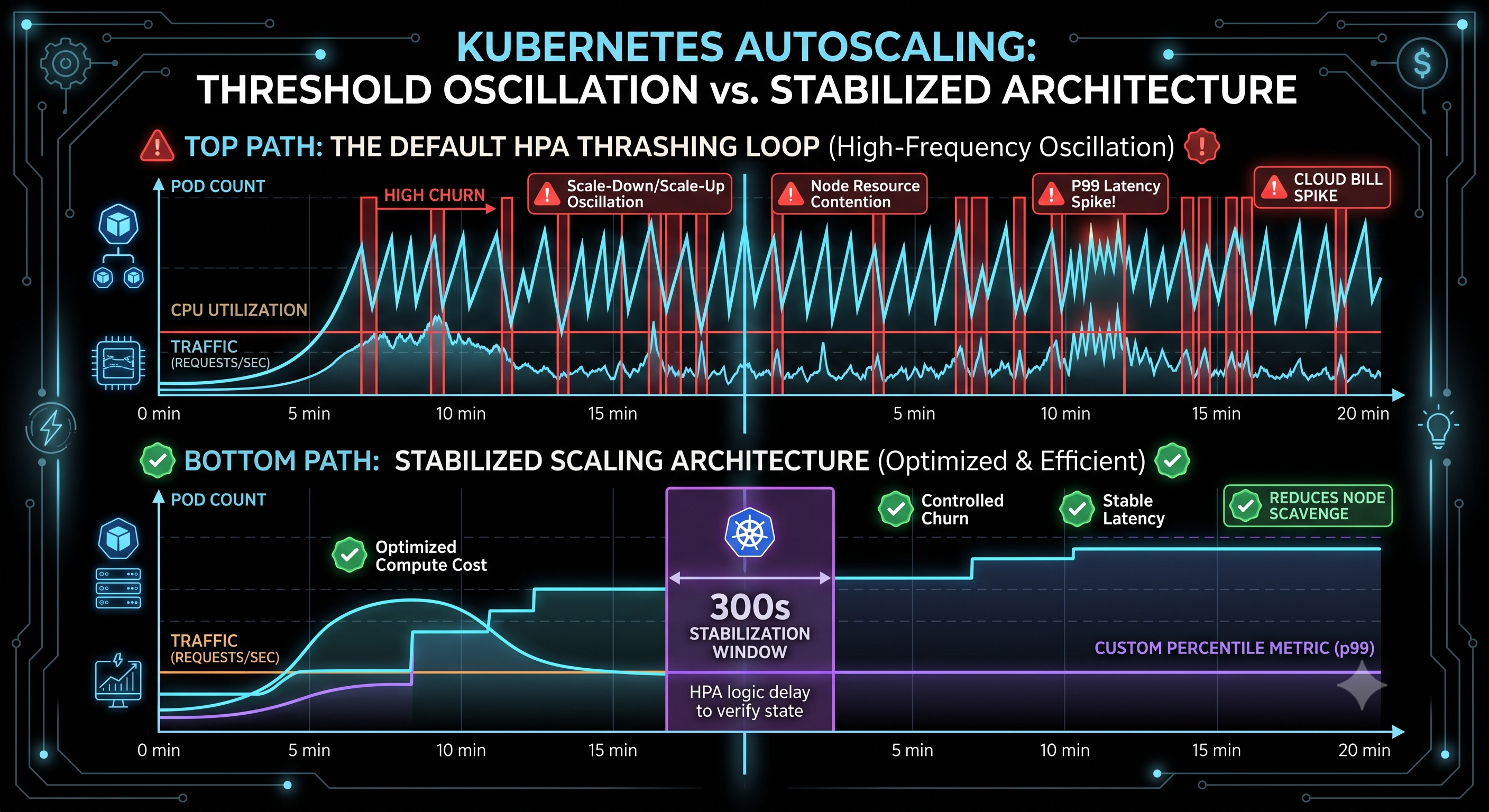 0 Σχόλια 0 Μοιράστηκε 63 Views 0 Προεπισκόπηση
 -
Sidecar Overkill: Why Your Kubernetes Service Mesh Is Burning 30% of Your Cluster Budget
When service meshes first gained widespread adoption, the sidecar pattern was a breakthrough. By attaching a lightweight proxy next to every workload, teams gained mutual TLS (mTLS), traffic telemetry, and L7 routing policies without changing application code.
Deploying thousands of sidecars at enterprise scale introduces real infrastructure bottlenecks:
The "Sidecar Tax" Multiplies Fast: Running an independent proxy inside every pod incurs dedicated memory reservations and CPU overhead. In a cluster with 500 pods, reserving even 0.1 vCPU and 128MB RAM per sidecar quietly consumes 50 CPU cores and 64GB of memory solely to shuttle local TCP packets back and forth.
TCP Stack Traversal Latency: Every service-to-service call hops through multiple network namespaces: application container >>> loopback >>>>sidecar >>> node network stack >>> wire >>> remote host >>> sidecar >>> application container. That is four context switches and network stack traversals for a single internal RPC.
Lifecycle Synchronization Hell: Upgrades, rolling restarts, and graceful shutdowns frequently fail when application containers boot before their sidecar proxy initializes, or terminate while the proxy is still flushing outgoing traces.
The Architectural Shift: Move Networking to Kernel eBPF
Modern cloud infrastructure is replacing user-space sidecar duplication with kernel-native datapaths (like Cilium and Ambient mesh models):
Enforce L3/L4 Security at the Kernel Layer: Instead of intercepting every TCP packet in user space, utilize eBPF programs attached to Linux kernel sockets. Packets are evaluated and routed at the kernel layer with O(1) lookup time, completely bypassing sequential iptables rules and eliminating per-pod proxy overhead.
Decouple L7 Policy from Pod Boundaries: For advanced Layer 7 routing, traffic splitting, or header injection, deploy a shared, node-level proxy or utilize native Gateway API controllers rather than spawning hundreds of redundant proxies per workload.
Streamline Cluster Zero Trust: Establish node-level cryptographic identity (via SPIFFE/SPIRE) so pods gain seamless mutual authentication without paying a latency penalty on every intra-node hop.
Infrastructure should disappear into the OS platform, not crowd your deployment manifests.
Discussion Question
Is your platform team still running dedicated sidecars on every single pod, or have you migrated toward eBPF-driven networking and sidecarless mesh architectures?
CTA (Join Cloud, DevOps & Open Source)
Looking to strip away cloud over-engineering, slash compute bills, and master modern platform design?
👉 Join the Techawks Cloud, DevOps & Open Source Community to dive deep into kernel networking, Kubernetes internals, and production cloud infrastructure:Sidecar Overkill: Why Your Kubernetes Service Mesh Is Burning 30% of Your Cluster Budget When service meshes first gained widespread adoption, the sidecar pattern was a breakthrough. By attaching a lightweight proxy next to every workload, teams gained mutual TLS (mTLS), traffic telemetry, and L7 routing policies without changing application code. Deploying thousands of sidecars at enterprise scale introduces real infrastructure bottlenecks: The "Sidecar Tax" Multiplies Fast: Running an independent proxy inside every pod incurs dedicated memory reservations and CPU overhead. In a cluster with 500 pods, reserving even 0.1 vCPU and 128MB RAM per sidecar quietly consumes 50 CPU cores and 64GB of memory solely to shuttle local TCP packets back and forth. TCP Stack Traversal Latency: Every service-to-service call hops through multiple network namespaces: application container >>> loopback >>>>sidecar >>> node network stack >>> wire >>> remote host >>> sidecar >>> application container. That is four context switches and network stack traversals for a single internal RPC. Lifecycle Synchronization Hell: Upgrades, rolling restarts, and graceful shutdowns frequently fail when application containers boot before their sidecar proxy initializes, or terminate while the proxy is still flushing outgoing traces. The Architectural Shift: Move Networking to Kernel eBPF Modern cloud infrastructure is replacing user-space sidecar duplication with kernel-native datapaths (like Cilium and Ambient mesh models): Enforce L3/L4 Security at the Kernel Layer: Instead of intercepting every TCP packet in user space, utilize eBPF programs attached to Linux kernel sockets. Packets are evaluated and routed at the kernel layer with O(1) lookup time, completely bypassing sequential iptables rules and eliminating per-pod proxy overhead. Decouple L7 Policy from Pod Boundaries: For advanced Layer 7 routing, traffic splitting, or header injection, deploy a shared, node-level proxy or utilize native Gateway API controllers rather than spawning hundreds of redundant proxies per workload. Streamline Cluster Zero Trust: Establish node-level cryptographic identity (via SPIFFE/SPIRE) so pods gain seamless mutual authentication without paying a latency penalty on every intra-node hop. Infrastructure should disappear into the OS platform, not crowd your deployment manifests. Discussion Question Is your platform team still running dedicated sidecars on every single pod, or have you migrated toward eBPF-driven networking and sidecarless mesh architectures? CTA (Join Cloud, DevOps & Open Source) Looking to strip away cloud over-engineering, slash compute bills, and master modern platform design? 👉 Join the Techawks Cloud, DevOps & Open Source Community to dive deep into kernel networking, Kubernetes internals, and production cloud infrastructure: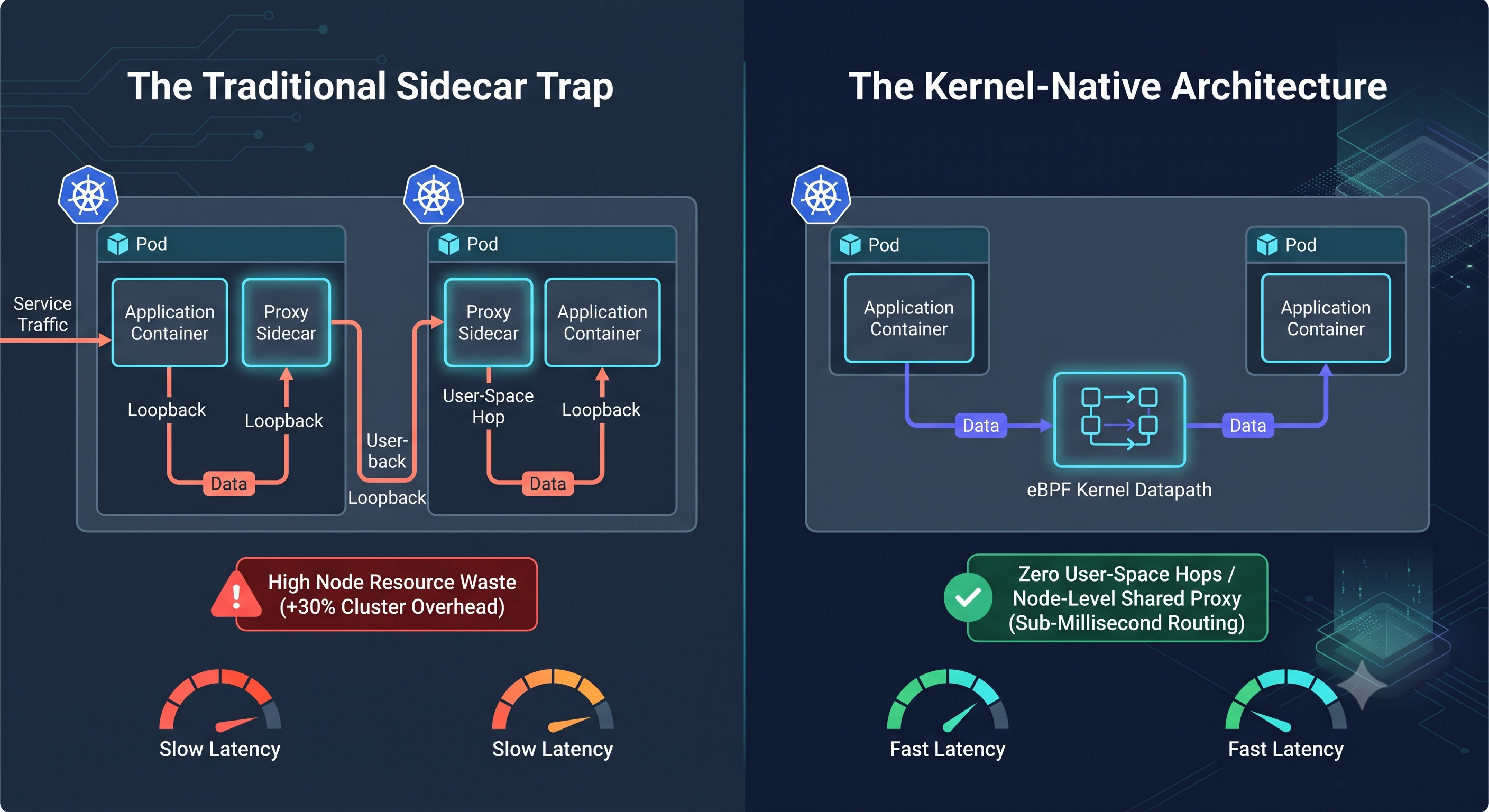 0 Σχόλια 0 Μοιράστηκε 368 Views 0 Προεπισκόπηση
 -
Stop Treating Kubernetes Like Traditional VMs: The 4-Step Platform Engineering Checklist for Modern Cloud Architectures
The cloud-native landscape has matured past manual cluster management and ad-hoc infrastructure scripts. Organizations are shifting away from throwing raw YAML files at developers, moving instead toward Platform Engineering and Internal Developer Platforms (IDPs) that abstract complexity while preserving enterprise guardrails.
To reduce cognitive friction, secure your clusters by default, and scale operations efficiently, use this actionable platform engineering checklist:
Build Self-Service Golden Paths: Replace manual ticketing systems with Internal Developer Platforms (IDPs) that let developers spin up compliant environments, services, and pipelines in minutes using standardized templates.
Embed Policy-as-Code Guards Early: Shift security left by enforcing admission controllers, artifact signing, and compliance rules directly inside your deployment pipeline before clusters ever touch runtime.
Optimize for Multi-Workload Efficiency: Architect your nodes to handle heterogeneous demands—bin-packing resource-intensive AI/ML jobs and GPU-centric workloads right alongside traditional stateless and stateful services.
Automate Day-Two Observability & FinOps: Implement continuous telemetry (via tools like OpenTelemetry) and real-time cost allocation tracking so performance bottlenecks and cloud waste are caught before hitting production.
Discussion Question: What is your biggest hurdle when scaling cloud-native environments—managing developer cognitive load, or balancing GPU/compute costs with strict security compliance? Share your thoughts below!
CTA (Join Cloud, DevOps & Open Source): Ready to master modern cloud-native systems and platform engineering? Join Cloud, DevOps & Open Source to access advanced architecture breakdowns, hands-on tutorials, and elite career networks.Stop Treating Kubernetes Like Traditional VMs: The 4-Step Platform Engineering Checklist for Modern Cloud Architectures The cloud-native landscape has matured past manual cluster management and ad-hoc infrastructure scripts. Organizations are shifting away from throwing raw YAML files at developers, moving instead toward Platform Engineering and Internal Developer Platforms (IDPs) that abstract complexity while preserving enterprise guardrails. To reduce cognitive friction, secure your clusters by default, and scale operations efficiently, use this actionable platform engineering checklist: Build Self-Service Golden Paths: Replace manual ticketing systems with Internal Developer Platforms (IDPs) that let developers spin up compliant environments, services, and pipelines in minutes using standardized templates. Embed Policy-as-Code Guards Early: Shift security left by enforcing admission controllers, artifact signing, and compliance rules directly inside your deployment pipeline before clusters ever touch runtime. Optimize for Multi-Workload Efficiency: Architect your nodes to handle heterogeneous demands—bin-packing resource-intensive AI/ML jobs and GPU-centric workloads right alongside traditional stateless and stateful services. Automate Day-Two Observability & FinOps: Implement continuous telemetry (via tools like OpenTelemetry) and real-time cost allocation tracking so performance bottlenecks and cloud waste are caught before hitting production. Discussion Question: What is your biggest hurdle when scaling cloud-native environments—managing developer cognitive load, or balancing GPU/compute costs with strict security compliance? Share your thoughts below! CTA (Join Cloud, DevOps & Open Source): Ready to master modern cloud-native systems and platform engineering? Join Cloud, DevOps & Open Source to access advanced architecture breakdowns, hands-on tutorials, and elite career networks.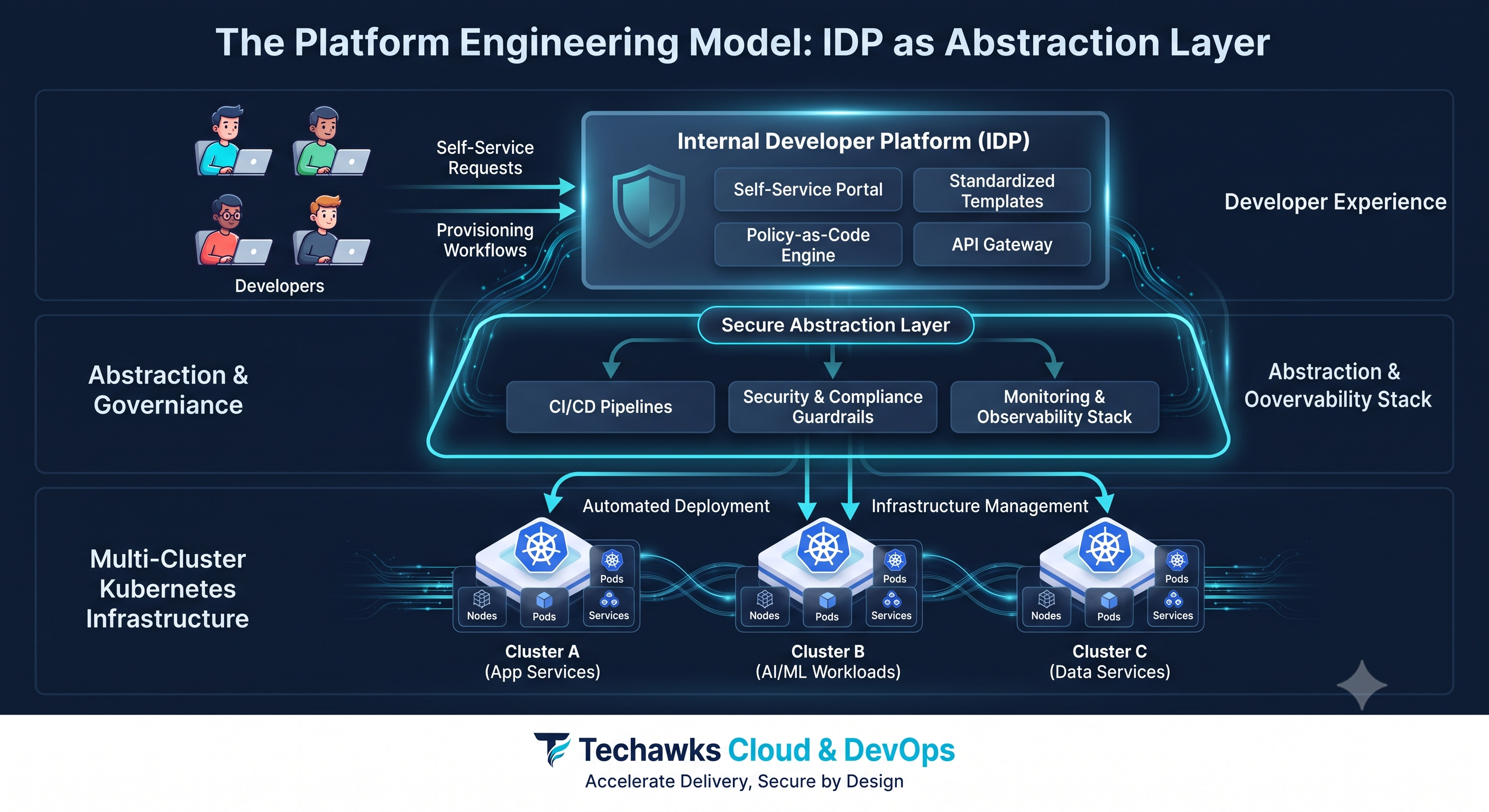 0 Σχόλια 0 Μοιράστηκε 122 Views 0 Προεπισκόπηση
 -
The 80% Idle Trap: Why 2026 Belongs to Local-First AI & Minimalist Cloud Infrastructure
The original promise of cloud computing was variable cost control: burst compute when needed, pay-for-use, and minimize idle overhead. However, the AI-native shift has corrupted this model.
High-performing teams are no longer just "cloud-native"; they are local-first.
In 2026, the most significant performance and cost optimization is removing infrastructure, not adding it. High-end workstations and M-series chips now handle heavy agentic reasoning loops and local SLM (Small Language Model) inference at the source boundary.
Your 3-Step DevOps Optimization Strategy:
Shift Right, then Shift Left (Boundary Inference)
Treat local machines as an extended compute plane. Use containerized local inference gateways. Before sending a workload to the cloud, enforce a boundary rule: if the query requires fewer than 7B parameters or can be semantic-cached locally, drop it from the cloud egress pipeline entirely.
Move from VMs to Native WASM & Containers
If an agent workflow requires cloud validation, execute it in a highly ephemeral environment. Do not spin up a K8s pod or a VM. Use WebAssembly (WASM) or lightweight native containers (like Firecracker/gVisor) for transactional, low-millisecond agent calls.
Establish Local/Cloud Deterministic Sync
The bottleneck isn’t compute; it’s state. Implement local-first CRDT (Conflict-free Replicated Data Type) or robust transactional databases that keep state deterministic between the developer workstation and the cloud control plane.
Your cloud strategy should not be about managing massive clusters; it should be about building minimal, deterministic gateways that coordinate execution across decentralized, high-utilization hardware.
Discussion Question
For cloud and platform engineers optimizing AI architecture: How are you handling the hybrid split—are you using service mesh to route inference, containerizing local runtimes, or purely optimizing on-demand cloud costs? Share your optimization playbook.
CTA
Ready to build minimal, scalable, and cost-efficient cloud systems?
👉 Join the Techawks Cloud, DevOps & Open Source Community to master distributed systems, local-first architecture, and production engineering Alongside industry practitioners.The 80% Idle Trap: Why 2026 Belongs to Local-First AI & Minimalist Cloud Infrastructure The original promise of cloud computing was variable cost control: burst compute when needed, pay-for-use, and minimize idle overhead. However, the AI-native shift has corrupted this model. High-performing teams are no longer just "cloud-native"; they are local-first. In 2026, the most significant performance and cost optimization is removing infrastructure, not adding it. High-end workstations and M-series chips now handle heavy agentic reasoning loops and local SLM (Small Language Model) inference at the source boundary. Your 3-Step DevOps Optimization Strategy: Shift Right, then Shift Left (Boundary Inference) Treat local machines as an extended compute plane. Use containerized local inference gateways. Before sending a workload to the cloud, enforce a boundary rule: if the query requires fewer than 7B parameters or can be semantic-cached locally, drop it from the cloud egress pipeline entirely. Move from VMs to Native WASM & Containers If an agent workflow requires cloud validation, execute it in a highly ephemeral environment. Do not spin up a K8s pod or a VM. Use WebAssembly (WASM) or lightweight native containers (like Firecracker/gVisor) for transactional, low-millisecond agent calls. Establish Local/Cloud Deterministic Sync The bottleneck isn’t compute; it’s state. Implement local-first CRDT (Conflict-free Replicated Data Type) or robust transactional databases that keep state deterministic between the developer workstation and the cloud control plane. Your cloud strategy should not be about managing massive clusters; it should be about building minimal, deterministic gateways that coordinate execution across decentralized, high-utilization hardware. Discussion Question For cloud and platform engineers optimizing AI architecture: How are you handling the hybrid split—are you using service mesh to route inference, containerizing local runtimes, or purely optimizing on-demand cloud costs? Share your optimization playbook. CTA Ready to build minimal, scalable, and cost-efficient cloud systems? 👉 Join the Techawks Cloud, DevOps & Open Source Community to master distributed systems, local-first architecture, and production engineering Alongside industry practitioners. 0 Σχόλια 0 Μοιράστηκε 1χλμ. Views 0 Προεπισκόπηση
 -
Why "Restart to Resize" Is Dying: How In-Place Pod Scaling & Scheduler Preemption Fix Kubernetes Overprovisioning
For over a decade, horizontal scaling (HPA) was the default Kubernetes reaction to traffic surges. But for stateful workloads—databases, distributed caches, and LLM inference engines with gigabytes of weights loaded into memory—horizontal scaling is often too slow, expensive, or architecturally impossible.
Until recently, vertical scaling (VPA) carried a painful tradeoff: updating a container's resource requests or limits required recreating the Pod.
Recreating a pod means:
Severing active TCP sessions and draining connections.
Forcing stateful nodes to warm their local memory, page caches, and scratch disks from scratch.
Increasing initialization latencies from milliseconds to minutes.
The Architectural Shift: Dynamic In-Place Scaling Meets Scheduler Preemption
Cloud-native operations have matured beyond destructive restarts. Through the progression of In-Place Pod Vertical Scaling and centralized Scheduler Preemption for In-Place Resizing, the control plane now treats resource boundaries as dynamic parameters rather than immutable pod specs:
Zero-Downtime Resource Expansion: When a container hits its memory or CPU threshold, the control plane updates the cgroups hierarchy directly via the Kubelet on the existing host without terminating the process or cycling PID 1.
Centralized Scheduler Coordination: Instead of letting local Kubelets make ad-hoc, conflicting eviction decisions during a resize, the centralized scheduler evaluates pods in a Deferred resize state. It tracks capacity reservations to prevent double-allocation and scheduling races.
Localized, Node-Scoped Preemption: When a high-priority pod needs immediate vertical headroom on a saturated node, the scheduler evaluates eligible lower-priority victim pods strictly localized to that specific host. It initiates graceful evictions under Pod Disruption Budgets (PDBs) to clear host headroom dynamically.
Treating infrastructure capacity as elastic at the node level eliminates the need to over-provision static headroom "just in case." You can run tight cluster bin-packing while maintaining the responsiveness needed for unpredictable, latency-sensitive workloads.
Discussion Question
For workloads with high warm-up overhead (like Redis, JVM services, or inference models), do you currently over-provision static limits to avoid pod restarts, or are you adopting in-place cgroup vertical scaling?
CTA
Stop wasting compute and engineer truly resilient cloud-native infrastructure. Connect with SREs, platform engineers, and cloud architects inside Cloud, DevOps & Open Source to exchange production Kubernetes configurations, capacity planning playbooks, and GitOps workflows.Why "Restart to Resize" Is Dying: How In-Place Pod Scaling & Scheduler Preemption Fix Kubernetes Overprovisioning For over a decade, horizontal scaling (HPA) was the default Kubernetes reaction to traffic surges. But for stateful workloads—databases, distributed caches, and LLM inference engines with gigabytes of weights loaded into memory—horizontal scaling is often too slow, expensive, or architecturally impossible. Until recently, vertical scaling (VPA) carried a painful tradeoff: updating a container's resource requests or limits required recreating the Pod. Recreating a pod means: Severing active TCP sessions and draining connections. Forcing stateful nodes to warm their local memory, page caches, and scratch disks from scratch. Increasing initialization latencies from milliseconds to minutes. The Architectural Shift: Dynamic In-Place Scaling Meets Scheduler Preemption Cloud-native operations have matured beyond destructive restarts. Through the progression of In-Place Pod Vertical Scaling and centralized Scheduler Preemption for In-Place Resizing, the control plane now treats resource boundaries as dynamic parameters rather than immutable pod specs: Zero-Downtime Resource Expansion: When a container hits its memory or CPU threshold, the control plane updates the cgroups hierarchy directly via the Kubelet on the existing host without terminating the process or cycling PID 1. Centralized Scheduler Coordination: Instead of letting local Kubelets make ad-hoc, conflicting eviction decisions during a resize, the centralized scheduler evaluates pods in a Deferred resize state. It tracks capacity reservations to prevent double-allocation and scheduling races. Localized, Node-Scoped Preemption: When a high-priority pod needs immediate vertical headroom on a saturated node, the scheduler evaluates eligible lower-priority victim pods strictly localized to that specific host. It initiates graceful evictions under Pod Disruption Budgets (PDBs) to clear host headroom dynamically. Treating infrastructure capacity as elastic at the node level eliminates the need to over-provision static headroom "just in case." You can run tight cluster bin-packing while maintaining the responsiveness needed for unpredictable, latency-sensitive workloads. Discussion Question For workloads with high warm-up overhead (like Redis, JVM services, or inference models), do you currently over-provision static limits to avoid pod restarts, or are you adopting in-place cgroup vertical scaling? CTA Stop wasting compute and engineer truly resilient cloud-native infrastructure. Connect with SREs, platform engineers, and cloud architects inside Cloud, DevOps & Open Source to exchange production Kubernetes configurations, capacity planning playbooks, and GitOps workflows. 0 Σχόλια 0 Μοιράστηκε 158 Views 0 Προεπισκόπηση
 -
Ditch the Ingress Annotation Spaghetti: The Operational Reality of Kubernetes Gateway API
The original Kubernetes Ingress resource was designed in 2015 for simple, single-tenant HTTP path routing. As enterprise architectures evolved to require canary traffic splits, header-based routing, mTLS, and cross-namespace delegation, the Ingress spec broke under the pressure.
Teams patched the gap using proprietary controller annotations. The result was severe configuration drift, vendor lock-in, and zero portability between cloud providers and on-premise clusters.
The Architectural Shift: Role-Oriented Decoupling
The Gateway API fixes this by splitting traffic management into three explicit, decoupled resources that reflect real-world team boundaries:
GatewayClass (Infrastructure Provider): Managed by platform/cloud teams. Defines the backing controller implementation (e.g., Envoy Gateway, Cilium, Istio, cloud load balancer).
Gateway (Cluster Operator): Managed by SRE/DevOps. Declares the point of ingress, listeners, ports, TLS certificates, and allowed namespaces.
HTTPRoute / GRPCRoute (Application Developer): Managed by product teams. Defines the actual routing rules, path matches, rewrites, and canary weights without needing cluster-admin privileges.
[ Platform Admin ] ──> GatewayClass (envoy-gateway / cilium)
│
[ Cluster Operator ] ──> Gateway (Port 443, TLS Secrets, Allowed Namespaces)
│
[ App Developer ] ──> HTTPRoute (Path: /api/v2 ➔ Canary Weight: 15%)
Why Cloud Engineers Should Migrate:
Native Canary & Weighted Routing: Splitting traffic across services no longer requires custom service-mesh CRDs or proprietary annotations. HTTPRoute natively supports weight across multiple backendRefs with standard telemetry.
Cross-Namespace Route Delegation: Application teams can define their own routing rules inside their isolated namespaces while attaching cleanly to a shared, enterprise-grade central Gateway managed by operations.
Unified Protocol Support: Unlike traditional Ingress which treated anything non-HTTP as an afterthought, Gateway API provides first-class support for GRPCRoute, TCPRoute, UDPRoute, and TLSRoute.
The future of cloud-native networking belongs to clean boundaries. Decoupling infrastructure provisioning from application routing turns fragile operational handoffs into resilient platform APIs.
Discussion Question
Has your organization begun deprecating legacy Ingress controllers in favor of the Kubernetes Gateway API, or are annotation-heavy NGINX/ALB ingress setups still deeply embedded in your GitOps repos?
CTA (Join Cloud, DevOps & Open Source)
Ready to build resilient platform engineering foundations, master modern Kubernetes architectures, and stay ahead of cloud-native standards? Join the Cloud, DevOps & Open Source community to share production configs, Helm charts, and infrastructure post-mortems.Ditch the Ingress Annotation Spaghetti: The Operational Reality of Kubernetes Gateway API The original Kubernetes Ingress resource was designed in 2015 for simple, single-tenant HTTP path routing. As enterprise architectures evolved to require canary traffic splits, header-based routing, mTLS, and cross-namespace delegation, the Ingress spec broke under the pressure. Teams patched the gap using proprietary controller annotations. The result was severe configuration drift, vendor lock-in, and zero portability between cloud providers and on-premise clusters. The Architectural Shift: Role-Oriented Decoupling The Gateway API fixes this by splitting traffic management into three explicit, decoupled resources that reflect real-world team boundaries: GatewayClass (Infrastructure Provider): Managed by platform/cloud teams. Defines the backing controller implementation (e.g., Envoy Gateway, Cilium, Istio, cloud load balancer). Gateway (Cluster Operator): Managed by SRE/DevOps. Declares the point of ingress, listeners, ports, TLS certificates, and allowed namespaces. HTTPRoute / GRPCRoute (Application Developer): Managed by product teams. Defines the actual routing rules, path matches, rewrites, and canary weights without needing cluster-admin privileges. [ Platform Admin ] ──> GatewayClass (envoy-gateway / cilium) │ [ Cluster Operator ] ──> Gateway (Port 443, TLS Secrets, Allowed Namespaces) │ [ App Developer ] ──> HTTPRoute (Path: /api/v2 ➔ Canary Weight: 15%) Why Cloud Engineers Should Migrate: Native Canary & Weighted Routing: Splitting traffic across services no longer requires custom service-mesh CRDs or proprietary annotations. HTTPRoute natively supports weight across multiple backendRefs with standard telemetry. Cross-Namespace Route Delegation: Application teams can define their own routing rules inside their isolated namespaces while attaching cleanly to a shared, enterprise-grade central Gateway managed by operations. Unified Protocol Support: Unlike traditional Ingress which treated anything non-HTTP as an afterthought, Gateway API provides first-class support for GRPCRoute, TCPRoute, UDPRoute, and TLSRoute. The future of cloud-native networking belongs to clean boundaries. Decoupling infrastructure provisioning from application routing turns fragile operational handoffs into resilient platform APIs. Discussion Question Has your organization begun deprecating legacy Ingress controllers in favor of the Kubernetes Gateway API, or are annotation-heavy NGINX/ALB ingress setups still deeply embedded in your GitOps repos? CTA (Join Cloud, DevOps & Open Source) Ready to build resilient platform engineering foundations, master modern Kubernetes architectures, and stay ahead of cloud-native standards? Join the Cloud, DevOps & Open Source community to share production configs, Helm charts, and infrastructure post-mortems. 0 Σχόλια 0 Μοιράστηκε 112 Views 0 Προεπισκόπηση
 -
The Post-Ingress Era: Why Kubernetes Gateway API + Sidecarless eBPF Is the New Production Standard
Cloud-native networking has crossed an operational turning point. The legacy Kubernetes Ingress resource—frozen and insufficient for multi-tenant, zero-trust environments—has reached the end of its lifecycle. At the same time, platform teams are actively stripping out sidecars to slash CPU/memory overhead and eliminate deployment race conditions.
In their place, two converging standards define the 2026 production baseline:
Kubernetes Gateway API: Role-oriented, cross-namespace ingress and routing.
eBPF-Powered Sidecarless Meshes (ambient routing & Cilium): Enforcing L4/L7 policy and mTLS directly in the Linux kernel rather than via per-pod proxies.
Transitioning to this architecture isn't just about cleaning up YAML; it redefines how platform engineers isolate network governance from developer deployments.
3 Architectural Shifts Every Cloud Engineer Must Implement
1. Decouple Routing from Infrastructure with Gateway API
The old Ingress spec forced platform admins and developers into the same fragile resource. The Gateway API establishes a clear separation of concerns:
GatewayClass (Infra Provider): Defines the underlying load-balancing controller (e.g., Envoy Gateway, Cilium).
Gateway (Platform / Ops Team): Declares listeners, ports, TLS certificates, and namespace boundaries.
HTTPRoute / GRPCRoute (App Developers): Enables developers to bind routing, header splits, and canary percentages directly to their services without touching cluster-wide network config.
2. Eliminate the "Sidecar Tax" with Kernel-Level eBPF
Traditional service meshes inject an Envoy container into every pod, consuming upwards of 100MB+ of RAM and adding latency at every hops.
By moving traffic routing down to the kernel using eBPF (Ambient Mesh / Cilium), mTLS handshake handoffs and L4 telemetry execute at the node layer without modifying application pods.
Upgrade cycles for the mesh no longer require restarting client application containers.
3. Enforce Programmatic L7 Zero-Trust at the Node
Instead of sprawling, unreadable iptables chains that degrade throughput as cluster size grows, use eBPF programs to enforce Layer 7 network policies natively.
Combine Gateway API routing rules at the perimeter with eBPF identity tokens internally.
Default to a strict namespace deny-all policy and only permit authenticated service identities, eliminating lateral movement vectors across your worker nodes.
The Cloud Takeaway: Stop building fragile networks on top of userspace proxies and deprecated Ingress configs. Push perimeter routing into declarative Gateway API specs and internal transport into the Linux kernel.
Discussion Question
Has your platform team already started migrating production traffic from legacy Ingress controllers to the Gateway API, or is sidecarless eBPF networking currently higher on your roadmap?
CTA
Join Cloud, DevOps & Open Source
Level up your infrastructure engineering, master modern Kubernetes architectures, and build alongside platform engineers worldwide. Join Techawks Cloud & DevOps todayThe Post-Ingress Era: Why Kubernetes Gateway API + Sidecarless eBPF Is the New Production Standard Cloud-native networking has crossed an operational turning point. The legacy Kubernetes Ingress resource—frozen and insufficient for multi-tenant, zero-trust environments—has reached the end of its lifecycle. At the same time, platform teams are actively stripping out sidecars to slash CPU/memory overhead and eliminate deployment race conditions. In their place, two converging standards define the 2026 production baseline: Kubernetes Gateway API: Role-oriented, cross-namespace ingress and routing. eBPF-Powered Sidecarless Meshes (ambient routing & Cilium): Enforcing L4/L7 policy and mTLS directly in the Linux kernel rather than via per-pod proxies. Transitioning to this architecture isn't just about cleaning up YAML; it redefines how platform engineers isolate network governance from developer deployments. 3 Architectural Shifts Every Cloud Engineer Must Implement 1. Decouple Routing from Infrastructure with Gateway API The old Ingress spec forced platform admins and developers into the same fragile resource. The Gateway API establishes a clear separation of concerns: GatewayClass (Infra Provider): Defines the underlying load-balancing controller (e.g., Envoy Gateway, Cilium). Gateway (Platform / Ops Team): Declares listeners, ports, TLS certificates, and namespace boundaries. HTTPRoute / GRPCRoute (App Developers): Enables developers to bind routing, header splits, and canary percentages directly to their services without touching cluster-wide network config. 2. Eliminate the "Sidecar Tax" with Kernel-Level eBPF Traditional service meshes inject an Envoy container into every pod, consuming upwards of 100MB+ of RAM and adding latency at every hops. By moving traffic routing down to the kernel using eBPF (Ambient Mesh / Cilium), mTLS handshake handoffs and L4 telemetry execute at the node layer without modifying application pods. Upgrade cycles for the mesh no longer require restarting client application containers. 3. Enforce Programmatic L7 Zero-Trust at the Node Instead of sprawling, unreadable iptables chains that degrade throughput as cluster size grows, use eBPF programs to enforce Layer 7 network policies natively. Combine Gateway API routing rules at the perimeter with eBPF identity tokens internally. Default to a strict namespace deny-all policy and only permit authenticated service identities, eliminating lateral movement vectors across your worker nodes. The Cloud Takeaway: Stop building fragile networks on top of userspace proxies and deprecated Ingress configs. Push perimeter routing into declarative Gateway API specs and internal transport into the Linux kernel. Discussion Question Has your platform team already started migrating production traffic from legacy Ingress controllers to the Gateway API, or is sidecarless eBPF networking currently higher on your roadmap? CTA Join Cloud, DevOps & Open Source Level up your infrastructure engineering, master modern Kubernetes architectures, and build alongside platform engineers worldwide. Join Techawks Cloud & DevOps today 0 Σχόλια 0 Μοιράστηκε 137 Views 0 Προεπισκόπηση
 -
The Death of the Sidecar: Why eBPF is Replacing Heavy Cloud-Native Proxies
For years, implementing a service mesh or deep runtime observability in Kubernetes meant accepting a painful tax: the Sidecar Pattern.
Every application pod ran an accompanying container (like Envoy or a local daemon) intercepting local traffic. At scale, this introduced severe operational drag:
Resource Fragmentation: Thousands of sidecars consume CPU and memory reserves that could run core workloads.
Network Latency: Packets hop through multiple TCP/IP user-space buffers and virtual network interfaces just to move across services.
Lifecycle Headaches: Upgrading sidecar images across hundreds of microservices requires rolling restarts and complex admission controller webhooks.
Modern cloud infrastructure is standardizing around an alternative: Sidecarless Architectures powered by eBPF (Extended Berkeley Packet Filter).
By compiling sandboxed programs directly into the Linux kernel, tools like Cilium handle packet routing, L7 traffic management, and cryptographic microsegmentation at the socket layer.
Here is how modern platform teams transition from proxy overhead to kernel-level performance:
Bypass iptables & Virtual Interfaces: Traditional kube-proxy relies on massive iptables rule-chains that slow down as cluster services grow. eBPF routes packets directly from socket to socket via BPF sockops programs, bypassing network stack bottlenecks.
Sidecarless L7 Governance: Instead of deploying a proxy container alongside every microservice, run a shared node-level proxy managed dynamically by eBPF. The kernel forwards traffic to the local proxy only when deep L7 inspection (HTTP headers, gRPC parsing) is explicitly declared.
Zero-Instrumentation Telemetry: eBPF hooks into kernel system calls (sys_enter, tcp_connect) directly. Observability and security telemetry are gathered across the entire node without touching application code, modifying Dockerfiles, or maintaining daemon sidecars.
Infrastructure efficiency isn’t just about autoscaling compute down; it’s about removing the architectural overhead you never should have deployed in the first place.
Discussion Question
POLL: How is your team currently handling Kubernetes service-to-service networking and observability?
Traditional Sidecar Service Mesh (Istio / Linkerd with injected proxies)
Kernel-level eBPF / Sidecarless mesh (Cilium / Ambient mesh)
Basic Kubernetes CNI + Ingress controllers (no mesh layer)
Managed cloud service provider fabrics (AWS App Mesh / GCP Service Connect)
Cast your vote below and share your latency/cost tradeoffs in the comments!
CTA
Looking to master cloud-native architecture, eBPF internals, and production Kubernetes engineering?
👉 Join Cloud, DevOps & Open Source [link in bio/comments] to trade real cluster post-mortems, GitOps pipelines, and infrastructure playbooks.The Death of the Sidecar: Why eBPF is Replacing Heavy Cloud-Native Proxies For years, implementing a service mesh or deep runtime observability in Kubernetes meant accepting a painful tax: the Sidecar Pattern. Every application pod ran an accompanying container (like Envoy or a local daemon) intercepting local traffic. At scale, this introduced severe operational drag: Resource Fragmentation: Thousands of sidecars consume CPU and memory reserves that could run core workloads. Network Latency: Packets hop through multiple TCP/IP user-space buffers and virtual network interfaces just to move across services. Lifecycle Headaches: Upgrading sidecar images across hundreds of microservices requires rolling restarts and complex admission controller webhooks. Modern cloud infrastructure is standardizing around an alternative: Sidecarless Architectures powered by eBPF (Extended Berkeley Packet Filter). By compiling sandboxed programs directly into the Linux kernel, tools like Cilium handle packet routing, L7 traffic management, and cryptographic microsegmentation at the socket layer. Here is how modern platform teams transition from proxy overhead to kernel-level performance: Bypass iptables & Virtual Interfaces: Traditional kube-proxy relies on massive iptables rule-chains that slow down as cluster services grow. eBPF routes packets directly from socket to socket via BPF sockops programs, bypassing network stack bottlenecks. Sidecarless L7 Governance: Instead of deploying a proxy container alongside every microservice, run a shared node-level proxy managed dynamically by eBPF. The kernel forwards traffic to the local proxy only when deep L7 inspection (HTTP headers, gRPC parsing) is explicitly declared. Zero-Instrumentation Telemetry: eBPF hooks into kernel system calls (sys_enter, tcp_connect) directly. Observability and security telemetry are gathered across the entire node without touching application code, modifying Dockerfiles, or maintaining daemon sidecars. Infrastructure efficiency isn’t just about autoscaling compute down; it’s about removing the architectural overhead you never should have deployed in the first place. Discussion Question POLL: How is your team currently handling Kubernetes service-to-service networking and observability? Traditional Sidecar Service Mesh (Istio / Linkerd with injected proxies) Kernel-level eBPF / Sidecarless mesh (Cilium / Ambient mesh) Basic Kubernetes CNI + Ingress controllers (no mesh layer) Managed cloud service provider fabrics (AWS App Mesh / GCP Service Connect) Cast your vote below and share your latency/cost tradeoffs in the comments! CTA Looking to master cloud-native architecture, eBPF internals, and production Kubernetes engineering? 👉 Join Cloud, DevOps & Open Source [link in bio/comments] to trade real cluster post-mortems, GitOps pipelines, and infrastructure playbooks.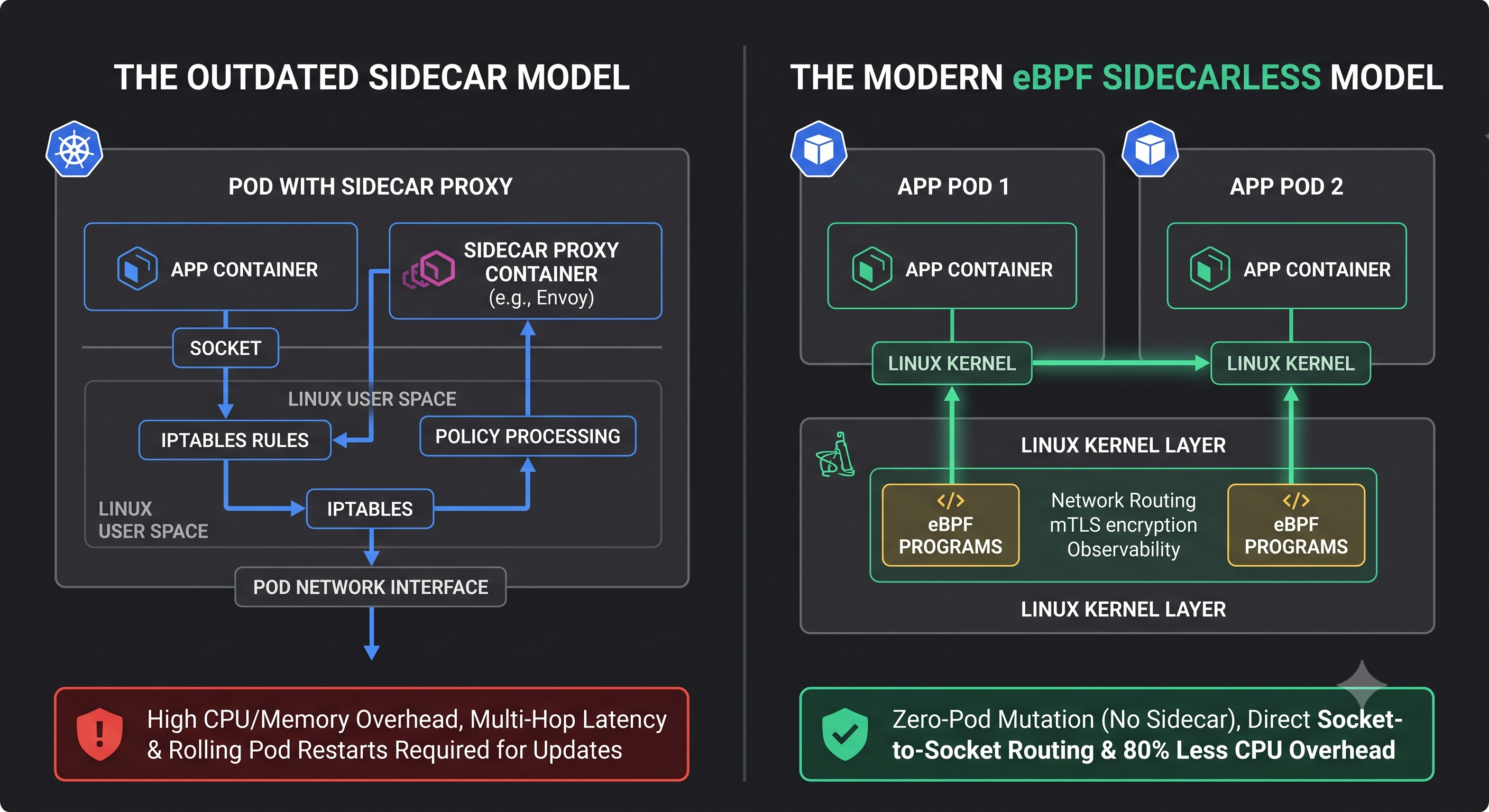 0 Σχόλια 0 Μοιράστηκε 172 Views 0 Προεπισκόπηση
 -
Why "Ticket-Ops" Is Killing Your Cloud Career (And How Platform Thinking Saves It)
Gartner projected that 80% of large engineering organizations would establish dedicated platform teams by 2026—and looking across modern infrastructure stacks today, that reality is already here.
Yet, far too many cloud engineers remain stuck in the "DevOps reactive trap":
A developer needs an RDS cluster or S3 bucket -> They open a Jira ticket.
You manually write HCL, run plan, get sign-off, and apply.
A deployment breaks -> You get paged at 2 AM because nobody else understands the manifest.
This is not DevOps; it is glorified operations disguised as automation.
When AI coding assistants and automation tooling can generate boilerplate Terraform and Kubernetes manifests in seconds, the cloud engineers commanding top-tier career leverage aren’t the ones typing YAML—they are Platform Engineers treating infrastructure as an internal product.
Here is how you shift your career from Reactive Operator to Platform Architect:
1. Stop Provisioning Resources; Start Building "Golden Paths"
Don’t hand developers raw cloud primitives where they can misconfigure security groups or incur run-away costs. Package your architecture into opinionated, self-service templates (via tools like Backstage or custom CLI workflows).
Old way: Manually spinning up an EKS namespace and ingress on request.
New way: Codifying a "Node.js service standard" where a developer runs one command to get repo scaffolding, automated CI/CD, RBAC, and telemetry out of the box.
2. Trade "Manual Gates" for Policy-as-Code & FinOps Guardrails
If you are the human bottleneck reviewing every pull request for IAM least-privilege or cost overruns, you don't scale.
Enforce pre-commit and admission controls (using Kyverno, Open Policy Agent, or Infracost).
Let code linters and CI policies block unencrypted storage or missing resource limits before you ever see a PR.
3. Measure Value by "Developer Cognitive Load," Not Uptime
Uptime is table stakes. High-leverage platform teams measure:
Time to First Deploy: How fast can a new hire ship their first microservice to staging?
Self-Service Adoption: Are engineers choosing your paved path over custom hacky pipelines?
Career Takeaway: Your engineering value is no longer measured by how many cloud resources you personally manage. It’s measured by how many developers can safely deploy to production without ever having to speak with you.
Discussion Question
What is the single biggest bottleneck in your current deployment workflow: slow approval gates, cognitive overload on complex Helm charts, or ticket-driven infrastructure requests?
CTA
Ready to move past reactive DevOps and build scalable internal platforms?
👉 Join Cloud, DevOps & Open Source on Techawks for production architectures, platform engineering blueprints, and open-source tooling breakdowns.Why "Ticket-Ops" Is Killing Your Cloud Career (And How Platform Thinking Saves It) Gartner projected that 80% of large engineering organizations would establish dedicated platform teams by 2026—and looking across modern infrastructure stacks today, that reality is already here. Yet, far too many cloud engineers remain stuck in the "DevOps reactive trap": A developer needs an RDS cluster or S3 bucket -> They open a Jira ticket. You manually write HCL, run plan, get sign-off, and apply. A deployment breaks -> You get paged at 2 AM because nobody else understands the manifest. This is not DevOps; it is glorified operations disguised as automation. When AI coding assistants and automation tooling can generate boilerplate Terraform and Kubernetes manifests in seconds, the cloud engineers commanding top-tier career leverage aren’t the ones typing YAML—they are Platform Engineers treating infrastructure as an internal product. Here is how you shift your career from Reactive Operator to Platform Architect: 1. Stop Provisioning Resources; Start Building "Golden Paths" Don’t hand developers raw cloud primitives where they can misconfigure security groups or incur run-away costs. Package your architecture into opinionated, self-service templates (via tools like Backstage or custom CLI workflows). Old way: Manually spinning up an EKS namespace and ingress on request. New way: Codifying a "Node.js service standard" where a developer runs one command to get repo scaffolding, automated CI/CD, RBAC, and telemetry out of the box. 2. Trade "Manual Gates" for Policy-as-Code & FinOps Guardrails If you are the human bottleneck reviewing every pull request for IAM least-privilege or cost overruns, you don't scale. Enforce pre-commit and admission controls (using Kyverno, Open Policy Agent, or Infracost). Let code linters and CI policies block unencrypted storage or missing resource limits before you ever see a PR. 3. Measure Value by "Developer Cognitive Load," Not Uptime Uptime is table stakes. High-leverage platform teams measure: Time to First Deploy: How fast can a new hire ship their first microservice to staging? Self-Service Adoption: Are engineers choosing your paved path over custom hacky pipelines? Career Takeaway: Your engineering value is no longer measured by how many cloud resources you personally manage. It’s measured by how many developers can safely deploy to production without ever having to speak with you. Discussion Question What is the single biggest bottleneck in your current deployment workflow: slow approval gates, cognitive overload on complex Helm charts, or ticket-driven infrastructure requests? CTA Ready to move past reactive DevOps and build scalable internal platforms? 👉 Join Cloud, DevOps & Open Source on Techawks for production architectures, platform engineering blueprints, and open-source tooling breakdowns.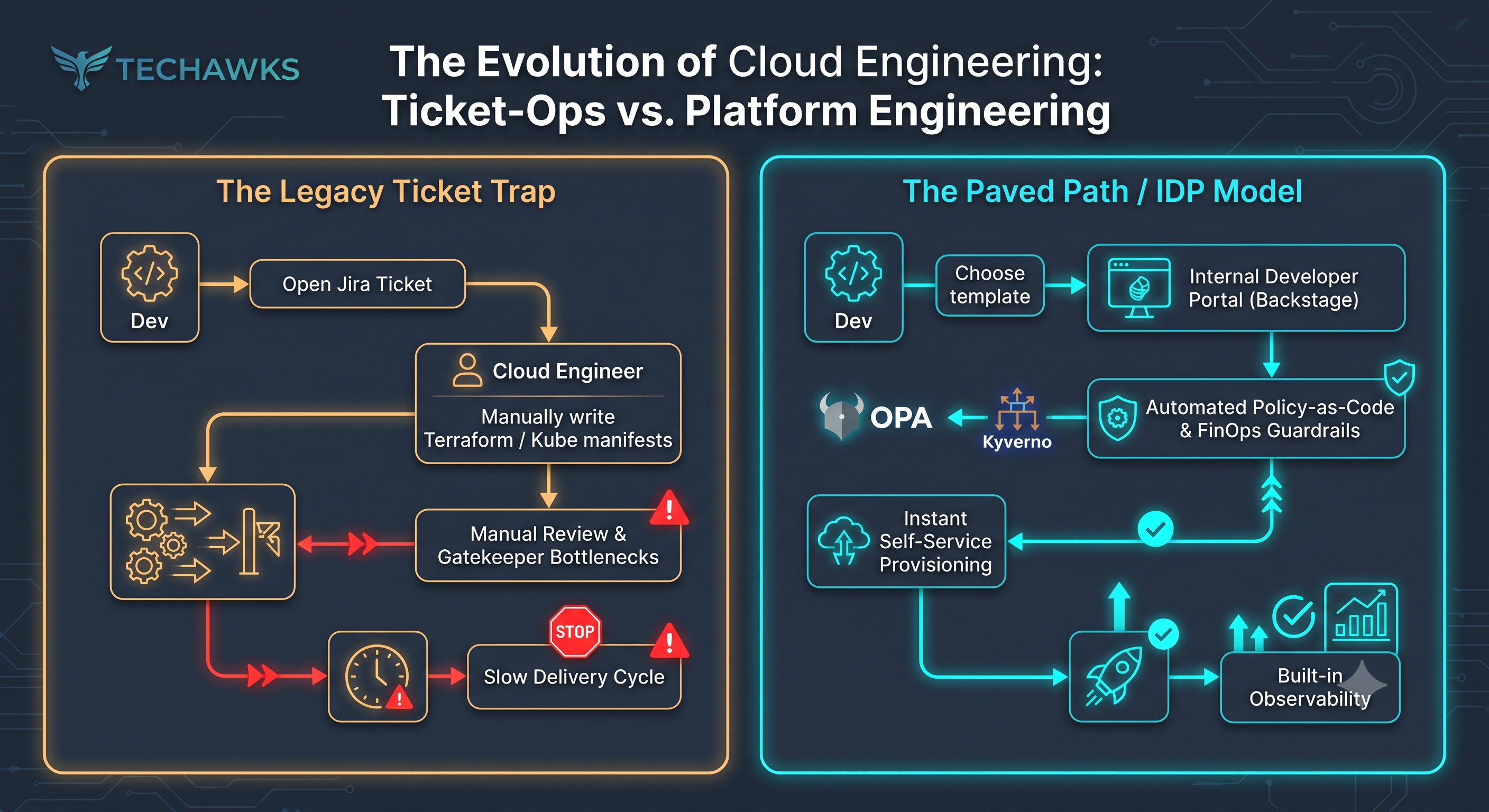 0 Σχόλια 0 Μοιράστηκε 410 Views 0 Προεπισκόπηση
 -
The Sidecar Tax: Why Ambient Mesh and eBPF Are Ending the Proxy-per-Pod Era
For years, the standard pattern for securing microservices in Kubernetes was uniform: inject a dedicated user-space proxy container into every application pod to handle mTLS, observability, and traffic routing.
While battle-tested, the sidecar pattern introduces severe operational drag at scale.
Myth: Running a sidecar proxy in every pod is the only way to achieve strict Zero-Trust mTLS and granular traffic governance in Kubernetes.
Fact: Sidecars waste massive memory reserves, inflate application deployment latency, and bind Layer 4 identity to heavy Layer 7 compute overhead.
Why the traditional sidecar model is hitting an architectural wall:
The Resource Penalty: Injecting an Envoy container consuming 50–70 MB of RAM across 1,500 pods means dedicating up to 100 GB of cluster memory solely to duplicate proxy binaries—starving actual business compute.
Lifecycle Coupling: When an Envoy proxy needs a security patch, every application pod across the cluster requires a rolling restart. If a sidecar fails to initialize before the main container, startup crashes and race conditions occur.
The Multi-Hop Latency Spike: Every request traversing microservice boundaries suffers two user-space context switches on both the source and destination pods, adding 2–6 ms of avoidable latency.
How Modern Platform Engineering Replaces Sidecars:
Decouple L4 Encryption from L7 Governance: Adopt sidecarless architectures (such as Istio Ambient Mode). Route Layer 4 mutual TLS through a shared, lightweight node-level daemon (ztunnel), and only deploy Layer 7 waypoint proxies for services that explicitly need advanced routing or header transformation.
Push L4 Policy into the Kernel with eBPF: Leverage eBPF-based datapaths (such as Cilium) to handle socket-level routing, network policy enforcement, and observability directly in kernel space without redirecting packets into user-space proxies.
Eliminate Pod Restart Dependencies: Decoupled networking stacks allow platform teams to upgrade network proxies, security certificates, and CNI layers without restarting production application containers or breaking existing connections.
Discussion Question
Is your platform team still deploying per-pod sidecars for basic mTLS, or have you begun migrating to sidecarless/eBPF-driven networking to cut resource bloat?
CTA
Ready to optimize your Kubernetes infrastructure, eliminate operational overhead, and master cloud-native networking? Join the Cloud, DevOps & Open Source community to share production benchmarks, GitOps patterns, and resilient architectural designs.The Sidecar Tax: Why Ambient Mesh and eBPF Are Ending the Proxy-per-Pod Era For years, the standard pattern for securing microservices in Kubernetes was uniform: inject a dedicated user-space proxy container into every application pod to handle mTLS, observability, and traffic routing. While battle-tested, the sidecar pattern introduces severe operational drag at scale. Myth: Running a sidecar proxy in every pod is the only way to achieve strict Zero-Trust mTLS and granular traffic governance in Kubernetes. Fact: Sidecars waste massive memory reserves, inflate application deployment latency, and bind Layer 4 identity to heavy Layer 7 compute overhead. Why the traditional sidecar model is hitting an architectural wall: The Resource Penalty: Injecting an Envoy container consuming 50–70 MB of RAM across 1,500 pods means dedicating up to 100 GB of cluster memory solely to duplicate proxy binaries—starving actual business compute. Lifecycle Coupling: When an Envoy proxy needs a security patch, every application pod across the cluster requires a rolling restart. If a sidecar fails to initialize before the main container, startup crashes and race conditions occur. The Multi-Hop Latency Spike: Every request traversing microservice boundaries suffers two user-space context switches on both the source and destination pods, adding 2–6 ms of avoidable latency. How Modern Platform Engineering Replaces Sidecars: Decouple L4 Encryption from L7 Governance: Adopt sidecarless architectures (such as Istio Ambient Mode). Route Layer 4 mutual TLS through a shared, lightweight node-level daemon (ztunnel), and only deploy Layer 7 waypoint proxies for services that explicitly need advanced routing or header transformation. Push L4 Policy into the Kernel with eBPF: Leverage eBPF-based datapaths (such as Cilium) to handle socket-level routing, network policy enforcement, and observability directly in kernel space without redirecting packets into user-space proxies. Eliminate Pod Restart Dependencies: Decoupled networking stacks allow platform teams to upgrade network proxies, security certificates, and CNI layers without restarting production application containers or breaking existing connections. Discussion Question Is your platform team still deploying per-pod sidecars for basic mTLS, or have you begun migrating to sidecarless/eBPF-driven networking to cut resource bloat? CTA Ready to optimize your Kubernetes infrastructure, eliminate operational overhead, and master cloud-native networking? Join the Cloud, DevOps & Open Source community to share production benchmarks, GitOps patterns, and resilient architectural designs.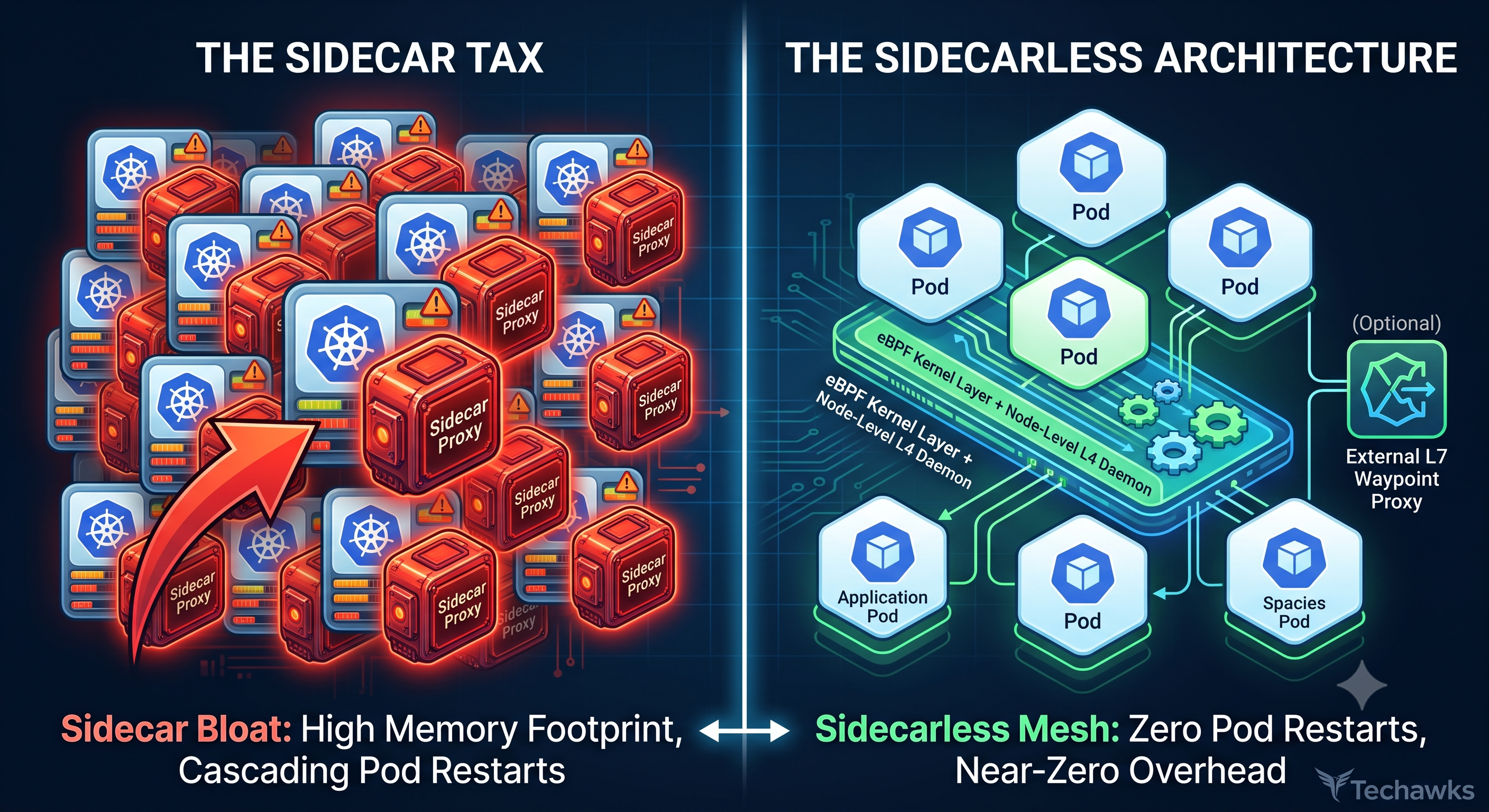 0 Σχόλια 0 Μοιράστηκε 144 Views 0 Προεπισκόπηση
 -
Stop Trusting "It Works in Staging": The Zero-Click Cloud Drift Audit
Configuration drift is the silent killer of cloud reliability. It rarely starts with malicious intent; it begins with an emergency 2:00 AM hotfix, a temporary security group rule opened for debugging, or an unrecorded manual instance resize.
When your real infrastructure diverges from your declarative code, you inherit major vulnerabilities:
The Phantom Rollback: The next automated CI/CD pipeline run will either silently overwrite the emergency hotfix (re-breaking production) or fail entirely due to state mismatch.
Security Blind Spots: Console-applied ingress rules bypass automated policy-as-code scanners (like tfsec or Checkov), leaving unauthorized ports open to the public internet.
Non-Reproducible Environments: Disaster recovery plans collapse because your code can only spin up a fraction of the actual operational architecture.
The 7-Day Zero-Click Infrastructure Challenge:
Select one non-critical production workload or tier-2 microservice and execute this audit:
Step 1: Run an Unscheduled Drift Detection. Trigger a clean terraform plan or equivalent state-refresh against live cloud state. Catalogue every single resource showing unexpected additions, modifications, or deletions outside of Git commits.
Step 2: Codify or Terminate. For every drifted attribute found: either formalize it into your version-controlled templates with a proper pull request, or destroy it immediately to align with the true state.
Step 3: Revoke Console Write Access. Strip interactive write/admin permissions for human operators in that target environment. Route all modifications—including environment variables and scaling policies—through peer-reviewed pull requests and automated pipelines.
Step 4: Implement Automated Drift Alarms. Set up a scheduled, read-only pipeline run (e.g., every 6 hours) that alerts directly to your on-call channel whenever real-world infrastructure deviates from state files.
Key Takeaways
Console fixes are technical debt: A manual change in a cloud dashboard solves a symptom today while guaranteeing a deployment failure tomorrow.
State files lie when humans have write access: Strict Least Privilege must apply to engineers, not just services; production changes belong exclusively in automated pipelines.
Drift detection is preventive maintenance: Catching infrastructure deltas continuously prevents catastrophic surprises during critical disaster-recovery events.
CTA
Ready to build resilient, immutable infrastructure that eliminates drift and operational overhead? Join the Cloud, DevOps & Open Source community to exchange proven IaC workflows, GitOps pipelines, and multi-cloud architectures.Stop Trusting "It Works in Staging": The Zero-Click Cloud Drift Audit Configuration drift is the silent killer of cloud reliability. It rarely starts with malicious intent; it begins with an emergency 2:00 AM hotfix, a temporary security group rule opened for debugging, or an unrecorded manual instance resize. When your real infrastructure diverges from your declarative code, you inherit major vulnerabilities: The Phantom Rollback: The next automated CI/CD pipeline run will either silently overwrite the emergency hotfix (re-breaking production) or fail entirely due to state mismatch. Security Blind Spots: Console-applied ingress rules bypass automated policy-as-code scanners (like tfsec or Checkov), leaving unauthorized ports open to the public internet. Non-Reproducible Environments: Disaster recovery plans collapse because your code can only spin up a fraction of the actual operational architecture. The 7-Day Zero-Click Infrastructure Challenge: Select one non-critical production workload or tier-2 microservice and execute this audit: Step 1: Run an Unscheduled Drift Detection. Trigger a clean terraform plan or equivalent state-refresh against live cloud state. Catalogue every single resource showing unexpected additions, modifications, or deletions outside of Git commits. Step 2: Codify or Terminate. For every drifted attribute found: either formalize it into your version-controlled templates with a proper pull request, or destroy it immediately to align with the true state. Step 3: Revoke Console Write Access. Strip interactive write/admin permissions for human operators in that target environment. Route all modifications—including environment variables and scaling policies—through peer-reviewed pull requests and automated pipelines. Step 4: Implement Automated Drift Alarms. Set up a scheduled, read-only pipeline run (e.g., every 6 hours) that alerts directly to your on-call channel whenever real-world infrastructure deviates from state files. Key Takeaways Console fixes are technical debt: A manual change in a cloud dashboard solves a symptom today while guaranteeing a deployment failure tomorrow. State files lie when humans have write access: Strict Least Privilege must apply to engineers, not just services; production changes belong exclusively in automated pipelines. Drift detection is preventive maintenance: Catching infrastructure deltas continuously prevents catastrophic surprises during critical disaster-recovery events. CTA Ready to build resilient, immutable infrastructure that eliminates drift and operational overhead? Join the Cloud, DevOps & Open Source community to exchange proven IaC workflows, GitOps pipelines, and multi-cloud architectures.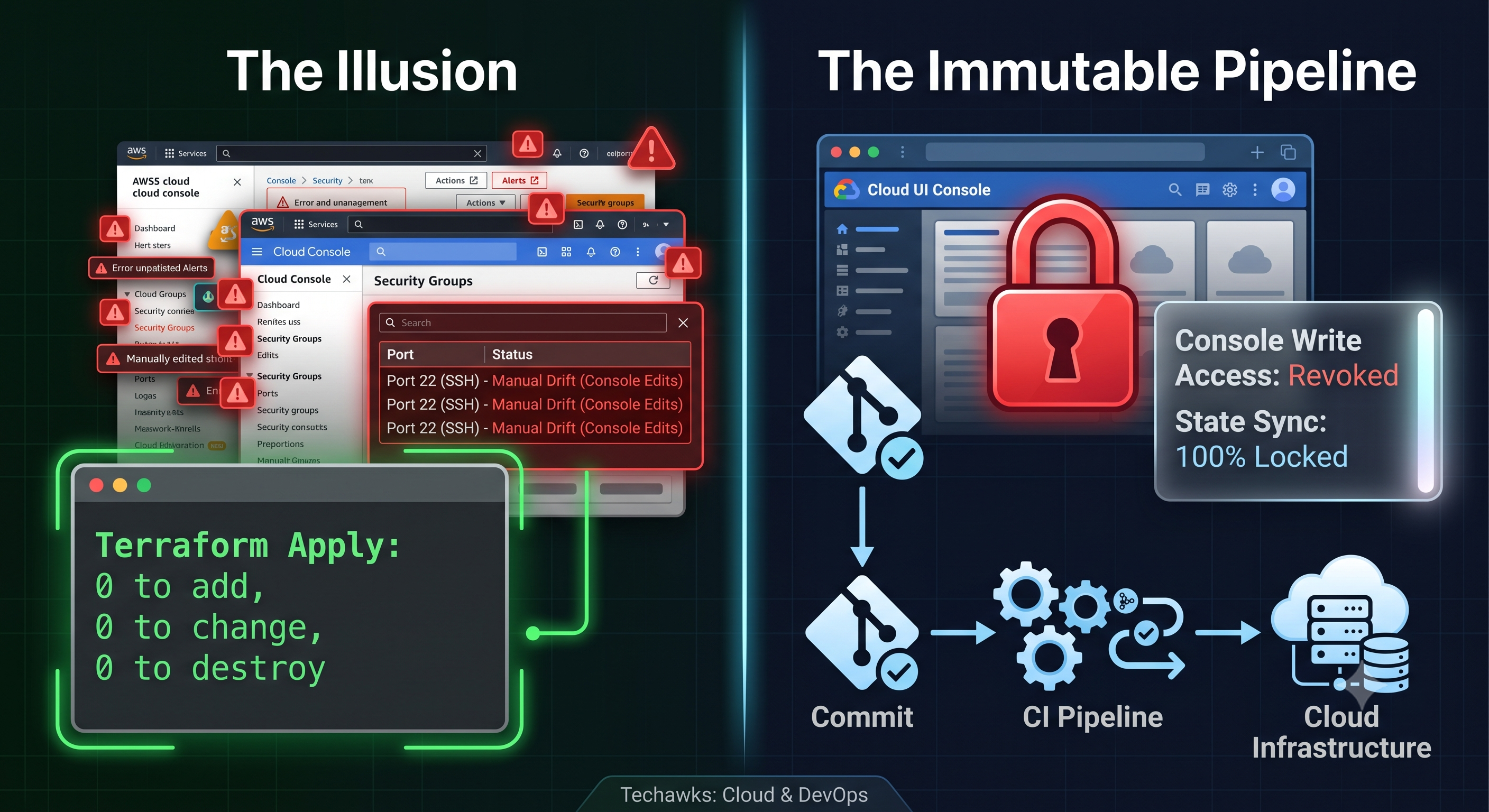 0 Σχόλια 0 Μοιράστηκε 167 Views 0 Προεπισκόπηση
 -
The Hidden Danger of "Permissive" Ephemeral Infrastructure: Hardening Your CI/CD & Cluster Control Plane
As teams scale GitOps and platform engineering, infrastructure provisioning has become fully dynamic. Dynamic runners spin up, assume cloud IAM roles, apply Kubernetes manifests or IaC modules, and terminate.
The trap? Ephemeral execution with static trust.
Engineers often grant wide IAM permissions (e.g., * on S3 buckets, wide VPC modification, or cluster-admin service accounts) under the false assumption that because the runner lives for only 6 minutes, the blast radius is negligible. In practice, compromised third-party dependencies, malicious PR actions, or leaked pipeline context tokens convert short-lived environments into full control plane takeover vectors.
Resilient cloud architecture demands that credential lifespans match the micro-task, not the entire build pipeline.
Before your next release cycle, run this audit across your deployment pipelines:
The Zero-Trust Ephemeral Infrastructure Checklist
[ ] 1. Enforce Workload Identity Federation (No Static API Keys)
Eliminate static access keys stored in CI variables. Mandate OIDC (OpenID Connect) federation (e.g., GitHub Actions/GitLab OIDC to AWS IAM, GCP Workload Identity, or Azure Federated Credentials) with strictly bounded audience and subject claims.
[ ] 2. Scope IAM to Single Plan/Apply Phases (Task-Level Scoping)
Decouple your pipeline roles: the "plan/spec" phase receives strictly read-only metadata permissions, while the "apply" phase receives narrow write access restricted to the targeted state file and VPC resources.
[ ] 3. Adopt Kernel-Level Runtime Observability (eBPF)
Traditional container logs miss unauthorized outbound connections or privilege escalations initiated inside dynamic runners. Deploy eBPF-based runtime monitoring (such as Cilium or Falco) to flag unexpected process execution at the host level.
[ ] 4. Enforce Policy-as-Code Gates Before State Locking
Integrate deterministic validation (Open Policy Agent/Rego, Kyverno, or Trivy) inside the pipeline. Block deployments automatically if a pull request introduces open security groups (0.0.0.0/0), elevated container privileges, or missing encryption tags.
[ ] 5. Cap Token TTL to Sub-Hour Limits
Set the maximum session duration for assumed STS/IAM roles to match the mean pipeline runtime (e.g., 15–30 minutes), preventing cached credential reuse in the event of an artifact leak.
[ ] 6. Isolate Dynamic Runners in Dedicated VPCs
Ensure dynamic runners and build agents do not run in the same internal network plane as staging or production databases. Enforce strict egress filtering—runners only connect to designated registries and cloud control-plane endpoints.
Discussion Question
How does your team enforce the boundary between read-only evaluation and write-level deployment privileges inside automated GitOps workflows?
CTA
Join Cloud, DevOps & Open Source — follow Techawks Cloud & DevOps for hands-on architectural blueprints, infrastructure teardowns, and actionable reliability checklists.The Hidden Danger of "Permissive" Ephemeral Infrastructure: Hardening Your CI/CD & Cluster Control Plane As teams scale GitOps and platform engineering, infrastructure provisioning has become fully dynamic. Dynamic runners spin up, assume cloud IAM roles, apply Kubernetes manifests or IaC modules, and terminate. The trap? Ephemeral execution with static trust. Engineers often grant wide IAM permissions (e.g., * on S3 buckets, wide VPC modification, or cluster-admin service accounts) under the false assumption that because the runner lives for only 6 minutes, the blast radius is negligible. In practice, compromised third-party dependencies, malicious PR actions, or leaked pipeline context tokens convert short-lived environments into full control plane takeover vectors. Resilient cloud architecture demands that credential lifespans match the micro-task, not the entire build pipeline. Before your next release cycle, run this audit across your deployment pipelines: The Zero-Trust Ephemeral Infrastructure Checklist [ ] 1. Enforce Workload Identity Federation (No Static API Keys) Eliminate static access keys stored in CI variables. Mandate OIDC (OpenID Connect) federation (e.g., GitHub Actions/GitLab OIDC to AWS IAM, GCP Workload Identity, or Azure Federated Credentials) with strictly bounded audience and subject claims. [ ] 2. Scope IAM to Single Plan/Apply Phases (Task-Level Scoping) Decouple your pipeline roles: the "plan/spec" phase receives strictly read-only metadata permissions, while the "apply" phase receives narrow write access restricted to the targeted state file and VPC resources. [ ] 3. Adopt Kernel-Level Runtime Observability (eBPF) Traditional container logs miss unauthorized outbound connections or privilege escalations initiated inside dynamic runners. Deploy eBPF-based runtime monitoring (such as Cilium or Falco) to flag unexpected process execution at the host level. [ ] 4. Enforce Policy-as-Code Gates Before State Locking Integrate deterministic validation (Open Policy Agent/Rego, Kyverno, or Trivy) inside the pipeline. Block deployments automatically if a pull request introduces open security groups (0.0.0.0/0), elevated container privileges, or missing encryption tags. [ ] 5. Cap Token TTL to Sub-Hour Limits Set the maximum session duration for assumed STS/IAM roles to match the mean pipeline runtime (e.g., 15–30 minutes), preventing cached credential reuse in the event of an artifact leak. [ ] 6. Isolate Dynamic Runners in Dedicated VPCs Ensure dynamic runners and build agents do not run in the same internal network plane as staging or production databases. Enforce strict egress filtering—runners only connect to designated registries and cloud control-plane endpoints. Discussion Question How does your team enforce the boundary between read-only evaluation and write-level deployment privileges inside automated GitOps workflows? CTA Join Cloud, DevOps & Open Source — follow Techawks Cloud & DevOps for hands-on architectural blueprints, infrastructure teardowns, and actionable reliability checklists.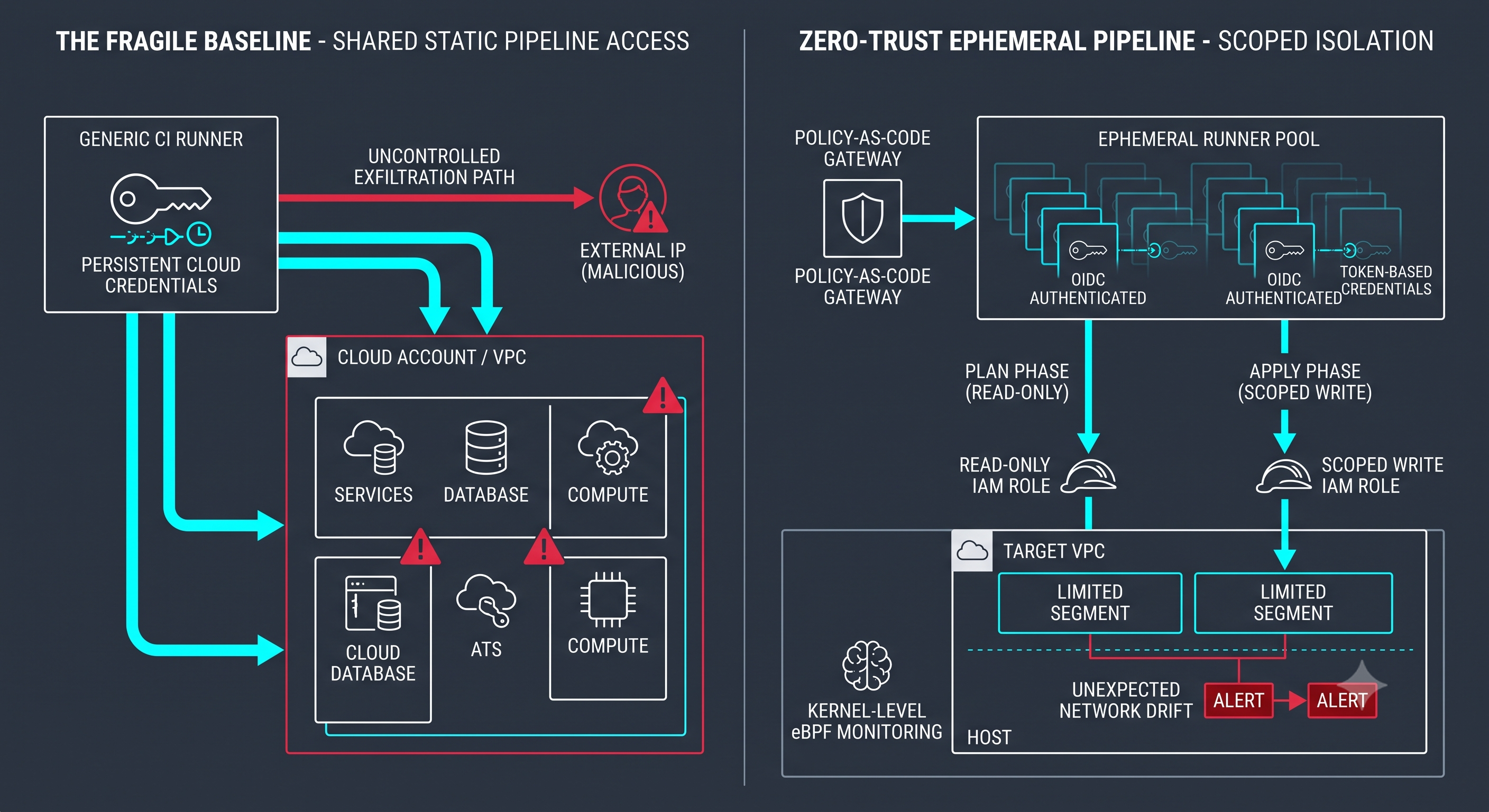 0 Σχόλια 0 Μοιράστηκε 385 Views 0 Προεπισκόπηση
και άλλες ιστορίες