


Techawks Data & Analytics is a community for data enthusiasts, analysts, scientists, engineers, business intelligence professionals, students, and AI innovators who want to learn, share, and grow together. Whether you're just starting with spreadsheets or building advanced machine learning models, you'll find valuable discussions and resources here.
Discover tutorials, industry trends, real-world projects, SQL and Python tips, visualization techniques, dashboard design, AI-powered analytics, career guidance, interview preparation, certifications, and networking opportunities. Connect with professionals worldwide and turn data into meaningful insights.
Discover tutorials, industry trends, real-world projects, SQL and Python tips, visualization techniques, dashboard design, AI-powered analytics, career guidance, interview preparation, certifications, and networking opportunities. Connect with professionals worldwide and turn data into meaningful insights.
-
PBID: 0230001500000009
-
1 Les gens qui ont lié ça
-
97 Articles
-
97 Photos
-
0 Vidéos
-
Aperçu
-
Science and Technology
Rechercher

 English
 Arabic
 Spanish
 Portuguese
 Deutsch
 Turkish
 Dutch
 Italiano
 Russian
 Romaian
 Portuguese (Brazil)
 Greek
Mises à jour récentes
-
The Two-Copy Trap: Why Modern Data Stacks Are Killing Standalone Vector Databases in Favor of Lakehouse Vector Columns
When generative AI and semantic retrieval exploded into enterprise architectures, the instinctive solution was adding another siloed database: dump raw data into the object lake, transform it in Snowflake or Databricks, generate embeddings via batch jobs, and mirror those vectors into a dedicated vector store.
The real price tag isn't just the secondary storage or GPU RAM bill. It’s the operational blast radius:
Governance Drift: Row-level security, tenant masking, and catalog access policies applied in your lakehouse must be manually reimplemented as metadata filters in the vector store.
Silent Sync Lag: Updates, soft deletes, and GDPR/CCPA purge requests applied in your primary tables fail to propagate instantly, causing LLM retrieval systems to surface deleted or unauthorized data.
Zero Snapshot Time-Travel: While open lakehouse table formats (like Apache Iceberg or Delta Lake) allow deterministic historical queries via immutable snapshot trees, standalone vector databases rarely support unified temporal rollbacks.
Enterprise data architecture is fundamentally consolidating toward In-Place Lakehouse Vector Search and unified columnar formats.
The Siloed Sync Anti-Pattern vs. Unified Lakehouse Storage
Siloed Vector DB Architecture (The Two-Copy Trap):
[Lakehouse Table (Iceberg)]
│
└──> [Brittle Sync Pipeline] ➔ [Standalone Vector DB] ➔ [Disjointed Access Control]
(Prone to lag, sync failures, & GDPR audit leakage)
Unified Lakehouse Architecture (In-Place Vector Search):
[Client / Query Engine (Trino, DuckDB, LanceDB, Spark)]
│
▼
[Unified Open Table Format: Vector Embeddings Stored In-Place]
├── Relational Columns: (user_id, tenant_id, timestamp)
├── Vector Column: embedding: array<float>
└── Governed Catalog (ACID Transactions, Time Travel, Single RBAC Policy)
3 Rules for Designing Resilient Vector Data Architectures
Treat Embeddings as First-Class Column Types
Modern columnar formats (Parquet, Lance, and Iceberg) allow embedding vectors to be stored directly alongside transactional and analytical metadata. Colocating embeddings with structured business attributes enables engines to perform pre-filtered vector pruning (e.g., filtering tenant_id = 'org_42' before computing cosine distance) without cross-system network hops.
Anchor ACID Transactions to a Single System of Record
If your application requires approximate nearest neighbor (ANN) indexing at scale, ensure your open lakehouse format remains the authoritative master. Any specialized external index must be treated as an ephemeral, derived projection that can be rebuilt deterministically from Iceberg snapshot metadata rather than an independent source of truth.
Eliminate RAM-Bound Infrastructure Taxes
First-generation vector stores require keeping entire vector indices in memory to deliver low latencies. Newer disk-backed and object-storage-native indexing algorithms (such as IVF-PQ and DiskANN over cloud object storage) allow petabyte-scale semantic search at standard cloud object storage rates ($0.02/GB/month) rather than dedicated high-RAM cluster pricing.
Discussion Question
Is your data team querying vector embeddings directly within your primary data lakehouse/warehouse engines (via Iceberg, Lance, or warehouse-native vector functions), or are you still maintaining a separate vector database cluster? What has been your biggest pain point with metadata synchronization?
CTA (Join Data Science & Analytics)
Ditch outdated pipeline patterns, optimize lakehouse architectures, and build enterprise-grade data infrastructure with top engineers.
👉 Join Data Science & Analytics: [techawks.io/data-community]The Two-Copy Trap: Why Modern Data Stacks Are Killing Standalone Vector Databases in Favor of Lakehouse Vector Columns When generative AI and semantic retrieval exploded into enterprise architectures, the instinctive solution was adding another siloed database: dump raw data into the object lake, transform it in Snowflake or Databricks, generate embeddings via batch jobs, and mirror those vectors into a dedicated vector store. The real price tag isn't just the secondary storage or GPU RAM bill. It’s the operational blast radius: Governance Drift: Row-level security, tenant masking, and catalog access policies applied in your lakehouse must be manually reimplemented as metadata filters in the vector store. Silent Sync Lag: Updates, soft deletes, and GDPR/CCPA purge requests applied in your primary tables fail to propagate instantly, causing LLM retrieval systems to surface deleted or unauthorized data. Zero Snapshot Time-Travel: While open lakehouse table formats (like Apache Iceberg or Delta Lake) allow deterministic historical queries via immutable snapshot trees, standalone vector databases rarely support unified temporal rollbacks. Enterprise data architecture is fundamentally consolidating toward In-Place Lakehouse Vector Search and unified columnar formats. The Siloed Sync Anti-Pattern vs. Unified Lakehouse Storage Siloed Vector DB Architecture (The Two-Copy Trap): [Lakehouse Table (Iceberg)] │ └──> [Brittle Sync Pipeline] ➔ [Standalone Vector DB] ➔ [Disjointed Access Control] (Prone to lag, sync failures, & GDPR audit leakage) Unified Lakehouse Architecture (In-Place Vector Search): [Client / Query Engine (Trino, DuckDB, LanceDB, Spark)] │ ▼ [Unified Open Table Format: Vector Embeddings Stored In-Place] ├── Relational Columns: (user_id, tenant_id, timestamp) ├── Vector Column: embedding: array<float> └── Governed Catalog (ACID Transactions, Time Travel, Single RBAC Policy) 3 Rules for Designing Resilient Vector Data Architectures Treat Embeddings as First-Class Column Types Modern columnar formats (Parquet, Lance, and Iceberg) allow embedding vectors to be stored directly alongside transactional and analytical metadata. Colocating embeddings with structured business attributes enables engines to perform pre-filtered vector pruning (e.g., filtering tenant_id = 'org_42' before computing cosine distance) without cross-system network hops. Anchor ACID Transactions to a Single System of Record If your application requires approximate nearest neighbor (ANN) indexing at scale, ensure your open lakehouse format remains the authoritative master. Any specialized external index must be treated as an ephemeral, derived projection that can be rebuilt deterministically from Iceberg snapshot metadata rather than an independent source of truth. Eliminate RAM-Bound Infrastructure Taxes First-generation vector stores require keeping entire vector indices in memory to deliver low latencies. Newer disk-backed and object-storage-native indexing algorithms (such as IVF-PQ and DiskANN over cloud object storage) allow petabyte-scale semantic search at standard cloud object storage rates ($0.02/GB/month) rather than dedicated high-RAM cluster pricing. Discussion Question Is your data team querying vector embeddings directly within your primary data lakehouse/warehouse engines (via Iceberg, Lance, or warehouse-native vector functions), or are you still maintaining a separate vector database cluster? What has been your biggest pain point with metadata synchronization? CTA (Join Data Science & Analytics) Ditch outdated pipeline patterns, optimize lakehouse architectures, and build enterprise-grade data infrastructure with top engineers. 👉 Join Data Science & Analytics: [techawks.io/data-community]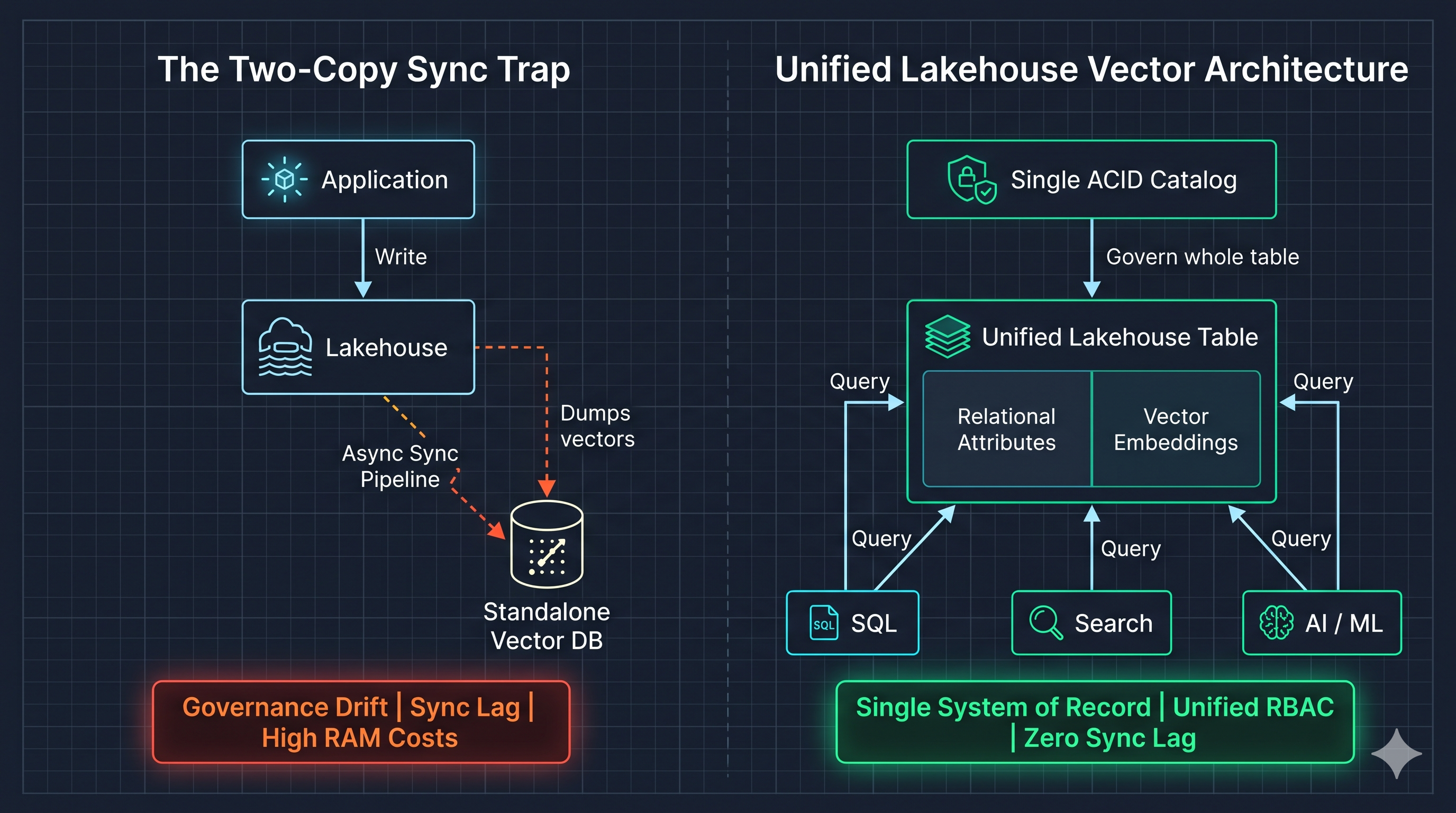 0 Commentaires 0 Parts 53 Vue 0 Aperçu
-
The End of Duplicate Storage: How Zero-Copy Architectures (Apache Iceberg + Apache Arrow) Redefine Lakehouse Analytics
For years, the standard modern data stack accepted an expensive trade-off: engine isolation required physical data duplication
If data science wanted to run Python/DuckDB, BI needed low-latency Trino or Snowflake, and streaming pipelines wrote via Spark or Kafka, engineering teams built brittle, multi-hop ETL pipelines. The same dataset was written, copied, converted to proprietary micro-partitions, and redundantly stored across three different platforms.The industry has decisively shifted toward Zero-Copy Lakehouse Architectures, built on two open, complementary standards:At Rest: Open table formats with hierarchical metadata (e.g., Apache Iceberg).In Memory & In Flight: Universal columnar in-memory representations (e.g., Apache Arrow and Arrow Flight).Plaintext[ ANTI-PATTERN: MULTI-HOP STORAGE DUPLICATION ]
S3 Data Lake ──► Heavy ETL Pipeline ──► Proprietary Cloud DW ──► Reverse-ETL / Marts ──► Row-by-Row Serialization ──► BI & Python Runtimes
(3x Storage Cost & High Latency)
[ PRODUCTION PATTERN: ZERO-COPY UNIFIED LAKEHOUSE ]
Object Storage (Parquet) ──► Apache Iceberg (ACID Metadata / Snapshots) ──► Apache Arrow / Flight (Zero-Copy Memory Bus) ──► DuckDB / Trino / Spark / BI
(Single Source of Truth, Zero Duplication)
Here is why this architecture fundamentally alters data engineering economics and how to implement it:1. Manifest-Driven Metadata Instead of Directory ScanningTraditional data lakes break down when tables exceed tens of thousands of partitions because object storage API listing is notoriously slow.
The Iceberg Advantage: Iceberg decouples table definitions from file paths using an immutable tree: Catalog $\rightarrow$ Metadata File $\rightarrow$ Manifest List $\rightarrow$ Manifest Files $\rightarrow$ Data Files.
Min/Max Pruning at Planning Time: Query engines prune 90%+ of irrelevant files before reading a single byte of storage by reading manifest-level column statistics.2. Arrow Flight Over JDBC/ODBC Network BottlenecksMoving millions of rows from a query engine into Python, R, or downstream dashboards over standard JDBC/ODBC forces row-by-row serialization, CPU thrashing, and high memory usage.
The Arrow Protocol: Apache Arrow defines a standard in-memory columnar format.rrow Flight: Streams binary Arrow record batches over gRPC without serializing or deserializing data. Both the query engine and your client runtime reference the exact same memory layout directly, yielding up to a 10x throughput improvement for analytical data transfers.3. Hidden Compaction Tax: Optimize Merge-on-Read vs. Copy-on-WriteZero-copy open lakehouses do not eliminate table maintenance. Failing to actively manage file layouts creates "small file disease" and bloated delete files.
Deletes & Updates: If your workload has frequent updates or CDC upserts, uncompacted positional or equality delete files force readers to merge records dynamically at query runtime, degrading $p95$ query times.
Production Guardrail: Schedule automated background table compaction and snapshot expiration jobs outside peak query hours to maintain clean file sizes (ideally 128 MB to 512 MB Parquet chunks) without interrupting active transactions.
Analytical maturity in modern data teams is no longer measured by how many complex sync pipelines you can maintain, but by how cleanly you eliminate redundant copies while serving multiple engines from a single, governed source of truth.
Discussion Question
For data architects and engineers: Has your team moved production marts to open table formats like Apache Iceberg, or is the operational overhead of catalog management (Polaris, Unity, REST) still keeping you on proprietary warehouse storage?
CTA
Ready to master high-scale data pipelines, query optimization, and modern lakehouse architecture?
👉 Join Data Science & Analytics to collaborate with data engineers, ML practitioners, and analytics leaders in the Techawks community.The End of Duplicate Storage: How Zero-Copy Architectures (Apache Iceberg + Apache Arrow) Redefine Lakehouse Analytics For years, the standard modern data stack accepted an expensive trade-off: engine isolation required physical data duplication If data science wanted to run Python/DuckDB, BI needed low-latency Trino or Snowflake, and streaming pipelines wrote via Spark or Kafka, engineering teams built brittle, multi-hop ETL pipelines. The same dataset was written, copied, converted to proprietary micro-partitions, and redundantly stored across three different platforms.The industry has decisively shifted toward Zero-Copy Lakehouse Architectures, built on two open, complementary standards:At Rest: Open table formats with hierarchical metadata (e.g., Apache Iceberg).In Memory & In Flight: Universal columnar in-memory representations (e.g., Apache Arrow and Arrow Flight).Plaintext[ ANTI-PATTERN: MULTI-HOP STORAGE DUPLICATION ] S3 Data Lake ──► Heavy ETL Pipeline ──► Proprietary Cloud DW ──► Reverse-ETL / Marts ──► Row-by-Row Serialization ──► BI & Python Runtimes (3x Storage Cost & High Latency) [ PRODUCTION PATTERN: ZERO-COPY UNIFIED LAKEHOUSE ] Object Storage (Parquet) ──► Apache Iceberg (ACID Metadata / Snapshots) ──► Apache Arrow / Flight (Zero-Copy Memory Bus) ──► DuckDB / Trino / Spark / BI (Single Source of Truth, Zero Duplication) Here is why this architecture fundamentally alters data engineering economics and how to implement it:1. Manifest-Driven Metadata Instead of Directory ScanningTraditional data lakes break down when tables exceed tens of thousands of partitions because object storage API listing is notoriously slow. The Iceberg Advantage: Iceberg decouples table definitions from file paths using an immutable tree: Catalog $\rightarrow$ Metadata File $\rightarrow$ Manifest List $\rightarrow$ Manifest Files $\rightarrow$ Data Files. Min/Max Pruning at Planning Time: Query engines prune 90%+ of irrelevant files before reading a single byte of storage by reading manifest-level column statistics.2. Arrow Flight Over JDBC/ODBC Network BottlenecksMoving millions of rows from a query engine into Python, R, or downstream dashboards over standard JDBC/ODBC forces row-by-row serialization, CPU thrashing, and high memory usage. The Arrow Protocol: Apache Arrow defines a standard in-memory columnar format.rrow Flight: Streams binary Arrow record batches over gRPC without serializing or deserializing data. Both the query engine and your client runtime reference the exact same memory layout directly, yielding up to a 10x throughput improvement for analytical data transfers.3. Hidden Compaction Tax: Optimize Merge-on-Read vs. Copy-on-WriteZero-copy open lakehouses do not eliminate table maintenance. Failing to actively manage file layouts creates "small file disease" and bloated delete files. Deletes & Updates: If your workload has frequent updates or CDC upserts, uncompacted positional or equality delete files force readers to merge records dynamically at query runtime, degrading $p95$ query times. Production Guardrail: Schedule automated background table compaction and snapshot expiration jobs outside peak query hours to maintain clean file sizes (ideally 128 MB to 512 MB Parquet chunks) without interrupting active transactions. Analytical maturity in modern data teams is no longer measured by how many complex sync pipelines you can maintain, but by how cleanly you eliminate redundant copies while serving multiple engines from a single, governed source of truth. Discussion Question For data architects and engineers: Has your team moved production marts to open table formats like Apache Iceberg, or is the operational overhead of catalog management (Polaris, Unity, REST) still keeping you on proprietary warehouse storage? CTA Ready to master high-scale data pipelines, query optimization, and modern lakehouse architecture? 👉 Join Data Science & Analytics to collaborate with data engineers, ML practitioners, and analytics leaders in the Techawks community. 0 Commentaires 0 Parts 39 Vue 0 Aperçu
-
The Lakehouse Reality Check: Why Adopting Apache Iceberg Fails Without Manifest Pruning and Unified Semantic Modeling
The enterprise migration to open table formats (Apache Iceberg, Delta Lake) has decoupled storage from compute across Snowflake, Databricks, BigQuery, and Trino. Storing raw parquet files on object storage while maintaining ACID transactions, snapshot isolation, and schema evolution provides immense architectural flexibility.
However, running production analytics on an open lakehouse introduces two critical failure modes that traditional managed data warehouses historically abstracted away:
1. The Manifest Tree Explosion & Position Delete Bloat
An Iceberg table is not a single directory of Parquet files; it is a hierarchical tree of metadata.json, Avro manifest lists, Avro manifests, and data/delete files.
The Micro-Batch Trap: When streaming ingestion tools (such as Kafka or Flink) commit micro-batches every 30 to 60 seconds, they generate thousands of tiny Parquet files and corresponding metadata commits.
The Consequence: During query planning, query engines spend 80% of their execution time walking deep metadata trees and applying row-level position deletes rather than scanning actual columnar data.
The Engineering Fix: Automated compaction maintenance is non-negotiable. Schedule atomic file rewrites (REWRITE DATA FILES) with bin-packing or Z-order sorting, alongside orphan file cleanup and snapshot expiration to keep metadata evaluation sub-second.
2. The Semantic Modeling Vacuum
Decoupling storage from query engines creates an immediate governance crisis. When StarRocks, DuckDB, Trino, and warehouse engines simultaneously query the same Iceberg tables, business logic fragments.
If "active revenue" or "churned user" is defined in one BI tool's SQL view and recalculated differently in an AI agent's prompt context, analytics trust collapses.
The Shift to Centralized Semantic Layers: You cannot leave metric definitions inside distributed SQL queries. Metric definitions must reside in a centralized semantic layer (e.g., dbt semantic layer, Cube) that sits between the open table catalog and downstream consumers. Every query engine, dashboard, and autonomous AI pipeline must pull definitions from a single immutable contract.
Open table formats solve vendor lock-in, but metadata hygiene and semantic modeling determine whether your lakehouse actually delivers high-throughput analytical value.
Discussion Question
For analytics and data platform engineers operating on Iceberg or open lakehouse architectures: how frequently do you run automated manifest compaction, and has your team successfully centralized metrics in a semantic layer or do business definitions still leak into BI-specific SQL views?
CTA
Join Data Science & Analytics: Connect with lead data architects, analytics engineers, and data platform specialists discussing modern lakehouse architectures, open table governance, and high-performance querying inside the Techawks Data & Analytics community. Link in bio/comments.The Lakehouse Reality Check: Why Adopting Apache Iceberg Fails Without Manifest Pruning and Unified Semantic Modeling The enterprise migration to open table formats (Apache Iceberg, Delta Lake) has decoupled storage from compute across Snowflake, Databricks, BigQuery, and Trino. Storing raw parquet files on object storage while maintaining ACID transactions, snapshot isolation, and schema evolution provides immense architectural flexibility. However, running production analytics on an open lakehouse introduces two critical failure modes that traditional managed data warehouses historically abstracted away: 1. The Manifest Tree Explosion & Position Delete Bloat An Iceberg table is not a single directory of Parquet files; it is a hierarchical tree of metadata.json, Avro manifest lists, Avro manifests, and data/delete files. The Micro-Batch Trap: When streaming ingestion tools (such as Kafka or Flink) commit micro-batches every 30 to 60 seconds, they generate thousands of tiny Parquet files and corresponding metadata commits. The Consequence: During query planning, query engines spend 80% of their execution time walking deep metadata trees and applying row-level position deletes rather than scanning actual columnar data. The Engineering Fix: Automated compaction maintenance is non-negotiable. Schedule atomic file rewrites (REWRITE DATA FILES) with bin-packing or Z-order sorting, alongside orphan file cleanup and snapshot expiration to keep metadata evaluation sub-second. 2. The Semantic Modeling Vacuum Decoupling storage from query engines creates an immediate governance crisis. When StarRocks, DuckDB, Trino, and warehouse engines simultaneously query the same Iceberg tables, business logic fragments. If "active revenue" or "churned user" is defined in one BI tool's SQL view and recalculated differently in an AI agent's prompt context, analytics trust collapses. The Shift to Centralized Semantic Layers: You cannot leave metric definitions inside distributed SQL queries. Metric definitions must reside in a centralized semantic layer (e.g., dbt semantic layer, Cube) that sits between the open table catalog and downstream consumers. Every query engine, dashboard, and autonomous AI pipeline must pull definitions from a single immutable contract. Open table formats solve vendor lock-in, but metadata hygiene and semantic modeling determine whether your lakehouse actually delivers high-throughput analytical value. Discussion Question For analytics and data platform engineers operating on Iceberg or open lakehouse architectures: how frequently do you run automated manifest compaction, and has your team successfully centralized metrics in a semantic layer or do business definitions still leak into BI-specific SQL views? CTA Join Data Science & Analytics: Connect with lead data architects, analytics engineers, and data platform specialists discussing modern lakehouse architectures, open table governance, and high-performance querying inside the Techawks Data & Analytics community. Link in bio/comments. 0 Commentaires 0 Parts 61 Vue 0 Aperçu
-
Beyond Directory-Based Hive Partitions: How to Architect Hidden Partitioning and Manifest Pruning in Modern Lakehouses
In legacy Hive-style data lakes, partition values were embedded directly into physical cloud object storage paths.
This creates two critical production failure modes:
Physical Coupling & Query Misalignment: When users write SQL filters against timestamps (WHERE event_time >= '2026-10-01'), but the storage engine is partitioned strictly by string date columns (WHERE date_str = '2026-10-01'), the query planner cannot deduce directory paths and is forced to perform a full-table scan across thousands of storage prefixes.
Catalog Metadata Bottlenecks: Query planning requires sending recursive filesystem LIST requests to cloud object storage (e.g., S3, ADLS, GCS), which are rate-limited, high-latency, and lack column-level statistical bounds.
Modern open table formats (such as Apache Iceberg and Delta Lake) replace physical directory scanning with Hierarchical Metadata Trees and Hidden Partitioning.
[❌ Legacy Hive Partitioning: Path-Bound Full Scan Trap]
SQL Query: SELECT * FROM telemetry WHERE timestamp >= '2026-10-31 00:00:00'
Path: s3://lakehouse/telemetry/year=2026/month=10/day=31/
Planner: Must issue S3:LIST objects on thousands of prefixes.
Result: 45-second metadata discovery overhead; failed partition pruning on timestamp transforms.
[✅ Lakehouse Manifest Pruning: Hierarchical Snapshot Tree]
Catalog Pointer ──> metadata.json ──> Manifest List (Snapshot)
│
┌────────────────────────────┴────────────────────────────┐
▼ ▼
Manifest File A (Partitions: Oct 20-25) Manifest File B (Partitions: Oct 26-31)
[Evaluates Min/Max Stats: PRUNED] [Column Stats Match: SCANNED]
│ │
(0 Data Files Read) Data Files (Direct GET by path)
To optimize analytics queries across multi-engine lakehouses (Trino, Spark, DuckDB, Snowflake), implement this 3-tier table management architecture:
1. Leverage Hidden Partitioning via Transform Functions
Stop forcing data engineers to materialize redundant synthetic columns (date, month, hour) alongside canonical ISO timestamps.
Use partition transforms directly on source timestamp fields (e.g., days(event_time) or hours(event_time)).
The query engine automatically converts predicates on event_time into manifest filter operations. Analysts query the business column naturally without knowing the underlying storage partitioning scheme.
2. Eliminate Directory Rewrites with Partition Evolution
Business data volumes scale unpredictably. A table partitioned by day may grow to gigabytes per hour, while an over-partitioned table creates the dreaded "small-file crisis."
The table format assigns partition spec IDs per manifest. Old data queries use Spec 0, while new data routes through Spec 1, enabling zero-downtime schema and layout evolution.
3. Enforce Manifest Compaction and Snapshot Expiration
As streaming pipelines (Kafka/Flink) commit records every few minutes, small manifest files proliferate, degrading query planning time.
Schedule asynchronous metadata compaction routines:
SQL
-- Iceberg rewrite manifests to cluster data files by partition bounds
CALL system.rewrite_manifests('analytics.production_telemetry');
-- Expire obsolete historical snapshots older than 7 days to clean storage bloat
CALL system.expire_snapshots('analytics.production_telemetry', older_than => TIMESTAMP '2026-10-24 00:00:00');
Moving your lakehouse from primitive directory structures to snapshot-based metadata architectures decouples business query logic from physical file layouts, slashing time-to-first-byte across enterprise analytics workloads.
Discussion Question
How frequently does your data engineering team run manifest compaction and file bin-packing routines on streaming lakehouse tables to prevent query-planning degradation?
CTA
Join Data Science & Analytics to learn advanced data engineering architectures, lakehouse performance tuning, and scalable query optimization techniques with practitioners globally.Beyond Directory-Based Hive Partitions: How to Architect Hidden Partitioning and Manifest Pruning in Modern Lakehouses In legacy Hive-style data lakes, partition values were embedded directly into physical cloud object storage paths. This creates two critical production failure modes: Physical Coupling & Query Misalignment: When users write SQL filters against timestamps (WHERE event_time >= '2026-10-01'), but the storage engine is partitioned strictly by string date columns (WHERE date_str = '2026-10-01'), the query planner cannot deduce directory paths and is forced to perform a full-table scan across thousands of storage prefixes. Catalog Metadata Bottlenecks: Query planning requires sending recursive filesystem LIST requests to cloud object storage (e.g., S3, ADLS, GCS), which are rate-limited, high-latency, and lack column-level statistical bounds. Modern open table formats (such as Apache Iceberg and Delta Lake) replace physical directory scanning with Hierarchical Metadata Trees and Hidden Partitioning. [❌ Legacy Hive Partitioning: Path-Bound Full Scan Trap] SQL Query: SELECT * FROM telemetry WHERE timestamp >= '2026-10-31 00:00:00' Path: s3://lakehouse/telemetry/year=2026/month=10/day=31/ Planner: Must issue S3:LIST objects on thousands of prefixes. Result: 45-second metadata discovery overhead; failed partition pruning on timestamp transforms. [✅ Lakehouse Manifest Pruning: Hierarchical Snapshot Tree] Catalog Pointer ──> metadata.json ──> Manifest List (Snapshot) │ ┌────────────────────────────┴────────────────────────────┐ ▼ ▼ Manifest File A (Partitions: Oct 20-25) Manifest File B (Partitions: Oct 26-31) [Evaluates Min/Max Stats: PRUNED] [Column Stats Match: SCANNED] │ │ (0 Data Files Read) Data Files (Direct GET by path) To optimize analytics queries across multi-engine lakehouses (Trino, Spark, DuckDB, Snowflake), implement this 3-tier table management architecture: 1. Leverage Hidden Partitioning via Transform Functions Stop forcing data engineers to materialize redundant synthetic columns (date, month, hour) alongside canonical ISO timestamps. Use partition transforms directly on source timestamp fields (e.g., days(event_time) or hours(event_time)). The query engine automatically converts predicates on event_time into manifest filter operations. Analysts query the business column naturally without knowing the underlying storage partitioning scheme. 2. Eliminate Directory Rewrites with Partition Evolution Business data volumes scale unpredictably. A table partitioned by day may grow to gigabytes per hour, while an over-partitioned table creates the dreaded "small-file crisis." The table format assigns partition spec IDs per manifest. Old data queries use Spec 0, while new data routes through Spec 1, enabling zero-downtime schema and layout evolution. 3. Enforce Manifest Compaction and Snapshot Expiration As streaming pipelines (Kafka/Flink) commit records every few minutes, small manifest files proliferate, degrading query planning time. Schedule asynchronous metadata compaction routines: SQL -- Iceberg rewrite manifests to cluster data files by partition bounds CALL system.rewrite_manifests('analytics.production_telemetry'); -- Expire obsolete historical snapshots older than 7 days to clean storage bloat CALL system.expire_snapshots('analytics.production_telemetry', older_than => TIMESTAMP '2026-10-24 00:00:00'); Moving your lakehouse from primitive directory structures to snapshot-based metadata architectures decouples business query logic from physical file layouts, slashing time-to-first-byte across enterprise analytics workloads. Discussion Question How frequently does your data engineering team run manifest compaction and file bin-packing routines on streaming lakehouse tables to prevent query-planning degradation? CTA Join Data Science & Analytics to learn advanced data engineering architectures, lakehouse performance tuning, and scalable query optimization techniques with practitioners globally.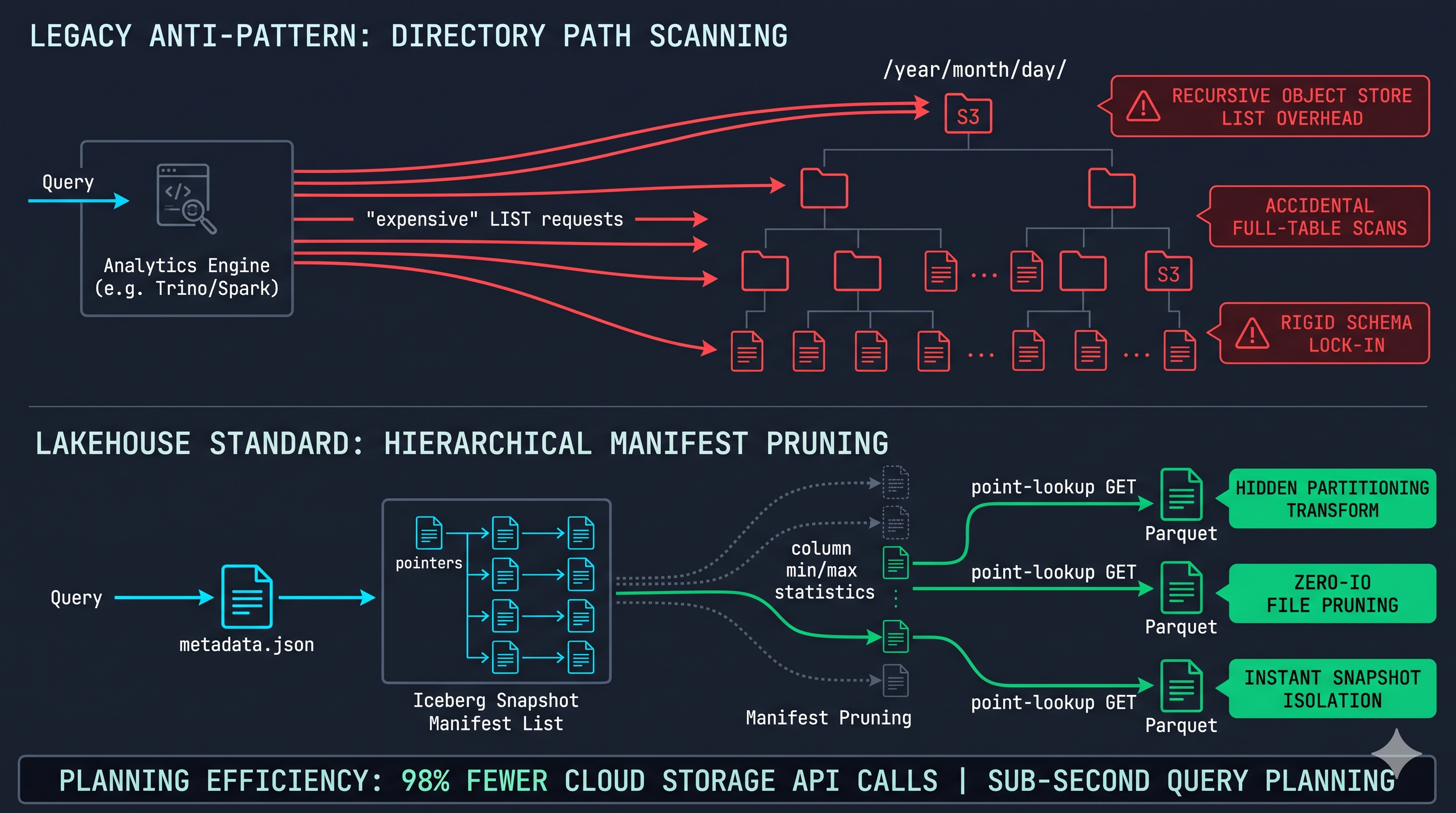 0 Commentaires 0 Parts 169 Vue 0 Aperçu
-
Stop Downloading Massive Datasets: Master Modern In-Process Data Filtering with DuckDB SQL
As data professionals, we’ve all been there: you need to analyze a subset of a massive dataset, but your computer slows to a crawl while loading the files. Traditional methods often require reading the entire dataset into memory or setting up complex database pipelines just for a quick query.
In modern analytics, we utilize In-Process OLAP (Online Analytical Processing) engines like DuckDB to run fast SQL queries on local or remote files—without the overhead of a server.
By querying files (like Parquet, CSV, or JSON) directly where they live, you bypass the slow extract-load-transform (ETL) loop entirely.
[ 15 GB Raw Parquet on S3 ]
│
(No massive download)
│
▼
┌──────────────────────────────────────────────┐
│ DuckDB In-Process Query Engine │
│ - Executes SQL directly on the remote file │
│ - Only pulls requested columns & rows │
└──────────────────────────────────────────────┘
│
▼
[ Megabytes of filtered ]
[ result in Python/R ]
💡 The Quick Tutorial: Querying Remote Files Fast
Instead of downloading a massive dataset, you can point DuckDB directly to the file's URL (or S3 bucket) and run SQL queries to extract only what you need:
SQL
-- 1. Install & import DuckDB (it runs embedded, no server needed)
-- 2. Enable HTTP/S3 support
INSTALL httpfs;
LOAD httpfs;
-- 3. Query a massive remote file directly
SELECT
passenger_count,
ROUND(AVG(trip_distance), 2) AS avg_distance,
ROUND(AVG(fare_amount), 2) AS avg_fare
FROM 'https://d37ci6vzurychx.cloudfront.net/trip-data/yellow_tripdata_2024-01.parquet'
WHERE trip_distance > 10
GROUP BY passenger_count
ORDER BY avg_distance DESC;
Why This Changes Your Workflow:
Zero Infrastructure Overhead: Runs instantly on your laptop as a Python library (import duckdb) or via CLI, no server configuration required.
Smart Data Pulls: Using Parquet’s columnar format, DuckDB only reads the exact bytes required for your query—reducing network transfer by up to 99%.
Rich SQL Dialect: Supports complex analytical functions, joins, and aggregations right out of the box.
Don't let big files slow your data exploration down. Streamline your analysis at the source.
Discussion Question
What is your go-to tool for quick data exploration on massive datasets? Do you rely on local pandas/polars, spin up a cloud warehouse like Snowflake/BigQuery, or use in-process SQL engines like DuckDB?
CTA
Ready to elevate your data engineering and analytics skills? Join Data Science & Analytics at Techawks to exchange optimization tips, architectural insights, and practical workflows with active data professionals.Stop Downloading Massive Datasets: Master Modern In-Process Data Filtering with DuckDB SQL As data professionals, we’ve all been there: you need to analyze a subset of a massive dataset, but your computer slows to a crawl while loading the files. Traditional methods often require reading the entire dataset into memory or setting up complex database pipelines just for a quick query. In modern analytics, we utilize In-Process OLAP (Online Analytical Processing) engines like DuckDB to run fast SQL queries on local or remote files—without the overhead of a server. By querying files (like Parquet, CSV, or JSON) directly where they live, you bypass the slow extract-load-transform (ETL) loop entirely. [ 15 GB Raw Parquet on S3 ] │ (No massive download) │ ▼ ┌──────────────────────────────────────────────┐ │ DuckDB In-Process Query Engine │ │ - Executes SQL directly on the remote file │ │ - Only pulls requested columns & rows │ └──────────────────────────────────────────────┘ │ ▼ [ Megabytes of filtered ] [ result in Python/R ] 💡 The Quick Tutorial: Querying Remote Files Fast Instead of downloading a massive dataset, you can point DuckDB directly to the file's URL (or S3 bucket) and run SQL queries to extract only what you need: SQL -- 1. Install & import DuckDB (it runs embedded, no server needed) -- 2. Enable HTTP/S3 support INSTALL httpfs; LOAD httpfs; -- 3. Query a massive remote file directly SELECT passenger_count, ROUND(AVG(trip_distance), 2) AS avg_distance, ROUND(AVG(fare_amount), 2) AS avg_fare FROM 'https://d37ci6vzurychx.cloudfront.net/trip-data/yellow_tripdata_2024-01.parquet' WHERE trip_distance > 10 GROUP BY passenger_count ORDER BY avg_distance DESC; Why This Changes Your Workflow: Zero Infrastructure Overhead: Runs instantly on your laptop as a Python library (import duckdb) or via CLI, no server configuration required. Smart Data Pulls: Using Parquet’s columnar format, DuckDB only reads the exact bytes required for your query—reducing network transfer by up to 99%. Rich SQL Dialect: Supports complex analytical functions, joins, and aggregations right out of the box. Don't let big files slow your data exploration down. Streamline your analysis at the source. Discussion Question What is your go-to tool for quick data exploration on massive datasets? Do you rely on local pandas/polars, spin up a cloud warehouse like Snowflake/BigQuery, or use in-process SQL engines like DuckDB? CTA Ready to elevate your data engineering and analytics skills? Join Data Science & Analytics at Techawks to exchange optimization tips, architectural insights, and practical workflows with active data professionals.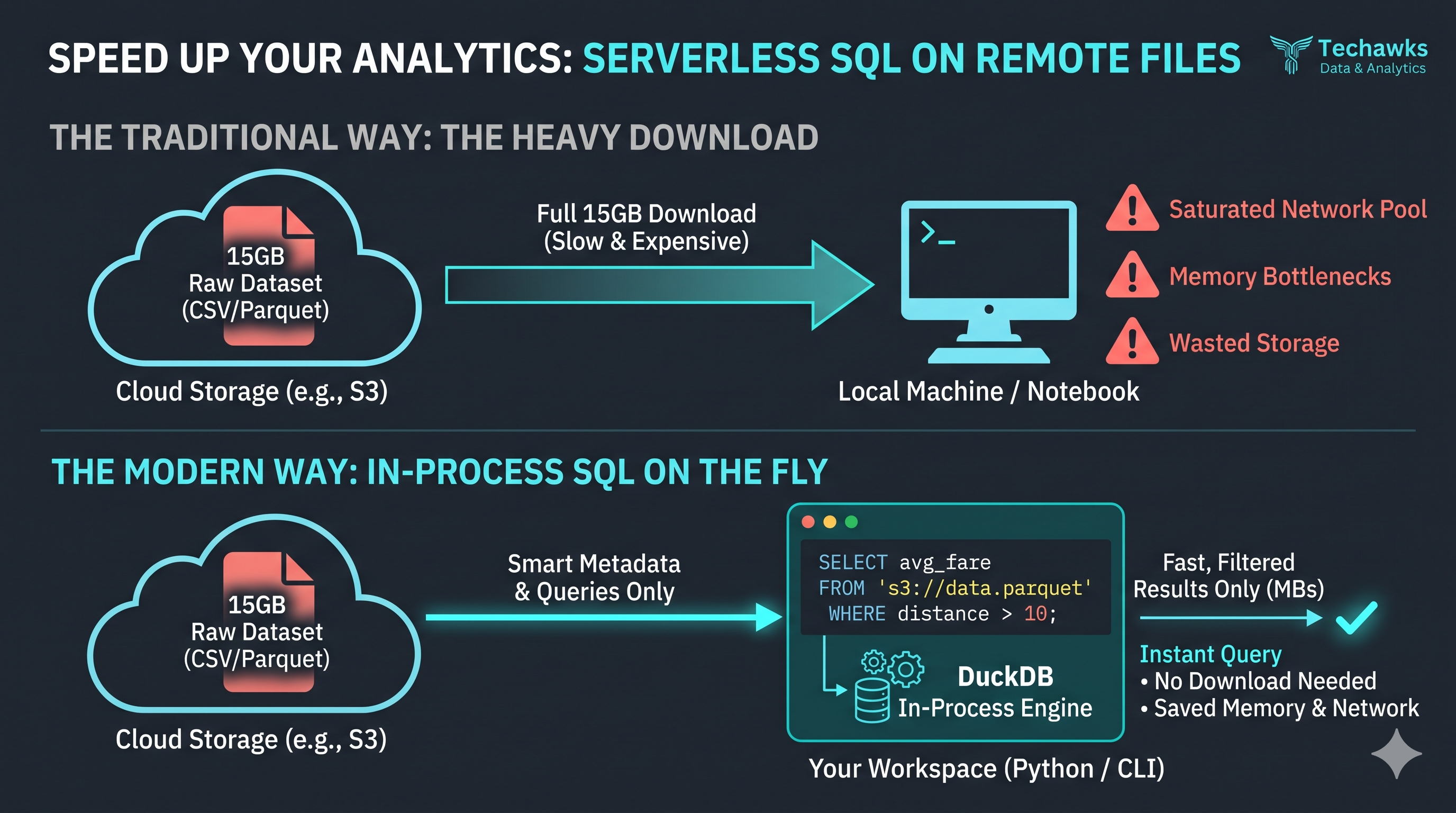 0 Commentaires 0 Parts 149 Vue 0 Aperçu
-
Shift-Left Data Contracts: The Production Reliability Checklist Every Data Team Needs
In traditional data architectures, data engineering and analytics exist in a passive, downstream vacuum. Application engineering teams push schema migrations, modify payload fields, or alter telemetry events without visibility into downstream data lakehouse dependencies. The resulting pipeline breakage leads to silent metric degradation, pipeline downtime, and eroded executive trust.
To build resilient analytics pipelines, data organizations must adopt Shift-Left Data Contracts: treating data as an explicit, versioned API contract negotiated between software producers and data consumers.
Plaintext
[ ANTI-PATTERN: SILENT DOWNSTREAM PIPELINE BREAKAGE ]
App Code Mutation ──> Unchecked JSON Payload ──> Kafka ──> Lakehouse (Bronze) ──> Broken dbt Transformation ──> Degraded Dashboards & Models
[ RESILIENT PATTERN: PRODUCER-ENFORCED DATA CONTRACTS ]
App Code Mutation ──> CI/CD Contract Linter (Protobuf/JSON Schema) ──> Schema Registry Gate ──> Validated Ingestion ──> Reliable Lakehouse Layer
│
└──[ Schema Drift / Violation ]──> BLOCKED AT BUILD / DEAD-LETTER QUEUE
Here is your production checklist to transition from reactive pipeline triage to proactive contract-driven reliability:
1. Contract Definition & Version Control
[ ] Declarative Schema Definitions: Define schemas upstream in a standardized format (JSON Schema, Protocol Buffers, or OpenDataContract Specification) declaring explicit data types, nullability, primary keys, and field descriptions.
[ ] Semantic Versioning (SemVer) for Schemas: Treat data schema changes like public software APIs. Field additions trigger minor updates; field removals, type changes, or altered business logic require major version increments.
[ ] Centralized Schema Registry: Maintain a single source of truth (e.g., Confluent Schema Registry or an internal Git-backed catalog) to enforce producer and consumer contract alignment before serialization.
2. CI/CD & Producer-Side Guardrails
[ ] Pre-Merge Schema Breaking Checks: Integrate contract linters into upstream application pull request pipelines to automatically fail builds if a backend code change alters or deletes an active contract field.
[ ] Producer Ownership Accountability: Assign direct domain ownership for emitted schemas to the software engineering teams originating the entities, moving accountability out of the central data team.
[ ] Automated Dead-Letter Queues (DLQ): Route invalid, malformed, or uncontracted payloads into a quarantine DLQ with automated alerting, ensuring valid downstream streams continue without halting batch or streaming jobs.
3. Semantic Validation & SLA Observability
[ ] Data Quality Constraints & Expectations: Embed business logic assertions within the contract (e.g., price >= 0, currency IN ('USD', 'EUR', 'INR')) validated directly at runtime or via ingestion hooks.
[ ] Explicit Freshness & Latency SLAs: Define non-functional requirements inside the contract specification, including ingestion frequency, allowed delivery latency, and volume thresholds.
[ ] Automated Lineage & Blast-Radius Mapping: Connect contract metadata to your data catalog (e.g., OpenLineage or Apache Atlas) to automatically visualize every downstream dashboard, lakehouse table, and ML feature store impacted by proposed contract updates.
Discussion Question
Where does your team experience the most friction when implementing data contracts: getting upstream software engineers to adopt schema PR checks, or enforcing contract validation on legacy streaming pipelines without adding ingestion latency?
CTA
Join Data Science & Analytics — Connect with data architects, analytics engineers, and data leaders to access production blueprints, lakehouse design patterns, and modern data governance frameworks.Shift-Left Data Contracts: The Production Reliability Checklist Every Data Team Needs In traditional data architectures, data engineering and analytics exist in a passive, downstream vacuum. Application engineering teams push schema migrations, modify payload fields, or alter telemetry events without visibility into downstream data lakehouse dependencies. The resulting pipeline breakage leads to silent metric degradation, pipeline downtime, and eroded executive trust. To build resilient analytics pipelines, data organizations must adopt Shift-Left Data Contracts: treating data as an explicit, versioned API contract negotiated between software producers and data consumers. Plaintext [ ANTI-PATTERN: SILENT DOWNSTREAM PIPELINE BREAKAGE ] App Code Mutation ──> Unchecked JSON Payload ──> Kafka ──> Lakehouse (Bronze) ──> Broken dbt Transformation ──> Degraded Dashboards & Models [ RESILIENT PATTERN: PRODUCER-ENFORCED DATA CONTRACTS ] App Code Mutation ──> CI/CD Contract Linter (Protobuf/JSON Schema) ──> Schema Registry Gate ──> Validated Ingestion ──> Reliable Lakehouse Layer │ └──[ Schema Drift / Violation ]──> BLOCKED AT BUILD / DEAD-LETTER QUEUE Here is your production checklist to transition from reactive pipeline triage to proactive contract-driven reliability: 1. Contract Definition & Version Control [ ] Declarative Schema Definitions: Define schemas upstream in a standardized format (JSON Schema, Protocol Buffers, or OpenDataContract Specification) declaring explicit data types, nullability, primary keys, and field descriptions. [ ] Semantic Versioning (SemVer) for Schemas: Treat data schema changes like public software APIs. Field additions trigger minor updates; field removals, type changes, or altered business logic require major version increments. [ ] Centralized Schema Registry: Maintain a single source of truth (e.g., Confluent Schema Registry or an internal Git-backed catalog) to enforce producer and consumer contract alignment before serialization. 2. CI/CD & Producer-Side Guardrails [ ] Pre-Merge Schema Breaking Checks: Integrate contract linters into upstream application pull request pipelines to automatically fail builds if a backend code change alters or deletes an active contract field. [ ] Producer Ownership Accountability: Assign direct domain ownership for emitted schemas to the software engineering teams originating the entities, moving accountability out of the central data team. [ ] Automated Dead-Letter Queues (DLQ): Route invalid, malformed, or uncontracted payloads into a quarantine DLQ with automated alerting, ensuring valid downstream streams continue without halting batch or streaming jobs. 3. Semantic Validation & SLA Observability [ ] Data Quality Constraints & Expectations: Embed business logic assertions within the contract (e.g., price >= 0, currency IN ('USD', 'EUR', 'INR')) validated directly at runtime or via ingestion hooks. [ ] Explicit Freshness & Latency SLAs: Define non-functional requirements inside the contract specification, including ingestion frequency, allowed delivery latency, and volume thresholds. [ ] Automated Lineage & Blast-Radius Mapping: Connect contract metadata to your data catalog (e.g., OpenLineage or Apache Atlas) to automatically visualize every downstream dashboard, lakehouse table, and ML feature store impacted by proposed contract updates. Discussion Question Where does your team experience the most friction when implementing data contracts: getting upstream software engineers to adopt schema PR checks, or enforcing contract validation on legacy streaming pipelines without adding ingestion latency? CTA Join Data Science & Analytics — Connect with data architects, analytics engineers, and data leaders to access production blueprints, lakehouse design patterns, and modern data governance frameworks.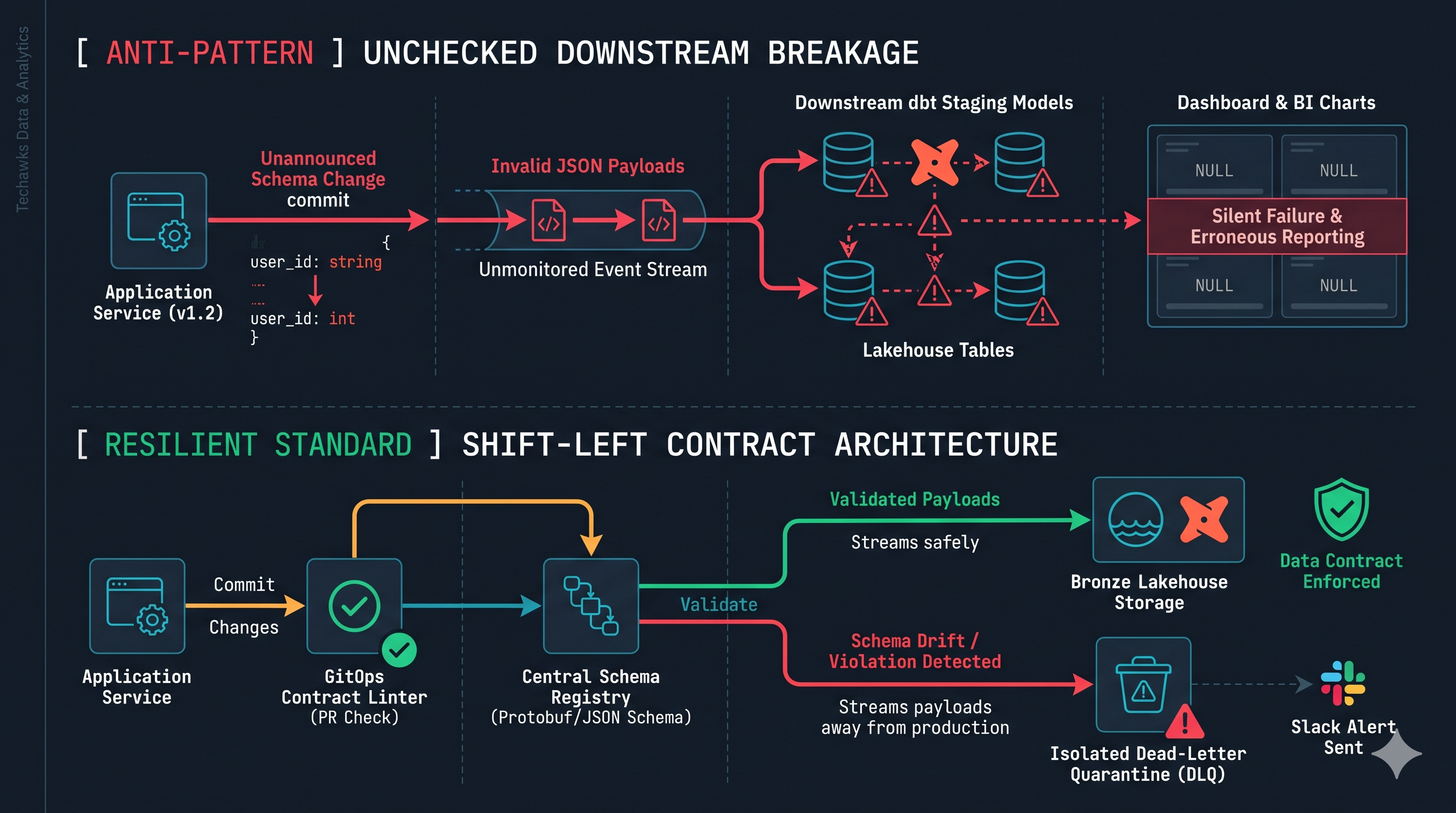 0 Commentaires 0 Parts 242 Vue 0 Aperçu
-
The Lakehouse Metadata Tax: Why Your Apache Iceberg Tables Are Crawling (And How to Fix Query Planning)
Modern analytics stacks increasingly standardize on open table formats like Apache Iceberg to decouple storage from query engines like Trino, DuckDB, Spark, and Snowflake.The promise is ACID compliance, snapshot time-travel, and partition evolution over commodity object storage. But high-frequency ingestion pipelines (e.g., streaming CDC or continuous micro-batches) introduce an invisible bottleneck: The Small-Manifest Explosion.When an engine plans an analytical query, it doesn't immediately open data files. It traverses a tree of snapshot metadata:Snapshots $\rightarrow$ pin table state.Manifest Lists $\rightarrow$ index manifest files with partition bounds.Manifest Files $\rightarrow$ track physical Parquet paths, column-level min/max statistics, and deletion vectors.If a streaming pipeline commits every 60 seconds without active metadata maintenance, a table accumulates tens of thousands of manifest entries within weeks.
Query engines spend 80% to 90% of overall query latency evaluating redundant metadata files over HTTP/S3 round trips just to figure out which data files to prune.
The Core Shift: Multi-Tiered Lakehouse CompactionCompaction is not just merging 5 MB Parquet files into 512 MB files. Production table maintenance requires a three-tiered lifecycle:[ Ingestion Stream / High-Frequency Commits ]
│
▼
┌────────────────────────────────────────┐
│ 1. Data File Compaction │ ──► Bin-pack small Parquet files into
│ (rewrite_data_files) │ optimal 256MB–512MB columnar blocks
└────────────────────────────────────────┘
│
▼
┌────────────────────────────────────────┐
│ 2. Manifest Rewriting │ ──► Consolidate scattered commit manifests
│ (rewrite_manifests) │ sorted by partition keys for fast pruning
└────────────────────────────────────────┘
│
▼
┌────────────────────────────────────────┐
│ 3. Snapshot Expiry & Storage Purge │ ──► Prune unreferenced snapshots & purge
│ (expire_snapshots + orphan cleanup) │ dangling Puffin/Parquet files to stop disk bloat
└────────────────────────────────────────┘
How to optimize query planning today:
Cluster Manifests by Query Access Patterns: Running rewrite_data_files optimizes physical storage layout, but leaves metadata fragmented by commit time. Periodically execute CALL catalog.system.rewrite_manifests('table') to re-cluster manifest entries strictly along partition boundaries, allowing query engines to skip entire manifests without opening them.
Stop Infinite Snapshot Accumulation: Snapshot time-travel is invaluable for auditability, but retaining months of hourly commits doubles your cloud storage bill (since expired files remain referenced) and slows catalog resolution. Establish an automated retention policy (e.g., expire_snapshots retaining the last 7 days or $N$ snapshots).Leverage Deletion Vectors Over Copy-on-Write: If your workload performs frequent row-level updates or deletes, configure your table format for modern deletion vectors (e.g., Puffin Roaring bitmaps in Iceberg v3 / Delta v3) rather than rewriting entire 500 MB data files for a single row change.
When metadata is compact and partition-aligned, query planning drops from dozens of seconds to sub-second evaluation.
Discussion Question
What does your current table maintenance schedule look like for high-throughput lakehouse tables? Are you running automated manifest rewrites and compaction as scheduled background jobs, or handling it reactively when query times spike?
CTA (Join Data Science & Analytics)
Join the Techawks Data & Analytics community to master production data engineering, lakehouse optimization, and scalable analytics architectures alongside leading data practitioners. Share your stack below.The Lakehouse Metadata Tax: Why Your Apache Iceberg Tables Are Crawling (And How to Fix Query Planning) Modern analytics stacks increasingly standardize on open table formats like Apache Iceberg to decouple storage from query engines like Trino, DuckDB, Spark, and Snowflake.The promise is ACID compliance, snapshot time-travel, and partition evolution over commodity object storage. But high-frequency ingestion pipelines (e.g., streaming CDC or continuous micro-batches) introduce an invisible bottleneck: The Small-Manifest Explosion.When an engine plans an analytical query, it doesn't immediately open data files. It traverses a tree of snapshot metadata:Snapshots $\rightarrow$ pin table state.Manifest Lists $\rightarrow$ index manifest files with partition bounds.Manifest Files $\rightarrow$ track physical Parquet paths, column-level min/max statistics, and deletion vectors.If a streaming pipeline commits every 60 seconds without active metadata maintenance, a table accumulates tens of thousands of manifest entries within weeks. Query engines spend 80% to 90% of overall query latency evaluating redundant metadata files over HTTP/S3 round trips just to figure out which data files to prune. The Core Shift: Multi-Tiered Lakehouse CompactionCompaction is not just merging 5 MB Parquet files into 512 MB files. Production table maintenance requires a three-tiered lifecycle:[ Ingestion Stream / High-Frequency Commits ] │ ▼ ┌────────────────────────────────────────┐ │ 1. Data File Compaction │ ──► Bin-pack small Parquet files into │ (rewrite_data_files) │ optimal 256MB–512MB columnar blocks └────────────────────────────────────────┘ │ ▼ ┌────────────────────────────────────────┐ │ 2. Manifest Rewriting │ ──► Consolidate scattered commit manifests │ (rewrite_manifests) │ sorted by partition keys for fast pruning └────────────────────────────────────────┘ │ ▼ ┌────────────────────────────────────────┐ │ 3. Snapshot Expiry & Storage Purge │ ──► Prune unreferenced snapshots & purge │ (expire_snapshots + orphan cleanup) │ dangling Puffin/Parquet files to stop disk bloat └────────────────────────────────────────┘ How to optimize query planning today: Cluster Manifests by Query Access Patterns: Running rewrite_data_files optimizes physical storage layout, but leaves metadata fragmented by commit time. Periodically execute CALL catalog.system.rewrite_manifests('table') to re-cluster manifest entries strictly along partition boundaries, allowing query engines to skip entire manifests without opening them. Stop Infinite Snapshot Accumulation: Snapshot time-travel is invaluable for auditability, but retaining months of hourly commits doubles your cloud storage bill (since expired files remain referenced) and slows catalog resolution. Establish an automated retention policy (e.g., expire_snapshots retaining the last 7 days or $N$ snapshots).Leverage Deletion Vectors Over Copy-on-Write: If your workload performs frequent row-level updates or deletes, configure your table format for modern deletion vectors (e.g., Puffin Roaring bitmaps in Iceberg v3 / Delta v3) rather than rewriting entire 500 MB data files for a single row change. When metadata is compact and partition-aligned, query planning drops from dozens of seconds to sub-second evaluation. Discussion Question What does your current table maintenance schedule look like for high-throughput lakehouse tables? Are you running automated manifest rewrites and compaction as scheduled background jobs, or handling it reactively when query times spike? CTA (Join Data Science & Analytics) Join the Techawks Data & Analytics community to master production data engineering, lakehouse optimization, and scalable analytics architectures alongside leading data practitioners. Share your stack below. 0 Commentaires 0 Parts 127 Vue 0 Aperçu
-
Open Table Formats Do Not Eliminate Query Planning Latency: The Lakehouse Metadata Bloat Reality
Across modern data engineering teams, a widespread architectural misconception has taken root: "Switching from raw Parquet files to an open table format (like Apache Iceberg) automatically eliminates the 'small file problem' and scales query performance indefinitely."Here is why lakehouse performance silently degrades when teams ignore metadata lifecycle engineering:Myth vs FactMyth: Open table formats handle streaming writes and transactional mutations out-of-the-box without requiring maintenance jobs or file rewriting.Fact: Open table formats never modify files in place. Every streaming commit, row-level UPDATE, or DELETE appends new data files, positional delete markers, and metadata manifests. Without scheduled compaction and metadata expiration, query planning time explodes into tens of seconds.The Core Problem: The Metadata Tree ExplosionIn legacy data lakes (Hive-style partitioning), engines struggled with expensive filesystem directory listings (LIST operations on S3/GCS). Formats like Iceberg solved this by tracking table state in a hierarchical metadata tree: Catalog $\rightarrow$ Metadata File $\rightarrow$ Manifest List $\rightarrow$ Manifest Files $\rightarrow$ Data Files.
However, continuous streaming ingestion creates a new failure mode:
The Small-File Ingestion Debt: When Flink or Spark streams commit every 2–5 minutes, they generate thousands of tiny 5–15 MB Parquet files instead of the optimal 128–512 MB chunk size.Metadata Planning Bottlenecks: Before reading a single row of data, a query engine (Trino, DuckDB, Spark, Snowflake) must parse the metadata tree. When a table accumulates 50,000+ uncompacted manifests and delete files, query planning overhead escalates from milliseconds to 20+ seconds.
Merge-on-Read Penalty: If your table uses Merge-on-Read (MoR), the engine must join data files against thousands of delete vectors at query time, burning compute memory and killing BI dashboard responsiveness.
What to Implement Instead: Active LakeOps MaintenanceTo maintain sub-second query performance at scale, decouple real-time write pipelines from read-optimized storage:
Automated Asynchronous Compaction: Run continuous background compaction procedures (e.g., Iceberg rewrite_data_files with bin-packing or Z-ordering) to merge tiny streaming files into 256 MB or 512 MB targets.Aggressive Snapshot Expiration & Manifest Rewrites: Regularly prune stale snapshots (expire_snapshots) and consolidate small manifest files (rewrite_manifests) so that query planners only traverse lean, optimized metadata trees.
Selective Copy-on-Write for Read-Heavy Gold Layers: While Merge-on-Read (MoR) is fast for streaming ingestion into Bronze/Silver layers, rewrite mutated data using Copy-on-Write (CoW) or scheduled merge jobs before exposing tables to low-latency BI analysts.
Discussion Question
How does your team schedule and manage table compaction and metadata pruning for streaming lakehouse tables—custom orchestration (Airflow/Dagster) or native engine auto-maintenance?
CTA (Join Data Science & Analytics)
Master the architecture behind production lakehouses, high-performance SQL query planning, and modern analytics engineering. Join the Techawks Data Science & Analytics Community today to access production benchmarks, catalog patterns, and live architecture reviews.Open Table Formats Do Not Eliminate Query Planning Latency: The Lakehouse Metadata Bloat Reality Across modern data engineering teams, a widespread architectural misconception has taken root: "Switching from raw Parquet files to an open table format (like Apache Iceberg) automatically eliminates the 'small file problem' and scales query performance indefinitely."Here is why lakehouse performance silently degrades when teams ignore metadata lifecycle engineering:Myth vs FactMyth: Open table formats handle streaming writes and transactional mutations out-of-the-box without requiring maintenance jobs or file rewriting.Fact: Open table formats never modify files in place. Every streaming commit, row-level UPDATE, or DELETE appends new data files, positional delete markers, and metadata manifests. Without scheduled compaction and metadata expiration, query planning time explodes into tens of seconds.The Core Problem: The Metadata Tree ExplosionIn legacy data lakes (Hive-style partitioning), engines struggled with expensive filesystem directory listings (LIST operations on S3/GCS). Formats like Iceberg solved this by tracking table state in a hierarchical metadata tree: Catalog $\rightarrow$ Metadata File $\rightarrow$ Manifest List $\rightarrow$ Manifest Files $\rightarrow$ Data Files. However, continuous streaming ingestion creates a new failure mode: The Small-File Ingestion Debt: When Flink or Spark streams commit every 2–5 minutes, they generate thousands of tiny 5–15 MB Parquet files instead of the optimal 128–512 MB chunk size.Metadata Planning Bottlenecks: Before reading a single row of data, a query engine (Trino, DuckDB, Spark, Snowflake) must parse the metadata tree. When a table accumulates 50,000+ uncompacted manifests and delete files, query planning overhead escalates from milliseconds to 20+ seconds. Merge-on-Read Penalty: If your table uses Merge-on-Read (MoR), the engine must join data files against thousands of delete vectors at query time, burning compute memory and killing BI dashboard responsiveness. What to Implement Instead: Active LakeOps MaintenanceTo maintain sub-second query performance at scale, decouple real-time write pipelines from read-optimized storage: Automated Asynchronous Compaction: Run continuous background compaction procedures (e.g., Iceberg rewrite_data_files with bin-packing or Z-ordering) to merge tiny streaming files into 256 MB or 512 MB targets.Aggressive Snapshot Expiration & Manifest Rewrites: Regularly prune stale snapshots (expire_snapshots) and consolidate small manifest files (rewrite_manifests) so that query planners only traverse lean, optimized metadata trees. Selective Copy-on-Write for Read-Heavy Gold Layers: While Merge-on-Read (MoR) is fast for streaming ingestion into Bronze/Silver layers, rewrite mutated data using Copy-on-Write (CoW) or scheduled merge jobs before exposing tables to low-latency BI analysts. Discussion Question How does your team schedule and manage table compaction and metadata pruning for streaming lakehouse tables—custom orchestration (Airflow/Dagster) or native engine auto-maintenance? CTA (Join Data Science & Analytics) Master the architecture behind production lakehouses, high-performance SQL query planning, and modern analytics engineering. Join the Techawks Data Science & Analytics Community today to access production benchmarks, catalog patterns, and live architecture reviews.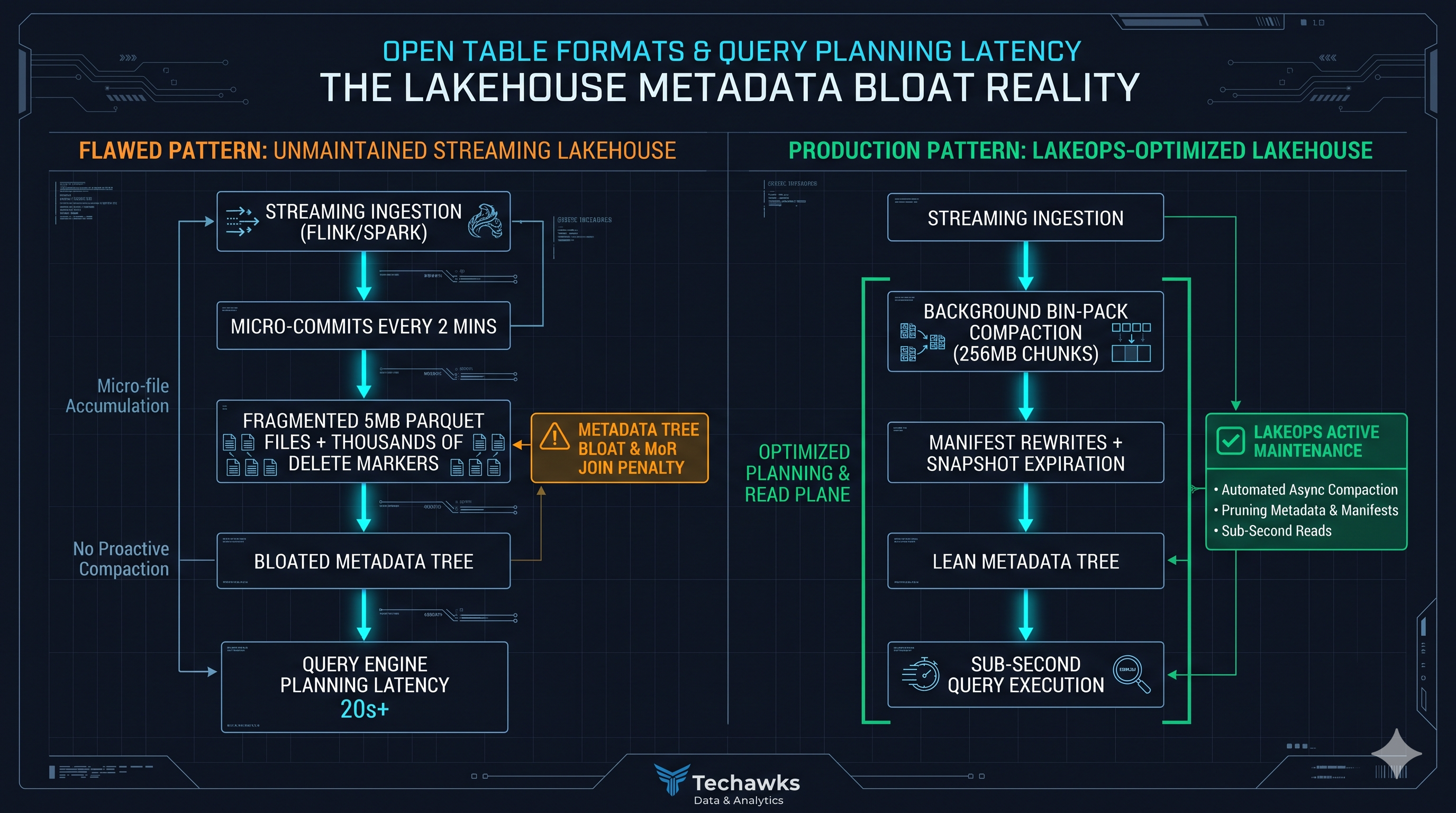 0 Commentaires 0 Parts 198 Vue 0 Aperçu
-
Tool Teardown: DuckDB vs. Traditional Cloud Data Warehouses for Local-First Analytics
Data teams are increasingly caught in an architectural trap: routing intermediate, exploratory, or single-node transformations through multi-tenant cloud data warehouses (Snowflake, BigQuery, Databricks).
The result? Network egress bottlenecks, query queuing latency, and cloud bills running 24/7 for workloads that fit entirely into local RAM.
Modern data platforms solve this through embedded, vectorized OLAP engines—most notably DuckDB. By running in-process without an external server daemon, DuckDB processes tabular analytical queries directly on local memory and disk, reading Parquet, CSV, and Arrow tables with zero copy overhead.
Systems Architecture: Cloud Round-Trip vs. Vectorized In-Process OLAP
Plaintext
[ ANTI-PATTERN: CLOUD OVERHEAD FOR EPHEMERAL WORKLOADS ]
Raw Parquet ---> S3/GCS Ingestion ---> Cloud DW Warehouse ---> Remote Compute Node ---> BI/Notebook Output
(Local/S3) (High Egress) (Cluster Cold Start) (Multi-Tenant Queue) (High Latency & Cost)
[ RESILIENT PATTERN: VECTORIZED IN-PROCESS EMBEDDED OLAP ]
Raw Parquet ---> In-Process Memory Pool [DuckDB Vectorized Engine] ---> Local PyArrow Table ---> Direct BI/Polars Output
(Direct S3/Disk) (SIMD Execution / Zero Network Hops) (Sub-Second Ephemeral Compute)
Production-Grade Evaluation: Where Embedded OLAP Fits
Vectorized Columnar Execution Over Server Latency
Traditional client-server databases incur IPC (Inter-Process Communication) and TCP serialization costs. DuckDB executes operations using SIMD vector chunks directly in the calling application process (Python, R, Node, or WASM in-browser), bypassing networking layers entirely.
Direct Parquet & Iceberg Projection Without Ingestion
Instead of running COPY INTO pipelines that duplicate terabytes into proprietary warehouse storage formats, embedded engines leverage object-store extensions to push down column projections and row-group filters directly to S3 or Lakehouse metadata catalogs.
CI/CD Integration and Ephemeral Data Testing
Spinning up cloud warehouse environments for PR integration tests introduces credential security risks and billing spikes. In-process analytical engines allow data engineers to run full dbt unit and integration tests against synthetic parquet datasets inside standard GitHub Actions runners.
The Boundary Constraint: When NOT to Use Embedded OLAP
DuckDB is single-node scale-up software. When workloads exceed local memory thresholds without partitionable spill-to-disk, or when multiple concurrent writers require ACID distributed locking, distributed engines (ClickHouse, Trino, or managed Cloud DWs) remain non-negotiable.
Discussion Question
For ad-hoc data profiling and CI pipeline testing: has your team shifted intermediate workloads to local/embedded engines like DuckDB, or is your stack fully standardized on central cloud warehouse compute? What are your governance tradeoffs?
CTA (Join Data Science & Analytics)
Master modern analytical engineering, lakehouse design patterns, and high-performance querying frameworks.
👉 Join Data Science & Analytics to connect with senior data architects and analytics engineers building scalable modern data stacks.Tool Teardown: DuckDB vs. Traditional Cloud Data Warehouses for Local-First Analytics Data teams are increasingly caught in an architectural trap: routing intermediate, exploratory, or single-node transformations through multi-tenant cloud data warehouses (Snowflake, BigQuery, Databricks). The result? Network egress bottlenecks, query queuing latency, and cloud bills running 24/7 for workloads that fit entirely into local RAM. Modern data platforms solve this through embedded, vectorized OLAP engines—most notably DuckDB. By running in-process without an external server daemon, DuckDB processes tabular analytical queries directly on local memory and disk, reading Parquet, CSV, and Arrow tables with zero copy overhead. Systems Architecture: Cloud Round-Trip vs. Vectorized In-Process OLAP Plaintext [ ANTI-PATTERN: CLOUD OVERHEAD FOR EPHEMERAL WORKLOADS ] Raw Parquet ---> S3/GCS Ingestion ---> Cloud DW Warehouse ---> Remote Compute Node ---> BI/Notebook Output (Local/S3) (High Egress) (Cluster Cold Start) (Multi-Tenant Queue) (High Latency & Cost) [ RESILIENT PATTERN: VECTORIZED IN-PROCESS EMBEDDED OLAP ] Raw Parquet ---> In-Process Memory Pool [DuckDB Vectorized Engine] ---> Local PyArrow Table ---> Direct BI/Polars Output (Direct S3/Disk) (SIMD Execution / Zero Network Hops) (Sub-Second Ephemeral Compute) Production-Grade Evaluation: Where Embedded OLAP Fits Vectorized Columnar Execution Over Server Latency Traditional client-server databases incur IPC (Inter-Process Communication) and TCP serialization costs. DuckDB executes operations using SIMD vector chunks directly in the calling application process (Python, R, Node, or WASM in-browser), bypassing networking layers entirely. Direct Parquet & Iceberg Projection Without Ingestion Instead of running COPY INTO pipelines that duplicate terabytes into proprietary warehouse storage formats, embedded engines leverage object-store extensions to push down column projections and row-group filters directly to S3 or Lakehouse metadata catalogs. CI/CD Integration and Ephemeral Data Testing Spinning up cloud warehouse environments for PR integration tests introduces credential security risks and billing spikes. In-process analytical engines allow data engineers to run full dbt unit and integration tests against synthetic parquet datasets inside standard GitHub Actions runners. The Boundary Constraint: When NOT to Use Embedded OLAP DuckDB is single-node scale-up software. When workloads exceed local memory thresholds without partitionable spill-to-disk, or when multiple concurrent writers require ACID distributed locking, distributed engines (ClickHouse, Trino, or managed Cloud DWs) remain non-negotiable. Discussion Question For ad-hoc data profiling and CI pipeline testing: has your team shifted intermediate workloads to local/embedded engines like DuckDB, or is your stack fully standardized on central cloud warehouse compute? What are your governance tradeoffs? CTA (Join Data Science & Analytics) Master modern analytical engineering, lakehouse design patterns, and high-performance querying frameworks. 👉 Join Data Science & Analytics to connect with senior data architects and analytics engineers building scalable modern data stacks. 0 Commentaires 0 Parts 154 Vue 0 Aperçu
-
From Dashboard Builder to Semantic Architect: The 2026 Shift in High-Leverage Analytics
Across modern enterprise data stacks, a massive bottleneck has reached a boiling point.
Organizations have deployed natural-language analytics tools, copilots, and autonomous agents across their teams. Business stakeholders can now ask plain-language questions like "What was our Net Retention Rate last quarter by customer tier?"
The problem? Without a governed semantic foundation, the AI queries the raw warehouse, invents a join, and produces three conflicting figures across three separate departments.
The industry no longer has a query-writing problem. It has a business-logic governance problem.
If you want to accelerate your career as a data analyst, analytics engineer, or data scientist in 2026, you must transition from delivering reactive charts to engineering the central Semantic Layer & Metric Fabric.
Here is the technical career framework to build an unshakeable advantage:
Treat Metrics as Code, Not Visualizations
Stop embedding metric formulas inside disconnected Power BI, Tableau, or Metabase calculations. When business definitions are trapped in presentation layers, "metric drift" inevitably ruins data trust. High-leverage analytics teams define entities, grain rules, dimensions, and measures centrally as code (using tools like dbt Semantic Layer/MetricFlow, Cube, or warehouse-native semantic views).
Master Join Integrity, Granularity & Query Safety
When automated agents write queries, they frequently stumble into multi-fact chasm traps, fan-out duplicates, and mismatched table grains. Your job as an analytics architect is to encode deterministic join paths and grain constraints into the semantic model. When you enforce these guardrails at the schema level, an autonomous agent or junior user cannot mathematically produce a double-counted revenue figure.
Grounded Agent Interoperability (MCP & Headless APIs)
AI systems don't query via drag-and-drop user interfaces; they interact with APIs using protocols like Model Context Protocol (MCP) or headless semantic endpoints. Learn how semantic APIs expose certified metrics to downstream autonomous workflows. By making the semantic layer machine-readable and authenticated, you become the person who bridges raw lakehouse infrastructure with automated enterprise decision-making.
The Actionable Takeaway:
Audit your current company or personal portfolio. Pick three core business KPIs (such as LTV, Gross Margin, or Churn Rate). Extract them from individual dashboard formulas and define them inside a centralized, version-controlled semantic YAML or metric view.
Move upstream from the dashboard. When you govern the metrics, you own the nervous system of the company.
Discussion Question
In your current stack, are your business metrics modeled centrally in code (semantic layer), or are they still calculated inside individual BI tools and disparate SQL scripts?
CTA
Join Data Science & Analytics — Connect with experienced analytics engineers, master modern semantic modeling and data governance frameworks, and build the infrastructure powering real-world data teams.From Dashboard Builder to Semantic Architect: The 2026 Shift in High-Leverage Analytics Across modern enterprise data stacks, a massive bottleneck has reached a boiling point. Organizations have deployed natural-language analytics tools, copilots, and autonomous agents across their teams. Business stakeholders can now ask plain-language questions like "What was our Net Retention Rate last quarter by customer tier?" The problem? Without a governed semantic foundation, the AI queries the raw warehouse, invents a join, and produces three conflicting figures across three separate departments. The industry no longer has a query-writing problem. It has a business-logic governance problem. If you want to accelerate your career as a data analyst, analytics engineer, or data scientist in 2026, you must transition from delivering reactive charts to engineering the central Semantic Layer & Metric Fabric. Here is the technical career framework to build an unshakeable advantage: Treat Metrics as Code, Not Visualizations Stop embedding metric formulas inside disconnected Power BI, Tableau, or Metabase calculations. When business definitions are trapped in presentation layers, "metric drift" inevitably ruins data trust. High-leverage analytics teams define entities, grain rules, dimensions, and measures centrally as code (using tools like dbt Semantic Layer/MetricFlow, Cube, or warehouse-native semantic views). Master Join Integrity, Granularity & Query Safety When automated agents write queries, they frequently stumble into multi-fact chasm traps, fan-out duplicates, and mismatched table grains. Your job as an analytics architect is to encode deterministic join paths and grain constraints into the semantic model. When you enforce these guardrails at the schema level, an autonomous agent or junior user cannot mathematically produce a double-counted revenue figure. Grounded Agent Interoperability (MCP & Headless APIs) AI systems don't query via drag-and-drop user interfaces; they interact with APIs using protocols like Model Context Protocol (MCP) or headless semantic endpoints. Learn how semantic APIs expose certified metrics to downstream autonomous workflows. By making the semantic layer machine-readable and authenticated, you become the person who bridges raw lakehouse infrastructure with automated enterprise decision-making. The Actionable Takeaway: Audit your current company or personal portfolio. Pick three core business KPIs (such as LTV, Gross Margin, or Churn Rate). Extract them from individual dashboard formulas and define them inside a centralized, version-controlled semantic YAML or metric view. Move upstream from the dashboard. When you govern the metrics, you own the nervous system of the company. Discussion Question In your current stack, are your business metrics modeled centrally in code (semantic layer), or are they still calculated inside individual BI tools and disparate SQL scripts? CTA Join Data Science & Analytics — Connect with experienced analytics engineers, master modern semantic modeling and data governance frameworks, and build the infrastructure powering real-world data teams. 0 Commentaires 0 Parts 470 Vue 0 Aperçu
-
The Death of Legacy Environment Copy-Pasting: Why "Zero-Copy Cloning" Is Essential for High-Fidelity Data Testing
In the age of massive datasets and real-time operations, duplicating multiple terabytes to a separate testing environment wastes cloud budget, creates security risks, and severely slows down delivery cycles.
Modern data platforms—leveraging built-in functions or open-table formats like Apache Iceberg—resolve this bottleneck with a critical technique: Zero-Copy Cloning (also known as Shallow Cloning or Metadata-Based Cloning).
The Mechanics: How You Clone Without Copying
Traditional clones force your infrastructure to physically replicate entire underlying data files. Zero-Copy Cloning operates entirely at the metadata layer:
Metadata Replication: When you run a clone operation, the system does not touch or move the underlying storage files (such as Parquet or ORC micro-partitions). It simply creates a new set of metadata pointers referencing the exact same raw files.
Instant Environments: Because it is only creating pointers, a multi-terabyte production database, schema, or table can be "duplicated" into a staging or dev workspace in seconds.
Copy-on-Write Isolation: What happens when your staging tests mutate data? Since both environments use isolated metadata trees, any write, update, or deletion in the staging copy creates new storage files. Staging points to these new variations, while your production pointers and historical time-travel snapshots remain untouched.
Plaintext
Original Metadata (Prod) ──> [ Micro-Partition A ] <── cloned Metadata (staging)
[ Micro-Partition B ]
(Mutation in Staging) [ Micro-Partition C ] <── staging updates make new file
[ Micro-Partition D_new ]
Why Zero-Copy Cloning Matters for Data Teams
Immediate Dev/QA Environments: Run validation scripts, schema migrations, or exploratory model training on actual production data structures instantly, without waiting for batch transfers.
Near-Zero Extra Storage Fees: You only pay for mutated files or new data generated in the staging environment. If you only run read-heavy tests or update 1% of the data, your staging environment’s storage footprint remains negligible.
Risk-Free Sandboxing: Allow analysts and engineers to run write-heavy queries or delete operations on production data snapshots with zero fear of breaking active BI dashboards or operational databases.
Stop copying data; clone its pointers. Mastering the metadata layer is key to scaling your data architecture.
Discussion Question
Community Poll: How is your team currently creating and managing test or staging data environments for analytical transformations and pipeline testing?
A) Instant Zero-Copy Cloning (Snowflake CREATE CLONE, Delta/Iceberg shallow clone, etc.)
B) Traditional ETL/ELT physical copy-and-paste to a separate QA environment
C) Operating on sampled/synthetic subsets instead of full production scale
D) Directly running transformations in isolated sandboxes using production files as read-only inputs
CTA
Looking to master high-throughput data architectures, optimize cloud warehousing costs, and collaborate on real-world engineering patterns?
👉 Join Data Science & Analytics to connect with data engineers, architects, and analytics professionals shaping the next generation of data tech with Techawks.The Death of Legacy Environment Copy-Pasting: Why "Zero-Copy Cloning" Is Essential for High-Fidelity Data Testing In the age of massive datasets and real-time operations, duplicating multiple terabytes to a separate testing environment wastes cloud budget, creates security risks, and severely slows down delivery cycles. Modern data platforms—leveraging built-in functions or open-table formats like Apache Iceberg—resolve this bottleneck with a critical technique: Zero-Copy Cloning (also known as Shallow Cloning or Metadata-Based Cloning). The Mechanics: How You Clone Without Copying Traditional clones force your infrastructure to physically replicate entire underlying data files. Zero-Copy Cloning operates entirely at the metadata layer: Metadata Replication: When you run a clone operation, the system does not touch or move the underlying storage files (such as Parquet or ORC micro-partitions). It simply creates a new set of metadata pointers referencing the exact same raw files. Instant Environments: Because it is only creating pointers, a multi-terabyte production database, schema, or table can be "duplicated" into a staging or dev workspace in seconds. Copy-on-Write Isolation: What happens when your staging tests mutate data? Since both environments use isolated metadata trees, any write, update, or deletion in the staging copy creates new storage files. Staging points to these new variations, while your production pointers and historical time-travel snapshots remain untouched. Plaintext Original Metadata (Prod) ──> [ Micro-Partition A ] <── cloned Metadata (staging) [ Micro-Partition B ] (Mutation in Staging) [ Micro-Partition C ] <── staging updates make new file [ Micro-Partition D_new ] Why Zero-Copy Cloning Matters for Data Teams Immediate Dev/QA Environments: Run validation scripts, schema migrations, or exploratory model training on actual production data structures instantly, without waiting for batch transfers. Near-Zero Extra Storage Fees: You only pay for mutated files or new data generated in the staging environment. If you only run read-heavy tests or update 1% of the data, your staging environment’s storage footprint remains negligible. Risk-Free Sandboxing: Allow analysts and engineers to run write-heavy queries or delete operations on production data snapshots with zero fear of breaking active BI dashboards or operational databases. Stop copying data; clone its pointers. Mastering the metadata layer is key to scaling your data architecture. Discussion Question Community Poll: How is your team currently creating and managing test or staging data environments for analytical transformations and pipeline testing? A) Instant Zero-Copy Cloning (Snowflake CREATE CLONE, Delta/Iceberg shallow clone, etc.) B) Traditional ETL/ELT physical copy-and-paste to a separate QA environment C) Operating on sampled/synthetic subsets instead of full production scale D) Directly running transformations in isolated sandboxes using production files as read-only inputs CTA Looking to master high-throughput data architectures, optimize cloud warehousing costs, and collaborate on real-world engineering patterns? 👉 Join Data Science & Analytics to connect with data engineers, architects, and analytics professionals shaping the next generation of data tech with Techawks.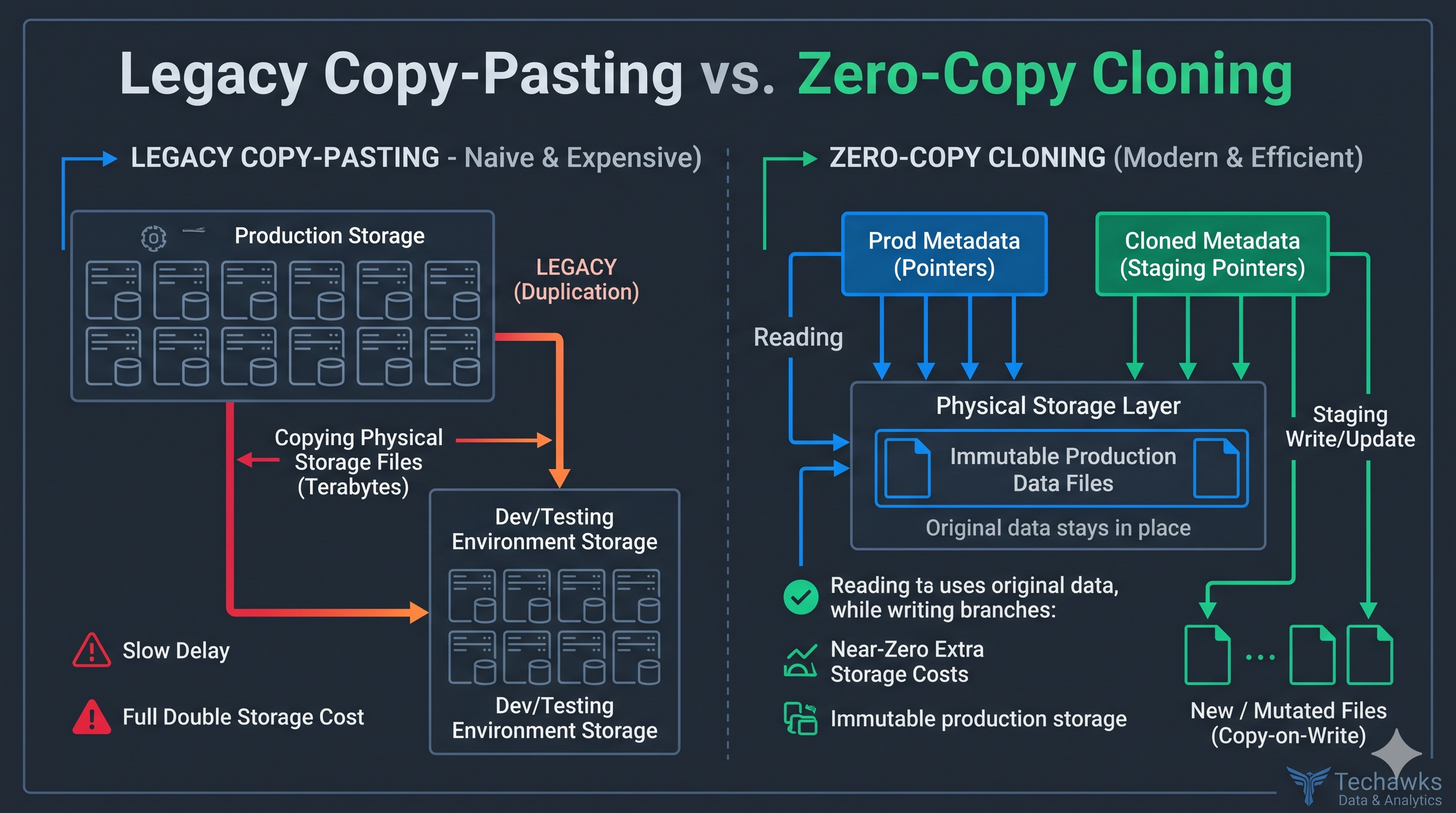 0 Commentaires 0 Parts 210 Vue 0 Aperçu
-
Stop Directory-Scanning Your S3 Bucket: Optimize Big Data Queries with Apache Iceberg Metadata
Traditional object storage (like AWS S3 or Google Cloud Storage) is not a database. It does not understand rows, columns, or transactions—it only knows files.
When you write partitioned queries over giant Hive-style data lakes, your query engine (like Presto, Athena, or Spark) has to call costly LIST operations on object storage to find out which files to read. At scale (petabytes of data), this directory-level path-resolution process becomes a massive latency bottleneck.
Apache Iceberg solves this by introducing a highly structured metadata layer that keeps a precise, stateful inventory of every data file, entirely bypassing filesystem-level file-discovery scans.
Traditional Hive-Style Approach
[ Query Engine ] ──> [ S3 LIST files/date=2026-10-22/* ] (Slow Directory Scanning)
│
▼
10,000s of Raw Parquet Files ❌ (High I/O Overhead)
The Apache Iceberg Model
[ Query Engine ] ──> [ Catalog (REST / Unity / Glue) ]
│
▼
[ Iceberg Metadata Files ]
• Metadata Pointer (v3.metadata.json)
• Manifest List (Snapshots)
• Manifest File (Exact physical file paths & statistics)
│
▼
[ Selective File Reads ] (Zero Directory Scans)
The 3 Metadata Tiers Making Your Lakehouse Fast
To verify and query data efficiently, Iceberg avoids "guessing" where data is located by creating three tiers of read-optimized metadata:
1. The Manifest File (The File Level):
An Iceberg manifest is an Avro-format file that tracks the exact path of every Parquet data file, along with critical column-level statistics (min/max values, null counts). Before even opening a single data file, the engine uses this manifest to discard entire files that do not match the query’s filter, a process called file-level pruning.
2. The Manifest List (The Snapshot Level):
A manifest list collects groups of manifests to represent a single snapshot of the table at a specific point in time. It stores partition boundaries for each manifest, allowing the engine to skip whole groups of files before scanning file-level metrics.
3. The Metadata File (The Schema & History Level):
This top-level file stores the table’s current schema, its historical partition specs, and a chronological log of previous snapshots. This allows your queries to perform safe, ACID-compliant time-travel queries by letting you query exact points in time simply by referencing an older snapshot ID.
By replacing dynamic folder searches with direct, statistics-driven metadata lookups, you can drop data catalog scanning bottlenecks entirely and turn your generic object store into a high-performance database.
Discussion Question
Is your organization currently migrating Hive-partitioned S3/Blob storage lakes over to Apache Iceberg or Delta Lake? What was your experience with latency improvements when switching from directory-level scans to metadata-driven querying?
CTA
Want to master modern data pipelines, data lakehouse architectures, and cloud-scale query performance alongside thousands of senior data engineers?
👉 Join the Data Science & Analytics Community today: [techawks.io/join-data]Stop Directory-Scanning Your S3 Bucket: Optimize Big Data Queries with Apache Iceberg Metadata Traditional object storage (like AWS S3 or Google Cloud Storage) is not a database. It does not understand rows, columns, or transactions—it only knows files. When you write partitioned queries over giant Hive-style data lakes, your query engine (like Presto, Athena, or Spark) has to call costly LIST operations on object storage to find out which files to read. At scale (petabytes of data), this directory-level path-resolution process becomes a massive latency bottleneck. Apache Iceberg solves this by introducing a highly structured metadata layer that keeps a precise, stateful inventory of every data file, entirely bypassing filesystem-level file-discovery scans. Traditional Hive-Style Approach [ Query Engine ] ──> [ S3 LIST files/date=2026-10-22/* ] (Slow Directory Scanning) │ ▼ 10,000s of Raw Parquet Files ❌ (High I/O Overhead) The Apache Iceberg Model [ Query Engine ] ──> [ Catalog (REST / Unity / Glue) ] │ ▼ [ Iceberg Metadata Files ] • Metadata Pointer (v3.metadata.json) • Manifest List (Snapshots) • Manifest File (Exact physical file paths & statistics) │ ▼ [ Selective File Reads ] (Zero Directory Scans) The 3 Metadata Tiers Making Your Lakehouse Fast To verify and query data efficiently, Iceberg avoids "guessing" where data is located by creating three tiers of read-optimized metadata: 1. The Manifest File (The File Level): An Iceberg manifest is an Avro-format file that tracks the exact path of every Parquet data file, along with critical column-level statistics (min/max values, null counts). Before even opening a single data file, the engine uses this manifest to discard entire files that do not match the query’s filter, a process called file-level pruning. 2. The Manifest List (The Snapshot Level): A manifest list collects groups of manifests to represent a single snapshot of the table at a specific point in time. It stores partition boundaries for each manifest, allowing the engine to skip whole groups of files before scanning file-level metrics. 3. The Metadata File (The Schema & History Level): This top-level file stores the table’s current schema, its historical partition specs, and a chronological log of previous snapshots. This allows your queries to perform safe, ACID-compliant time-travel queries by letting you query exact points in time simply by referencing an older snapshot ID. By replacing dynamic folder searches with direct, statistics-driven metadata lookups, you can drop data catalog scanning bottlenecks entirely and turn your generic object store into a high-performance database. Discussion Question Is your organization currently migrating Hive-partitioned S3/Blob storage lakes over to Apache Iceberg or Delta Lake? What was your experience with latency improvements when switching from directory-level scans to metadata-driven querying? CTA Want to master modern data pipelines, data lakehouse architectures, and cloud-scale query performance alongside thousands of senior data engineers? 👉 Join the Data Science & Analytics Community today: [techawks.io/join-data]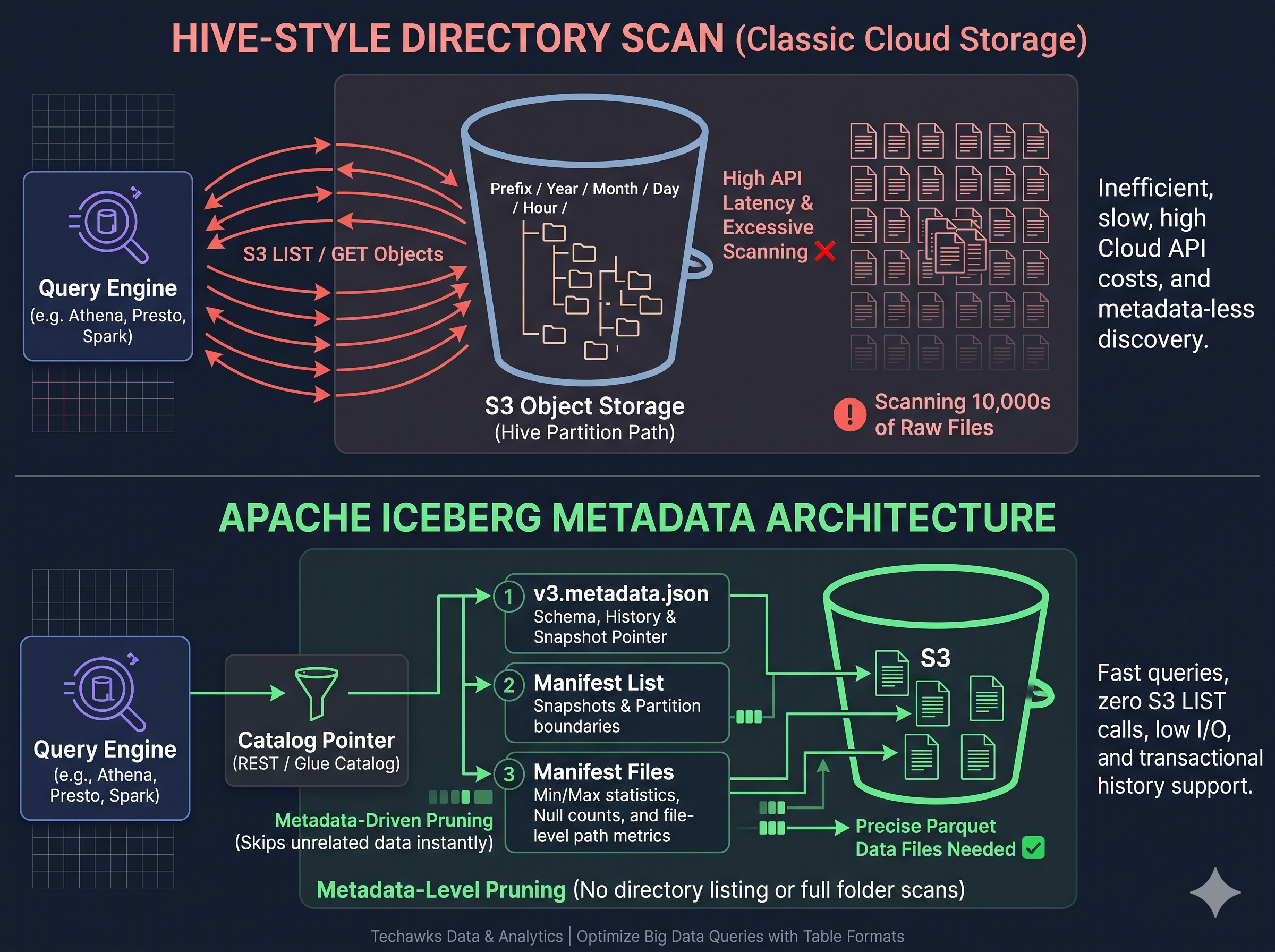 0 Commentaires 0 Parts 168 Vue 0 Aperçu
Plus de lecture