 English
 Arabic
 French
 Spanish
 Portuguese
 Deutsch
 Turkish
 Dutch
Dutch
 Italiano
 Russian
 Romaian
 Portuguese (Brazil)
 Greek
Greek
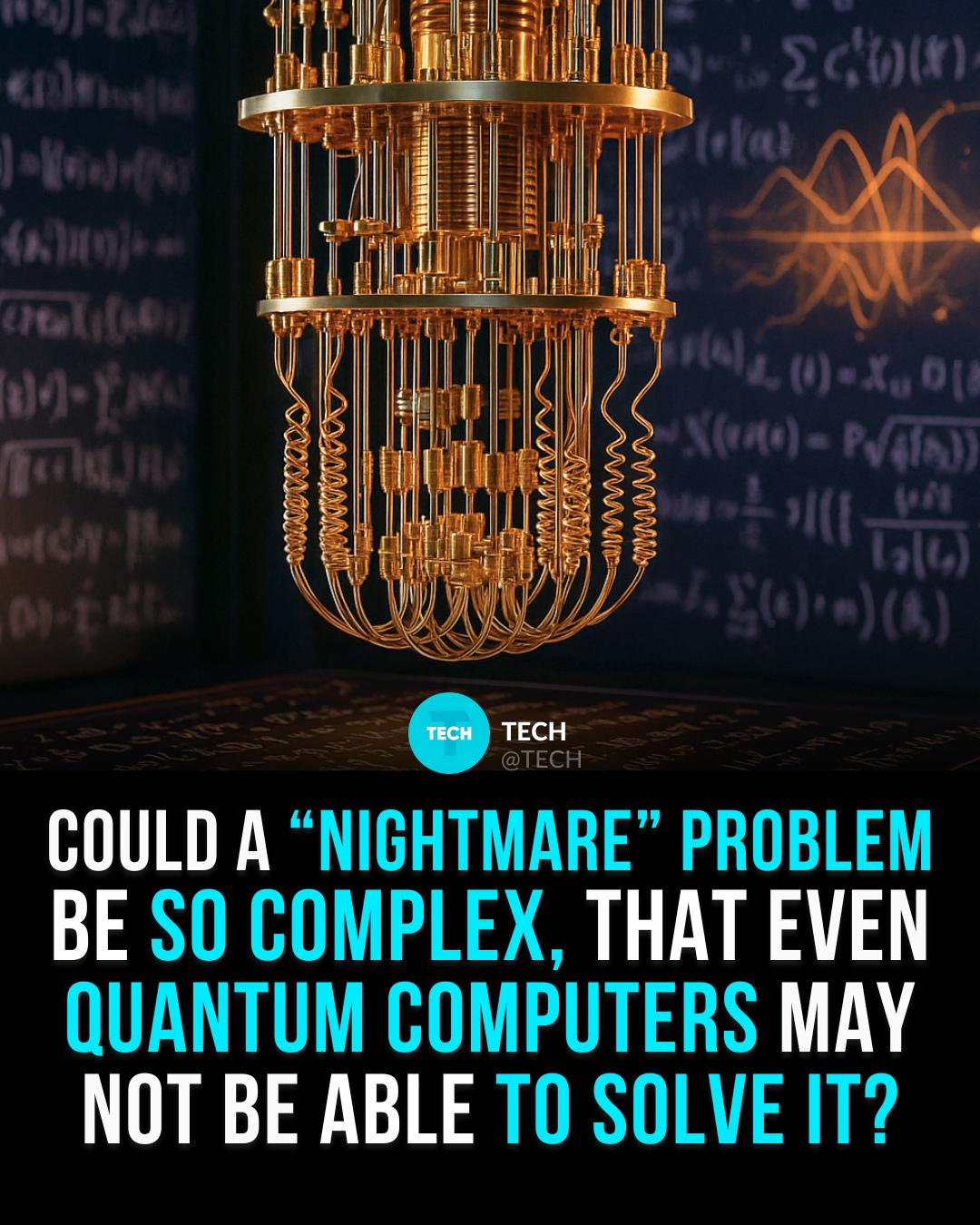
Quantum computers are often described as machines that can outrun any classical supercomputer, thanks to qubits that can exist in multiple states at once and become entangled. They’ve already shown raw speed, like blowing through certain calculations thousands of times faster than the best conventional hardware. But new work from researchers at Caltech and elsewhere shows a hard boundary. Some questions about quantum matter are not just hard in practice. They may be unanswerable in principle, no matter how powerful the quantum computer.
The trouble shows up in phases of quantum matter. In ordinary physics, a phase is easy to spot. Ice is solid water. Steam is gaseous water. Quantum phases are stranger. Their identity can depend on hidden patterns of entanglement that stretch across many particles at once. Thomas Schuster and colleagues have now proven that, for some exotic phases, figuring out which phase you’re looking at would take a quantum computer longer than the age of the universe.
That finding grows out of their companion result: a shortcut to quantum randomness. Instead of running a deep, fragile circuit across thousands or millions of qubits, the team divided the system into small blocks, scrambled each block with only a few operations, then stitched the blocks together. They showed mathematically that this creates the same kind of high-quality randomness once thought to require enormous depth.
That speed matters, because randomness is how scientists probe a quantum system. The faster a system scrambles, the faster it hides information. The team argues that certain properties — phases of matter, causal structure, even how quantum states evolve in time — may be fundamentally beyond experimental reach, not because our tools are weak, but because nature refuses to show us.
#science #physics #quantumcomputing #quantumphysics #entanglement #cryptography #materials #supercomputing #research #innovation
Source: 10.1126/science.adv8590
The trouble shows up in phases of quantum matter. In ordinary physics, a phase is easy to spot. Ice is solid water. Steam is gaseous water. Quantum phases are stranger. Their identity can depend on hidden patterns of entanglement that stretch across many particles at once. Thomas Schuster and colleagues have now proven that, for some exotic phases, figuring out which phase you’re looking at would take a quantum computer longer than the age of the universe.
That finding grows out of their companion result: a shortcut to quantum randomness. Instead of running a deep, fragile circuit across thousands or millions of qubits, the team divided the system into small blocks, scrambled each block with only a few operations, then stitched the blocks together. They showed mathematically that this creates the same kind of high-quality randomness once thought to require enormous depth.
That speed matters, because randomness is how scientists probe a quantum system. The faster a system scrambles, the faster it hides information. The team argues that certain properties — phases of matter, causal structure, even how quantum states evolve in time — may be fundamentally beyond experimental reach, not because our tools are weak, but because nature refuses to show us.
#science #physics #quantumcomputing #quantumphysics #entanglement #cryptography #materials #supercomputing #research #innovation
Source: 10.1126/science.adv8590
Quantum computers are often described as machines that can outrun any classical supercomputer, thanks to qubits that can exist in multiple states at once and become entangled. They’ve already shown raw speed, like blowing through certain calculations thousands of times faster than the best conventional hardware. But new work from researchers at Caltech and elsewhere shows a hard boundary. Some questions about quantum matter are not just hard in practice. They may be unanswerable in principle, no matter how powerful the quantum computer.
The trouble shows up in phases of quantum matter. In ordinary physics, a phase is easy to spot. Ice is solid water. Steam is gaseous water. Quantum phases are stranger. Their identity can depend on hidden patterns of entanglement that stretch across many particles at once. Thomas Schuster and colleagues have now proven that, for some exotic phases, figuring out which phase you’re looking at would take a quantum computer longer than the age of the universe.
That finding grows out of their companion result: a shortcut to quantum randomness. Instead of running a deep, fragile circuit across thousands or millions of qubits, the team divided the system into small blocks, scrambled each block with only a few operations, then stitched the blocks together. They showed mathematically that this creates the same kind of high-quality randomness once thought to require enormous depth.
That speed matters, because randomness is how scientists probe a quantum system. The faster a system scrambles, the faster it hides information. The team argues that certain properties — phases of matter, causal structure, even how quantum states evolve in time — may be fundamentally beyond experimental reach, not because our tools are weak, but because nature refuses to show us.
#science #physics #quantumcomputing #quantumphysics #entanglement #cryptography #materials #supercomputing #research #innovation
Source: 10.1126/science.adv8590
·269 Views
·0 Reviews
