 English
 Arabic
 French
 Spanish
 Portuguese
 Deutsch
 Turkish
 Dutch
Dutch
 Italiano
 Russian
 Romaian
 Portuguese (Brazil)
 Greek
Greek
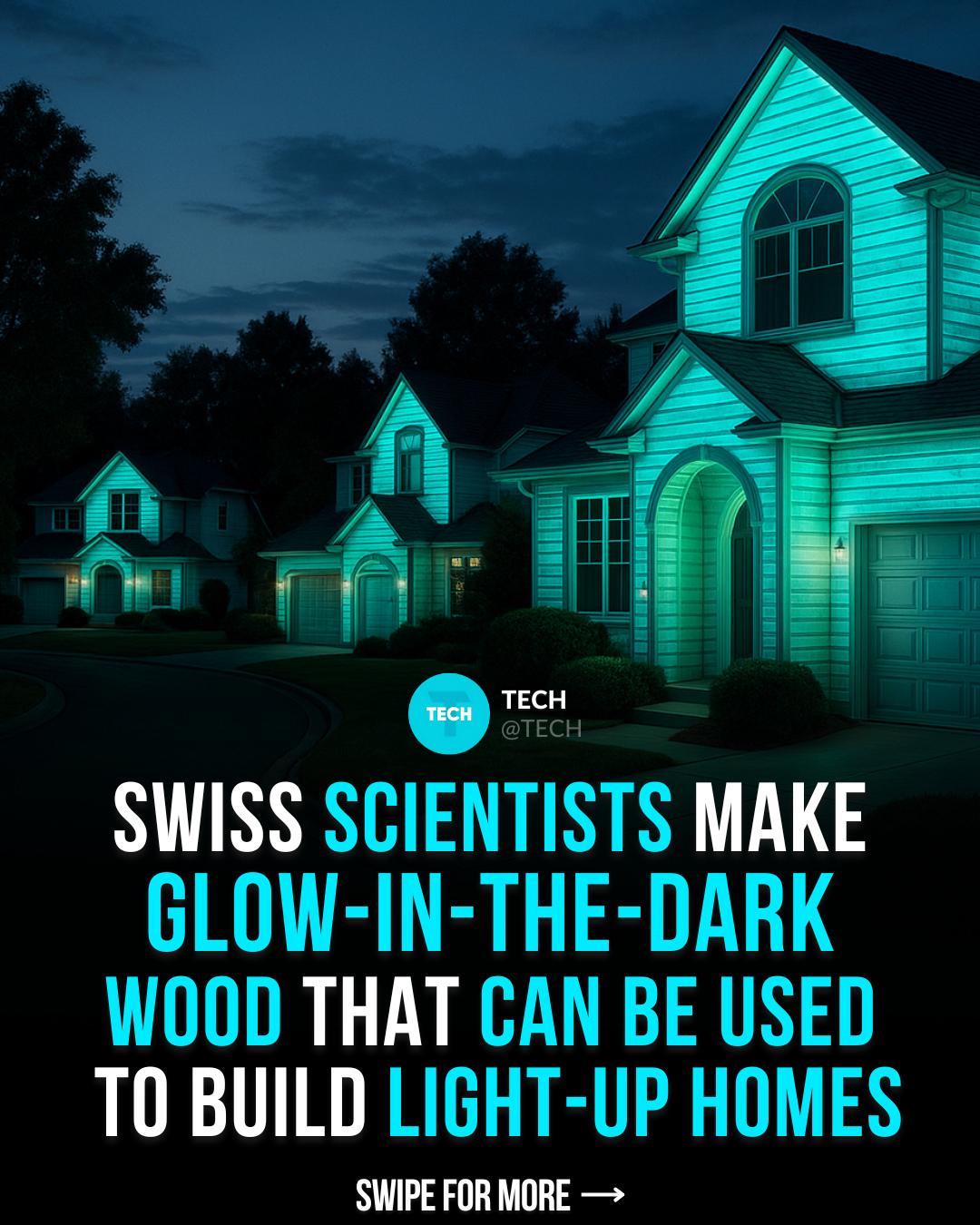
Swiss researchers have achieved a remarkable breakthrough by developing wood that glows in the dark without relying on electricity. At the heart of this innovation is the ringless honey fungus, a parasitic organism that naturally produces a light‑emitting substance known as luciferin. By carefully incubating balsa wood with the fungus in a humid environment for three months, scientists discovered that fungal threads could spread through the wood and trigger a green luminescence when exposed to oxygen.
The process isn’t just beautiful; it preserves the integrity of the wood itself. Even though the fungus breaks down lignin—the component responsible for stiffness—the cellulose remains intact, meaning the material still holds up structurally while glowing. That stability opens the door to creative and sustainable uses, from softly lit park benches to decorative panels that glow through the night.
This glow lasts for up to 10 days, reaching a wavelength of about 560 nanometers, and researchers are already exploring ways to make the light brighter and longer‑lasting. Imagine future homes with glowing stair rails that provide safety during outages or bioluminescent street signs that reduce energy demands.
The team at Empa, led by Dr. Francis Schwarze, describes this work as a step toward eco‑friendly design solutions, blending natural materials with smart functionality. If perfected, glowing wood could reduce our dependence on traditional lighting and add an enchanting layer of sustainability to urban life.
#innovation #futuretech #bioluminescence #greenenergy #sustainableliving #technews #smartdesign #ecotechnology #materialsengineering #sciencetech
The process isn’t just beautiful; it preserves the integrity of the wood itself. Even though the fungus breaks down lignin—the component responsible for stiffness—the cellulose remains intact, meaning the material still holds up structurally while glowing. That stability opens the door to creative and sustainable uses, from softly lit park benches to decorative panels that glow through the night.
This glow lasts for up to 10 days, reaching a wavelength of about 560 nanometers, and researchers are already exploring ways to make the light brighter and longer‑lasting. Imagine future homes with glowing stair rails that provide safety during outages or bioluminescent street signs that reduce energy demands.
The team at Empa, led by Dr. Francis Schwarze, describes this work as a step toward eco‑friendly design solutions, blending natural materials with smart functionality. If perfected, glowing wood could reduce our dependence on traditional lighting and add an enchanting layer of sustainability to urban life.
#innovation #futuretech #bioluminescence #greenenergy #sustainableliving #technews #smartdesign #ecotechnology #materialsengineering #sciencetech
Swiss researchers have achieved a remarkable breakthrough by developing wood that glows in the dark without relying on electricity. At the heart of this innovation is the ringless honey fungus, a parasitic organism that naturally produces a light‑emitting substance known as luciferin. By carefully incubating balsa wood with the fungus in a humid environment for three months, scientists discovered that fungal threads could spread through the wood and trigger a green luminescence when exposed to oxygen.
The process isn’t just beautiful; it preserves the integrity of the wood itself. Even though the fungus breaks down lignin—the component responsible for stiffness—the cellulose remains intact, meaning the material still holds up structurally while glowing. That stability opens the door to creative and sustainable uses, from softly lit park benches to decorative panels that glow through the night.
This glow lasts for up to 10 days, reaching a wavelength of about 560 nanometers, and researchers are already exploring ways to make the light brighter and longer‑lasting. Imagine future homes with glowing stair rails that provide safety during outages or bioluminescent street signs that reduce energy demands.
The team at Empa, led by Dr. Francis Schwarze, describes this work as a step toward eco‑friendly design solutions, blending natural materials with smart functionality. If perfected, glowing wood could reduce our dependence on traditional lighting and add an enchanting layer of sustainability to urban life. 🌿
#innovation #futuretech #bioluminescence #greenenergy #sustainableliving #technews #smartdesign #ecotechnology #materialsengineering #sciencetech
·488 Views
·0 Reviews
