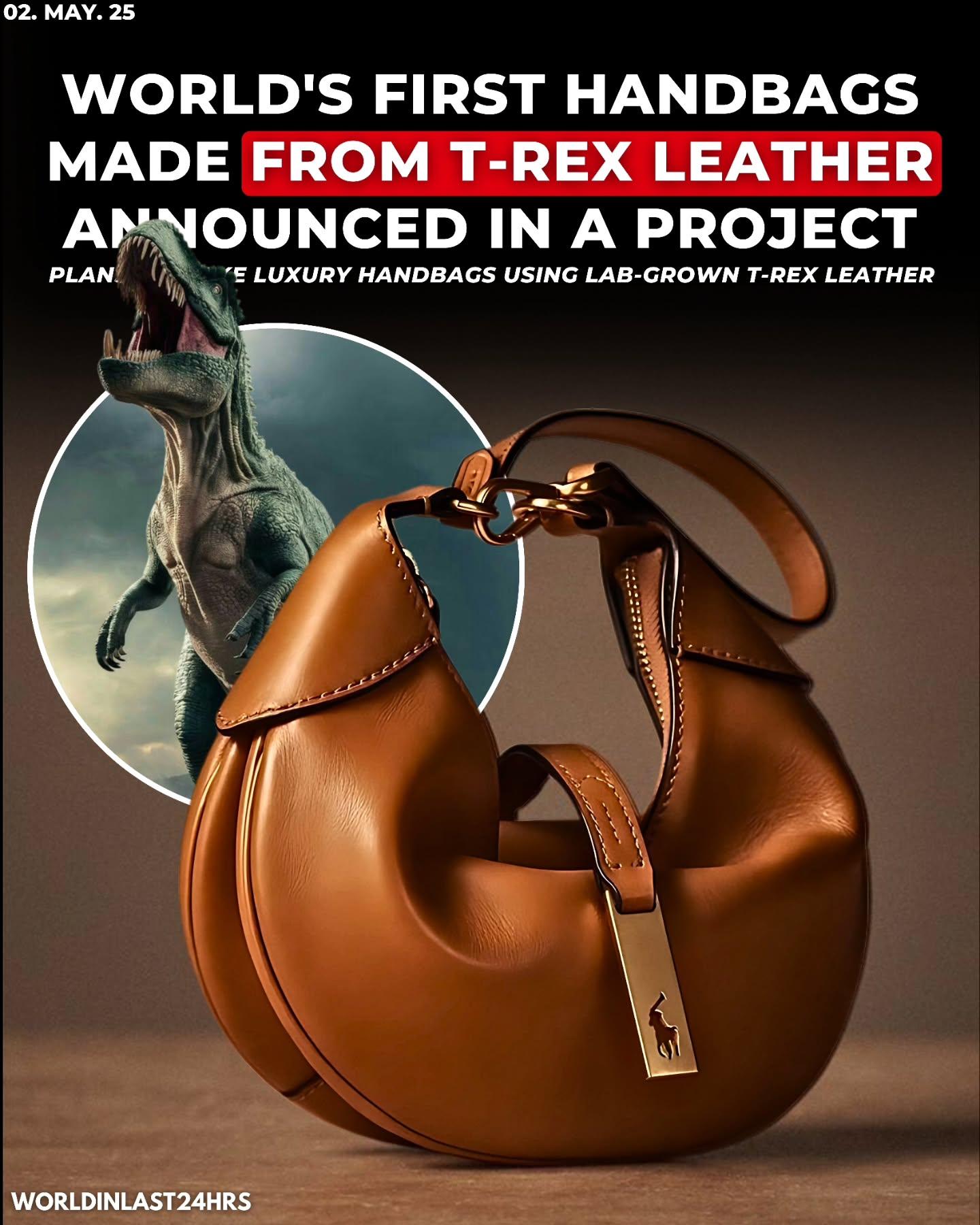
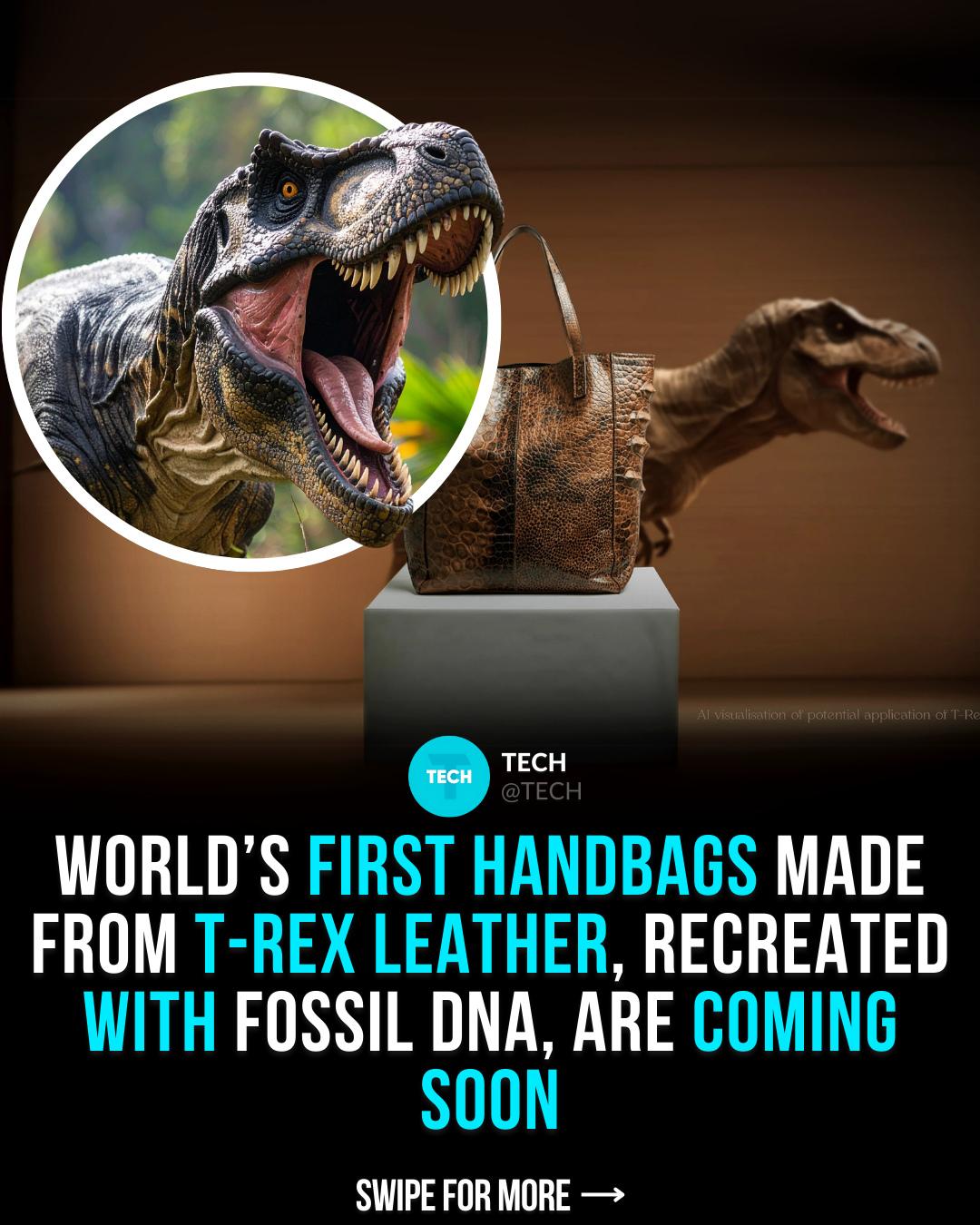
Scientists and biotech startups have captured global attention with plans to craft the world’s first handbags made from "T. rex leather"-a material engineered in the lab using reconstructed protein sequences inspired by Tyrannosaurus rex fossils. The ambitious project is a collaboration between The Organoid Company (Netherlands), Lab-Grown Leather Ltd (UK), and creative agency VML (US), aiming to launch a flagship accessory by the end of 2025 and eventually expand into other luxury and automotive sectors.
Here’s how it works: researchers are not extracting actual T. rex DNA-which is impossible, since DNA degrades after a few million years and T. rex vanished 66 million years ago. Instead, they’re piecing together fragments of preserved dinosaur collagen found in fossils and using comparative genomics with modern relatives (like chickens) to reconstruct plausible protein sequences. These sequences are then engineered into synthetic DNA, which is inserted into custom cell lines that grow sheets of collagen-the key ingredient in leather-via tissue engineering platforms.
The result is a lab-grown biomaterial that’s marketed as cruelty-free, biodegradable, and structurally similar to traditional leather, but inspired by prehistoric biology. The project’s backers say this could revolutionize luxury materials by offering an alternative that avoids animal slaughter and environmental harm, while tapping into the mystique of the dinosaur age.
However, paleontologists and molecular biologists are skeptical. No genuine T. rex DNA or skin tissue has ever been recovered, and the oldest DNA ever sequenced is only about 2 million years old-far younger than any dinosaur fossil. Experts stress that, at best, these handbags will contain proteins that are “inspired by” or “reconstructed from” ancient collagen, not authentic dinosaur leather. Still, the initiative is a striking fusion of science, sustainability, and marketing-one that might attract luxury buyers and spark debate about what’s real, what’s possible, and what’s just prehistoric hype.
Scientists and biotech startups have captured global attention with plans to craft the world’s first handbags made from "T. rex leather"-a material engineered in the lab using reconstructed protein sequences inspired by Tyrannosaurus rex fossils. The ambitious project is a collaboration between The Organoid Company (Netherlands), Lab-Grown Leather Ltd (UK), and creative agency VML (US), aiming to launch a flagship accessory by the end of 2025 and eventually expand into other luxury and automotive sectors.
Here’s how it works: researchers are not extracting actual T. rex DNA-which is impossible, since DNA degrades after a few million years and T. rex vanished 66 million years ago. Instead, they’re piecing together fragments of preserved dinosaur collagen found in fossils and using comparative genomics with modern relatives (like chickens) to reconstruct plausible protein sequences. These sequences are then engineered into synthetic DNA, which is inserted into custom cell lines that grow sheets of collagen-the key ingredient in leather-via tissue engineering platforms.
The result is a lab-grown biomaterial that’s marketed as cruelty-free, biodegradable, and structurally similar to traditional leather, but inspired by prehistoric biology. The project’s backers say this could revolutionize luxury materials by offering an alternative that avoids animal slaughter and environmental harm, while tapping into the mystique of the dinosaur age.
However, paleontologists and molecular biologists are skeptical. No genuine T. rex DNA or skin tissue has ever been recovered, and the oldest DNA ever sequenced is only about 2 million years old-far younger than any dinosaur fossil. Experts stress that, at best, these handbags will contain proteins that are “inspired by” or “reconstructed from” ancient collagen, not authentic dinosaur leather. Still, the initiative is a striking fusion of science, sustainability, and marketing-one that might attract luxury buyers and spark debate about what’s real, what’s possible, and what’s just prehistoric hype.
 English
 Arabic
 French
 Spanish
 Portuguese
 Deutsch
 Turkish
 Dutch
Dutch
 Italiano
 Russian
 Romaian
 Portuguese (Brazil)
 Greek
Greek