• The Atlanta Fed just revised its GDPNow estimate for Q3 down slightly from 3.9% to 3.8%. Still strong, still above trend, and still well above what most forecasters expected just a few months ago.

    But here’s the interesting part:

    While the US economy continues to outperform expectations, other major economies are showing cracks:

    Japan is wrestling with rising bond yields and the limits of yield curve control.

    Europe is stagnating.

    China is fighting deflationary pressure and structural debt issues.

    Meanwhile, US growth remains resilient driven by consumer spending, investment, and ongoing fiscal momentum.

    A number like 3.8% doesn’t sound dramatic, but in a world of slowing growth, this level of momentum makes a statement. The US continues to be the global outlier the economy everyone bets against, yet the one capital keeps flowing back to.

    No wonder global investors overweight US equities and Treasuries. The U.S. isn’t just participating in the global cycle it’s defining it.

    The real question:

    Does this strength give the Fed room to stay tighter for longer, or does it simply delay the slowdown the market keeps trying to price in?

    Because if the economy really is this strong rate cuts aren’t a certainty. They become a negotiation.

    #GDP #Economy #Macro #AtlantaFed #Growth #Finance #Markets #USMarket #Investing #RecessionNarrative #DataDriven
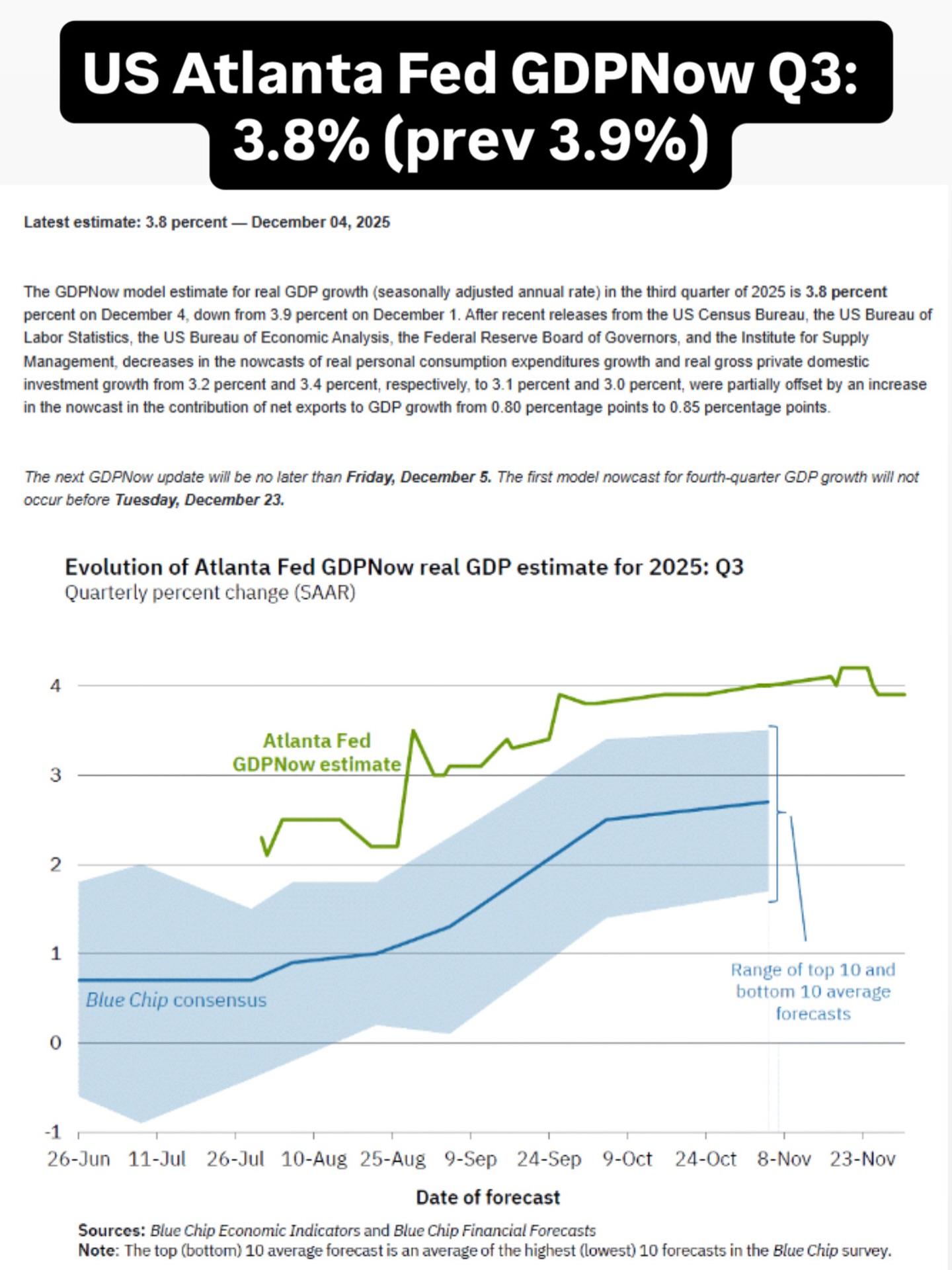
    The Atlanta Fed just revised its GDPNow estimate for Q3 down slightly from 3.9% to 3.8%. Still strong, still above trend, and still well above what most forecasters expected just a few months ago. But here’s the interesting part: While the US economy continues to outperform expectations, other major economies are showing cracks: Japan is wrestling with rising bond yields and the limits of yield curve control. Europe is stagnating. China is fighting deflationary pressure and structural debt issues. Meanwhile, US growth remains resilient driven by consumer spending, investment, and ongoing fiscal momentum. A number like 3.8% doesn’t sound dramatic, but in a world of slowing growth, this level of momentum makes a statement. The US continues to be the global outlier the economy everyone bets against, yet the one capital keeps flowing back to. No wonder global investors overweight US equities and Treasuries. The U.S. isn’t just participating in the global cycle it’s defining it. The real question: Does this strength give the Fed room to stay tighter for longer, or does it simply delay the slowdown the market keeps trying to price in? Because if the economy really is this strong rate cuts aren’t a certainty. They become a negotiation. #GDP #Economy #Macro #AtlantaFed #Growth #Finance #Markets #USMarket #Investing #RecessionNarrative #DataDriven
    ·162 Views ·0 Reviews
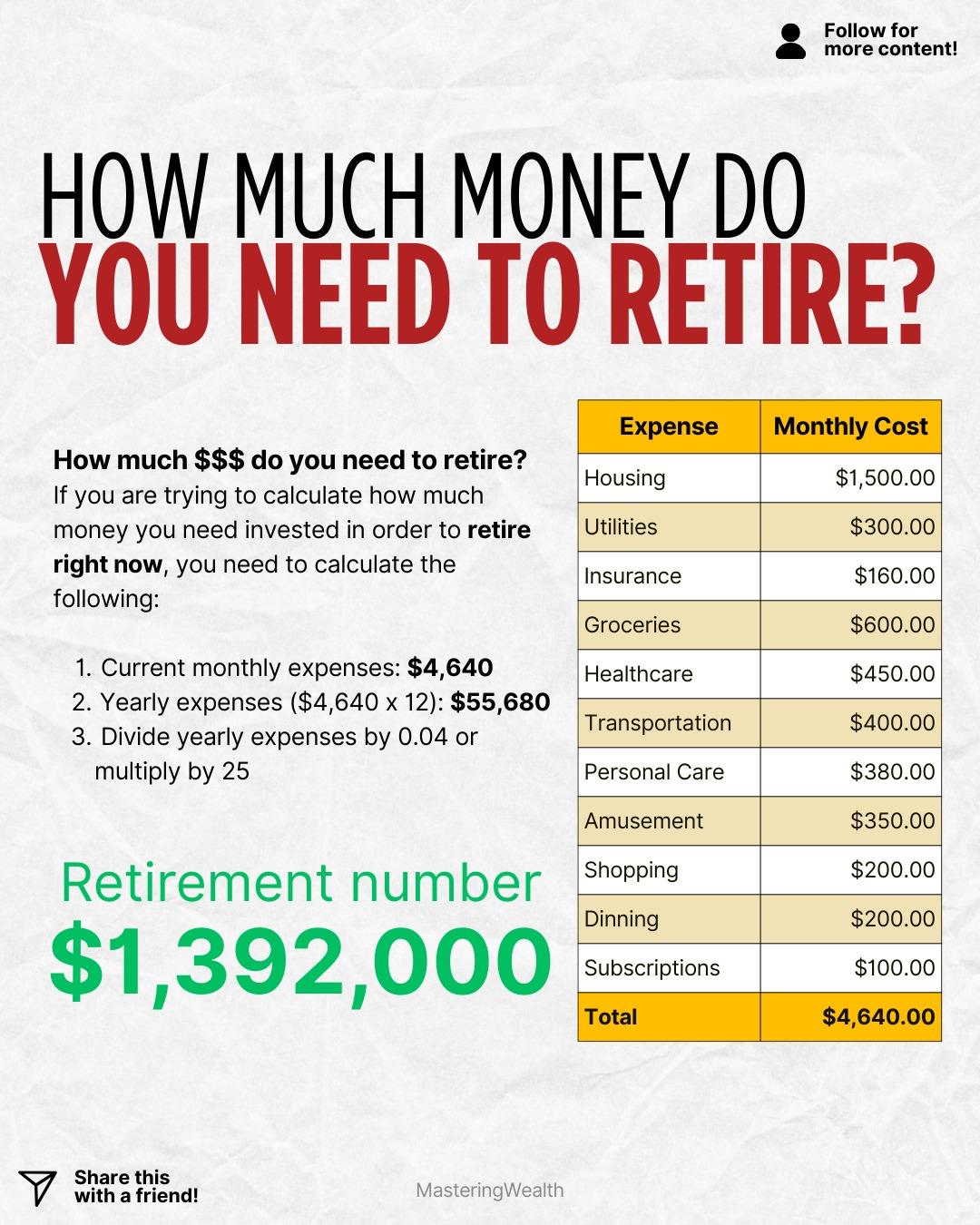
  • Figuring out how much money you need to retire can feel overwhelming, but this graphic breaks it down into a simple formula that anyone can understand. The key is knowing your monthly expenses and then calculating your yearly spending. From there you can use the four percent rule to estimate the total amount you need invested to retire comfortably.

    In this example the monthly expenses are four thousand six hundred forty dollars which adds up to fifty five thousand six hundred eighty dollars per year. When you multiply that number by twenty five you get a retirement number of one million three hundred ninety two thousand dollars. This number represents how much money you would need invested so that a four percent withdrawal rate could support your lifestyle.

    The four percent rule is based on historical market performance and is used as a guideline for safe withdrawals in retirement. It provides a way to estimate how much money your investments can generate each year without running out too quickly. While the exact amount will vary from person to person the formula gives you a starting point for retirement planning.

    Knowing your retirement number helps you map out your journey toward financial independence. It makes your goal feel more realistic because you have a target instead of guessing. Once you know how much you need you can reverse engineer a plan and adjust your savings rate and investment strategy.

    The expenses shown in the chart also remind you that your retirement plan must reflect your real lifestyle. Housing, groceries, transportation, healthcare, subscriptions, entertainment, and personal care all play a role in your overall number. The more accurately you track your expenses the more accurate your retirement calculation will be.

    If you want to see my dividend portfolio which helps me build long term wealth and move closer to financial independence, comment “Stocks” and I will send you the link.

    This content is for educational purposes only and is not financial advice. Always do your own research or consult a licensed professional before making financial decisions.
    Figuring out how much money you need to retire can feel overwhelming, but this graphic breaks it down into a simple formula that anyone can understand. The key is knowing your monthly expenses and then calculating your yearly spending. From there you can use the four percent rule to estimate the total amount you need invested to retire comfortably. In this example the monthly expenses are four thousand six hundred forty dollars which adds up to fifty five thousand six hundred eighty dollars per year. When you multiply that number by twenty five you get a retirement number of one million three hundred ninety two thousand dollars. This number represents how much money you would need invested so that a four percent withdrawal rate could support your lifestyle. The four percent rule is based on historical market performance and is used as a guideline for safe withdrawals in retirement. It provides a way to estimate how much money your investments can generate each year without running out too quickly. While the exact amount will vary from person to person the formula gives you a starting point for retirement planning. Knowing your retirement number helps you map out your journey toward financial independence. It makes your goal feel more realistic because you have a target instead of guessing. Once you know how much you need you can reverse engineer a plan and adjust your savings rate and investment strategy. The expenses shown in the chart also remind you that your retirement plan must reflect your real lifestyle. Housing, groceries, transportation, healthcare, subscriptions, entertainment, and personal care all play a role in your overall number. The more accurately you track your expenses the more accurate your retirement calculation will be. If you want to see my dividend portfolio which helps me build long term wealth and move closer to financial independence, comment “Stocks” and I will send you the link. ⚠️ This content is for educational purposes only and is not financial advice. Always do your own research or consult a licensed professional before making financial decisions.
    ·98 Views ·0 Reviews
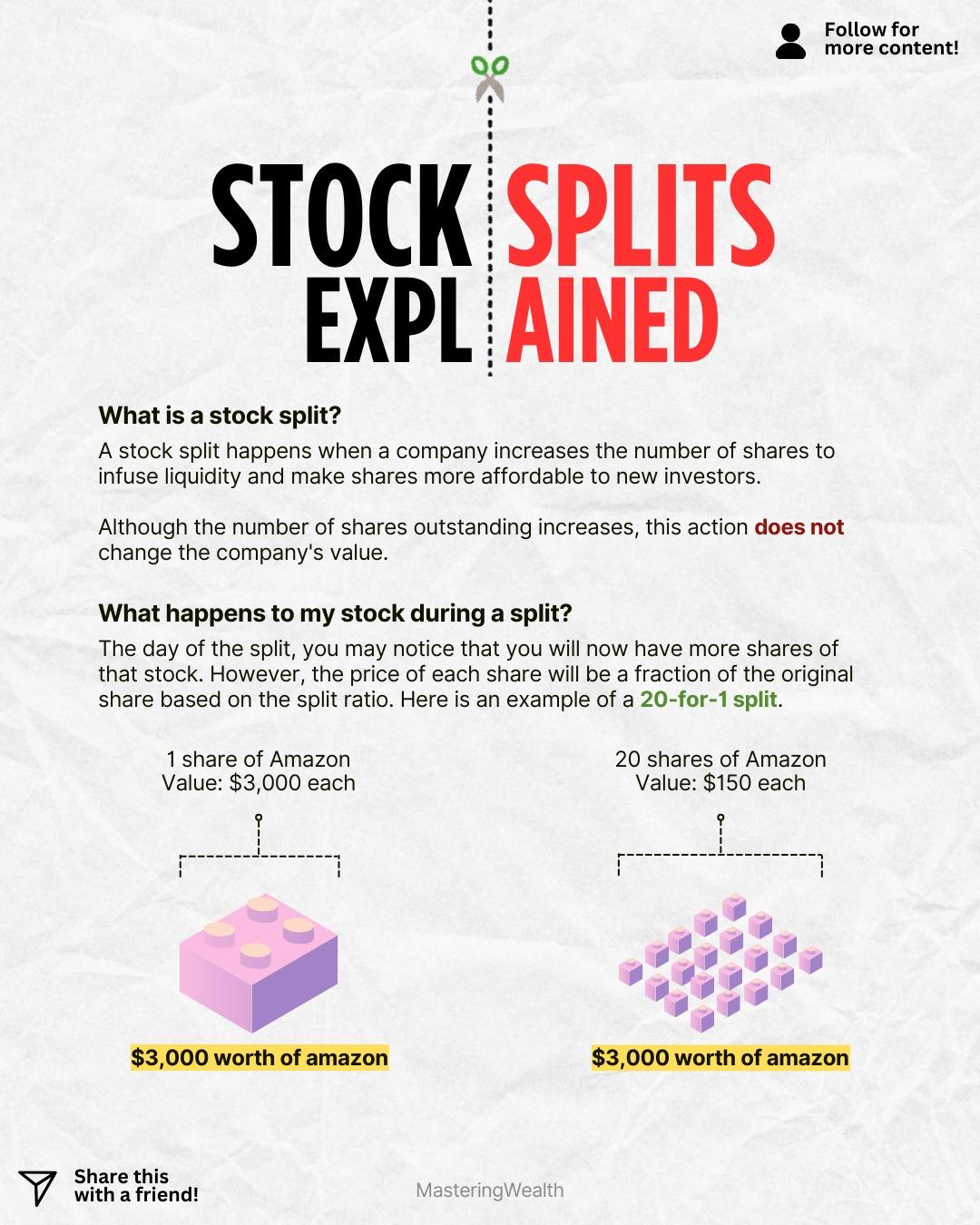
  • A stock split is one of those investing concepts that sounds confusing until you actually see it visually. The graphic shows exactly what happens during a stock split and why it does not change the total value of your investment. Companies use stock splits to make each share more affordable and to increase liquidity which allows more investors to participate.

    When a company performs a stock split it increases the number of shares available but the total value of the company stays the same. This means your overall investment does not change even though the number of shares you hold increases. The price of each share is adjusted based on the split ratio which keeps the total value equal.

    For example if you own one share of Amazon worth three thousand dollars and the company does a twenty for one split you end up with twenty shares worth one hundred fifty dollars each. Nothing about your total value changes because twenty shares at one hundred fifty dollars equals the same three thousand dollars. The split simply breaks the value into smaller parts.

    Many companies like Apple, Tesla, Amazon and Nvidia have used stock splits in the past. They often choose to split their stock once the price becomes too high for new investors who may feel priced out. A split also sends a signal of confidence because companies usually perform them when their share prices have grown significantly.

    Understanding stock splits helps you make smarter investing decisions. When you know that your value stays the same you avoid the confusion that comes from seeing your share count suddenly increase. You also recognize that a lower share price after a split does not mean the company is dropping in value.

    If you want to see the dividend portfolio I use to build long term wealth, comment “Stocks” and I will send you the link.

    For more easy to understand investing breakdowns and financial education visuals, follow @MasteringWealth for daily content that grows your money knowledge.

    This content is for educational purposes only and is not financial advice. Always research carefully or consult with a licensed professional before making financial decisions.
    A stock split is one of those investing concepts that sounds confusing until you actually see it visually. The graphic shows exactly what happens during a stock split and why it does not change the total value of your investment. Companies use stock splits to make each share more affordable and to increase liquidity which allows more investors to participate. When a company performs a stock split it increases the number of shares available but the total value of the company stays the same. This means your overall investment does not change even though the number of shares you hold increases. The price of each share is adjusted based on the split ratio which keeps the total value equal. For example if you own one share of Amazon worth three thousand dollars and the company does a twenty for one split you end up with twenty shares worth one hundred fifty dollars each. Nothing about your total value changes because twenty shares at one hundred fifty dollars equals the same three thousand dollars. The split simply breaks the value into smaller parts. Many companies like Apple, Tesla, Amazon and Nvidia have used stock splits in the past. They often choose to split their stock once the price becomes too high for new investors who may feel priced out. A split also sends a signal of confidence because companies usually perform them when their share prices have grown significantly. Understanding stock splits helps you make smarter investing decisions. When you know that your value stays the same you avoid the confusion that comes from seeing your share count suddenly increase. You also recognize that a lower share price after a split does not mean the company is dropping in value. If you want to see the dividend portfolio I use to build long term wealth, comment “Stocks” and I will send you the link. For more easy to understand investing breakdowns and financial education visuals, follow @MasteringWealth for daily content that grows your money knowledge. ⚠️ This content is for educational purposes only and is not financial advice. Always research carefully or consult with a licensed professional before making financial decisions.
    ·131 Views ·0 Reviews
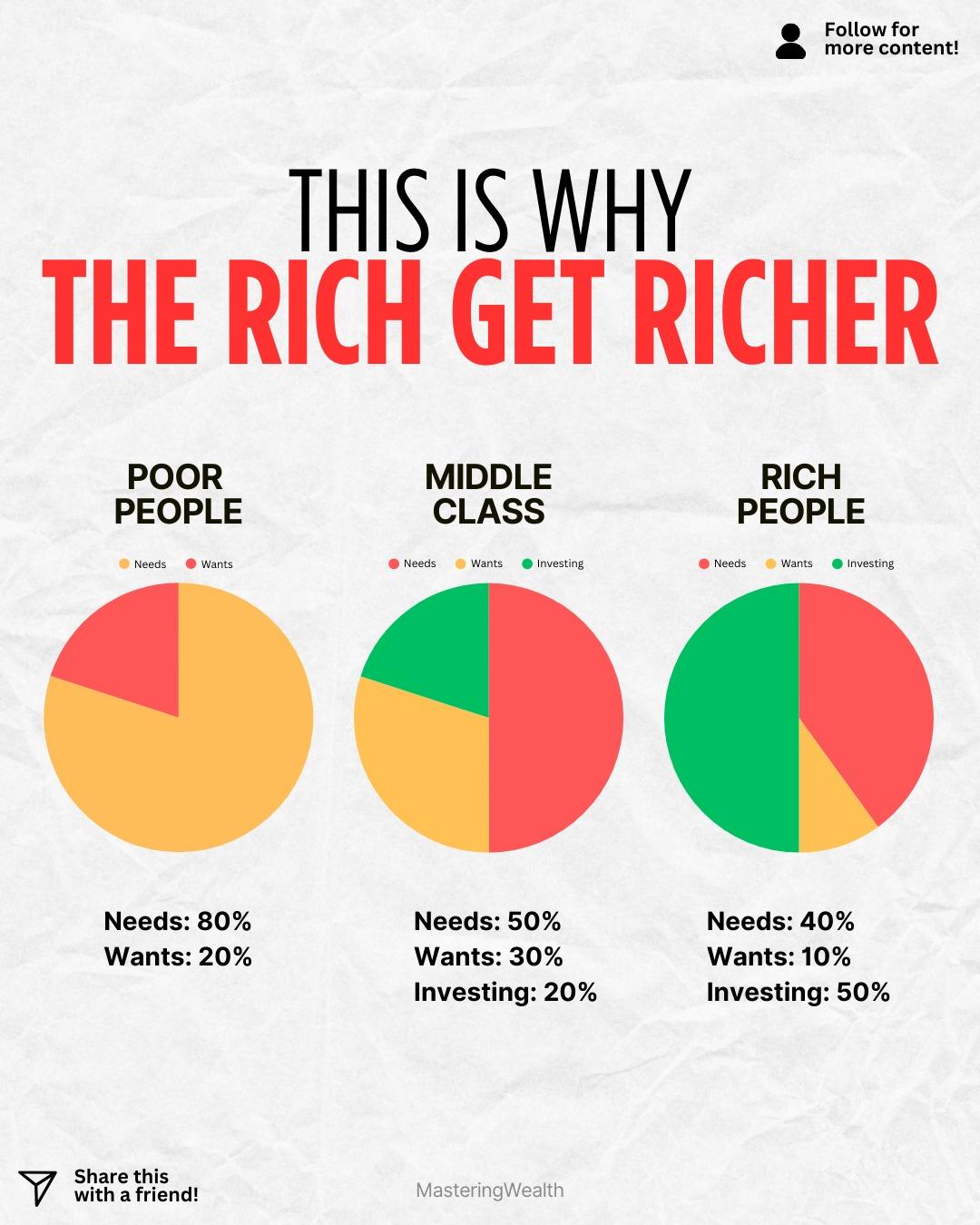
  • Most people never realize that the biggest difference between poor people middle class people and rich people is not just income. The difference is how each group allocates their money and how much of their cash flow goes toward building future wealth. The chart shows three spending patterns that create completely different financial outcomes over time.

    Poor people spend the majority of their money on needs and the rest usually goes toward wants which leaves nothing left to invest. With no money invested there is no growth and no long term wealth building taking place. This creates a cycle where every dollar is already spent before it even arrives.

    Middle class people split their budget between needs wants and a small amount for investing. This is better than not investing at all but usually not enough to create true financial freedom. Without increasing the investing percentage it becomes difficult to break out of the paycheck to paycheck rhythm.

    Rich people prioritize investing first which is why they continue to grow wealth over time. Half of their money goes toward investments which then generate more money through compound growth. That reinvested growth is what keeps expanding their net worth year after year.

    When you study the habits of wealthy people you realize it is not just about earning more money but about keeping more of it. The more you invest the more your money begins working for you instead of you constantly working for money. Even small changes in your percentages can change your long term financial trajectory.

    If you want the link to see my dividend portfolio and learn how I personally invest for long term income comment Stocks and I will send it to you.

    Which of the three spending patterns do you feel you are closest to right now and what percentage do you want to work toward next?

    For more content that breaks down money in a simple and visual way make sure to follow @MasteringWealth for daily financial education.

    This content is for educational purposes only and should not be taken as financial advice. Always do your own research or speak with a licensed professional before making financial decisions.
    Most people never realize that the biggest difference between poor people middle class people and rich people is not just income. The difference is how each group allocates their money and how much of their cash flow goes toward building future wealth. The chart shows three spending patterns that create completely different financial outcomes over time. Poor people spend the majority of their money on needs and the rest usually goes toward wants which leaves nothing left to invest. With no money invested there is no growth and no long term wealth building taking place. This creates a cycle where every dollar is already spent before it even arrives. Middle class people split their budget between needs wants and a small amount for investing. This is better than not investing at all but usually not enough to create true financial freedom. Without increasing the investing percentage it becomes difficult to break out of the paycheck to paycheck rhythm. Rich people prioritize investing first which is why they continue to grow wealth over time. Half of their money goes toward investments which then generate more money through compound growth. That reinvested growth is what keeps expanding their net worth year after year. When you study the habits of wealthy people you realize it is not just about earning more money but about keeping more of it. The more you invest the more your money begins working for you instead of you constantly working for money. Even small changes in your percentages can change your long term financial trajectory. If you want the link to see my dividend portfolio and learn how I personally invest for long term income comment Stocks and I will send it to you. Which of the three spending patterns do you feel you are closest to right now and what percentage do you want to work toward next? For more content that breaks down money in a simple and visual way make sure to follow @MasteringWealth for daily financial education. ⚠️ This content is for educational purposes only and should not be taken as financial advice. Always do your own research or speak with a licensed professional before making financial decisions.
    ·170 Views ·0 Reviews
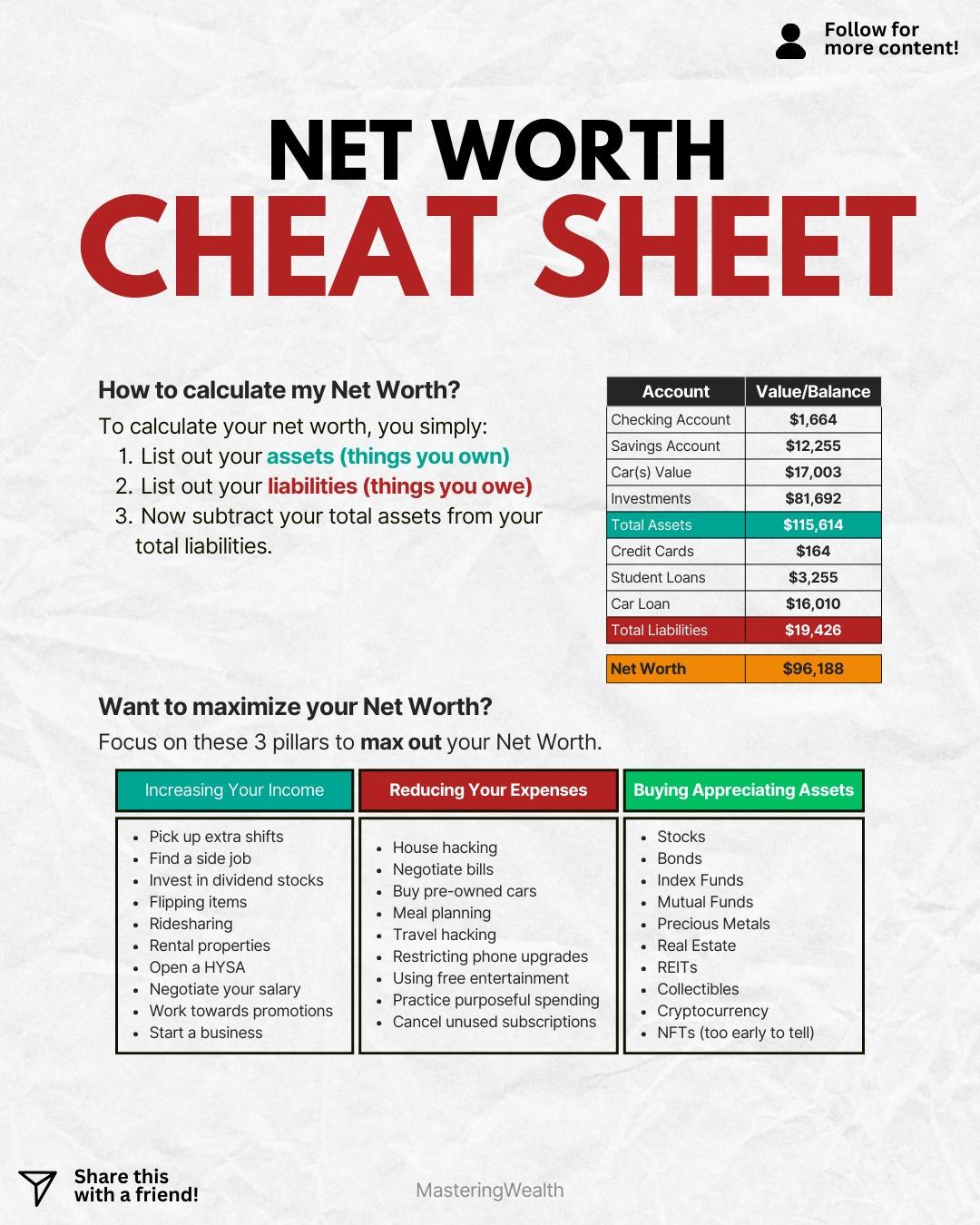
  • Your net worth is one of the clearest indicators of your financial health. It shows the full picture of what you own compared to what you owe. The visual in this post breaks down the steps to calculate it and gives you simple ways to increase it over time.

    To calculate your net worth, start by listing all of your assets which includes cash, savings, investments, and the value of major items like a car. Then list all your liabilities which are debts such as credit cards, student loans, and car loans. Once you subtract your total liabilities from your total assets, the result is your net worth.

    This number does not define your value as a person, but it does help you understand your financial progress. Tracking your net worth each month gives you clarity on whether you are moving forward or backward. It also helps you identify which areas need improvement.

    There are three main ways to grow your net worth over time. The first is to increase your income which can be done through side jobs, promotions, skill building, or investing in dividend stocks or rental properties. The second is reducing expenses by negotiating bills, eliminating unused subscriptions, and making smarter spending decisions.

    The third method is buying appreciating assets which grow in value such as stocks, bonds, index funds, real estate, precious metals, and mutual funds. When you consistently buy assets that rise in value, your net worth increases automatically. Small improvements in each of these areas compound into major long term results.

    Understanding your net worth helps you stay in control of your financial journey. It gives you a clear target to improve and a way to measure your growth. The goal is not perfection but progress over time.

    Comment “Stocks” if you want a link to see my dividend portfolio and learn how I use appreciating assets to increase my net worth.

    Which pillar do you feel you need to focus on the most right now: increasing income, reducing expenses, or buying more assets?

    This content is for educational purposes only and is not financial advice. Always research carefully or consult a licensed professional before making investment decisions.
    Your net worth is one of the clearest indicators of your financial health. It shows the full picture of what you own compared to what you owe. The visual in this post breaks down the steps to calculate it and gives you simple ways to increase it over time. To calculate your net worth, start by listing all of your assets which includes cash, savings, investments, and the value of major items like a car. Then list all your liabilities which are debts such as credit cards, student loans, and car loans. Once you subtract your total liabilities from your total assets, the result is your net worth. This number does not define your value as a person, but it does help you understand your financial progress. Tracking your net worth each month gives you clarity on whether you are moving forward or backward. It also helps you identify which areas need improvement. There are three main ways to grow your net worth over time. The first is to increase your income which can be done through side jobs, promotions, skill building, or investing in dividend stocks or rental properties. The second is reducing expenses by negotiating bills, eliminating unused subscriptions, and making smarter spending decisions. The third method is buying appreciating assets which grow in value such as stocks, bonds, index funds, real estate, precious metals, and mutual funds. When you consistently buy assets that rise in value, your net worth increases automatically. Small improvements in each of these areas compound into major long term results. Understanding your net worth helps you stay in control of your financial journey. It gives you a clear target to improve and a way to measure your growth. The goal is not perfection but progress over time. 💬 Comment “Stocks” if you want a link to see my dividend portfolio and learn how I use appreciating assets to increase my net worth. Which pillar do you feel you need to focus on the most right now: increasing income, reducing expenses, or buying more assets? ⚠️ This content is for educational purposes only and is not financial advice. Always research carefully or consult a licensed professional before making investment decisions.
    ·234 Views ·0 Reviews
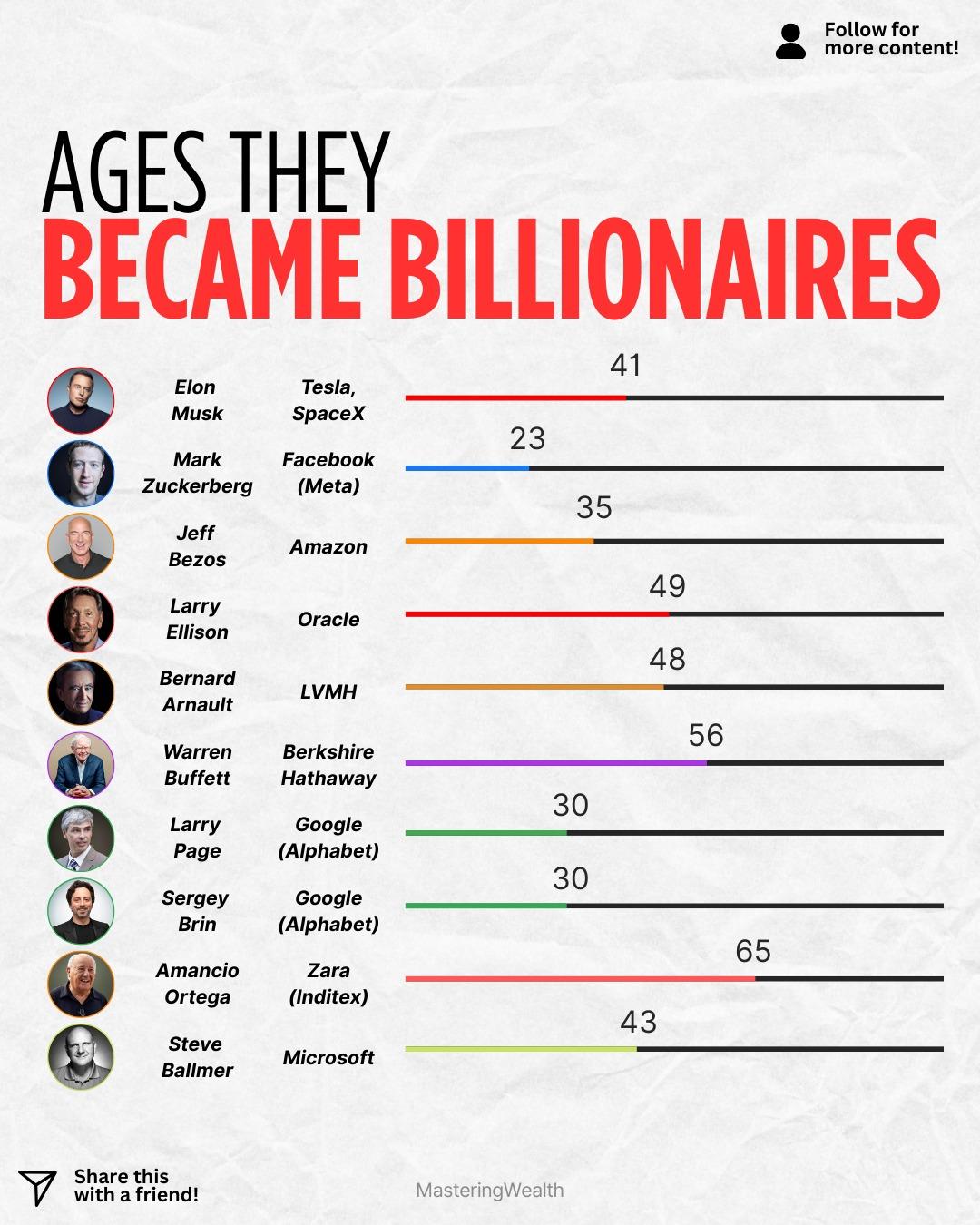
  • Success does not have a deadline. The graphic in this post shows the ages at which some of the world’s most famous entrepreneurs became billionaires. What it proves is that wealth can be created early, late, and everywhere in between depending on timing, vision, and perseverance.

    Mark Zuckerberg became a billionaire at age twenty three which makes him one of the youngest on the list. Sergey Brin and Larry Page reached billionaire status at age thirty through Google. Jeff Bezos reached his billionaire milestone at age thirty five after years of building Amazon when online shopping was still a new idea.

    Others reached the milestone later in life. Elon Musk became a billionaire at forty one while scaling Tesla and SpaceX after many failures and setbacks. Bernard Arnault reached billionaire status at forty eight through luxury brands and long term business thinking.

    Some reached the milestone even later. Warren Buffett became a billionaire at age fifty six after decades of consistent investing and value based decisions. Amancio Ortega, the founder of Zara, became a billionaire at age sixty five which shows that massive wealth can still be built late in life.

    This list proves that there is no perfect age for success. What matters is the willingness to start, learn, take risks, and keep going. The timeline looks different for everyone but persistence always pays off somewhere along the journey.

    Comment “Stocks” if you want a link to see my dividend portfolio and learn how long term investing builds wealth step by step.

    If you could choose any path toward financial freedom, would you prefer the fast route with higher risk or the slow and steady route like Warren Buffett?

    For more visuals that break down success stories, wealth building, and investing lessons, follow @MasteringWealth for daily financial content.

    This content is for educational purposes only and is not financial advice. Always research carefully or consult with a licensed professional before making investment decisions.
    Success does not have a deadline. The graphic in this post shows the ages at which some of the world’s most famous entrepreneurs became billionaires. What it proves is that wealth can be created early, late, and everywhere in between depending on timing, vision, and perseverance. Mark Zuckerberg became a billionaire at age twenty three which makes him one of the youngest on the list. Sergey Brin and Larry Page reached billionaire status at age thirty through Google. Jeff Bezos reached his billionaire milestone at age thirty five after years of building Amazon when online shopping was still a new idea. Others reached the milestone later in life. Elon Musk became a billionaire at forty one while scaling Tesla and SpaceX after many failures and setbacks. Bernard Arnault reached billionaire status at forty eight through luxury brands and long term business thinking. Some reached the milestone even later. Warren Buffett became a billionaire at age fifty six after decades of consistent investing and value based decisions. Amancio Ortega, the founder of Zara, became a billionaire at age sixty five which shows that massive wealth can still be built late in life. This list proves that there is no perfect age for success. What matters is the willingness to start, learn, take risks, and keep going. The timeline looks different for everyone but persistence always pays off somewhere along the journey. 💬 Comment “Stocks” if you want a link to see my dividend portfolio and learn how long term investing builds wealth step by step. If you could choose any path toward financial freedom, would you prefer the fast route with higher risk or the slow and steady route like Warren Buffett? For more visuals that break down success stories, wealth building, and investing lessons, follow @MasteringWealth for daily financial content. ⚠️ This content is for educational purposes only and is not financial advice. Always research carefully or consult with a licensed professional before making investment decisions.
    ·294 Views ·0 Reviews
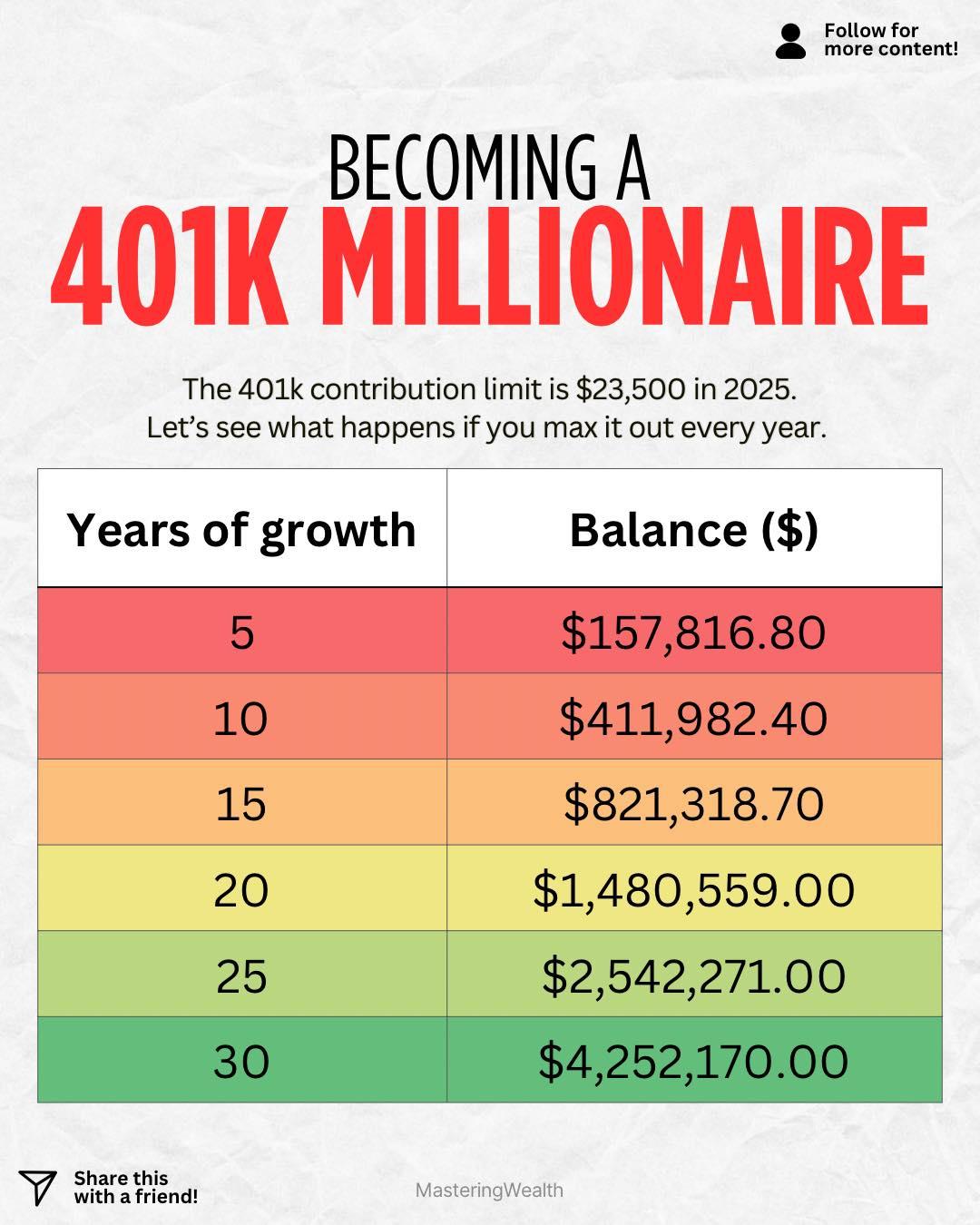
  • Becoming a millionaire is more achievable than most people realize when you use the tools available to you. The visual in this post shows what happens when you consistently max out your 401k over time. With the 2025 contribution limit of twenty three thousand five hundred dollars, long term consistency can turn regular income into massive retirement wealth.

    The table shows how your 401k grows with compound interest when you invest the maximum each year. In just five years you could reach more than one hundred fifty seven thousand dollars. In ten years that number jumps to more than four hundred eleven thousand dollars which shows the accelerating power of compounding.

    At fifteen years your balance could grow to more than eight hundred twenty one thousand dollars. At twenty years the balance reaches more than one million four hundred eighty thousand dollars which officially makes you a 401k millionaire. Once you stay invested for twenty five or thirty years the numbers grow even faster, eventually crossing more than four million two hundred fifty thousand dollars.

    This is the quiet power of consistent investing. You do not need to pick perfect stocks or time the market. You only need discipline, patience, and a long term approach to let compound growth do its work.

    Your 401k is one of the most powerful wealth building tools because contributions reduce taxable income and your investments grow tax deferred. Many employers also match a portion of your contributions which gives you free money for retirement. When you combine these benefits with decades of growth, the results become life changing.

    Comment “Stocks” if you want a link to see my dividend portfolio and learn how I invest for long term financial freedom.

    What age would you ideally want to reach your first one million dollars in investments?

    For more content about investing, retirement planning, and financial growth, follow @MasteringWealth for daily education that helps you build wealth step by step.

    This content is for educational purposes only and is not financial advice. Always research carefully or consult a licensed professional before making investment decisions.
    Becoming a millionaire is more achievable than most people realize when you use the tools available to you. The visual in this post shows what happens when you consistently max out your 401k over time. With the 2025 contribution limit of twenty three thousand five hundred dollars, long term consistency can turn regular income into massive retirement wealth. The table shows how your 401k grows with compound interest when you invest the maximum each year. In just five years you could reach more than one hundred fifty seven thousand dollars. In ten years that number jumps to more than four hundred eleven thousand dollars which shows the accelerating power of compounding. At fifteen years your balance could grow to more than eight hundred twenty one thousand dollars. At twenty years the balance reaches more than one million four hundred eighty thousand dollars which officially makes you a 401k millionaire. Once you stay invested for twenty five or thirty years the numbers grow even faster, eventually crossing more than four million two hundred fifty thousand dollars. This is the quiet power of consistent investing. You do not need to pick perfect stocks or time the market. You only need discipline, patience, and a long term approach to let compound growth do its work. Your 401k is one of the most powerful wealth building tools because contributions reduce taxable income and your investments grow tax deferred. Many employers also match a portion of your contributions which gives you free money for retirement. When you combine these benefits with decades of growth, the results become life changing. 💬 Comment “Stocks” if you want a link to see my dividend portfolio and learn how I invest for long term financial freedom. What age would you ideally want to reach your first one million dollars in investments? For more content about investing, retirement planning, and financial growth, follow @MasteringWealth for daily education that helps you build wealth step by step. ⚠️ This content is for educational purposes only and is not financial advice. Always research carefully or consult a licensed professional before making investment decisions.
    ·155 Views ·0 Reviews
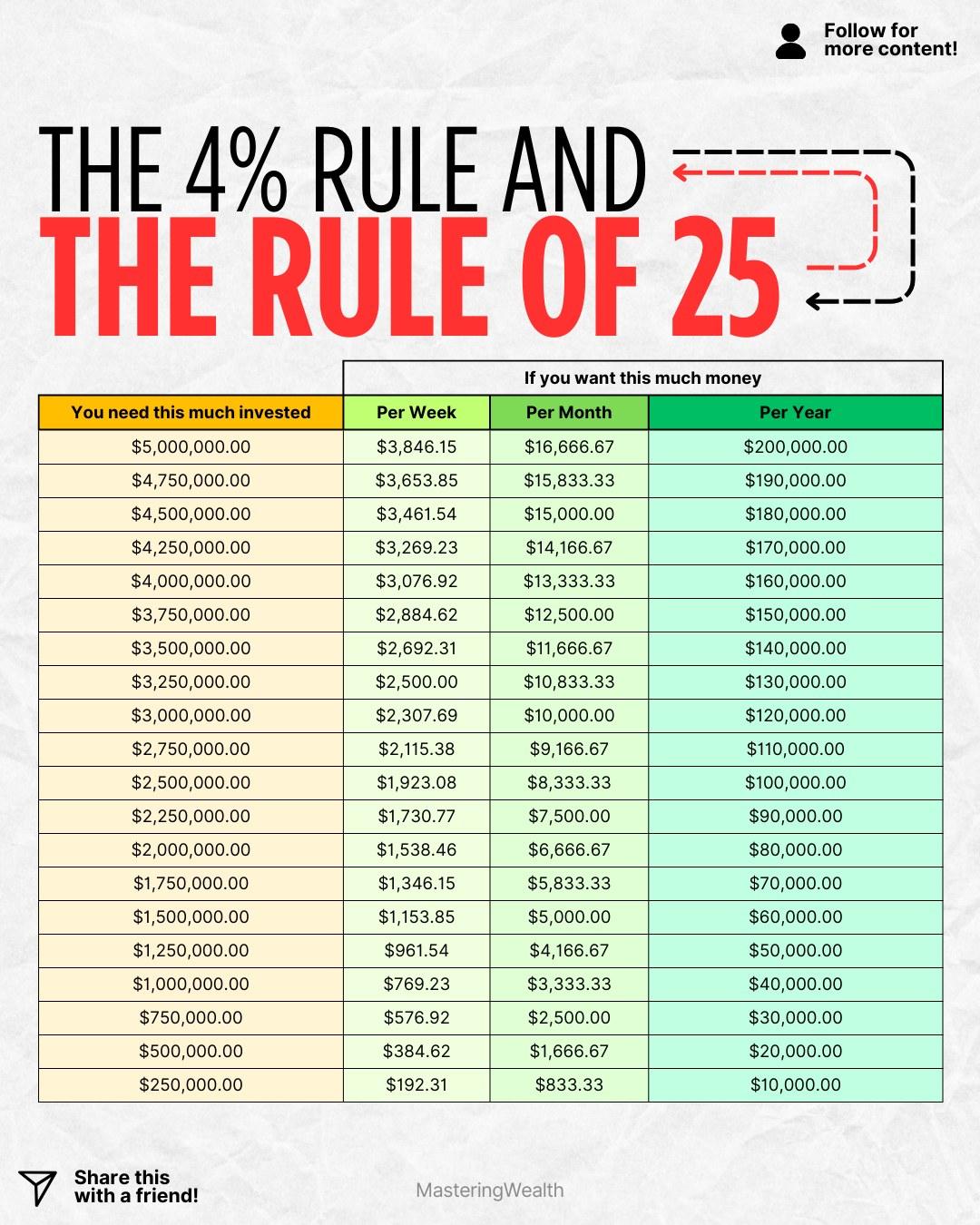
  • Planning for retirement becomes much easier when you understand the math behind how much money you need invested. The visual in this post shows the rule of twenty five which tells you how large your portfolio should be if you want to withdraw a certain amount each year. When you multiply your desired yearly income by twenty five, you get the total amount you need invested to retire with confidence.

    The four percent rule is what connects the chart together. It is a guideline that suggests you can withdraw around four percent of your investments each year without running out of money too quickly. This rule helps simplify retirement planning because it gives you a clear target based on the lifestyle you want.

    For example, if you want one hundred thousand dollars per year in retirement, you would need around two million five hundred thousand dollars invested. If you only want fifty thousand dollars per year, the target becomes one million two hundred fifty thousand dollars. The chart also breaks these numbers down weekly and monthly to help you visualize how much income your portfolio can realistically produce.

    These calculations show why long term investing is so important. Savings alone cannot reach these levels without the help of compound interest. The earlier you start, the more time your investments have to grow into the numbers seen in the chart.

    This cheat sheet is meant to give you clarity and direction, not pressure. Everyone starts in a different place and progresses at their own pace. What matters most is understanding the math so you can plan with intention instead of guessing.

    Comment “Stocks” if you want a link to see my dividend portfolio and learn how I build passive income for my own retirement plan.

    If you could choose any yearly retirement income from this chart, which amount would make you feel financially free and comfortable?

    This content is for educational purposes only and is not financial advice. Always research carefully or consult a licensed professional before making investment decisions.
    Planning for retirement becomes much easier when you understand the math behind how much money you need invested. The visual in this post shows the rule of twenty five which tells you how large your portfolio should be if you want to withdraw a certain amount each year. When you multiply your desired yearly income by twenty five, you get the total amount you need invested to retire with confidence. The four percent rule is what connects the chart together. It is a guideline that suggests you can withdraw around four percent of your investments each year without running out of money too quickly. This rule helps simplify retirement planning because it gives you a clear target based on the lifestyle you want. For example, if you want one hundred thousand dollars per year in retirement, you would need around two million five hundred thousand dollars invested. If you only want fifty thousand dollars per year, the target becomes one million two hundred fifty thousand dollars. The chart also breaks these numbers down weekly and monthly to help you visualize how much income your portfolio can realistically produce. These calculations show why long term investing is so important. Savings alone cannot reach these levels without the help of compound interest. The earlier you start, the more time your investments have to grow into the numbers seen in the chart. This cheat sheet is meant to give you clarity and direction, not pressure. Everyone starts in a different place and progresses at their own pace. What matters most is understanding the math so you can plan with intention instead of guessing. 💬 Comment “Stocks” if you want a link to see my dividend portfolio and learn how I build passive income for my own retirement plan. If you could choose any yearly retirement income from this chart, which amount would make you feel financially free and comfortable? ⚠️ This content is for educational purposes only and is not financial advice. Always research carefully or consult a licensed professional before making investment decisions.
    ·155 Views ·0 Reviews
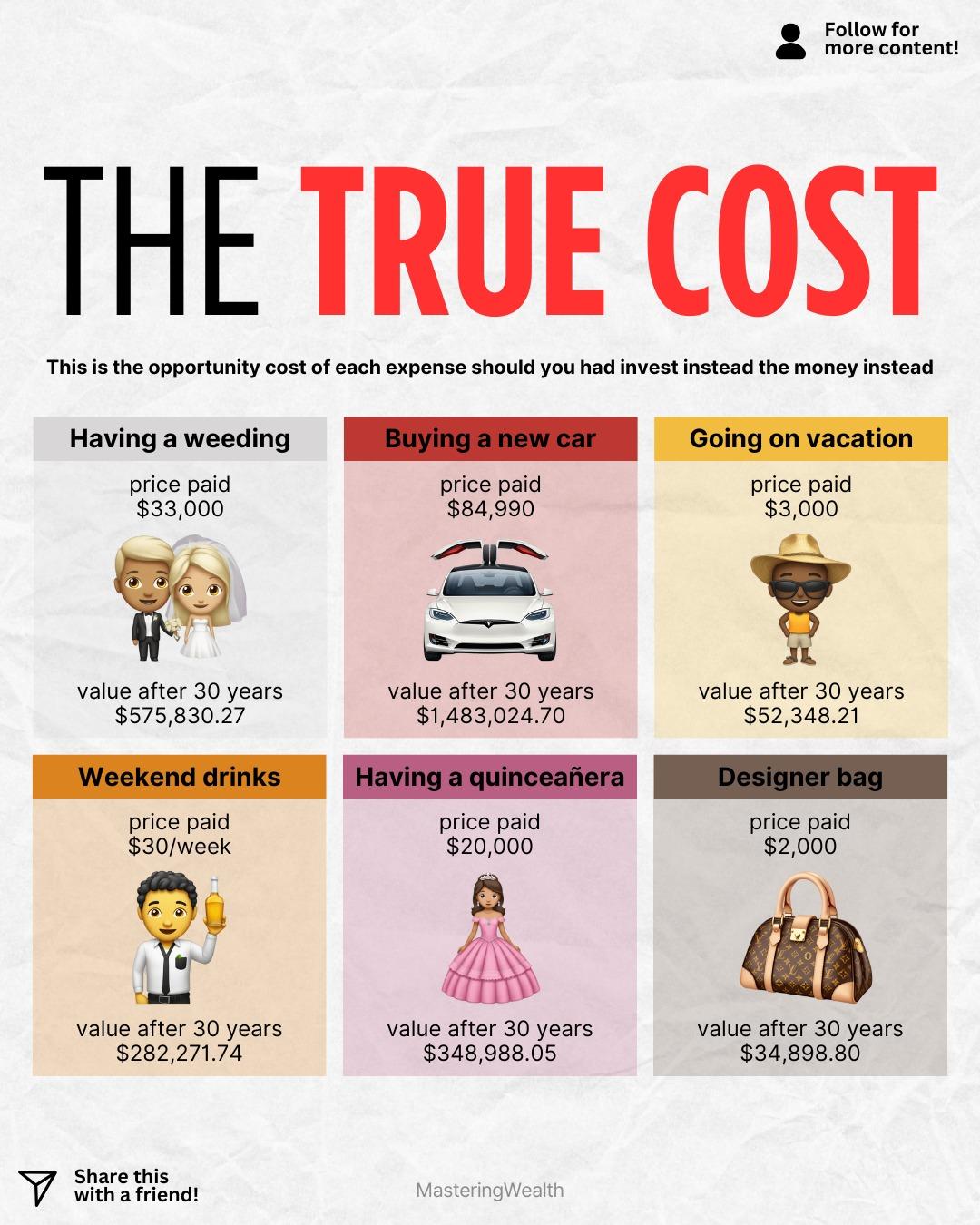
  • Most people look at a purchase and only see the price they paid today. What they rarely see is the long term impact that money could have had if it was invested instead. The graphic in this post shows the opportunity cost of common expenses and what that same money could have grown into over thirty years.

    For example, a thirty three thousand dollar wedding might seem like a normal expense. But invested over thirty years, that same amount could grow into more than five hundred seventy five thousand dollars. That difference is what opportunity cost really looks like.

    Buying a new car is another big example. Spending eighty four thousand nine hundred ninety dollars on a vehicle today means giving up the potential to have more than one million four hundred eighty three thousand dollars in the future. Cars lose value while investments grow.

    Even small habits add up over time. Spending thirty dollars each week on weekend drinks can seem harmless, but over thirty years that money could grow into more than two hundred eighty two thousand dollars. The same goes for vacations, designer bags, or large events like a quinceañera.

    This does not mean you should never enjoy life. It simply shows the importance of being intentional with your money and choosing what matters most. When you understand the long term value of your dollars, you make smarter financial decisions and get closer to financial freedom.

    Comment “Stocks” if you want a link to see my dividend portfolio and learn how investing consistently builds long term wealth.

    Which of these expenses surprised you the most when you saw how much it could grow over thirty years?

    For more financial education, investing breakdowns, and money visuals that help you understand long term wealth, follow @MasteringWealth for daily content.

    This content is for educational purposes only and is not financial advice. Always research carefully or speak with a licensed professional before making investment decisions.
    Most people look at a purchase and only see the price they paid today. What they rarely see is the long term impact that money could have had if it was invested instead. The graphic in this post shows the opportunity cost of common expenses and what that same money could have grown into over thirty years. For example, a thirty three thousand dollar wedding might seem like a normal expense. But invested over thirty years, that same amount could grow into more than five hundred seventy five thousand dollars. That difference is what opportunity cost really looks like. Buying a new car is another big example. Spending eighty four thousand nine hundred ninety dollars on a vehicle today means giving up the potential to have more than one million four hundred eighty three thousand dollars in the future. Cars lose value while investments grow. Even small habits add up over time. Spending thirty dollars each week on weekend drinks can seem harmless, but over thirty years that money could grow into more than two hundred eighty two thousand dollars. The same goes for vacations, designer bags, or large events like a quinceañera. This does not mean you should never enjoy life. It simply shows the importance of being intentional with your money and choosing what matters most. When you understand the long term value of your dollars, you make smarter financial decisions and get closer to financial freedom. 💬 Comment “Stocks” if you want a link to see my dividend portfolio and learn how investing consistently builds long term wealth. Which of these expenses surprised you the most when you saw how much it could grow over thirty years? For more financial education, investing breakdowns, and money visuals that help you understand long term wealth, follow @MasteringWealth for daily content. ⚠️ This content is for educational purposes only and is not financial advice. Always research carefully or speak with a licensed professional before making investment decisions.
    ·255 Views ·0 Reviews
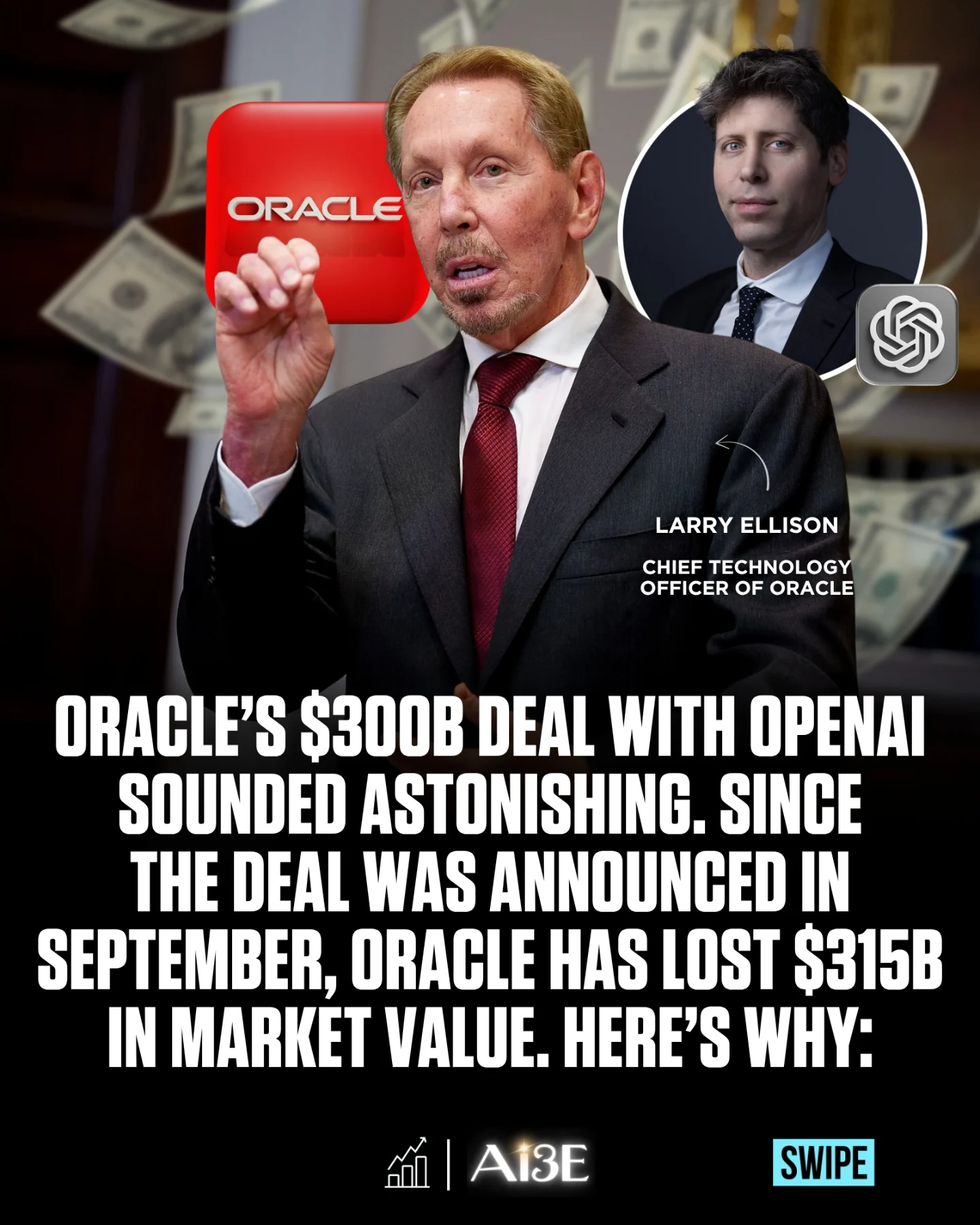
  • Oracle’s massive commitment to become a core infrastructure provider for OpenAI has pushed the company into one of the most aggressive investment cycles in its history, creating a level of financial strain that markets have reacted to sharply.

    The scale of its data center expansion requires years of heavy spending, and the reliance on borrowing adds pressure as interest costs rise and cash generation trails far behind the pace of construction.

    What concerns analysts most is how closely Oracle’s future is now tied to OpenAI’s trajectory, because any slowdown in model demand or commercial momentum would leave Oracle carrying the full weight of its long term financing obligations.

    Investors are questioning whether today’s AI partnerships still deliver the stock market boost they did a year ago, especially as multiple tech giants have seen muted reactions to billion-dollar deals in the current environment.

    Follow us (@artificialintelligenceee) for everything latest from the AI world.

    Source: CNBC
    Oracle’s massive commitment to become a core infrastructure provider for OpenAI has pushed the company into one of the most aggressive investment cycles in its history, creating a level of financial strain that markets have reacted to sharply. The scale of its data center expansion requires years of heavy spending, and the reliance on borrowing adds pressure as interest costs rise and cash generation trails far behind the pace of construction. What concerns analysts most is how closely Oracle’s future is now tied to OpenAI’s trajectory, because any slowdown in model demand or commercial momentum would leave Oracle carrying the full weight of its long term financing obligations. Investors are questioning whether today’s AI partnerships still deliver the stock market boost they did a year ago, especially as multiple tech giants have seen muted reactions to billion-dollar deals in the current environment. Follow us (👉@artificialintelligenceee) for everything latest from the AI world. Source: CNBC
    ·62 Views ·0 Reviews
More Results
Techawks - Powered By Pantrade Blockchain https://techawks.com