• The Atlanta Fed just revised its GDPNow estimate for Q3 down slightly from 3.9% to 3.8%. Still strong, still above trend, and still well above what most forecasters expected just a few months ago.

    But here’s the interesting part:

    While the US economy continues to outperform expectations, other major economies are showing cracks:

    Japan is wrestling with rising bond yields and the limits of yield curve control.

    Europe is stagnating.

    China is fighting deflationary pressure and structural debt issues.

    Meanwhile, US growth remains resilient driven by consumer spending, investment, and ongoing fiscal momentum.

    A number like 3.8% doesn’t sound dramatic, but in a world of slowing growth, this level of momentum makes a statement. The US continues to be the global outlier the economy everyone bets against, yet the one capital keeps flowing back to.

    No wonder global investors overweight US equities and Treasuries. The U.S. isn’t just participating in the global cycle it’s defining it.

    The real question:

    Does this strength give the Fed room to stay tighter for longer, or does it simply delay the slowdown the market keeps trying to price in?

    Because if the economy really is this strong rate cuts aren’t a certainty. They become a negotiation.

    #GDP #Economy #Macro #AtlantaFed #Growth #Finance #Markets #USMarket #Investing #RecessionNarrative #DataDriven
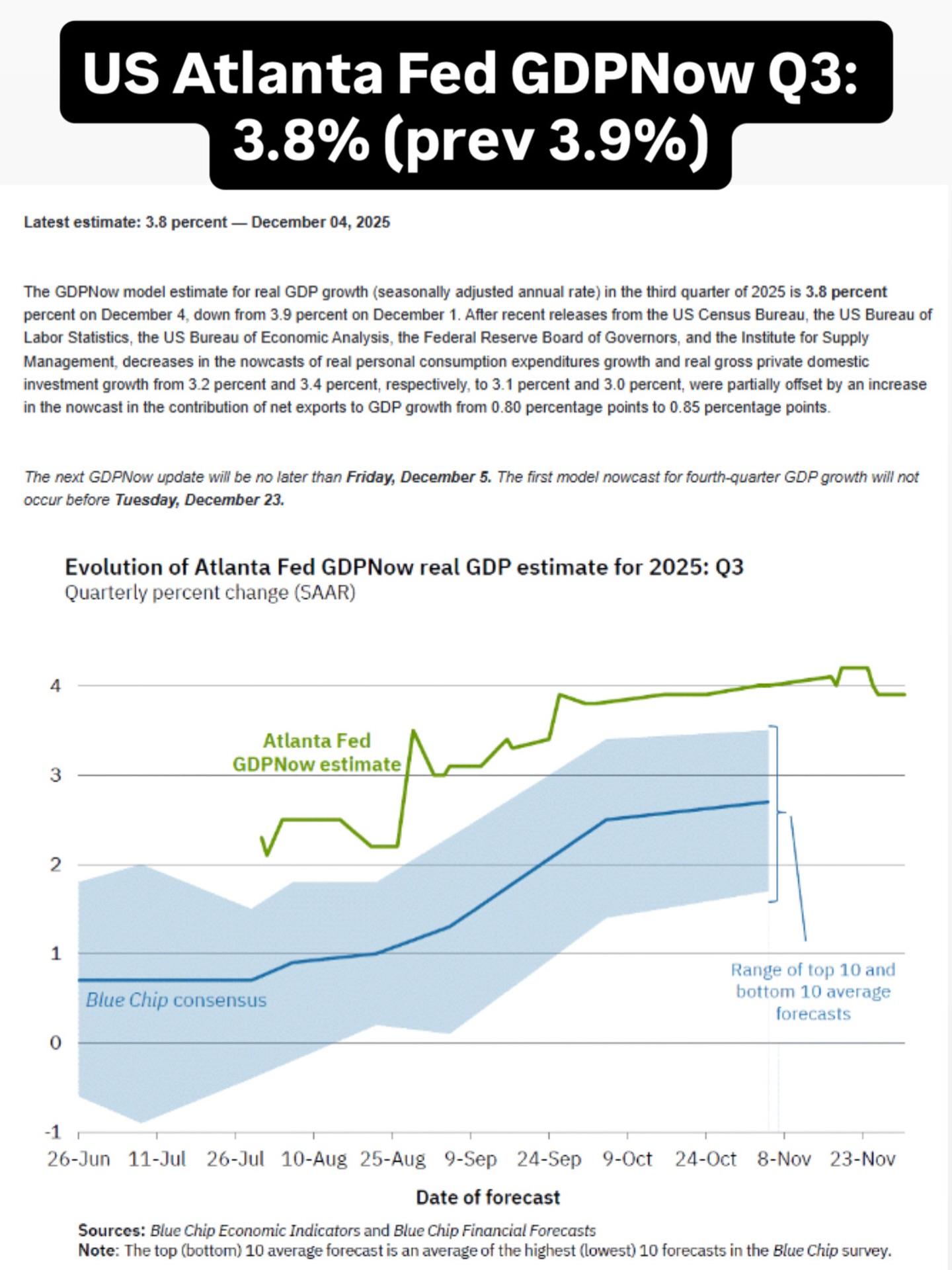
    The Atlanta Fed just revised its GDPNow estimate for Q3 down slightly from 3.9% to 3.8%. Still strong, still above trend, and still well above what most forecasters expected just a few months ago. But here’s the interesting part: While the US economy continues to outperform expectations, other major economies are showing cracks: Japan is wrestling with rising bond yields and the limits of yield curve control. Europe is stagnating. China is fighting deflationary pressure and structural debt issues. Meanwhile, US growth remains resilient driven by consumer spending, investment, and ongoing fiscal momentum. A number like 3.8% doesn’t sound dramatic, but in a world of slowing growth, this level of momentum makes a statement. The US continues to be the global outlier the economy everyone bets against, yet the one capital keeps flowing back to. No wonder global investors overweight US equities and Treasuries. The U.S. isn’t just participating in the global cycle it’s defining it. The real question: Does this strength give the Fed room to stay tighter for longer, or does it simply delay the slowdown the market keeps trying to price in? Because if the economy really is this strong rate cuts aren’t a certainty. They become a negotiation. #GDP #Economy #Macro #AtlantaFed #Growth #Finance #Markets #USMarket #Investing #RecessionNarrative #DataDriven
    ·135 مشاهدة ·0 معاينة
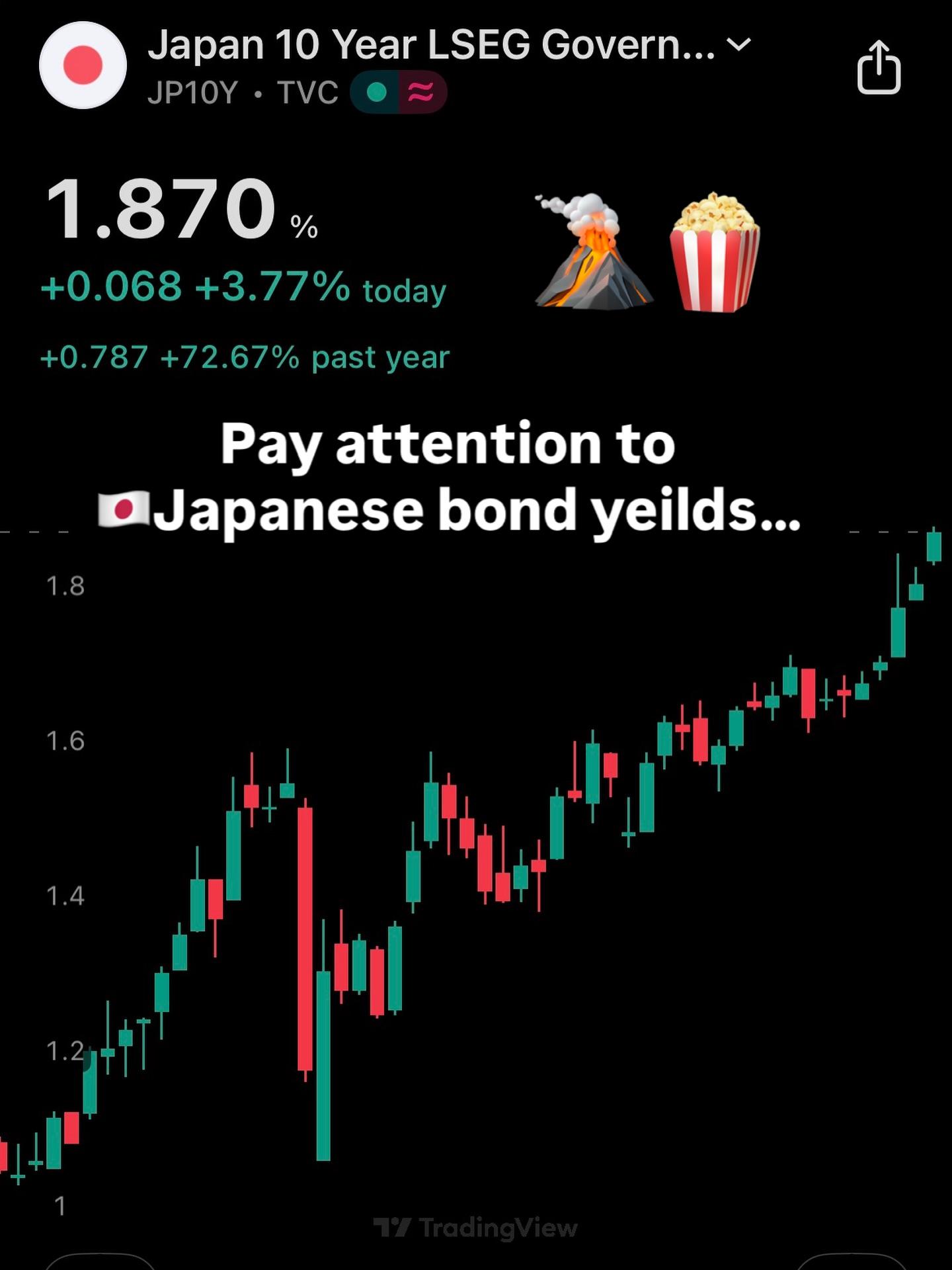
  • Japan is quietly becoming the most important macro story in the world. How long can this go on for?

    The country with the highest debt to GDP ratio on earth is now facing rising yields. The 10 year Japanese government bond is pushing toward 2 percent up more than 70 percent in a year.

    Japan has lived in a world of near zero rates for decades. A world where its central bank could buy its own bonds indefinitely, keep yields pinned down, and create the illusion of stability. That era is ending.

    The Bank of Japan has tried every tool: negative rates, quantitative easing, and now yield curve control. But there’s a simple truth: markets eventually overpower intervention.

    If the BoJ keeps buying bonds to suppress yields, the currency weakens.

    If it stops buying, yields spike and debt service costs explode.

    Japan is stuck between two bad choices.

    The debt burden is over 250 percent of GDP. Higher rates mean higher interest expenses, and that means more borrowing just to pay the interest. The problem becomes exponential.

    If yield curve control breaks, you will see one of two outcomes:

    A currency crisis the yen collapses to absorb the pressure.

    A bond crisis yields blow out and force deleveraging at a scale Japan hasn’t seen in modern history.

    For years investors believed Japan could never break. Zero rates were permanent. Demographics were destiny. Now the market is testing that assumption.

    Japan matters because it’s the endgame experiment:
    What happens when a government prints for decades, monetizes debt, and finally runs out of tools?

    Everyone focuses on the United States. But if Japan snaps first, it will be a global shockwave.

    How does this end? Incredibly slowly… then all at once.

    Liquidity is what everyone is grasping for 😮‍💨

    #japan #macro #markets #bonds #economics #investing #finance #interestrates #debt #yen #bankofjapan #globalmacro #riskmanagement #wealthbuilding #economy #marketanalysis
    Japan is quietly becoming the most important macro story in the world. How long can this go on for? The country with the highest debt to GDP ratio on earth is now facing rising yields. The 10 year Japanese government bond is pushing toward 2 percent up more than 70 percent in a year. Japan has lived in a world of near zero rates for decades. A world where its central bank could buy its own bonds indefinitely, keep yields pinned down, and create the illusion of stability. That era is ending. The Bank of Japan has tried every tool: negative rates, quantitative easing, and now yield curve control. But there’s a simple truth: markets eventually overpower intervention. If the BoJ keeps buying bonds to suppress yields, the currency weakens. If it stops buying, yields spike and debt service costs explode. Japan is stuck between two bad choices. The debt burden is over 250 percent of GDP. Higher rates mean higher interest expenses, and that means more borrowing just to pay the interest. The problem becomes exponential. If yield curve control breaks, you will see one of two outcomes: A currency crisis the yen collapses to absorb the pressure. A bond crisis yields blow out and force deleveraging at a scale Japan hasn’t seen in modern history. For years investors believed Japan could never break. Zero rates were permanent. Demographics were destiny. Now the market is testing that assumption. Japan matters because it’s the endgame experiment: What happens when a government prints for decades, monetizes debt, and finally runs out of tools? Everyone focuses on the United States. But if Japan snaps first, it will be a global shockwave. How does this end? Incredibly slowly… then all at once. Liquidity is what everyone is grasping for 😮‍💨 #japan #macro #markets #bonds #economics #investing #finance #interestrates #debt #yen #bankofjapan #globalmacro #riskmanagement #wealthbuilding #economy #marketanalysis
    ·289 مشاهدة ·0 معاينة
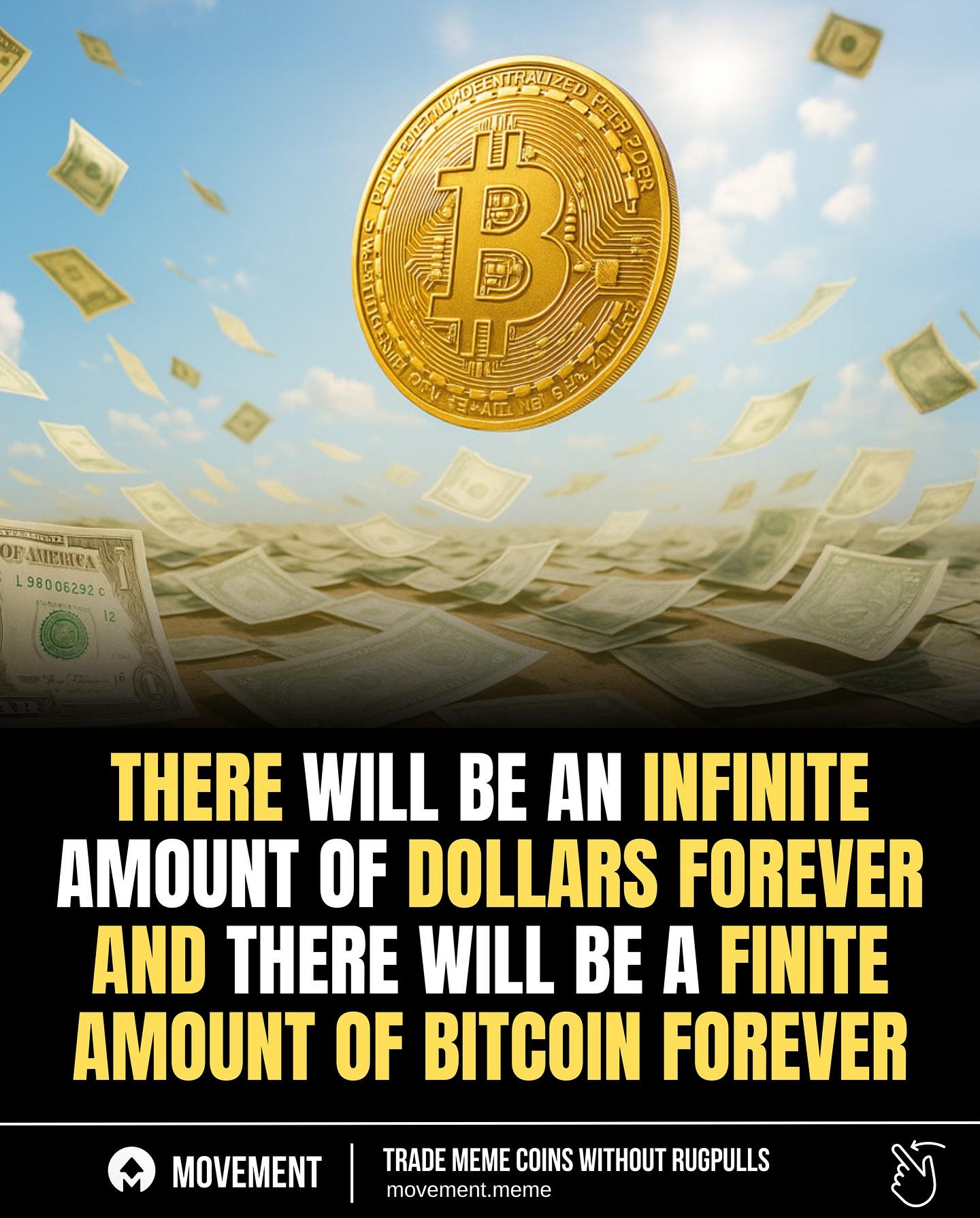
  • Analysts are once again underscoring Bitcoin’s scarcity as global liquidity expands and central banks keep printing to stimulate growth.

    With only 21 million BTC ever to exist, the contrast against infinite fiat issuance continues to drive Bitcoin’s long-term adoption narrative.

    This dynamic has become one of the core macro arguments fueling institutional investment into the crypto market.

    Download the Movement Market app in my bio and start trading memecoins
    Analysts are once again underscoring Bitcoin’s scarcity as global liquidity expands and central banks keep printing to stimulate growth. With only 21 million BTC ever to exist, the contrast against infinite fiat issuance continues to drive Bitcoin’s long-term adoption narrative. This dynamic has become one of the core macro arguments fueling institutional investment into the crypto market. Download the Movement Market app in my bio and start trading memecoins 🚀
    ·140 مشاهدة ·0 معاينة
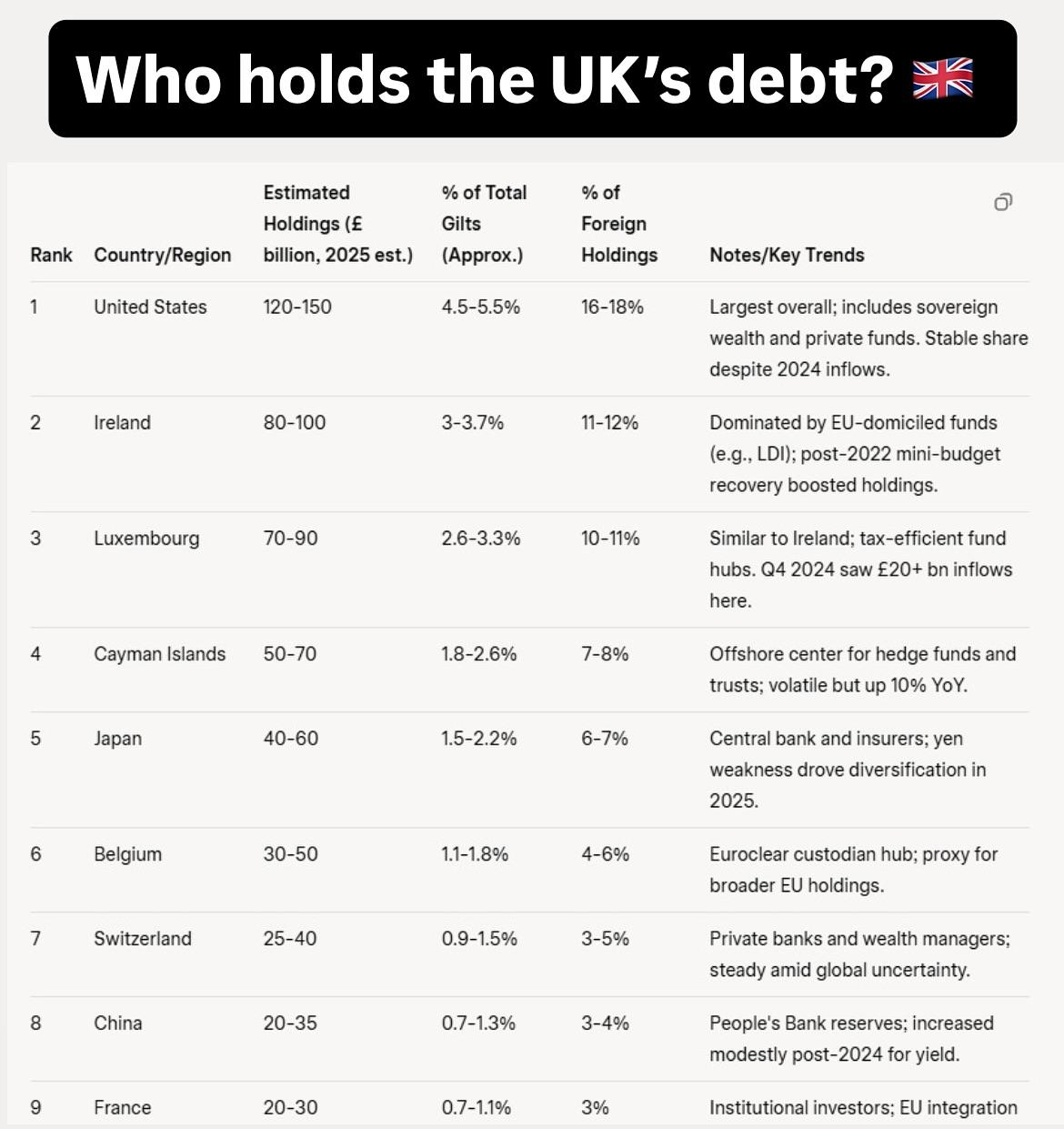
  • This chart shows which countries own the biggest slices of UK government bonds. If these major holders like the US, Ireland, or Luxembourg were to sell off even a fraction, gilt yields would jump. That means higher borrowing costs for the government and a lot less room to fund public spending. In short: financing depends on foreign confidence. How do you incentive buyers?

    I’ve been talking about this for months… it makes it harder to finance deficits and fund public spending. In essence, the UK’s fiscal flexibility depends heavily on external confidence in its debt markets.

    You know what to do lads 🫡

    Scott is the most undervalued person in Washington… he knows the score his macro background is

    #Bonds #UKGilts #UKBondMarket #DebtMarkets #FiscalPolicy #GlobalFinance #debt
    This chart shows which countries own the biggest slices of UK government bonds. If these major holders like the US, Ireland, or Luxembourg were to sell off even a fraction, gilt yields would jump. That means higher borrowing costs for the government and a lot less room to fund public spending. In short: financing depends on foreign confidence. How do you incentive buyers? 🍿 I’ve been talking about this for months… it makes it harder to finance deficits and fund public spending. In essence, the UK’s fiscal flexibility depends heavily on external confidence in its debt markets. You know what to do lads 🦍🇺🇸🤝🫡 Scott is the most undervalued person in Washington… he knows the score 🎯 his macro background is 🔥👌 #Bonds #UKGilts #UKBondMarket #DebtMarkets #FiscalPolicy #GlobalFinance #debt
    ·390 مشاهدة ·0 معاينة
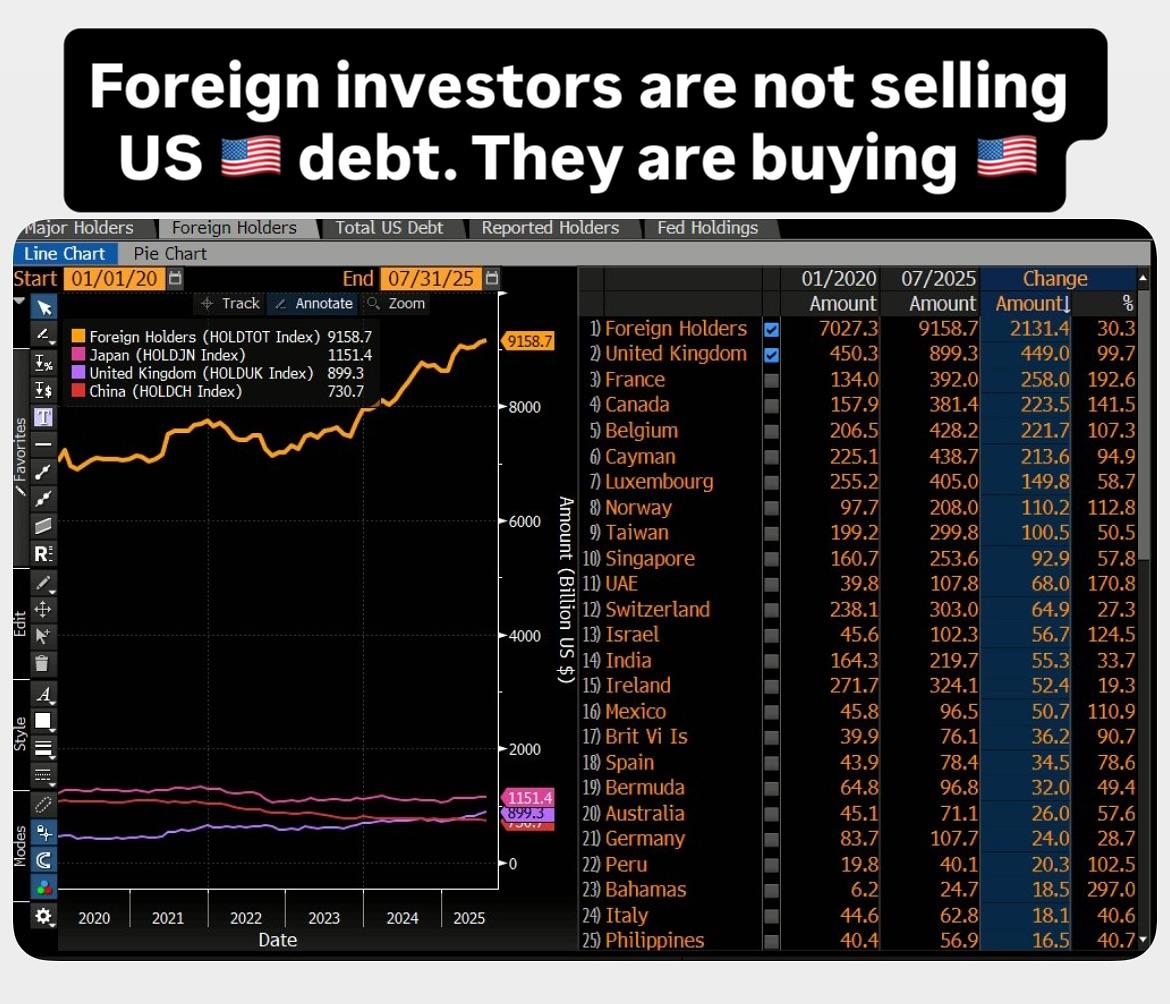
  • Foreign investors are not selling US debt. They are buying.

    Total foreign holdings: $9.16T (July 2025), up from $7.0T in Jan 2020.

    The U.K. doubled its exposure → $899B today vs. $450B in 2020.

    France, Canada, Belgium, and Luxembourg also posted significant increases.

    Japan remains the largest single holder at $1.15T, while China has reduced but still holds $730B.

    This suggests that U.S. Treasuries are still viewed globally as the ultimate safe haven even in a high rate, high debt world.

    #bloomberg #USTreasuries #GlobalMarkets #Macro #Investing #Geopolitics #DebtMarket #SafeHaven #Bonds #USDebt #macroeconomics
    Foreign investors are not selling US 🇺🇸debt. They are buying. Total foreign holdings: $9.16T (July 2025), up from $7.0T in Jan 2020. The U.K. doubled its exposure → $899B today vs. $450B in 2020. France, Canada, Belgium, and Luxembourg also posted significant increases. Japan remains the largest single holder at $1.15T, while China has reduced but still holds $730B. 👉 This suggests that U.S. Treasuries are still viewed globally as the ultimate safe haven even in a high rate, high debt world. #bloomberg #USTreasuries #GlobalMarkets #Macro #Investing #Geopolitics #DebtMarket #SafeHaven #Bonds #USDebt #macroeconomics
    ·522 مشاهدة ·0 معاينة
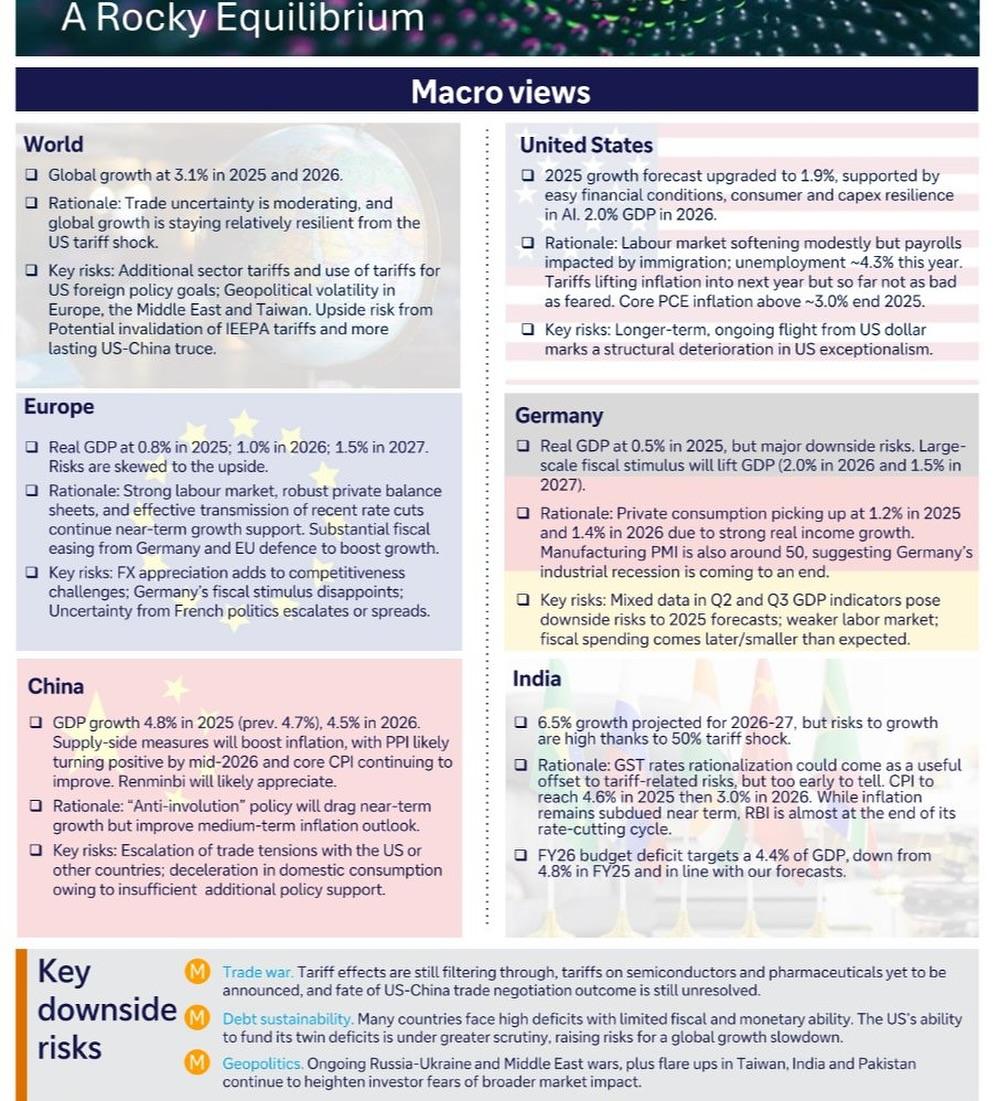
  • Deutsche Bank recent macro views…
    Deutsche Bank recent macro views…
    ·64 مشاهدة ·0 معاينة
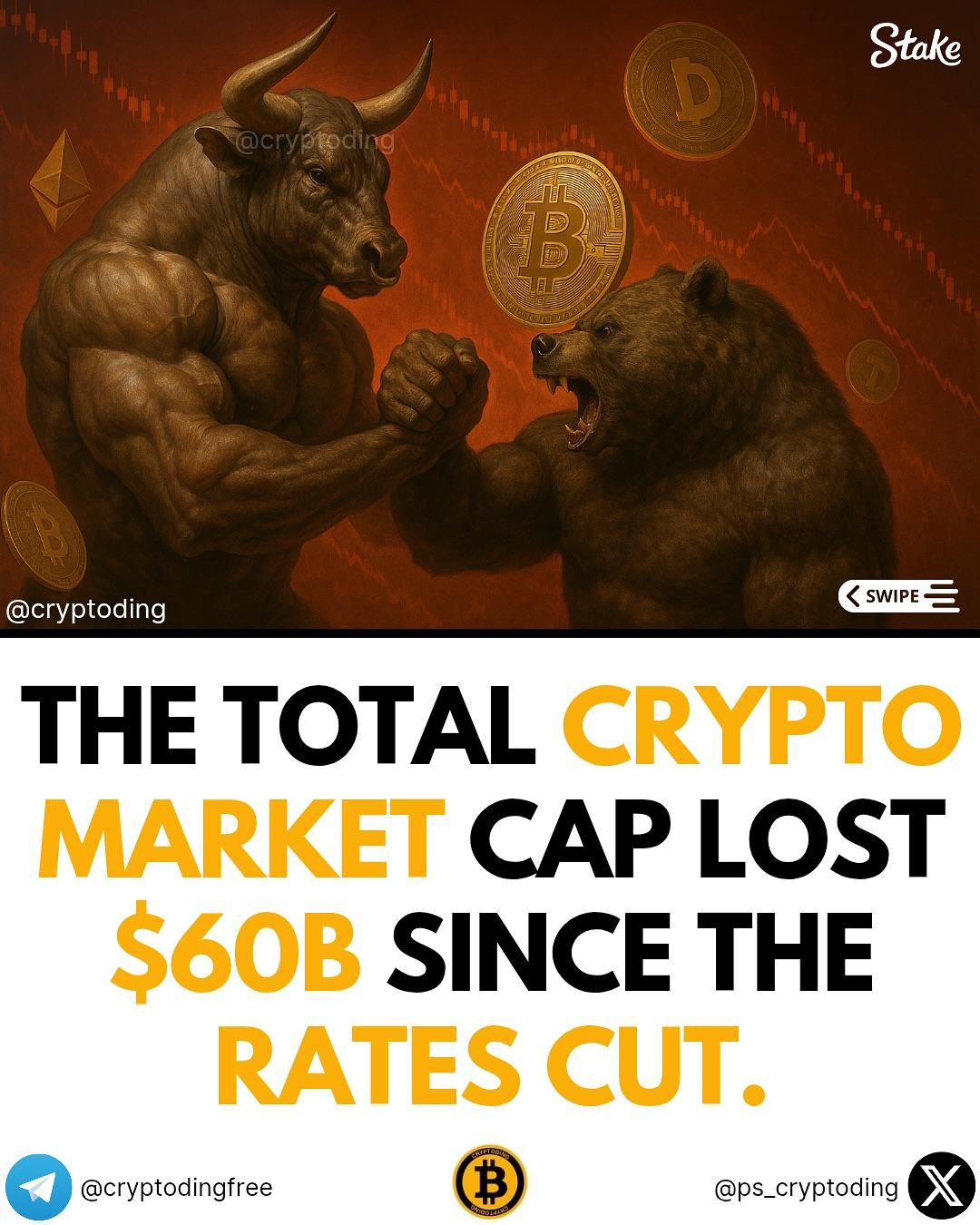
  • The total crypto market cap has seen significant swings in recent weeks.

    Since the recent rate cut, the market has shed around $60 billion, reflecting short-term uncertainty and volatility among traders.

    However, looking at the broader picture, the market has still added nearly $270 billion in value since September 1st, showing that despite temporary pullbacks, overall sentiment and capital inflows into crypto remain strong.

    This highlights how the space continues to grow even while reacting sharply to macroeconomic decisions.
    The total crypto market cap has seen significant swings in recent weeks. Since the recent rate cut, the market has shed around $60 billion, reflecting short-term uncertainty and volatility among traders. However, looking at the broader picture, the market has still added nearly $270 billion in value since September 1st, showing that despite temporary pullbacks, overall sentiment and capital inflows into crypto remain strong. This highlights how the space continues to grow even while reacting sharply to macroeconomic decisions.
    ·108 مشاهدة ·0 معاينة
  • By noon on September 18, approximately 450,000 people had taken to the streets and workplaces across France. Coming just a week after nationwide blockades under the slogan “Let’s Block Everything” (Bloquons tout), Thursday’s strikes and assemblies were called by trade unions and confederations determined to resist another round of austerity measures.

    “There are thousands and thousands of strikes in all workplaces,” Sophie Binet, head of the General Confederation of Labor (Confédération générale du travail, CGT), said during one of the marches. “Schools are largely closed. Daycare centers, swimming pools, libraries, and many factories are closed. The entire transportation sector is also affected by strikes. In short, today workers are rising up to say that they can no longer endure this endless night of Macronism.”

    Read the full article on our website.
    By noon on September 18, approximately 450,000 people had taken to the streets and workplaces across France. Coming just a week after nationwide blockades under the slogan “Let’s Block Everything” (Bloquons tout), Thursday’s strikes and assemblies were called by trade unions and confederations determined to resist another round of austerity measures. “There are thousands and thousands of strikes in all workplaces,” Sophie Binet, head of the General Confederation of Labor (Confédération générale du travail, CGT), said during one of the marches. “Schools are largely closed. Daycare centers, swimming pools, libraries, and many factories are closed. The entire transportation sector is also affected by strikes. In short, today workers are rising up to say that they can no longer endure this endless night of Macronism.” 📲 Read the full article on our website.
    ·158 مشاهدة ·0 معاينة
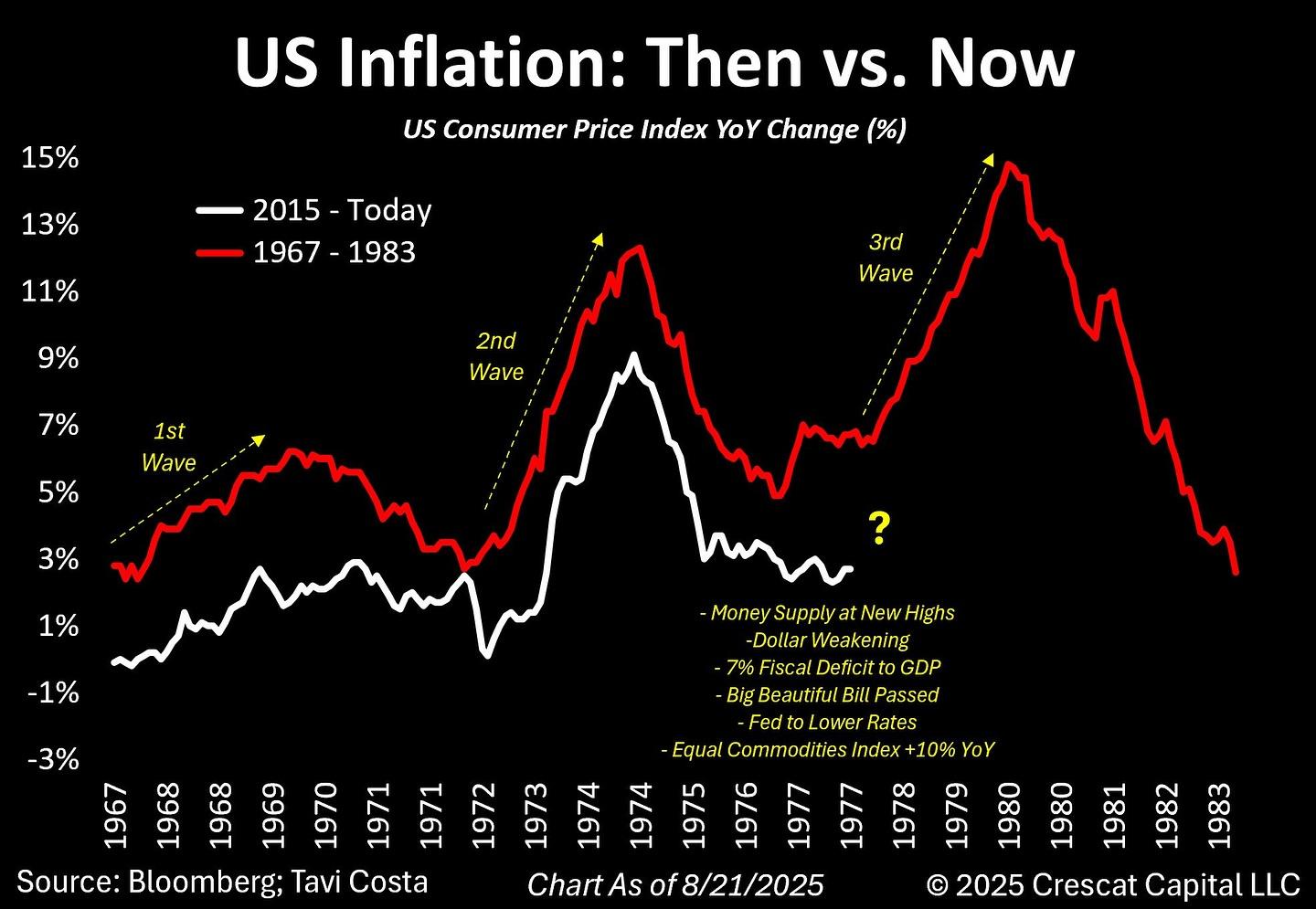
  • History doesn’t repeat, but it often rhymes. This chart compares U.S. inflation today with the 1967 - 1983 period, when inflation came in waves the first surge in the late 1960s, a sharper second wave in the mid-1970s, and finally the massive third wave that forced Paul Volcker’s Fed to slam rates higher and crush inflation at the cost of a deep recession.

    Today, inflation has cooled from its recent highs, but with money supply at new records, a weakening dollar, persistent fiscal deficits, accommodative policy signals, and rising commodity prices, the risk of another wave is far from gone. The big question: are we repeating the 1970s playbook?

    #Inflation #Economy #Macro #Commodities #CPI #FederalReserve #Markets #Investing #MacroEconomics #Stagflation #EconomicHistory
    History doesn’t repeat, but it often rhymes. This chart compares U.S. inflation today with the 1967 - 1983 period, when inflation came in waves the first surge in the late 1960s, a sharper second wave in the mid-1970s, and finally the massive third wave that forced Paul Volcker’s Fed to slam rates higher and crush inflation at the cost of a deep recession. Today, inflation has cooled from its recent highs, but with money supply at new records, a weakening dollar, persistent fiscal deficits, accommodative policy signals, and rising commodity prices, the risk of another wave is far from gone. The big question: are we repeating the 1970s playbook? #Inflation #Economy #Macro #Commodities #CPI #FederalReserve #Markets #Investing #MacroEconomics #Stagflation #EconomicHistory
    ·316 مشاهدة ·0 معاينة
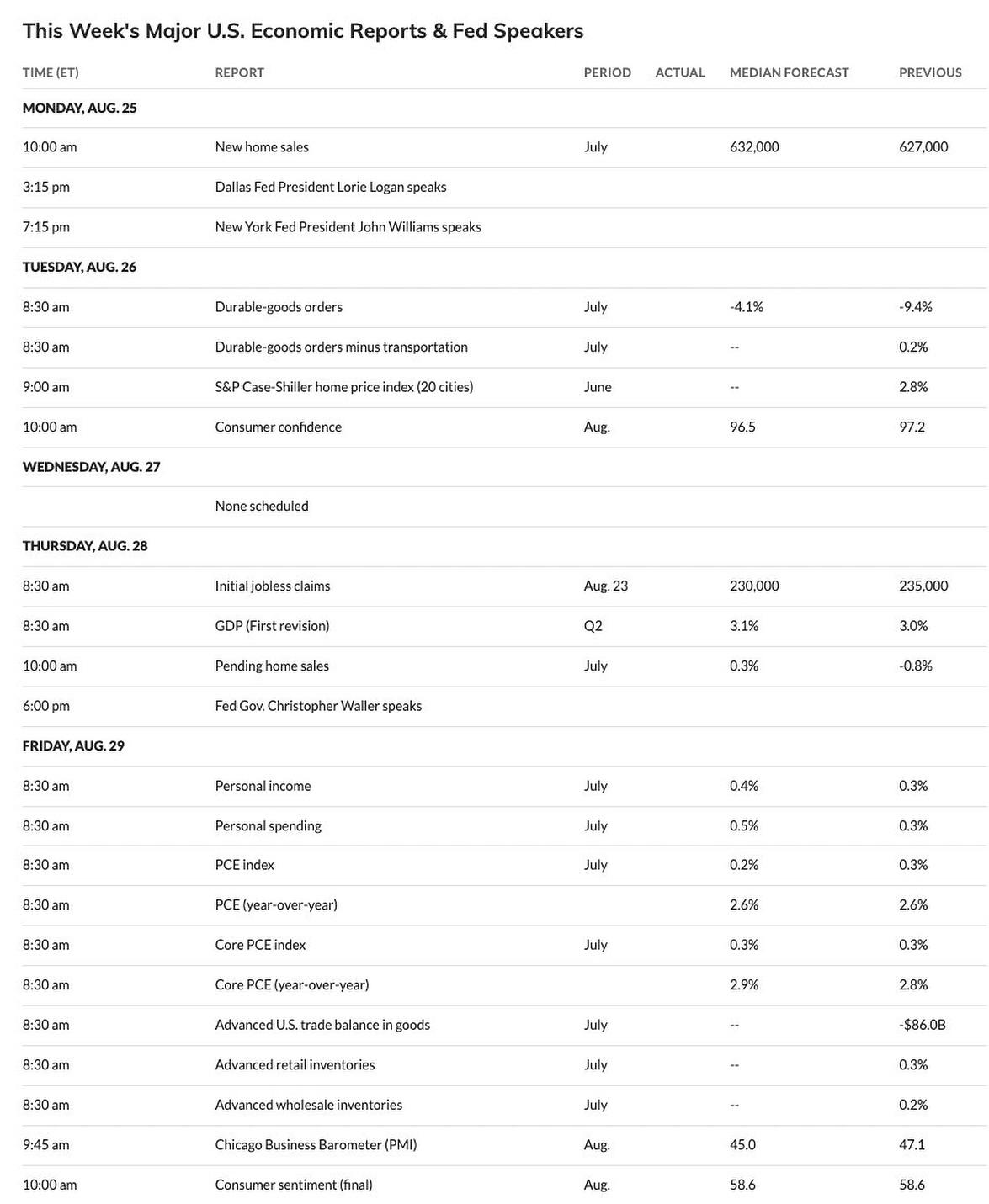
  • Here is the economic calendar for this upcoming week #macroeconomics #stocks #markets
    Here is the 🇺🇸 economic calendar for this upcoming week #macroeconomics #stocks #markets
    ·156 مشاهدة ·0 معاينة
الصفحات المعززة
Techawks - Powered By Pantrade Blockchain https://techawks.com