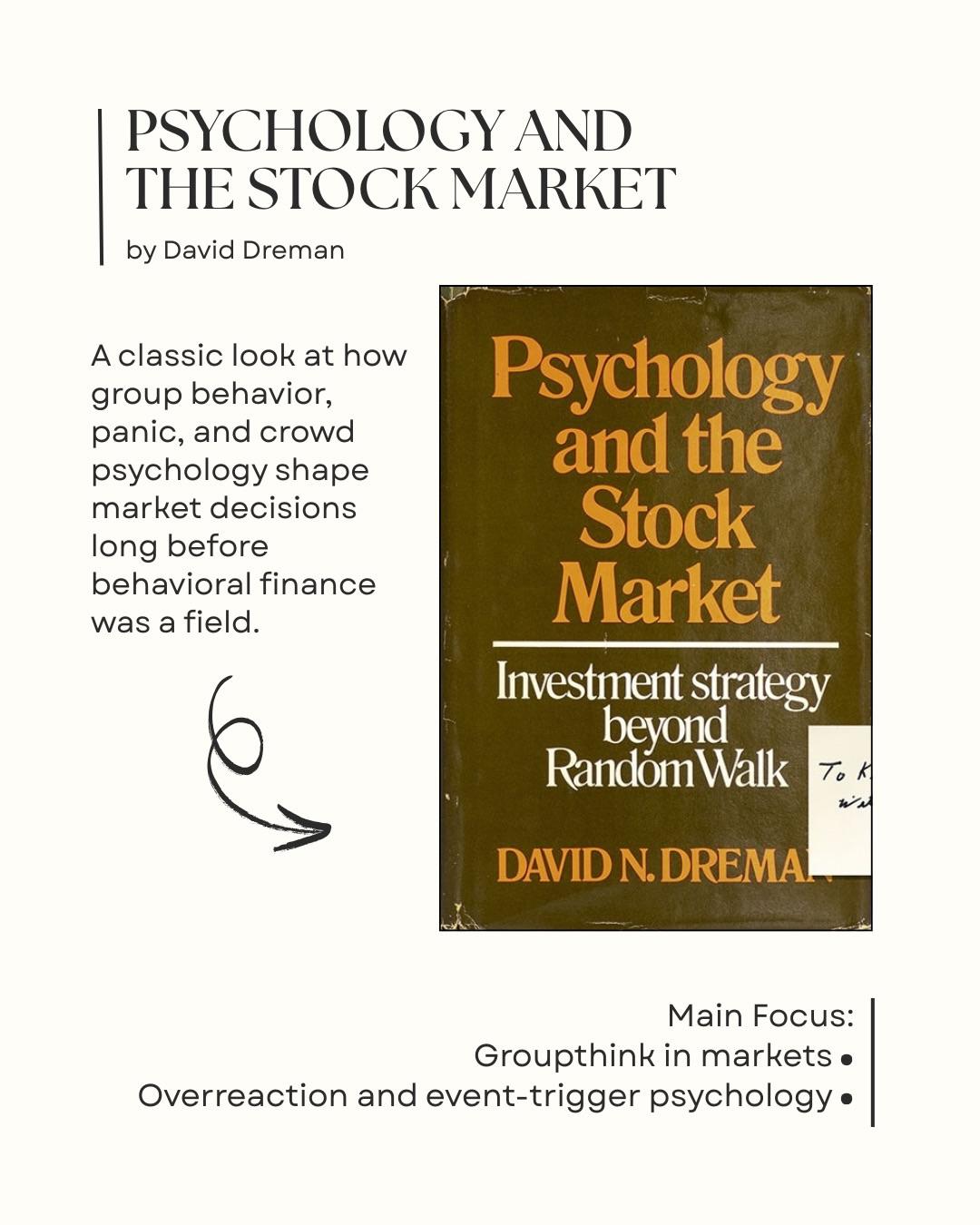
• 5 Books to Master the Psychology of Investing. #economics #stocks #books
    5 Books to Master the Psychology of Investing. #economics #stocks #books
    ·37 Views ·0 voorbeeld
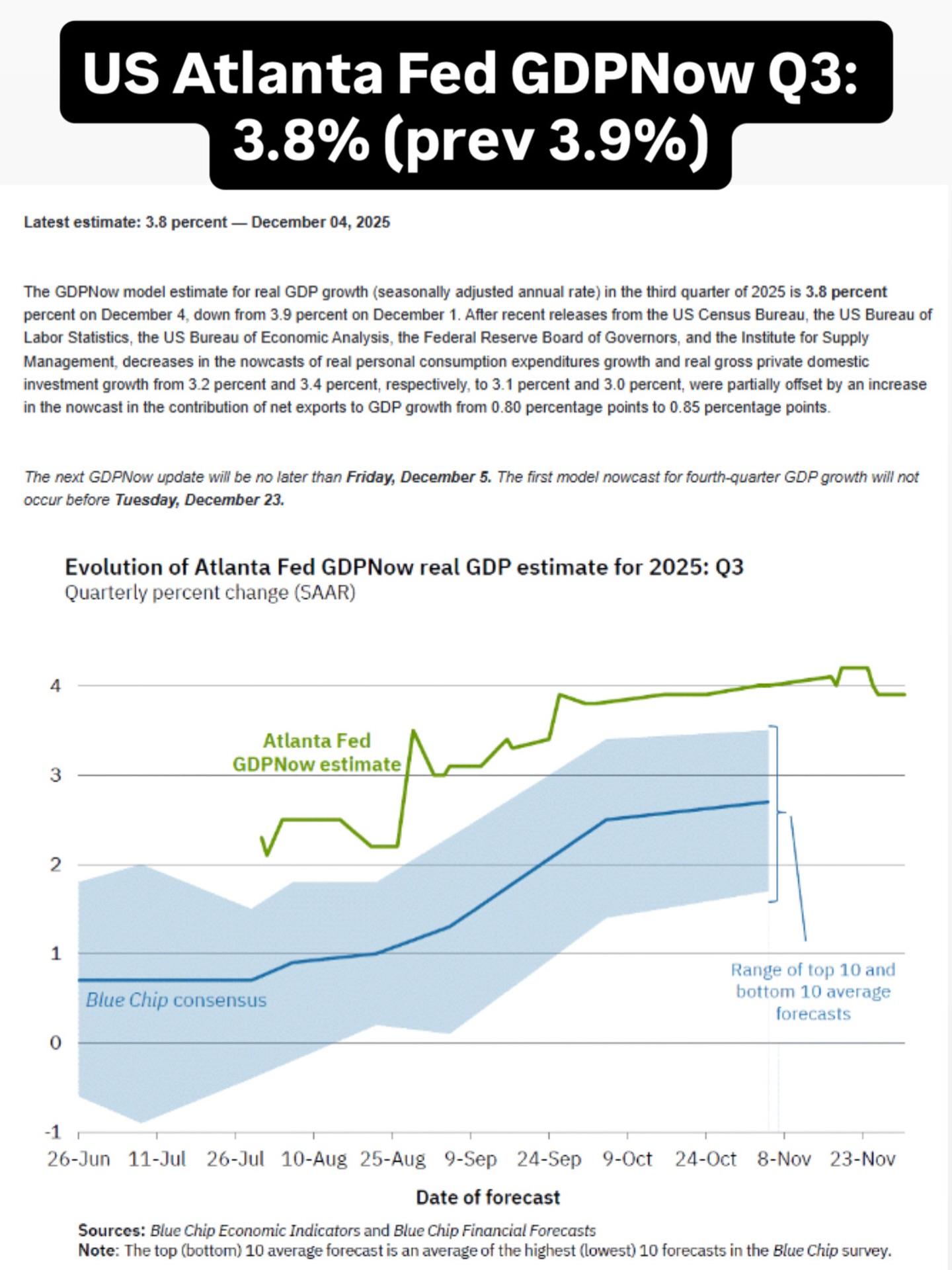
  • The Atlanta Fed just revised its GDPNow estimate for Q3 down slightly from 3.9% to 3.8%. Still strong, still above trend, and still well above what most forecasters expected just a few months ago.

    But here’s the interesting part:

    While the US economy continues to outperform expectations, other major economies are showing cracks:

    Japan is wrestling with rising bond yields and the limits of yield curve control.

    Europe is stagnating.

    China is fighting deflationary pressure and structural debt issues.

    Meanwhile, US growth remains resilient driven by consumer spending, investment, and ongoing fiscal momentum.

    A number like 3.8% doesn’t sound dramatic, but in a world of slowing growth, this level of momentum makes a statement. The US continues to be the global outlier the economy everyone bets against, yet the one capital keeps flowing back to.

    No wonder global investors overweight US equities and Treasuries. The U.S. isn’t just participating in the global cycle it’s defining it.

    The real question:

    Does this strength give the Fed room to stay tighter for longer, or does it simply delay the slowdown the market keeps trying to price in?

    Because if the economy really is this strong rate cuts aren’t a certainty. They become a negotiation.

    #GDP #Economy #Macro #AtlantaFed #Growth #Finance #Markets #USMarket #Investing #RecessionNarrative #DataDriven
    The Atlanta Fed just revised its GDPNow estimate for Q3 down slightly from 3.9% to 3.8%. Still strong, still above trend, and still well above what most forecasters expected just a few months ago. But here’s the interesting part: While the US economy continues to outperform expectations, other major economies are showing cracks: Japan is wrestling with rising bond yields and the limits of yield curve control. Europe is stagnating. China is fighting deflationary pressure and structural debt issues. Meanwhile, US growth remains resilient driven by consumer spending, investment, and ongoing fiscal momentum. A number like 3.8% doesn’t sound dramatic, but in a world of slowing growth, this level of momentum makes a statement. The US continues to be the global outlier the economy everyone bets against, yet the one capital keeps flowing back to. No wonder global investors overweight US equities and Treasuries. The U.S. isn’t just participating in the global cycle it’s defining it. The real question: Does this strength give the Fed room to stay tighter for longer, or does it simply delay the slowdown the market keeps trying to price in? Because if the economy really is this strong rate cuts aren’t a certainty. They become a negotiation. #GDP #Economy #Macro #AtlantaFed #Growth #Finance #Markets #USMarket #Investing #RecessionNarrative #DataDriven
    ·140 Views ·0 voorbeeld
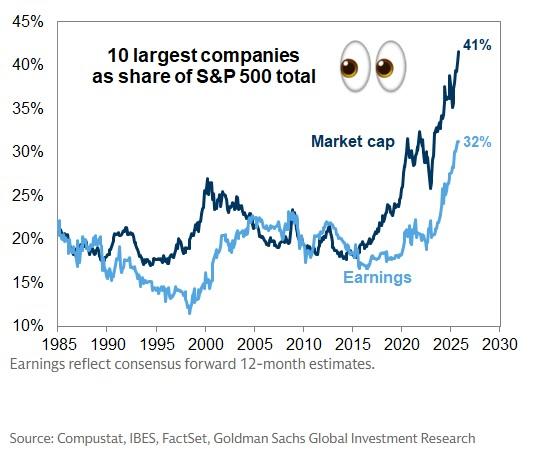
  • Remarkable… Modern record of 41% SPX concentration in the top 10 stocks, but they account for a rising 32% share of earnings GS #goldmansachs #investing #finance #stocks #sp500
    Remarkable… Modern record of 41% SPX concentration in the top 10 stocks, but they account for a rising 32% share of earnings GS #goldmansachs #investing #finance #stocks #sp500
    ·85 Views ·0 voorbeeld
  • Remarkable… Modern record of 41% SPX concentration in the top 10 stocks, but they account for a rising 32% share of earnings GS #goldmansachs #investing #finance #stocks #sp500
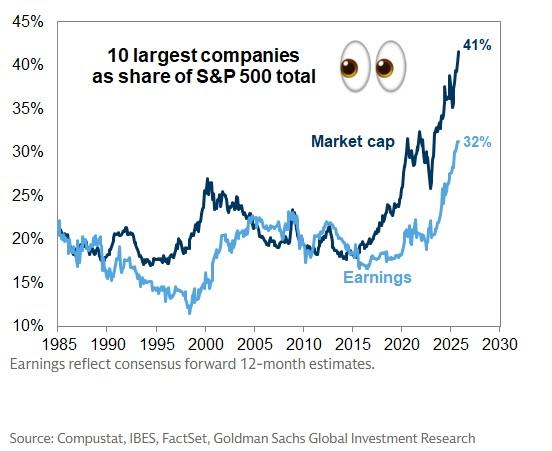
    Remarkable… Modern record of 41% SPX concentration in the top 10 stocks, but they account for a rising 32% share of earnings GS #goldmansachs #investing #finance #stocks #sp500
    ·100 Views ·0 voorbeeld
  • That feeling when you finally understand bonds #investing #bonds #stocks #markets #hedgefunds
    That feeling when you finally understand bonds #investing #bonds #stocks #markets #hedgefunds
    ·94 Views ·2 Plays ·0 voorbeeld
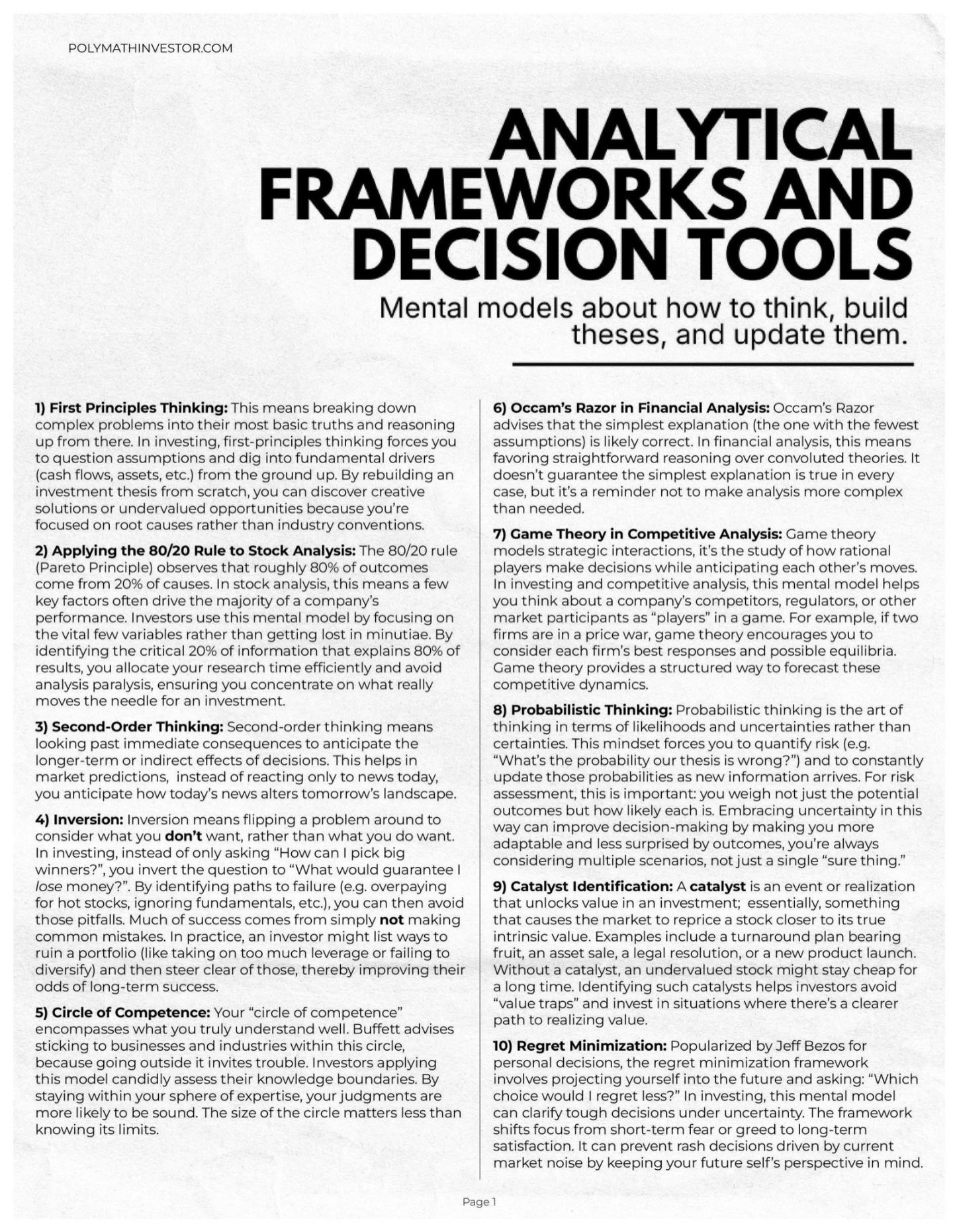
  • 44 mental models every serious investor should know.

    What makes these useful isn’t how many you can memorize it’s how many you can actually apply when making decisions under uncertainty.

    A few worth keeping close:

    The McNamara Fallacy
    What gets measured gets managed but sometimes the most important variables can’t be easily quantified. Markets aren’t just numbers. Sentiment, incentives, governance quality, and strategy don’t fit neatly into a spreadsheet… but they drive outcomes. The danger is letting easy to measure metrics blind you to meaningful but hard to measure risks.

    The Semmelweis Reflex
    Markets hate new information especially information that challenges existing beliefs. Every cycle, investors dismiss certain trends as “temporary”… until they aren’t. Think EVs, cloud software, crypto, AI. Reflexive rejection is comfortable until it becomes expensive.

    The Baader Meinhof Phenomenon
    Once an idea enters your awareness, suddenly you see it everywhere. In markets, this can create false confidence and FOMO. Just because a theme dominates headlines doesn’t mean it’s investable or priced attractively.

    These frameworks don’t tell you what to buy they help you avoid being misled by your own psychology while you do it.

    Great investing is less about predicting the future and more about avoiding the mental traps that keep most people from seeing it clearly.

    #investing #finance
    44 mental models every serious investor should know. What makes these useful isn’t how many you can memorize it’s how many you can actually apply when making decisions under uncertainty. A few worth keeping close: The McNamara Fallacy What gets measured gets managed but sometimes the most important variables can’t be easily quantified. Markets aren’t just numbers. Sentiment, incentives, governance quality, and strategy don’t fit neatly into a spreadsheet… but they drive outcomes. The danger is letting easy to measure metrics blind you to meaningful but hard to measure risks. The Semmelweis Reflex Markets hate new information especially information that challenges existing beliefs. Every cycle, investors dismiss certain trends as “temporary”… until they aren’t. Think EVs, cloud software, crypto, AI. Reflexive rejection is comfortable until it becomes expensive. The Baader Meinhof Phenomenon Once an idea enters your awareness, suddenly you see it everywhere. In markets, this can create false confidence and FOMO. Just because a theme dominates headlines doesn’t mean it’s investable or priced attractively. These frameworks don’t tell you what to buy they help you avoid being misled by your own psychology while you do it. Great investing is less about predicting the future and more about avoiding the mental traps that keep most people from seeing it clearly. #investing #finance
    ·207 Views ·0 voorbeeld
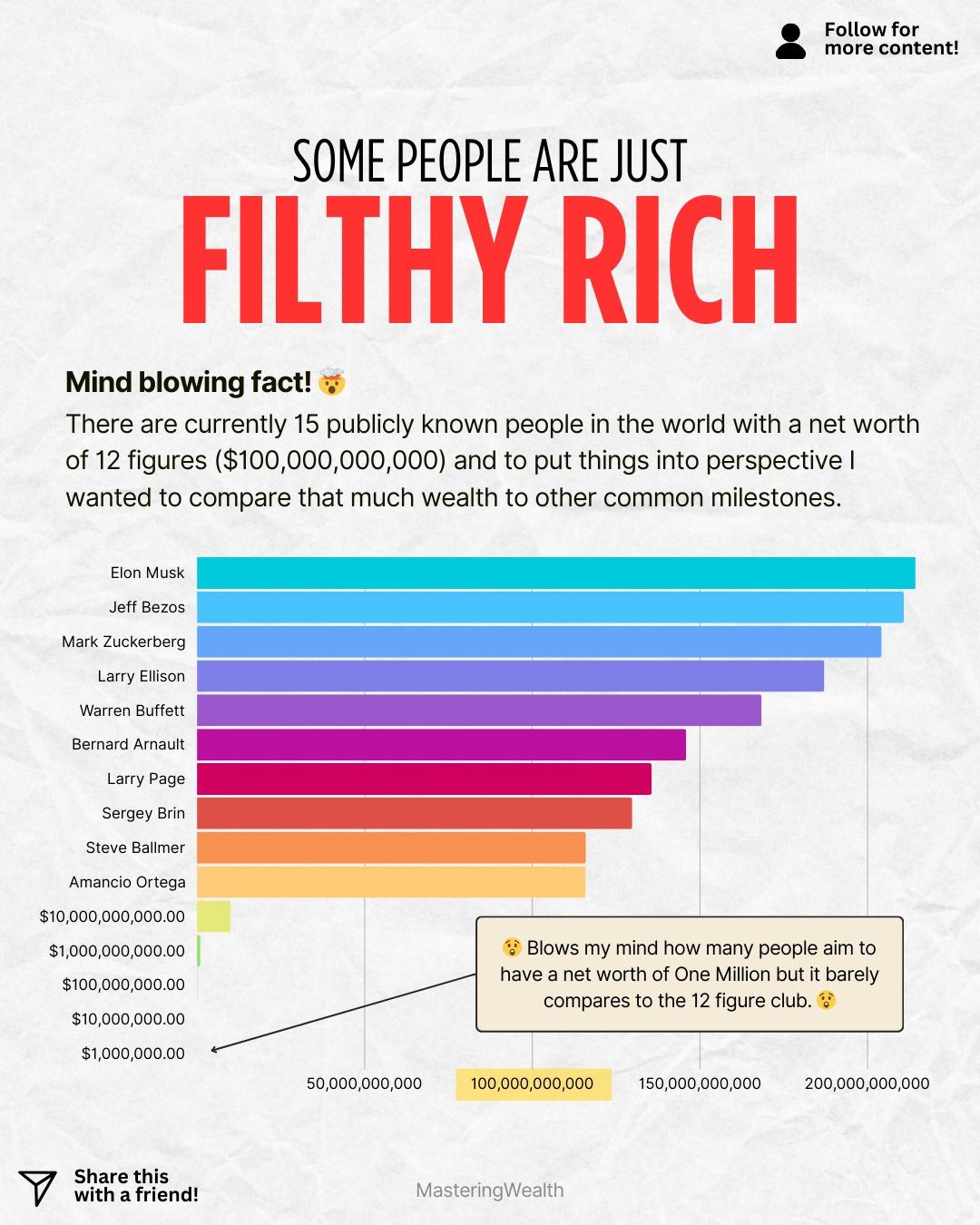
  • The level of wealth shown in this chart is almost impossible to wrap your mind around. The people highlighted here are part of the extremely rare twelve figure club which means their net worth reaches one hundred billion dollars or more. Seeing these numbers next to common financial milestones like one million makes you realize how massive the gap is between everyday wealth and ultra wealth.

    Right now there are about fifteen publicly known individuals who have reached this level. Names like Elon Musk, Jeff Bezos, Mark Zuckerberg, Warren Buffett, Larry Page, Sergey Brin and Bernard Arnault dominate the list because they built companies that changed entire industries. Their wealth is tied to innovation, ownership, and long term growth rather than salary.

    The graphic helps show the scale visually. One million dollars looks tiny when placed next to one hundred billion dollars and that is the entire point. Many people chase their first million while these individuals have created wealth that is one hundred thousand times greater.

    The world of extreme wealth teaches us something important. Wealth grows exponentially when you own assets that scale and reach global markets. Technology, platforms, and long term business ownership continue to be the vehicles that create new billionaires.

    If you want to see the dividend portfolio I use to build steady long term wealth, comment “Stocks” and I will send you the link.

    Which person on this list inspires you the most and why do you think they were able to reach this level of financial success?

    For more content that breaks down wealth building, investing, net worth growth, and financial education in a simple visual way, follow @MasteringWealth and level up your money knowledge daily.

    This content is for educational purposes only and is not financial advice. Always make informed decisions and consult with a licensed professional where needed.
    The level of wealth shown in this chart is almost impossible to wrap your mind around. The people highlighted here are part of the extremely rare twelve figure club which means their net worth reaches one hundred billion dollars or more. Seeing these numbers next to common financial milestones like one million makes you realize how massive the gap is between everyday wealth and ultra wealth. Right now there are about fifteen publicly known individuals who have reached this level. Names like Elon Musk, Jeff Bezos, Mark Zuckerberg, Warren Buffett, Larry Page, Sergey Brin and Bernard Arnault dominate the list because they built companies that changed entire industries. Their wealth is tied to innovation, ownership, and long term growth rather than salary. The graphic helps show the scale visually. One million dollars looks tiny when placed next to one hundred billion dollars and that is the entire point. Many people chase their first million while these individuals have created wealth that is one hundred thousand times greater. The world of extreme wealth teaches us something important. Wealth grows exponentially when you own assets that scale and reach global markets. Technology, platforms, and long term business ownership continue to be the vehicles that create new billionaires. If you want to see the dividend portfolio I use to build steady long term wealth, comment “Stocks” and I will send you the link. Which person on this list inspires you the most and why do you think they were able to reach this level of financial success? For more content that breaks down wealth building, investing, net worth growth, and financial education in a simple visual way, follow @MasteringWealth and level up your money knowledge daily. ⚠️ This content is for educational purposes only and is not financial advice. Always make informed decisions and consult with a licensed professional where needed.
    ·37 Views ·0 voorbeeld
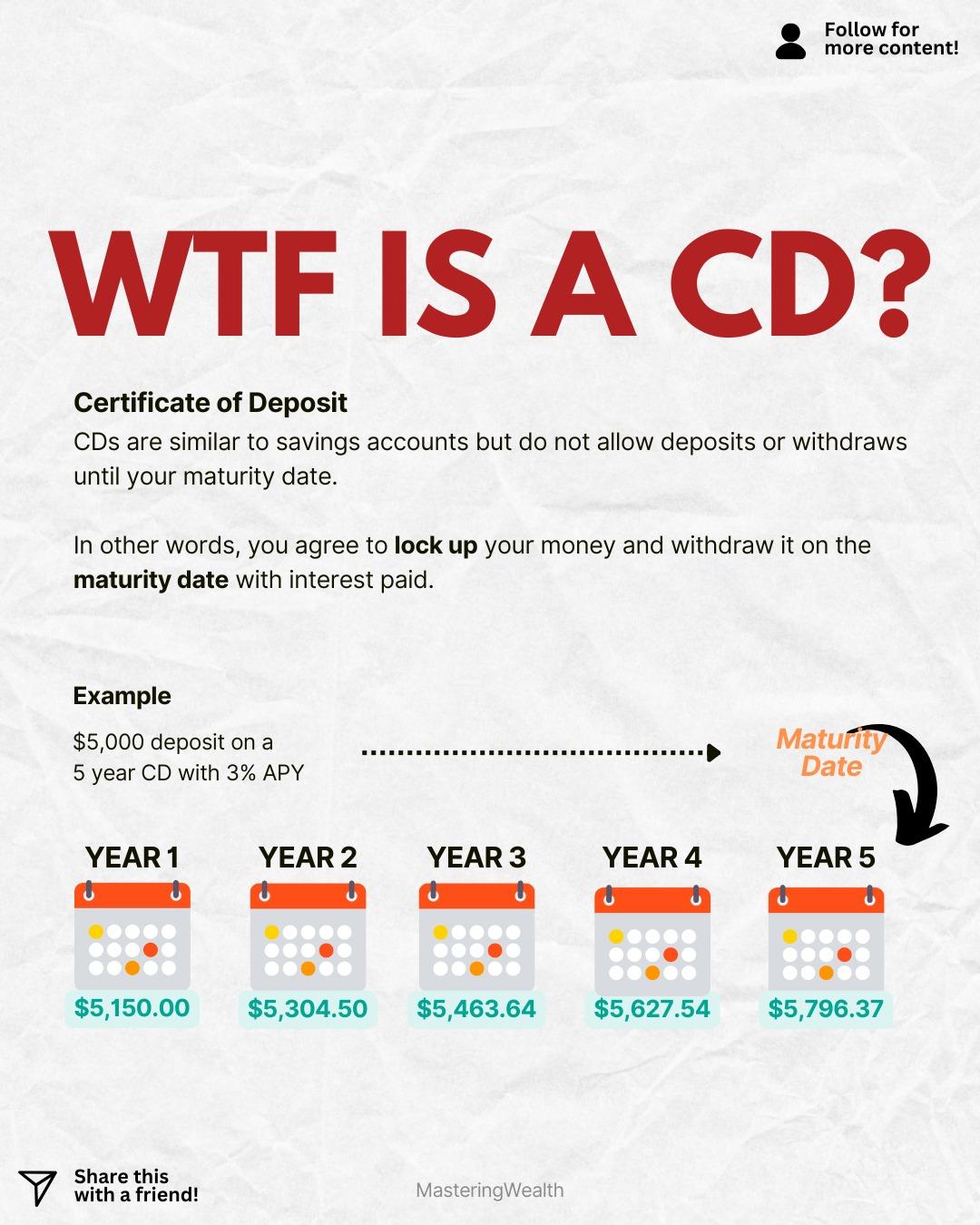
  • A Certificate of Deposit is one of the simplest financial tools you can use to grow your savings with predictable returns. The graphic shows how a CD works by locking your money for a set period and earning a fixed interest rate until the maturity date. This is different from a regular savings account because you cannot add or withdraw money until the term ends without paying a penalty.

    CDs offer stability which makes them attractive for short term goals. You know exactly how much interest you will earn and when you will be able to access your money. This gives you a safe place to store cash while avoiding the risk of market fluctuations.

    In the example shown you deposit five thousand dollars into a five year CD with a three percent APY. Each year your balance grows because interest is added and compounds on the new amount. By the end of year five your money grows to five thousand seven hundred ninety six dollars without needing to do anything extra.

    CDs are great for people who want a guaranteed return. They are often used for emergency fund surplus, saving for a planned purchase, or holding money during uncertain market conditions. They typically offer higher interest rates than regular savings accounts which makes them a better option for money you do not need immediately.

    When comparing CDs always check the APY, term length, and whether the CD is locked or flexible. Online banks sometimes offer higher CD rates than traditional banks which can give you better returns. CDs are also insured which adds another layer of safety for your savings.

    If you want to see the dividend portfolio I use for long term investing and compounding, comment “Stocks” and I will send you the link.

    Would you ever consider using a CD for part of your savings or do you prefer keeping everything in a regular savings account?

    For more simple guides that help you understand interest rates, savings tools, and smart money decisions, follow @MasteringWealth for daily financial breakdowns.

    This content is for educational purposes only and is not financial advice. Always do your own research or consult a licensed professional before making financial decisions.
    A Certificate of Deposit is one of the simplest financial tools you can use to grow your savings with predictable returns. The graphic shows how a CD works by locking your money for a set period and earning a fixed interest rate until the maturity date. This is different from a regular savings account because you cannot add or withdraw money until the term ends without paying a penalty. CDs offer stability which makes them attractive for short term goals. You know exactly how much interest you will earn and when you will be able to access your money. This gives you a safe place to store cash while avoiding the risk of market fluctuations. In the example shown you deposit five thousand dollars into a five year CD with a three percent APY. Each year your balance grows because interest is added and compounds on the new amount. By the end of year five your money grows to five thousand seven hundred ninety six dollars without needing to do anything extra. CDs are great for people who want a guaranteed return. They are often used for emergency fund surplus, saving for a planned purchase, or holding money during uncertain market conditions. They typically offer higher interest rates than regular savings accounts which makes them a better option for money you do not need immediately. When comparing CDs always check the APY, term length, and whether the CD is locked or flexible. Online banks sometimes offer higher CD rates than traditional banks which can give you better returns. CDs are also insured which adds another layer of safety for your savings. If you want to see the dividend portfolio I use for long term investing and compounding, comment “Stocks” and I will send you the link. Would you ever consider using a CD for part of your savings or do you prefer keeping everything in a regular savings account? For more simple guides that help you understand interest rates, savings tools, and smart money decisions, follow @MasteringWealth for daily financial breakdowns. ⚠️ This content is for educational purposes only and is not financial advice. Always do your own research or consult a licensed professional before making financial decisions.
    ·64 Views ·0 voorbeeld
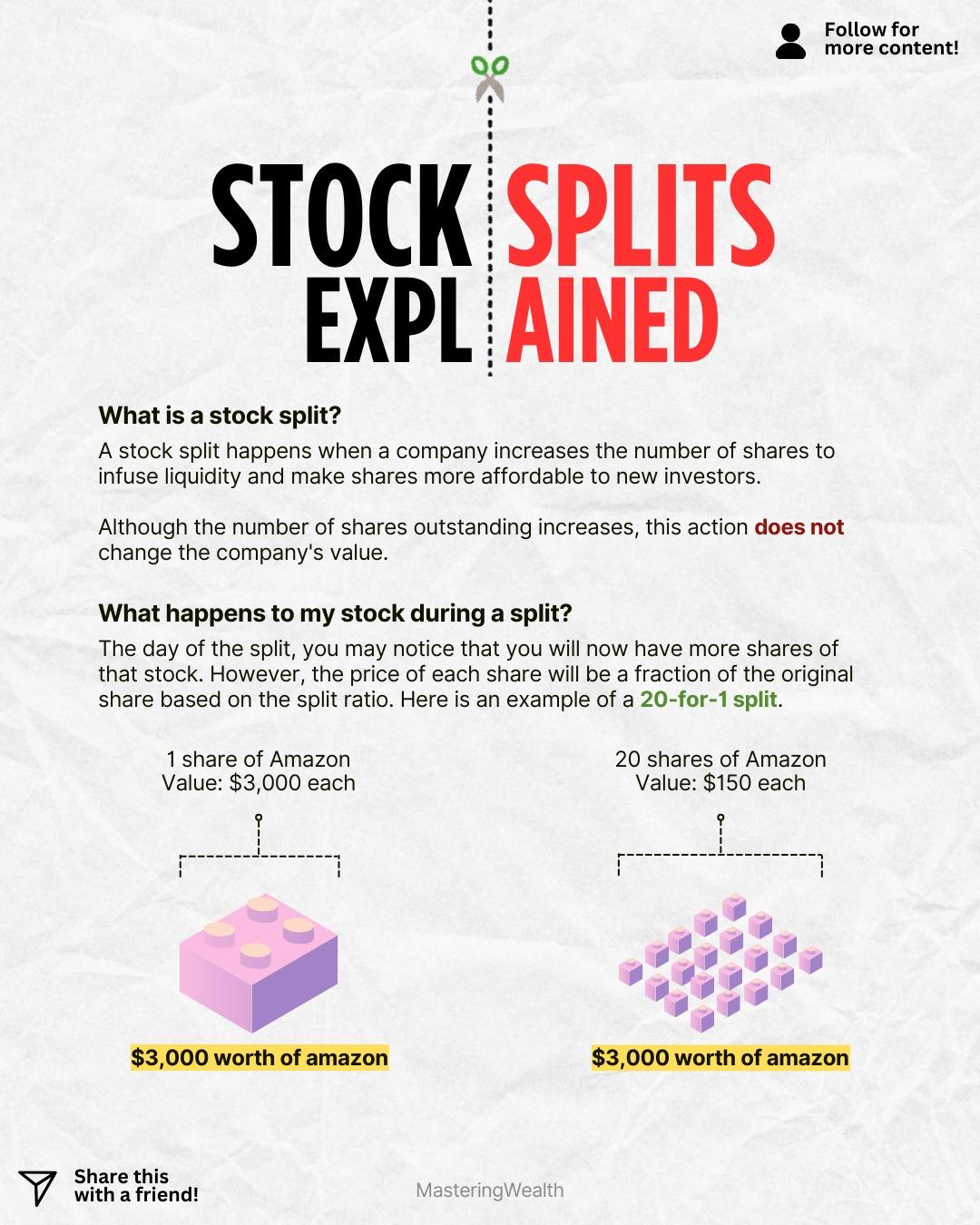
  • A stock split is one of those investing concepts that sounds confusing until you actually see it visually. The graphic shows exactly what happens during a stock split and why it does not change the total value of your investment. Companies use stock splits to make each share more affordable and to increase liquidity which allows more investors to participate.

    When a company performs a stock split it increases the number of shares available but the total value of the company stays the same. This means your overall investment does not change even though the number of shares you hold increases. The price of each share is adjusted based on the split ratio which keeps the total value equal.

    For example if you own one share of Amazon worth three thousand dollars and the company does a twenty for one split you end up with twenty shares worth one hundred fifty dollars each. Nothing about your total value changes because twenty shares at one hundred fifty dollars equals the same three thousand dollars. The split simply breaks the value into smaller parts.

    Many companies like Apple, Tesla, Amazon and Nvidia have used stock splits in the past. They often choose to split their stock once the price becomes too high for new investors who may feel priced out. A split also sends a signal of confidence because companies usually perform them when their share prices have grown significantly.

    Understanding stock splits helps you make smarter investing decisions. When you know that your value stays the same you avoid the confusion that comes from seeing your share count suddenly increase. You also recognize that a lower share price after a split does not mean the company is dropping in value.

    If you want to see the dividend portfolio I use to build long term wealth, comment “Stocks” and I will send you the link.

    For more easy to understand investing breakdowns and financial education visuals, follow @MasteringWealth for daily content that grows your money knowledge.

    This content is for educational purposes only and is not financial advice. Always research carefully or consult with a licensed professional before making financial decisions.
    A stock split is one of those investing concepts that sounds confusing until you actually see it visually. The graphic shows exactly what happens during a stock split and why it does not change the total value of your investment. Companies use stock splits to make each share more affordable and to increase liquidity which allows more investors to participate. When a company performs a stock split it increases the number of shares available but the total value of the company stays the same. This means your overall investment does not change even though the number of shares you hold increases. The price of each share is adjusted based on the split ratio which keeps the total value equal. For example if you own one share of Amazon worth three thousand dollars and the company does a twenty for one split you end up with twenty shares worth one hundred fifty dollars each. Nothing about your total value changes because twenty shares at one hundred fifty dollars equals the same three thousand dollars. The split simply breaks the value into smaller parts. Many companies like Apple, Tesla, Amazon and Nvidia have used stock splits in the past. They often choose to split their stock once the price becomes too high for new investors who may feel priced out. A split also sends a signal of confidence because companies usually perform them when their share prices have grown significantly. Understanding stock splits helps you make smarter investing decisions. When you know that your value stays the same you avoid the confusion that comes from seeing your share count suddenly increase. You also recognize that a lower share price after a split does not mean the company is dropping in value. If you want to see the dividend portfolio I use to build long term wealth, comment “Stocks” and I will send you the link. For more easy to understand investing breakdowns and financial education visuals, follow @MasteringWealth for daily content that grows your money knowledge. ⚠️ This content is for educational purposes only and is not financial advice. Always research carefully or consult with a licensed professional before making financial decisions.
    ·120 Views ·0 voorbeeld
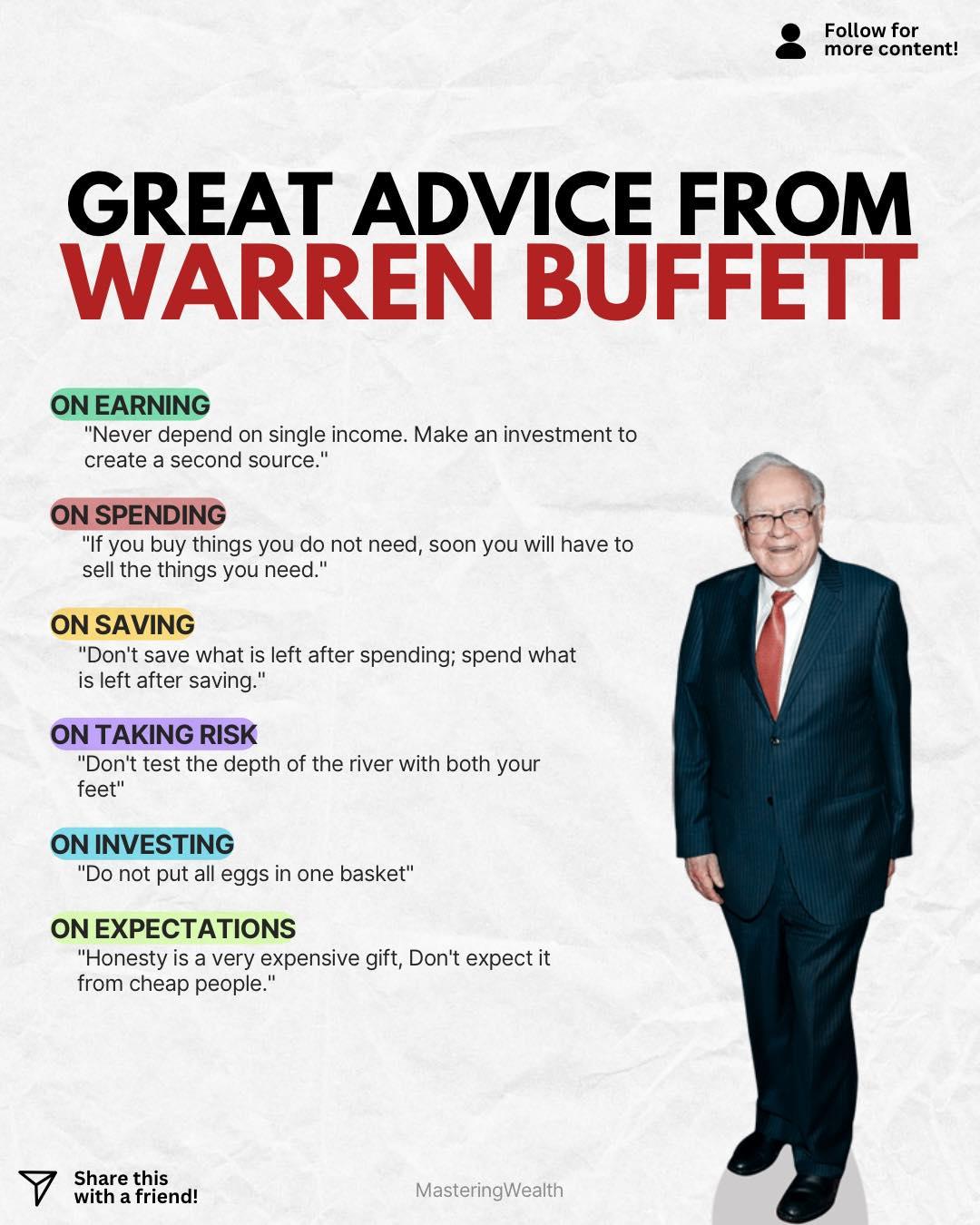
  • Warren Buffett is one of the most respected investors in the world, and his financial wisdom has helped millions of people build better money habits . The advice in this post highlights some of his most powerful lessons on earning, spending, saving, investing and managing expectations. These principles matter because they create a foundation for long term wealth and financial stability.

    One key lesson Buffett teaches is the importance of having more than one income stream. Depending on a single paycheck can leave you vulnerable, which is why building multiple sources of income can protect your financial future. This idea is at the core of wealth building because it gives you flexibility and security.

    Buffett also warns against unnecessary spending. When you buy things you do not need, you increase the risk of losing the things that truly matter later. Smart spending is not about deprivation but about protecting your long term goals and choosing intention over impulse .

    Another powerful point is his view on saving. He encourages people to save first and spend what is left instead of saving whatever remains after spending. This flips the normal habit and helps you grow wealth with discipline.

    Buffett also talks about risk. He reminds us that smart risk is necessary, but reckless risk is dangerous. Testing the depth of the river with both feet can lead to consequences that take years to fix.

    On investing, his message is clear. Avoid putting everything into one place and instead focus on diversification and long term thinking . This protects you from unnecessary losses and helps your money grow steadily.

    If you want the link to my dividend portfolio that I use to build long term passive income, comment the word Stocks and I will send it to you .

    Which piece of Warren Buffett advice speaks to you the most and why

    For more daily financial education, wealth building tips and investing content, follow me at MasteringWealth and level up your money mindset .

    This content is for education only and is not financial advice.
    Warren Buffett is one of the most respected investors in the world, and his financial wisdom has helped millions of people build better money habits 💰📚. The advice in this post highlights some of his most powerful lessons on earning, spending, saving, investing and managing expectations. These principles matter because they create a foundation for long term wealth and financial stability. One key lesson Buffett teaches is the importance of having more than one income stream. Depending on a single paycheck can leave you vulnerable, which is why building multiple sources of income can protect your financial future. This idea is at the core of wealth building because it gives you flexibility and security. Buffett also warns against unnecessary spending. When you buy things you do not need, you increase the risk of losing the things that truly matter later. Smart spending is not about deprivation but about protecting your long term goals and choosing intention over impulse 🧠💡. Another powerful point is his view on saving. He encourages people to save first and spend what is left instead of saving whatever remains after spending. This flips the normal habit and helps you grow wealth with discipline. Buffett also talks about risk. He reminds us that smart risk is necessary, but reckless risk is dangerous. Testing the depth of the river with both feet can lead to consequences that take years to fix. On investing, his message is clear. Avoid putting everything into one place and instead focus on diversification and long term thinking 📈. This protects you from unnecessary losses and helps your money grow steadily. If you want the link to my dividend portfolio that I use to build long term passive income, comment the word Stocks and I will send it to you 📬. Which piece of Warren Buffett advice speaks to you the most and why 🤔 For more daily financial education, wealth building tips and investing content, follow me at MasteringWealth and level up your money mindset 🌟. This content is for education only and is not financial advice.
    ·114 Views ·0 voorbeeld
Zoekresultaten
Techawks - Powered By Pantrade Blockchain https://techawks.com