



Which Skill Has Contributed Most to Your Career Growth in the Indian Tech Industry?
As engineering roles in India become more specialized and high-impact, developers and tech professionals face a crucial question: where should you invest your upskilling time for the highest long-term ROI?
While writing clean code is baseline, mid-to-senior engineers often report that non-coding or high-level architecture skills created their biggest career breakthroughs. We want to hear from the community across Bengaluru, NCR, Pune, Hyderabad, and beyond.
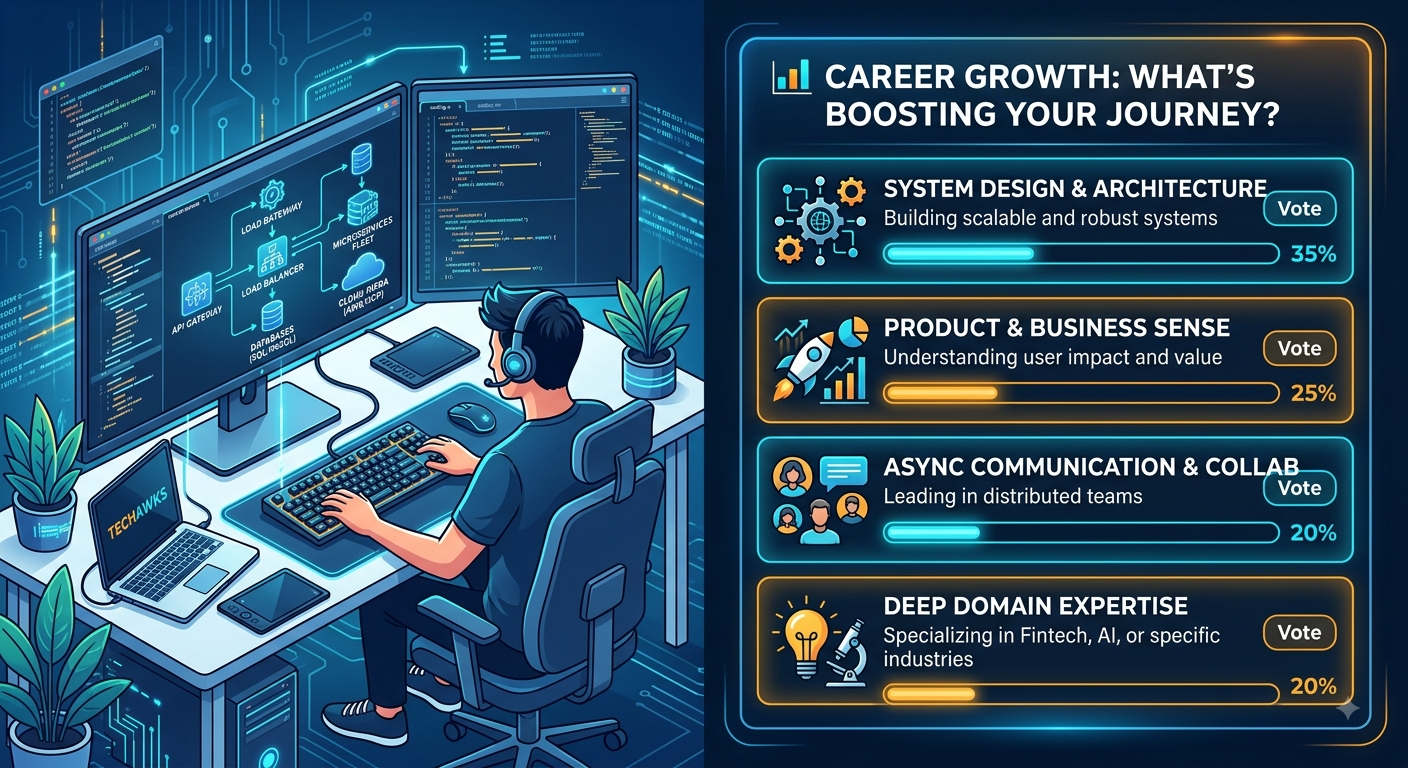
📊 POLL: Which area of expertise has accelerated your tech career the most?
A) System Design & Distributed Architecture (Scalability, low-latency, cloud infra)
B) Product & Business Sense (Understanding ROI, metrics, and user impact)
C) Async & Cross-Border Communication (Design docs, PR reviews, remote collab)
D) Deep Domain Expertise (Fintech, AI/ML, SaaS, DevTools)
(Cast your vote above and share your top career advice in the comments below!)
Actionable Advice to Accelerate Your Career in Tech
Regardless of your chosen path, here are 3 practical habits to boost your growth in the Indian tech market:
Document Your Decisions with ADRs
Don't just write code—document why choices were made. Writing Architecture Decision Records (ADRs) demonstrates senior-level thinking and builds trust across distributed product teams.
Understand the Economics of Your Tech Stack
Transition from a feature executor to a business contributor by analyzing cloud costs, API response times, and system efficiency. Engineers who optimize for both performance and cost always stand out.
Contribute to Open Source or Public Technical Writing
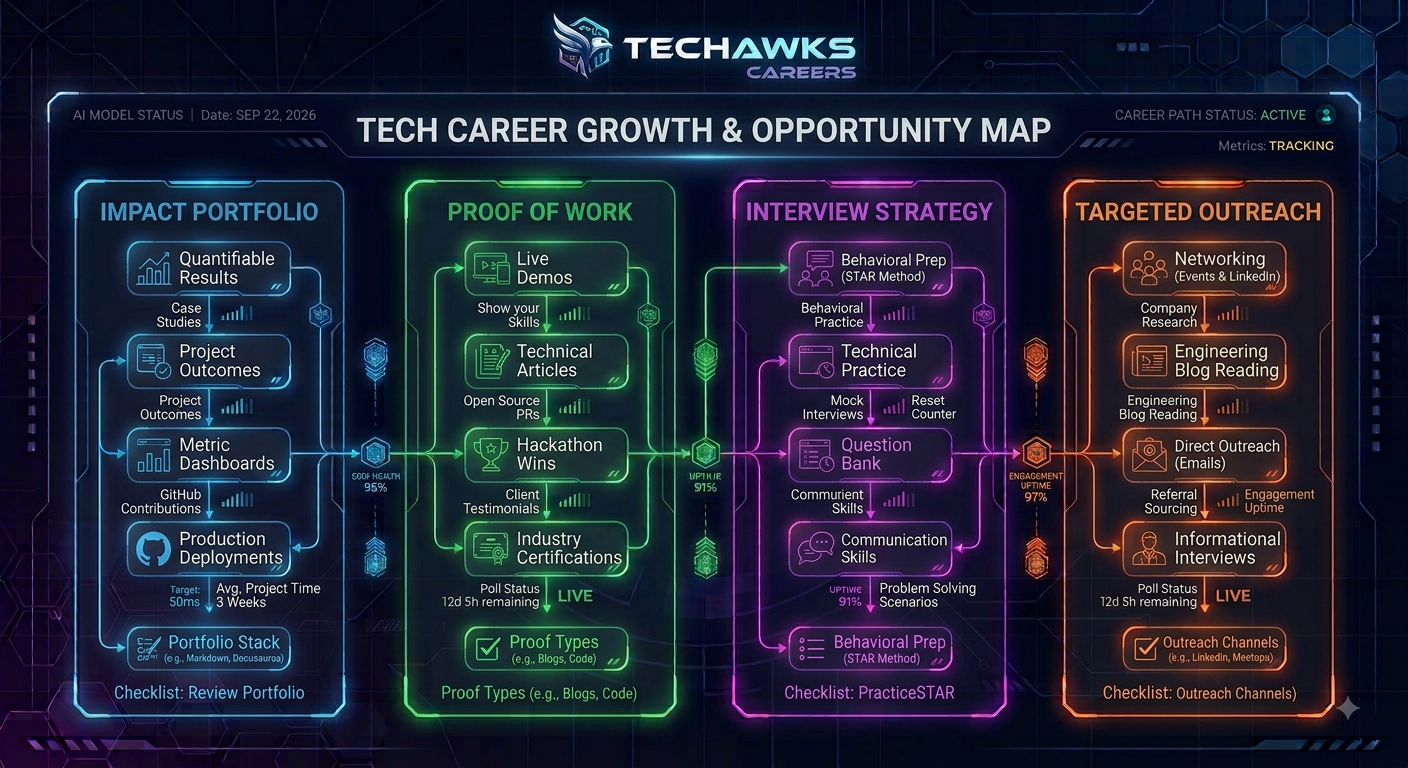
Build a public proof-of-work. Publishing technical post-mortems, system design breakdowns, or open-source contributions gives you leverage far beyond a traditional resume.
Key Takeaways
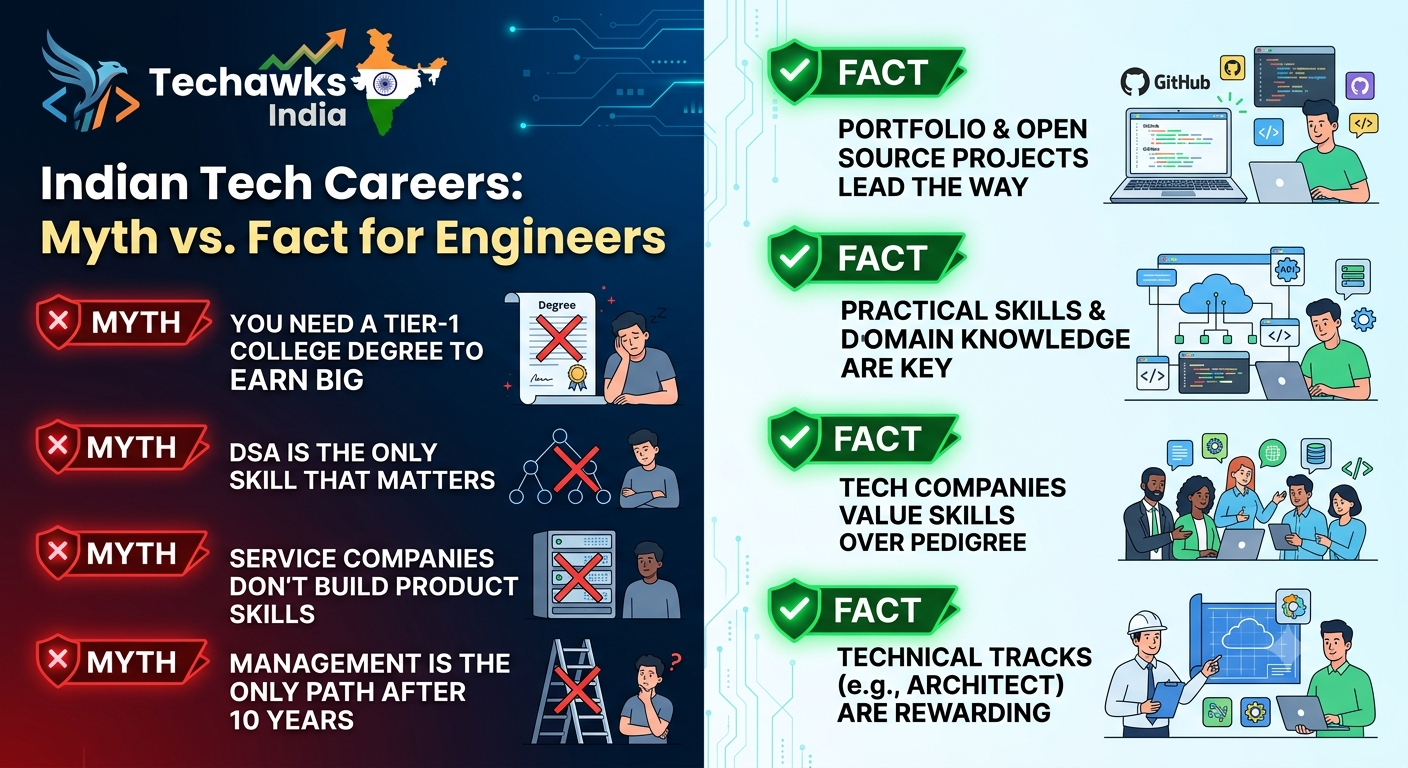
Think Beyond Syntax: Career growth correlates with system design, domain knowledge, and business impact.
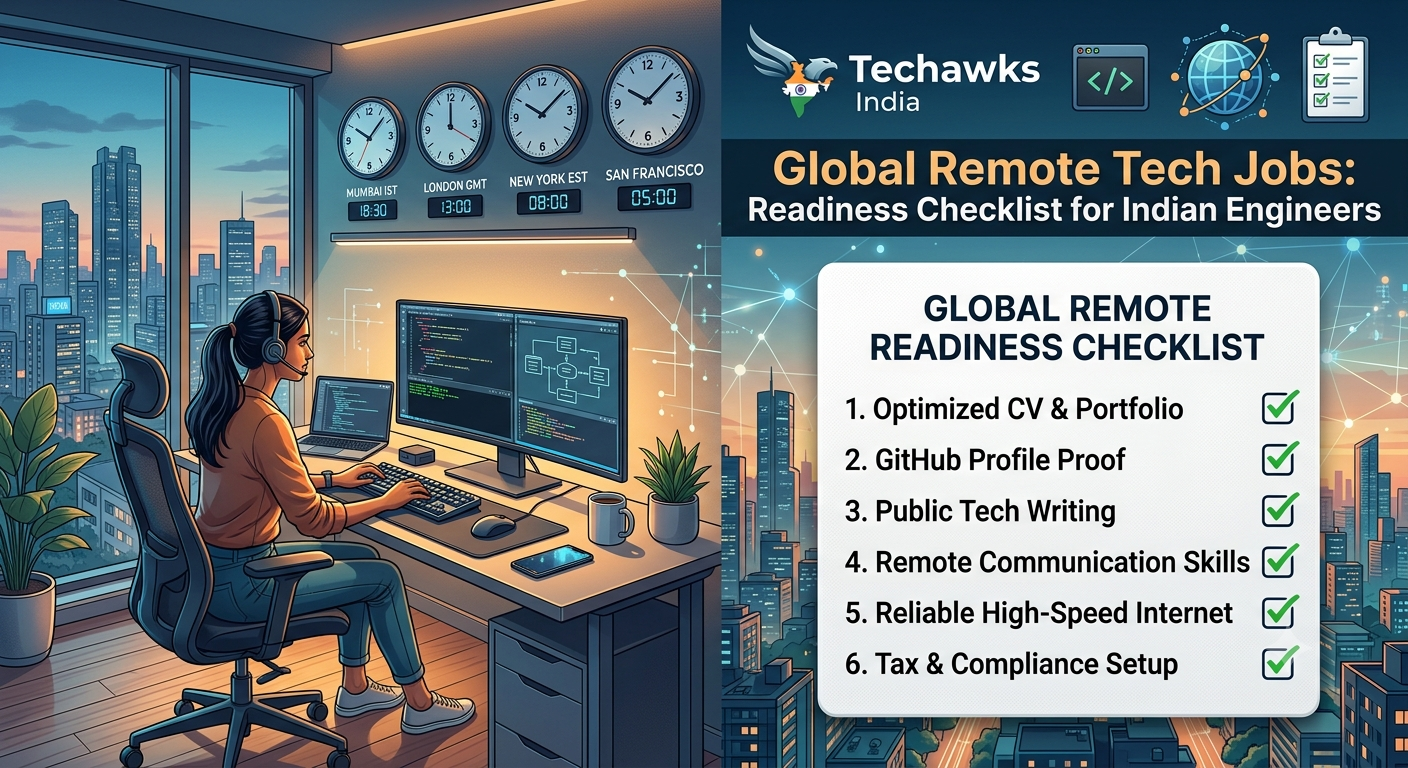
Master Async Communication: Clear technical writing and documentation elevate your visibility in global and remote engineering teams.
Build Proof-of-Work: Leverage public contributions, technical blogs, and open-source work to stand out in a competitive talent market.
CTA
Looking to connect with top developers, level up your system design skills, and navigate your tech career in India?
Join Techawks India today to participate in community discussions, access career playbooks, and network with leading engineers!
As engineering roles in India become more specialized and high-impact, developers and tech professionals face a crucial question: where should you invest your upskilling time for the highest long-term ROI?
While writing clean code is baseline, mid-to-senior engineers often report that non-coding or high-level architecture skills created their biggest career breakthroughs. We want to hear from the community across Bengaluru, NCR, Pune, Hyderabad, and beyond.
📊 POLL: Which area of expertise has accelerated your tech career the most?
A) System Design & Distributed Architecture (Scalability, low-latency, cloud infra)
B) Product & Business Sense (Understanding ROI, metrics, and user impact)
C) Async & Cross-Border Communication (Design docs, PR reviews, remote collab)
D) Deep Domain Expertise (Fintech, AI/ML, SaaS, DevTools)
(Cast your vote above and share your top career advice in the comments below!)
Actionable Advice to Accelerate Your Career in Tech
Regardless of your chosen path, here are 3 practical habits to boost your growth in the Indian tech market:
Document Your Decisions with ADRs
Don't just write code—document why choices were made. Writing Architecture Decision Records (ADRs) demonstrates senior-level thinking and builds trust across distributed product teams.
Understand the Economics of Your Tech Stack
Transition from a feature executor to a business contributor by analyzing cloud costs, API response times, and system efficiency. Engineers who optimize for both performance and cost always stand out.
Contribute to Open Source or Public Technical Writing
Build a public proof-of-work. Publishing technical post-mortems, system design breakdowns, or open-source contributions gives you leverage far beyond a traditional resume.
Key Takeaways
Think Beyond Syntax: Career growth correlates with system design, domain knowledge, and business impact.
Master Async Communication: Clear technical writing and documentation elevate your visibility in global and remote engineering teams.
Build Proof-of-Work: Leverage public contributions, technical blogs, and open-source work to stand out in a competitive talent market.
CTA
Looking to connect with top developers, level up your system design skills, and navigate your tech career in India?
Join Techawks India today to participate in community discussions, access career playbooks, and network with leading engineers!
Which Skill Has Contributed Most to Your Career Growth in the Indian Tech Industry?
As engineering roles in India become more specialized and high-impact, developers and tech professionals face a crucial question: where should you invest your upskilling time for the highest long-term ROI?
While writing clean code is baseline, mid-to-senior engineers often report that non-coding or high-level architecture skills created their biggest career breakthroughs. We want to hear from the community across Bengaluru, NCR, Pune, Hyderabad, and beyond.
📊 POLL: Which area of expertise has accelerated your tech career the most?
A) System Design & Distributed Architecture (Scalability, low-latency, cloud infra)
B) Product & Business Sense (Understanding ROI, metrics, and user impact)
C) Async & Cross-Border Communication (Design docs, PR reviews, remote collab)
D) Deep Domain Expertise (Fintech, AI/ML, SaaS, DevTools)
(Cast your vote above and share your top career advice in the comments below!)
Actionable Advice to Accelerate Your Career in Tech
Regardless of your chosen path, here are 3 practical habits to boost your growth in the Indian tech market:
Document Your Decisions with ADRs
Don't just write code—document why choices were made. Writing Architecture Decision Records (ADRs) demonstrates senior-level thinking and builds trust across distributed product teams.
Understand the Economics of Your Tech Stack
Transition from a feature executor to a business contributor by analyzing cloud costs, API response times, and system efficiency. Engineers who optimize for both performance and cost always stand out.
Contribute to Open Source or Public Technical Writing
Build a public proof-of-work. Publishing technical post-mortems, system design breakdowns, or open-source contributions gives you leverage far beyond a traditional resume.
Key Takeaways
Think Beyond Syntax: Career growth correlates with system design, domain knowledge, and business impact.
Master Async Communication: Clear technical writing and documentation elevate your visibility in global and remote engineering teams.
Build Proof-of-Work: Leverage public contributions, technical blogs, and open-source work to stand out in a competitive talent market.
CTA
Looking to connect with top developers, level up your system design skills, and navigate your tech career in India?
Join Techawks India today to participate in community discussions, access career playbooks, and network with leading engineers!



 English
 Arabic
 French
 Spanish
 Portuguese
 Deutsch
 Turkish
 Italiano
 Russian
 Romaian
 Portuguese (Brazil)
 Greek
Greek