• Humanity’s most powerful inventions could shape our future, or destroy it.

    From nuclear weapons capable of erasing entire cities, to AI systems that might one day surpass their creators, and gene-editing tools that can heal or accidentally unleash new threats, technology has never carried more risk.

    Autonomous drones can make decisions on their own, nanobots might replicate beyond control, deepfakes blur the boundary between real and fake, quantum computers threaten modern encryption, and cyberwarfare already disables nations without a single shot fired.

    These breakthroughs reveal just how thin the line is between progress and danger. As we continue to create synthetic life and increasingly intelligent machines, our greatest challenge isn’t innovation, it’s maintaining control. Our future will be shaped by whether our wisdom can keep pace with our power.

    Follow us @FutureTech for more!
    Humanity’s most powerful inventions could shape our future, or destroy it. From nuclear weapons capable of erasing entire cities, to AI systems that might one day surpass their creators, and gene-editing tools that can heal or accidentally unleash new threats, technology has never carried more risk. Autonomous drones can make decisions on their own, nanobots might replicate beyond control, deepfakes blur the boundary between real and fake, quantum computers threaten modern encryption, and cyberwarfare already disables nations without a single shot fired. These breakthroughs reveal just how thin the line is between progress and danger. As we continue to create synthetic life and increasingly intelligent machines, our greatest challenge isn’t innovation, it’s maintaining control. Our future will be shaped by whether our wisdom can keep pace with our power. 👉 Follow us @FutureTech for more! 🔌

    ·238 Views ·0 Vista previa

  • In San Diego, a small research team pointed a cheap residential satellite dish at the sky and watched the world's private traffic pour in. Using about $800 of off the shelf hardware and open source tools, they spent three years sweeping geostationary satellites that sit 22,000 miles above Earth and still quietly handle backhaul for airlines, remote cell towers, oil rigs, utilities, and governments. Instead of hardened, encrypted links, they kept finding raw, readable data flowing straight into their receiver.⁠

    From just 39 satellites, only a slice of the global geostationary fleet, the team captured private phone calls, text messages, in flight Wi Fi sessions, and internal corporate and government communications. A nine hour recording of T Mobile satellite backhaul revealed more than 2,700 phone numbers plus one side of users’ calls and SMS. Other links exposed browsing activity from passengers on commercial flights and traffic from rural internet customers whose data had been routed skyward without proper protection.⁠

    The leaks went far beyond consumer chatter. Mexican military and police units were broadcasting mission details, asset locations, and helicopter maintenance logs in the clear. U.S. vessels were transmitting unencrypted internal traffic that revealed ship identities and movements. Operators of critical infrastructure, including a major Latin American electric utility, were sending status reports, customer records, and failure alerts with no end to end encryption at all, creating an easy starting point for espionage or disruption.⁠

    After quiet disclosure, some firms, including T Mobile and AT&T, scrambled to add encryption, while others lagged behind. The researchers are now preparing an open source toolkit, named after their paper “Don’t Look Up,” so regulators, defenders, and operators can see for themselves what is leaking from orbit. The larger lesson is blunt, security by hoping nobody looks up is not security, it is an invitation.⁠

    #satellites #cybersecurity #encryption #infosec #space #communications #datasecurity #privacy #technology
    In San Diego, a small research team pointed a cheap residential satellite dish at the sky and watched the world's private traffic pour in. Using about $800 of off the shelf hardware and open source tools, they spent three years sweeping geostationary satellites that sit 22,000 miles above Earth and still quietly handle backhaul for airlines, remote cell towers, oil rigs, utilities, and governments. Instead of hardened, encrypted links, they kept finding raw, readable data flowing straight into their receiver.⁠ ⁠ From just 39 satellites, only a slice of the global geostationary fleet, the team captured private phone calls, text messages, in flight Wi Fi sessions, and internal corporate and government communications. A nine hour recording of T Mobile satellite backhaul revealed more than 2,700 phone numbers plus one side of users’ calls and SMS. Other links exposed browsing activity from passengers on commercial flights and traffic from rural internet customers whose data had been routed skyward without proper protection.⁠ ⁠ The leaks went far beyond consumer chatter. Mexican military and police units were broadcasting mission details, asset locations, and helicopter maintenance logs in the clear. U.S. vessels were transmitting unencrypted internal traffic that revealed ship identities and movements. Operators of critical infrastructure, including a major Latin American electric utility, were sending status reports, customer records, and failure alerts with no end to end encryption at all, creating an easy starting point for espionage or disruption.⁠ ⁠ After quiet disclosure, some firms, including T Mobile and AT&T, scrambled to add encryption, while others lagged behind. The researchers are now preparing an open source toolkit, named after their paper “Don’t Look Up,” so regulators, defenders, and operators can see for themselves what is leaking from orbit. The larger lesson is blunt, security by hoping nobody looks up is not security, it is an invitation.⁠ ⁠ #satellites #cybersecurity #encryption #infosec #space #communications #datasecurity #privacy #technology
    ·278 Views ·0 Vista previa
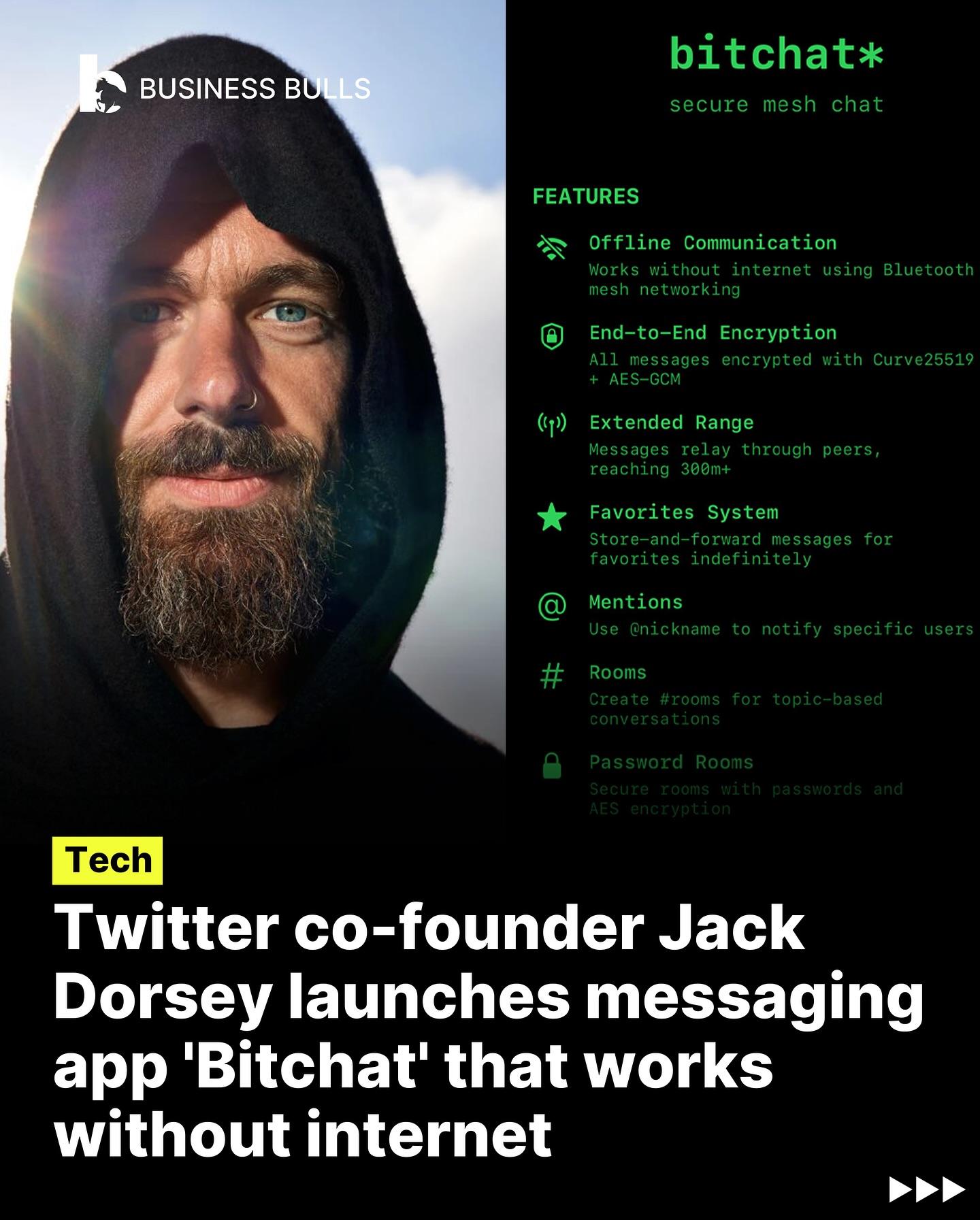
  • Twitter co-founder just launched Bitchat, a messaging app that works via Bluetooth mesh networks—no WiFi or SIM needed.
    
TWith a 300-meter range and end-to-end encryption, it’s perfect for off-grid chats, protests, or emergencies. The beta hit 10,000 users fast via TestFlight—now it’s waiting for App Store approval.
    
Like our content? Follow @BusinessBulls.in for more!

    #Businessbulls #Business #Bitchat #JackDorsey
    Twitter co-founder just launched Bitchat, a messaging app that works via Bluetooth mesh networks—no WiFi or SIM needed. 
TWith a 300-meter range and end-to-end encryption, it’s perfect for off-grid chats, protests, or emergencies. The beta hit 10,000 users fast via TestFlight—now it’s waiting for App Store approval. 
Like our content? Follow @BusinessBulls.in for more! #Businessbulls #Business #Bitchat #JackDorsey
    ·921 Views ·0 Vista previa
  • The U.S. House just banned WhatsApp from all government devices in a memo that claims the Meta-owned app lacks "transparency in user data protection" and has an "absence of stored data encryption"—a cybersecurity assessment that Meta is calling completely wrong. Chief Administrative Officer Catherine Szpindo's office classified WhatsApp as "high risk" and ordered congressional staff to immediately uninstall the app from phones, desktops, and avoid web browser access, while recommending Microsoft Teams, Signal, Wickr, iMessage, and FaceTime as approved alternatives.⁠

    The technical controversy centers on a fundamental disagreement about encryption capabilities. Meta spokesperson Andy Stone fired back that WhatsApp messages are "end-to-end encrypted by default, meaning only the recipients and not even WhatsApp can see them," arguing this provides "higher security than most apps on the CAO's approved list that do not offer that protection." The House cybersecurity office appears to be conflating message encryption with data storage practices, creating confusion about WhatsApp's actual security architecture.⁠

    What makes this ban particularly intriguing is the broader pattern of congressional tech restrictions. The House has previously banned TikTok, DeepSeek, Microsoft Copilot, and heavily restricted ChatGPT to paid versions only, while the Senate continues allowing WhatsApp use. This creates an unusual situation where Meta's 2 billion-user platform is deemed unsafe for House staff but acceptable for their Senate colleagues working in the same building.⁠

    The timing adds another layer of complexity, coming just months after approximately 100 journalists and civil society members were targeted through WhatsApp by Israeli spyware company Paragon Solutions' Graphite malware. While this demonstrates real security threats exist, Meta argues the solution should be better security practices rather than wholesale platform bans.
    The U.S. House just banned WhatsApp from all government devices in a memo that claims the Meta-owned app lacks "transparency in user data protection" and has an "absence of stored data encryption"—a cybersecurity assessment that Meta is calling completely wrong. Chief Administrative Officer Catherine Szpindo's office classified WhatsApp as "high risk" and ordered congressional staff to immediately uninstall the app from phones, desktops, and avoid web browser access, while recommending Microsoft Teams, Signal, Wickr, iMessage, and FaceTime as approved alternatives.⁠ ⁠ The technical controversy centers on a fundamental disagreement about encryption capabilities. Meta spokesperson Andy Stone fired back that WhatsApp messages are "end-to-end encrypted by default, meaning only the recipients and not even WhatsApp can see them," arguing this provides "higher security than most apps on the CAO's approved list that do not offer that protection." The House cybersecurity office appears to be conflating message encryption with data storage practices, creating confusion about WhatsApp's actual security architecture.⁠ ⁠ What makes this ban particularly intriguing is the broader pattern of congressional tech restrictions. The House has previously banned TikTok, DeepSeek, Microsoft Copilot, and heavily restricted ChatGPT to paid versions only, while the Senate continues allowing WhatsApp use. This creates an unusual situation where Meta's 2 billion-user platform is deemed unsafe for House staff but acceptable for their Senate colleagues working in the same building.⁠ ⁠ The timing adds another layer of complexity, coming just months after approximately 100 journalists and civil society members were targeted through WhatsApp by Israeli spyware company Paragon Solutions' Graphite malware. While this demonstrates real security threats exist, Meta argues the solution should be better security practices rather than wholesale platform bans.
    ·666 Views ·0 Vista previa
  • The U.S. House just banned WhatsApp from all government devices in a memo that claims the Meta-owned app lacks "transparency in user data protection" and has an "absence of stored data encryption"—a cybersecurity assessment that Meta is calling completely wrong. Chief Administrative Officer Catherine Szpindo's office classified WhatsApp as "high risk" and ordered congressional staff to immediately uninstall the app from phones, desktops, and avoid web browser access, while recommending Microsoft Teams, Signal, Wickr, iMessage, and FaceTime as approved alternatives.⁠

    The technical controversy centers on a fundamental disagreement about encryption capabilities. Meta spokesperson Andy Stone fired back that WhatsApp messages are "end-to-end encrypted by default, meaning only the recipients and not even WhatsApp can see them," arguing this provides "higher security than most apps on the CAO's approved list that do not offer that protection." The House cybersecurity office appears to be conflating message encryption with data storage practices, creating confusion about WhatsApp's actual security architecture.⁠

    What makes this ban particularly intriguing is the broader pattern of congressional tech restrictions. The House has previously banned TikTok, DeepSeek, Microsoft Copilot, and heavily restricted ChatGPT to paid versions only, while the Senate continues allowing WhatsApp use. This creates an unusual situation where Meta's 2 billion-user platform is deemed unsafe for House staff but acceptable for their Senate colleagues working in the same building.⁠

    The timing adds another layer of complexity, coming just months after approximately 100 journalists and civil society members were targeted through WhatsApp by Israeli spyware company Paragon Solutions' Graphite malware. While this demonstrates real security threats exist, Meta argues the solution should be better security practices rather than wholesale platform bans.
    The U.S. House just banned WhatsApp from all government devices in a memo that claims the Meta-owned app lacks "transparency in user data protection" and has an "absence of stored data encryption"—a cybersecurity assessment that Meta is calling completely wrong. Chief Administrative Officer Catherine Szpindo's office classified WhatsApp as "high risk" and ordered congressional staff to immediately uninstall the app from phones, desktops, and avoid web browser access, while recommending Microsoft Teams, Signal, Wickr, iMessage, and FaceTime as approved alternatives.⁠ ⁠ The technical controversy centers on a fundamental disagreement about encryption capabilities. Meta spokesperson Andy Stone fired back that WhatsApp messages are "end-to-end encrypted by default, meaning only the recipients and not even WhatsApp can see them," arguing this provides "higher security than most apps on the CAO's approved list that do not offer that protection." The House cybersecurity office appears to be conflating message encryption with data storage practices, creating confusion about WhatsApp's actual security architecture.⁠ ⁠ What makes this ban particularly intriguing is the broader pattern of congressional tech restrictions. The House has previously banned TikTok, DeepSeek, Microsoft Copilot, and heavily restricted ChatGPT to paid versions only, while the Senate continues allowing WhatsApp use. This creates an unusual situation where Meta's 2 billion-user platform is deemed unsafe for House staff but acceptable for their Senate colleagues working in the same building.⁠ ⁠ The timing adds another layer of complexity, coming just months after approximately 100 journalists and civil society members were targeted through WhatsApp by Israeli spyware company Paragon Solutions' Graphite malware. While this demonstrates real security threats exist, Meta argues the solution should be better security practices rather than wholesale platform bans.
    ·542 Views ·0 Vista previa
  • Elon Musk has introduced XChat, a new messaging feature within the X platform (formerly Twitter), aiming to rival WhatsApp, Telegram, and Signal. Launched on June 1, 2025, XChat includes end-to-end encryption, disappearing messages, file sharing, and audio/video calls—all without requiring a phone number.

    Built using the Rust programming language, Musk describes it as using “Bitcoin-style encryption,” a term some experts have questioned, since Bitcoin relies on cryptographic techniques rather than standard encryption protocols. Currently in beta for X Premium subscribers, XChat is part of Musk’s broader plan to turn X into an “everything app” similar to WeChat, combining messaging, social media, and payment features.

    A wider release is expected soon, depending on scaling progress. However, it remains unclear whether free users will get full access or only a limited version. While the feature supports Musk’s vision for a unified digital ecosystem, it’s uncertain how well it will compete with dominant messaging platforms.

    -

    #x #technology #futuretech #news #viral
    Elon Musk has introduced XChat, a new messaging feature within the X platform (formerly Twitter), aiming to rival WhatsApp, Telegram, and Signal. Launched on June 1, 2025, XChat includes end-to-end encryption, disappearing messages, file sharing, and audio/video calls—all without requiring a phone number. Built using the Rust programming language, Musk describes it as using “Bitcoin-style encryption,” a term some experts have questioned, since Bitcoin relies on cryptographic techniques rather than standard encryption protocols. Currently in beta for X Premium subscribers, XChat is part of Musk’s broader plan to turn X into an “everything app” similar to WeChat, combining messaging, social media, and payment features. A wider release is expected soon, depending on scaling progress. However, it remains unclear whether free users will get full access or only a limited version. While the feature supports Musk’s vision for a unified digital ecosystem, it’s uncertain how well it will compete with dominant messaging platforms. - #x #technology #futuretech #news #viral
    ·220 Views ·0 Vista previa
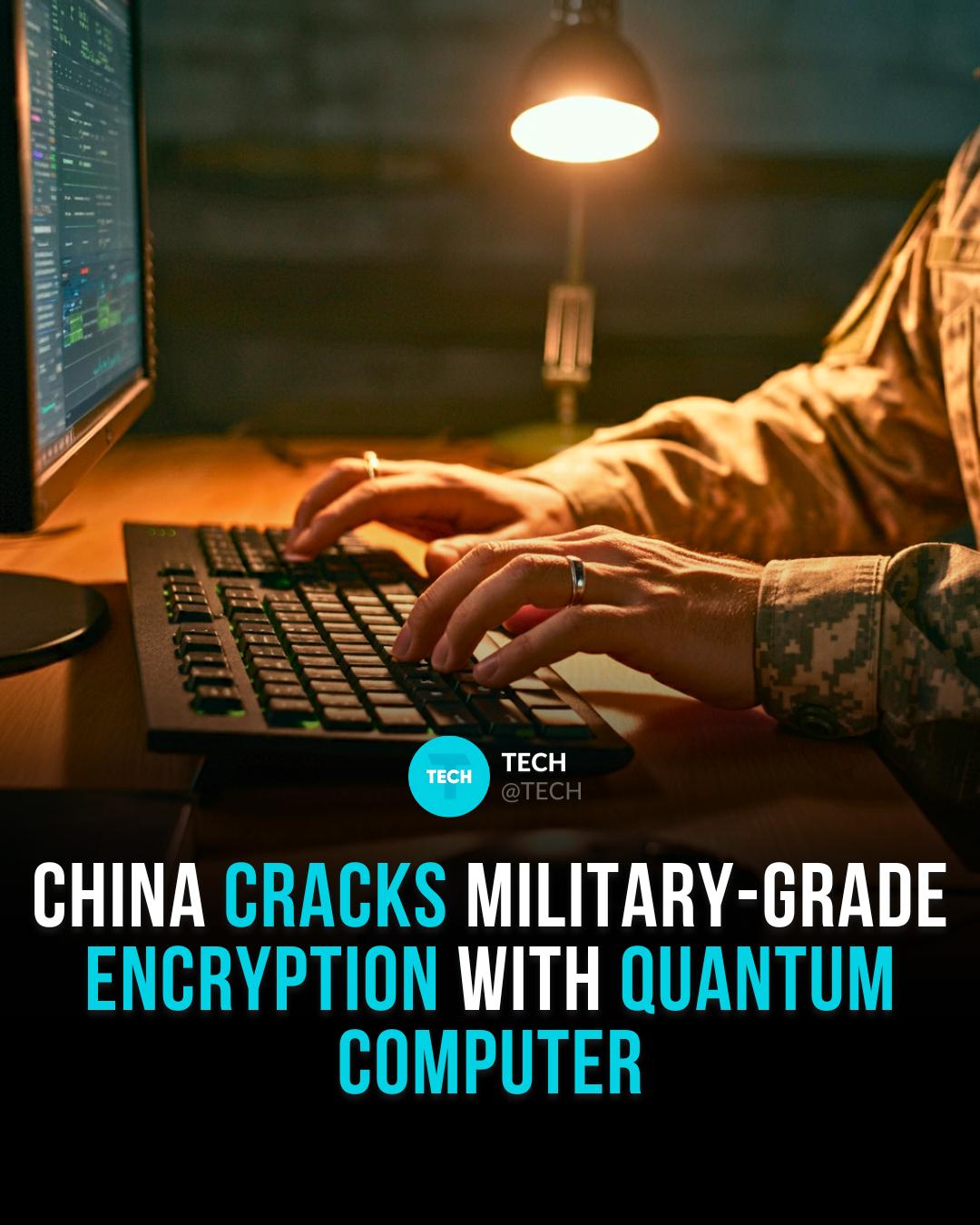
  • Chinese researchers have achieved a major milestone in cybersecurity by successfully hacking military-grade encryption algorithms using a quantum computer. The team, led by Wang Chao of Shanghai University, used a D-Wave quantum device to breach the SPN algorithms that form the foundation of advanced encryption standards (AES) widely used by militaries and banks.⁠

    While the hack has not cracked specific passcodes yet, it demonstrates the growing threat quantum computing poses to even the most secure systems like AES-256. The researchers combined quantum annealing algorithms with classical methods in a novel architecture to frame the encryption problem in a way a quantum computer could solve.⁠

    Despite current limitations of quantum hardware and environmental interference, this advance represents a "real and substantial threat" according to the team. It marks the first time a quantum computer has compromised multiple full-scale encryption algorithms in real-world use. As quantum technologies mature, the cybersecurity landscape may shift significantly.
    Chinese researchers have achieved a major milestone in cybersecurity by successfully hacking military-grade encryption algorithms using a quantum computer. The team, led by Wang Chao of Shanghai University, used a D-Wave quantum device to breach the SPN algorithms that form the foundation of advanced encryption standards (AES) widely used by militaries and banks.⁠ ⁠ While the hack has not cracked specific passcodes yet, it demonstrates the growing threat quantum computing poses to even the most secure systems like AES-256. The researchers combined quantum annealing algorithms with classical methods in a novel architecture to frame the encryption problem in a way a quantum computer could solve.⁠ ⁠ Despite current limitations of quantum hardware and environmental interference, this advance represents a "real and substantial threat" according to the team. It marks the first time a quantum computer has compromised multiple full-scale encryption algorithms in real-world use. As quantum technologies mature, the cybersecurity landscape may shift significantly.
    ·218 Views ·0 Vista previa
  • Fake scrotums, fish drone, acoustic kitty & many more!

    The CIA has a history of developing cutting-edge technology, from advanced surveillance tools to futuristic gadgets.

    Today, they’re likely exploring AI spies, quantum encryption breakers, and functional miniature surveillance insects.

    #ai #artificialintelligence #aitools #aihacks #chatgpt #tech #technology
    😳 Fake scrotums, fish drone, acoustic kitty & many more! 👉 The CIA has a history of developing cutting-edge technology, from advanced surveillance tools to futuristic gadgets. 🤯 Today, they’re likely exploring AI spies, quantum encryption breakers, and functional miniature surveillance insects. #ai #artificialintelligence #aitools #aihacks #chatgpt #tech #technology
    ·394 Views ·0 Vista previa
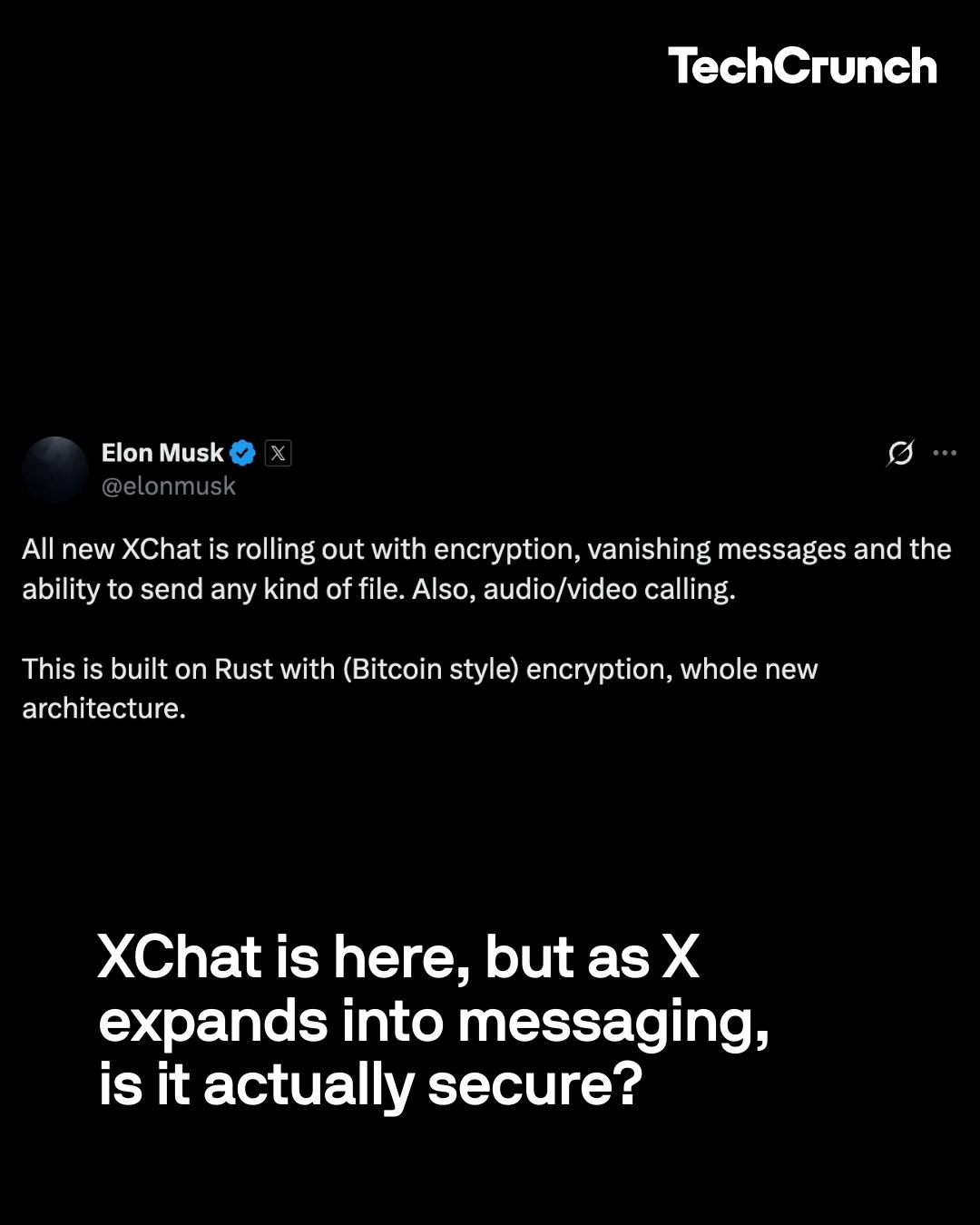
  • X's march toward becoming an everything app continues with its messaging platform, XChat, which is rolling out to a wider group of users this week.

    This announcement has also brought on the expect user questions like how its encryption will actually work — especially given the nuances involved in building legitimately secure messaging platforms.

    The claim of "Bitcoin style" encryption is raising some particular eyebrows within the security community, since Bitcoin technically doesn't utilize encryption on transactions — but rather relies on digital signatures. It seems pedantic, but methods matter in building trust, especially for messaging platforms that can contain personal info or, as recent news cycles demonstrated, sensitive national security secrets.

    Dive deeper into the debate, and more future plans for the messaging platform, via the link in our bio from Sarah Perez.
    X's march toward becoming an everything app continues with its messaging platform, XChat, which is rolling out to a wider group of users this week. This announcement has also brought on the expect user questions like how its encryption will actually work — especially given the nuances involved in building legitimately secure messaging platforms. The claim of "Bitcoin style" encryption is raising some particular eyebrows within the security community, since Bitcoin technically doesn't utilize encryption on transactions — but rather relies on digital signatures. It seems pedantic, but methods matter in building trust, especially for messaging platforms that can contain personal info or, as recent news cycles demonstrated, sensitive national security secrets. Dive deeper into the debate, and more future plans for the messaging platform, via the link in our bio from Sarah Perez.
    ·168 Views ·0 Vista previa
  • Elon Musk announced the beta launch of XChat.
    The new messenger incorporates “Bitcoin-style” encryption, Musk said.
    However, security experts aren’t convinced by Musk’s vague and potentially misleading statement.
    Elon Musk announced the beta launch of XChat. The new messenger incorporates “Bitcoin-style” encryption, Musk said. However, security experts aren’t convinced by Musk’s vague and potentially misleading statement.
    ·183 Views ·0 Vista previa
Resultados de la búsqueda
Techawks - Powered By Pantrade Blockchain https://techawks.com