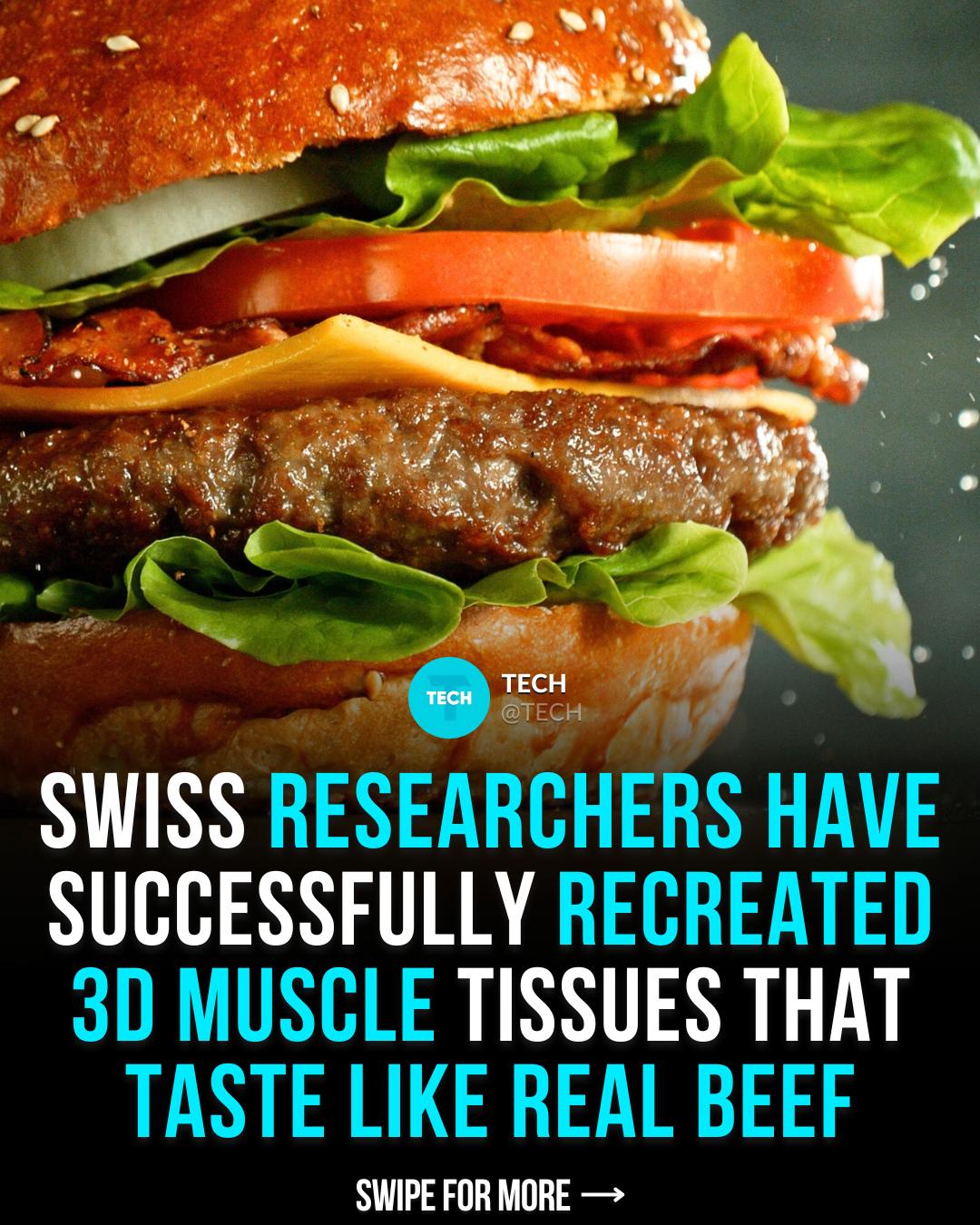
It looks, feels, and even contracts like real beef—only this meat was never part of a cow. Inside a Zurich lab, scientists have pushed lab-grown meat far beyond limp tissue into the realm of structured, functional muscle. Using a molecular “cocktail” of just three small compounds, ETH Zurich researchers have grown thick, 3D muscle fibers from bovine cells that mimic natural beef at the genetic, protein, and performance levels.
The breakthrough came from myoblasts—precursor muscle cells—extracted not from live animals, but from beef cuts like flank and sirloin. With the help of a nutrient-rich growth medium and a trio of molecules (originally developed for treating muscle diseases), these cells formed muscle rings that actually contract, pulsing under the microscope like real tissue.
Earlier attempts at lab-grown beef struggled with structure. Most resulted in thin, stringy fibers suitable only for minced meat. But ETH’s method produced organized bundles that include both slow- and fast-twitch fibers—key for replicating the texture of steak. And by removing the compounds mid-process, the resulting product could be both safe and scalable.
The environmental stakes are high. Cultivated meat could slash land use, reduce emissions, and spare animals—all while delivering customizable, slaughter-free protein. Though it’s not yet on Swiss plates, colleagues who've tasted it elsewhere say it’s nearly indistinguishable from the real thing.
This breakthrough also offers new opportunities for food security in a warming world, where traditional livestock farming faces growing constraints on space, water, and emissions. Meat, reimagined, might soon be as much about bioreactors as it is about barns.
Source: 10.1002/advs.202413998
It looks, feels, and even contracts like real beef—only this meat was never part of a cow. Inside a Zurich lab, scientists have pushed lab-grown meat far beyond limp tissue into the realm of structured, functional muscle. Using a molecular “cocktail” of just three small compounds, ETH Zurich researchers have grown thick, 3D muscle fibers from bovine cells that mimic natural beef at the genetic, protein, and performance levels.
The breakthrough came from myoblasts—precursor muscle cells—extracted not from live animals, but from beef cuts like flank and sirloin. With the help of a nutrient-rich growth medium and a trio of molecules (originally developed for treating muscle diseases), these cells formed muscle rings that actually contract, pulsing under the microscope like real tissue.
Earlier attempts at lab-grown beef struggled with structure. Most resulted in thin, stringy fibers suitable only for minced meat. But ETH’s method produced organized bundles that include both slow- and fast-twitch fibers—key for replicating the texture of steak. And by removing the compounds mid-process, the resulting product could be both safe and scalable.
The environmental stakes are high. Cultivated meat could slash land use, reduce emissions, and spare animals—all while delivering customizable, slaughter-free protein. Though it’s not yet on Swiss plates, colleagues who've tasted it elsewhere say it’s nearly indistinguishable from the real thing.
This breakthrough also offers new opportunities for food security in a warming world, where traditional livestock farming faces growing constraints on space, water, and emissions. Meat, reimagined, might soon be as much about bioreactors as it is about barns.
Source: 10.1002/advs.202413998
 English
 Arabic
 French
 Spanish
 Portuguese
 Deutsch
 Turkish
 Dutch
Dutch
 Italiano
 Russian
 Romaian
 Portuguese (Brazil)
 Greek
Greek