• Newly leaked internal documents reviewed by TechCrunch reveal that Microsoft has already received $865.9 million from OpenAI through a 20% revenue-share deal covering the first three quarters of 2025.

    This payout is far lower than the multibillion-dollar revenue figures the company has often implied publicly.

    The documents also show that OpenAI’s inference costs reached an estimated $12.4 billion from early 2024 through Q3 2025, underscoring how expensive it is to run large AI models at scale.

    These costs are significantly higher than what many analysts previously assumed.

    The leak raises questions about the sustainability of OpenAI’s business model and whether its rapid growth is being fueled more by massive compute spending than actual profitability.

    It also highlights how dependent OpenAI remains on Microsoft’s infrastructure.

    If accurate, the numbers suggest that OpenAI’s financial reality is much more fragile than its public image.

    Investors and partners may now push for transparency around true revenue, margins, and long-term viability.

    Follow us (@artificialintelligenceee) for everything latest from the AI world.

    Source: TechCrunch
    Newly leaked internal documents reviewed by TechCrunch reveal that Microsoft has already received $865.9 million from OpenAI through a 20% revenue-share deal covering the first three quarters of 2025. This payout is far lower than the multibillion-dollar revenue figures the company has often implied publicly. The documents also show that OpenAI’s inference costs reached an estimated $12.4 billion from early 2024 through Q3 2025, underscoring how expensive it is to run large AI models at scale. These costs are significantly higher than what many analysts previously assumed. The leak raises questions about the sustainability of OpenAI’s business model and whether its rapid growth is being fueled more by massive compute spending than actual profitability. It also highlights how dependent OpenAI remains on Microsoft’s infrastructure. If accurate, the numbers suggest that OpenAI’s financial reality is much more fragile than its public image. Investors and partners may now push for transparency around true revenue, margins, and long-term viability. Follow us (👉@artificialintelligenceee) for everything latest from the AI world. Source: TechCrunch

    ·59 Просмотры ·0 предпросмотр

  • A clear coating that turns ordinary windows into quiet power plants just cleared its first big test. Researchers at Nanjing University built a colorless, unidirectional solar concentrator that paints onto glass, keeps the view intact, and routes part of the sunlight to slim photovoltaic strips hidden along the pane’s edge.⁠

    The trick lies in cholesteric liquid crystals, a class of layered, helix-shaped materials that interact with light in precise ways. Stacked into ultrathin films, they selectively diffract one polarization of light, then steer those photons into the glass like a waveguide, where edge-mounted cells convert them to electricity. In plain English, most light passes through as normal, while a targeted slice is siphoned sideways for power.⁠

    Clarity holds up. Lab measurements show about 64.2 percent visible light transmission and a 91.3 percent color rendering index, so scenes look natural. Under green laser tests, up to 38.1 percent of incident energy was captured at the edges, and under full-spectrum conditions, the optical guiding efficiency reached 18.1 percent. A one-inch demo powered a 10-milliwatt fan outdoors, proving the idea works in practice.⁠

    Scale matters here, and the outlook is practical. Modeling suggests a two-meter-wide coated window could concentrate sunlight roughly 50×, cutting required solar cell area by as much as 75 percent. The films are made via photoalignment and polymerization, compatible with roll-to-roll manufacturing, and designed for durable retrofits onto existing glass. Researchers also stress the long-term stability of the design, noting it can withstand environmental exposure while remaining cost effective and visually unobtrusive.⁠

    Today’s system reports a modest 3.7 percent power conversion efficiency, but it can pair with high-performance cells like gallium arsenide and is engineered for steady gains. If windows become generators, architecture turns into infrastructure, and cities start harvesting the daylight they already own.⁠

    #tech #solar #renewableenergy #cleantech #architecture #materials #liquidcrystals #sustainability #energyefficiency

    Source: 10.1186/s43074-025-00178-3
    A clear coating that turns ordinary windows into quiet power plants just cleared its first big test. Researchers at Nanjing University built a colorless, unidirectional solar concentrator that paints onto glass, keeps the view intact, and routes part of the sunlight to slim photovoltaic strips hidden along the pane’s edge.⁠ ⁠ The trick lies in cholesteric liquid crystals, a class of layered, helix-shaped materials that interact with light in precise ways. Stacked into ultrathin films, they selectively diffract one polarization of light, then steer those photons into the glass like a waveguide, where edge-mounted cells convert them to electricity. In plain English, most light passes through as normal, while a targeted slice is siphoned sideways for power.⁠ ⁠ Clarity holds up. Lab measurements show about 64.2 percent visible light transmission and a 91.3 percent color rendering index, so scenes look natural. Under green laser tests, up to 38.1 percent of incident energy was captured at the edges, and under full-spectrum conditions, the optical guiding efficiency reached 18.1 percent. A one-inch demo powered a 10-milliwatt fan outdoors, proving the idea works in practice.⁠ ⁠ Scale matters here, and the outlook is practical. Modeling suggests a two-meter-wide coated window could concentrate sunlight roughly 50×, cutting required solar cell area by as much as 75 percent. The films are made via photoalignment and polymerization, compatible with roll-to-roll manufacturing, and designed for durable retrofits onto existing glass. Researchers also stress the long-term stability of the design, noting it can withstand environmental exposure while remaining cost effective and visually unobtrusive.⁠ ⁠ Today’s system reports a modest 3.7 percent power conversion efficiency, but it can pair with high-performance cells like gallium arsenide and is engineered for steady gains. If windows become generators, architecture turns into infrastructure, and cities start harvesting the daylight they already own.⁠ ⁠ #tech #solar #renewableenergy #cleantech #architecture #materials #liquidcrystals #sustainability #energyefficiency⁠ ⁠ Source: 10.1186/s43074-025-00178-3
    ·147 Просмотры ·0 предпросмотр
  • This is White Desert’s ultra‑luxury Antarctica camp, and yep: it costs $110,000+ for a week.

    Here’s why people drop that kind of money (and what you actually get):

    • You fly in on a private charter from Cape Town straight to a blue-ice runway. 

    • The stay is at one of two remote pods‑camps: Whichaway or the futuristic Echo. 

    • Only up to 12 guests per trip, super intimate, ultra-exclusive. 

    • Every pod has floor-to-ceiling windows so you can soak in the lunar-like Antarctic landscape. 

    • The trip includes gourmet meals, a private chef, and guided adventures, think glacier hikes, ice climbing, and even a visit to Emperor Penguin colonies. 

    • Despite its luxury, White Desert is committed to sustainability. 

    Bottom line: It’s not just a trip, it’s a once‑in‑a‑lifetime expedition that blends extreme adventure, high design, and serious isolation.

    Download the FREE @Travly App to book your next trip Link in bio to download!

    #Travel #explore #traveling
    This is White Desert’s ultra‑luxury Antarctica camp, and yep: it costs $110,000+ for a week. 🚁 Here’s why people drop that kind of money (and what you actually get): • You fly in on a private charter from Cape Town straight to a blue-ice runway.  • The stay is at one of two remote pods‑camps: Whichaway or the futuristic Echo.  • Only up to 12 guests per trip, super intimate, ultra-exclusive.  • Every pod has floor-to-ceiling windows so you can soak in the lunar-like Antarctic landscape.  • The trip includes gourmet meals, a private chef, and guided adventures, think glacier hikes, ice climbing, and even a visit to Emperor Penguin colonies.  • Despite its luxury, White Desert is committed to sustainability.  Bottom line: It’s not just a trip, it’s a once‑in‑a‑lifetime expedition that blends extreme adventure, high design, and serious isolation. 🌍✨ 📲 Download the FREE @Travly App to book your next trip 🤍 Link in bio to download! #Travel #explore #traveling
    ·228 Просмотры ·0 предпросмотр
  • Everyone dreams of landing a high paying job, but few realize how much strategy, skill, and time it actually takes to get there. The careers listed in this post are some of the top earners this year, with salaries that reach into the multiple six figures. From CFOs and Medical Directors to Software Engineers and Sales Professionals, these roles reflect where the biggest financial opportunities exist in today’s economy.

    What stands out is that most of these careers require specialized skills and a long-term investment in education or experience. Healthcare and finance continue to dominate the list, while technology and renewable energy are rising fast. Jobs like Principal Software Engineer and Solar Sales Representative show how the modern economy is shifting toward tech-driven and sustainability-focused careers.

    Still, a high income doesn’t automatically mean financial security. You can earn over $200,000 a year and still struggle if your expenses and debt are out of control. The key is to use your income as a wealth-building tool, not just a paycheck. Saving, investing, and creating additional income streams will always matter more than the number on your W2.

    Whether you’re aiming for one of these high paying jobs or working toward financial independence, remember this: your career is your greatest wealth-building asset in the beginning. As your income grows, shift your focus toward investments that create passive income and protect your time.

    Comment “Stocks” if you want a link to see my dividend portfolio and learn how I invest for long-term growth and financial freedom.

    If money wasn’t an issue, which one of these careers would you still choose to do every day?

    Follow @MasteringWealth for more posts that break down income, investing, and financial growth so you can turn a high salary into lasting wealth.

    Disclaimer: This content is for educational purposes only and not financial advice. Always do your own research or speak with a licensed financial professional before making financial decisions.
    💼 Everyone dreams of landing a high paying job, but few realize how much strategy, skill, and time it actually takes to get there. The careers listed in this post are some of the top earners this year, with salaries that reach into the multiple six figures. From CFOs and Medical Directors to Software Engineers and Sales Professionals, these roles reflect where the biggest financial opportunities exist in today’s economy. 📈 What stands out is that most of these careers require specialized skills and a long-term investment in education or experience. Healthcare and finance continue to dominate the list, while technology and renewable energy are rising fast. Jobs like Principal Software Engineer and Solar Sales Representative show how the modern economy is shifting toward tech-driven and sustainability-focused careers. Still, a high income doesn’t automatically mean financial security. You can earn over $200,000 a year and still struggle if your expenses and debt are out of control. The key is to use your income as a wealth-building tool, not just a paycheck. Saving, investing, and creating additional income streams will always matter more than the number on your W2. 💡 Whether you’re aiming for one of these high paying jobs or working toward financial independence, remember this: your career is your greatest wealth-building asset in the beginning. As your income grows, shift your focus toward investments that create passive income and protect your time. 💬 Comment “Stocks” if you want a link to see my dividend portfolio and learn how I invest for long-term growth and financial freedom. 🤔 If money wasn’t an issue, which one of these careers would you still choose to do every day? 👉 Follow @MasteringWealth for more posts that break down income, investing, and financial growth so you can turn a high salary into lasting wealth. ⚠️ Disclaimer: This content is for educational purposes only and not financial advice. Always do your own research or speak with a licensed financial professional before making financial decisions.
    ·222 Просмотры ·0 предпросмотр
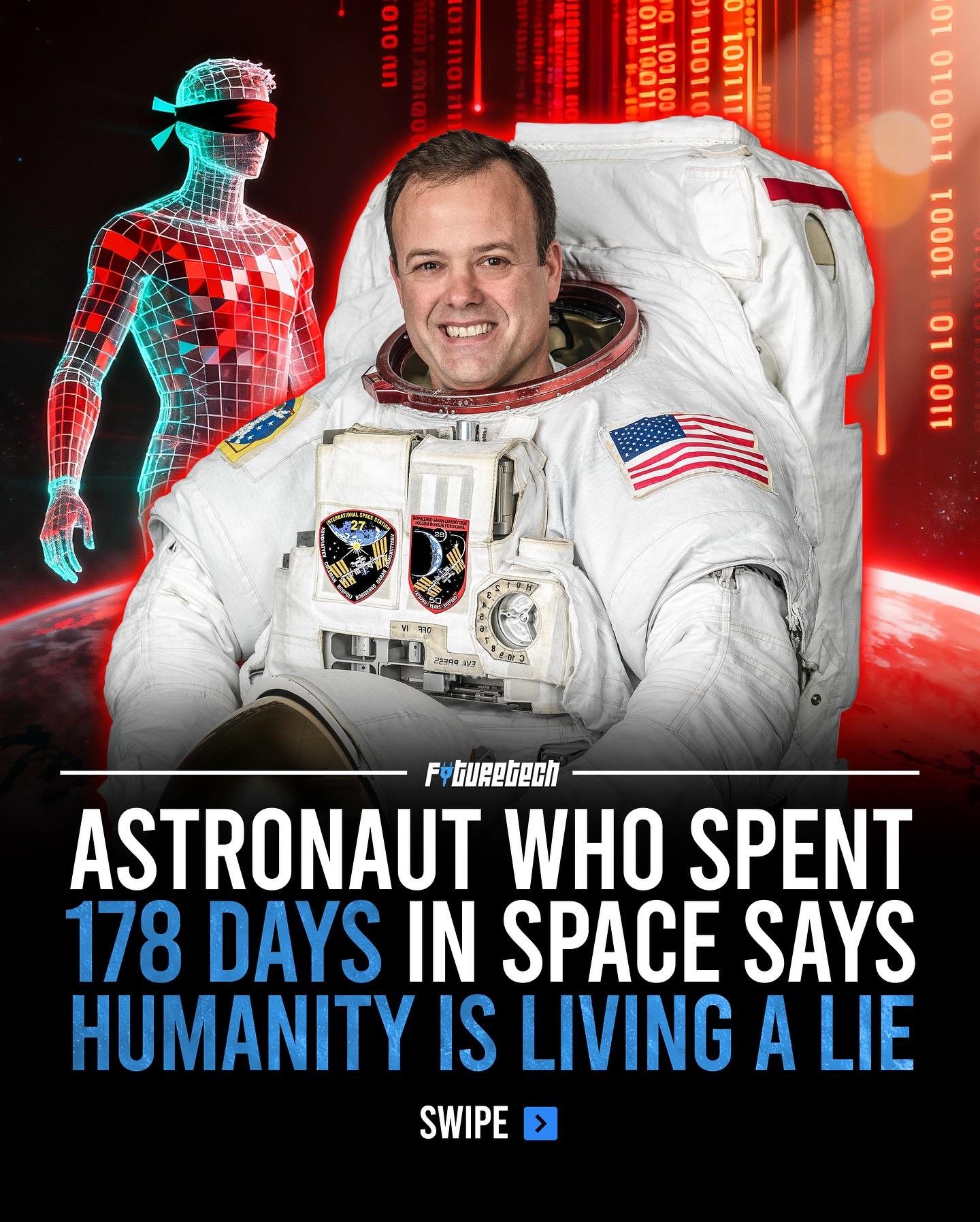
  • NASA astronaut Ron Garan, who spent 178 days in space, says humanity is “living a lie” after seeing Earth’s fragility firsthand and experiencing the profound Overview Effect.

    From orbit, Garan realized how backwards our priorities are: we put the economy first and the planet last, even though our thin atmosphere is the only barrier protecting life. He emphasized that the true order of importance should be Planet → Society → Economy, since without a thriving Earth, neither people nor systems can survive.

    He described the “lie” as the illusion of separation, the false belief that we are divided by nations, politics, or identities. In reality, he says, we are one human family sharing one fragile home. His message is a plea for unity, awareness, and sustainability before it’s too late.

    Like this content? Follow us @FutureTech for more!
    NASA astronaut Ron Garan, who spent 178 days in space, says humanity is “living a lie” after seeing Earth’s fragility firsthand and experiencing the profound Overview Effect. From orbit, Garan realized how backwards our priorities are: we put the economy first and the planet last, even though our thin atmosphere is the only barrier protecting life. He emphasized that the true order of importance should be Planet → Society → Economy, since without a thriving Earth, neither people nor systems can survive. He described the “lie” as the illusion of separation, the false belief that we are divided by nations, politics, or identities. In reality, he says, we are one human family sharing one fragile home. His message is a plea for unity, awareness, and sustainability before it’s too late. Like this content? 👉 Follow us @FutureTech for more! 🔌
    ·180 Просмотры ·0 предпросмотр
  • First, a fridge without the fumes. Scientists at Lawrence Berkeley National Laboratory have built a new “ionocaloric” cycle that cools by moving ions through a material to shift its melting point, the same physics behind road salt melting ice. In lab tests, a sodium–iodine salt and ethylene carbonate delivered a 25 °C temperature swing using under one volt, a bigger lift than most solid-state “caloric” approaches and without hydrofluorocarbon refrigerants.⁠

    Because it toggles a solid–liquid phase change, the working fluid can be pumped, avoiding compressors and complex valves. The team’s models suggest efficiency on par with, or better than, today’s vapor-compression systems. Using ethylene carbonate, which can be synthesized from captured CO₂, the refrigerant footprint could be not just low but potentially carbon-negative. If prototypes scale, the same cycle could also supply efficient water and process heating, trimming emissions from buildings and industry that are notoriously hard to decarbonize.⁠

    Now, a data center that chills with the sea. Off Shanghai, Hailanyun’s first commercial underwater AI facility places sealed server pods beneath offshore wind turbines and circulates seawater across radiators to carry heat away. Internal assessments with a Chinese institute report at least 30% lower electricity use for cooling compared with land sites, and the company says the farm is powered 97% by the nearby wind array.⁠

    One operational pod holds 198 racks, enough for roughly 396–792 AI-ready servers, and the company claims capacity to train a GPT-3.5-class model in a day. Microsoft’s earlier Project Natick found submerged servers can fail less often, but scaling raises new risks, including thermal plumes, acoustic sabotage, corrosion, biofouling, and slow maintenance cycles. From ions to oceans, cooling is being rewired for an AI-hungry, climate-strained future.⁠

    #tech #ai #cooling #climate #datacenters #materials #energy #sustainability #berkeleylab

    Source: 10.1126/science.ade1696
    First, a fridge without the fumes. Scientists at Lawrence Berkeley National Laboratory have built a new “ionocaloric” cycle that cools by moving ions through a material to shift its melting point, the same physics behind road salt melting ice. In lab tests, a sodium–iodine salt and ethylene carbonate delivered a 25 °C temperature swing using under one volt, a bigger lift than most solid-state “caloric” approaches and without hydrofluorocarbon refrigerants.⁠ ⁠ Because it toggles a solid–liquid phase change, the working fluid can be pumped, avoiding compressors and complex valves. The team’s models suggest efficiency on par with, or better than, today’s vapor-compression systems. Using ethylene carbonate, which can be synthesized from captured CO₂, the refrigerant footprint could be not just low but potentially carbon-negative. If prototypes scale, the same cycle could also supply efficient water and process heating, trimming emissions from buildings and industry that are notoriously hard to decarbonize.⁠ ⁠ Now, a data center that chills with the sea. Off Shanghai, Hailanyun’s first commercial underwater AI facility places sealed server pods beneath offshore wind turbines and circulates seawater across radiators to carry heat away. Internal assessments with a Chinese institute report at least 30% lower electricity use for cooling compared with land sites, and the company says the farm is powered 97% by the nearby wind array.⁠ ⁠ One operational pod holds 198 racks, enough for roughly 396–792 AI-ready servers, and the company claims capacity to train a GPT-3.5-class model in a day. Microsoft’s earlier Project Natick found submerged servers can fail less often, but scaling raises new risks, including thermal plumes, acoustic sabotage, corrosion, biofouling, and slow maintenance cycles. From ions to oceans, cooling is being rewired for an AI-hungry, climate-strained future.⁠ ⁠ #tech #ai #cooling #climate #datacenters #materials #energy #sustainability #berkeleylab⁠ ⁠ Source: 10.1126/science.ade1696
    ·173 Просмотры ·0 предпросмотр
  • In a breakthrough that could redefine the future of farming, scientists have uncovered a hidden genetic switch that makes wheat far more productive. Researchers at the University of Maryland discovered that a single gene, called WUSCHEL-D1 (WUS-D1), can transform a wheat flower from producing one grain to producing up to three. When this gene is activated early in the plant’s development, it reshapes the flower’s internal structure, allowing each floret to bear multiple ovaries, and therefore multiple grains. The findings, published in the Proceedings of the National Academy of Sciences, could help feed billions without expanding farmland.⁠

    The team created a genomic map of the mutant multi-ovary wheat and compared it to standard bread wheat. The crucial difference was that WUS-D1, normally silent, becomes active during early floral growth, enlarging tissues that form pistils and ovaries.⁠

    This genetic switch allows the plant to produce more reproductive structures and more grains per spikelet. Even modest gains in grain number could have a massive impact worldwide, given that wheat is a daily food source for billions of people in more than 120 countries.⁠

    Traditional breeding has reached its limits, while climate stress and shrinking farmland threaten future yields. WUS-D1 activation offers a powerful biological tool to raise output without demanding more land or fertilizer.⁠

    Using precision gene-editing to fine-tune this gene, scientists aim to design wheat varieties with denser, higher-yield heads that use the same resources more efficiently.⁠

    The discovery could also extend beyond wheat. If similar genetic pathways exist in crops like rice or maize, this strategy could revolutionize global agriculture and help sustain humanity in a warming world.⁠

    #agtech #genetics #wheat #foodsecurity #plantbiology #crispr #precisionag #cropbreeding #sustainability #biotechnology
    In a breakthrough that could redefine the future of farming, scientists have uncovered a hidden genetic switch that makes wheat far more productive. Researchers at the University of Maryland discovered that a single gene, called WUSCHEL-D1 (WUS-D1), can transform a wheat flower from producing one grain to producing up to three. When this gene is activated early in the plant’s development, it reshapes the flower’s internal structure, allowing each floret to bear multiple ovaries, and therefore multiple grains. The findings, published in the Proceedings of the National Academy of Sciences, could help feed billions without expanding farmland.⁠ ⁠ The team created a genomic map of the mutant multi-ovary wheat and compared it to standard bread wheat. The crucial difference was that WUS-D1, normally silent, becomes active during early floral growth, enlarging tissues that form pistils and ovaries.⁠ ⁠ This genetic switch allows the plant to produce more reproductive structures and more grains per spikelet. Even modest gains in grain number could have a massive impact worldwide, given that wheat is a daily food source for billions of people in more than 120 countries.⁠ ⁠ Traditional breeding has reached its limits, while climate stress and shrinking farmland threaten future yields. WUS-D1 activation offers a powerful biological tool to raise output without demanding more land or fertilizer.⁠ ⁠ Using precision gene-editing to fine-tune this gene, scientists aim to design wheat varieties with denser, higher-yield heads that use the same resources more efficiently.⁠ ⁠ The discovery could also extend beyond wheat. If similar genetic pathways exist in crops like rice or maize, this strategy could revolutionize global agriculture and help sustain humanity in a warming world.⁠ ⁠ #agtech #genetics #wheat #foodsecurity #plantbiology #crispr #precisionag #cropbreeding #sustainability #biotechnology
    ·245 Просмотры ·0 предпросмотр
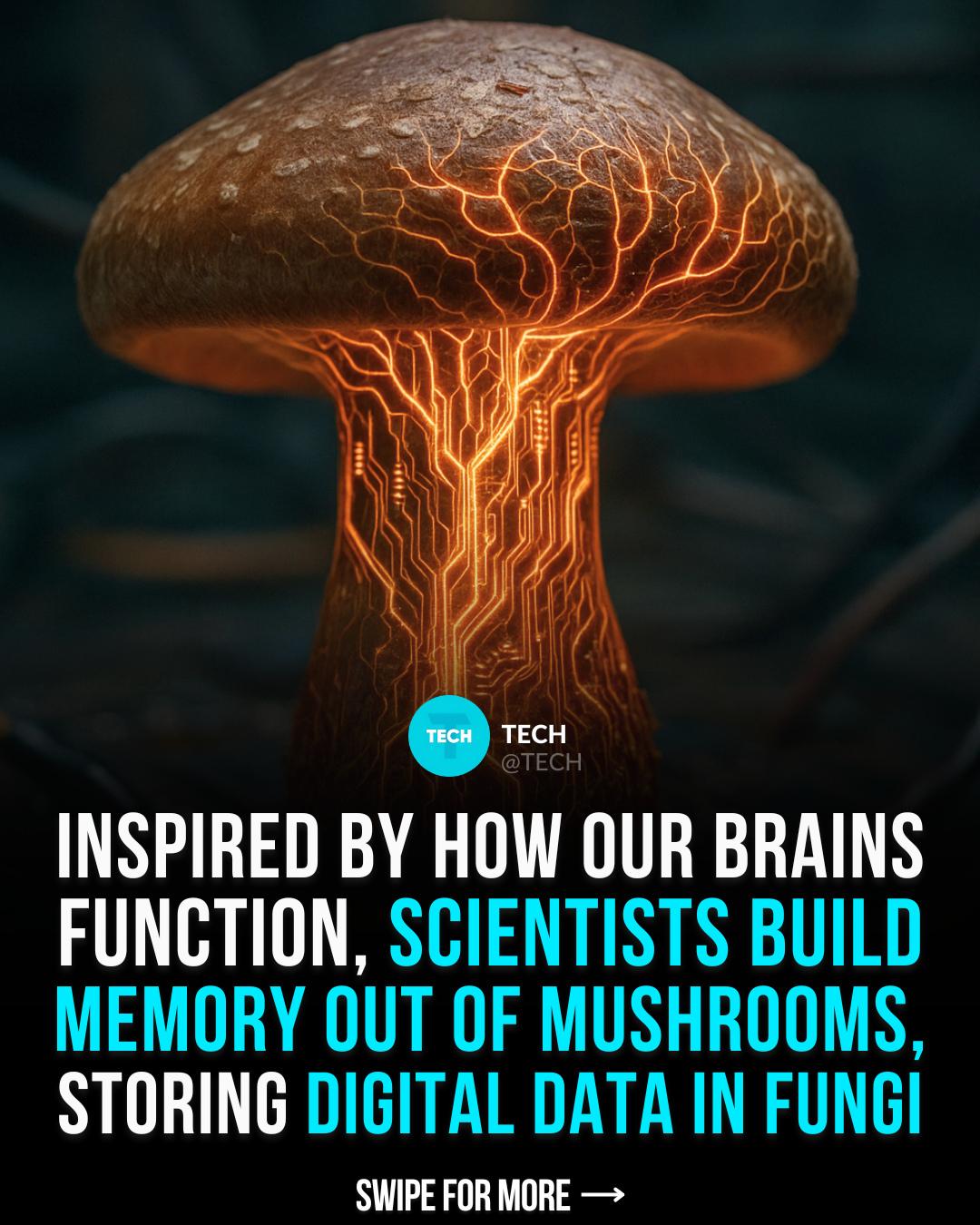
  • It began with a garden mushroom. In a small lab at Ohio State, researchers cultivated **shiitake mycelium**, the web-like root of a fungus, and discovered that it could remember. When dried, wired, and charged with electricity, this living network behaved like a computer’s memory chip, blurring the line between biology and machine.⁠

    Each strand of mycelium acted as a **memristor**, a circuit that learns from the past by remembering the voltages it has seen before. That’s how the human brain works too, less as a machine, more as a landscape of memories shaped by use. When the team pulsed the fungal tissue with tiny electrical currents, it switched between states nearly **6,000 times per second** and held its memory with **90 percent accuracy**, rivaling early silicon devices in speed and efficiency.⁠

    The elegance is in the simplicity. No rare minerals, no massive fabrication plants, just living material trained to think. When the circuits began to weaken at higher frequencies, the scientists simply added more mushrooms to the loop, and the system adapted, its performance restored through connection rather than replacement. The researchers even found that dehydrated samples could retain their “programming,” hinting at forms of long-term fungal memory that persist long after growth stops.⁠

    Shiitake mycelium is famously resilient, able to endure radiation and drought, and it grows using waste materials most industries throw away. That means these fungal chips might one day run quietly in remote sensors, spacecraft, or wearable devices, places where ordinary electronics corrode, overheat, or fail.⁠

    It’s an idea both strange and intimate, a future where the tools of thought grow from soil, where computation is something we cultivate, and where intelligence itself might one day take root.⁠

    #tech #biotech #neuralnetworks #ai #sustainability #computing #innovation #mushrooms #futuretech #bioelectronics

    Source: 10.1371/journal.pone.0328965
    It began with a garden mushroom. In a small lab at Ohio State, researchers cultivated **shiitake mycelium**, the web-like root of a fungus, and discovered that it could remember. When dried, wired, and charged with electricity, this living network behaved like a computer’s memory chip, blurring the line between biology and machine.⁠ ⁠ Each strand of mycelium acted as a **memristor**, a circuit that learns from the past by remembering the voltages it has seen before. That’s how the human brain works too, less as a machine, more as a landscape of memories shaped by use. When the team pulsed the fungal tissue with tiny electrical currents, it switched between states nearly **6,000 times per second** and held its memory with **90 percent accuracy**, rivaling early silicon devices in speed and efficiency.⁠ ⁠ The elegance is in the simplicity. No rare minerals, no massive fabrication plants, just living material trained to think. When the circuits began to weaken at higher frequencies, the scientists simply added more mushrooms to the loop, and the system adapted, its performance restored through connection rather than replacement. The researchers even found that dehydrated samples could retain their “programming,” hinting at forms of long-term fungal memory that persist long after growth stops.⁠ ⁠ Shiitake mycelium is famously resilient, able to endure radiation and drought, and it grows using waste materials most industries throw away. That means these fungal chips might one day run quietly in remote sensors, spacecraft, or wearable devices, places where ordinary electronics corrode, overheat, or fail.⁠ ⁠ It’s an idea both strange and intimate, a future where the tools of thought grow from soil, where computation is something we cultivate, and where intelligence itself might one day take root.⁠ ⁠ #tech #biotech #neuralnetworks #ai #sustainability #computing #innovation #mushrooms #futuretech #bioelectronics⁠ ⁠ Source: 10.1371/journal.pone.0328965
    ·238 Просмотры ·0 предпросмотр
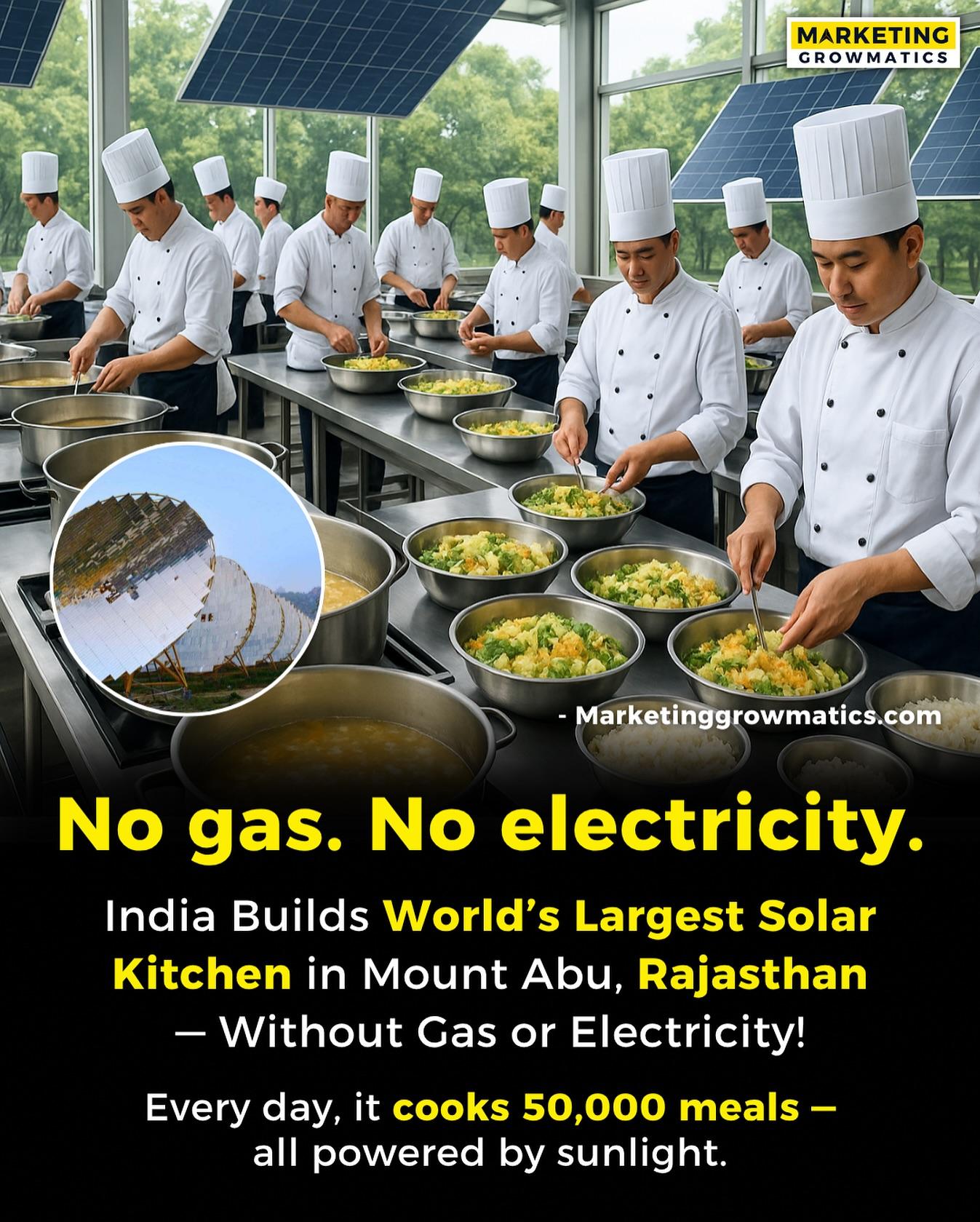
  • India Builds the World’s Largest Solar Kitchen in Mount Abu, Rajasthan — Cooking 50,000 Meals a Day Without Gas or Electricity!

    Located at the Brahma Kumaris Spiritual Headquarters, this massive kitchen uses 1,200+ solar reflectors to harness sunlight for cooking.
    It can prepare 50,000 vegetarian meals daily, completely emission-free — saving over 2 lakh kg of LPG every year.
    A shining example of renewable energy, sustainability, and scale working together for the greater good.

    Should more public kitchens adopt solar cooking?

    #SolarKitchen #MountAbu #BrahmaKumaris #RenewableEnergy #GreenIndia #CleanEnergy #Sustainability #SolarPowerIndia #LargestSolarKitchen #EcoFriendlyCooking #Rajasthan #IndiaInnovation #SolarEnergy #Viral
    India Builds the World’s Largest Solar Kitchen in Mount Abu, Rajasthan — Cooking 50,000 Meals a Day Without Gas or Electricity! Located at the Brahma Kumaris Spiritual Headquarters, this massive kitchen uses 1,200+ solar reflectors to harness sunlight for cooking. It can prepare 50,000 vegetarian meals daily, completely emission-free — saving over 2 lakh kg of LPG every year. A shining example of renewable energy, sustainability, and scale working together for the greater good. 💬 Should more public kitchens adopt solar cooking? #SolarKitchen #MountAbu #BrahmaKumaris #RenewableEnergy #GreenIndia #CleanEnergy #Sustainability #SolarPowerIndia #LargestSolarKitchen #EcoFriendlyCooking #Rajasthan #IndiaInnovation #SolarEnergy #Viral
    ·416 Просмотры ·0 предпросмотр
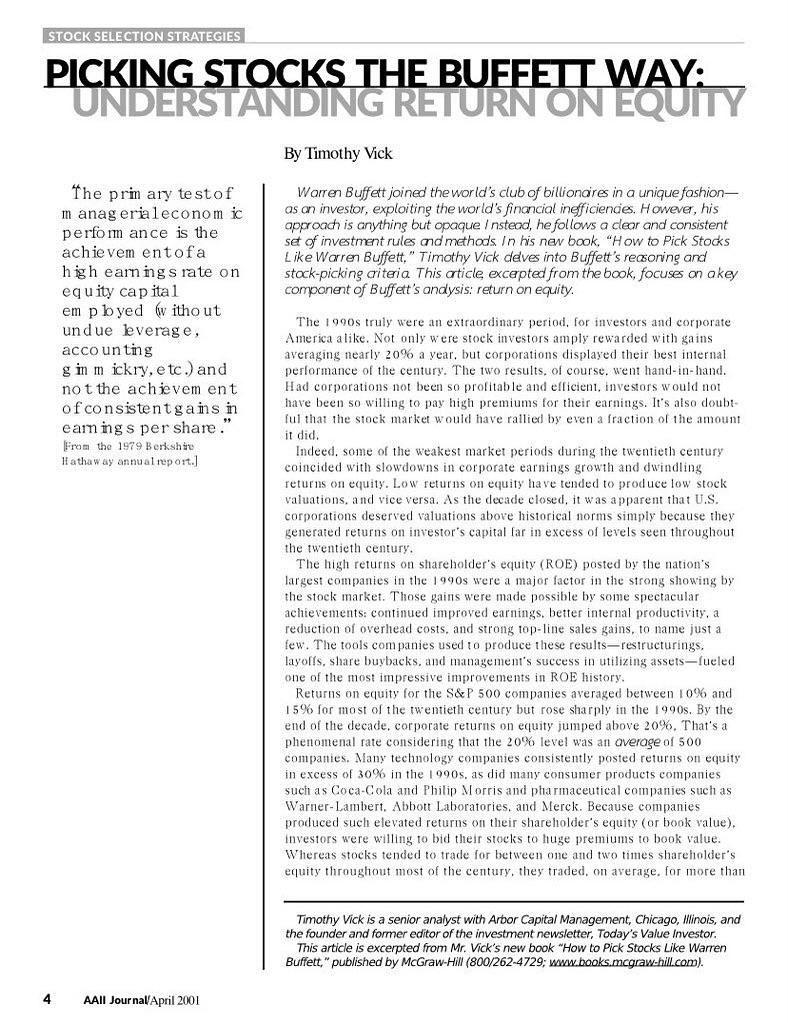
  • Warren Buffett’s timeless investing wisdom teaches us that the true measure of a company is its ability to consistently deliver high returns on equity without relying on excessive debt or accounting gimmicks. The focus should never be on short-term earnings per share but on how efficiently management compounds capital over time. High ROE is a sign of quality, but what truly matters is sustainability. The best businesses show discipline in reinvesting capital, resist empire building, and generate enduring value for shareholders. Buffett’s approach reminds us that consistency, prudence, and capital efficiency are the real cornerstones of long-term wealth creation.

    #ValueInvesting #WarrenBuffett #InvestingWisdom #ROE #StockMarket #Fundamentals
    Warren Buffett’s timeless investing wisdom teaches us that the true measure of a company is its ability to consistently deliver high returns on equity without relying on excessive debt or accounting gimmicks. The focus should never be on short-term earnings per share but on how efficiently management compounds capital over time. High ROE is a sign of quality, but what truly matters is sustainability. The best businesses show discipline in reinvesting capital, resist empire building, and generate enduring value for shareholders. Buffett’s approach reminds us that consistency, prudence, and capital efficiency are the real cornerstones of long-term wealth creation. #ValueInvesting #WarrenBuffett #InvestingWisdom #ROE #StockMarket #Fundamentals
    ·279 Просмотры ·0 предпросмотр
Расширенные страницы
Techawks - Powered By Pantrade Blockchain https://techawks.com