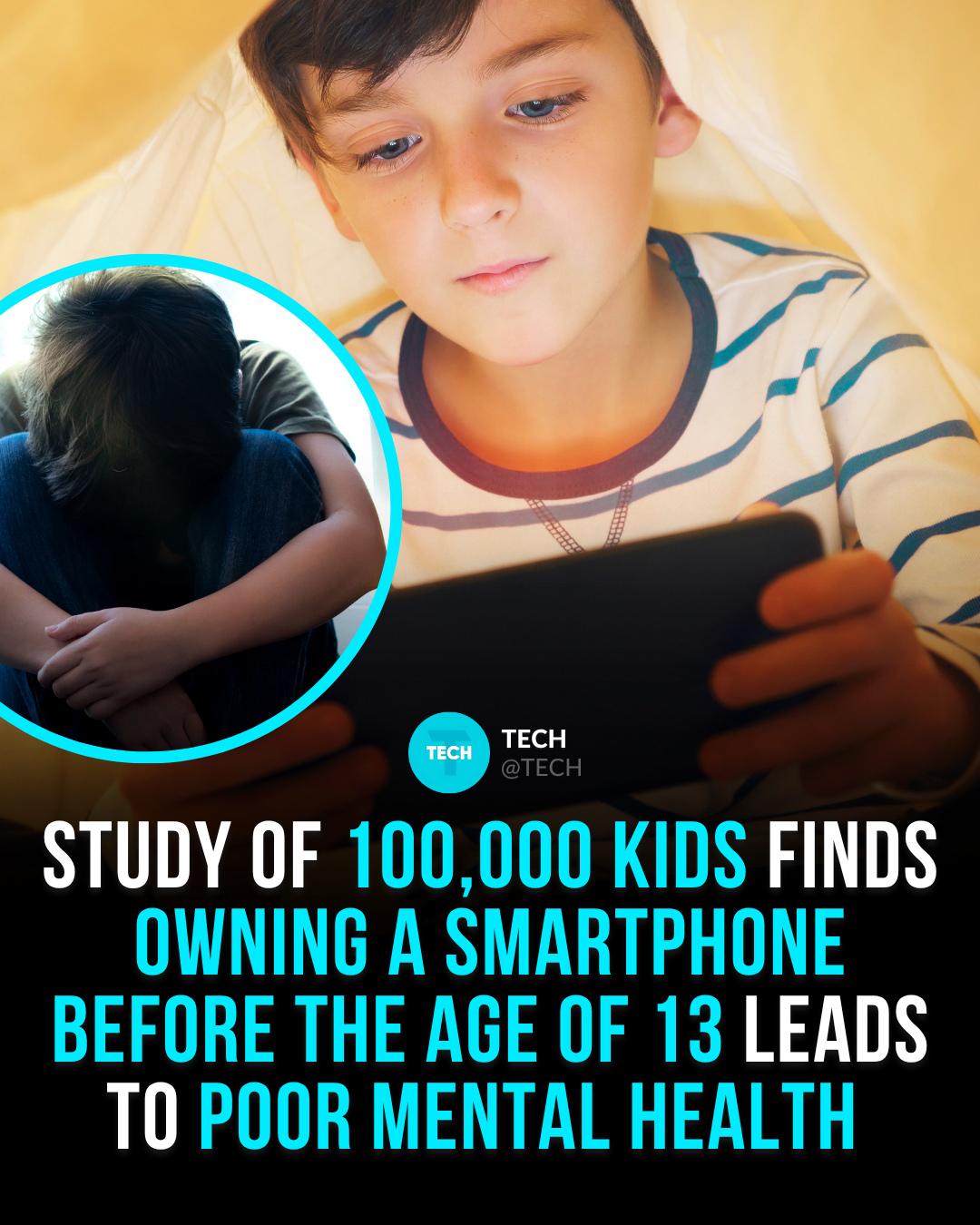
In one of the largest studies of its kind, scientists have uncovered an unsettling truth about the modern childhood experience: giving kids smartphones before they turn thirteen may shape their minds in ways that ripple for years. Drawing on data from over 100,000 young adults, the research paints a vivid picture of how early access to these devices is tied to more anxiety, aggression, detachment from reality, and even persistent suicidal thoughts later in life.
The younger the age of first ownership, the sharper the impact. A child who was handed a smartphone at just five years old scored dramatically lower on overall well‑being than a peer who received one at thirteen. For girls, the pattern was especially striking—nearly half of those who got smartphones before age six later reported severe suicidal ideation, compared to less than a third of those who waited. Boys were affected too, showing reduced calmness, empathy, and emotional stability.
What’s driving these changes isn’t just the devices themselves, but the digital world they unlock. Early access to algorithm‑driven social media means constant exposure to curated content, cyberbullying, and hours of late‑night scrolling instead of restorative sleep. These forces collide at a critical stage of brain development, when self‑image, emotional resilience, and social skills are still taking root.
The researchers argue it’s time to treat smartphones more like other age‑restricted products, urging stricter rules, better digital literacy education, and tougher accountability for tech companies. The findings are a stark reminder: while smartphones connect us to a vast world, giving them too early might quietly rewrite the way a generation grows, learns, and feels.
Source: 10.1080/19452829.2025.2518313
In one of the largest studies of its kind, scientists have uncovered an unsettling truth about the modern childhood experience: giving kids smartphones before they turn thirteen may shape their minds in ways that ripple for years. Drawing on data from over 100,000 young adults, the research paints a vivid picture of how early access to these devices is tied to more anxiety, aggression, detachment from reality, and even persistent suicidal thoughts later in life.
The younger the age of first ownership, the sharper the impact. A child who was handed a smartphone at just five years old scored dramatically lower on overall well‑being than a peer who received one at thirteen. For girls, the pattern was especially striking—nearly half of those who got smartphones before age six later reported severe suicidal ideation, compared to less than a third of those who waited. Boys were affected too, showing reduced calmness, empathy, and emotional stability.
What’s driving these changes isn’t just the devices themselves, but the digital world they unlock. Early access to algorithm‑driven social media means constant exposure to curated content, cyberbullying, and hours of late‑night scrolling instead of restorative sleep. These forces collide at a critical stage of brain development, when self‑image, emotional resilience, and social skills are still taking root.
The researchers argue it’s time to treat smartphones more like other age‑restricted products, urging stricter rules, better digital literacy education, and tougher accountability for tech companies. The findings are a stark reminder: while smartphones connect us to a vast world, giving them too early might quietly rewrite the way a generation grows, learns, and feels.
Source: 10.1080/19452829.2025.2518313
·219 Просмотры
·0 предпросмотр
 English
 Arabic
 French
 Spanish
 Portuguese
 Deutsch
 Turkish
 Dutch
Dutch
 Italiano
 Russian
 Romaian
 Portuguese (Brazil)
 Greek
Greek