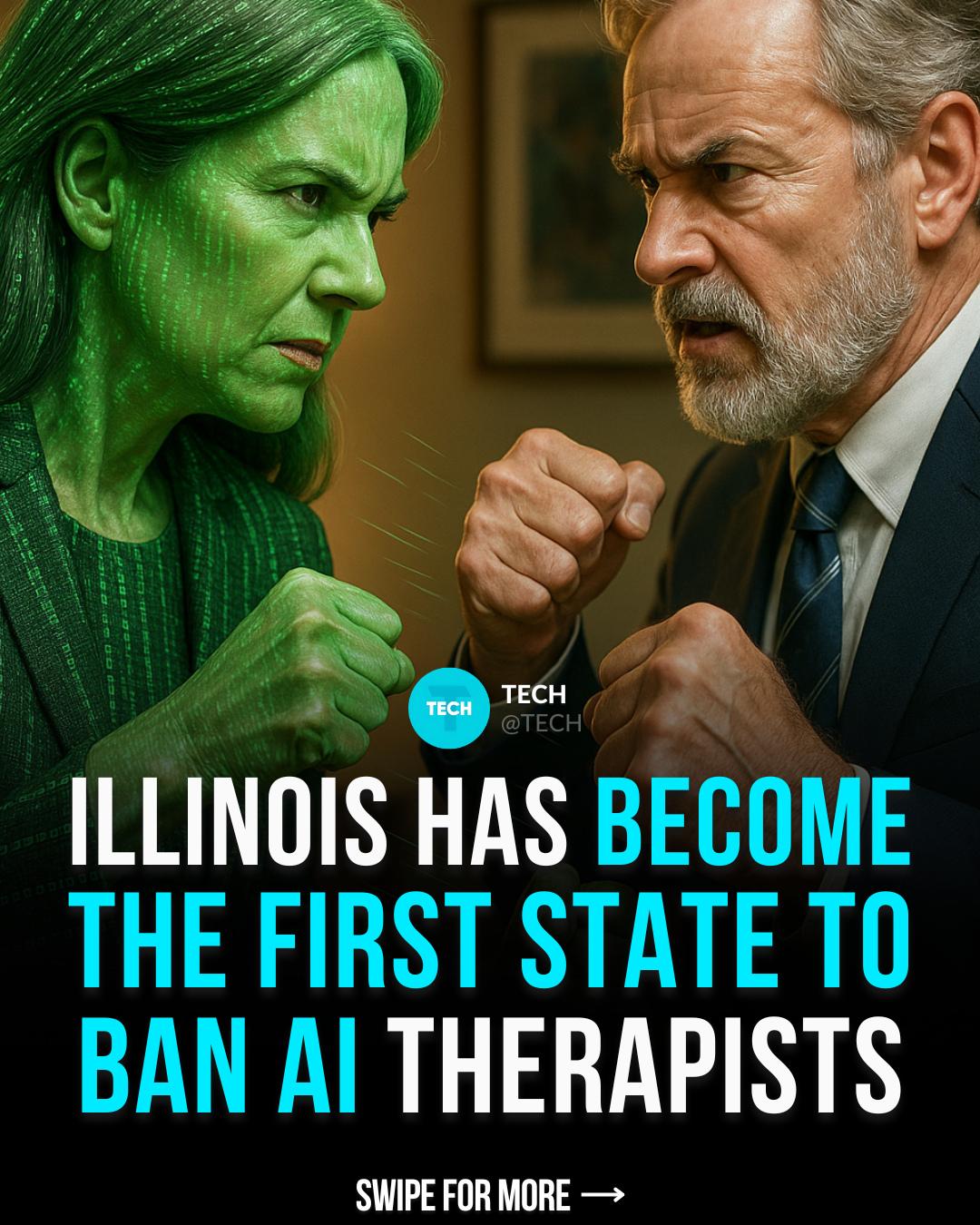
Illinois has become the first U.S. state to outlaw AI from acting as a therapist, with Governor JB Pritzker signing the Wellness and Oversight for Psychological Resources Act (HB 1806) into law. The measure bans AI tools from making therapeutic decisions, conducting counseling sessions, or creating treatment plans without human review. Only licensed professionals can provide mental health services, and violations can result in fines up to $10,000 per offense.
The legislation, passed unanimously in both chambers, still permits AI for administrative support such as scheduling, billing, or note-taking. Lawmakers say the goal is to prevent harm from unregulated chatbots posing as therapists, citing cases where AI tools encouraged suicidal thoughts or dangerous behaviors. In one example, an AI “therapist” suggested a fictional recovering addict take meth to cope with stress.
Supporters, including the Illinois Department of Financial and Professional Regulation and the National Association of Social Workers, argue the law safeguards patients and maintains ethical standards that AI cannot meet. Mental health professionals emphasize that human connection, empathy, and situational judgment are essential in therapy—qualities machines can’t replicate.
The move follows similar, though narrower, actions in Nevada, Utah, and New York, and comes amid a broader debate over AI’s role in healthcare. Federal policy under the Trump administration seeks to limit state-level AI regulation, potentially setting up legal clashes.
While some see AI as a way to address the shortage of therapists, experts warn that overreliance on unregulated systems can worsen mental health crises. For now, Illinois draws a clear line: AI can help schedule your session, but it cannot replace the human sitting across from you.
#ai #mentalhealth #therapy #illinois #technology #ethics #regulation #healthtech #psychologyIllinois has become the first U.S. state to outlaw AI from acting as a therapist, with Governor JB Pritzker signing the Wellness and Oversight for Psychological Resources Act (HB 1806) into law. The measure bans AI tools from making therapeutic decisions, conducting counseling sessions, or creating treatment plans without human review. Only licensed professionals can provide mental health services, and violations can result in fines up to $10,000 per offense.
The legislation, passed unanimously in both chambers, still permits AI for administrative support such as scheduling, billing, or note-taking. Lawmakers say the goal is to prevent harm from unregulated chatbots posing as therapists, citing cases where AI tools encouraged suicidal thoughts or dangerous behaviors. In one example, an AI “therapist” suggested a fictional recovering addict take meth to cope with stress.
Supporters, including the Illinois Department of Financial and Professional Regulation and the National Association of Social Workers, argue the law safeguards patients and maintains ethical standards that AI cannot meet. Mental health professionals emphasize that human connection, empathy, and situational judgment are essential in therapy—qualities machines can’t replicate.
The move follows similar, though narrower, actions in Nevada, Utah, and New York, and comes amid a broader debate over AI’s role in healthcare. Federal policy under the Trump administration seeks to limit state-level AI regulation, potentially setting up legal clashes.
While some see AI as a way to address the shortage of therapists, experts warn that overreliance on unregulated systems can worsen mental health crises. For now, Illinois draws a clear line: AI can help schedule your session, but it cannot replace the human sitting across from you.
#ai #mentalhealth #therapy #illinois #technology #ethics #regulation #healthtech #psychology
 English
 Arabic
 French
 Spanish
 Portuguese
 Deutsch
 Turkish
 Dutch
Dutch
 Italiano
 Russian
 Romaian
 Portuguese (Brazil)
 Greek
Greek