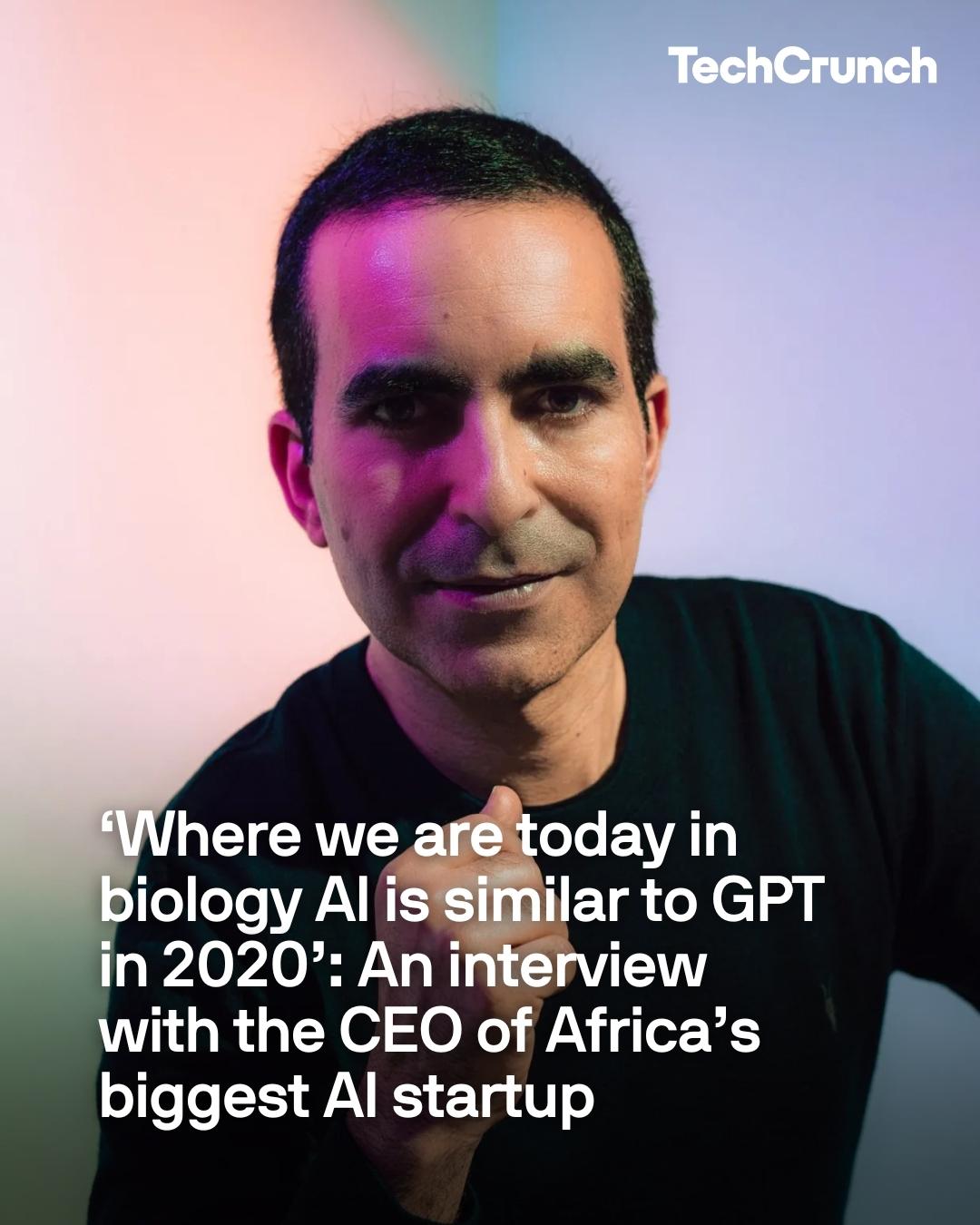
• BioNTech’s $550M acquisition of African AI startup InstaDeep is paying off.

    InstaDeep, known for its cutting-edge AI applications, continues to operate independently while boosting BioNTech’s biotech capabilities. In just over a year, the AI company has accelerated BioNTech’s drug and vaccine development, improving processes like tissue analysis by 5x.

    Their collaboration now includes breakthrough projects like AI-driven protein design and cancer-fighting innovations. Despite the biotech focus, InstaDeep is still making waves outside pharma, solving industrial challenges like railway scheduling and locust outbreak detection in Africa.

    With over 400 employees globally, InstaDeep is thriving under BioNTech’s wing and pushing the frontier of AI innovation across industries.

    Read our interview with InstaDeep's CEO Karim Beguir at the link in the bio

    Article by Tage Kene-Okafor

    Image Credits: InstaDeep; BioNTech

    #TechCrunch #technews #artificialintelligence #startup #founder #venturecapital
    BioNTech’s $550M acquisition of African AI startup InstaDeep is paying off. InstaDeep, known for its cutting-edge AI applications, continues to operate independently while boosting BioNTech’s biotech capabilities. In just over a year, the AI company has accelerated BioNTech’s drug and vaccine development, improving processes like tissue analysis by 5x. Their collaboration now includes breakthrough projects like AI-driven protein design and cancer-fighting innovations. Despite the biotech focus, InstaDeep is still making waves outside pharma, solving industrial challenges like railway scheduling and locust outbreak detection in Africa. With over 400 employees globally, InstaDeep is thriving under BioNTech’s wing and pushing the frontier of AI innovation across industries. Read our interview with InstaDeep's CEO Karim Beguir at the link in the bio 👆 Article by Tage Kene-Okafor Image Credits: InstaDeep; BioNTech #TechCrunch #technews #artificialintelligence #startup #founder #venturecapital
    ·108 Views ·0 Προεπισκόπηση

  • Chinese scientists are working on a promising anti-aging drug derived from a grapeseed compound known as PCC1, a breakthrough they believe could one day extend the human lifespan to as long as 150 years.

    The findings, published in Nature Metabolism, show that PCC1 successfully eliminated aged cells in mice and increased their lifespan by roughly 9%. The compound targets and clears senescent cells, which contribute to tissue aging. A Shenzhen-based biotech company, Lonvi Biosciences, is now preparing this technology for human trials, describing it as a major step toward practical life-extension science.

    Although the early data is exciting, experts emphasize that human aging is far more complex. PCC1’s safety, ideal dosage, and long-term effects will require extensive clinical research before any true breakthrough becomes possible. Still, the idea of routinely living beyond 100 is slowly shifting from science fiction to scientific possibility.

    Source: Nature Metabolism, University of Chinese Academy of Sciences

    Follow us @FutureTech for more!
    Chinese scientists are working on a promising anti-aging drug derived from a grapeseed compound known as PCC1, a breakthrough they believe could one day extend the human lifespan to as long as 150 years. 🧬 The findings, published in Nature Metabolism, show that PCC1 successfully eliminated aged cells in mice and increased their lifespan by roughly 9%. The compound targets and clears senescent cells, which contribute to tissue aging. A Shenzhen-based biotech company, Lonvi Biosciences, is now preparing this technology for human trials, describing it as a major step toward practical life-extension science. Although the early data is exciting, experts emphasize that human aging is far more complex. PCC1’s safety, ideal dosage, and long-term effects will require extensive clinical research before any true breakthrough becomes possible. Still, the idea of routinely living beyond 100 is slowly shifting from science fiction to scientific possibility. Source: Nature Metabolism, University of Chinese Academy of Sciences 👉 Follow us @FutureTech for more! 🔌
    ·49 Views ·0 Προεπισκόπηση
  • MIT researchers have unveiled a groundbreaking technology called Circulatronics, a platform that could treat neurological diseases and mental illnesses without the need for brain surgery.

    The innovation, published in Nature Biotechnology, uses tiny wireless chips called SWEDs that can be injected through a simple jab in the arm, travel through the bloodstream, and self-implant inside the brain.

    The chips, each roughly one-billionth the length of a grain of rice, attach to immune cells that naturally cross the blood–brain barrier and move toward inflamed brain regions. Once in position, they can be activated wirelessly with near-infrared light, delivering precise electrical stimulation to treat conditions like depression, Alzheimer’s, multiple sclerosis, and even brain tumors.

    In mouse tests, the injected hybrids successfully navigated to targeted diseased areas and activated nearby neurons when stimulated from outside the body. The approach could offer a safer, cheaper alternative to invasive electrode-based brain surgeries, which carry risks and remain inaccessible to billions worldwide.

    Led by MIT’s Deblina Sarkar in collaboration with Wellesley College and Harvard University, the team is already exploring next-generation upgrades, such as adding sensing abilities and synthetic electronic neurons. The tech could also be adapted for other organs, potentially enabling wireless pacemakers or injectable implants for chronic pain.

    Through a new MIT spinoff, Cahira Technologies, Circulatronics is aiming for clinical trials within three years, marking a major step toward a future where advanced neurological treatments might be delivered through a simple injection, no surgery required.

    Follow us @FutureTech for more!
    MIT researchers have unveiled a groundbreaking technology called Circulatronics, a platform that could treat neurological diseases and mental illnesses without the need for brain surgery. The innovation, published in Nature Biotechnology, uses tiny wireless chips called SWEDs that can be injected through a simple jab in the arm, travel through the bloodstream, and self-implant inside the brain. The chips, each roughly one-billionth the length of a grain of rice, attach to immune cells that naturally cross the blood–brain barrier and move toward inflamed brain regions. Once in position, they can be activated wirelessly with near-infrared light, delivering precise electrical stimulation to treat conditions like depression, Alzheimer’s, multiple sclerosis, and even brain tumors. In mouse tests, the injected hybrids successfully navigated to targeted diseased areas and activated nearby neurons when stimulated from outside the body. The approach could offer a safer, cheaper alternative to invasive electrode-based brain surgeries, which carry risks and remain inaccessible to billions worldwide. Led by MIT’s Deblina Sarkar in collaboration with Wellesley College and Harvard University, the team is already exploring next-generation upgrades, such as adding sensing abilities and synthetic electronic neurons. The tech could also be adapted for other organs, potentially enabling wireless pacemakers or injectable implants for chronic pain. Through a new MIT spinoff, Cahira Technologies, Circulatronics is aiming for clinical trials within three years, marking a major step toward a future where advanced neurological treatments might be delivered through a simple injection, no surgery required. 👉 Follow us @FutureTech for more! 🔌
    ·67 Views ·0 Προεπισκόπηση
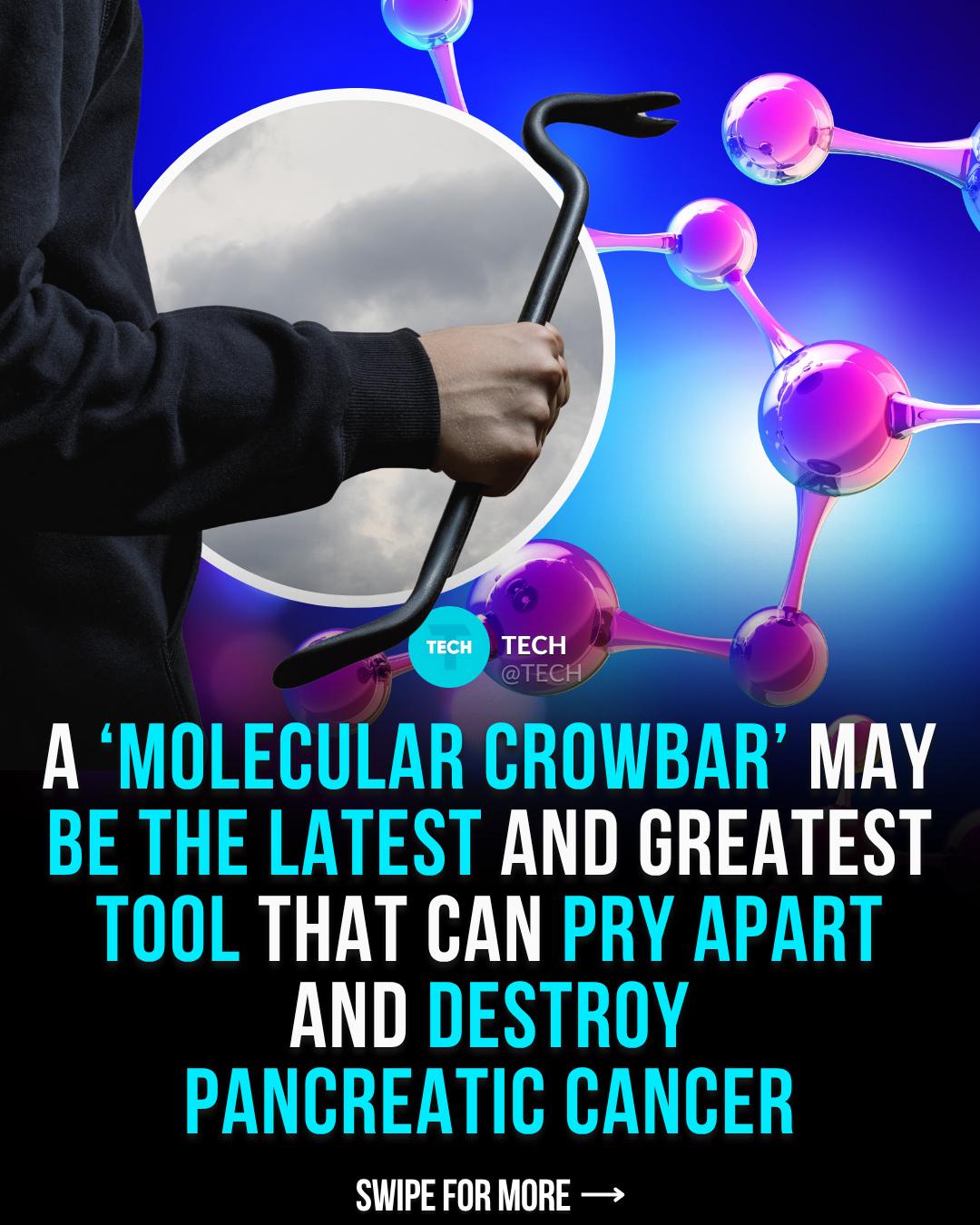
  • Researchers are closing in on one of the most stubborn molecular drivers of pancreatic cancer. Deep inside tumor cells and the fibrous tissues surrounding them, a fast-acting enzyme called Pin1 rewires signaling pathways that help cancers grow, spread, and evade therapy. A new effort by UC Riverside and City of Hope is using a precision-engineered “molecular crowbar” to pry this enzyme apart and trigger its destruction.⁠

    The strategy hinges on custom-designed compounds that bind tightly to Pin1, push it into an unstable shape, and mark it for removal by the cell’s own disposal machinery. Instead of simply blocking the enzyme’s activity, these degraders erase the protein entirely, offering a fundamentally different way to dismantle cancer’s internal wiring.⁠

    To move the approach forward, the teams strengthened the compounds’ stability in blood plasma, then mapped how they affect cancer cells and the surrounding fibroblasts drawn from patient biopsies. That dual targeting is critical, because the tumor microenvironment in pancreatic cancer forms a dense, treatment-resistant barrier that protects malignant cells from chemotherapy and immunotherapy.⁠

    In mouse models of peritoneal metastases—one of the deadliest complications of pancreatic, gastrointestinal, and abdominal cancers—the degraders sharply reduced tumor burden. The results offer rare proof-of-concept progress against a disease where survival is often measured in months.⁠

    Backed by a National Cancer Institute cooperative grant, the collaboration is now advancing these degraders toward clinical readiness. Because Pin1 is active across many tumor types, this approach could open a broader therapeutic class built around selective protein dismantling.⁠

    #tech #biotech #cancerresearch #pancreaticcancer #drugdiscovery #proteindegradation #molecularbiology #innovation #futuremedicine
    Researchers are closing in on one of the most stubborn molecular drivers of pancreatic cancer. Deep inside tumor cells and the fibrous tissues surrounding them, a fast-acting enzyme called Pin1 rewires signaling pathways that help cancers grow, spread, and evade therapy. A new effort by UC Riverside and City of Hope is using a precision-engineered “molecular crowbar” to pry this enzyme apart and trigger its destruction.⁠ ⁠ The strategy hinges on custom-designed compounds that bind tightly to Pin1, push it into an unstable shape, and mark it for removal by the cell’s own disposal machinery. Instead of simply blocking the enzyme’s activity, these degraders erase the protein entirely, offering a fundamentally different way to dismantle cancer’s internal wiring.⁠ ⁠ To move the approach forward, the teams strengthened the compounds’ stability in blood plasma, then mapped how they affect cancer cells and the surrounding fibroblasts drawn from patient biopsies. That dual targeting is critical, because the tumor microenvironment in pancreatic cancer forms a dense, treatment-resistant barrier that protects malignant cells from chemotherapy and immunotherapy.⁠ ⁠ In mouse models of peritoneal metastases—one of the deadliest complications of pancreatic, gastrointestinal, and abdominal cancers—the degraders sharply reduced tumor burden. The results offer rare proof-of-concept progress against a disease where survival is often measured in months.⁠ ⁠ Backed by a National Cancer Institute cooperative grant, the collaboration is now advancing these degraders toward clinical readiness. Because Pin1 is active across many tumor types, this approach could open a broader therapeutic class built around selective protein dismantling.⁠ ⁠ #tech #biotech #cancerresearch #pancreaticcancer #drugdiscovery #proteindegradation #molecularbiology #innovation #futuremedicine
    ·283 Views ·0 Προεπισκόπηση
  • A pill that helps big dogs live longer is closer than people think

    Biotech startup Loyal has been testing a medicine that targets aging in large dogs, and early trials suggest it could extend their healthy years rather than just add fragile time at the end.

    Regulators are already reviewing the data so the company is aiming for a launch around 2026, turning longevity medicine for pets from a sci-fi idea into a real product people can ask their vet about.

    #Dogs #Longevity #PetHealth #Biotech #Future
    A pill that helps big dogs live longer is closer than people think 🐶 Biotech startup Loyal has been testing a medicine that targets aging in large dogs, and early trials suggest it could extend their healthy years rather than just add fragile time at the end. Regulators are already reviewing the data so the company is aiming for a launch around 2026, turning longevity medicine for pets from a sci-fi idea into a real product people can ask their vet about. #Dogs #Longevity #PetHealth #Biotech #Future
    ·156 Views ·0 Προεπισκόπηση
  • Industry giants Apollo and @8VC have joined forces in a multi-billion-dollar alliance to fast-track the next wave of transformative technologies, including AI, robotics, autonomous systems, biotech, and clean energy, said Joe Lonsdale, Founding Partner of 8VC and Palantir co-founder.

    For decades, startups depended on venture equity. Now, the biggest shift in capital is happening—non-dilutive private credit is fueling future-defining AI and deep tech builders.

    Their goal is to strengthen supply chains, accelerate AI-driven innovations, and create new manufacturing jobs, keeping the US at the forefront of global technology.

    The big question: which American companies will earn their backing next?
    Industry giants Apollo and @8VC have joined forces in a multi-billion-dollar alliance to fast-track the next wave of transformative technologies, including AI, robotics, autonomous systems, biotech, and clean energy, said Joe Lonsdale, Founding Partner of 8VC and Palantir co-founder. For decades, startups depended on venture equity. Now, the biggest shift in capital is happening—non-dilutive private credit is fueling future-defining AI and deep tech builders. Their goal is to strengthen supply chains, accelerate AI-driven innovations, and create new manufacturing jobs, keeping the US at the forefront of global technology. The big question: which American companies will earn their backing next?
    ·209 Views ·0 Προεπισκόπηση
  • Baldness might soon meet its match in a patch made from sugar. Scientists have engineered a dissolving microneedle system that fuses minoxidil, the main ingredient in Rogaine, with stevioside, the natural sweetener from the Stevia plant. The result is a tiny grid of microscopic spikes that melt into the scalp, releasing medication directly to the roots of hair growth.⁠

    Developed by teams in China and Australia and published in *Advanced Healthcare Materials*, the invention solves two of minoxidil’s biggest problems: it doesn’t dissolve well in water, and it barely seeps through skin. By building the microneedles out of stevioside, researchers found a way to make the drug more soluble, more absorbable, and far more effective than traditional topical solutions.⁠

    Microneedles work by creating painless channels through the skin’s outer layer, then dissolving to deliver their contents exactly where hair follicles lie. Stevioside, a molecule with both water-loving and water-repelling sides, behaves like a natural carrier, wrapping around minoxidil and ferrying it deep into the epidermis without the sting or irritation of alcohol-based treatments.⁠

    In lab tests using pig ear tissue, more than 85% of the drug penetrated the skin, with nearly 20% staying in place, over twice the amount seen with regular liquid minoxidil. When tested on mice bred to mimic pattern baldness, the patch spurred regrowth in roughly 67% of the treated area within 35 days, compared to just 25% for standard applications.⁠

    The technology could streamline hair restoration routines, reducing the need for daily treatments and avoiding messy solvents. Still, human biology remains the ultimate test, since hair growth cycles in people are slower and influenced by many factors. Clinical trials will determine whether this sweet innovation can turn a pantry staple into the next revolution in hair loss therapy.⁠

    #tech #biotech #dermatology #hairloss #minoxidil #microneedles #stevia #regenerativemedicine #innovation

    Source: 10.1002/adhm.202503575
    Baldness might soon meet its match in a patch made from sugar. Scientists have engineered a dissolving microneedle system that fuses minoxidil, the main ingredient in Rogaine, with stevioside, the natural sweetener from the Stevia plant. The result is a tiny grid of microscopic spikes that melt into the scalp, releasing medication directly to the roots of hair growth.⁠ ⁠ Developed by teams in China and Australia and published in *Advanced Healthcare Materials*, the invention solves two of minoxidil’s biggest problems: it doesn’t dissolve well in water, and it barely seeps through skin. By building the microneedles out of stevioside, researchers found a way to make the drug more soluble, more absorbable, and far more effective than traditional topical solutions.⁠ ⁠ Microneedles work by creating painless channels through the skin’s outer layer, then dissolving to deliver their contents exactly where hair follicles lie. Stevioside, a molecule with both water-loving and water-repelling sides, behaves like a natural carrier, wrapping around minoxidil and ferrying it deep into the epidermis without the sting or irritation of alcohol-based treatments.⁠ ⁠ In lab tests using pig ear tissue, more than 85% of the drug penetrated the skin, with nearly 20% staying in place, over twice the amount seen with regular liquid minoxidil. When tested on mice bred to mimic pattern baldness, the patch spurred regrowth in roughly 67% of the treated area within 35 days, compared to just 25% for standard applications.⁠ ⁠ The technology could streamline hair restoration routines, reducing the need for daily treatments and avoiding messy solvents. Still, human biology remains the ultimate test, since hair growth cycles in people are slower and influenced by many factors. Clinical trials will determine whether this sweet innovation can turn a pantry staple into the next revolution in hair loss therapy.⁠ ⁠ #tech #biotech #dermatology #hairloss #minoxidil #microneedles #stevia #regenerativemedicine #innovation⁠ ⁠ Source: 10.1002/adhm.202503575
    ·227 Views ·0 Προεπισκόπηση
  • Scientists have now switched a kidney’s blood type before transplant, edging toward “universal” donor organs. In a first-in-human model published October 3, 2025 in Nature Biomedical Engineering, a team spanning Canada and China transplanted a type A kidney that had been enzymatically converted to type O into a brain-dead recipient. The organ worked for two days with no hyperacute rejection, then showed only a mild immune reaction on day three, alongside early signs of accommodation.⁠

    The trick is biochemical. Special enzymes act like molecular scissors to remove the sugar markers, called antigens, that label cells as type A. Antigens are essentially nametags for the immune system, and type O lacks the A and B tags that spark immediate attack. Strip those A tags from the kidney’s blood vessels and the organ starts to look immunologically neutral.⁠

    The impact could be profound. More than half of kidney waitlists are type O patients, who can receive only type O organs, and they often wait two to four years longer. In the United States, about 11 people die each day waiting for a kidney. Today’s work changes the organ rather than the patient, potentially avoiding days of antibody removal and heavy immunosuppression that currently require living donors and complex prep.⁠

    This milestone follows a decade of development by the University of British Columbia team led by Stephen Withers and Jayachandran Kizhakkedathu, including a 2019 enzyme discovery and earlier ex vivo conversions of lungs and kidneys. Regulatory approval for clinical trials is next, with UBC spin-off Avivo Biomedical advancing the enzymes for transplantation and on-demand universal blood.⁠

    It is not a cure-all yet, but it reads like a blueprint for turning scarcity into access, where compatibility is engineered and time moves back onto the patient’s side.⁠

    #tech #biotech #transplant #kidney #health #medicine #organtransplant #innovation #research

    Source: s41551-025-01513-6
    Scientists have now switched a kidney’s blood type before transplant, edging toward “universal” donor organs. In a first-in-human model published October 3, 2025 in Nature Biomedical Engineering, a team spanning Canada and China transplanted a type A kidney that had been enzymatically converted to type O into a brain-dead recipient. The organ worked for two days with no hyperacute rejection, then showed only a mild immune reaction on day three, alongside early signs of accommodation.⁠ ⁠ The trick is biochemical. Special enzymes act like molecular scissors to remove the sugar markers, called antigens, that label cells as type A. Antigens are essentially nametags for the immune system, and type O lacks the A and B tags that spark immediate attack. Strip those A tags from the kidney’s blood vessels and the organ starts to look immunologically neutral.⁠ ⁠ The impact could be profound. More than half of kidney waitlists are type O patients, who can receive only type O organs, and they often wait two to four years longer. In the United States, about 11 people die each day waiting for a kidney. Today’s work changes the organ rather than the patient, potentially avoiding days of antibody removal and heavy immunosuppression that currently require living donors and complex prep.⁠ ⁠ This milestone follows a decade of development by the University of British Columbia team led by Stephen Withers and Jayachandran Kizhakkedathu, including a 2019 enzyme discovery and earlier ex vivo conversions of lungs and kidneys. Regulatory approval for clinical trials is next, with UBC spin-off Avivo Biomedical advancing the enzymes for transplantation and on-demand universal blood.⁠ ⁠ It is not a cure-all yet, but it reads like a blueprint for turning scarcity into access, where compatibility is engineered and time moves back onto the patient’s side.⁠ ⁠ #tech #biotech #transplant #kidney #health #medicine #organtransplant #innovation #research⁠ ⁠ Source: s41551-025-01513-6
    ·163 Views ·0 Προεπισκόπηση
  • In a breakthrough that could redefine the future of farming, scientists have uncovered a hidden genetic switch that makes wheat far more productive. Researchers at the University of Maryland discovered that a single gene, called WUSCHEL-D1 (WUS-D1), can transform a wheat flower from producing one grain to producing up to three. When this gene is activated early in the plant’s development, it reshapes the flower’s internal structure, allowing each floret to bear multiple ovaries, and therefore multiple grains. The findings, published in the Proceedings of the National Academy of Sciences, could help feed billions without expanding farmland.⁠

    The team created a genomic map of the mutant multi-ovary wheat and compared it to standard bread wheat. The crucial difference was that WUS-D1, normally silent, becomes active during early floral growth, enlarging tissues that form pistils and ovaries.⁠

    This genetic switch allows the plant to produce more reproductive structures and more grains per spikelet. Even modest gains in grain number could have a massive impact worldwide, given that wheat is a daily food source for billions of people in more than 120 countries.⁠

    Traditional breeding has reached its limits, while climate stress and shrinking farmland threaten future yields. WUS-D1 activation offers a powerful biological tool to raise output without demanding more land or fertilizer.⁠

    Using precision gene-editing to fine-tune this gene, scientists aim to design wheat varieties with denser, higher-yield heads that use the same resources more efficiently.⁠

    The discovery could also extend beyond wheat. If similar genetic pathways exist in crops like rice or maize, this strategy could revolutionize global agriculture and help sustain humanity in a warming world.⁠

    #agtech #genetics #wheat #foodsecurity #plantbiology #crispr #precisionag #cropbreeding #sustainability #biotechnology
    In a breakthrough that could redefine the future of farming, scientists have uncovered a hidden genetic switch that makes wheat far more productive. Researchers at the University of Maryland discovered that a single gene, called WUSCHEL-D1 (WUS-D1), can transform a wheat flower from producing one grain to producing up to three. When this gene is activated early in the plant’s development, it reshapes the flower’s internal structure, allowing each floret to bear multiple ovaries, and therefore multiple grains. The findings, published in the Proceedings of the National Academy of Sciences, could help feed billions without expanding farmland.⁠ ⁠ The team created a genomic map of the mutant multi-ovary wheat and compared it to standard bread wheat. The crucial difference was that WUS-D1, normally silent, becomes active during early floral growth, enlarging tissues that form pistils and ovaries.⁠ ⁠ This genetic switch allows the plant to produce more reproductive structures and more grains per spikelet. Even modest gains in grain number could have a massive impact worldwide, given that wheat is a daily food source for billions of people in more than 120 countries.⁠ ⁠ Traditional breeding has reached its limits, while climate stress and shrinking farmland threaten future yields. WUS-D1 activation offers a powerful biological tool to raise output without demanding more land or fertilizer.⁠ ⁠ Using precision gene-editing to fine-tune this gene, scientists aim to design wheat varieties with denser, higher-yield heads that use the same resources more efficiently.⁠ ⁠ The discovery could also extend beyond wheat. If similar genetic pathways exist in crops like rice or maize, this strategy could revolutionize global agriculture and help sustain humanity in a warming world.⁠ ⁠ #agtech #genetics #wheat #foodsecurity #plantbiology #crispr #precisionag #cropbreeding #sustainability #biotechnology
    ·243 Views ·0 Προεπισκόπηση
  • It began with a garden mushroom. In a small lab at Ohio State, researchers cultivated **shiitake mycelium**, the web-like root of a fungus, and discovered that it could remember. When dried, wired, and charged with electricity, this living network behaved like a computer’s memory chip, blurring the line between biology and machine.⁠

    Each strand of mycelium acted as a **memristor**, a circuit that learns from the past by remembering the voltages it has seen before. That’s how the human brain works too, less as a machine, more as a landscape of memories shaped by use. When the team pulsed the fungal tissue with tiny electrical currents, it switched between states nearly **6,000 times per second** and held its memory with **90 percent accuracy**, rivaling early silicon devices in speed and efficiency.⁠

    The elegance is in the simplicity. No rare minerals, no massive fabrication plants, just living material trained to think. When the circuits began to weaken at higher frequencies, the scientists simply added more mushrooms to the loop, and the system adapted, its performance restored through connection rather than replacement. The researchers even found that dehydrated samples could retain their “programming,” hinting at forms of long-term fungal memory that persist long after growth stops.⁠

    Shiitake mycelium is famously resilient, able to endure radiation and drought, and it grows using waste materials most industries throw away. That means these fungal chips might one day run quietly in remote sensors, spacecraft, or wearable devices, places where ordinary electronics corrode, overheat, or fail.⁠

    It’s an idea both strange and intimate, a future where the tools of thought grow from soil, where computation is something we cultivate, and where intelligence itself might one day take root.⁠

    #tech #biotech #neuralnetworks #ai #sustainability #computing #innovation #mushrooms #futuretech #bioelectronics

    Source: 10.1371/journal.pone.0328965
    It began with a garden mushroom. In a small lab at Ohio State, researchers cultivated **shiitake mycelium**, the web-like root of a fungus, and discovered that it could remember. When dried, wired, and charged with electricity, this living network behaved like a computer’s memory chip, blurring the line between biology and machine.⁠ ⁠ Each strand of mycelium acted as a **memristor**, a circuit that learns from the past by remembering the voltages it has seen before. That’s how the human brain works too, less as a machine, more as a landscape of memories shaped by use. When the team pulsed the fungal tissue with tiny electrical currents, it switched between states nearly **6,000 times per second** and held its memory with **90 percent accuracy**, rivaling early silicon devices in speed and efficiency.⁠ ⁠ The elegance is in the simplicity. No rare minerals, no massive fabrication plants, just living material trained to think. When the circuits began to weaken at higher frequencies, the scientists simply added more mushrooms to the loop, and the system adapted, its performance restored through connection rather than replacement. The researchers even found that dehydrated samples could retain their “programming,” hinting at forms of long-term fungal memory that persist long after growth stops.⁠ ⁠ Shiitake mycelium is famously resilient, able to endure radiation and drought, and it grows using waste materials most industries throw away. That means these fungal chips might one day run quietly in remote sensors, spacecraft, or wearable devices, places where ordinary electronics corrode, overheat, or fail.⁠ ⁠ It’s an idea both strange and intimate, a future where the tools of thought grow from soil, where computation is something we cultivate, and where intelligence itself might one day take root.⁠ ⁠ #tech #biotech #neuralnetworks #ai #sustainability #computing #innovation #mushrooms #futuretech #bioelectronics⁠ ⁠ Source: 10.1371/journal.pone.0328965
    ·236 Views ·0 Προεπισκόπηση
Αναζήτηση αποτελεσμάτων
Techawks - Powered By Pantrade Blockchain https://techawks.com