• Here are some of our favorite horror movies that didn’t fail to give us nightmares during childhood.
    .
    .
    Do you like our articles on Nostalgia? If yes, then visit the 'Nostalgia' section on storishh website.

    #krishnacottage #raaz #darnamanahai #kaal #darnazaroorihai #1920evilreturns #phoonk #horrorstory #horrormovies #indianhorror #indianhorrormovies #nostalgia
    Here are some of our favorite horror movies that didn’t fail to give us nightmares during childhood. . . Do you like our articles on Nostalgia? If yes, then visit the 'Nostalgia' section on storishh website. #krishnacottage #raaz #darnamanahai #kaal #darnazaroorihai #1920evilreturns #phoonk #horrorstory #horrormovies #indianhorror #indianhorrormovies #nostalgia
    ·162 Views ·0 Anteprima
  • Bigger isn't always better

    One of the lessons that the wild Silicon Valley venture funding environment of the past few years has clearly taught is this: Bigger valuations are not always better.

    “I think we’ve all kind of seen the negative impact of having a valuation too high from the last, call it, three years,” Elizabeth Yin, co-founder of Hustle Fund said onstage at TechCrunch Disrupt last week. When a VC bull market hits and startups are able to easily raise a lot of money before they have real, provable businesses, they’ve set themselves up for difficult times. Because “the bar is higher for that next round,” she said.

    If the company fails to grow into a lofty valuation, it could wind up burning its most valuable employees, said VC Renata Quintini, co-founder of Renegade Partners.

    Read more on why startups shouldn’t always take the highest valuation at the link in the bio

    Article by Julie Bort

    Image Credits: Barak Shrama/ Slava Blazer Photography / Flickr

    #TechCrunch #technews #startups #founders #VCs #funding #venturecapital
    Bigger isn't always better 🤷 One of the lessons that the wild Silicon Valley venture funding environment of the past few years has clearly taught is this: Bigger valuations are not always better. “I think we’ve all kind of seen the negative impact of having a valuation too high from the last, call it, three years,” Elizabeth Yin, co-founder of Hustle Fund said onstage at TechCrunch Disrupt last week. When a VC bull market hits and startups are able to easily raise a lot of money before they have real, provable businesses, they’ve set themselves up for difficult times. Because “the bar is higher for that next round,” she said. If the company fails to grow into a lofty valuation, it could wind up burning its most valuable employees, said VC Renata Quintini, co-founder of Renegade Partners. Read more on why startups shouldn’t always take the highest valuation at the link in the bio 👆 Article by Julie Bort Image Credits: Barak Shrama/ Slava Blazer Photography / Flickr #TechCrunch #technews #startups #founders #VCs #funding #venturecapital
    ·308 Views ·0 Anteprima
  • A woman is going viral after accidentally eating her roommate’s popcorn not realizing they were special @bakedbags ones.

    It all kicked off when she grabbed some of her roommate’s snacks and ended up finishing the entire bag while sending her roommate nonstop Snapchats. Her roommate shared the hilarious journey as she got more and more baked.

    Once the snaps hit social media, everyone jumped in with their own funny stories and memes, from dads vacuuming snow to grandmas cuddling turkeys.

    Get some for yourself with link in bio

    #fail #bbpartner #viral #memes
    A woman is going viral after accidentally eating her roommate’s popcorn not realizing they were special @bakedbags ones. It all kicked off when she grabbed some of her roommate’s snacks and ended up finishing the entire bag while sending her roommate nonstop Snapchats. Her roommate shared the hilarious journey as she got more and more baked. Once the snaps hit social media, everyone jumped in with their own funny stories and memes, from dads vacuuming snow to grandmas cuddling turkeys. Get some for yourself with link in bio 😋 #fail #bbpartner #viral #memes
    ·211 Views ·0 Anteprima
  • History is not just written, it is reshaped, repeated, and often turned into so called facts that many people simply accept.

    Columbus did not truly discover anything, our brains do not operate at only ten percent, the accused in the Salem trials were not burned, Napoleon was not unusually short, Einstein did not fail math, and astronauts cannot actually see the Great Wall from space.

    We inherit the stories of the past, but we also inherit the mistakes and misunderstandings that come with them.

    The truth is almost always stranger than the simplified versions we are taught.

    Sources: Smithsonian Magazine, NASA Archives, Salem Witch Trial Court Records, Einstein Archives, Viking Age Archaeology, Neuroscience Research Papers, National Libraries and Historical Gazetteers.
    History is not just written, it is reshaped, repeated, and often turned into so called facts that many people simply accept. Columbus did not truly discover anything, our brains do not operate at only ten percent, the accused in the Salem trials were not burned, Napoleon was not unusually short, Einstein did not fail math, and astronauts cannot actually see the Great Wall from space. We inherit the stories of the past, but we also inherit the mistakes and misunderstandings that come with them. The truth is almost always stranger than the simplified versions we are taught. Sources: Smithsonian Magazine, NASA Archives, Salem Witch Trial Court Records, Einstein Archives, Viking Age Archaeology, Neuroscience Research Papers, National Libraries and Historical Gazetteers.
    ·145 Views ·0 Anteprima
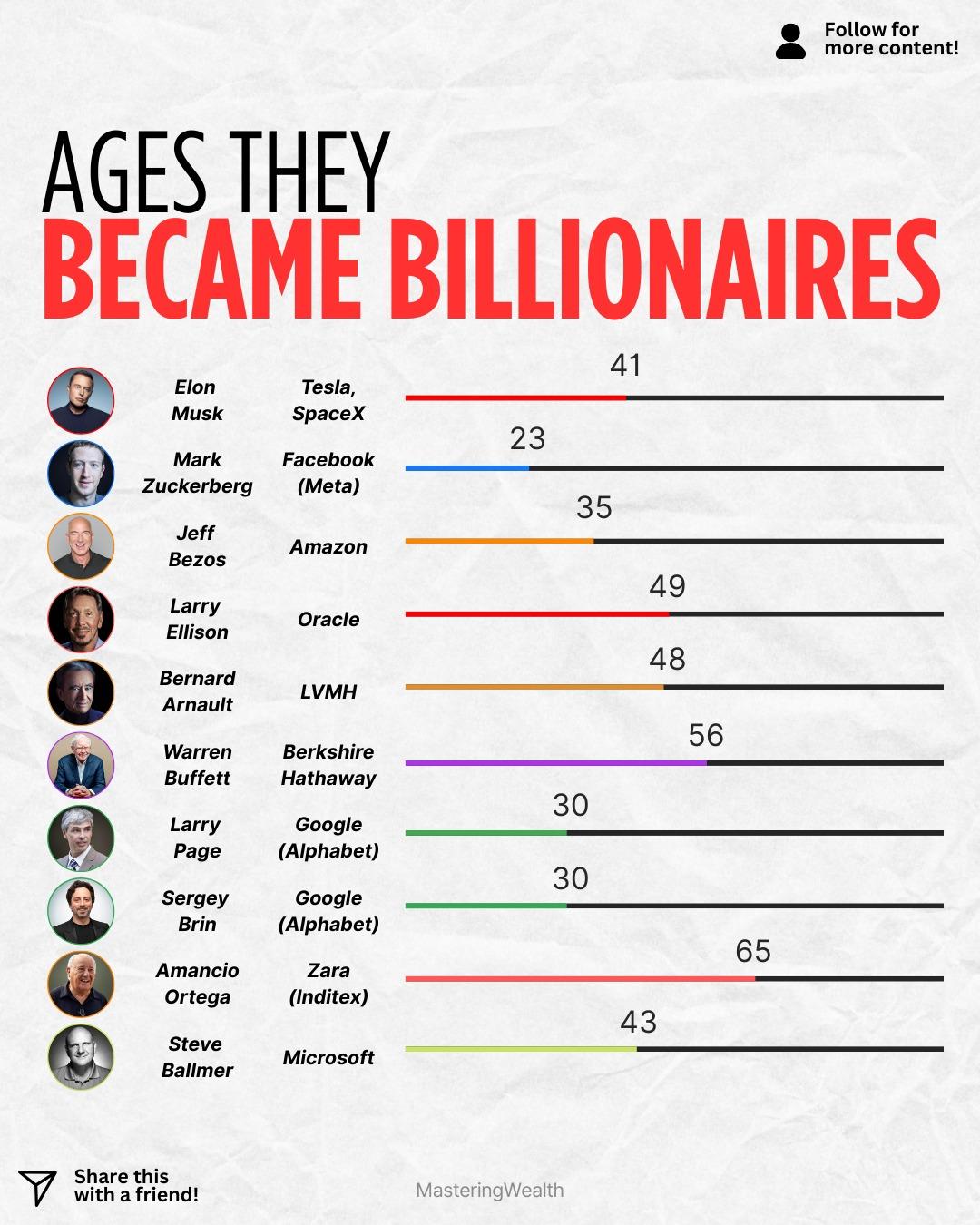
  • Success does not have a deadline. The graphic in this post shows the ages at which some of the world’s most famous entrepreneurs became billionaires. What it proves is that wealth can be created early, late, and everywhere in between depending on timing, vision, and perseverance.

    Mark Zuckerberg became a billionaire at age twenty three which makes him one of the youngest on the list. Sergey Brin and Larry Page reached billionaire status at age thirty through Google. Jeff Bezos reached his billionaire milestone at age thirty five after years of building Amazon when online shopping was still a new idea.

    Others reached the milestone later in life. Elon Musk became a billionaire at forty one while scaling Tesla and SpaceX after many failures and setbacks. Bernard Arnault reached billionaire status at forty eight through luxury brands and long term business thinking.

    Some reached the milestone even later. Warren Buffett became a billionaire at age fifty six after decades of consistent investing and value based decisions. Amancio Ortega, the founder of Zara, became a billionaire at age sixty five which shows that massive wealth can still be built late in life.

    This list proves that there is no perfect age for success. What matters is the willingness to start, learn, take risks, and keep going. The timeline looks different for everyone but persistence always pays off somewhere along the journey.

    Comment “Stocks” if you want a link to see my dividend portfolio and learn how long term investing builds wealth step by step.

    If you could choose any path toward financial freedom, would you prefer the fast route with higher risk or the slow and steady route like Warren Buffett?

    For more visuals that break down success stories, wealth building, and investing lessons, follow @MasteringWealth for daily financial content.

    This content is for educational purposes only and is not financial advice. Always research carefully or consult with a licensed professional before making investment decisions.
    Success does not have a deadline. The graphic in this post shows the ages at which some of the world’s most famous entrepreneurs became billionaires. What it proves is that wealth can be created early, late, and everywhere in between depending on timing, vision, and perseverance. Mark Zuckerberg became a billionaire at age twenty three which makes him one of the youngest on the list. Sergey Brin and Larry Page reached billionaire status at age thirty through Google. Jeff Bezos reached his billionaire milestone at age thirty five after years of building Amazon when online shopping was still a new idea. Others reached the milestone later in life. Elon Musk became a billionaire at forty one while scaling Tesla and SpaceX after many failures and setbacks. Bernard Arnault reached billionaire status at forty eight through luxury brands and long term business thinking. Some reached the milestone even later. Warren Buffett became a billionaire at age fifty six after decades of consistent investing and value based decisions. Amancio Ortega, the founder of Zara, became a billionaire at age sixty five which shows that massive wealth can still be built late in life. This list proves that there is no perfect age for success. What matters is the willingness to start, learn, take risks, and keep going. The timeline looks different for everyone but persistence always pays off somewhere along the journey. 💬 Comment “Stocks” if you want a link to see my dividend portfolio and learn how long term investing builds wealth step by step. If you could choose any path toward financial freedom, would you prefer the fast route with higher risk or the slow and steady route like Warren Buffett? For more visuals that break down success stories, wealth building, and investing lessons, follow @MasteringWealth for daily financial content. ⚠️ This content is for educational purposes only and is not financial advice. Always research carefully or consult with a licensed professional before making investment decisions.
    ·288 Views ·0 Anteprima
  • Amid the Western portrayal of Niger as a failed state reeling under attacks by terrorists after expelling the French troops, President Tchiani traveled on road in an unprecedented journey across the country’s seven regions, in an act of defiance as well as reassurance.

    Hundreds of thousands of people took to the streets across Niger between November 8 and 20 to greet their president, General Abdourahamane Tchiani, who was on an unprecedented trip to all seven regions by road in a 12-day-long journey.

    Tchiani’s journey came amid a proxy war allegedly waged by France using terror groups to destabilize the country after its troops were expelled. Niger’s partners in the Alliance of Sahel States (AES) – namely its neighbors Mali and Burkina Faso, which had also expelled French troops after popular coups amid mass protests – have also accused France of fielding terror groups to destabilize former colonies, asserting sovereignty.

    Read the full article on our website.
    Amid the Western portrayal of Niger as a failed state reeling under attacks by terrorists after expelling the French troops, President Tchiani traveled on road in an unprecedented journey across the country’s seven regions, in an act of defiance as well as reassurance. Hundreds of thousands of people took to the streets across Niger between November 8 and 20 to greet their president, General Abdourahamane Tchiani, who was on an unprecedented trip to all seven regions by road in a 12-day-long journey. Tchiani’s journey came amid a proxy war allegedly waged by France using terror groups to destabilize the country after its troops were expelled. Niger’s partners in the Alliance of Sahel States (AES) – namely its neighbors Mali and Burkina Faso, which had also expelled French troops after popular coups amid mass protests – have also accused France of fielding terror groups to destabilize former colonies, asserting sovereignty. 📲 Read the full article on our website.
    ·137 Views ·0 Anteprima
  • A major global internet outage temporarily brought the digital world to a halt after a critical Cloudflare failure disrupted major platforms, including X and OpenAI

    The issue began around 11:00 AM UTC when Cloudflare started returning widespread 500 internal server errors, cutting access to millions of websites. Early reports suggest an abnormal surge in traffic triggered a cascading network breakdown that impacted everything from work tools to entertainment services.

    Engineers have since pinpointed the problem, and systems are gradually coming back online as traffic is rerouted. Some users may still notice slowdowns until the fix is fully stabilized worldwide.

    Did you experience any connection issues during the outage today?

    Follow us @FutureTech for more!
    A major global internet outage temporarily brought the digital world to a halt after a critical Cloudflare failure disrupted major platforms, including X and OpenAI ⚠️ The issue began around 11:00 AM UTC when Cloudflare started returning widespread 500 internal server errors, cutting access to millions of websites. Early reports suggest an abnormal surge in traffic triggered a cascading network breakdown that impacted everything from work tools to entertainment services. Engineers have since pinpointed the problem, and systems are gradually coming back online as traffic is rerouted. Some users may still notice slowdowns until the fix is fully stabilized worldwide. Did you experience any connection issues during the outage today? 👉 Follow us @FutureTech for more! 🔌
    ·78 Views ·0 Anteprima
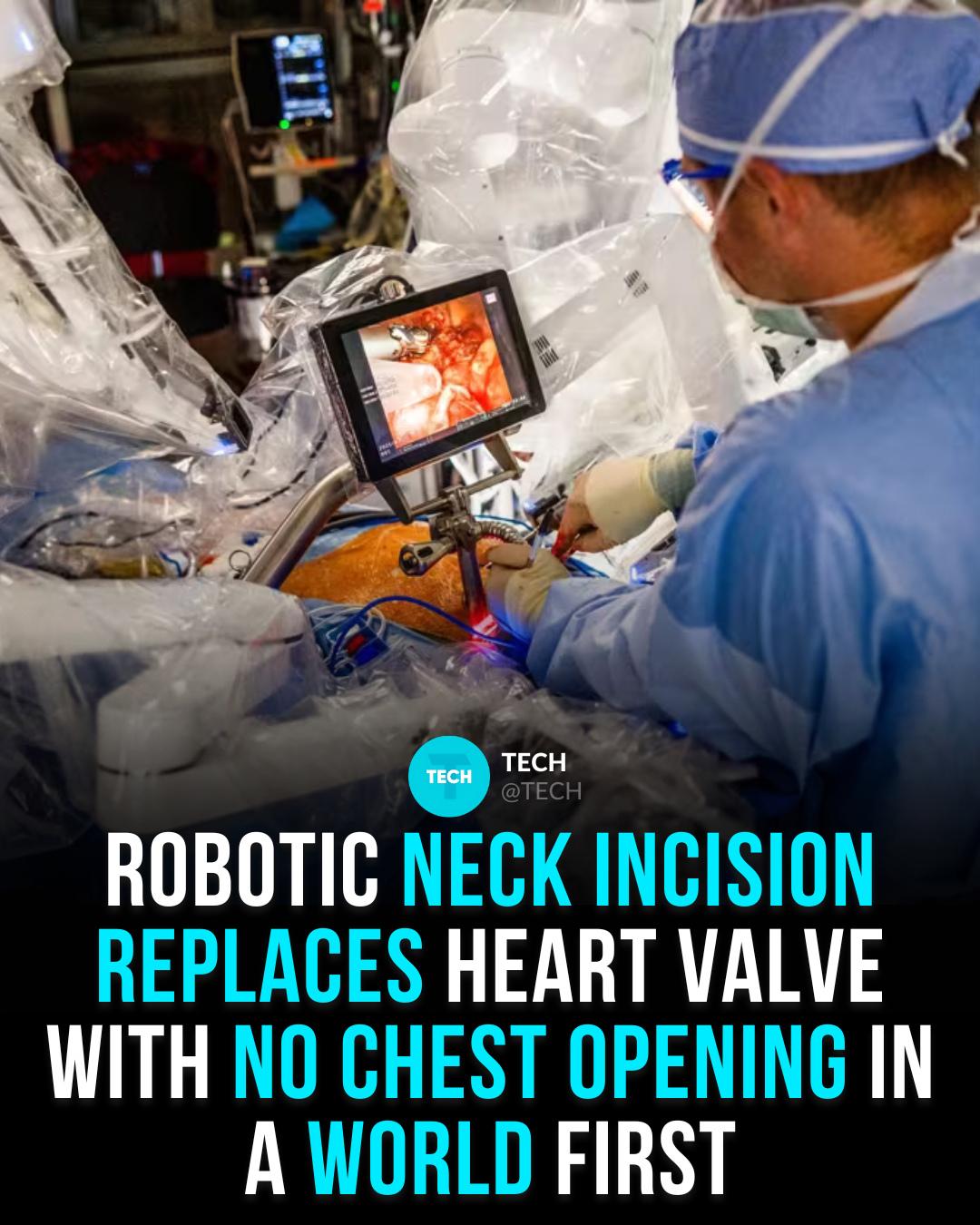
  • Cleveland Clinic surgeons just completed the world's first robotic aortic valve replacement through a tiny neck incision, eliminating the need to crack open the chest entirely. Dr. Marijan Koprivanac led the pioneering transcervical approach that replaces failing heart valves through four small incisions, with the main entry point hidden in a natural neck crease similar to thyroid surgery.⁠

    The results from the first four patients aged 60 to 74 years have stunned the medical community, with one patient returning to gym workouts just seven days after surgery and another back to farm work within three weeks. Traditional aortic valve replacement requires breaking the sternum and spreading the ribs apart, leading to months of painful recovery and strict lifting restrictions that this revolutionary technique completely avoids.⁠

    Dr. Koprivanac spent years perfecting the approach after learning transcervical thymectomies during surgical training, recognizing that the neck provides excellent access to view the aorta and aortic valve from above. He practiced the technique on 20 cadavers at Cleveland Clinic's anatomy lab before treating actual patients, using specialized retractors and robotic arms for millimeter-precise valve removal and replacement through the narrow cervical corridor.⁠

    The average surgical time was 140 minutes with hospital stays ranging from just 3 to 6 days, compared to traditional open-heart surgery that often requires weeks of recovery. Pain management consisted entirely of over-the-counter acetaminophen and ibuprofen, with patients reporting minimal discomfort throughout their recovery process.
    Cleveland Clinic surgeons just completed the world's first robotic aortic valve replacement through a tiny neck incision, eliminating the need to crack open the chest entirely. Dr. Marijan Koprivanac led the pioneering transcervical approach that replaces failing heart valves through four small incisions, with the main entry point hidden in a natural neck crease similar to thyroid surgery.⁠ ⁠ The results from the first four patients aged 60 to 74 years have stunned the medical community, with one patient returning to gym workouts just seven days after surgery and another back to farm work within three weeks. Traditional aortic valve replacement requires breaking the sternum and spreading the ribs apart, leading to months of painful recovery and strict lifting restrictions that this revolutionary technique completely avoids.⁠ ⁠ Dr. Koprivanac spent years perfecting the approach after learning transcervical thymectomies during surgical training, recognizing that the neck provides excellent access to view the aorta and aortic valve from above. He practiced the technique on 20 cadavers at Cleveland Clinic's anatomy lab before treating actual patients, using specialized retractors and robotic arms for millimeter-precise valve removal and replacement through the narrow cervical corridor.⁠ ⁠ The average surgical time was 140 minutes with hospital stays ranging from just 3 to 6 days, compared to traditional open-heart surgery that often requires weeks of recovery. Pain management consisted entirely of over-the-counter acetaminophen and ibuprofen, with patients reporting minimal discomfort throughout their recovery process.
    ·62 Views ·0 Anteprima
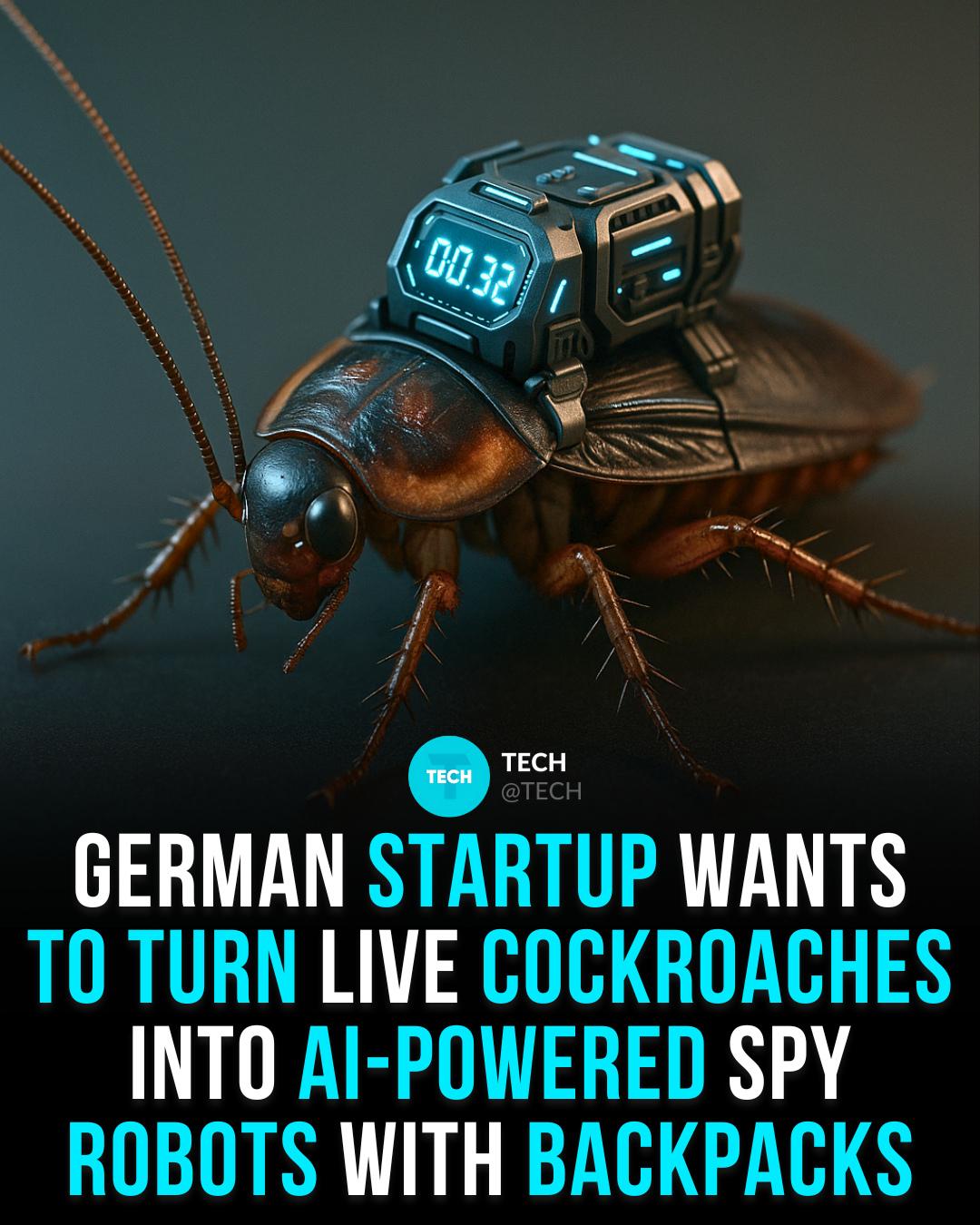
  • German startup SWARM Biotactics just secured €13 million in funding to turn live Madagascar hissing cockroaches into AI-powered spy robots equipped with miniature backpacks containing cameras, sensors, and neural stimulators that allow remote control for covert surveillance missions. The Kassel-based company represents the world's first commercial effort to create "biologically integrated, AI-enabled, and mass-deployable systems" that can infiltrate environments where traditional drones and ground robots completely fail.⁠

    CEO Stefan Wilhelm revealed that each cockroach carries a lightweight backpack weighing up to 3 grams that includes tiny cameras for real-time reconnaissance, environmental sensors to detect gas or radiation, and neural stimulators that send electrical impulses to the insect's nervous system to control movement. The technology allows military operators to guide individual cockroaches through rubble, tight spaces, or hostile territories, or deploy entire swarms that operate autonomously using artificial intelligence coordination.⁠

    The breakthrough addresses fundamental limitations of conventional surveillance technology in cluttered, GPS-denied environments like urban combat zones, collapsed buildings, or disaster areas. Unlike mechanical robots that require significant power and sophisticated navigation systems, cockroaches naturally excel at navigating complex terrain while requiring zero energy input for locomotion, making them ideal biological platforms for persistent intelligence gathering.⁠

    These living surveillance systems could provide unprecedented tactical advantages in scenarios where conventional technology proves inadequate or too conspicuous for effective intelligence gathering.
    German startup SWARM Biotactics just secured €13 million in funding to turn live Madagascar hissing cockroaches into AI-powered spy robots equipped with miniature backpacks containing cameras, sensors, and neural stimulators that allow remote control for covert surveillance missions. The Kassel-based company represents the world's first commercial effort to create "biologically integrated, AI-enabled, and mass-deployable systems" that can infiltrate environments where traditional drones and ground robots completely fail.⁠ ⁠ CEO Stefan Wilhelm revealed that each cockroach carries a lightweight backpack weighing up to 3 grams that includes tiny cameras for real-time reconnaissance, environmental sensors to detect gas or radiation, and neural stimulators that send electrical impulses to the insect's nervous system to control movement. The technology allows military operators to guide individual cockroaches through rubble, tight spaces, or hostile territories, or deploy entire swarms that operate autonomously using artificial intelligence coordination.⁠ ⁠ The breakthrough addresses fundamental limitations of conventional surveillance technology in cluttered, GPS-denied environments like urban combat zones, collapsed buildings, or disaster areas. Unlike mechanical robots that require significant power and sophisticated navigation systems, cockroaches naturally excel at navigating complex terrain while requiring zero energy input for locomotion, making them ideal biological platforms for persistent intelligence gathering.⁠ ⁠ These living surveillance systems could provide unprecedented tactical advantages in scenarios where conventional technology proves inadequate or too conspicuous for effective intelligence gathering.
    ·71 Views ·0 Anteprima
  • In San Diego, a small research team pointed a cheap residential satellite dish at the sky and watched the world's private traffic pour in. Using about $800 of off the shelf hardware and open source tools, they spent three years sweeping geostationary satellites that sit 22,000 miles above Earth and still quietly handle backhaul for airlines, remote cell towers, oil rigs, utilities, and governments. Instead of hardened, encrypted links, they kept finding raw, readable data flowing straight into their receiver.⁠

    From just 39 satellites, only a slice of the global geostationary fleet, the team captured private phone calls, text messages, in flight Wi Fi sessions, and internal corporate and government communications. A nine hour recording of T Mobile satellite backhaul revealed more than 2,700 phone numbers plus one side of users’ calls and SMS. Other links exposed browsing activity from passengers on commercial flights and traffic from rural internet customers whose data had been routed skyward without proper protection.⁠

    The leaks went far beyond consumer chatter. Mexican military and police units were broadcasting mission details, asset locations, and helicopter maintenance logs in the clear. U.S. vessels were transmitting unencrypted internal traffic that revealed ship identities and movements. Operators of critical infrastructure, including a major Latin American electric utility, were sending status reports, customer records, and failure alerts with no end to end encryption at all, creating an easy starting point for espionage or disruption.⁠

    After quiet disclosure, some firms, including T Mobile and AT&T, scrambled to add encryption, while others lagged behind. The researchers are now preparing an open source toolkit, named after their paper “Don’t Look Up,” so regulators, defenders, and operators can see for themselves what is leaking from orbit. The larger lesson is blunt, security by hoping nobody looks up is not security, it is an invitation.⁠

    #satellites #cybersecurity #encryption #infosec #space #communications #datasecurity #privacy #technology
    In San Diego, a small research team pointed a cheap residential satellite dish at the sky and watched the world's private traffic pour in. Using about $800 of off the shelf hardware and open source tools, they spent three years sweeping geostationary satellites that sit 22,000 miles above Earth and still quietly handle backhaul for airlines, remote cell towers, oil rigs, utilities, and governments. Instead of hardened, encrypted links, they kept finding raw, readable data flowing straight into their receiver.⁠ ⁠ From just 39 satellites, only a slice of the global geostationary fleet, the team captured private phone calls, text messages, in flight Wi Fi sessions, and internal corporate and government communications. A nine hour recording of T Mobile satellite backhaul revealed more than 2,700 phone numbers plus one side of users’ calls and SMS. Other links exposed browsing activity from passengers on commercial flights and traffic from rural internet customers whose data had been routed skyward without proper protection.⁠ ⁠ The leaks went far beyond consumer chatter. Mexican military and police units were broadcasting mission details, asset locations, and helicopter maintenance logs in the clear. U.S. vessels were transmitting unencrypted internal traffic that revealed ship identities and movements. Operators of critical infrastructure, including a major Latin American electric utility, were sending status reports, customer records, and failure alerts with no end to end encryption at all, creating an easy starting point for espionage or disruption.⁠ ⁠ After quiet disclosure, some firms, including T Mobile and AT&T, scrambled to add encryption, while others lagged behind. The researchers are now preparing an open source toolkit, named after their paper “Don’t Look Up,” so regulators, defenders, and operators can see for themselves what is leaking from orbit. The larger lesson is blunt, security by hoping nobody looks up is not security, it is an invitation.⁠ ⁠ #satellites #cybersecurity #encryption #infosec #space #communications #datasecurity #privacy #technology
    ·276 Views ·0 Anteprima
Pagine in Evidenza
Techawks - Powered By Pantrade Blockchain https://techawks.com